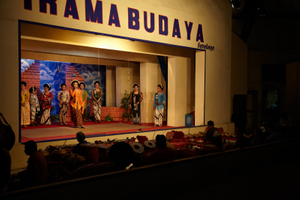
Ludruk is a traditional Indonesian comedic music theater form, found only in East Java, Indonesia, telling stories of daily life and the struggles of everyday people. Its origin is unknown but is believed to be more than half a millennia old.
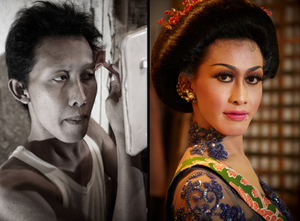
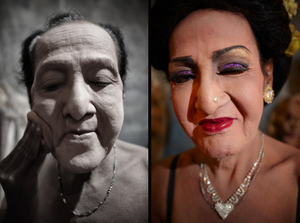
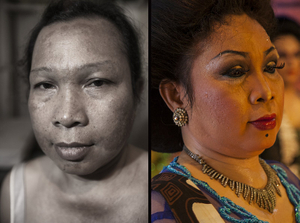
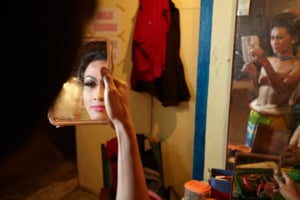
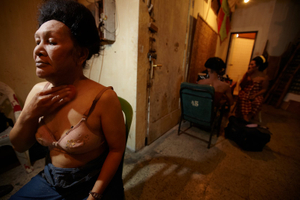
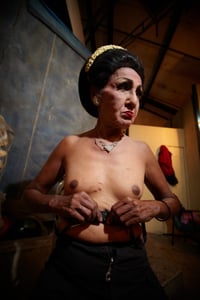
The she-male players undergo multi-hour make up sessions in the dim-lit backstage before each performance, for a spectacular transvestite (“waria” in Indonesian) transformation.
During the golden years of Ludruk (1980-2000) there were many troupes performing in the area but their number has declined dramatically, as has the audience, now almost on the verge of extinction. Some efforts are being made to preserve this art form by re-generation, with little success.
In East Java’s biggest city of Surabaya there is only one troupe left, called “Irama Budaya”, with about 30 members, mainly poor transvestites being paid less than one dollar for each show which is now held once a week, every Saturday in the evening. Most of them can not afford to rent a house to live in, so they stay in makeshift rooms behind the theater’ stage. They get support from their “friends” and supplement their income by prostitution. Their dedication to their art is their only motivation to keep preserving it.
“We used to live from Ludruk. But now we are living for Ludruk” says Maya, the waria in charge of the show.
Recently the troupe has been informed to evacuate the theater that had been granted to them by the local government in the 2000.