Inheritance can be a great many things; the contents of a bank account, the color of one’s hair, a cherished family home, a specific gesture or way of rolling one’s eyes. Even a set of stories. It can be a gift or a burden, a door to new possibilities or something that one has to cart around—a yoke around the neck.
For the Japanese photographer Aiko Wakao Austin, her inheritance was a trove of scrapbooks and her late grandmother’s collection of kimonos, the traditional wrapped-front, square-sleeved Japanese garments. With time, she would transform it into something of her own, opening up a world of artistic experimentation and shedding light on the complexity of her family’s memories. Based in New York, Wakao Austin has a background in journalism, photography, and translation. In What We Inherit, she pulls from these storytelling crafts to fashion an intimate history of emotional tension and familial love and loss, through the layering of decorative Japanese textiles and family photographs.
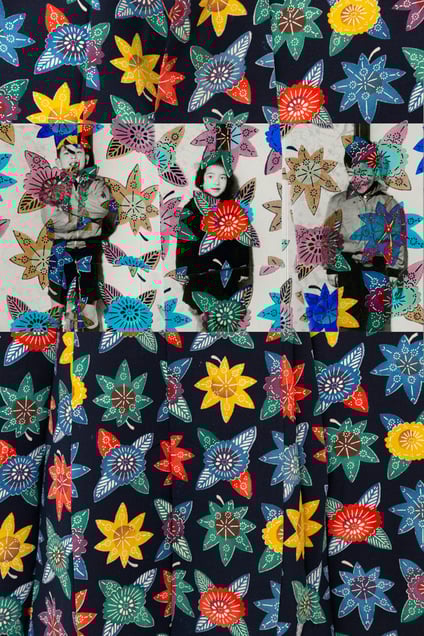
“Whenever I went home to Japan to see my parents with my children, we would spend time looking through my grandfather’s scrapbooks. He was an avid photographer himself, he meticulously documented his life, both personal and professional, from the 1930s all the way up to when he passed away years before I was born. The scrapbooks became this jewel of a family archive. I really wanted something that I could pass on to my children, that they could look at. You don’t always have access to your grandparents’ attic, where you can pull out a box of envelopes to look through,” Wakao Austin explains. Her grandmother, a lover of arts, beauty, and fashion, passed away when she was about six years old. “I was thinking a lot about her life and the weight of it—what she put on, what she left, and what she carried on herself,” she recalls.
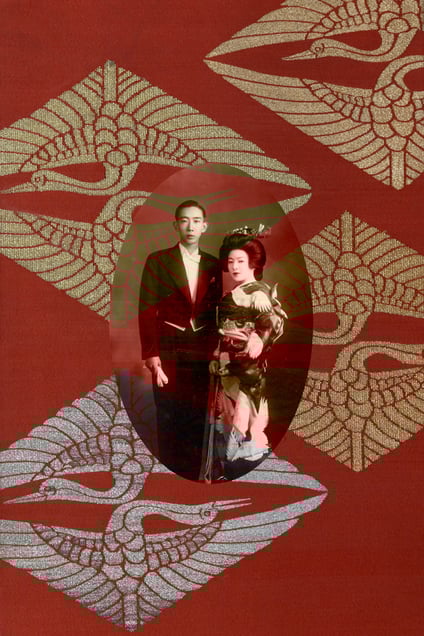
When the photographer moved to New York, she brought the kimonos with her and whilst airing them out, inspiration struck. “I hear stories from back in Japan where storage rooms of kimonos are just being dumped, because there is no market for them or no one to sort and figure them out,” Wakao Austin says.
“I thought maybe I could just take a little piece and reinterpret it as something that meant something to me—that came through my heart. I was fascinated by these textiles. Old fabrics fade and stain. You need to air them out. That process is very physical and real. And I think that freed me from this idea that I had to photograph at just that one moment when the light was beautiful.” From that moment of creative freedom, the project took off. Photographing the kimonos, she began to expand on her family’s story. “I thought: what about my grandfather? What about them as a young couple? And then as parents and as a family?”
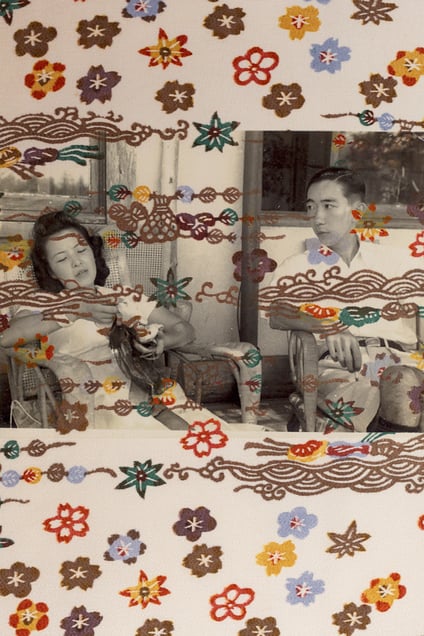
“Whenever we look back on family histories and stories, it’s always complicated. It has depth; there are layers to the story. It’s not always something to be proud of. There are tragedies and things that go wrong. Within my grandmother’s story, she spent the family’s money on trying to preserve her status in society as Japan westernized. In the post-war period, every family went through a lot of change, finding their own place as the world changed. Whenever my dad spoke about her or our family history, I felt there was a weight to it. And I wanted to somehow visually present that.”
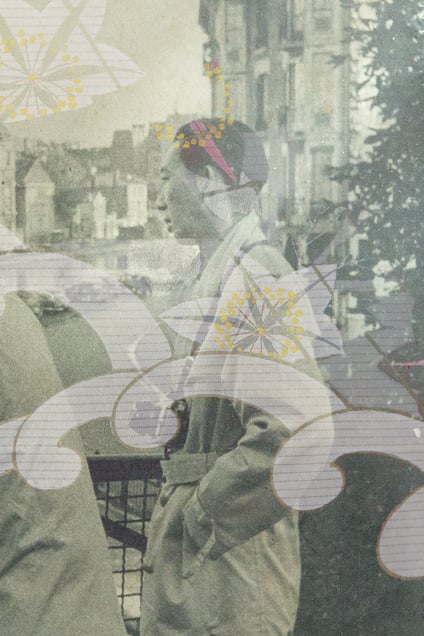
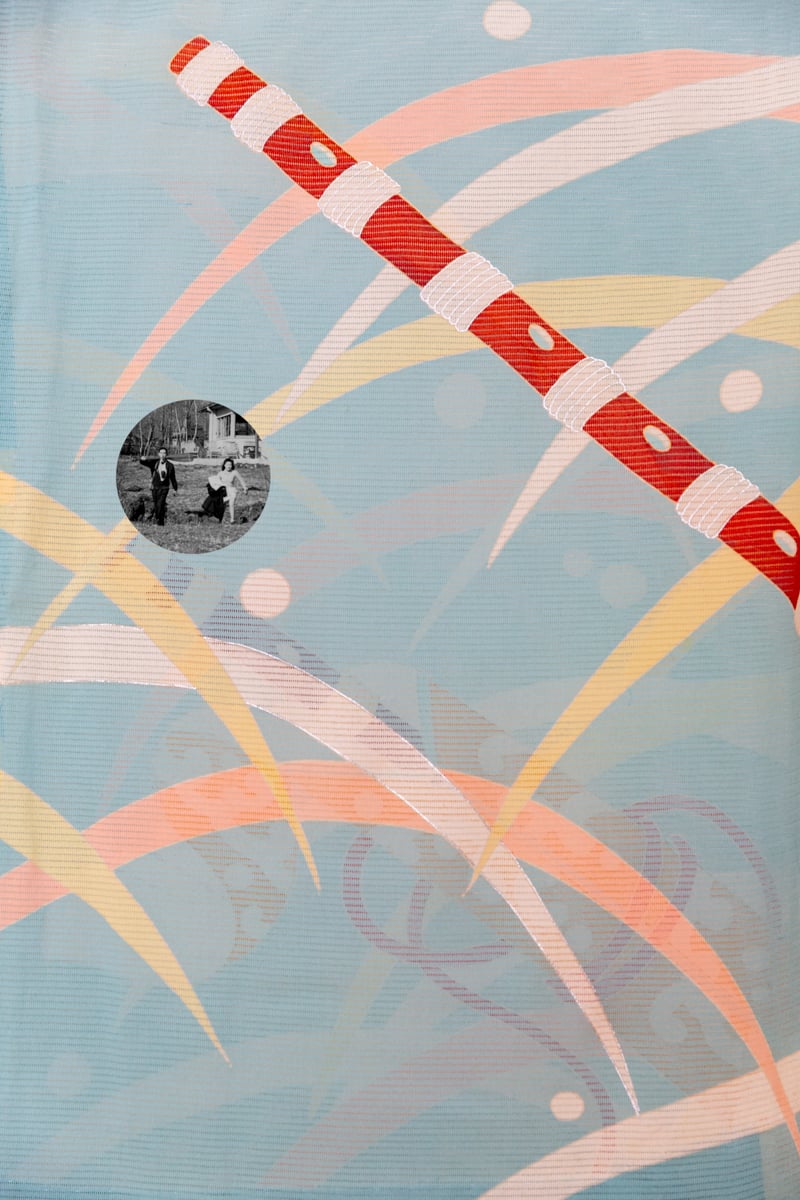
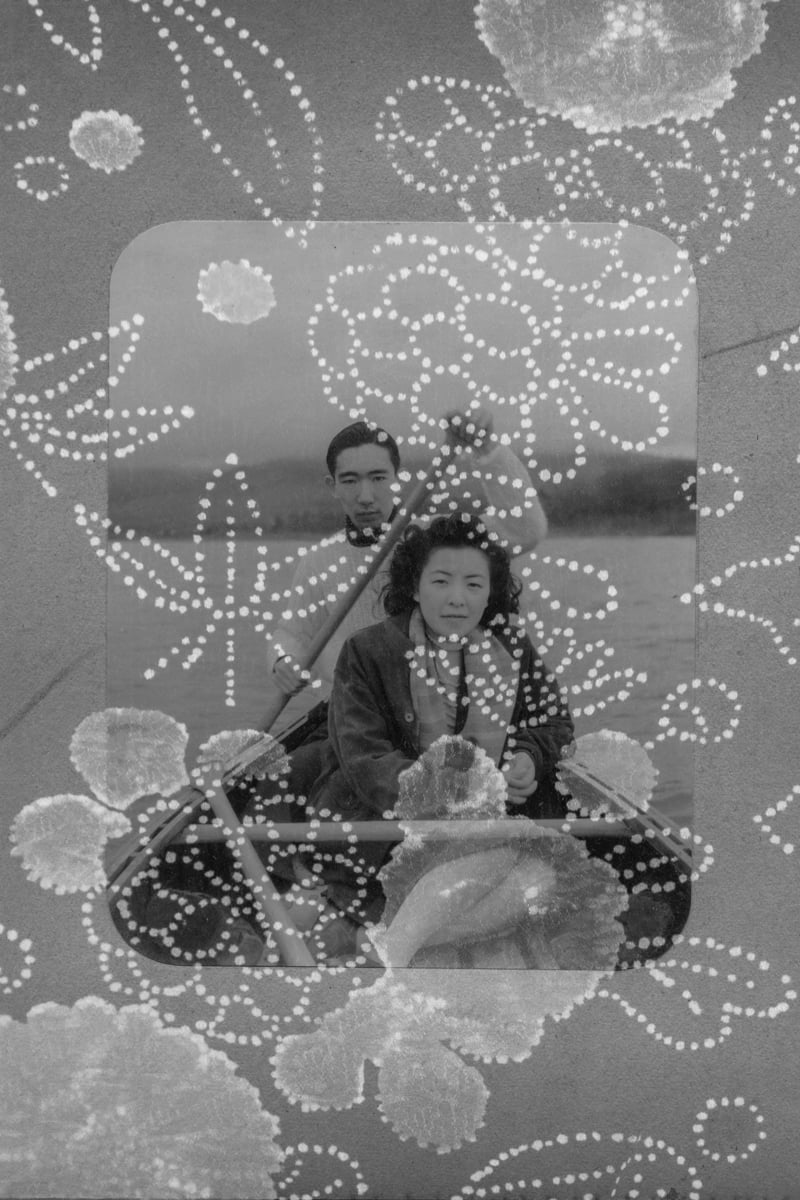
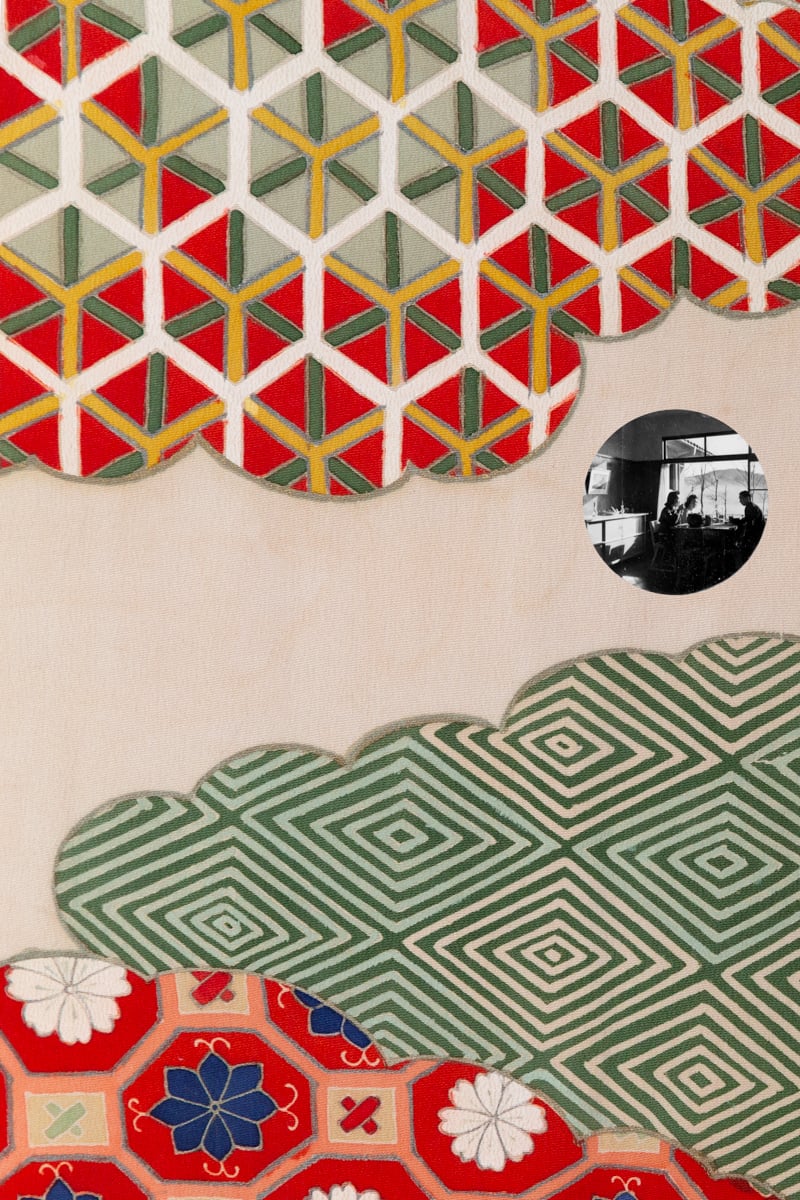
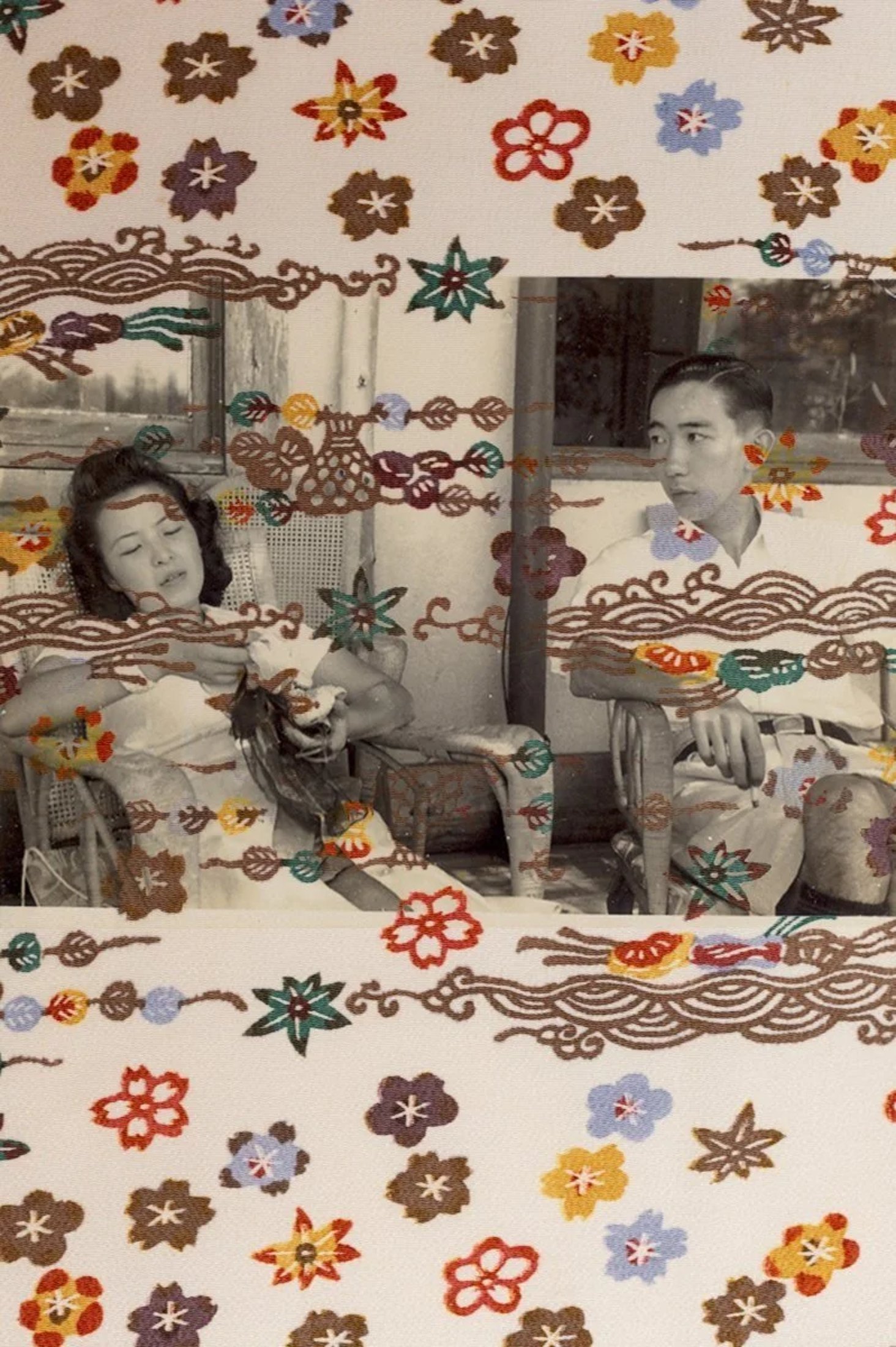
She began to layer images intuitively from the scrapbooks with selected details from the various kimonos. The garment is deeply ingrained in Japanese culture with styles and patterns connected to various seasons, events, and the wearer’s age. The fabrics of Wakao Austin’s collection are luminous and at times daring, featuring patterns that are both traditional and avant-garde.
The first image that she began to work on, Feathers, features a portrait of her grandmother, overlaid with golden feathers on a deep blue-purple gradient. In working on the series, the photographer found polaroids that had been taken of her grandmother in her kimonos, less as photographs to share and more as records of what she wore and paired together on certain occasions—a small monument to a love of style and presentation. In Feathers, Wakao Austin adds her own interpretive voice to the record.
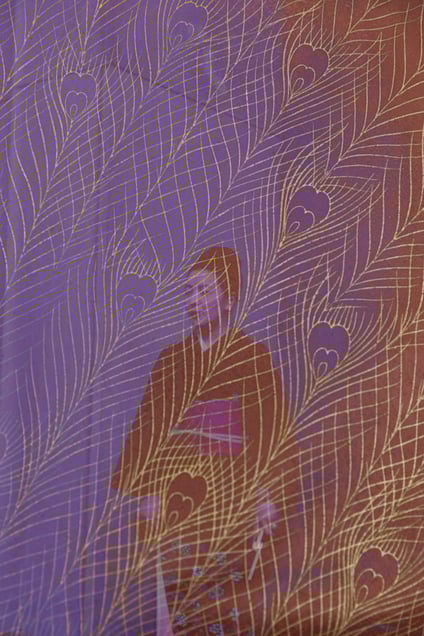
The images feature group portraits and figures alone, both celebratory and somber. Patterns swirl and dance off the page. Her grandfather’s circular scrapbook framing appears twice, small moments captured like bubbles from the past on pastel grounds. The strong red and gold thread of an obi, the sash that one ties around a kimono, overlays a marriage portrait of the young couple. Soft washes of gray and a pale lilac add melancholy to an image of her grandfather looking out over a cityscape. The images subtly take in tradition, social status, and change.
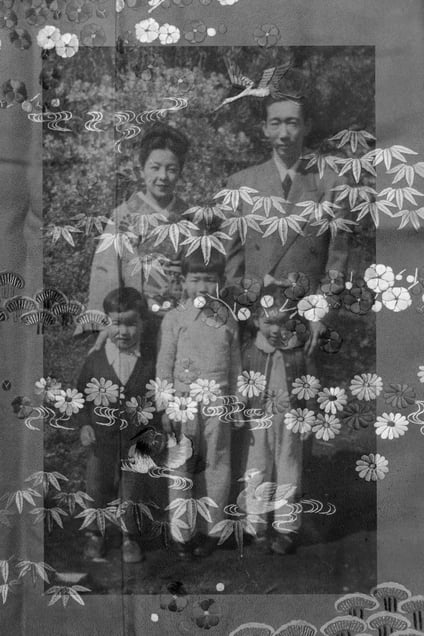
“I wanted to remember my family with respect, because their life wasn’t always beautiful and comfortable, or luxurious. It was actually the opposite. They had serious money and societal issues, and, in the end, their marriage wasn’t happy. Often in Japan, what you present to society or the outside world is so skewed because you hold back so much. I hear the stories, and I think that’s why it took my dad all this time to be able to talk about it—it’s behind him now. But there were moments where they were happy as a family. There was meaning to how they lived, how they looked, how they presented themselves, what they thought was important, and I wanted to respect that,” notes the artist.
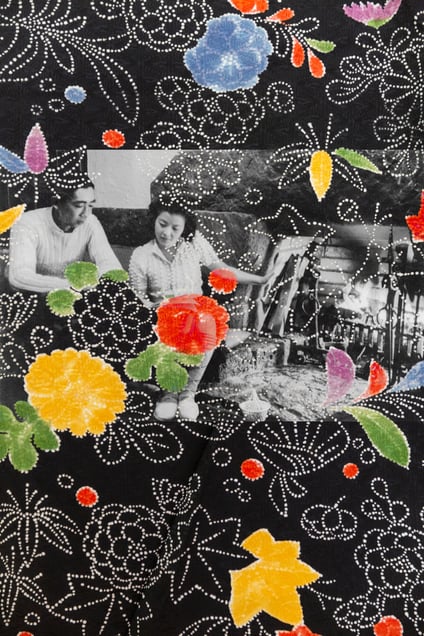
History—collective, familial, and individual—is made up of hard moments as well as beautiful ones, when viewed from afar. For Wakao Austin, the project is not a work of documentation. It is her interpretation of history. Each piece adds a new emotional layer. Memory is tinged by the passage of time, the softening of edges, the hindsight that allows for compassion and understanding. At times, memory is akin to seeing the past through rose-tinted glasses, and in the case of What We Inherit, perhaps it is through the purple cloth of a kimono that one connects to what came before, allowing a bit of its golden thread to unravel and find its way into the future.
Aiko Wakao Austin was one of the Top 10 winners of LensCulture’s Critics’ Choice Awards 2025. Discover all of the winners, here.