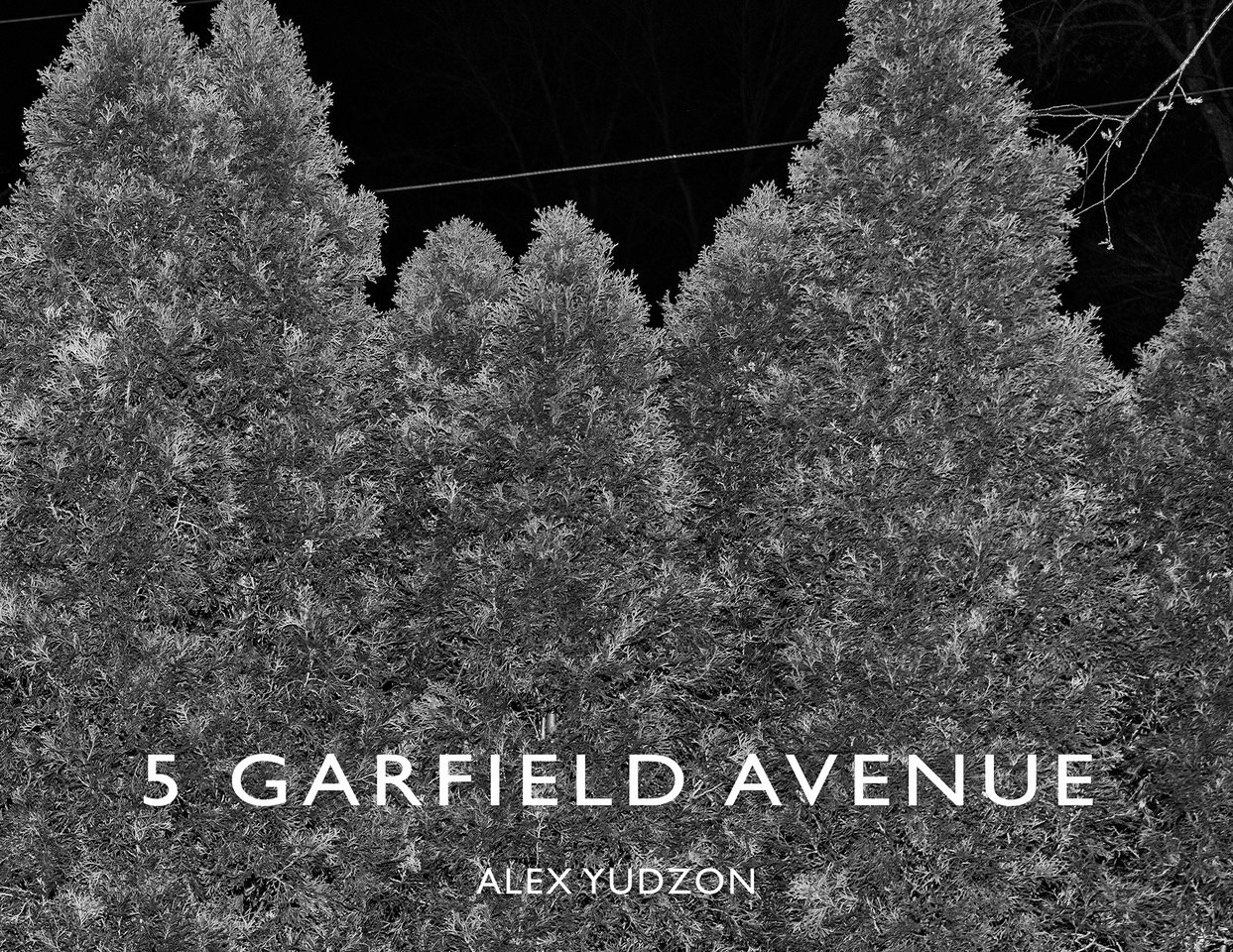
The artist Alex Yudzon’s relocation with his wife and one year-old daughter from a Brooklyn apartment to a rural Connecticut house was intended to be a respite from urban life. It would provide a slower pace, more space, and, in the nine months Yudzon and his family endured there, something unanticipated: materials, inspiration, and a setting in which to make photographs. Thirty-five of the black and white images make up 5 Garfield Avenue, Yudzon’s second monograph, which he self-published this year.
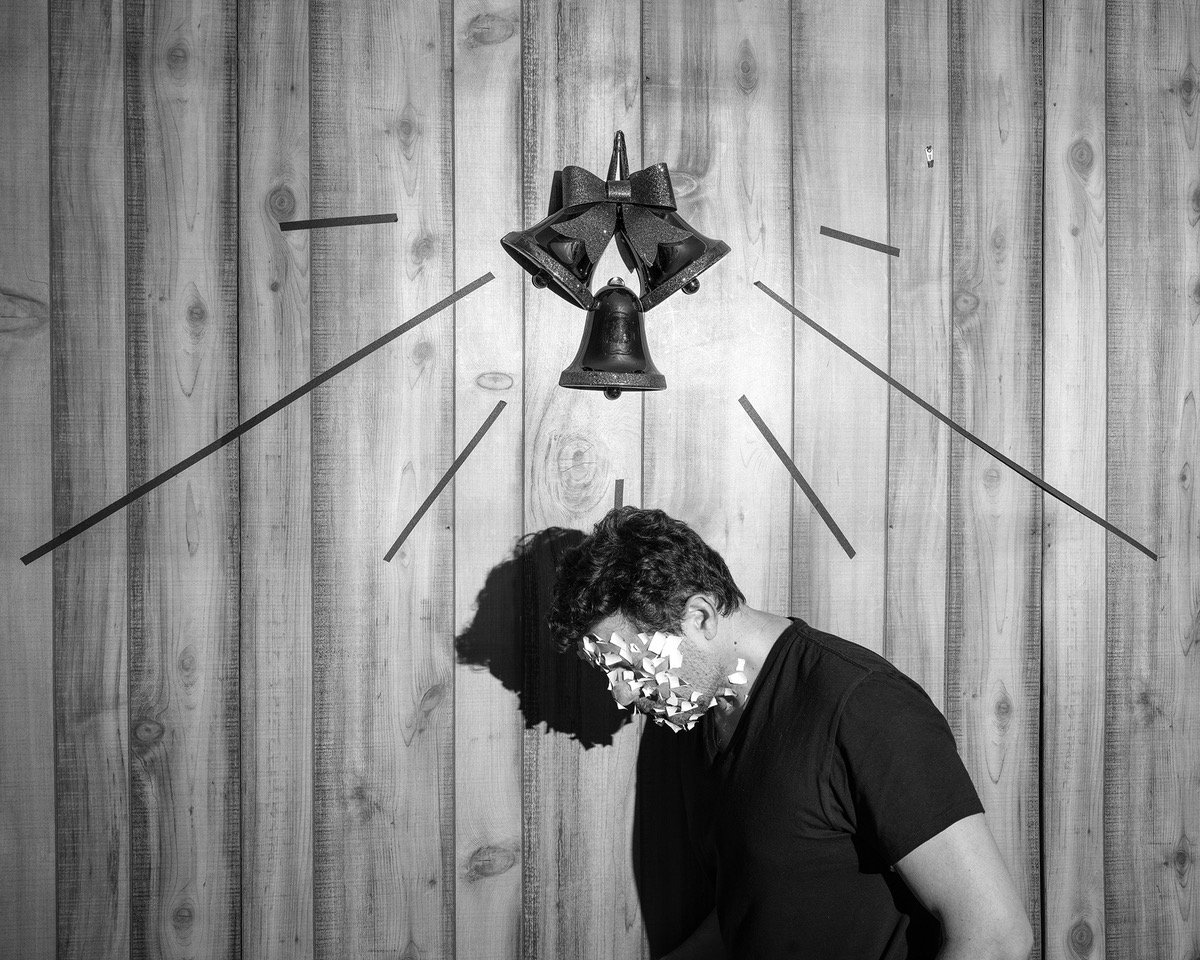
On the day of his family’s arrival, access to their new street was restricted due to a gas line rupture. Other omens soon appeared: a basement flood, faulty appliances, and a trove of abandoned boxes in the attic. An artist with an extraordinary imagination, as evidenced in Yudzon’s first monograph, A Room for a Night, published by Radius Books in 2023, he turned his new home into a working studio. From the front porch, the basement, the backyard, he created ephemeral site-specific installations and exalted the ordinary.
Yudzon was trained as a painter and constructs his images with rigorous attention to the elements of art—line, space, shape, form, texture—and the principles of design—balance, repetition, contrast, and unity. Conceptually, he draws from a range of interdisciplinary artists—John Baldessari, George Perec, Sophie Calle, and David Lynch. For more than a decade now, he has used photography as his primary medium to transform his ideas through play, spontaneity, and chance into precisely executed works of art. Cinema and his childhood experiences are, however, equally fundamental to the eerie and humorous photographs in 5 Garfield Avenue.
In 1985, during a peak escalation in the Cold War, eight year-old Yudzon emigrated from Moscow to the suburbs of Washington, D.C. with his parents and brother. His first memory in his new homeland is waking up in a hotel room decorated in hues of mustard yellow and brown—carpet, curtains, walls—all lit by dim light. A host would pick up Yudzon and his family later that day, but for the hours until then, in this liminal foreign space, he absorbed a deep sense of displacement.
Once in elementary school, the artist was bullied by peers because of his Soviet origins. In his social isolation, he turned to television and became enthralled by horror films, a genre suppressed in Soviet cinema until the relaxation of censorship, including Friday the 13th, A Nightmare on Elm Street, and The Amityville Horror. About these experiences, Yudzon says: “The atmosphere of dread permeating these films mirrored my emotional reality, and I absorbed every grisly drop of blood with the wide-eyed shock of a deer in headlights. Looking back now, I realize that part of my fascination was that I identified with both the victims and the perpetrators—a connection that continues to render these films as ambivalent touchstones of my early youth.”
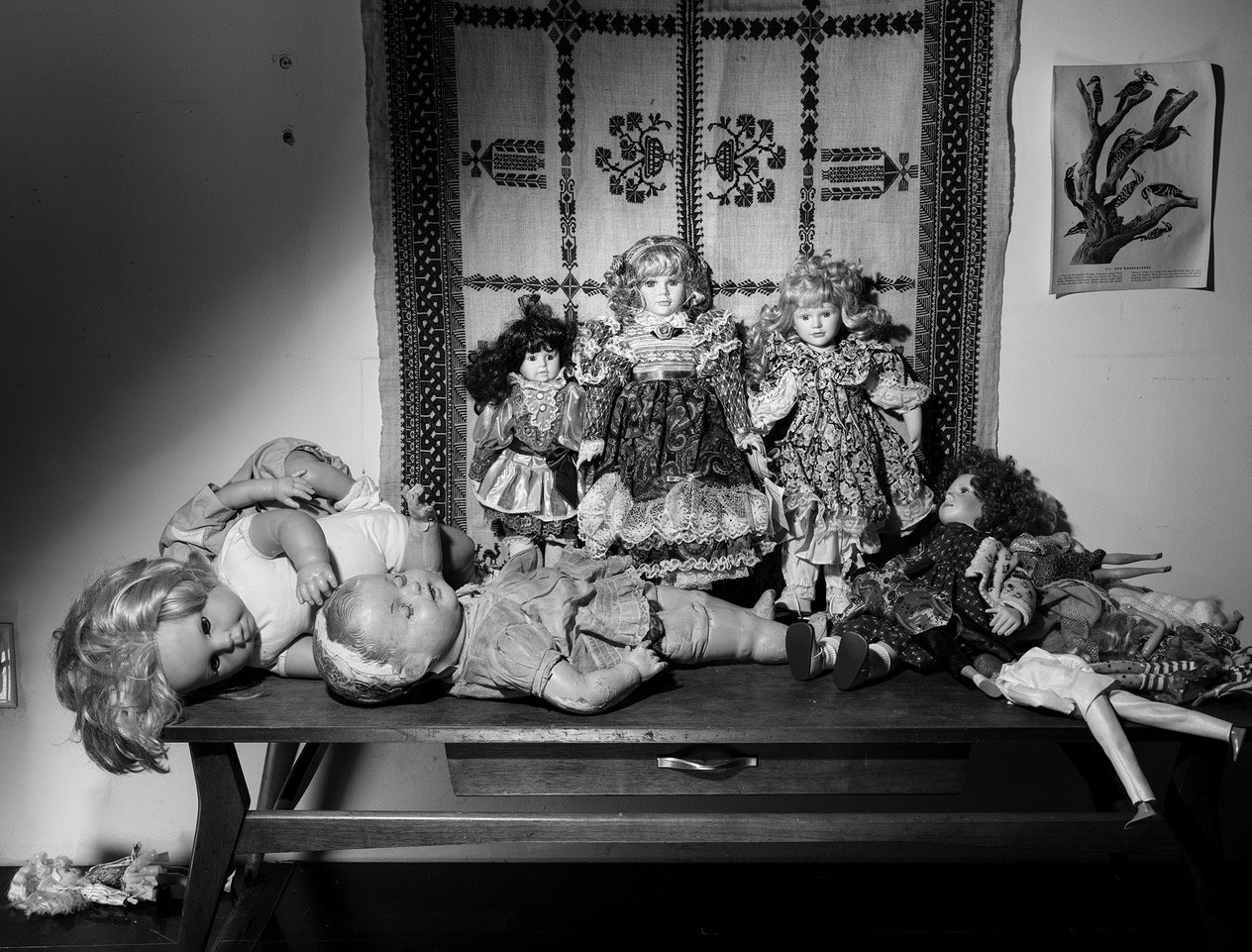
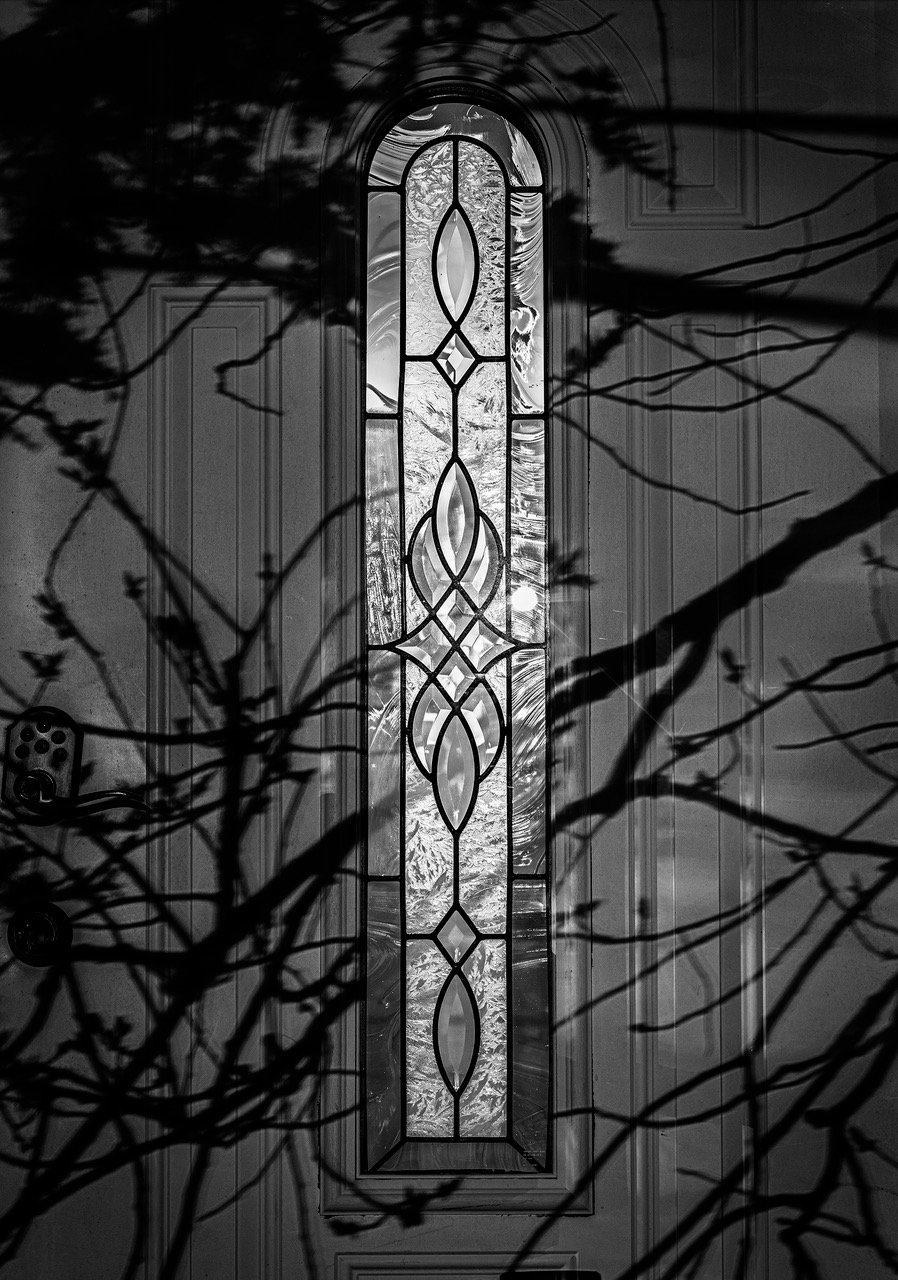
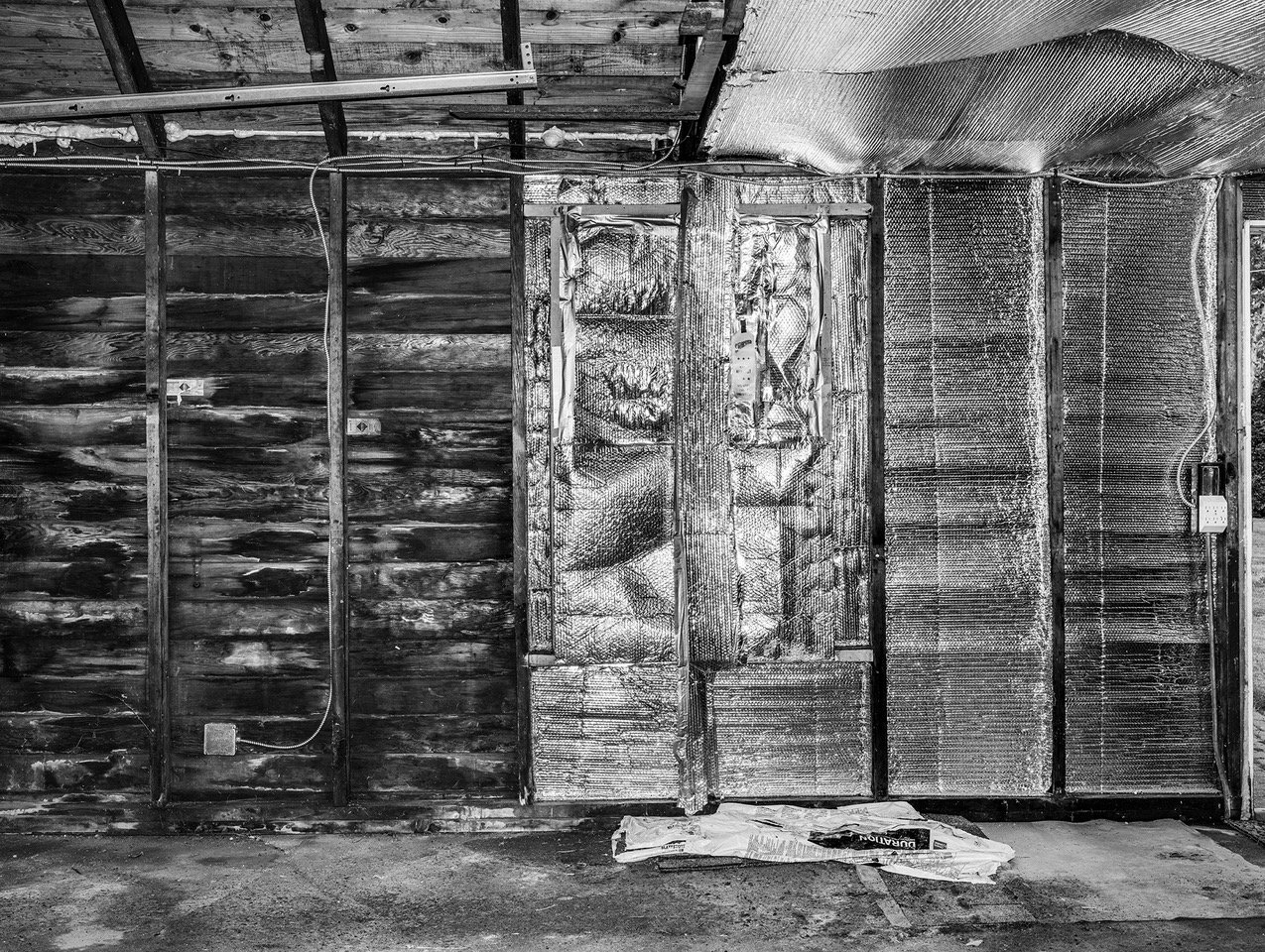
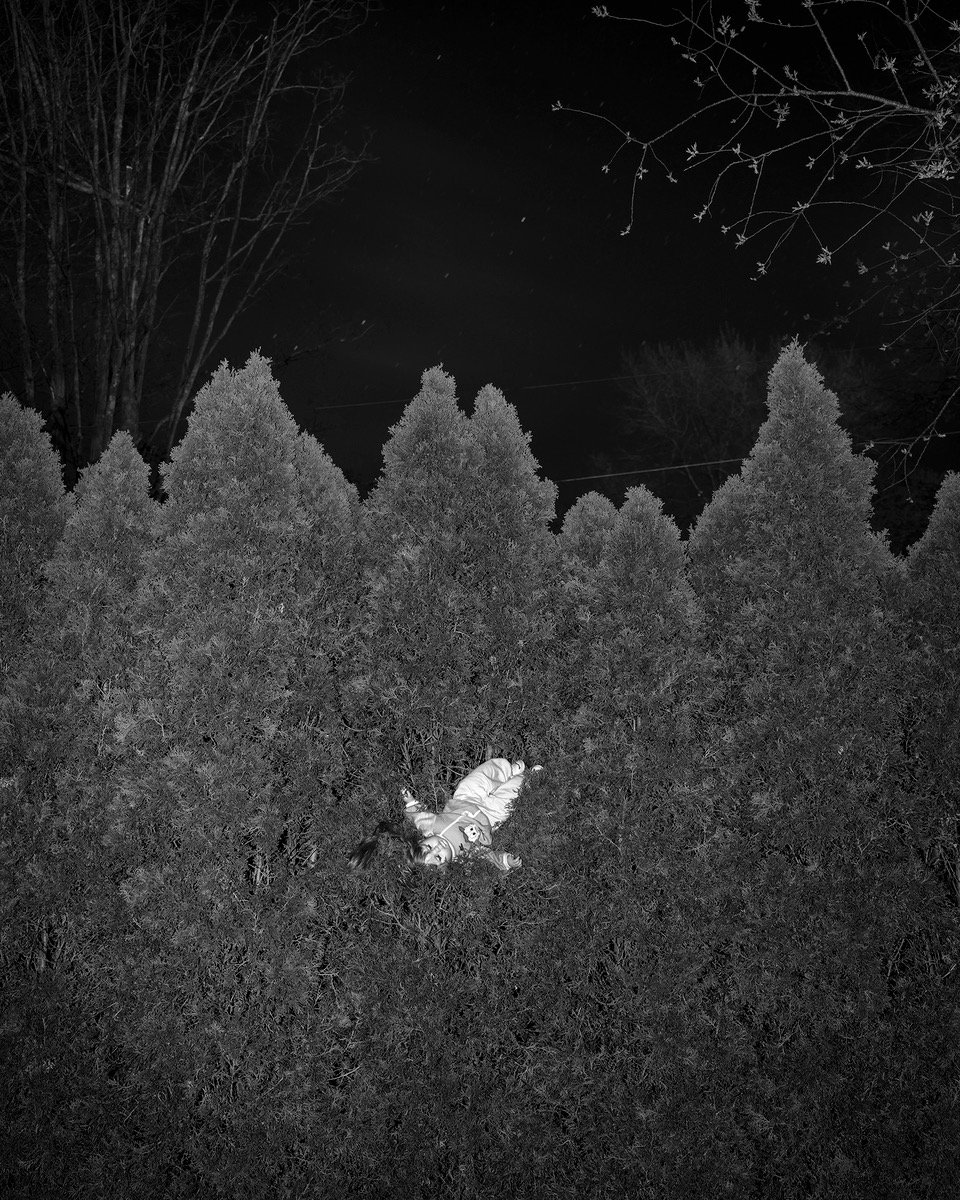
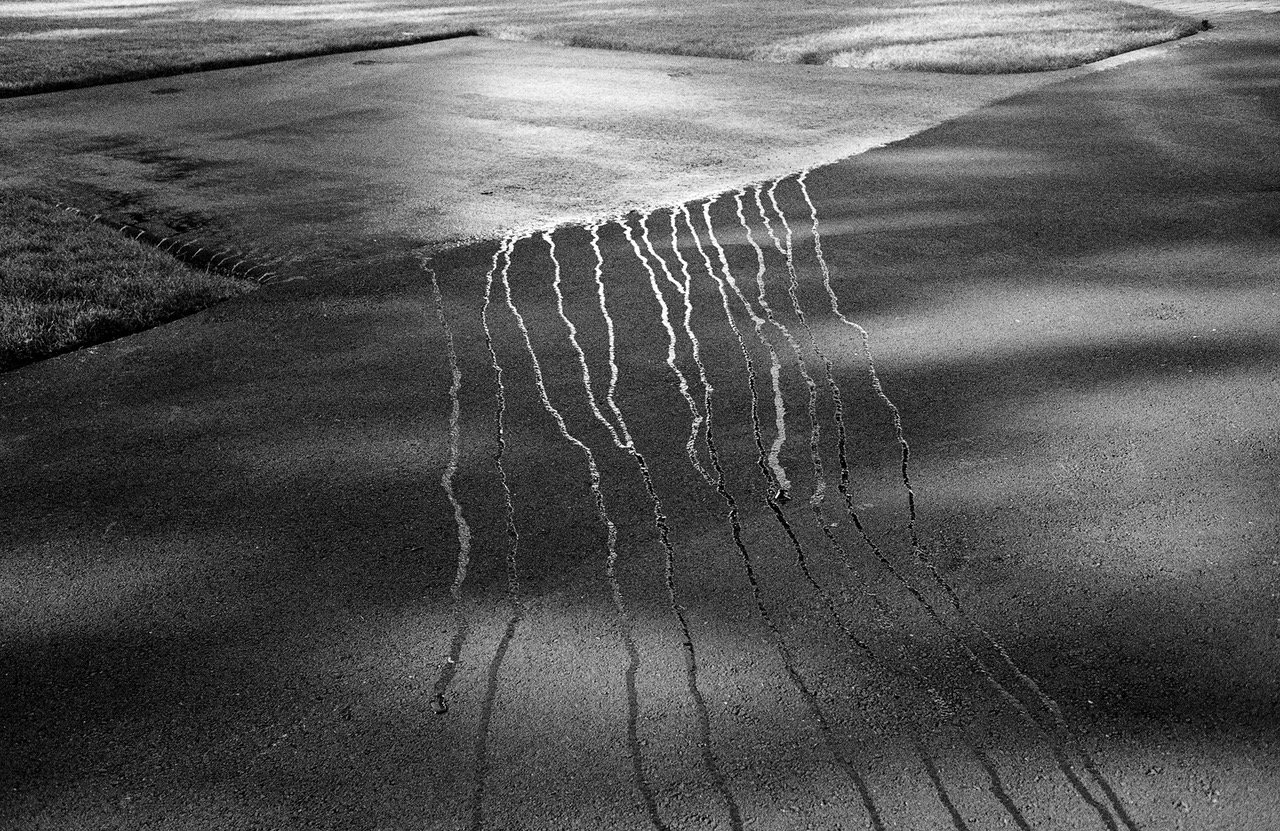
Accompanied by a short story Yudzon authored, the images in 5 Garfield Avenue evoke the fictional world of horror and suspense while examining themes of displacement, domestic uncertainty, and exile.
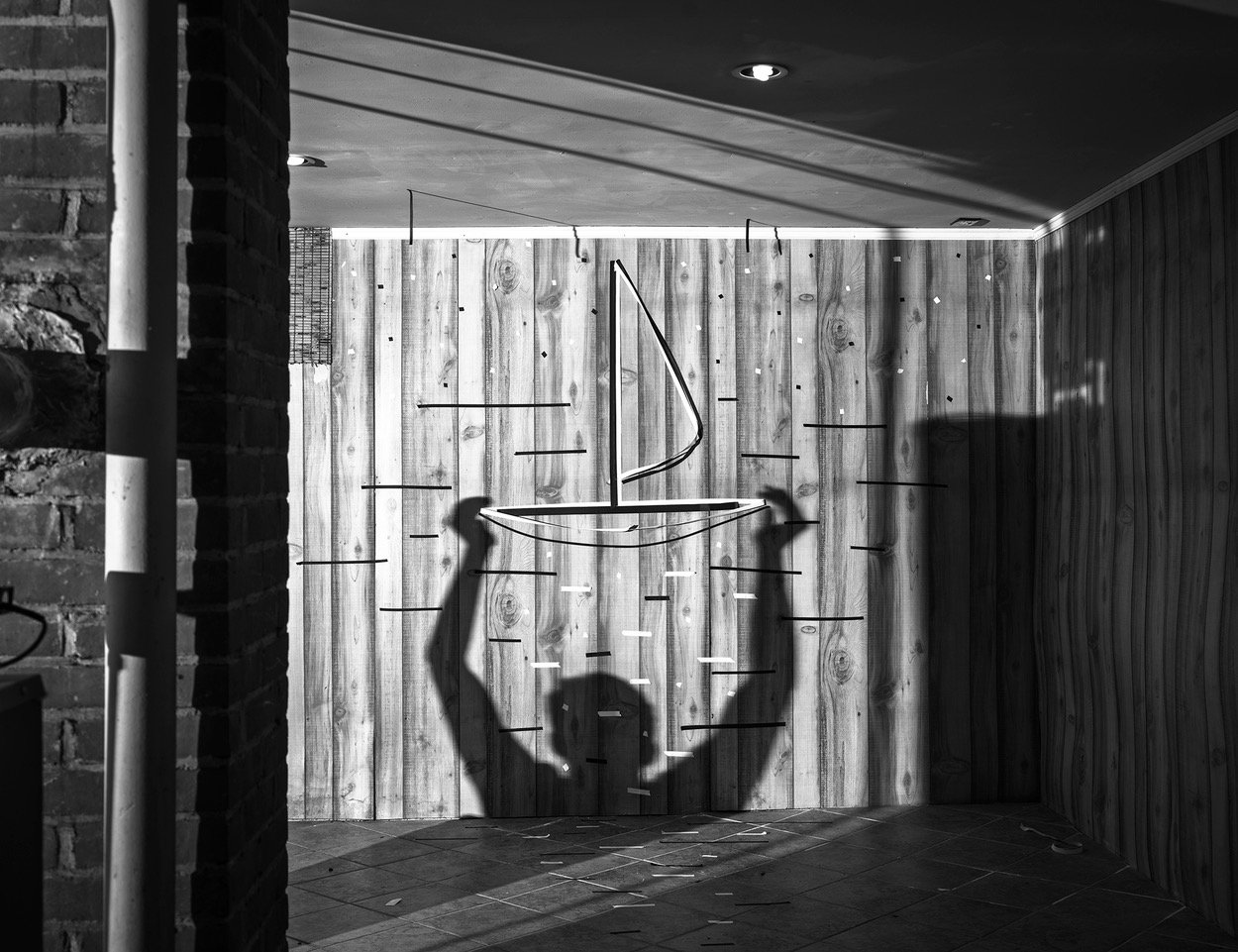
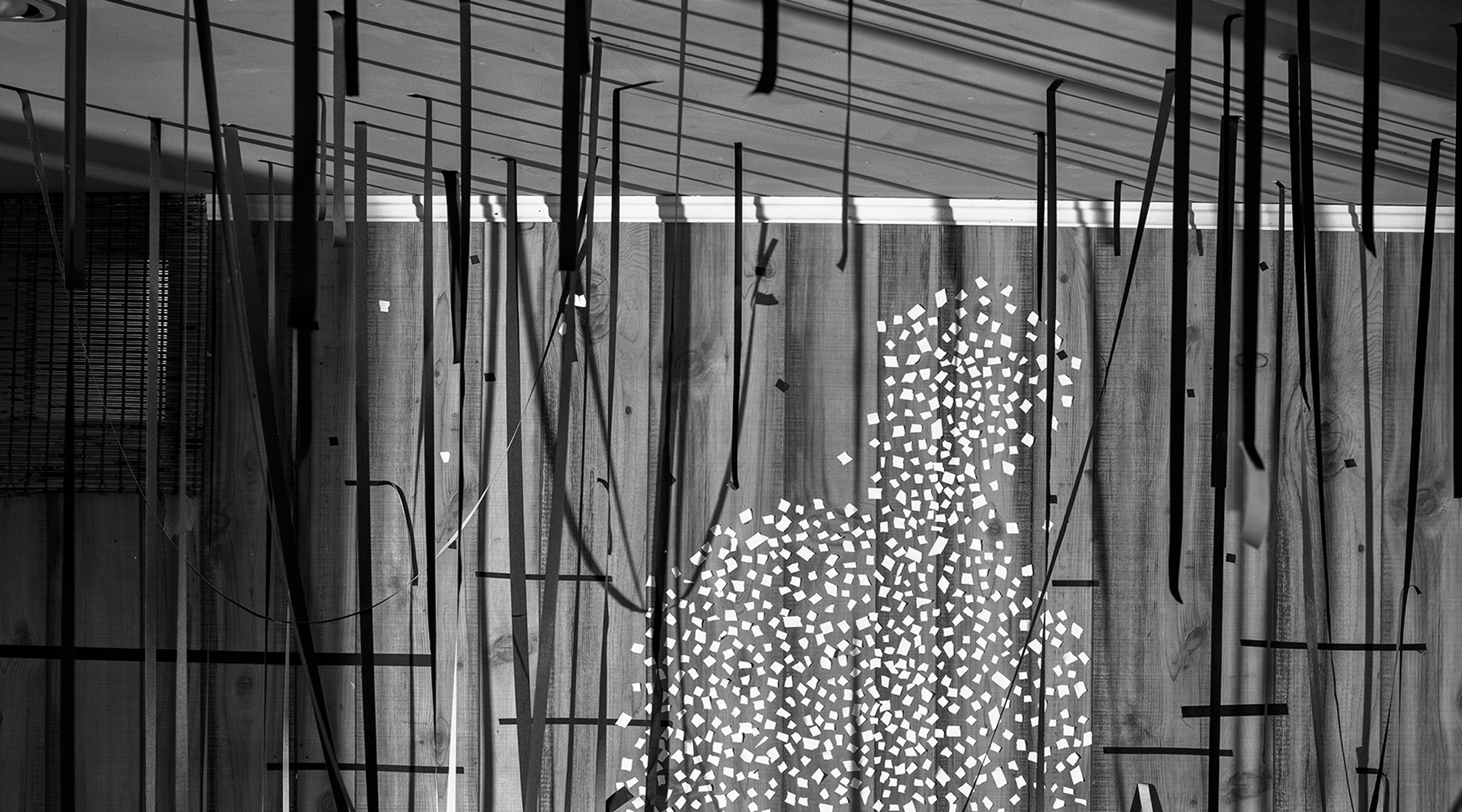
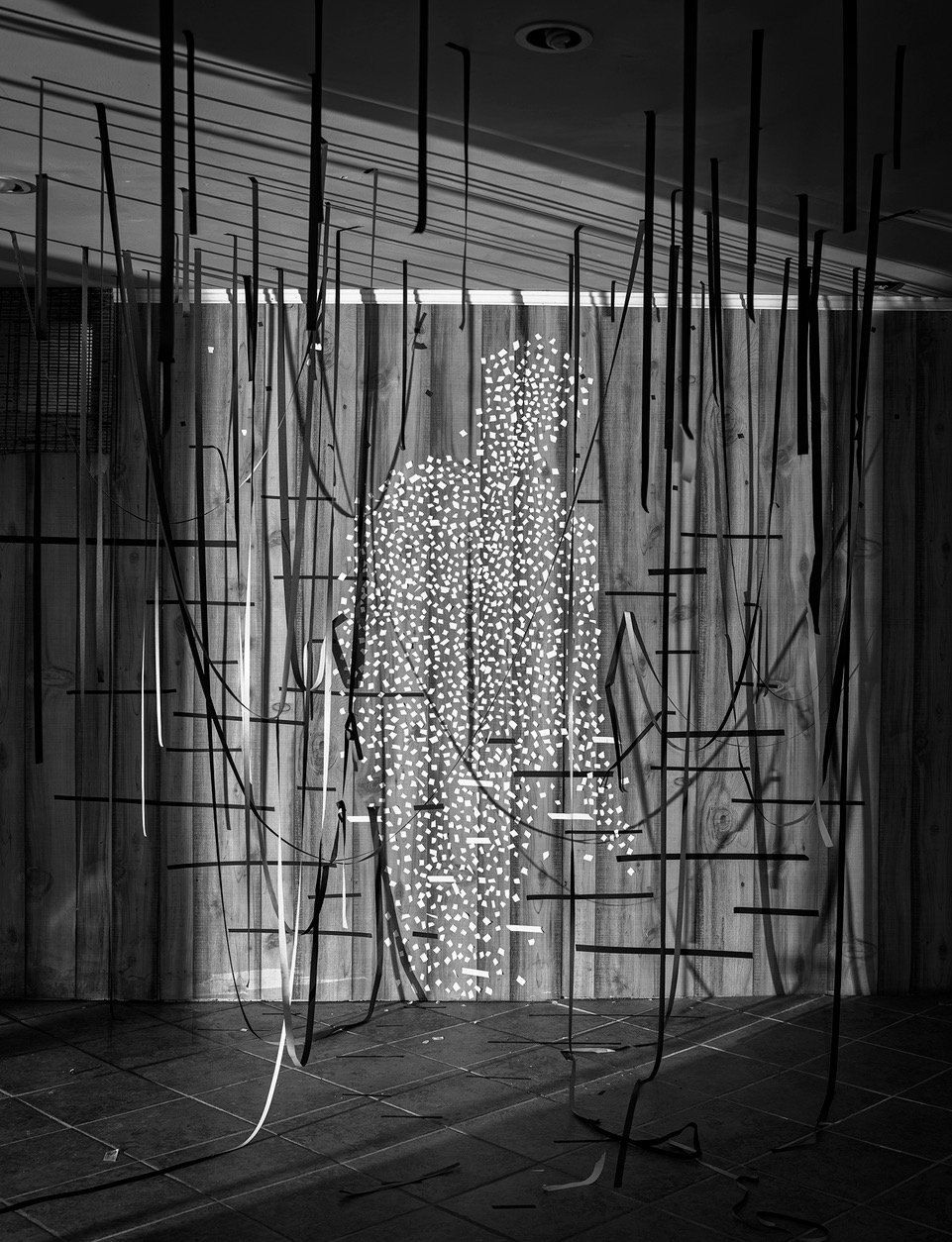
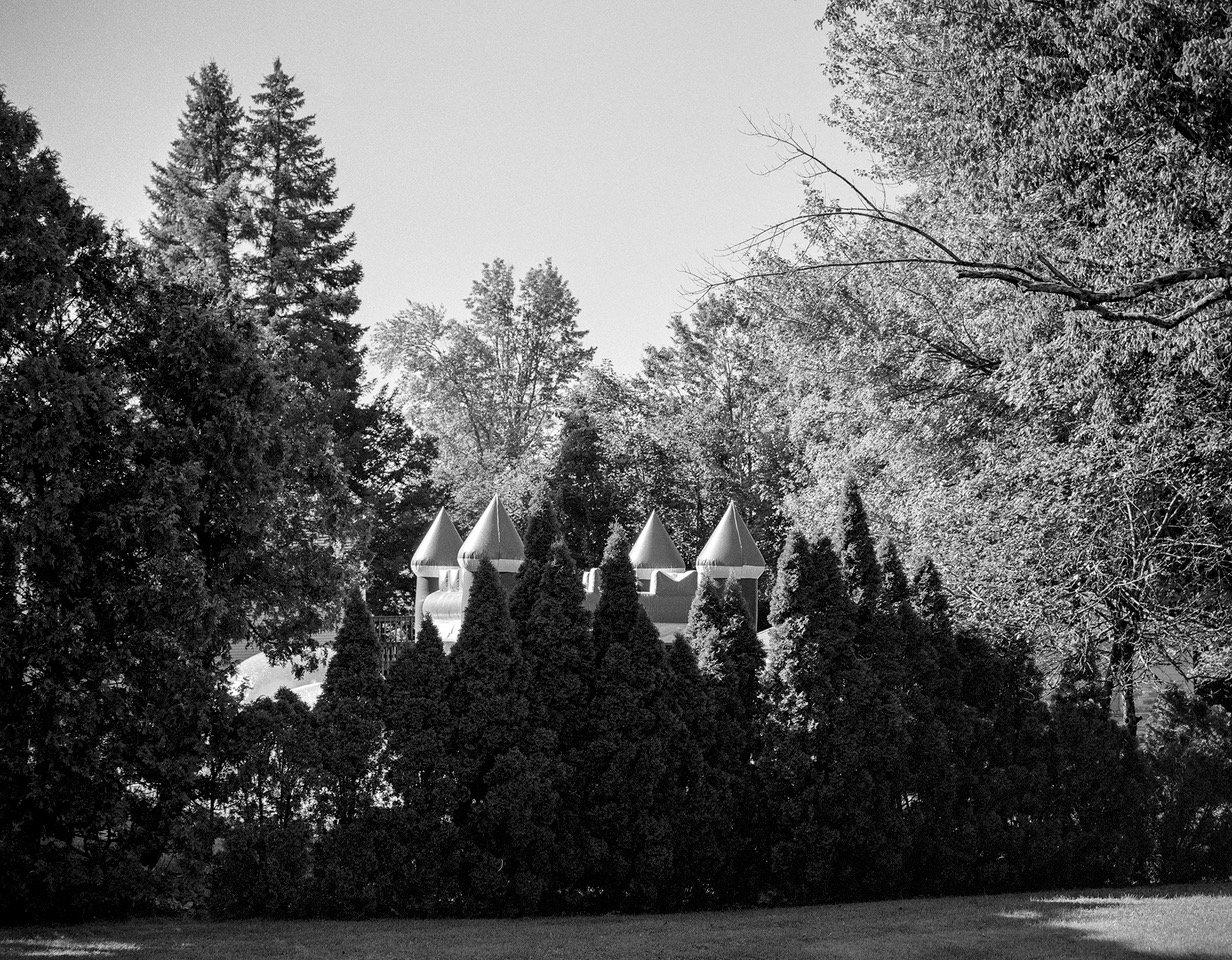
Basement Figure, a vertical image, shows Yudzon’s wall-size silhouette created by hundreds of tiny torn white pieces of artist tape adhered to a wood-paneled wall. Horizontal lines surround and disrupt it. Precisely lit, the flat mosaic figure shines behind dozens of black strips hanging in the foreground. This photograph hews more toward the realm of alternate reality than horror. Similarly, Bouncy Castle is a horizontal image made from a distant wide angle of what appears to be a colossal inflatable castle soaring above a diagonal line of pine trees. In an uncanny juxtaposition, the fortress’ tower tops echo nature’s forms in the foreground and in two distant twin trees.
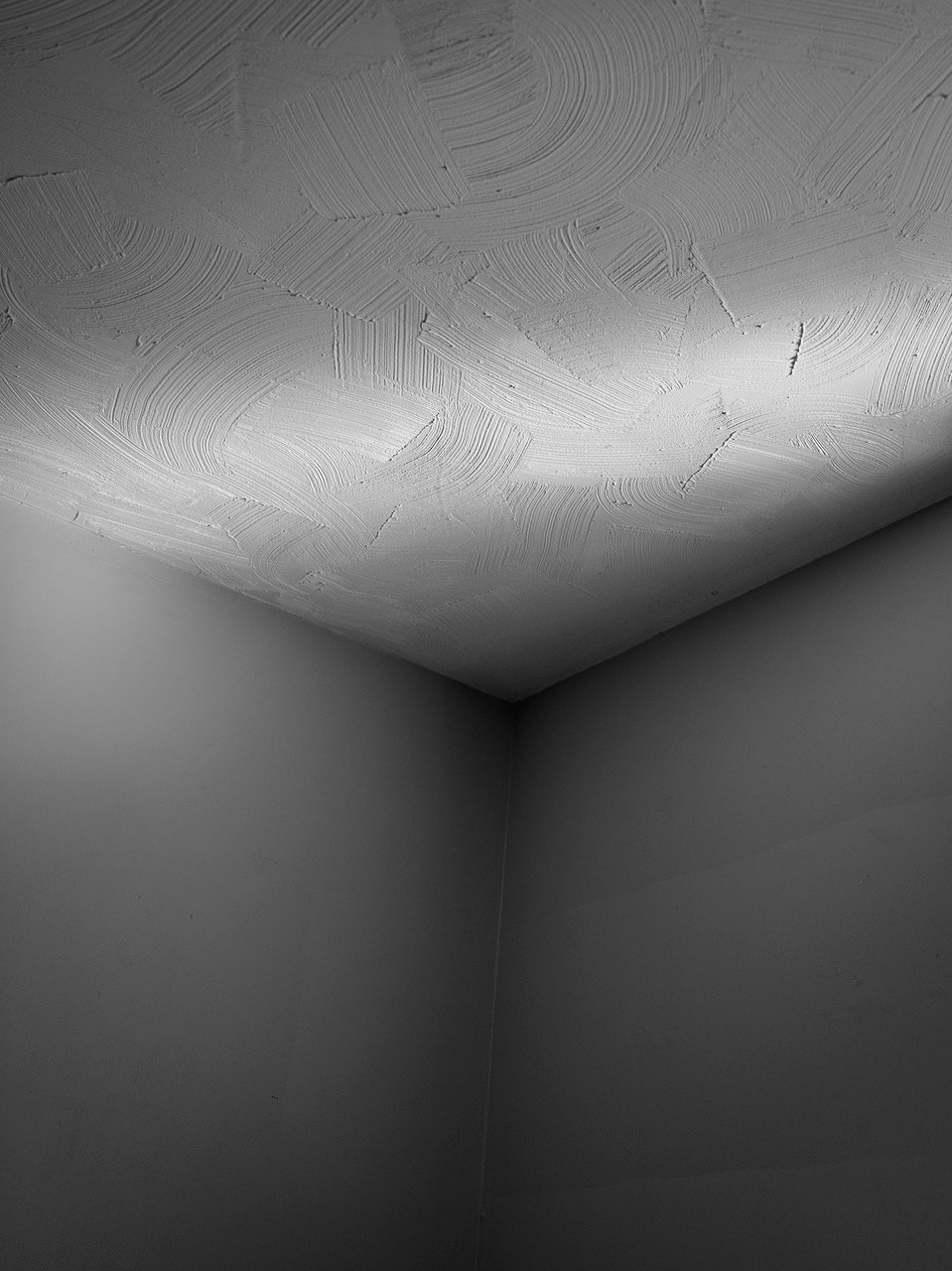
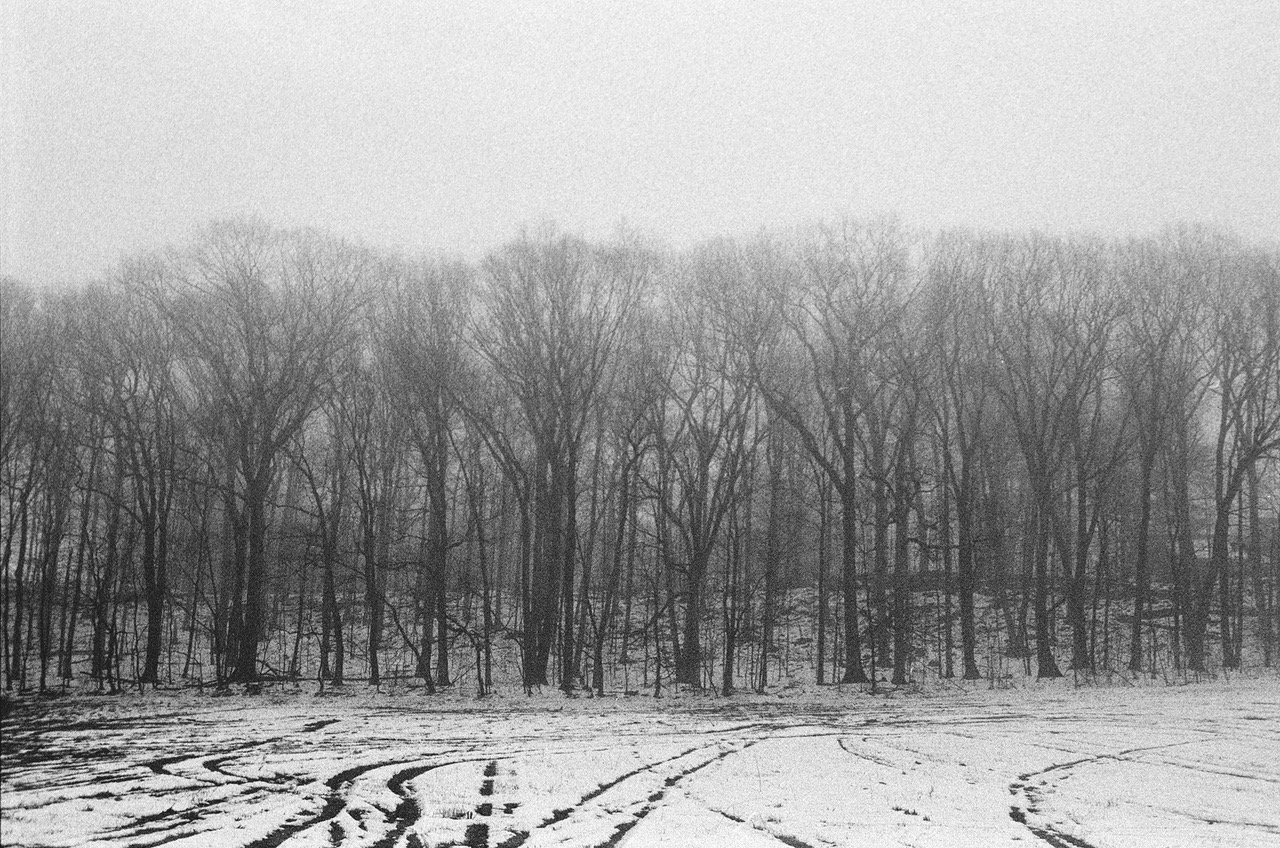
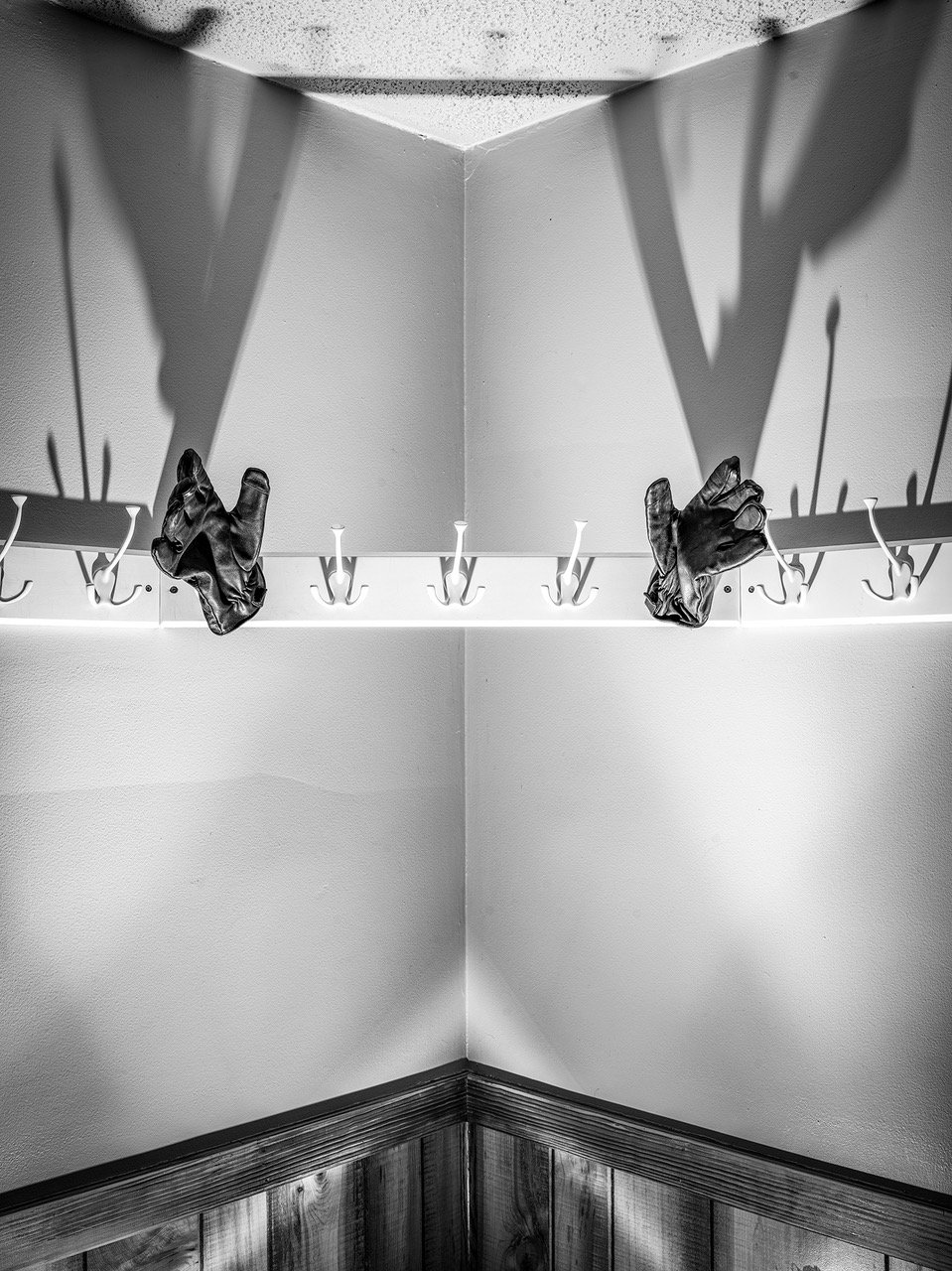
In other images, the influence of the horror genre is more palpable. Encore, a vertical image shows two walls meeting in the center, triangles of different values and textures at the top and bottom of the frame, and a rack of hooks across the center. Hanging from the fixtures are gloves, one on each side, and above them are abstract shadows cast by blazing artificial light. Trees in Snow, a horizontal image, shows a snowy field marked by tire tracks that lead to and from barren woods fading in fog. On the following page, Car with Tree, also a horizontal, shows a partially covered car parked on a late autumn lawn between a tree and a dilapidating garage. A window is broken. Signs of abandonment abound.
In the end, it was nature that drove Yudzon and his family back to Brooklyn. A pregnant female skunk had taken up residence under the mudroom’s subfloor. State animal welfare regulations forbade the animal’s removal. Homeopathic remedies did not weaken the pungent order. Less than a month later, Yudzon and his family left Garfield Avenue.