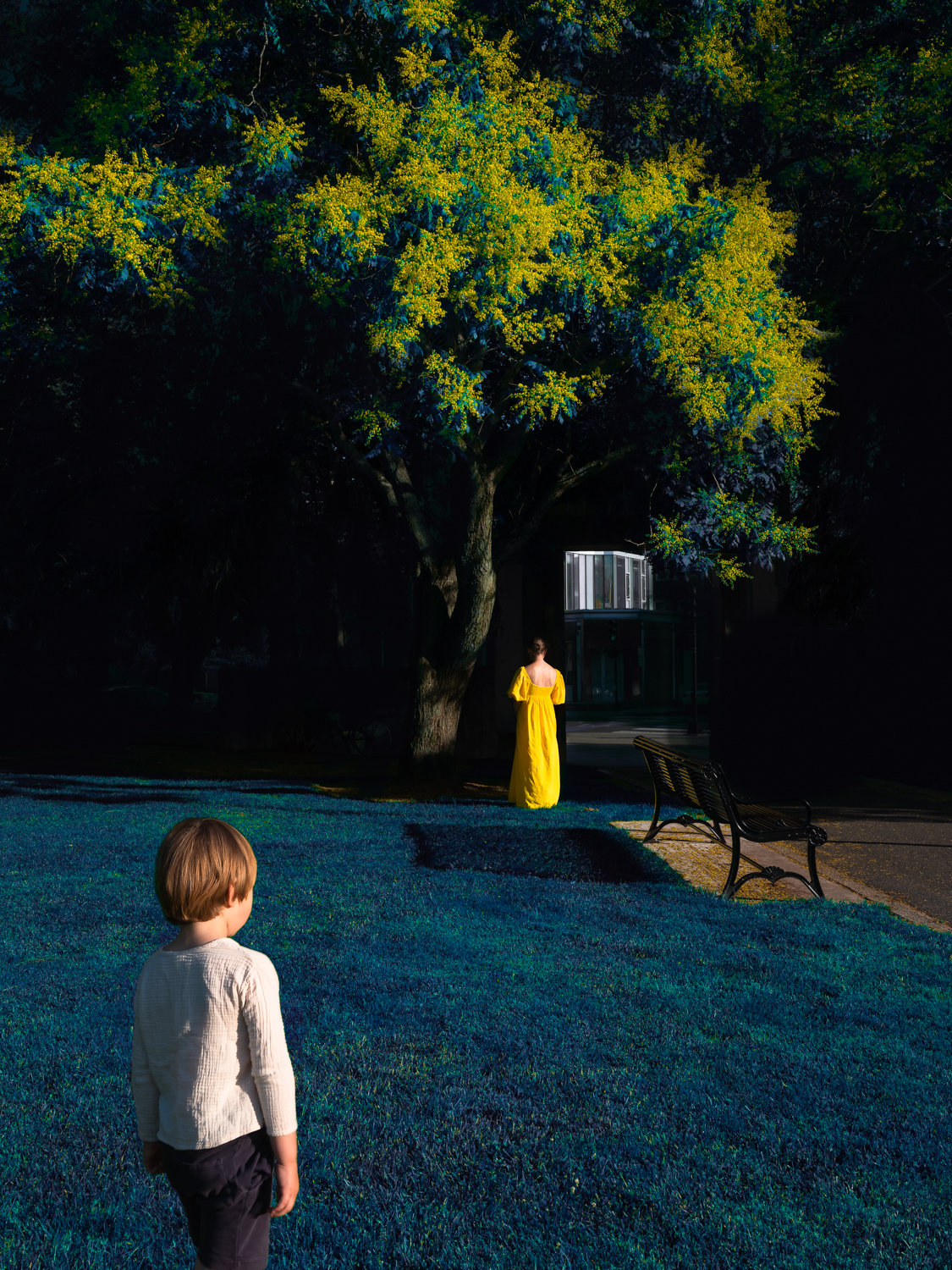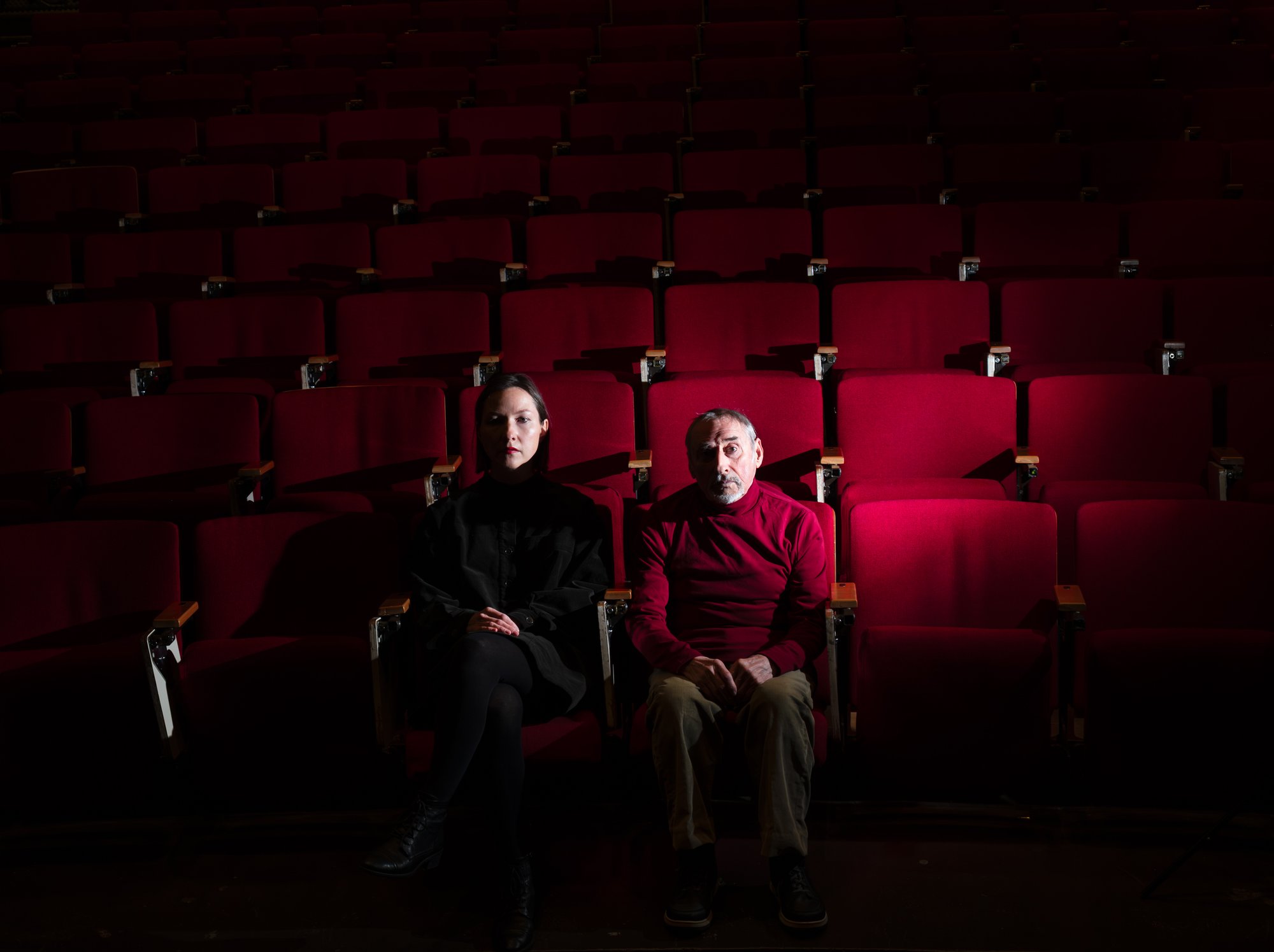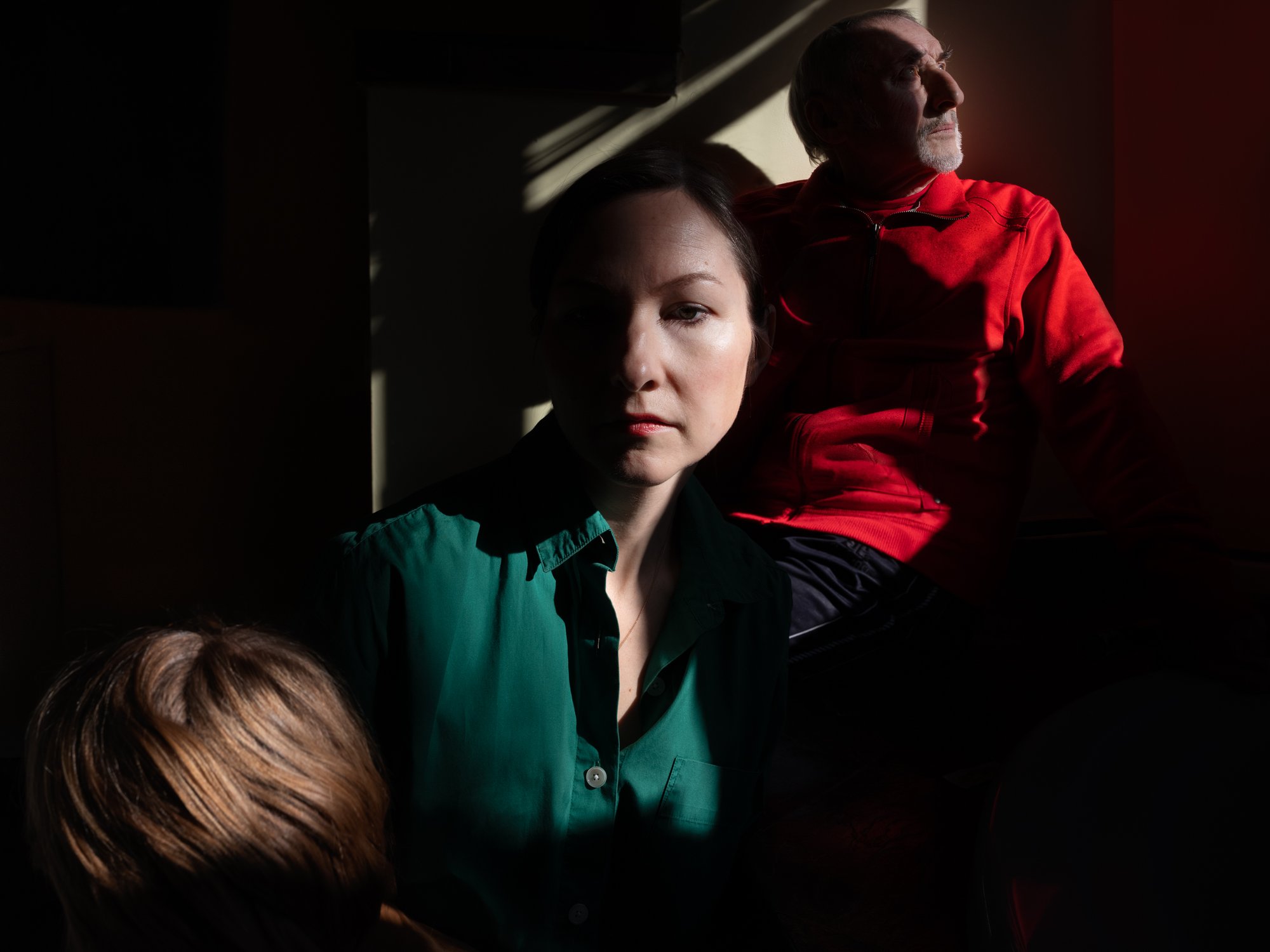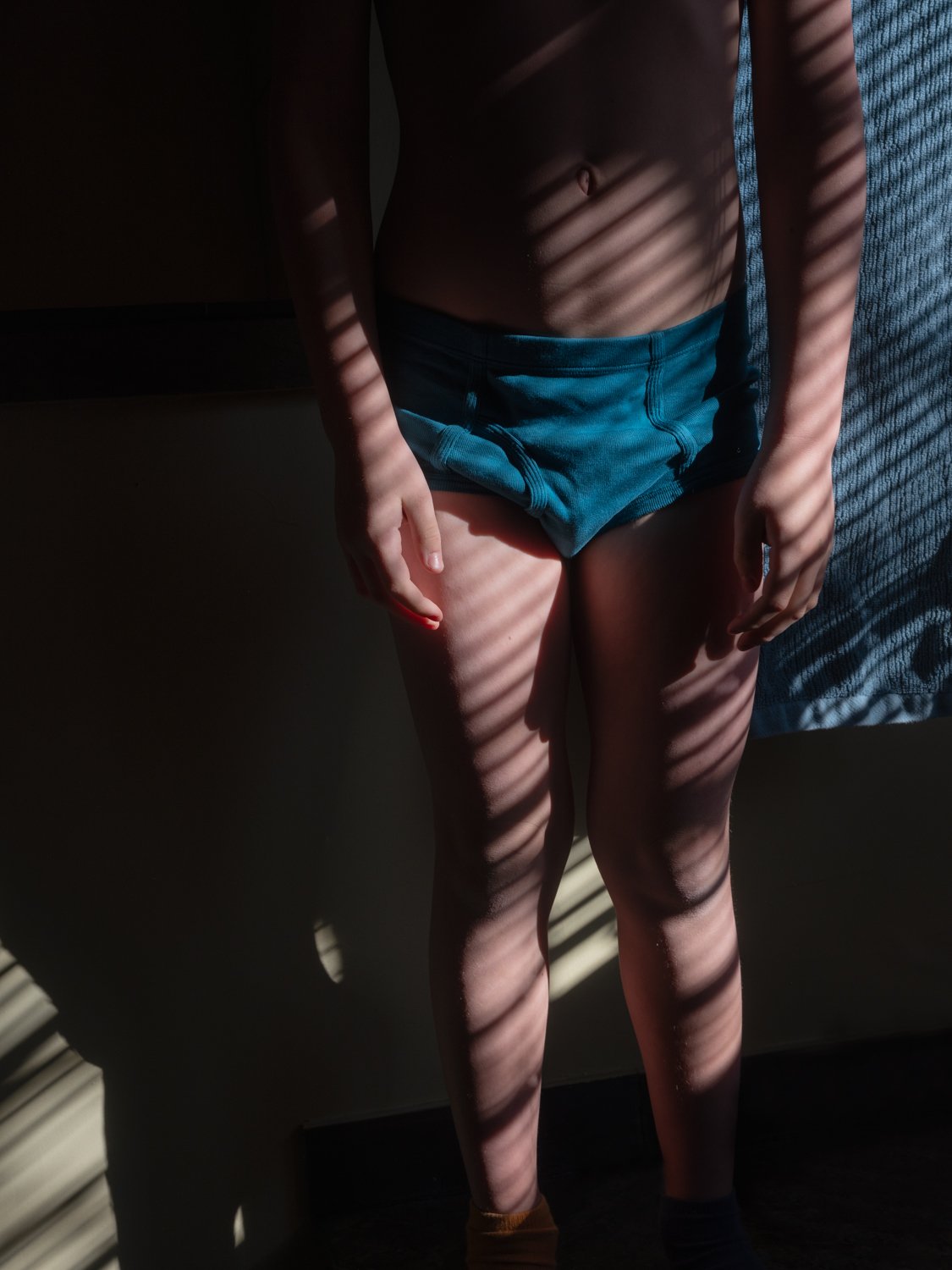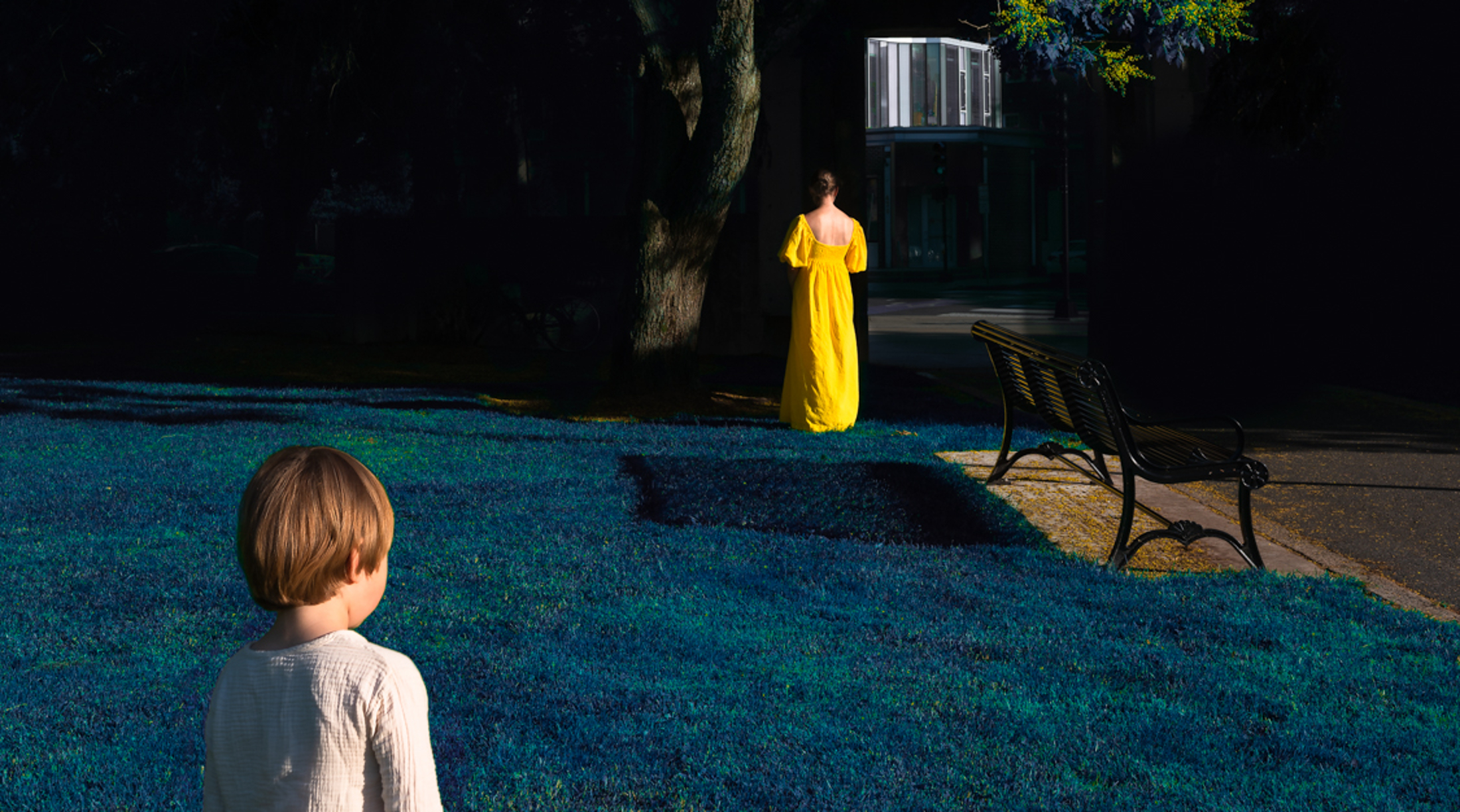
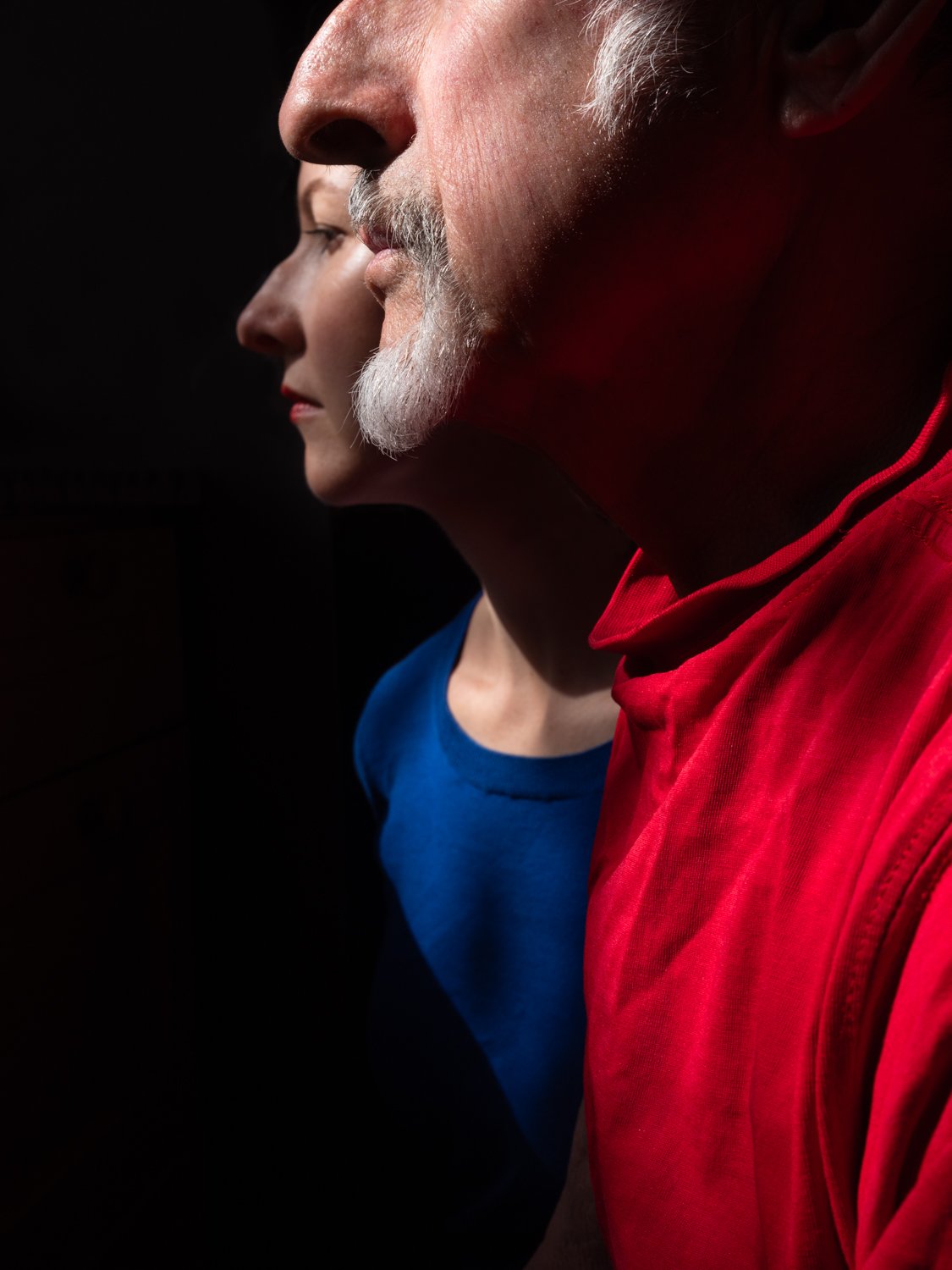
Three figures populate the dreamlike world constructed across Anastasia Sierra’s images. An old man, a young boy and the photographer herself. A place of sharp shadows and bright colors, the images are theatrical and full of tension, its cast of characters confined by a tight frame. In The Witching Hour, Sierra creates a container to explore the complex tide of emotions that shored up when her father moved in.
Since deciding her work and home life were too separate, photography has become a space to process the photographer’s journey as a new mother. The work began with Bittersweet, charting the early transformation of motherhood. It has since evolved into The Witching Hour, a more complex domestic reality where Sierra’s son and her aging father now occupy the same house. This ongoing journey explores the psychological weight of care and emotional labor. It is a space that everyone shares together, infused with a sense of play and intimacy and captured through a surrealist gaze.
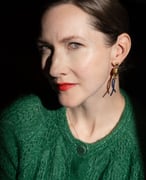
In this interview for LensCulture, Sierra speaks to Sophie Wright about cultivating presence through the lens, finding reconciliation through photography and bridging the distance between parents and children using art.
Sophie Wright: Do you remember the feeling that led you to pursue photography?
Anastasia Sierra: I first felt the pull of photography in my twenties when I got my first DSLR. I started bringing it everywhere; having the freedom to make mistakes took away the pressure to be perfect and let me play. It felt exciting to watch people through the lens and wait until something in their faces or gestures spoke to me. My early images were cinematic, mostly of the people in my life—it was thrilling to see my life as movie stills.
I felt so alive when making pictures, and I still do. There is something so magical in looking at the world through the viewfinder. It helps me stay present and experience life more profoundly. We often rush through our lives towards these goals we perceive as big and important, and miss so much along the way. When I am photographing, what I have now, in front of me, is enough, and there are endless ways of seeing it.
SW: You’ve also tended to your experience of motherhood in previous projects. Why is photography your chosen language to speak about this theme? What does it bring you to work with your own life as material?
AS: When I had my son I was working as a freelance photographer, focusing on portraiture and fashion, so photography felt like a natural choice. I like how David Campany describes photography as the perfect medium for articulating mixed feelings. Words often feel like labels—they try to be precise, and can feel so final. A picture, on the other hand, allows for many different readings, and I find that beautiful.
Making personal work helps me avoid sleepwalking through my life, and allows me to find beauty in experiences that feel ambiguous or difficult. I used to have this clearly defined line between work and home: work took me away from home and vice versa. And with this project it’s all one thing. I like it this way. My life is quite hectic now, and when we make pictures it feels magical to be in the same warm sunlit room with my father and my son, hear them breathe, and just be together.
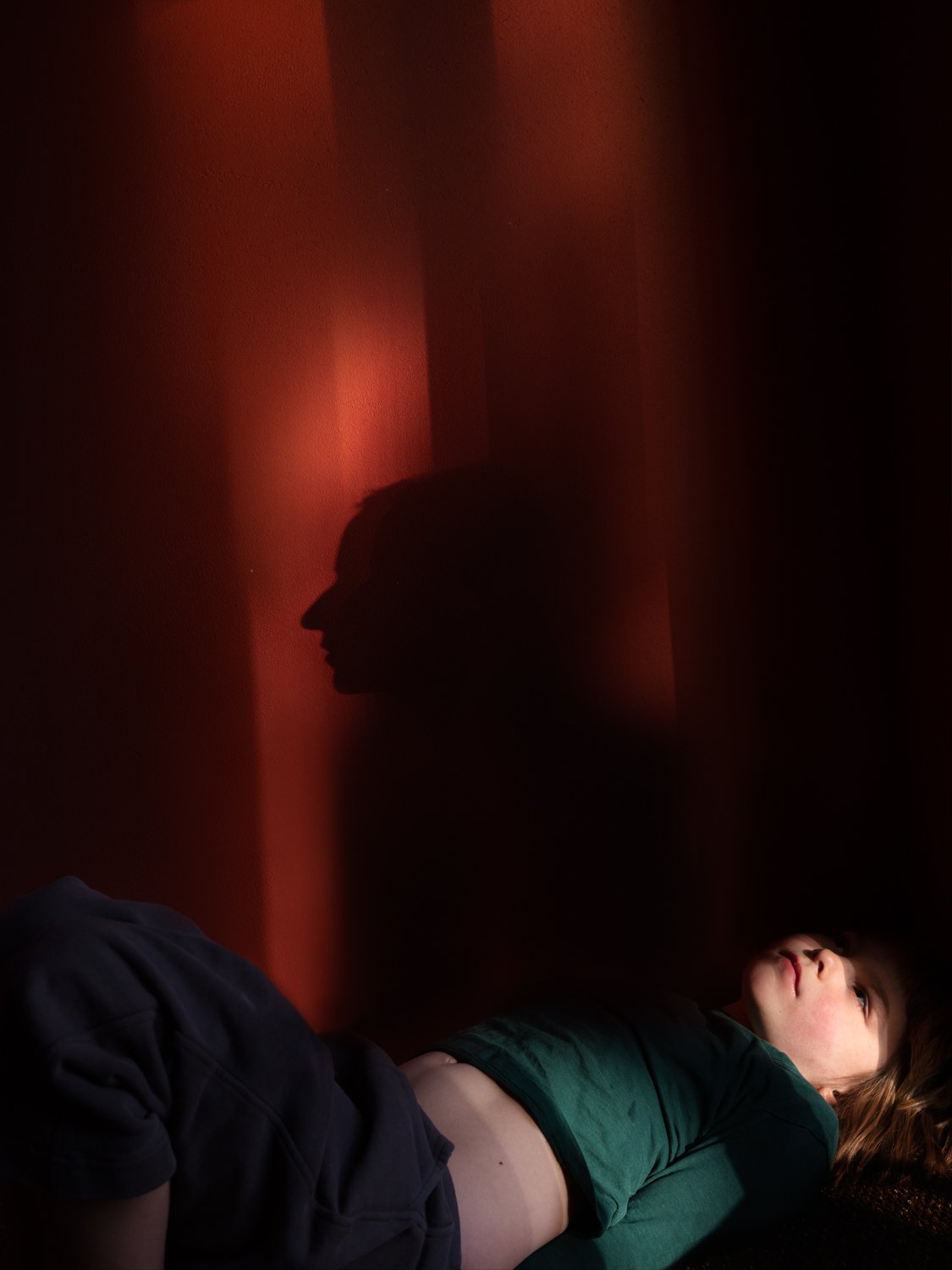
SW: What is the relationship between Bittersweet in which you photographed your son as an infant and The Witching Hour?
AS: The image-making process has remained essentially the same since Bittersweet. It’s an alternative world that runs in parallel with my day to day life, and opens up when I choose to make pictures. It’s not really a project-based process. I work mostly in our apartment on sunny mornings, using natural light from our east-facing windows. I arrange the space, coordinate colors, and then introduce the ‘characters.’ Both projects are untethered from the real world, operating on a different plane.
What has shifted is the intent. Bittersweet was a way to navigate the isolation of early motherhood and the identity shift no one warns you about. My husband traveled a lot for work, we had no family nearby, and as a freelance photographer, I had to cut back on work because reliable childcare was nearly impossible. I loved being a mom, but I was mourning the loss of the career I’d worked so hard to build. I started making pictures with my son just to remind myself I was still a photographer. I didn’t mind that they were not great at first, just the act of making them meant so much. In the beginning I was just trying to get one interesting image at a time; later I realized I could use photography to explore and reconcile conflicting feelings.
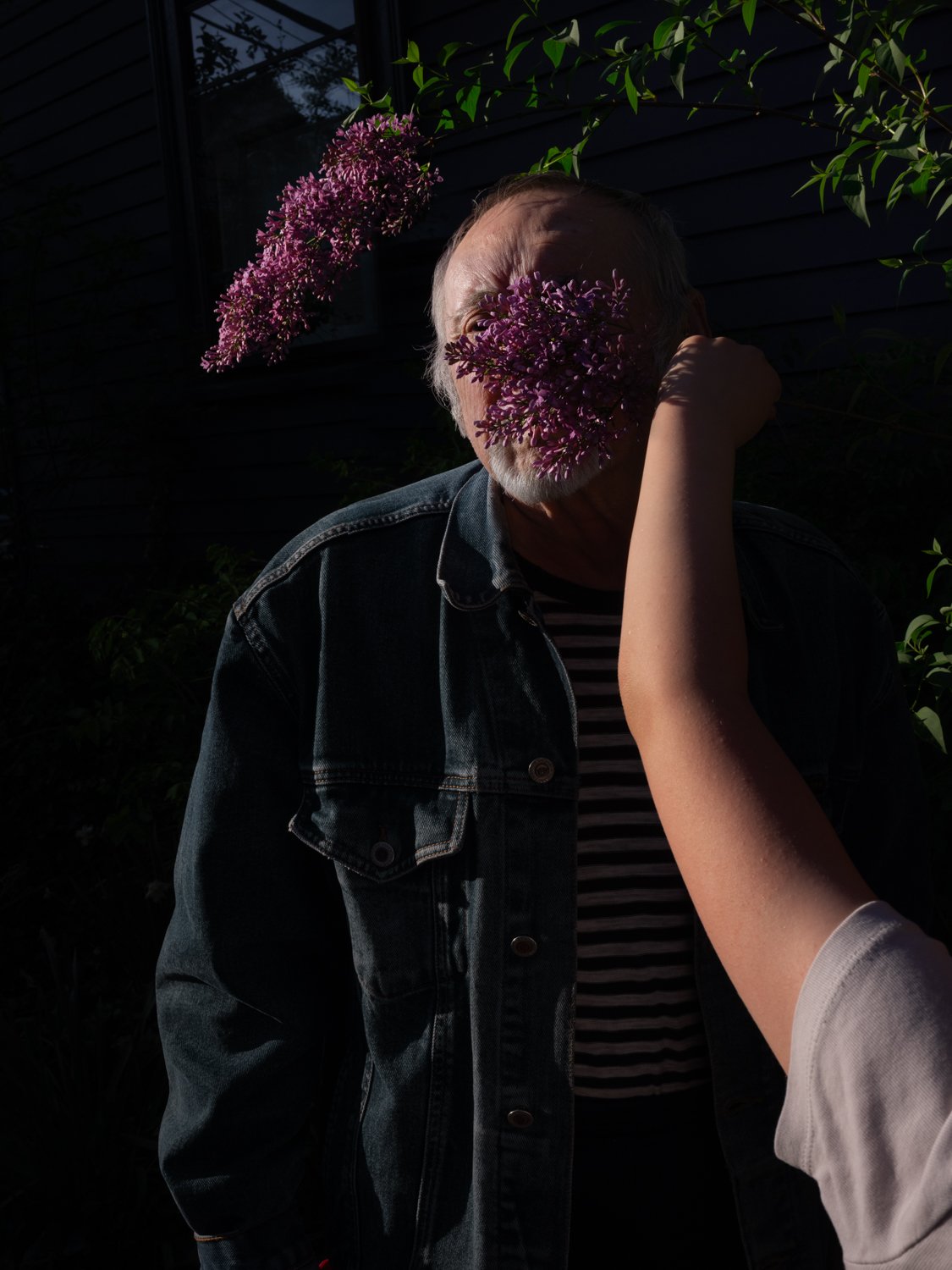
Bittersweet was six years ago. A lot has happened since. My mother passed away—an unspeakable loss that left me mourning the years we could have spent more closely. I moved from Russia to the US after college. Though we spoke daily, and I visited often, the physical distance created an emotional one. I didn’t want to repeat that with my father. The war has made visiting difficult, so he’s spending most of his time with us now. We’re living in this tight space together, but there is still distance. We inhabit different worlds, culturally, politically and personally.
My father and child don’t share a language, and there are a lot of misunderstandings. Even without the language barrier in my case, words still fail us. We want to talk about different things and we don’t always hear each other. There is a lot of love—we wouldn’t be living together otherwise—but I can’t blame my father for feeling lost and lonely sometimes. Making pictures together has become a way to connect without words. My work life has grown busy, which I’m grateful for, but I spend less time with family; while days dragged in Bittersweet, in The Witching Hour they feel compressed, like time is running out. Distance and the fear of loss recur here. Not only the big losses but small ones too: missed chances for connection, small acts of kindness forgone while chasing ‘bigger’ things.
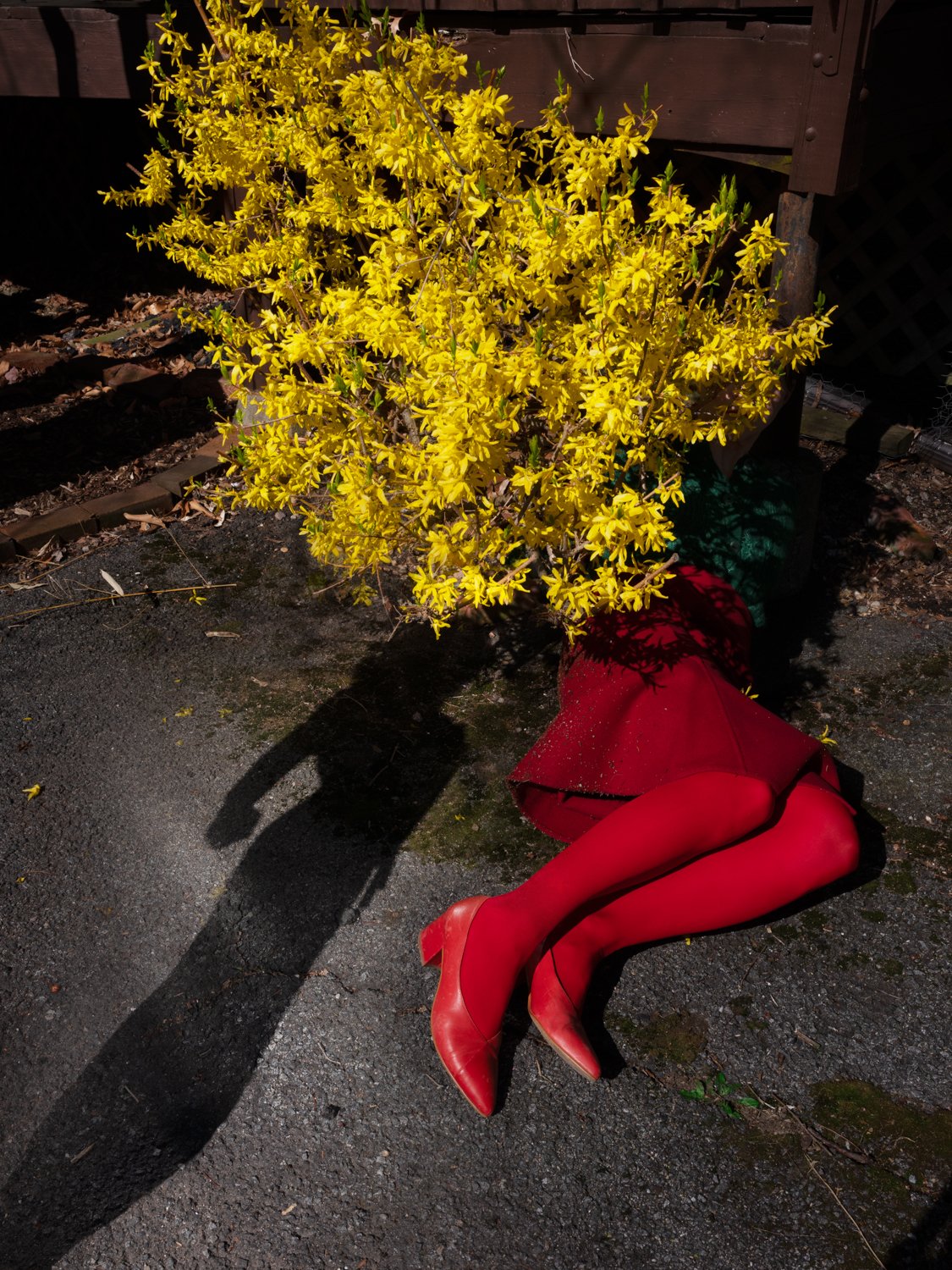
SW: Your vivid dreams seem to be at the heart of these images. Could you tell me about your work process?
AS: I think of my images as psychological landscapes. A mix of dreams, memories, irrational fears and feelings hard to name. It is a world where my mother is still alive but it is defined by her absence; a world where I can move between continents in seconds and where the past and future collide. I don’t attempt to reconstruct specific dreams or memories, I am more interested in conveying the lingering feelings.
SW: The Witching Hour feels full of ambiguity. Intimacy and distance, playfulness and fear. Can you speak a little about the atmosphere you wanted to conjure throughout the series?
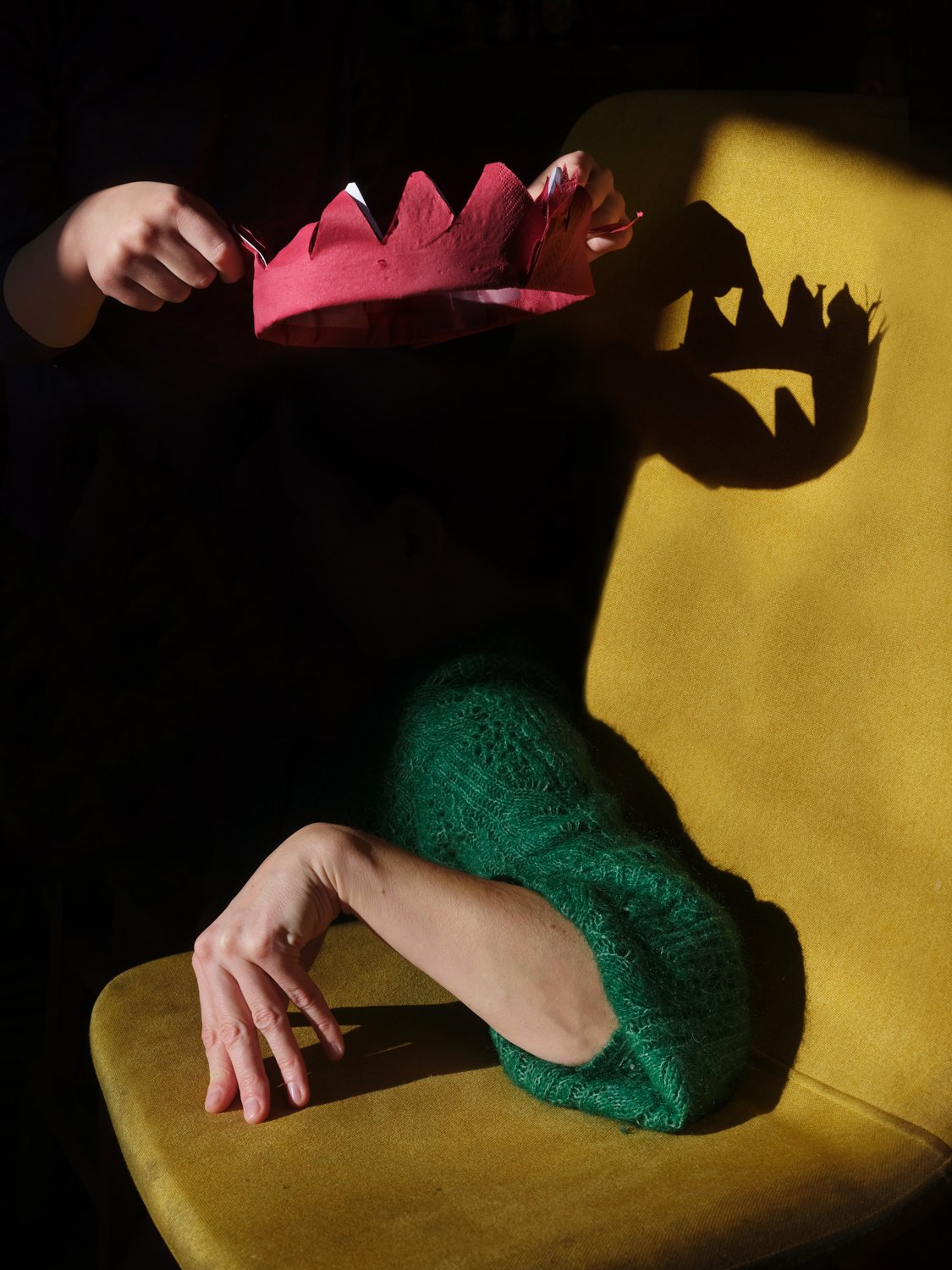
AS: I’m not interested in portraying plain reality. Photography has always been an escape; with this project I wanted to create an alternate world within my life. I work intuitively and cycle through phases. A few years ago I was obsessed with touch and intimacy—how older children no longer run into their parents’ beds in the mornings, so early childhood is clearly the time to savor this. I made many images of our bodies touching. Then I thought about play. I’m not the most playful parent, but when I surrender a different world opens, and I’ve grown to love it. Most recently I’ve been drawn to shadows. I was photographing my father the other day and told him to hold still because his shadow looked great. He replied, “When one is old, all that is left is a shadow.”
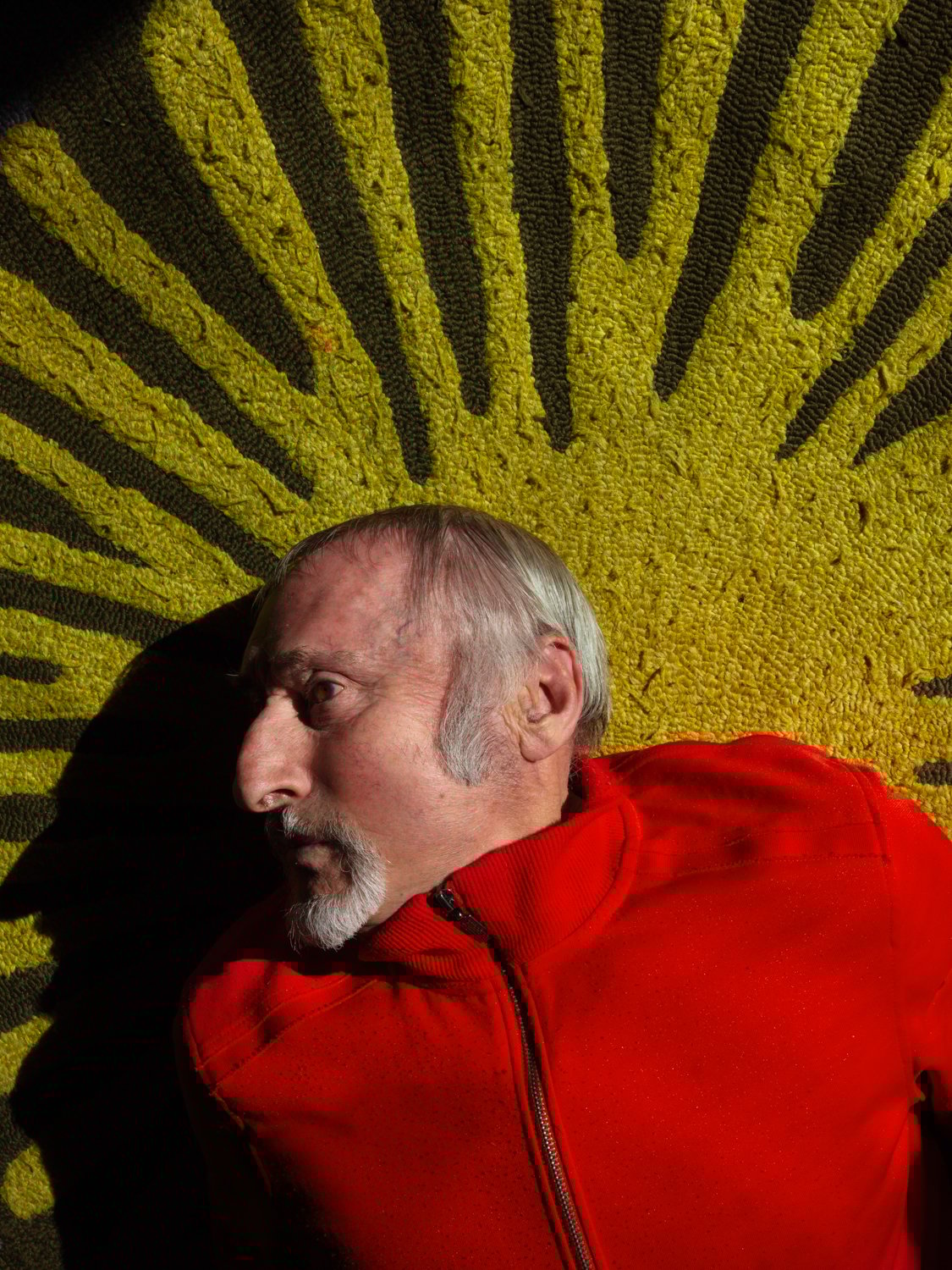
SW: The presence of both your father and your son reflects your role in the project as simultaneously mother and child, which also feels present in the playful way you’ve staged the images and their color palette. Does your own experience of childhood inform The Witching Hour?
AS: I don’t get to be a child as much as I’d like any more. I actually feel more like a child when I’m playing with my son, than around my father. It must be hard for him to be in a foreign country at his age, without the language, navigating all these strange new foods and appliances, and few people to talk to. He relies on me for a lot of things, yet I’m often unavailable. I have two people in my life to whom I’m constantly explaining how the world works. It can be overwhelming. Every now and again, someone has a tantrum. Maybe this means everyone is a child sometimes—perhaps that’s where the playfulness in the work comes from.
SW: Do you ever encounter challenges working so closely with your family?
AS: Not many. It’s just something we do. I am very lucky and grateful that they are so eager to be involved. I need to be mindful to not overdo it. We often make pictures in intense bursts over a week or so, and then take a break for a few weeks—I wouldn’t want anyone to think that all I care about is pictures.
SW: What role does photography play for you in confronting the complexities of motherhood and your feelings about it?
AS: Photography is a way to give importance to what we photograph. Becoming a mother and losing my own were life-altering events, yet up until recently motherhood and family have not been considered as big enough subjects in art. The images don’t always resolve anything, but pointing your lens at what troubles you, instead of running away, can be restorative.
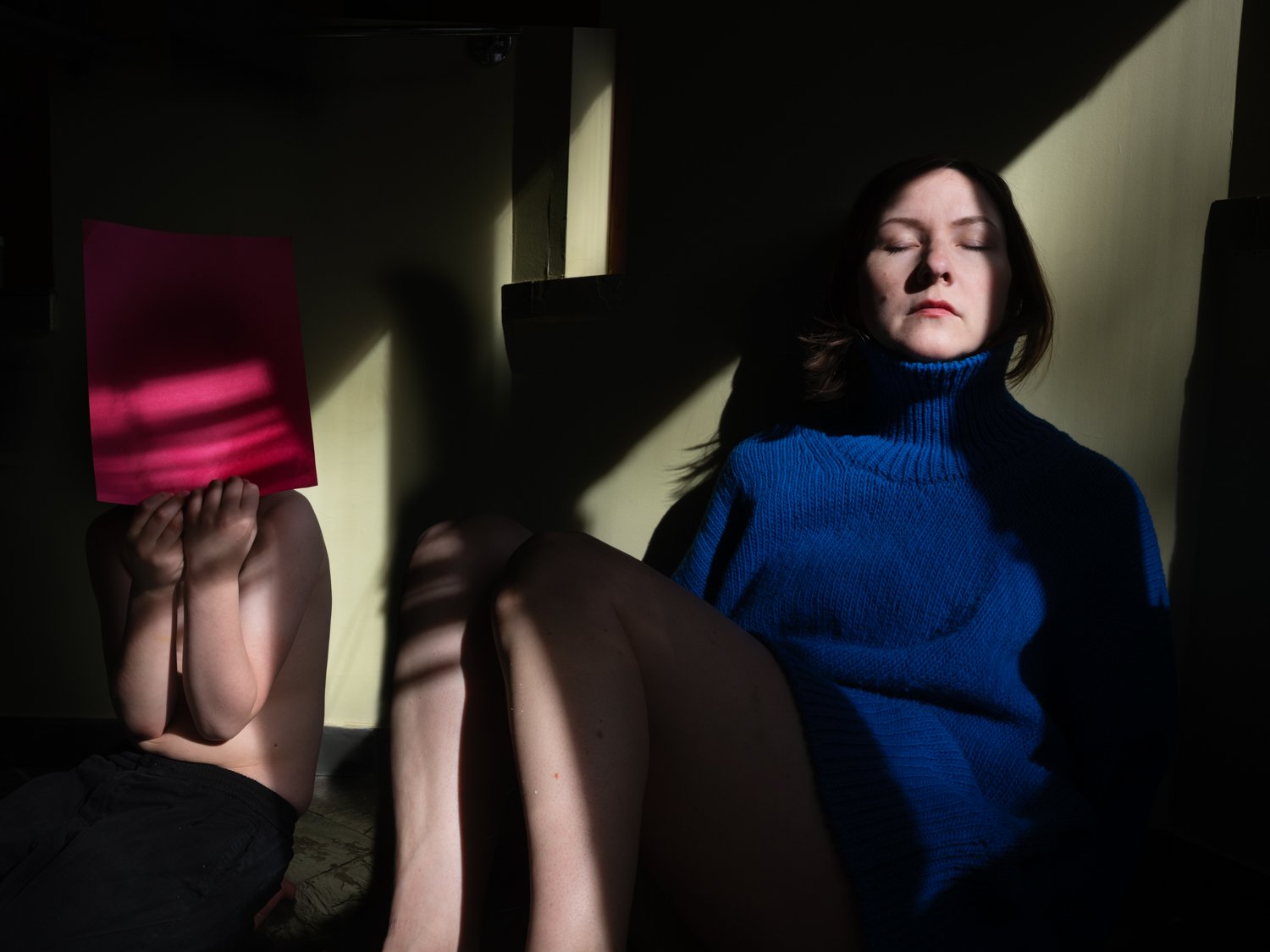
SW: Do your images provide a place for the monsters you mention in your statement to live safely?
AS: I think so. When I was a child, my mom would say: ‘If you have a bad dream, share it with someone and it won’t come true.’ I’m not superstitious but I like to imagine she was right—if I share fears and nightmares through images, maybe they won’t materialize.
SW: Did you have any influences whilst working on the project? Both photographic and non-photographic.
AS: I’ve been thinking a lot about the films of Celine Sciamma lately, specifically Petite Maman. Parents and children rarely meet on the same level. My father no longer remembers what it felt like to be pulled in many directions in his forties; I only vaguely remember the thrill of doing something ‘naughty’ as a child. Life is badly designed in that way. There is no bond stronger than this, and yet we are so far apart. I admire the quiet depth of Sciamma’s films, and her ability to portray rich psychological experiences with little dialogue, without relying on drama or conflict.
Another influence is Rachel Yoder’s Nightbitch. I read the book a few years ago, when the toddler years were still fresh in my mind, and felt so seen. I loved the magical realism—how the story is truthful yet clearly fictional. It’s beautiful, funny and heartbreaking. I wanted to achieve something similar with photography.
Early in the project I discovered the EyeMama Project, an initiative by Karni Arieli that became a book of contemporary motherhood images by women photographers worldwide. It felt empowering to be among those voices, and to see motherhood represented with honesty. Most recently, I’ve been looking at Kinderwunsch by Ana Casas Broda. I’m inspired by the raw psychological space she creates, showing the ‘shadow’ side of motherhood with an openness that feels both intimate and unsettling.
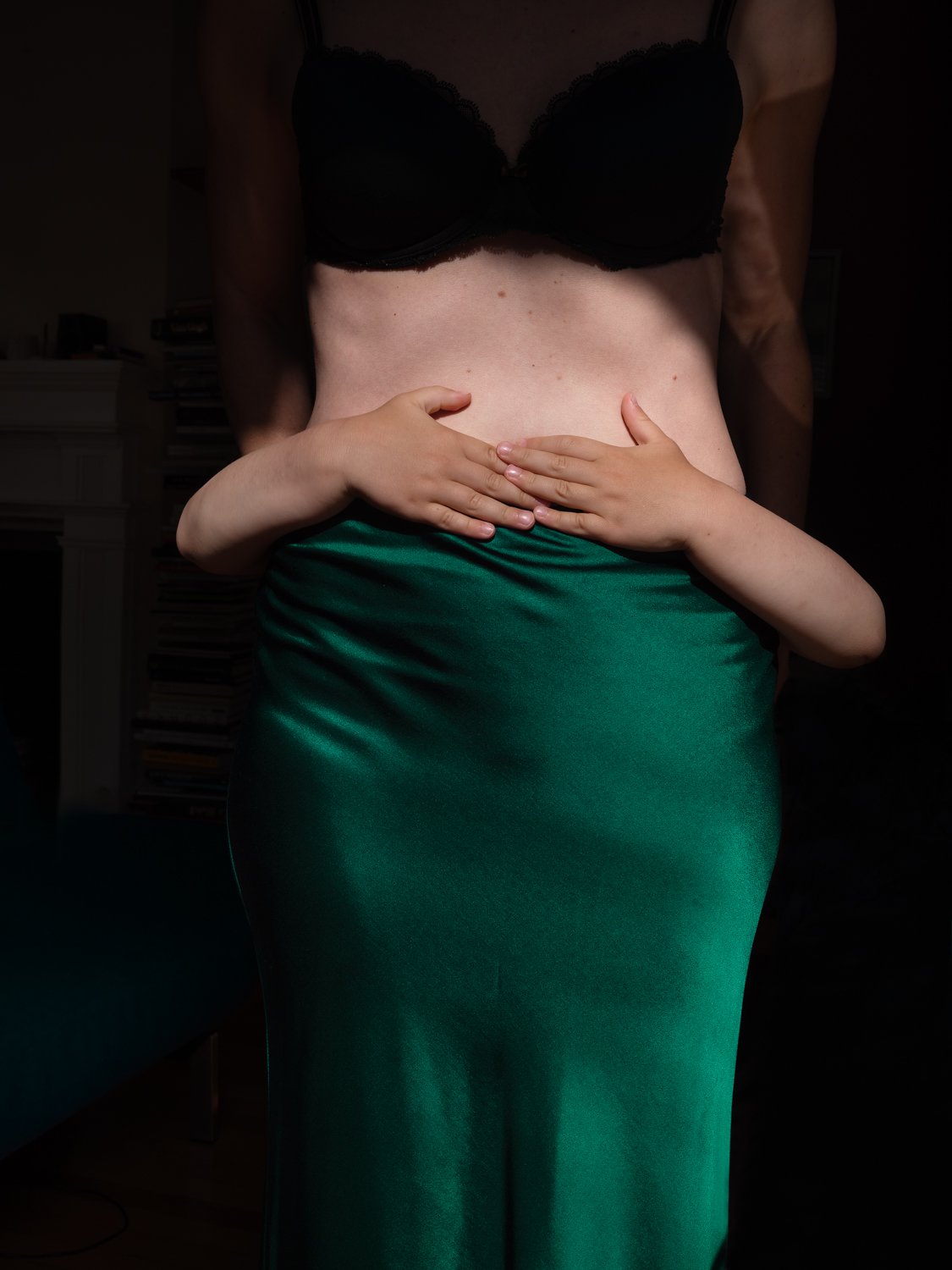
SW: Finally, can you tell me about the title of the work?
AS: At the end of my second semester of graduate school, I felt like I was failing at everything—overwhelmed by work and unable to be present at home. I stopped sleeping; my thoughts raced with nightmares of making small mistakes and being punished disproportionately. I thought of the ‘witching hour,’ that time of day when babies are too tired to sleep and become inconsolable. Suddenly I was the one afflicted.
I am not spiritual or religious, but I like that The Witching Hour refers to a time when the barrier between the living and the ghost world is thought to be thinnest. My ghosts aren’t from the past; they are from a present that is still unfolding. I want to evoke that intense feeling you have after waking from a powerful dream: even when it was just a dream, the feeling lingers. Because what we fear, the things that matter to us the most, is where our most vulnerable parts live.