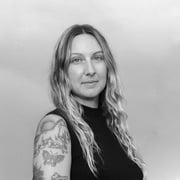
Raised near the woodlands of Kentucky, Andrea Koesters relocated to the Sonoran Desert of southern Arizona in 2018, after a brief residency in the small town of Oracle. She found herself drawn to the ecology, the nocturnal life, the volatile monsoons, and the stark, visual narratives of growth and decay. What began as an attempt to understand a new environment gradually became a sustained photographic inquiry into the strange rhythms of the desert.
Now based in Oracle, where she lives in a multi-generational artist community, Koesters has developed a series, also called Oracle, that documents her evolving relationship to the desert and the way she’s come to see it as having less to do with desolation and more to do with care, grief, and mutual understanding.
In this interview for LensCulture, Koesters speaks to Collier Brown about the emotional vitality of this unique and otherworldly landscape, the many seasons of the Sonoran Desert and the tenderness of the photographic act.
Collier Brown: I want to start with your background and how that informs the work. You’re from Kentucky originally, right?
Andrea Koesters: I am, yeah, I’m a Southern girl at heart. A lot of my family lives in Kentucky.
CB: How long were you there before you moved to Arizona?
AK: I was in Kentucky pretty much my whole young adult life. We lived semi-rurally outside of Louisville. I grew up in the woods. I come from a family of nature lovers.
I came out to Arizona to do an artist residency in 2018, in the summer. I just showed up to this little town called Oracle, sight unseen. I focused on making large-format nightscapes in the desert. Truly, it was a monumental shift in my own practice because the desert is unlike anything I ever grew up with. I ended up moving that fall to Phoenix, then I moved down to Oracle, where I live now. That was about three or four years ago now.
I actually live on a communal artist ranch. Originally it was a dude ranch, foreclosed in the 60s during the Back to the Land Movement. I’m really lucky to be a part of it now. There are some original members still living. One is 95 years old, I think. At one point, Andy Warhol came out to film his queer cowboy movie, Lonesome Cowboys. I think he got run out of town while he was making it, but there are some scenes that made it into the film from the ranch that I live on. Some interesting characters have come through.
CB: Do any of the members in the community feature in your series?
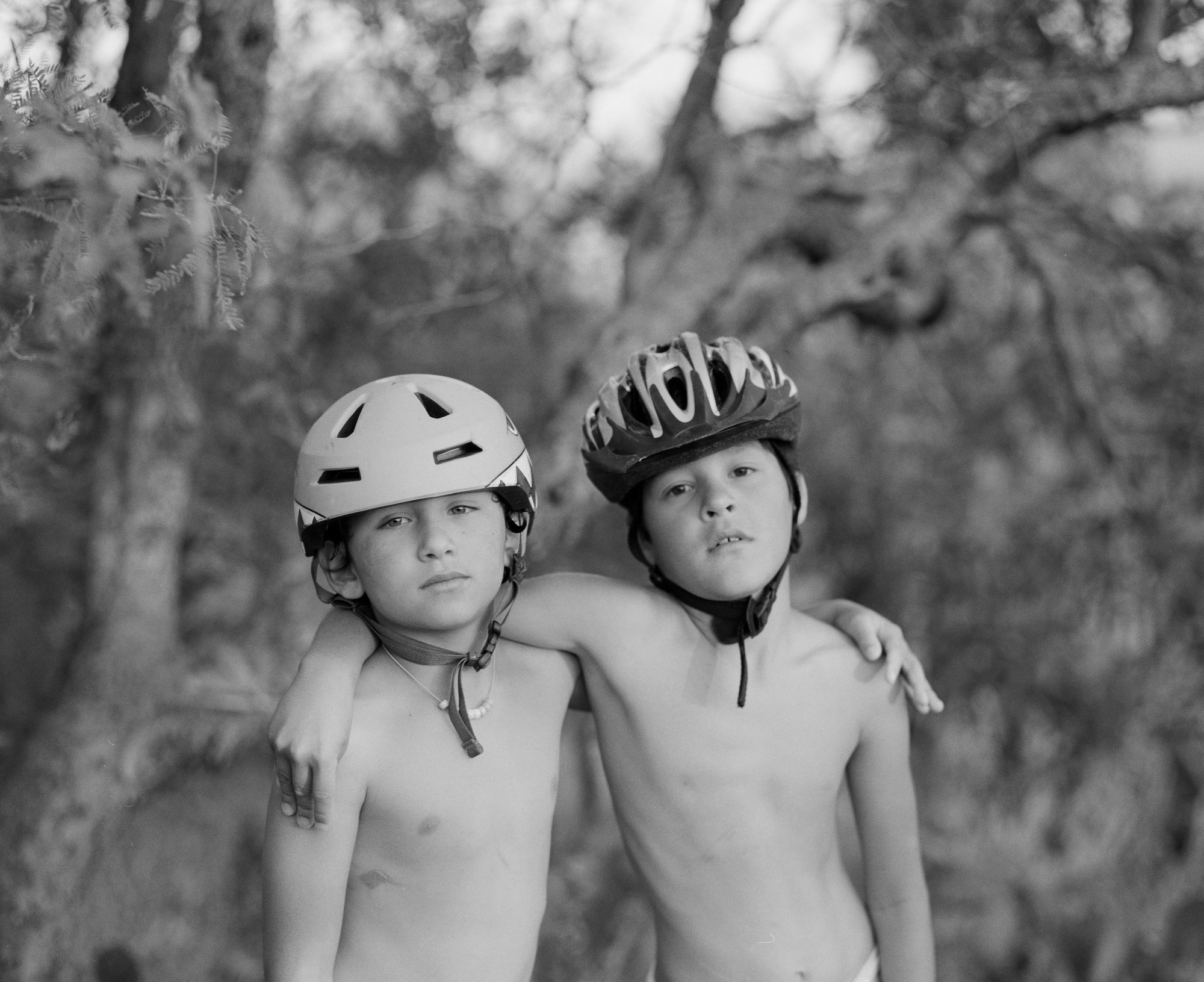
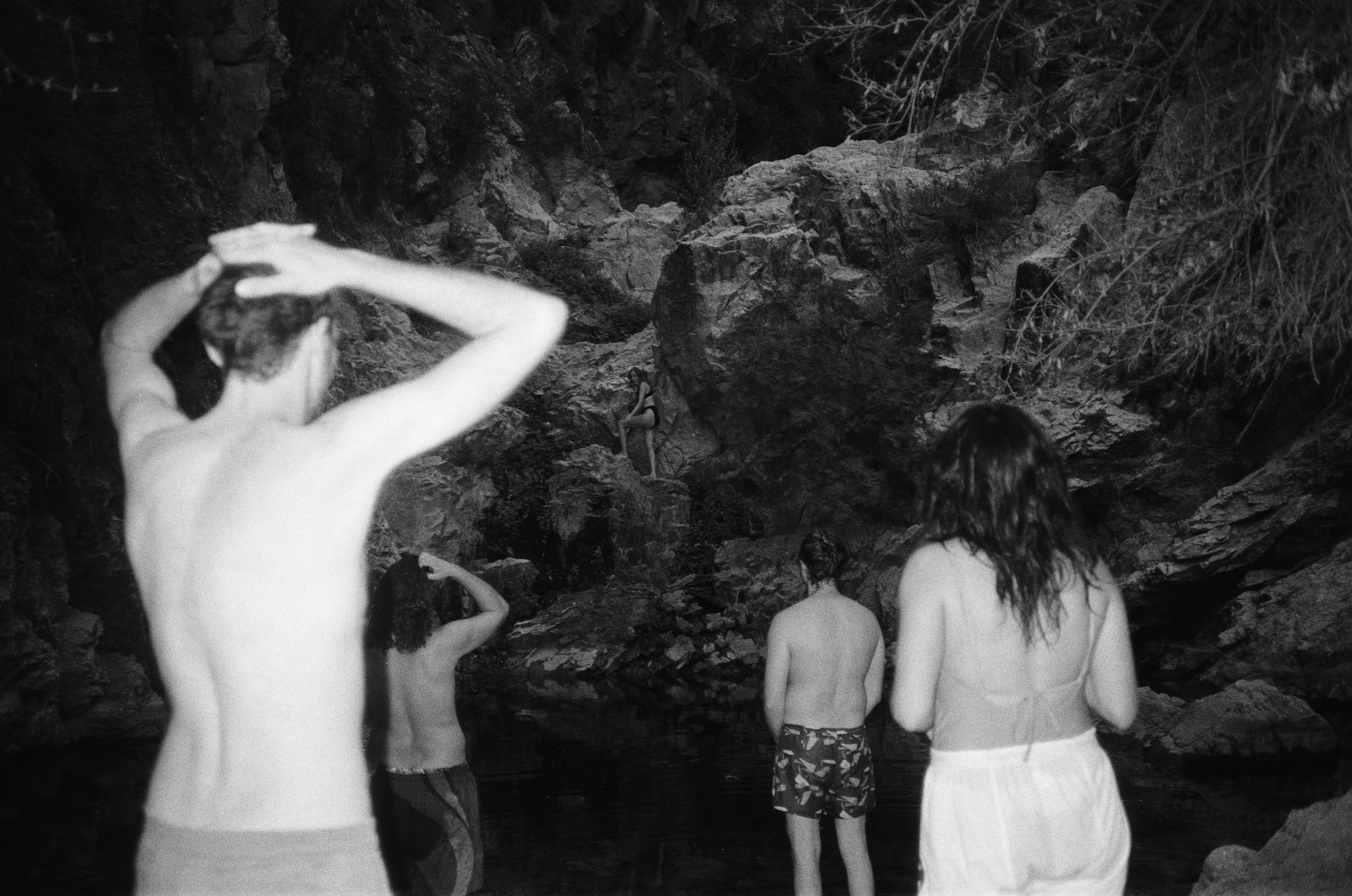
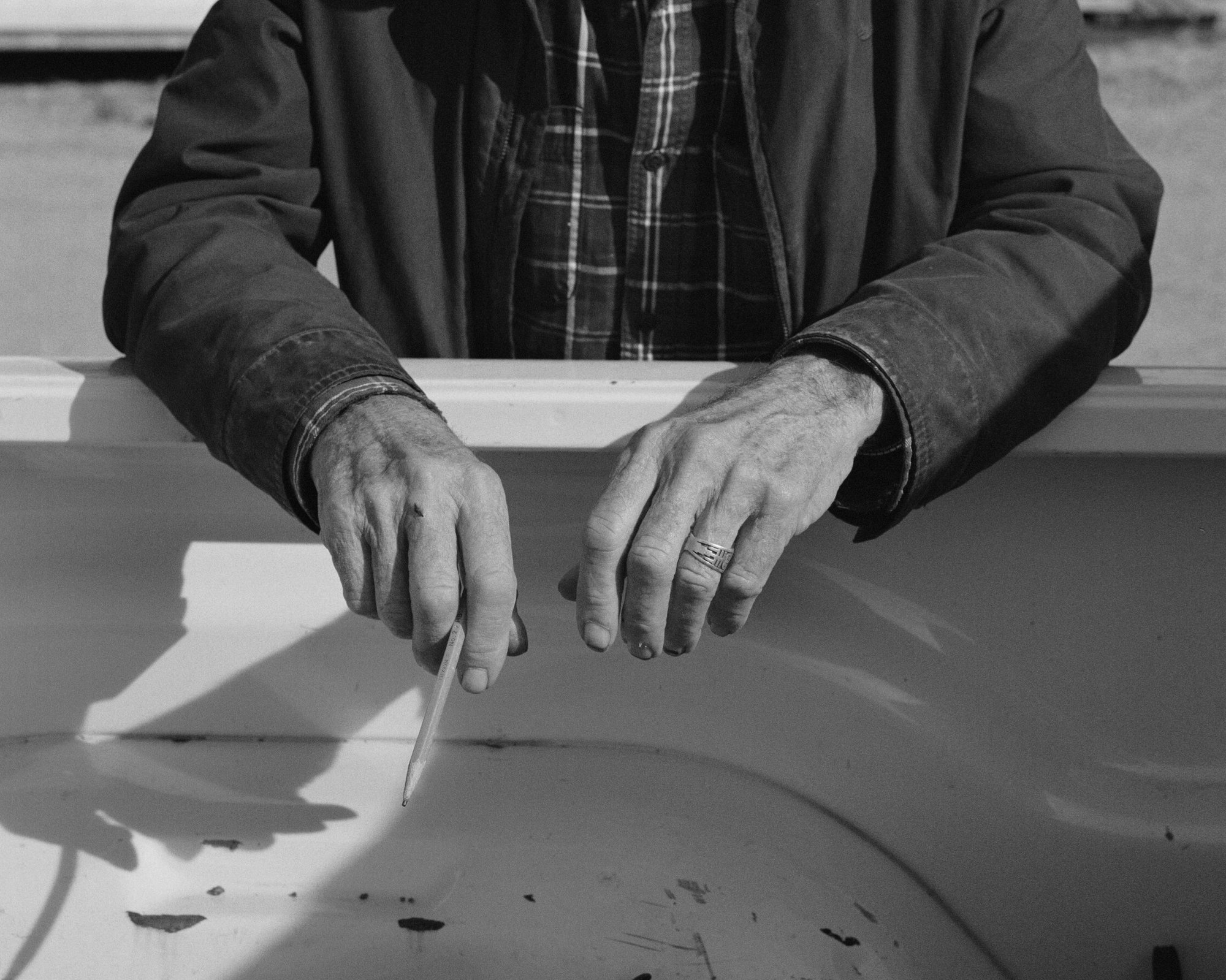
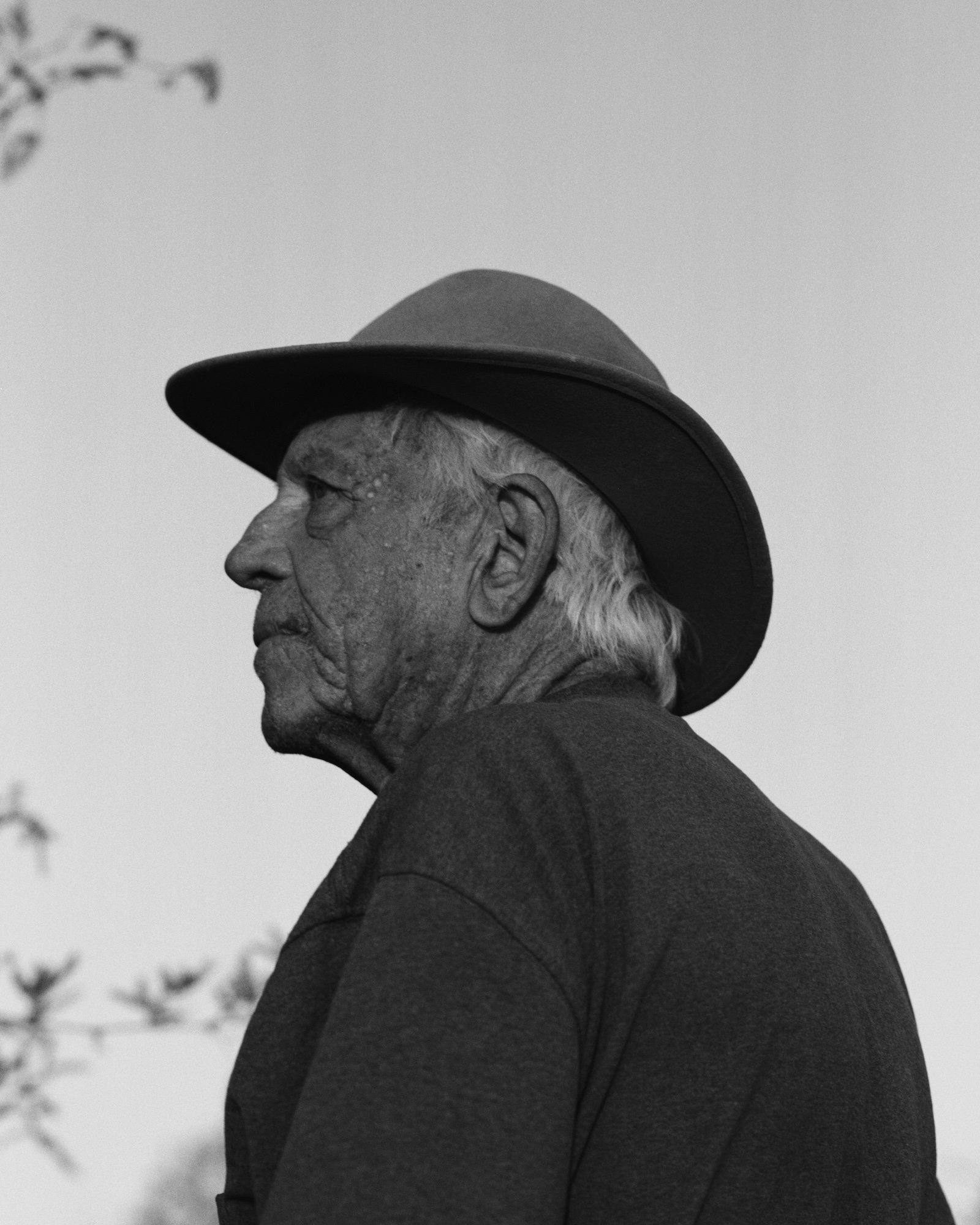
AK: Almost every person featured in the book lives on the ranch, but there are many others who live here as well. Being here has really taught me the importance of multi-generational friendships. My neighbors are such good friends. Some are in their 80s. One of my good friends, Chuck, is featured in the book twice. There’s a side portrait of him with a hat on, and then there’s a photo of his hands. Most of my neighbors are older, but there is a new wave of some of us who are in our 30s, carving out our own existence in this intentional community.
CB: Goodness knows we need more of that intention.
AK: Definitely.
CB: Having spent your formative years in Kentucky, how do you think about yourself in this place now? Has photography given you a kind of insider connection or does your outsiderness add something important to the way that you see things in the desert?
AK: I think that’s a great question. There have been so many times that I’ve met somebody born and raised in Arizona who just never even thought about the fact that they have a 50-foot saguaro right outside of their home. I think it’s easy to have blinders on when you grow up in a place. The same is true of myself, growing up in the woods. It’s easy to overlook its beauty.
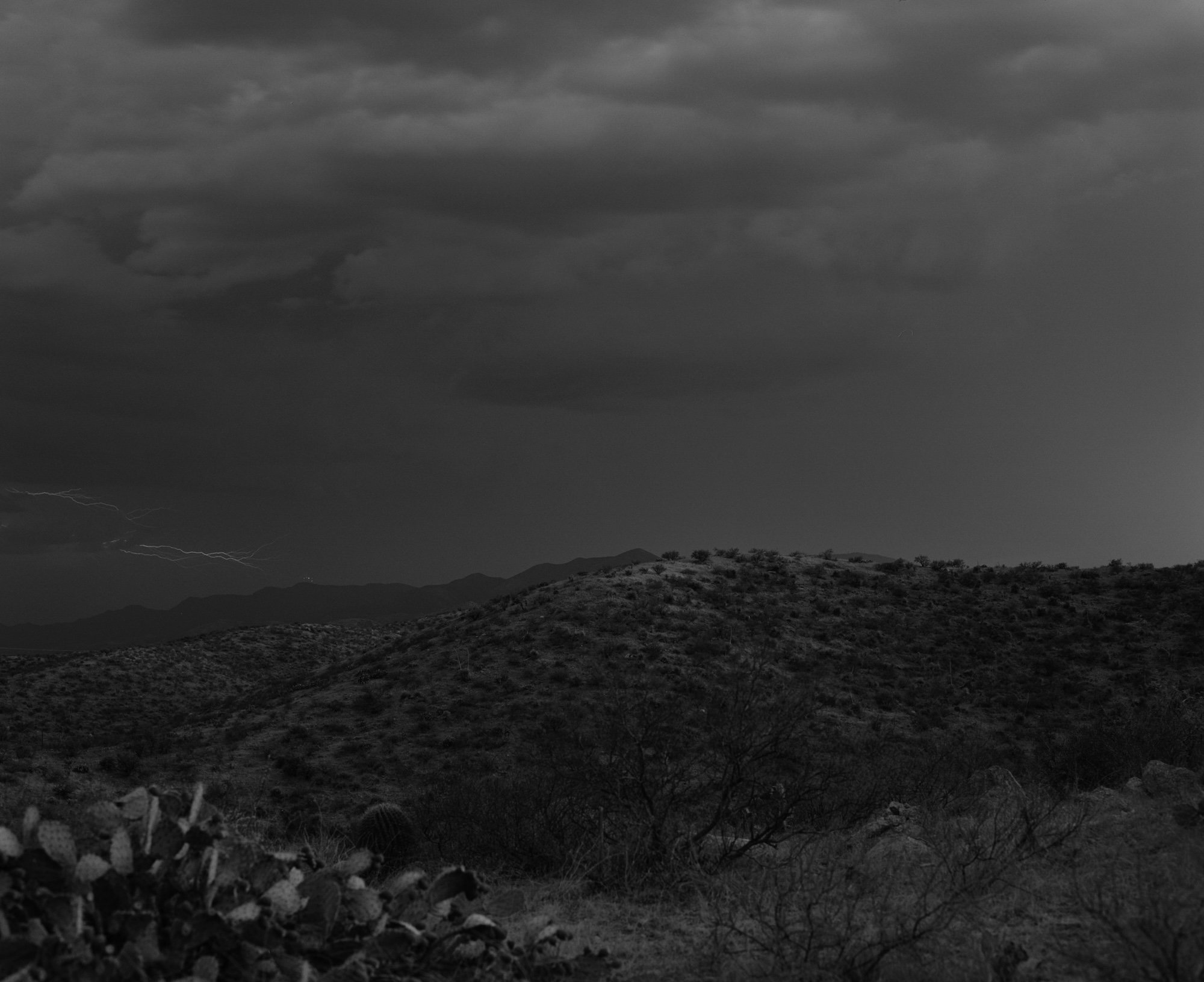
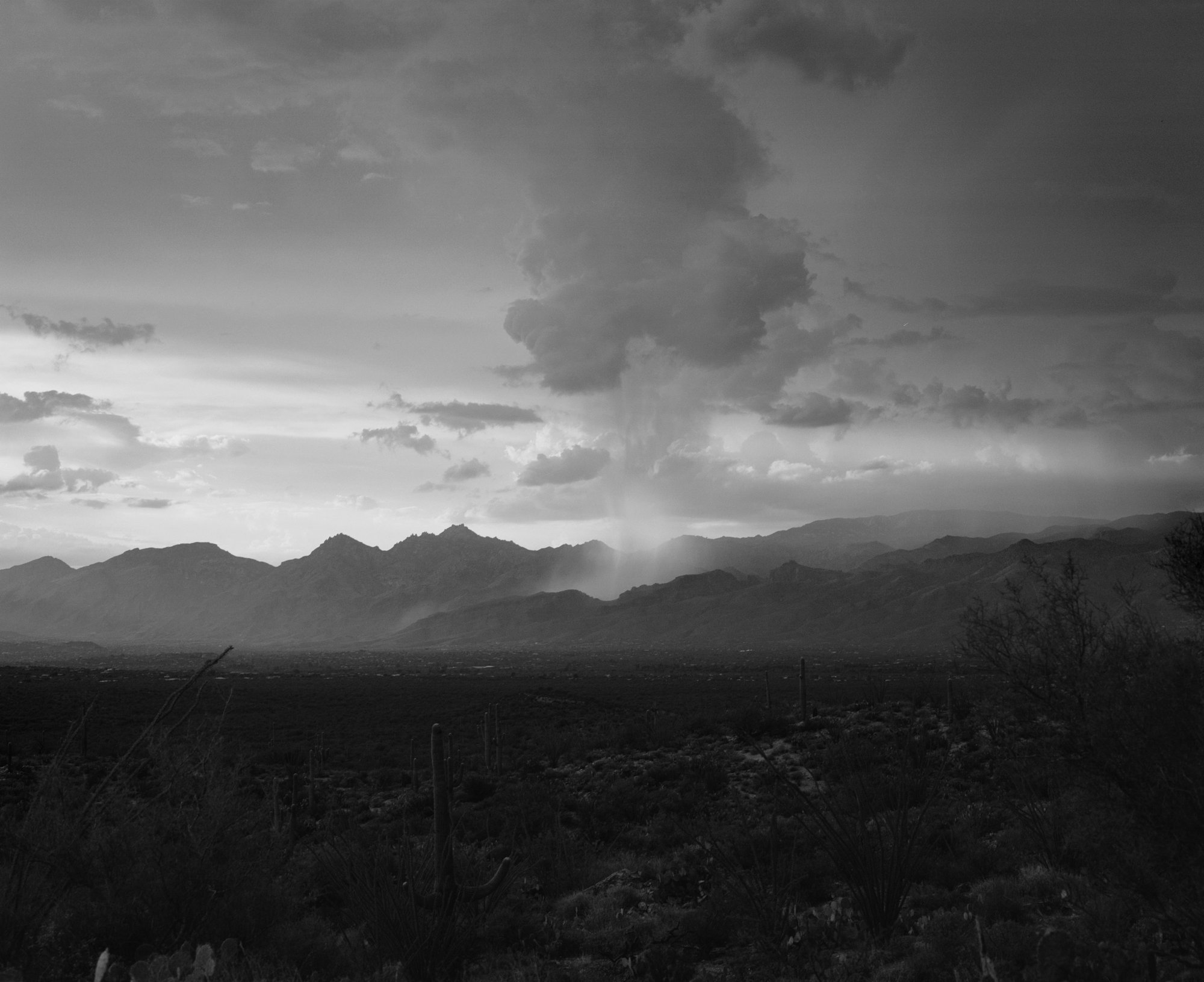
So I do think I was influenced by coming to a place that was not my own, that I was completely unfamiliar with, to really look deeply and to learn everything I could about the plant life here and their cycles. I had never seen a monsoon season before. They’re really, really powerful. Intense lightning. Magical is the only way I can really describe it. One of the first images in my book is of a monsoon cloud just dumping rain into the mountains.
I think it’s probably a little bit of both, insider and outsider experience, but I do think being an outsider looking in and trying to understand what this place means to me has been a huge driving force behind my photography.
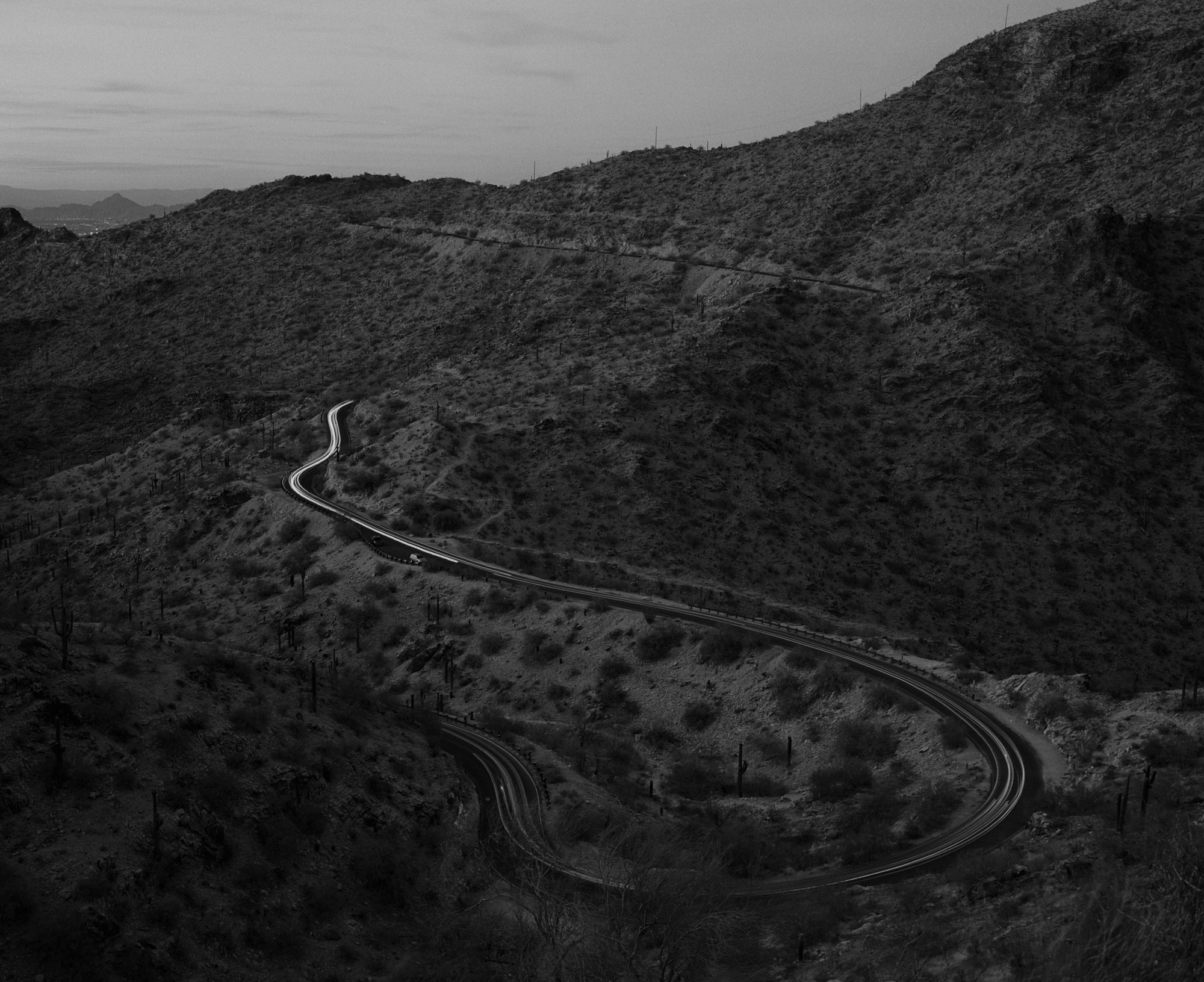
CB: I’d like to ask you about a couple of themes in the series. One has to do with roads and paths, or maybe road versus path. You have these sinuous, winding roads, glowing with time-lapsed light trails from the passing headlights and brake lights. The roads both contrast and somehow complement the lightless and seemingly untraveled landscape. I wonder if you could say something about that group of images.
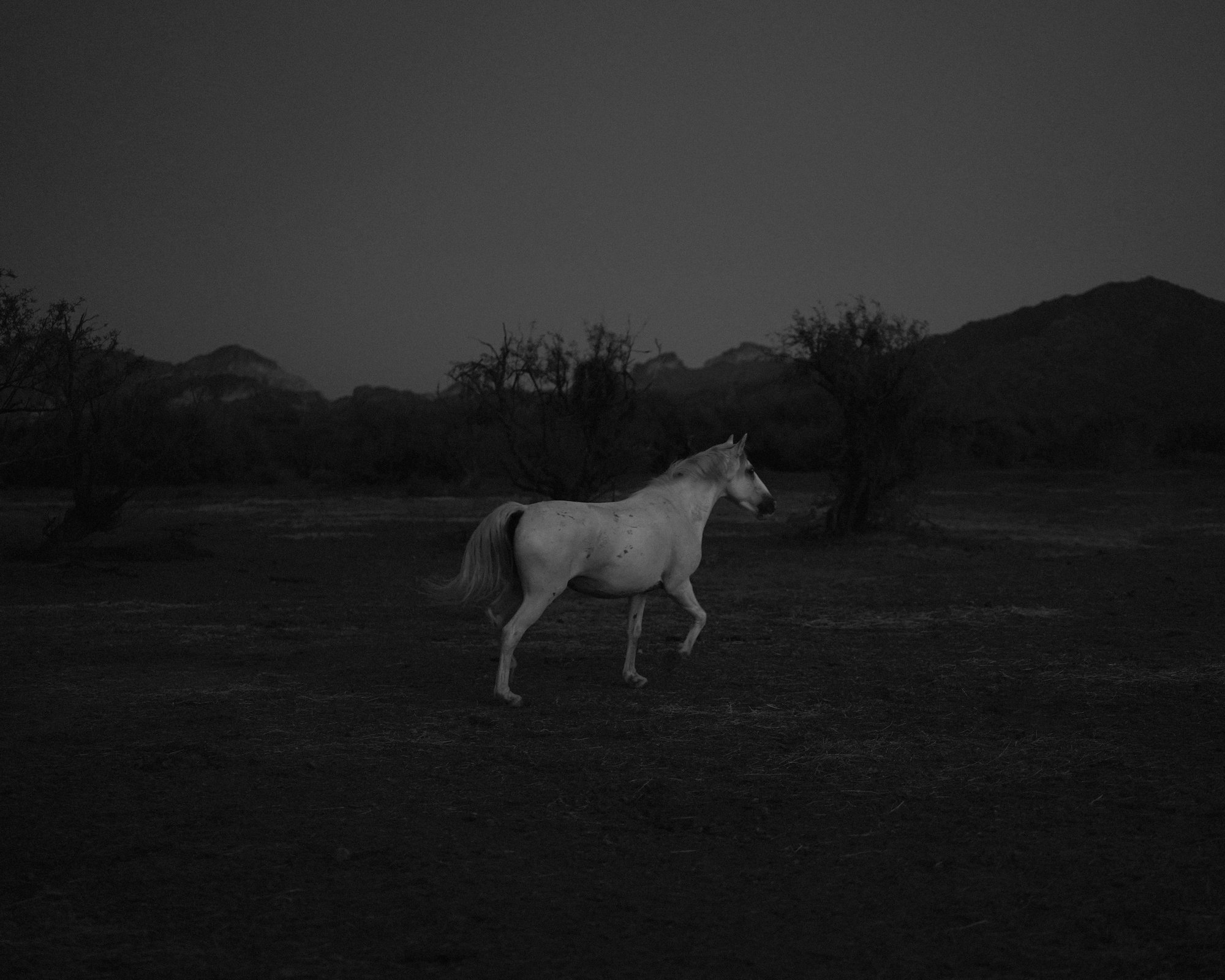
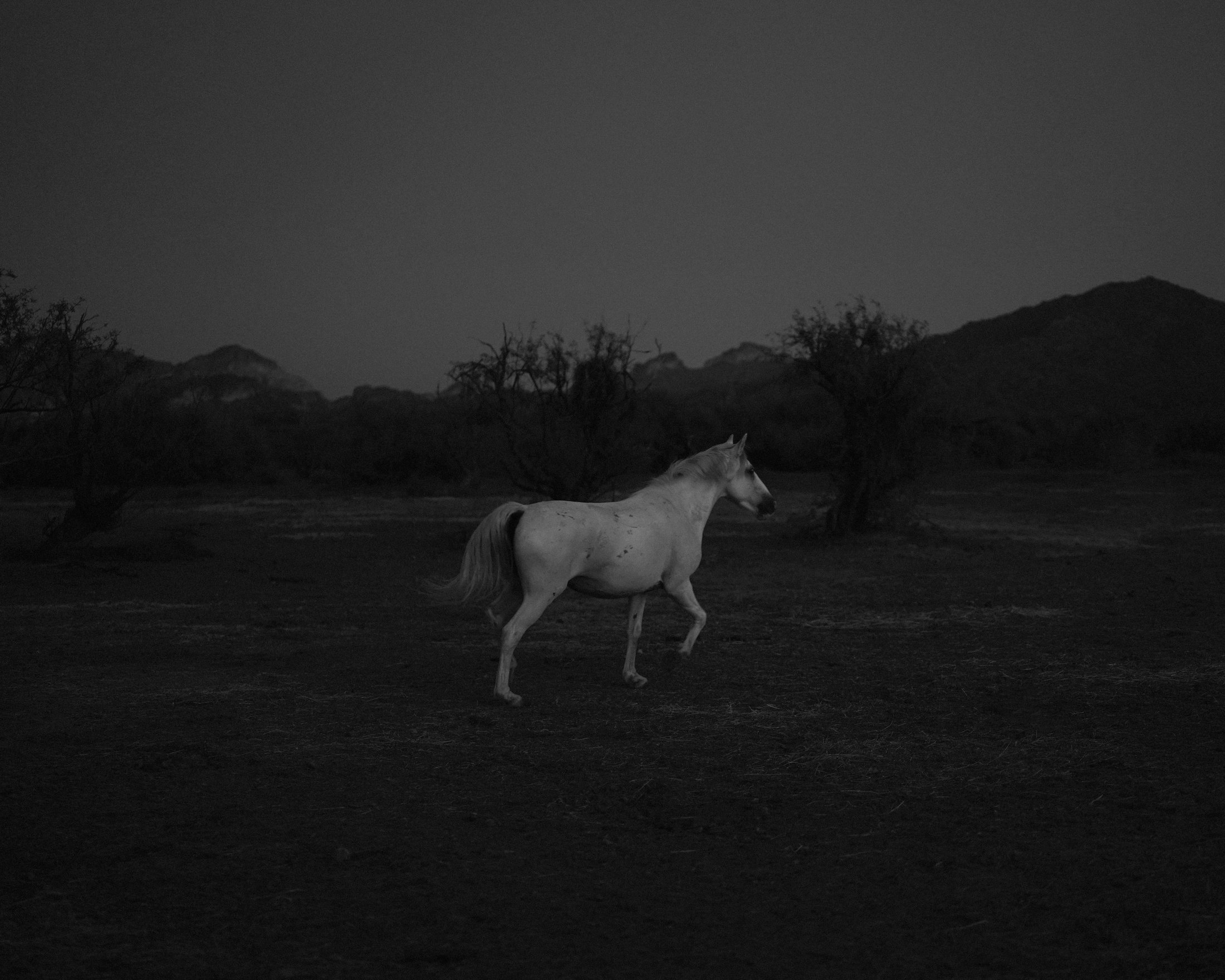
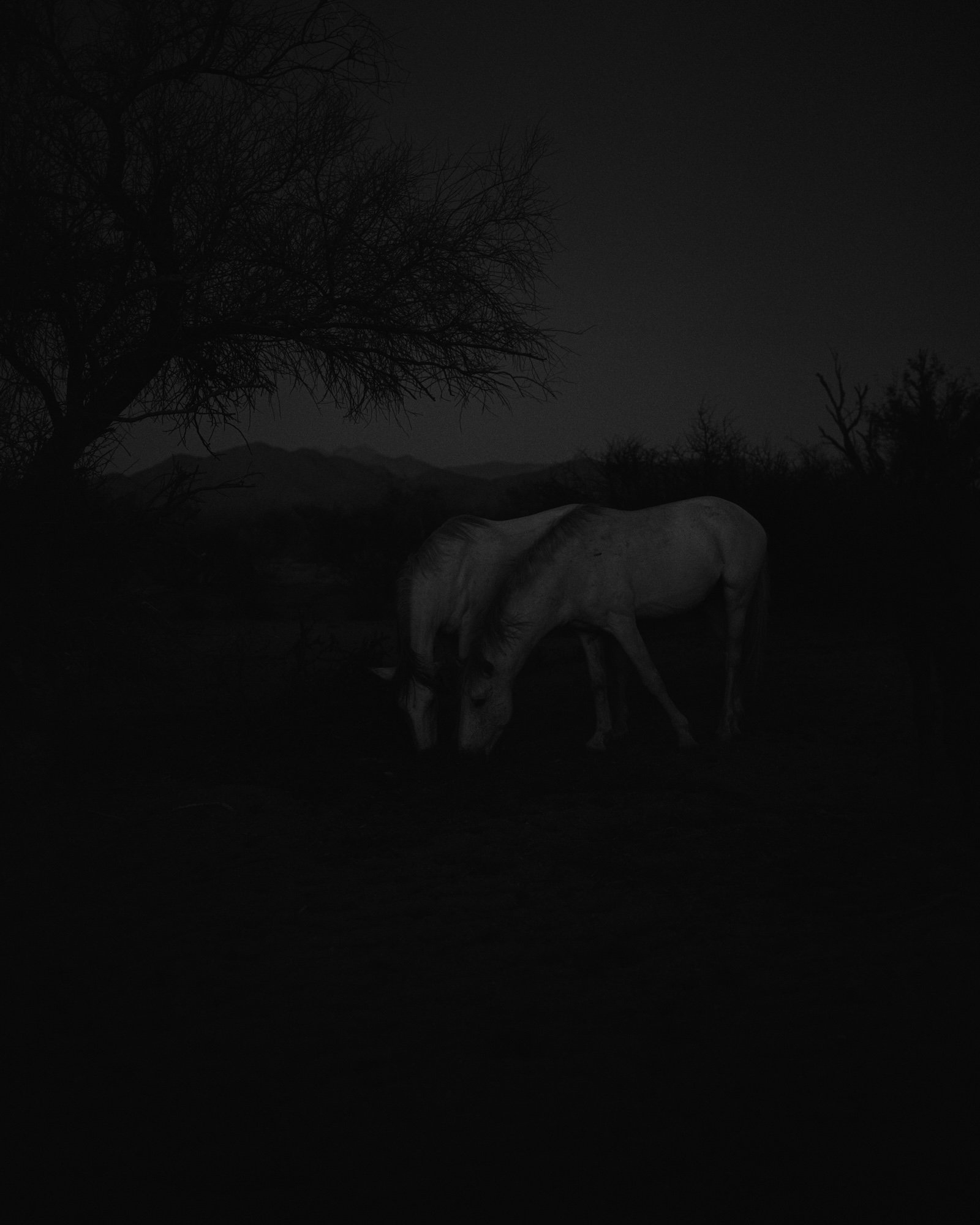
AK: Yeah, you see remnants of human activity everywhere, from how we interact with the landscape to how we destroy it. I started doing those light trail images when I lived in Phoenix. I was volunteering for a wild horse rescue group. It was an organization that helped manage the population of this huge band of wild horses in the National Forest. I started documenting them at nighttime because that was the only time that the public would leave that zone. Those light trails are people leaving the National Forest for the night.
And the more time I spent out there at night, the more I saw the desert come alive. Animals would come out. So many desert species are nocturnal. And there are fewer humans. It’s also cooler. So it’s also a survival mechanism to go out and feed at night. That’s where the night shots stemmed from and the connection to the roads.
CB: These images of removal, with the cars, and motion, with the night life, create Oracle’s visual cadence. In fact, you’ve said elsewhere that one of the things that interests you about these landscapes are their subtle rhythms. Could you say more about that—about what this rhythm means, photographically, to you?
AK: I get so excited to talk about this stuff, because it’s so magical to me. In the Sonoran Desert, we have more than four seasons. Sometimes, depending on the weather cycles, we may have five or six seasons. In the summers, we end up with a kind of second spring. Flowers that have bloomed once in the year will bloom again with increased rains. I like that ecological sparkle.
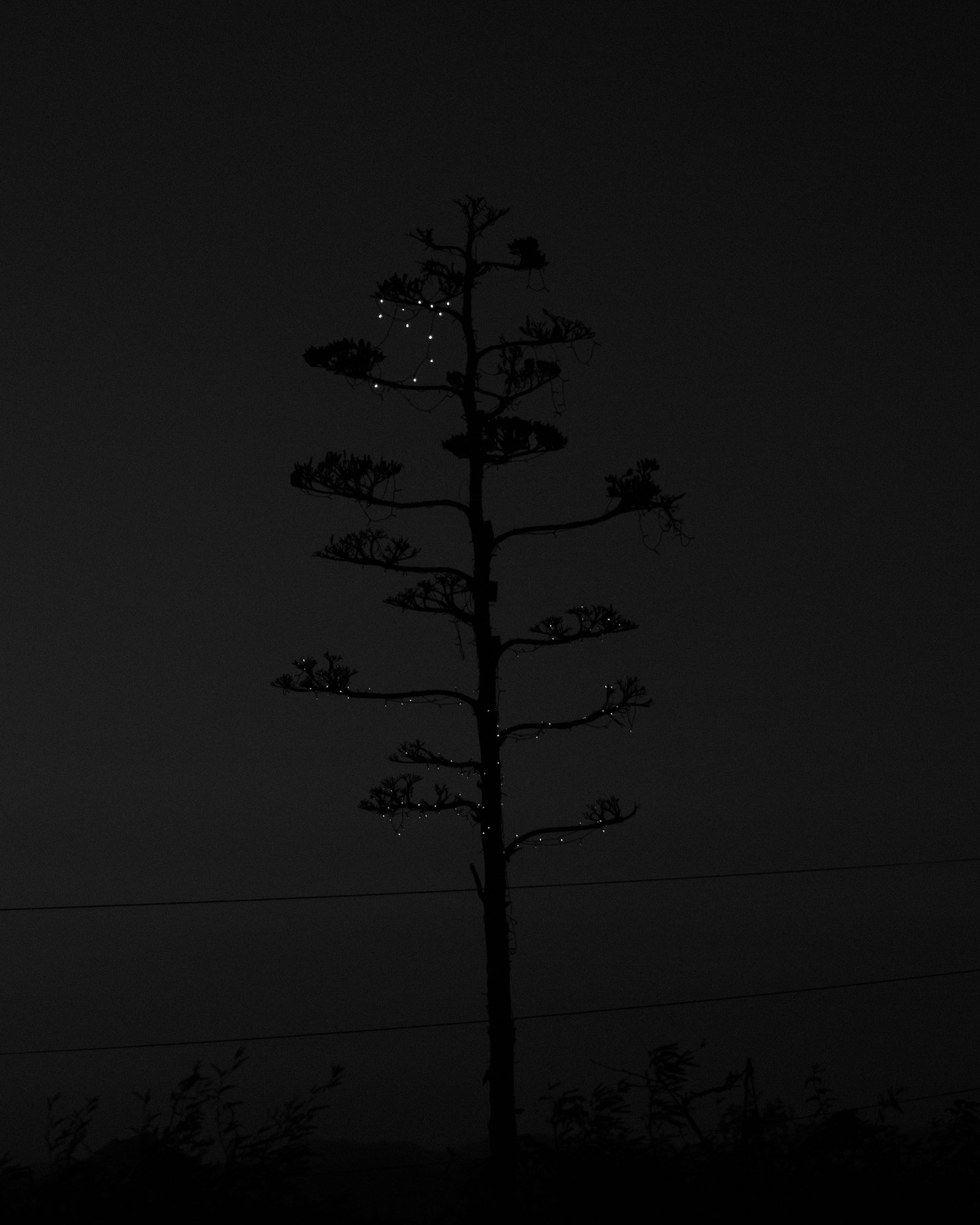
Then there’s a rhythm directly related to weather, and to the life cycles of fauna and the humans here as well. Then there’s what remains, you know, when that cycle has ended. Things return to the desert so fast.
I used to take care of goats. I got to know them really well. Then one of them passed away, and I think when you live somewhere that’s not rural, you don’t really consider the implications of these deaths. We’re so far removed from that kind of rhythm. So when an animal dies out here, you deal with it yourself.
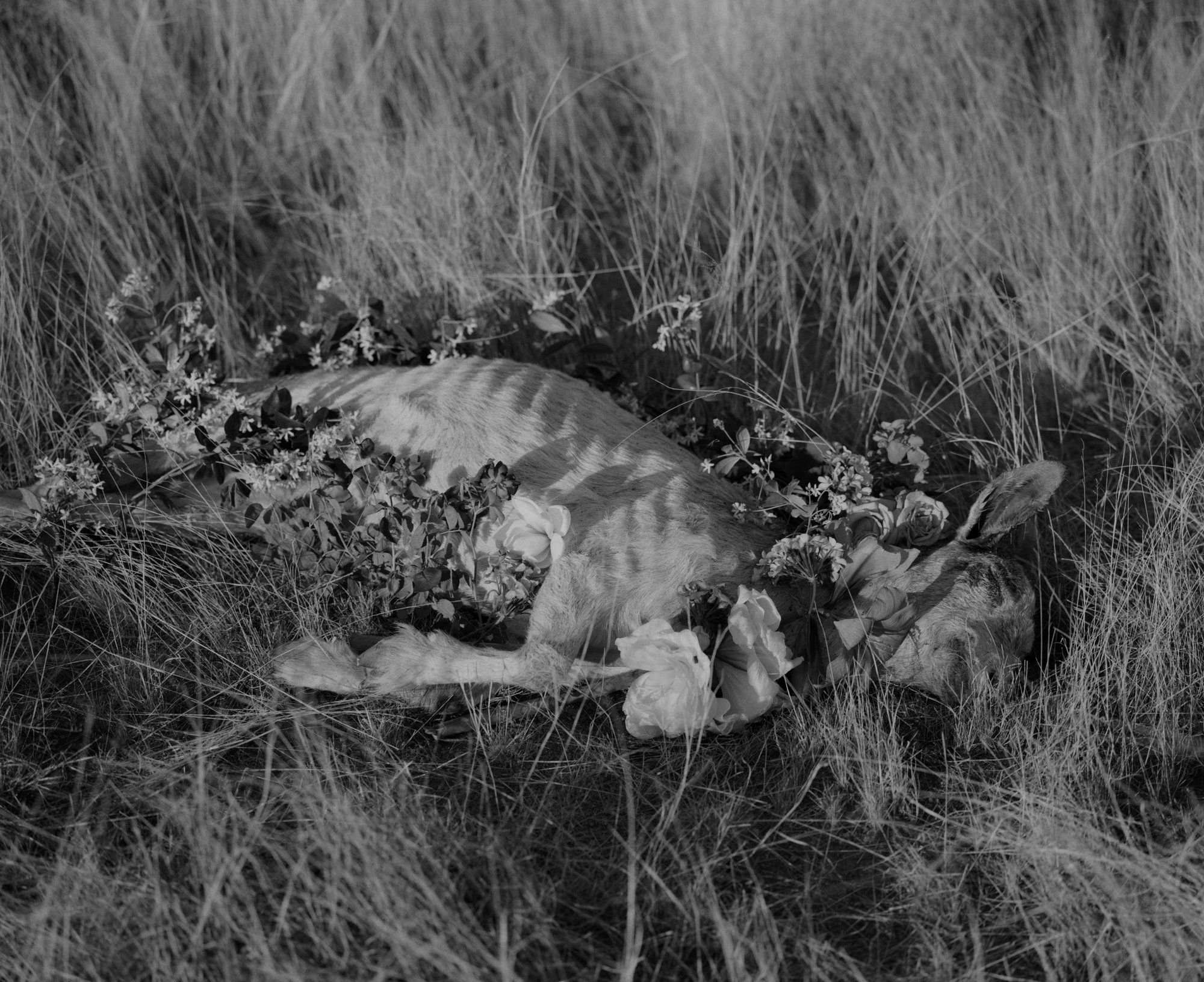
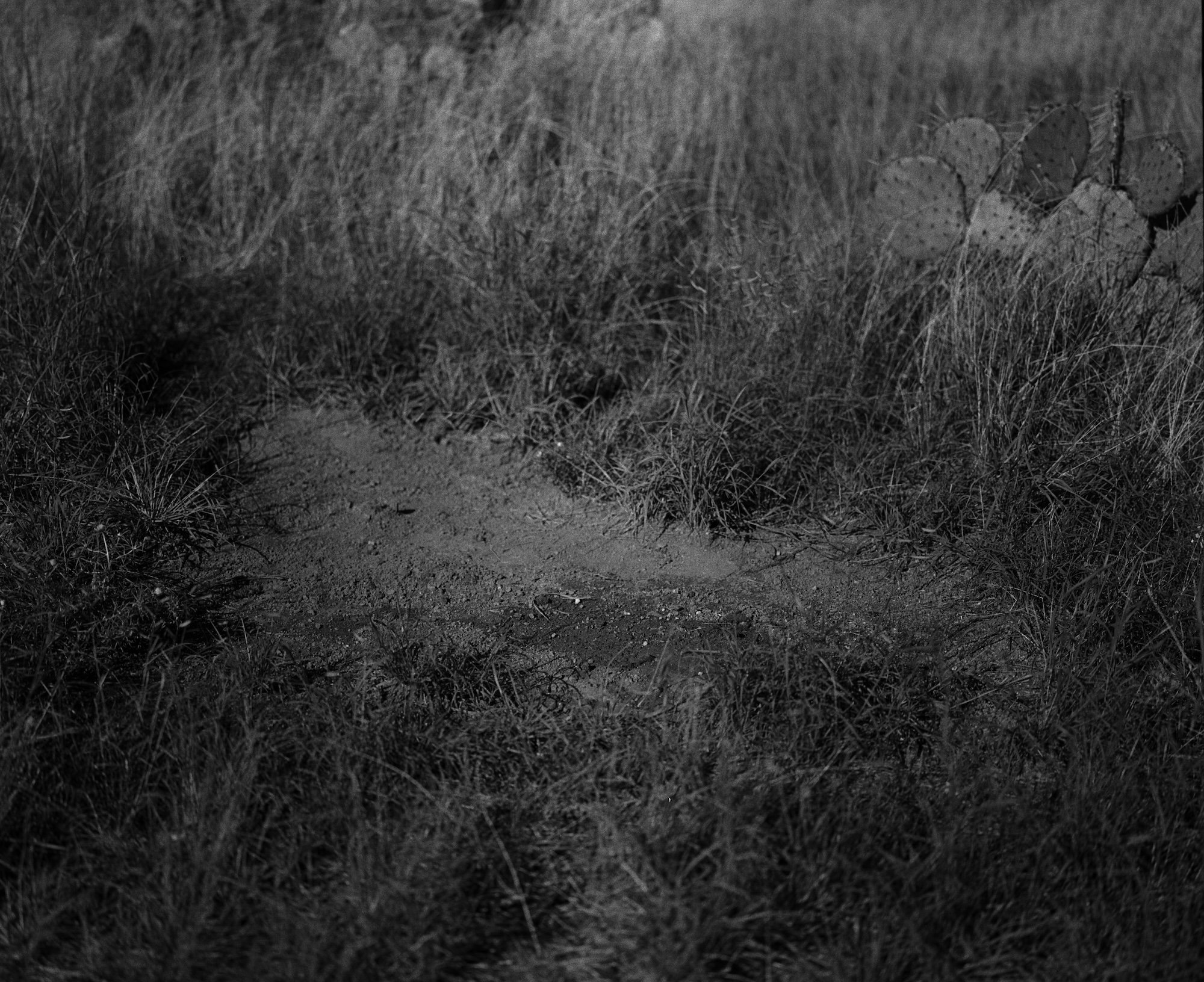
We put her body out in the desert so that she could, in turn, feed other animals. A couple months later, that goat’s mother passed away. And we took her to the exact same spot where her daughter was laid. You’ll see in the series an impression in the grass of the mother’s body, completely gone.
We’re not so different from the animals and the plants that we live with. In the past three years, we’ve had four deaths in the community from old age and health complications. I really wanted to depict that cycle.
CB: The desert really does have a way of putting life and death in sharp relief. Sometimes, I think, the distinction blurs in this series. For example, there are interesting resemblances between living and nonliving forms, like the shapes of cacti and outcrops of stone. I’d love to get your thoughts on how Oracle sometimes complicates that distinction.
AK: There’s always a challenge when making photos to tell the story I’m aiming for. But the main thing is, I’m trying to capture really intense subject matter with tenderness.
CB: That comes through. Tenderness, I think that’s a much better way of talking about that blurring I mentioned. There is something tender in your mediation of life and death in the series, or maybe the mediation is itself a tender act?
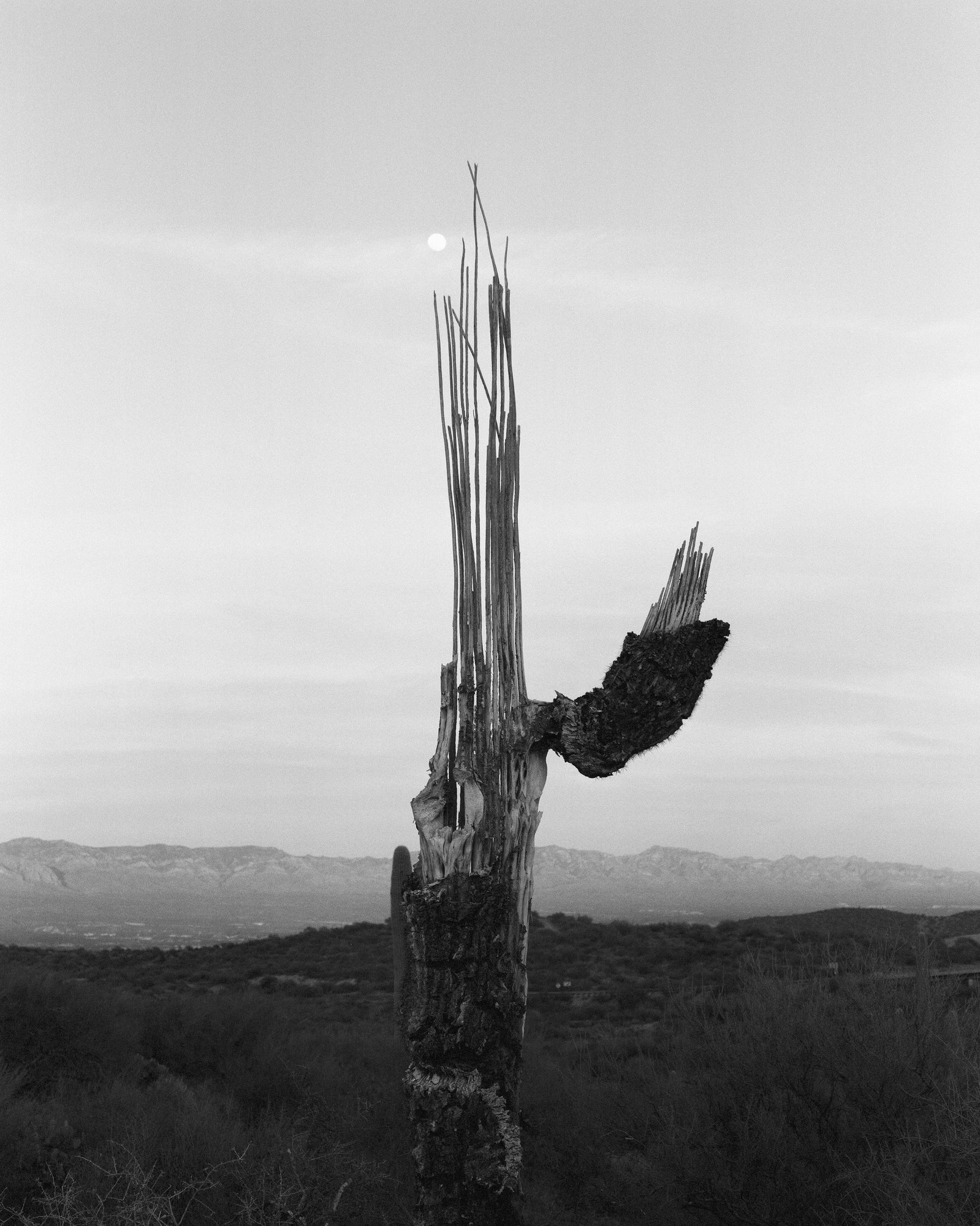
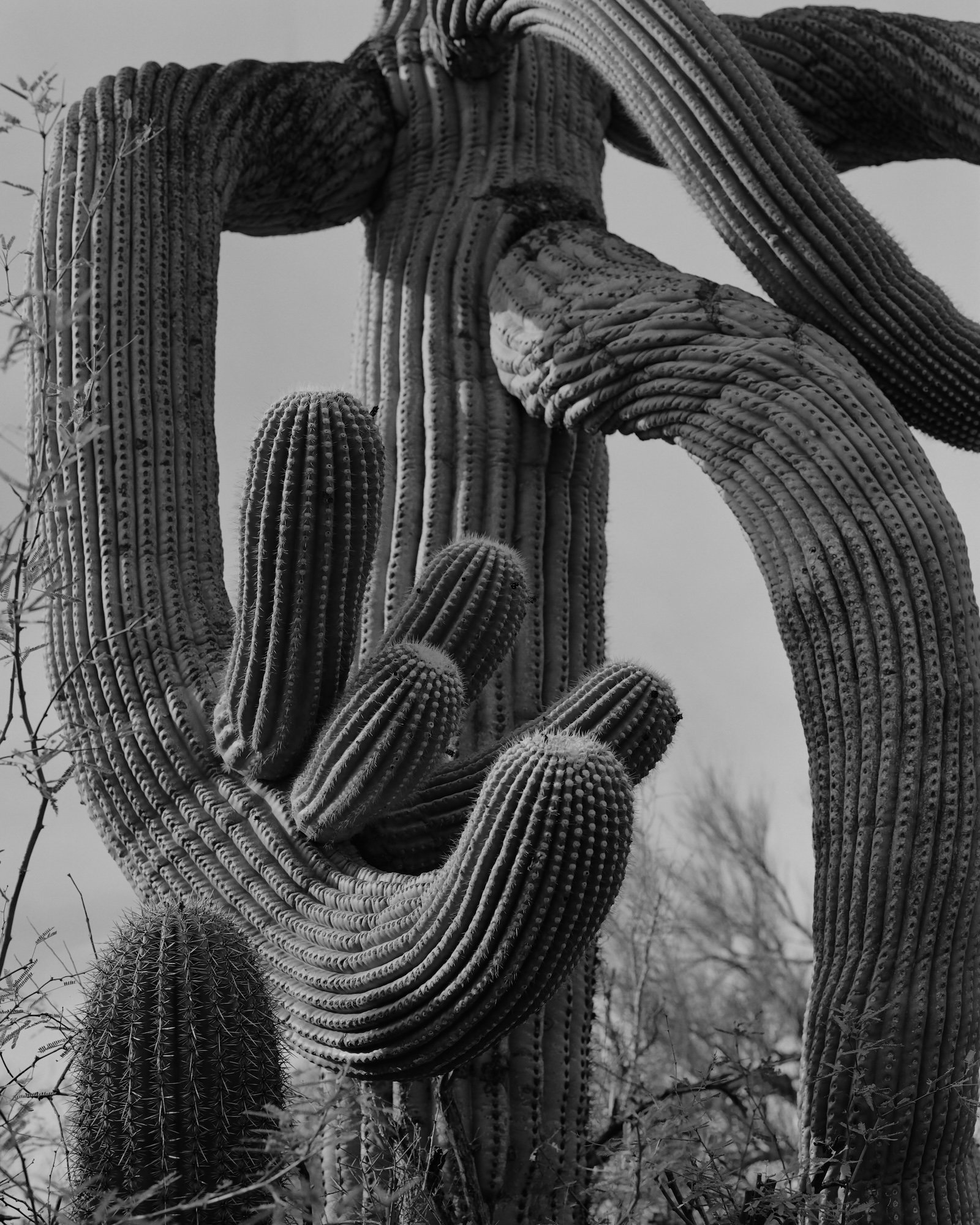
AK: I think it comes from long relationships here. It’s the same process with people. You show up, you get to know them, and you get to care about them, and then you support them. It’s the same way that I view going out and seeing that old saguaro every month. I’m building a relationship with all of these amazing species. I think I am highlighting that tenderness in the story I’m trying to tell.
I talk a little bit about grief in this work, and how that relates to what I’m seeing, whether it’s the loss of environment, or the loss of life. My dad was a photographer. That’s where my interest stems from. He was a commercial photographer for 40 years and made his own personal work on the side. In 2020, he passed away. In the year after he passed, in all my processing and grief, I had this compulsion to go out and make photos of the moon every month as a way to document the time that had passed since he was gone. A couple of the images I made during that time are in this series, and so it’s all just so intrinsically linked to these cycles of time and tenderness they inspire.
CB: Time, then, isn’t just a theme but a method in your work. You’ve said that you often return to sites you’ve photographed after some months or years have passed. What does returning to the same place do for a series like this? What does it teach you that a single visit might not?
AK: It’s definitely something that is always on my mind. You know, when I go back to these places, a lot of things come up. One is just my own memory of being there the last time—what I was feeling in that moment, or what was going on, or who I was with. That sense of familiarity is something I crave, knowing that around the corner, there’s another saguaro that I really like to see, or there’s a patch of beautiful wildflowers I like.
There’s a mesquite grove about 25 minutes outside of Oracle, in this beautiful riparian zone called the San Pedro River, which is what I’m documenting now. It’s one of the most whimsical dark forest places I’ve ever been to. I’ve gone maybe ten times already. You cross the river, and you enter this insane forest of twisting trees. One or two of those images made it into this project. The grove changes drastically every season. And I remember bringing my younger sibling there the first time, and I was talking it up, like, this place is amazing, you’re gonna love it. And we showed up, and there was no grass, there were no leaves on the trees, and it felt bleak.
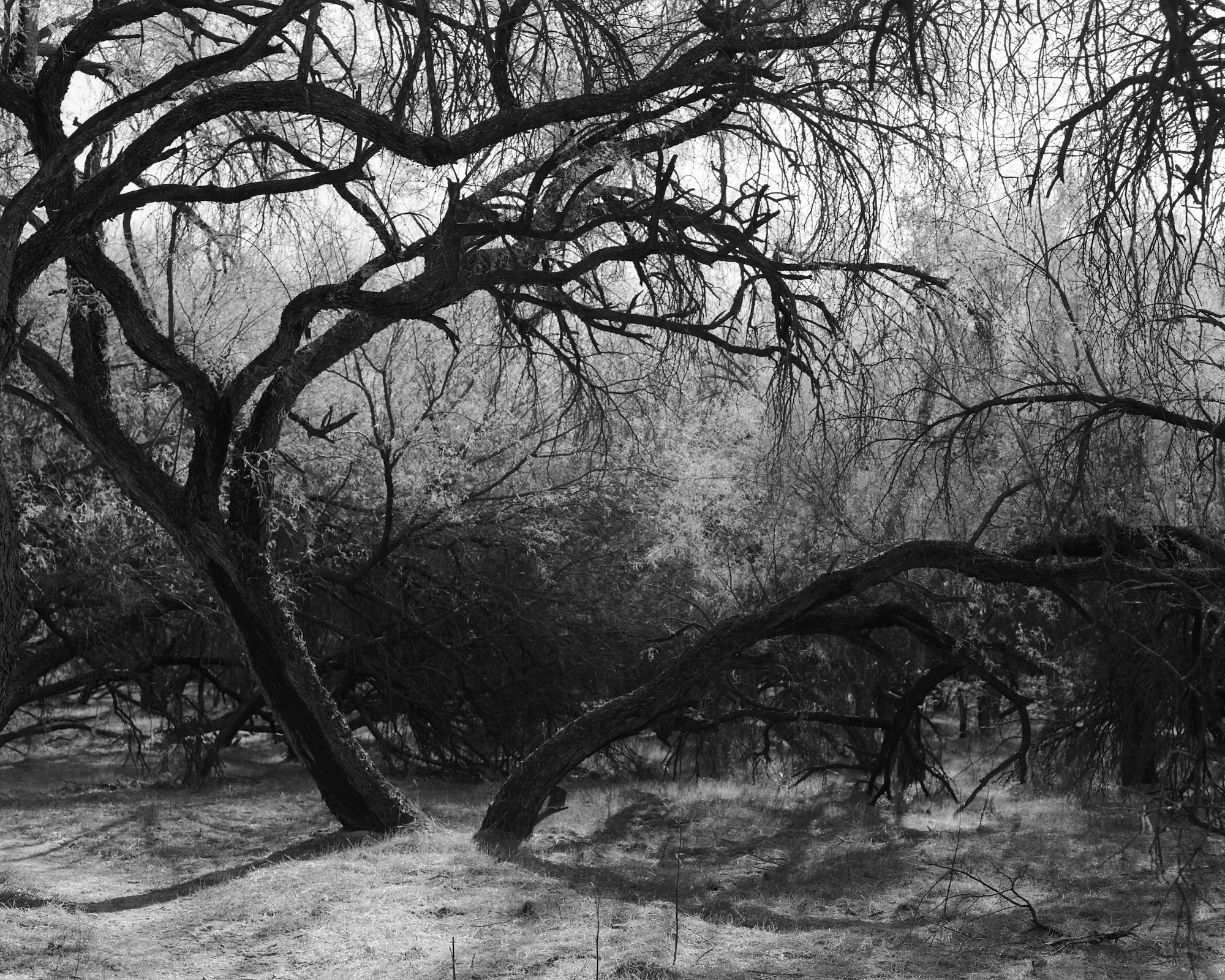
CB: That touches on something else I wanted to ask. Going back to the start of our conversation about being an outsider, it seems like you’re discovering that certain places, no matter how often you return, resist familiarity.
AK: That’s a really great way to put it—that sense of resistance. Because, you know, everything in the desert can feel really hostile. You see a saguaro, and it has these crazy spikes that tell you, “don’t touch me.” That’s a lot like how humans are as well, you know?
CB: For sure!
AK: I remember being in grief therapy in 2020, and I was given a creative prompt: if you could be a kind of tree, what would you be? I’m a saguaro, you know—this spiky exterior. But you might say one thing to me, and I’m just mush inside, you know?
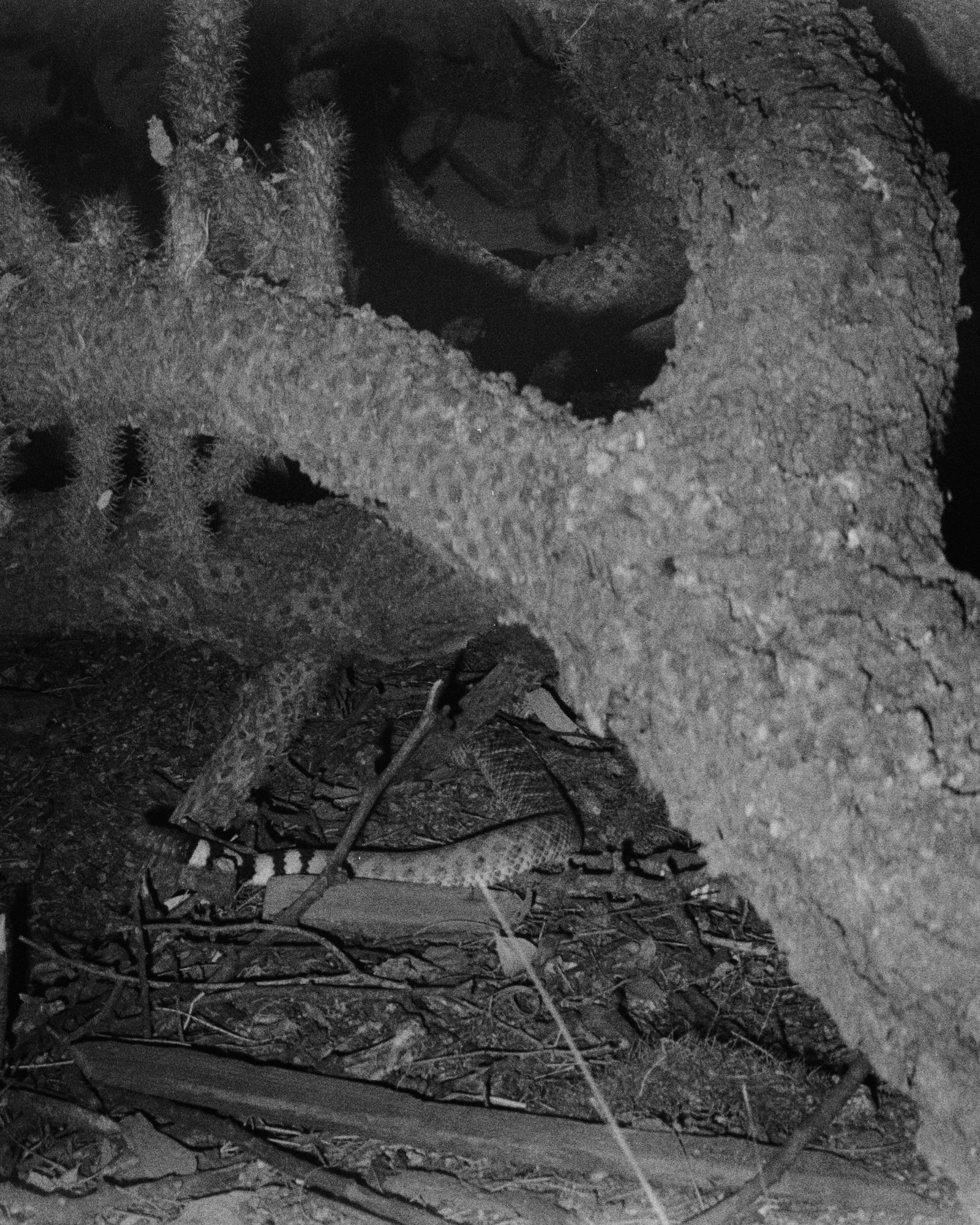
It’s not just the plants that resist. There are scorpions that will sting you. There are snakes that are venomous. There are lizards that are venomous too.
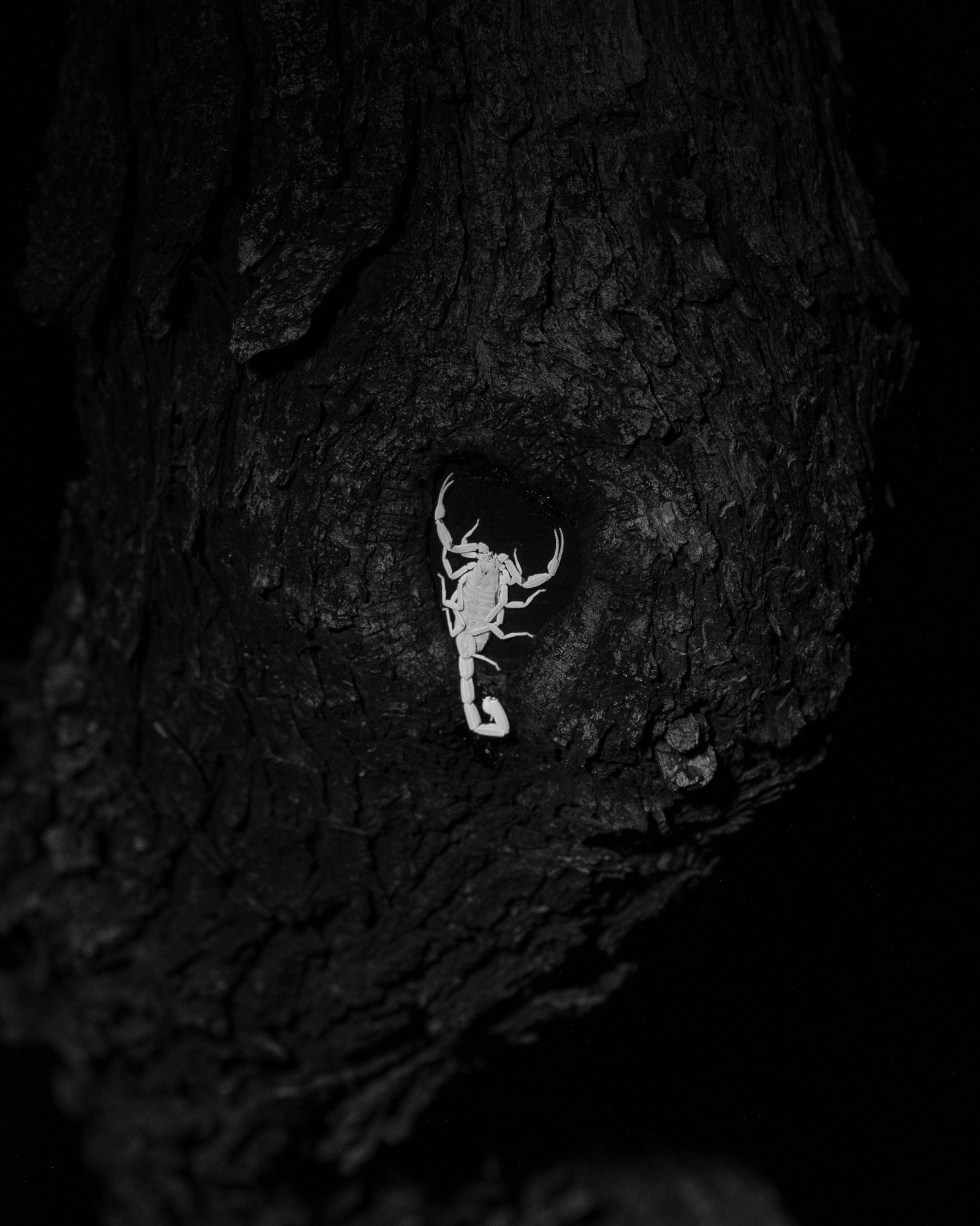
CB: I’m glad you said that, because I imagine there’ll be a lot of people who look at this series and see the tenderness and not understand the challenge of taking these photographs.
AK: It is definitely present, always. You have to be aware of your surroundings.
CB: What do you hope people will get out of this series? What would you like readers and viewers to understand about your relationship to place through photography?
AK: There is a fantastic reward in slowing down and taking in your environment and really seeing it. It might teach you something about yourself, about your relationship to nature, about community.