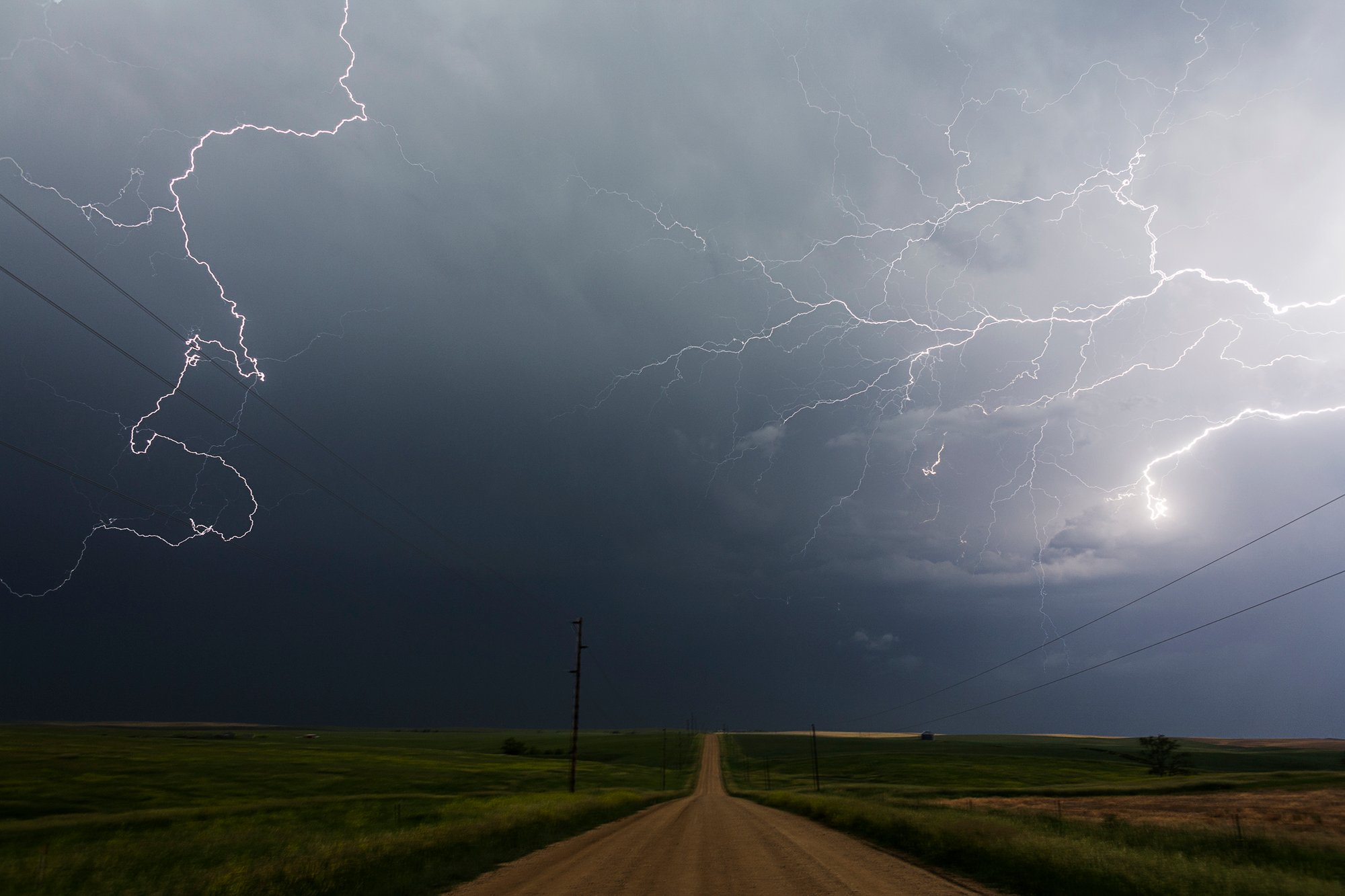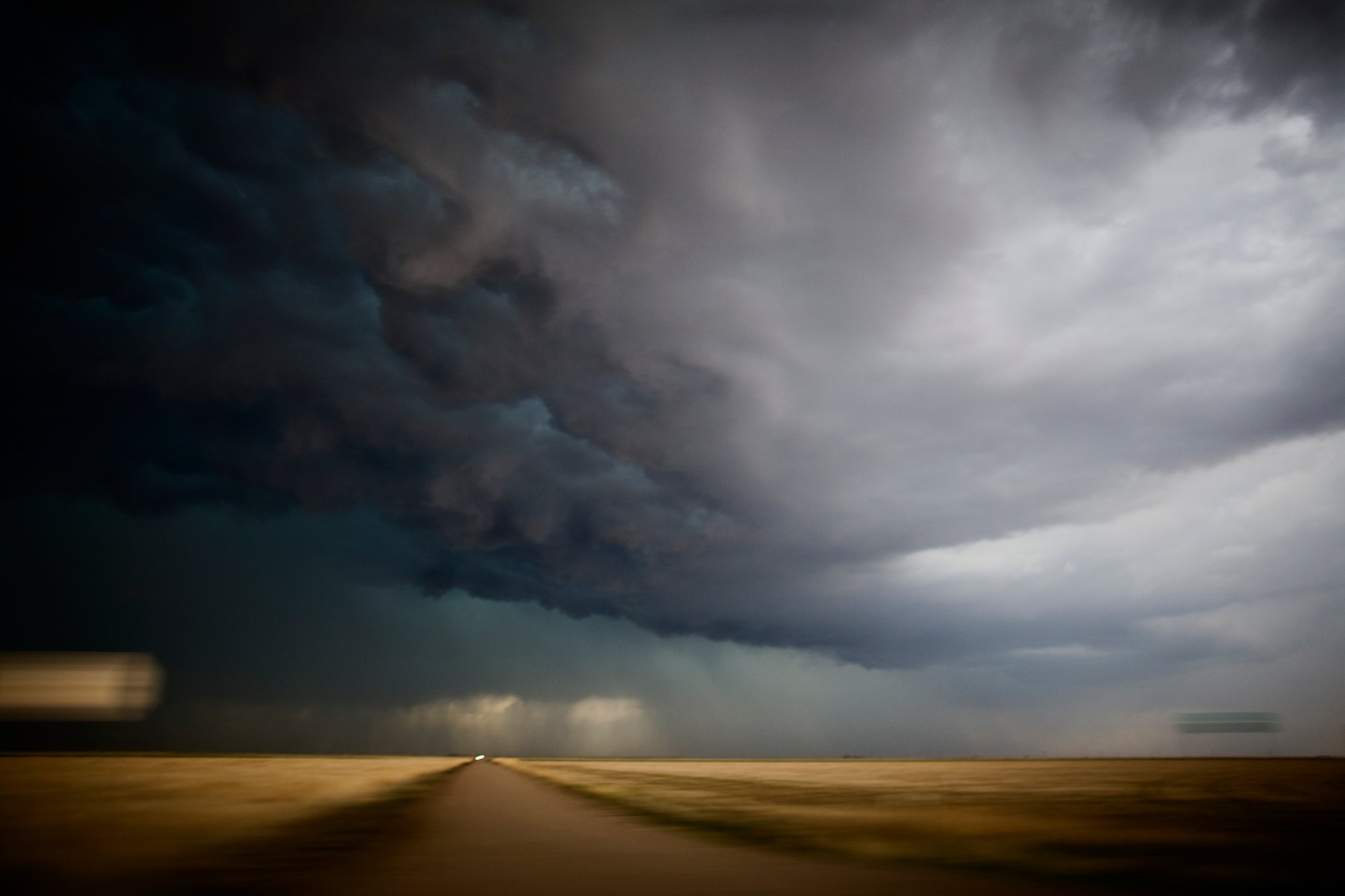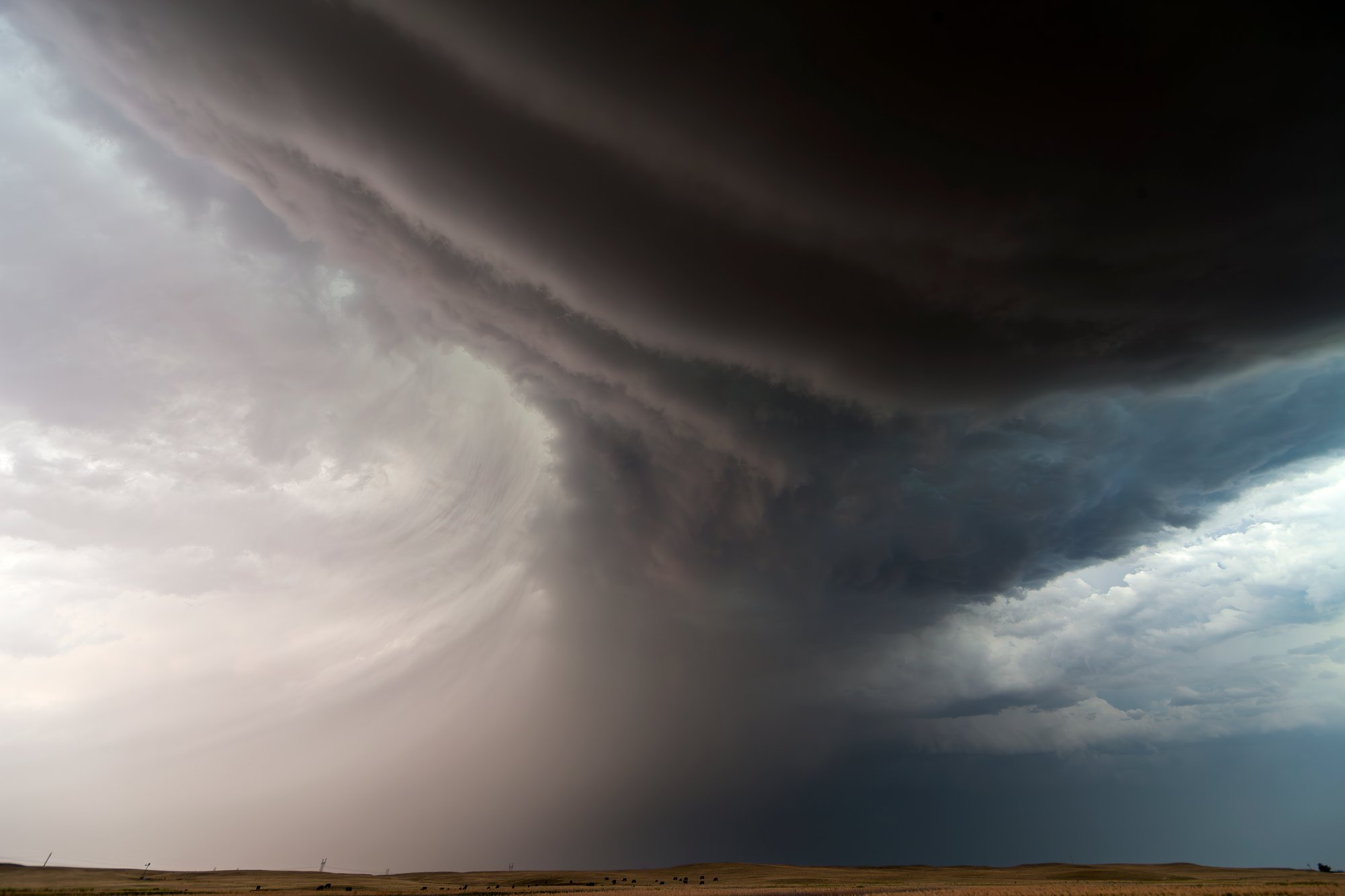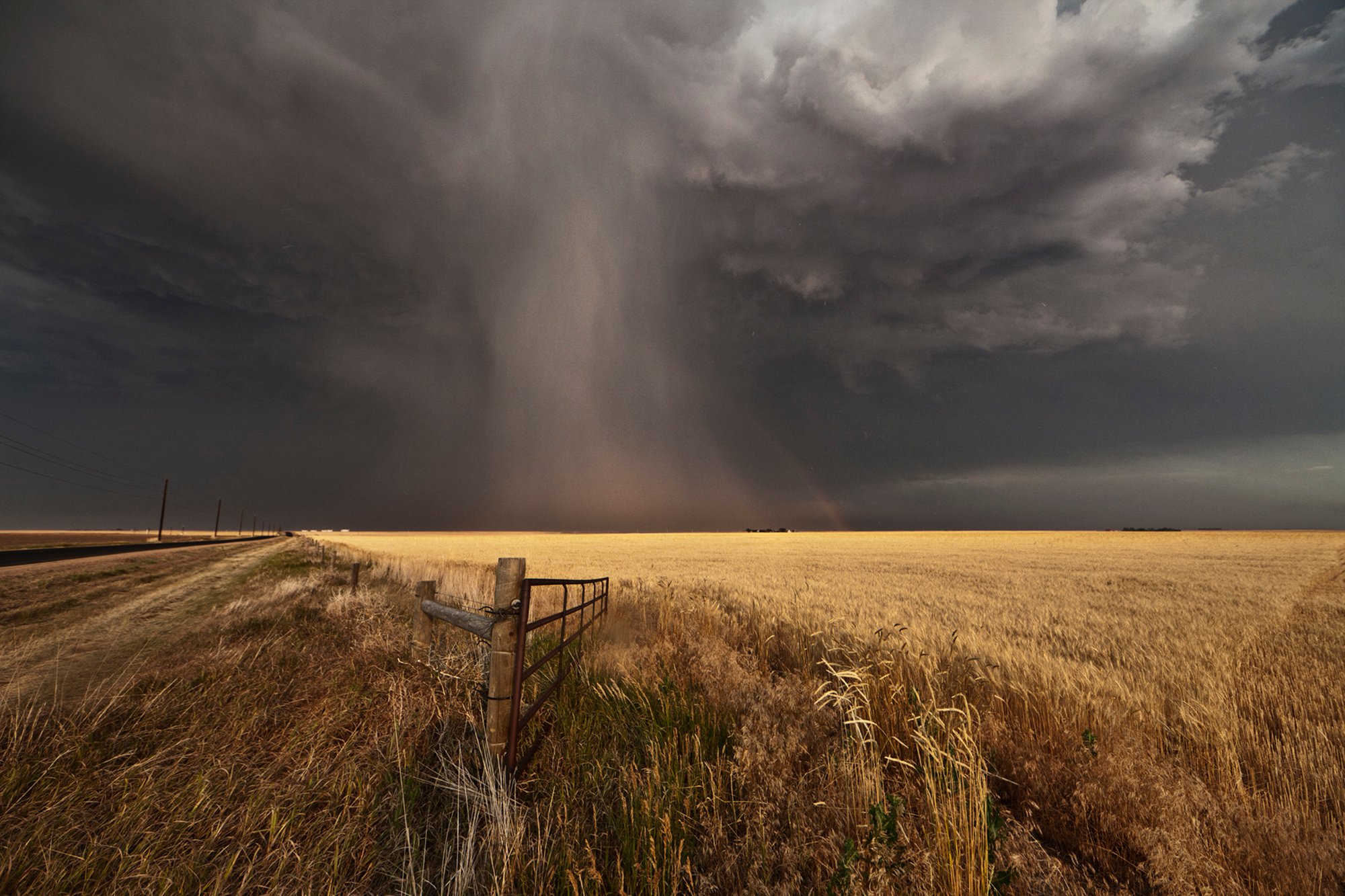
Storm is the eleventh cycle of the Prix Pictet, the international prize and exhibition platform focused on photography and sustainability. It is a broad and complex theme: “As both a natural phenomenon and a metaphor, Storm speaks to the unseen, relentless forces shaping our world today—environmental collapse, political upheaval, economic instability, and social unrest—where it can feel like we’re perpetually bracing for the next crisis. But Storm is also an agent of change: a generative force that can bring transformation, renewal, and—sometimes—hope in its wake.”
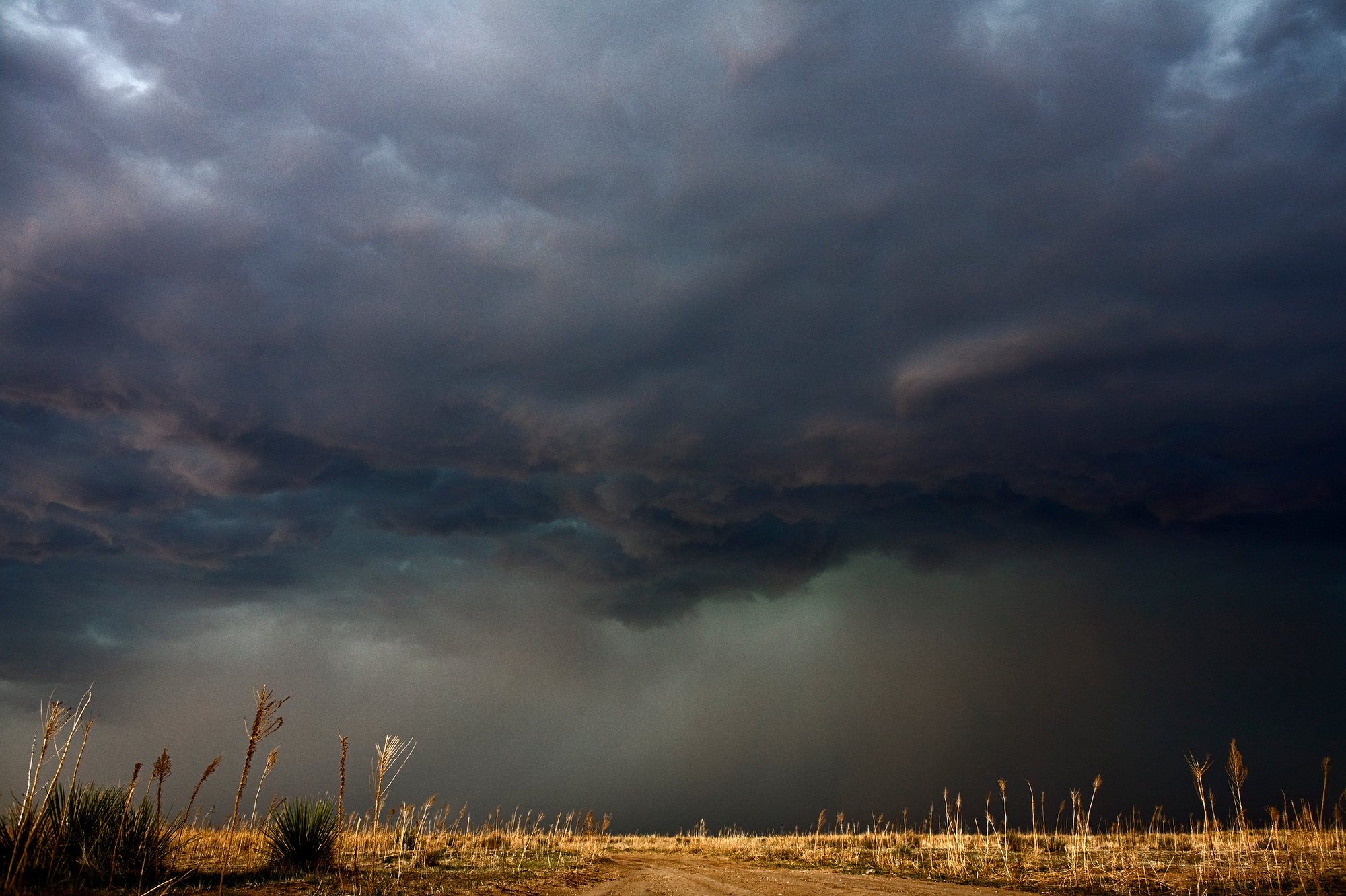
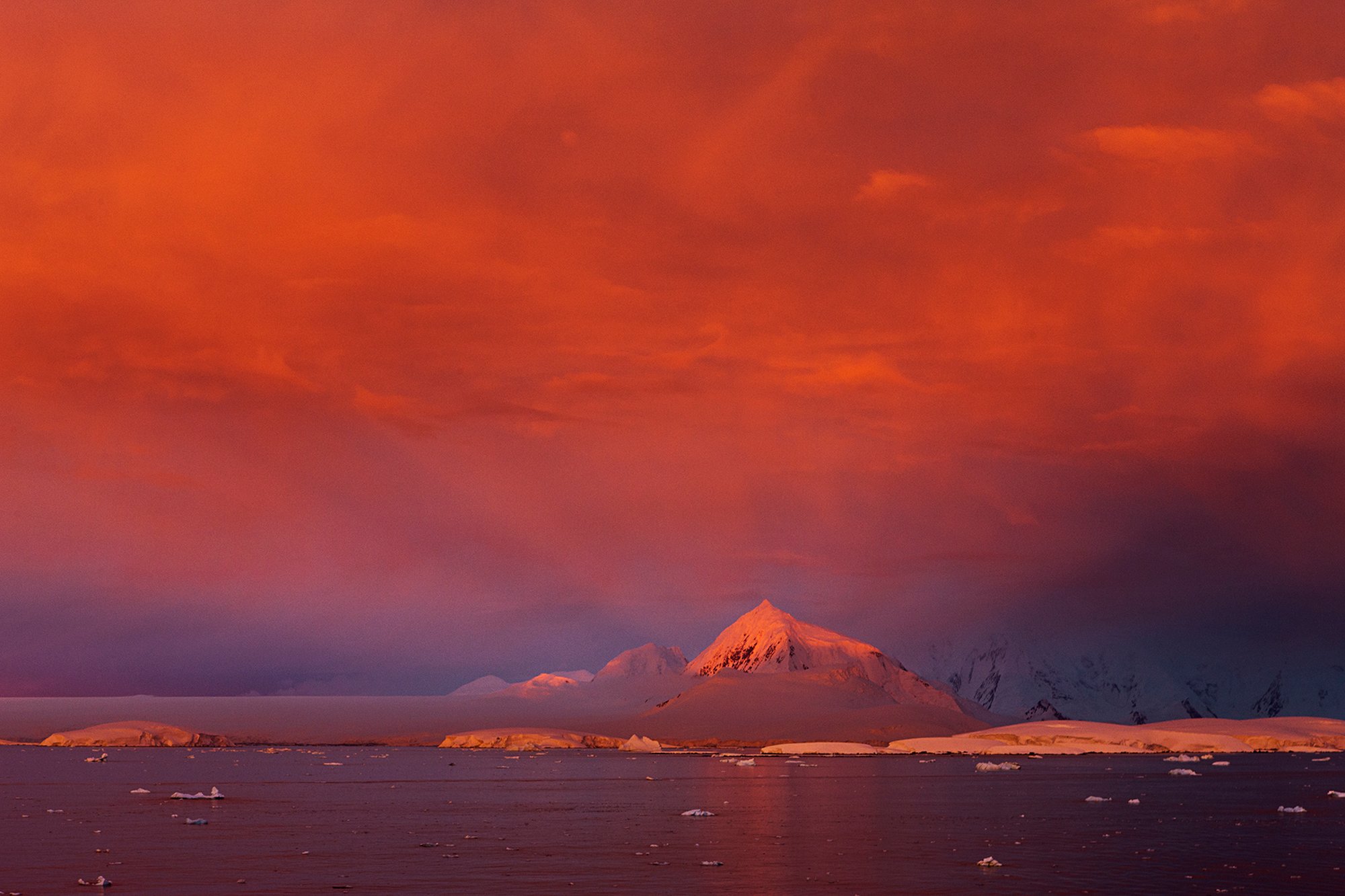
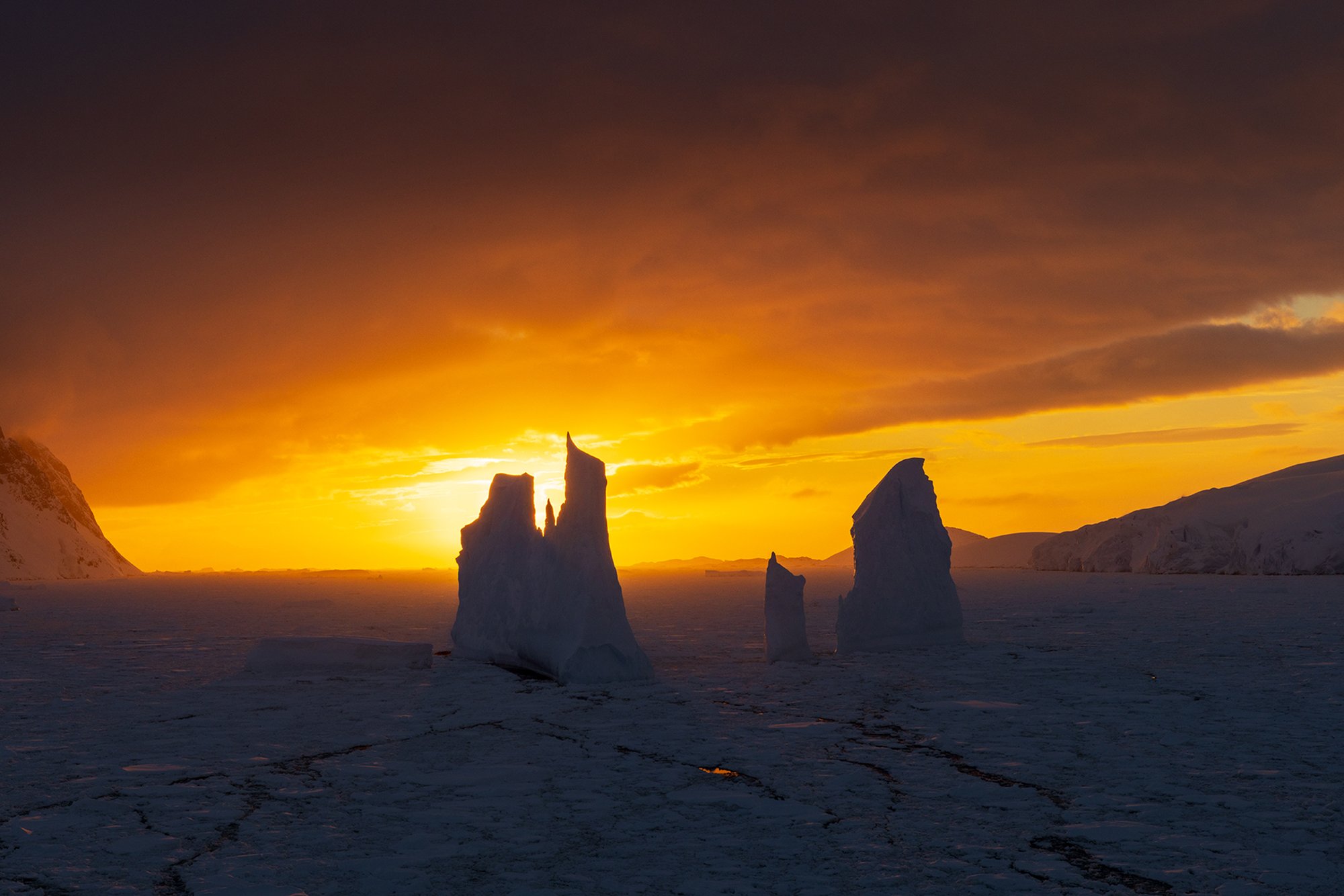
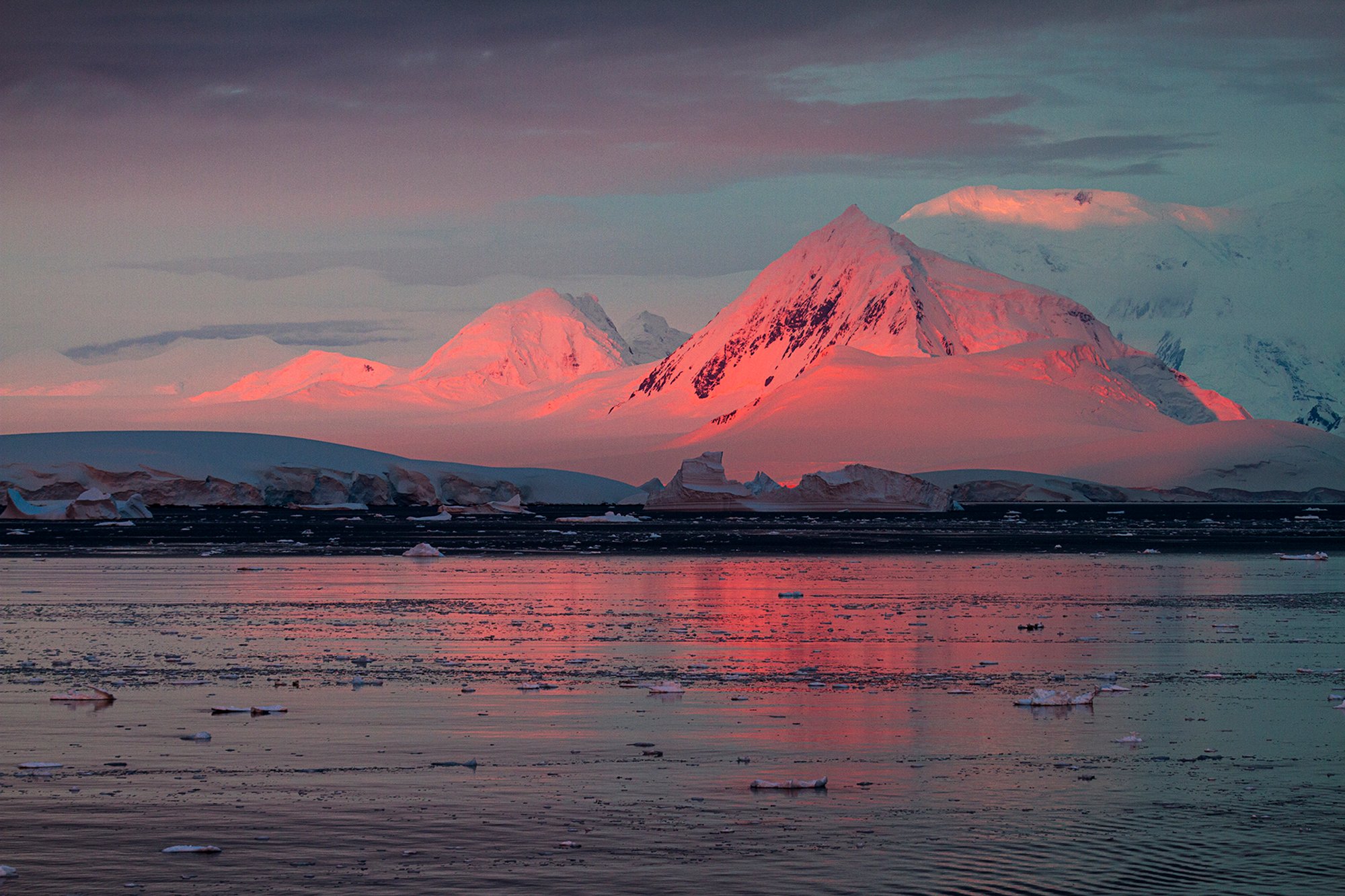
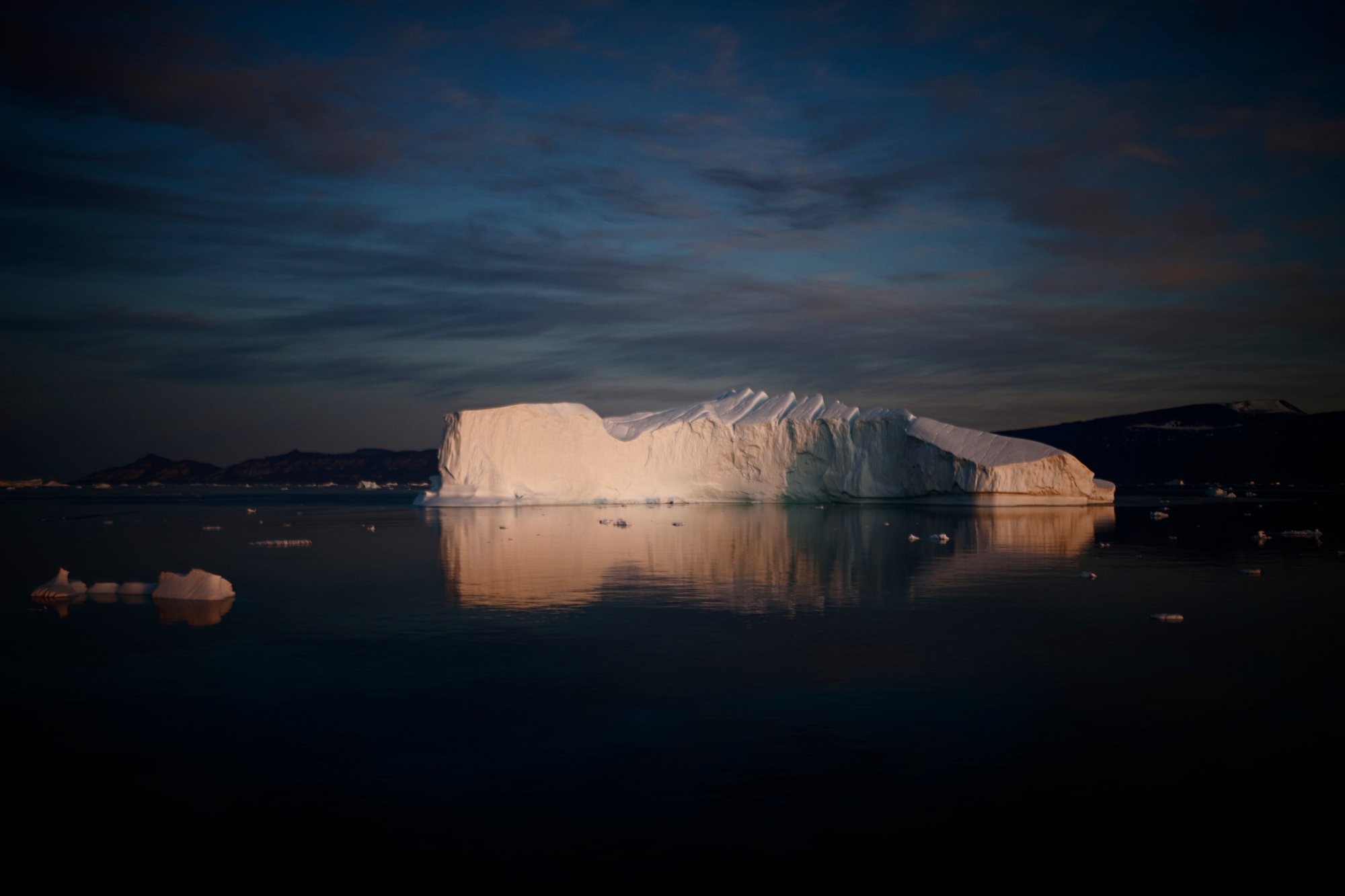
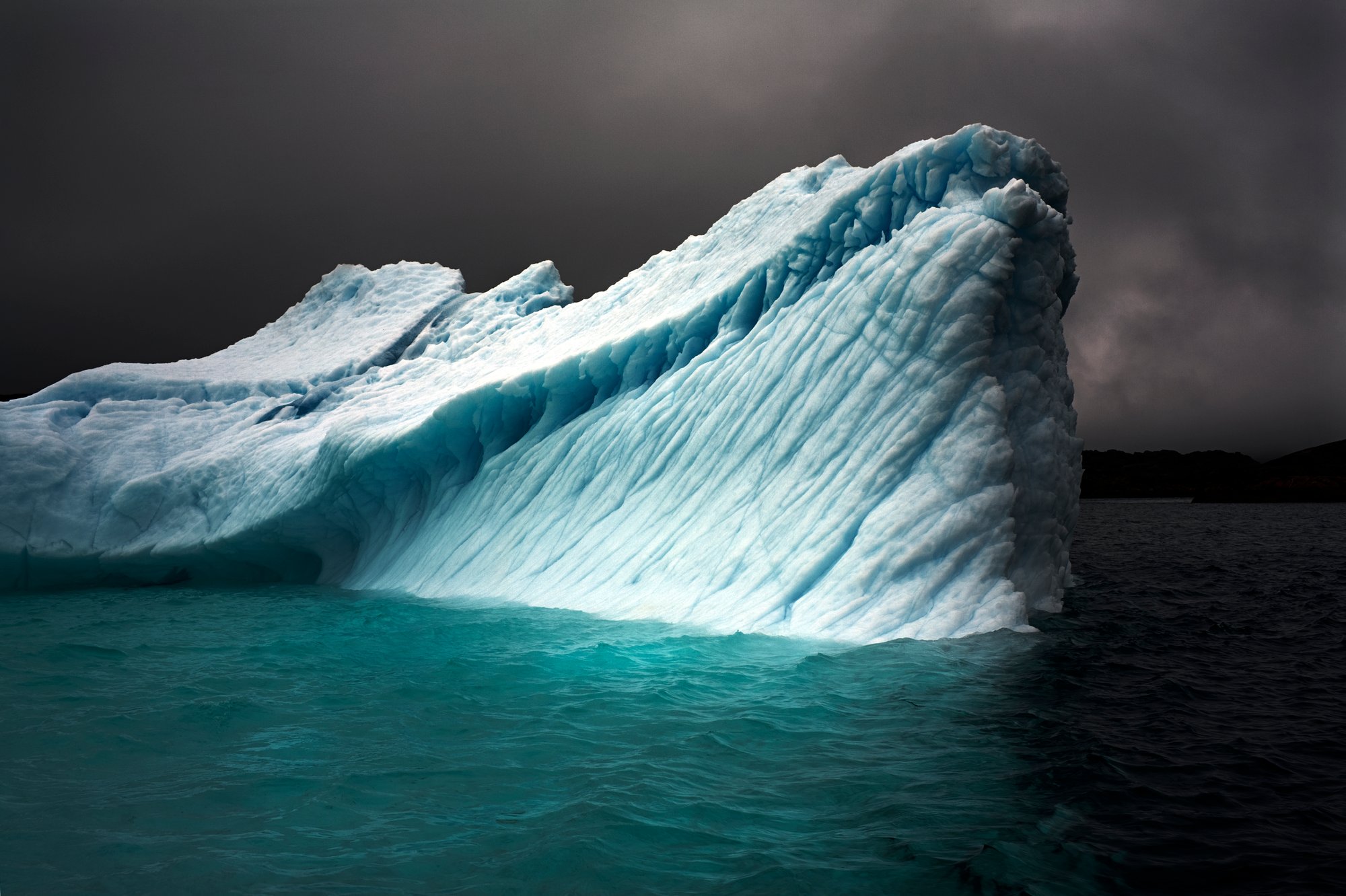
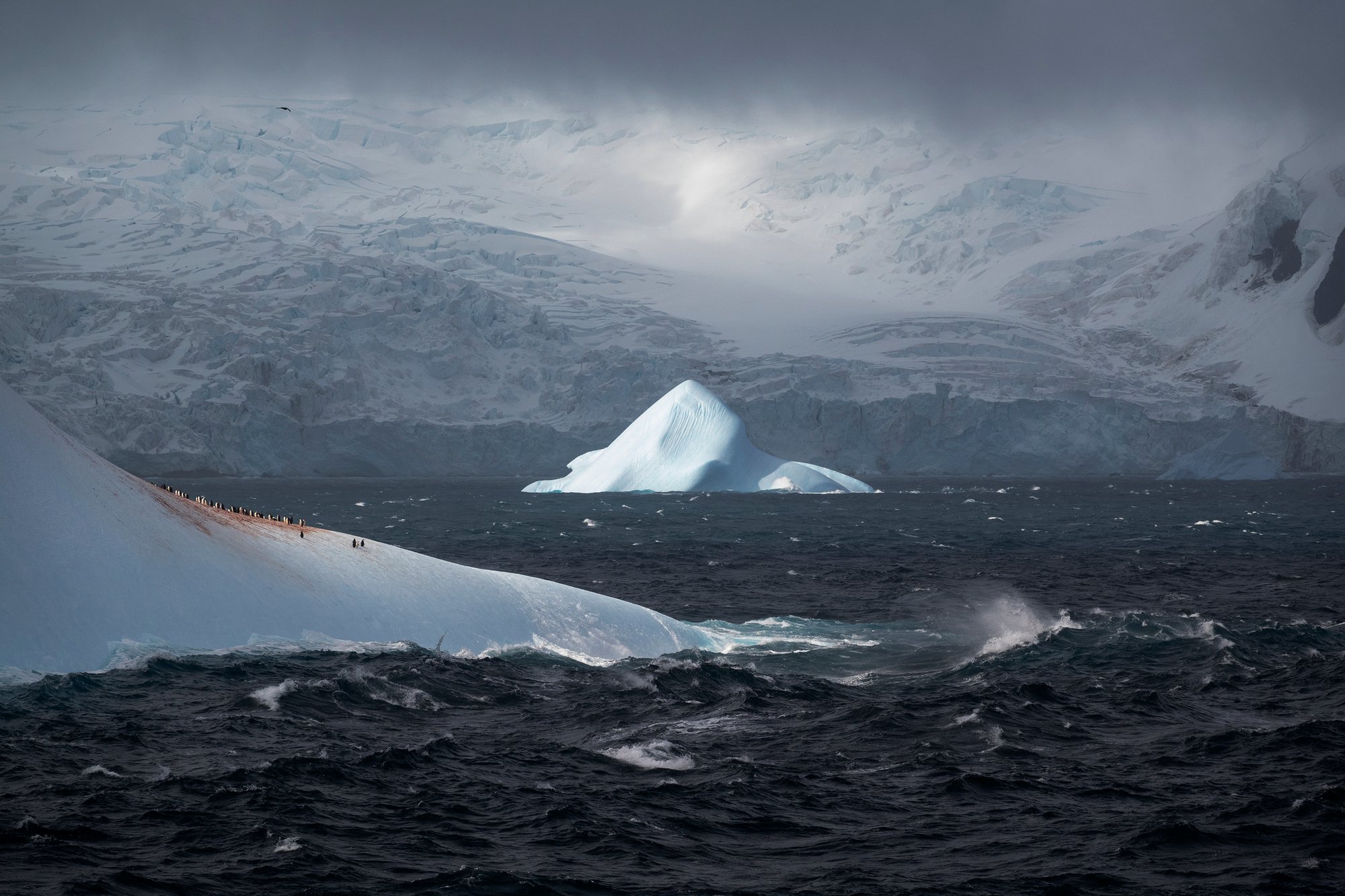
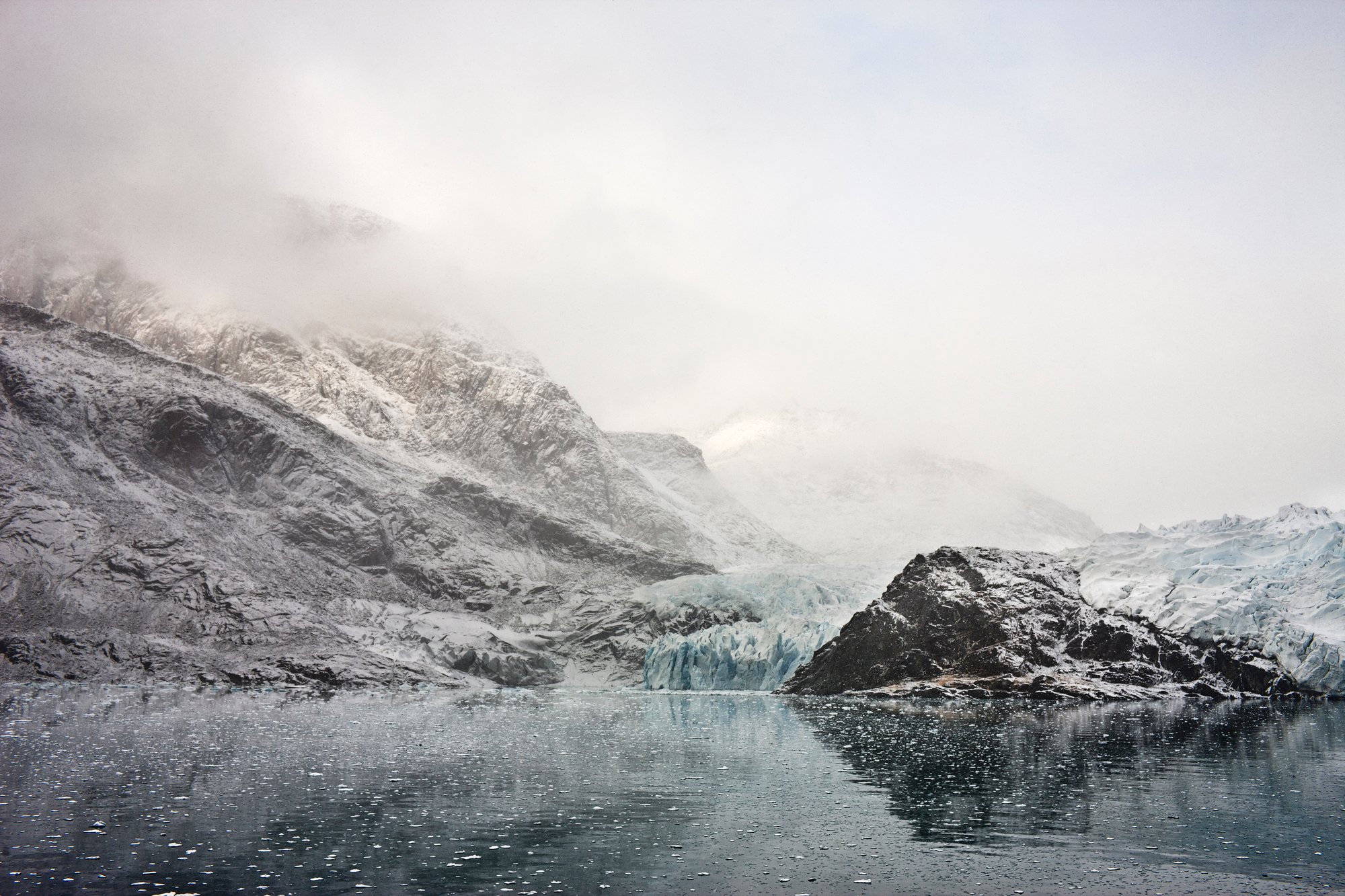
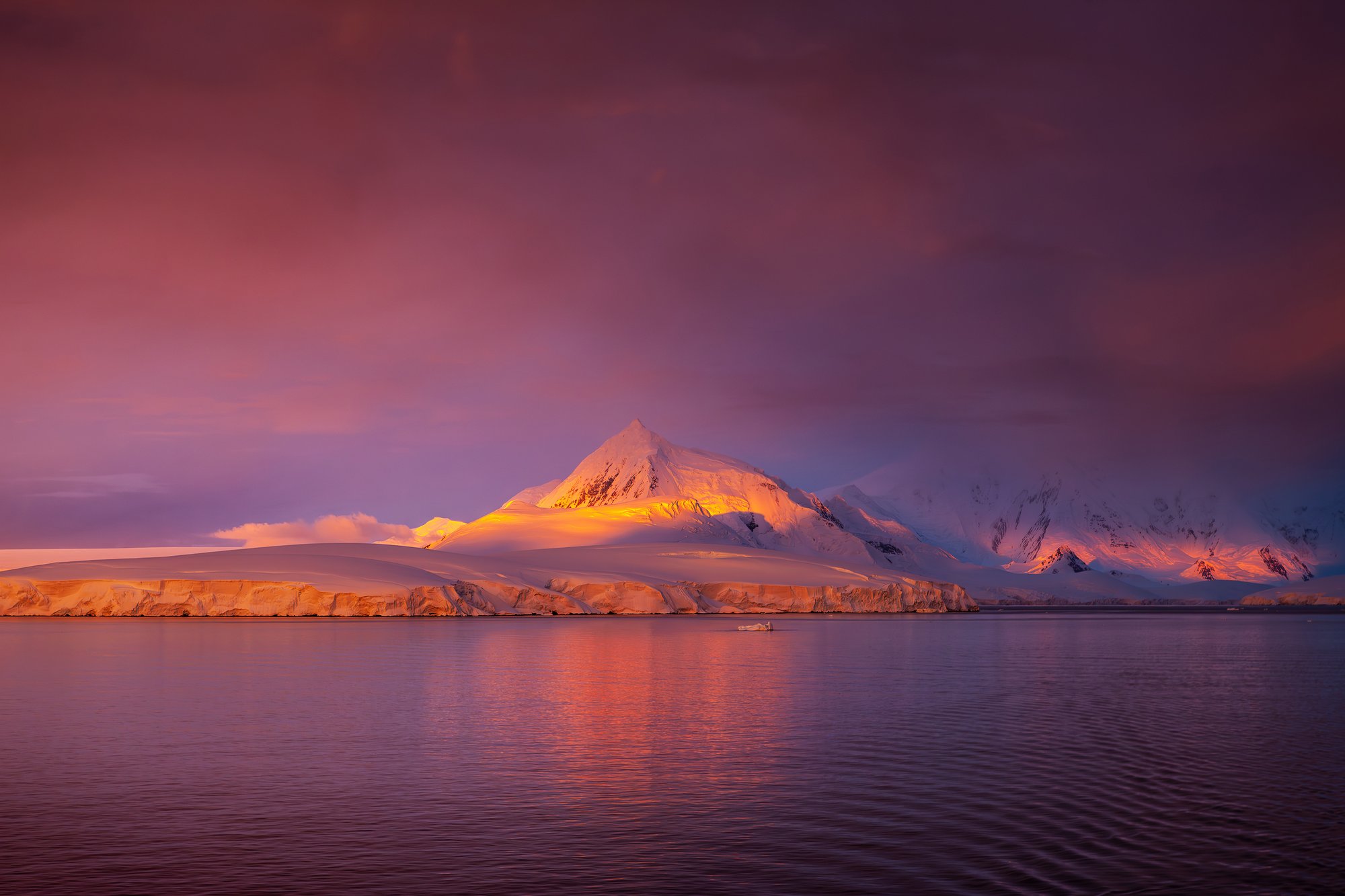
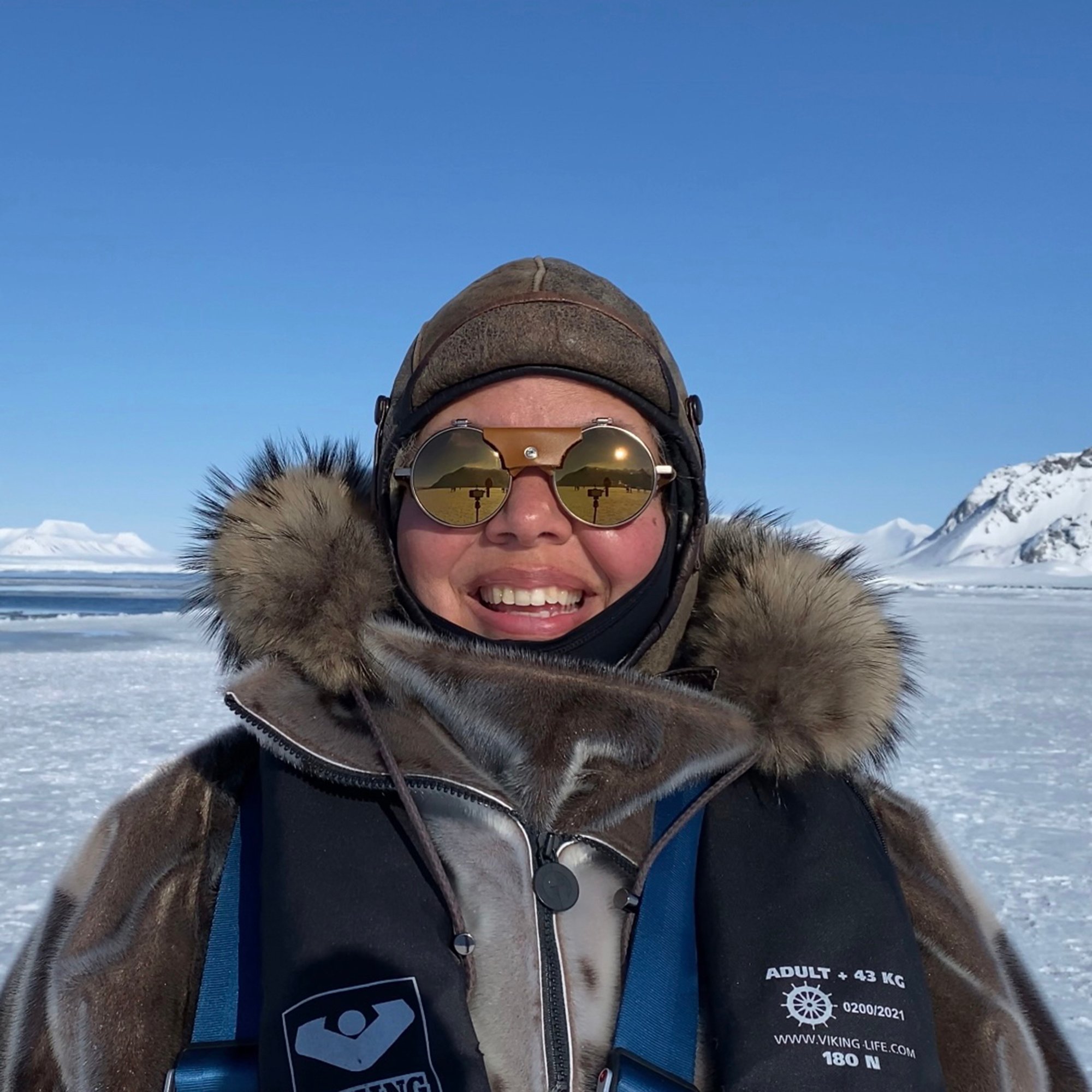
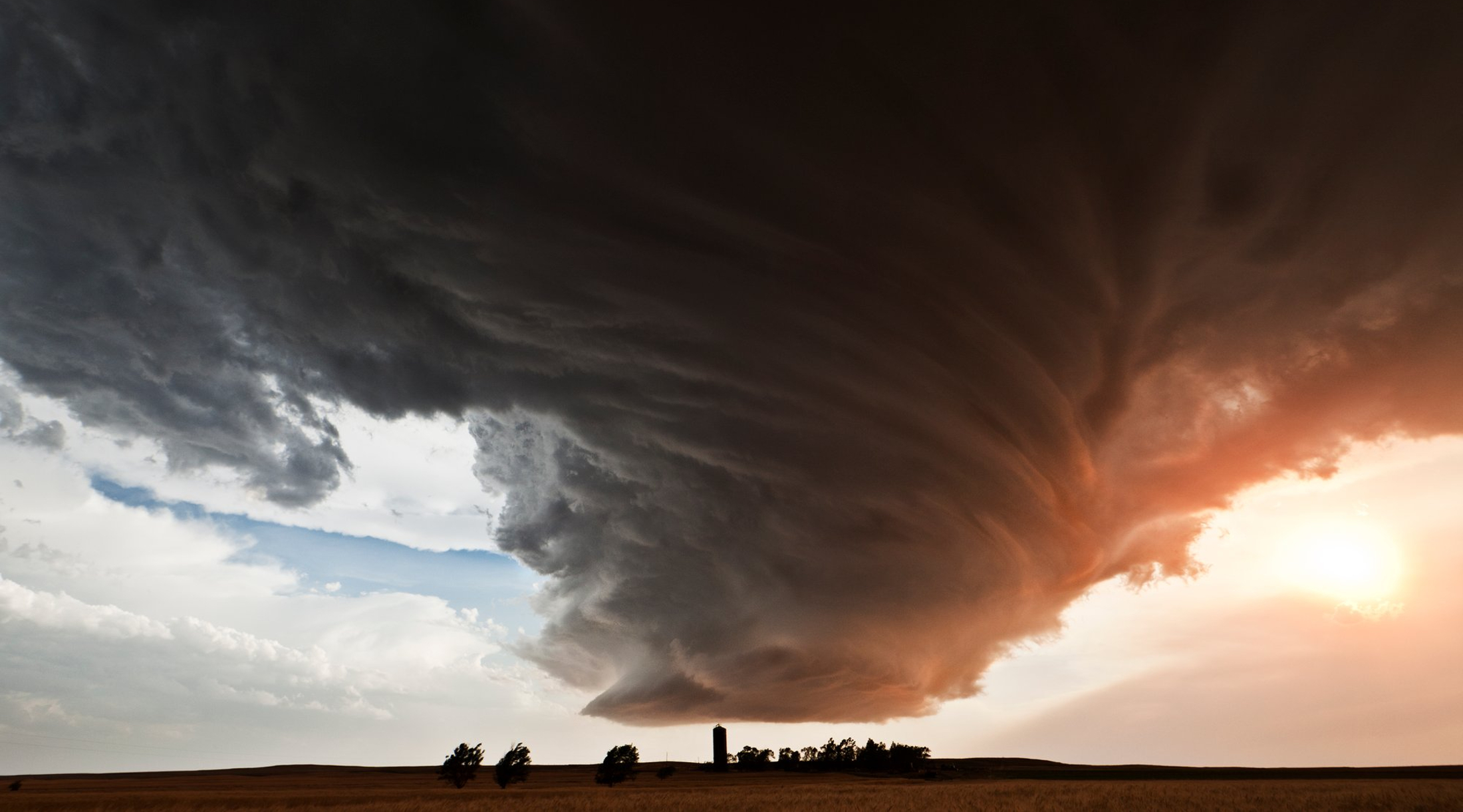
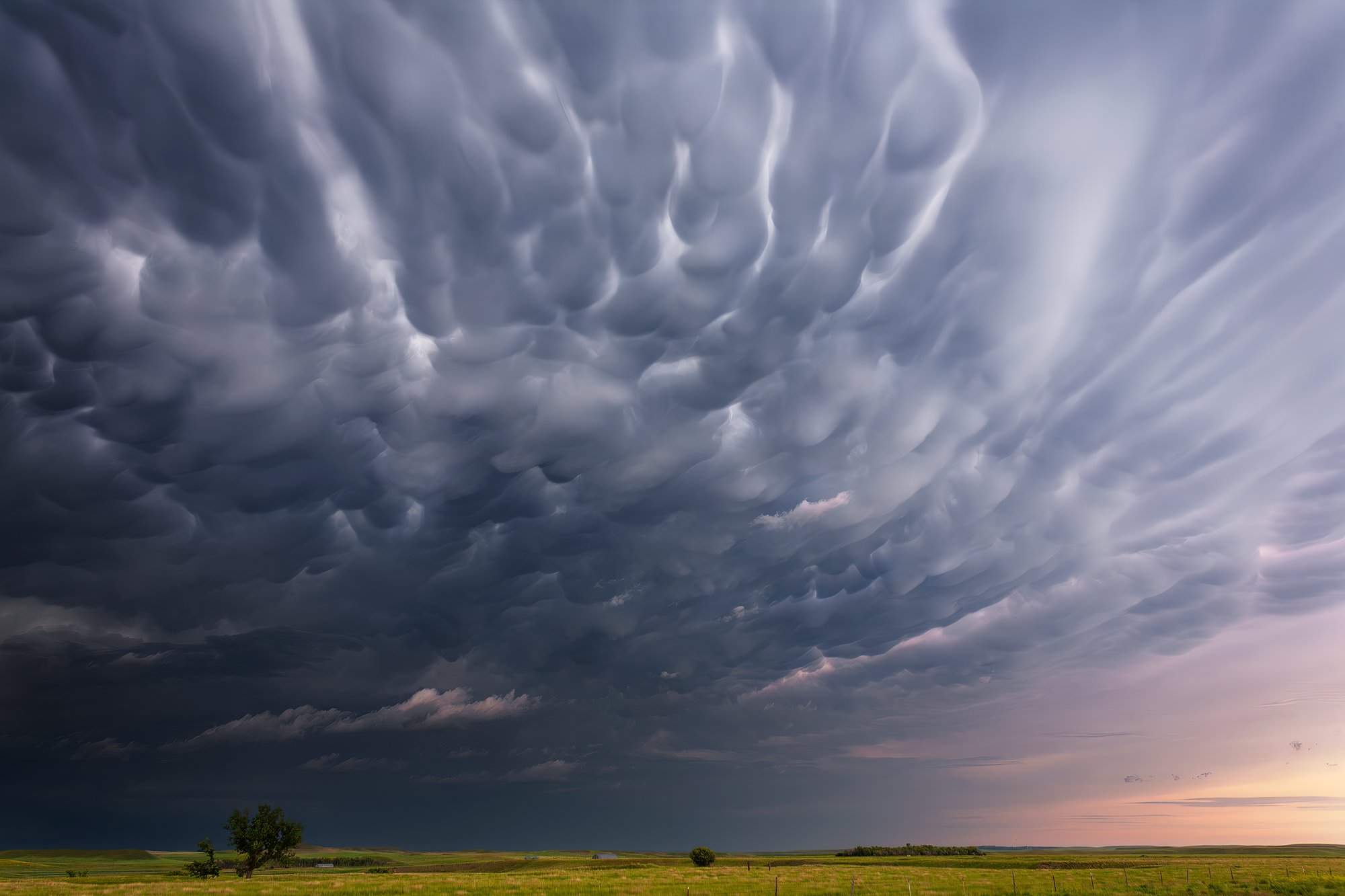
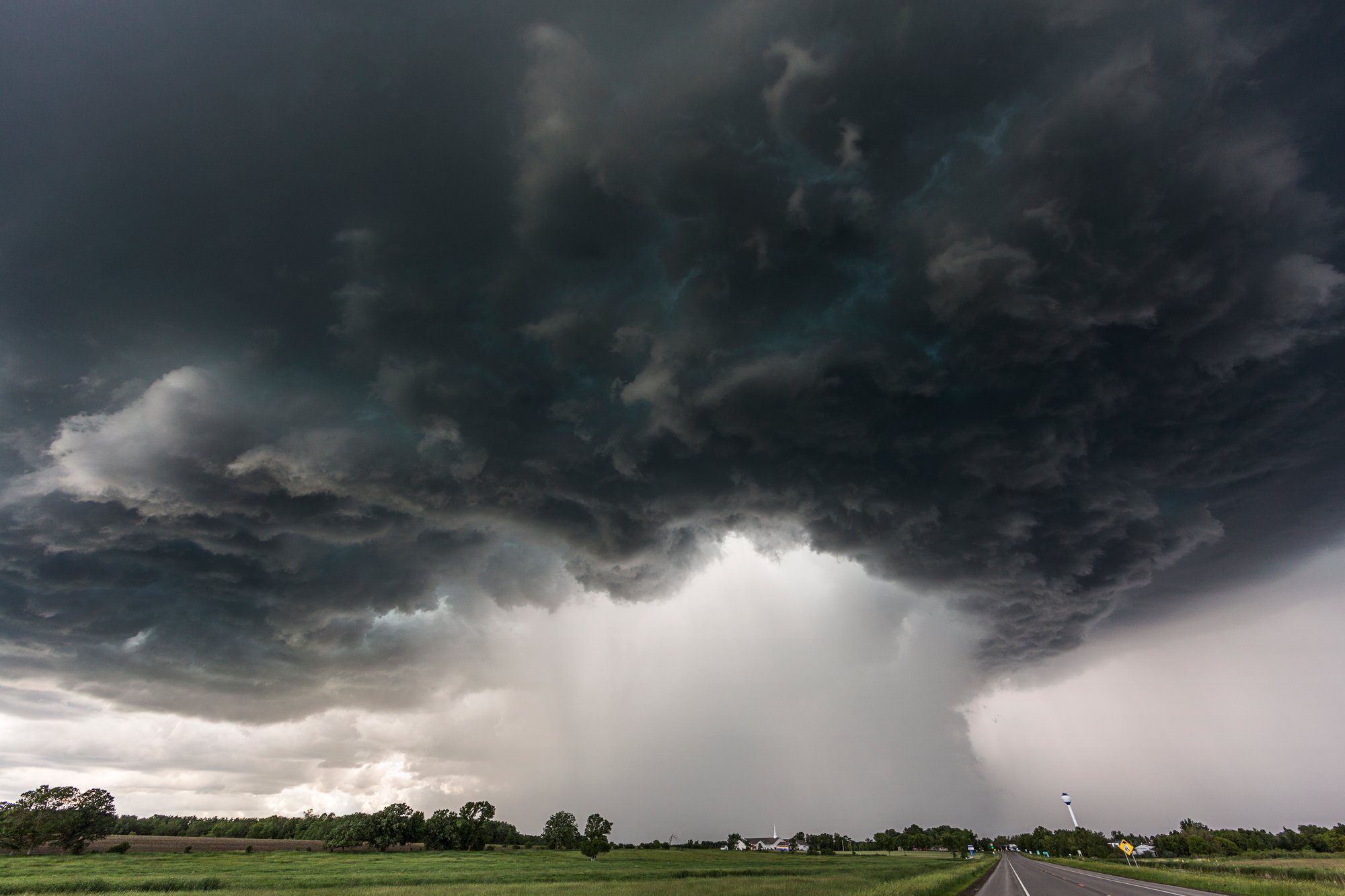
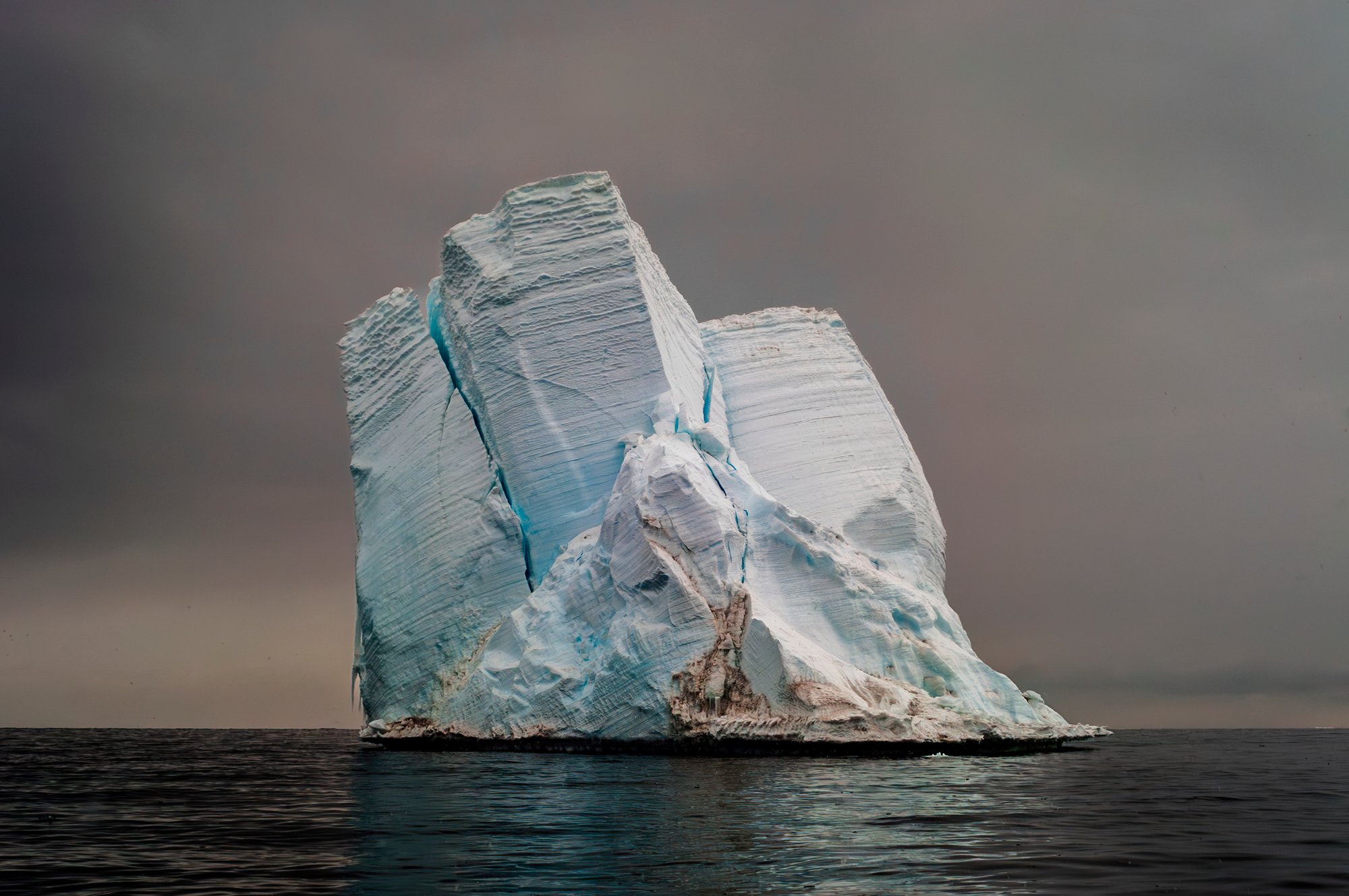
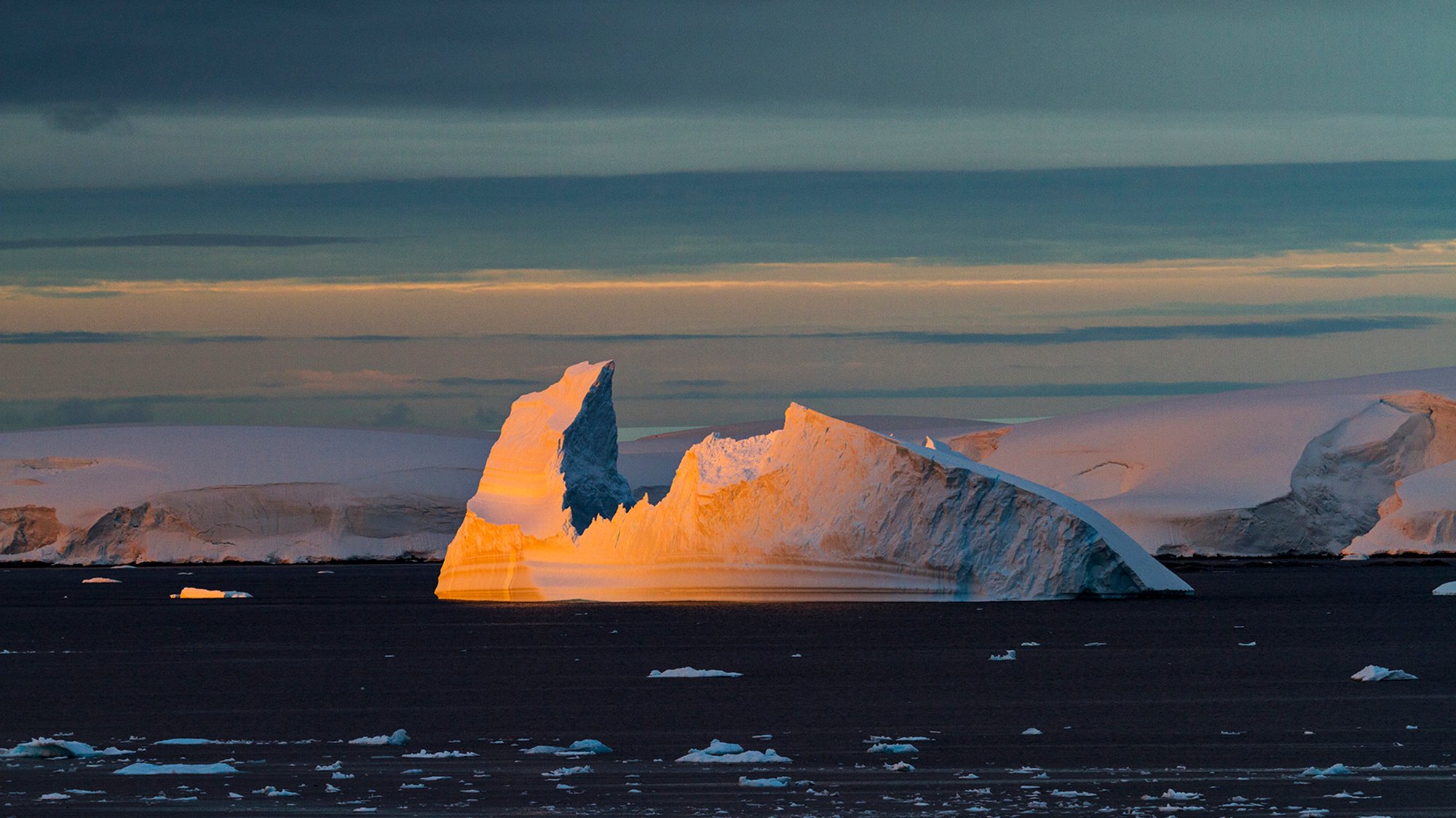
Shortlisted for the Prix Pictet in 2025, photographer Camille Seaman has spent years making images that insist we are not separate from nature. Best known for “The Last Iceberg”—portraits of Arctic and Antarctic icebergs that helped bring her wide attention—Seaman later turned her camera toward a different kind of sublime: the supercell thunderstorms that can spin into tornadoes, unleash grapefruit-sized hail, and darken whole landscapes as if daylight itself has been erased.
Her images aren’t interested in spectacle for its own sake; they’re about duality—beauty and terror, creation and destruction—as well as the interconnectedness of nature’s forces. Seaman spoke with Jim Casper for this interview in LensCulture. What follows is an edited version of their conversation.
Jim Casper: Hi Camille. I’ve been looking forward to this conversation with you. I want to talk about the storm work, the iceberg work, and also the bigger questions. Why photography? What do you think about activism? Do you consider your photography to be documentary or art? But let’s start at the beginning. What drew you to photography as your medium?
Camille Seaman: As a small child I was fascinated by cameras and photographs, but we were very poor, so we didn’t have fancy things. Our family had one of those Instamatics with the cartridge, and they’re… honestly, they’re crap. I remember being five and thinking, Why is it so grainy? Why isn’t it sharp? But my family would give me the camera because I wouldn’t cut people’s heads off. So, even at a young age, I intuitively knew something about photography.
Then as a teenager I went to the “Fame” high school in New York City—the High School of Music & Art. I was accepted as a visual art student for drawing. Drawing was one of my superpowers. And that school required us to go to museums constantly. We had free access to every New York City museum, even some private collections. So I grew up looking at art.
At the same time, things at home were disintegrating. There was a lot of emotional, sometimes physical abuse. I left home when I was 15, and I was essentially homeless in the middle of New York City. I was sleeping on friends’ couches just to stay in school. I worked odd jobs—one at Woolworth’s with a lunch counter so I could get free food, and another at a one-hour photo lab. They recognized I was in trouble and they gave me an old 35mm film camera and said: go out and photograph your experience. My friends were punk rockers and art hags—so I was photographing our mischievous lifestyle. It gave me an excuse to do something creative and constructive at a time when I was angry and lost. And that was my first deep dive into photography.
After high school, I went to university at the New York School for Art, where I got a BFA. I had really amazing teachers. I took a photography class with Jan Groover who taught me, among other things, how a photograph was a two dimensional flat plane, but by playing with shapes and lights you can make things look like they are receding or floating.
But it wasn’t until I was 29 that I realized that cameras and photography had meaning for me. It happened for me around the time of the World Trade Center. One of the jobs I had as a homeless teenager was being a New York City bike messenger. I delivered to the World Trade Center all the time. So when those buildings fell, and I had pictures of me and my friends—and that was our landscape—I understood the importance of a photograph as a historic document for the first time.
JC: That’s interesting — the “importance of a photograph.” Can you go into a little more detail about that?
CS: So many of us have pictures of our parents and grandparents and their parents. We might not know much about those people, but we know they’re our ancestors. We look at those photos and try to see ourselves in them, try to imagine their lives. In my family we didn’t have many pictures like that. And something about having photographs of those two buildings made me realize that my daughter—she was almost two when they fell—she would never know those buildings in the way I knew them, except through photographs or film.
That makes the photographs historically relevant. Not just for me, but for her, and for people who never knew that world. Photos are a kind of proof. Like the way we have pictures of the Civil War, or—controversially for me—Edward Curtis and what “native” was supposed to look like. These images become documents, whether we like it or not.
As I get older—and I’m on the other side of twenty-plus years in the polar regions—I’m more aware that I’m not just photographing the external world. I’m photographing myself, too. My state of mind is in those photographs. You can see my way of seeing change over time.
JC: What attracted you to go to the Arctic?
CS: It was unexpected. I gave up my seat on an oversold flight—Oakland to LA—and they offered a free round-trip ticket anywhere they flew. I took it. It was Alaska Airlines, and I chose to go to a place on the Bering land bridge. I’m Shinnecock, from Eastern Long Island—and I was curious about the idea of that long human migration, walking across frozen sea ice, and then walking across the entire continent to end up on the East Coast.
When I went there—minus 35 Fahrenheit on frozen sea ice—I felt like I met my planet for the first time. I understood I was standing on my rock in space. I was made of the material of the planet. I’m an earthling.
The first time I was in the Arctic, I wasn’t a photographer. I had a camera, but I wasn’t a photographer. After 9/11, something switched on. I remember sitting on my couch holding my daughter, watching the retaliation begin, and thinking: What can I do to counter this darkness? The only thing I could think of was: Make pictures. Not I’m going to document climate change—I didn’t have that framework. It was: I’m going to document my life.
And then there were these other doors that opened—my grandfather always encouraged us to walk through a door, even if it wasn’t one we planned to open. Say yes to opportunities.
That set off a chain of events. Later I decided to go to Svalbard—north of 80 degrees into the pack ice, seeing polar bears, with the intention of making lots and lots photographs. And I was hooked. I took five different formats of film camera and photographed the hell out of the trip.

JC: At that point you decided you wanted to do photography seriously—without going back to school. How did you teach yourself?
CS: I was 32 and I realized: I want to do photography. I didn’t even know what that meant, but I wanted to do it. And I wasn’t willing to go back to university. I was older, too. I had life experience, business experience. I didn’t have time to be shy. I needed to learn who I was visually as quickly as possible and go with it. So instead, I started calling photographers whose work I admired. I asked very specific questions.
Some were like, “Why would I tell you?” There was a scarcity mindset. But others were generous. I called Steve McCurry and asked: “How do you make such soulful portraits with available light?” He said: “Come to Tibet with me.”
So I went. And he kicked my ass. I was dragging around multiple camera formats, and he challenged me: Choose one camera body, one fixed lens, for one full year. That was huge. I chose my Leica with a 35mm 1.4, and that was it.
But the bigger gift was how he taught me about light. He’d see me photographing in harsh, bright conditions and literally yell, “What the hell are you doing in this light?” Then he’d pull me into an alley with soft light—no harsh shadows—and show me. He said: “It doesn’t matter how good your composition is or your subject is—if you don’t understand the quality of light, your images won’t withstand the test of time. This is not a sprint. This is a marathon.”
JC: You’ve talked about “finding your voice,” and there’s a practice you described—printing and living with the pictures. Can you talk about that?
CS: It’s critical to be able to say, “This is what makes my work mine.”
Back in the film days—with 24 or 36 exposures per roll—I’d print 4x6s and put them somewhere I had to pass all the time, like a hallway to the bathroom or kitchen. And every time I walked by, I’d look.
First pass: remove what isn’t what I intended. What isn’t what I want my photographs to be. If it feels too familiar—like I’ve seen someone else do it—take it off.
Then I would put up the ones that aren’t me and live with them for a month, asking: Why isn’t it me? And you have to articulate it—say it, write it down. “I don’t like crooked horizons.” “The focus point isn’t working.” “The composition is weak.” “This speaks too much like an Alex Webb.” Wherever you can see other people’s influence too strongly.
After that, you put up what’s left—the ones that are you—and every time you walk by you say: “This is me because…” Being able to articulate the way you see the world and how that’s represented is really important. It’s ironic because I got so frustrated with art school and talking about intention—and here it was. You do need to state your intention.
And in this age where everything is on a screen, nothing replaces the power and impact of a photographic print.
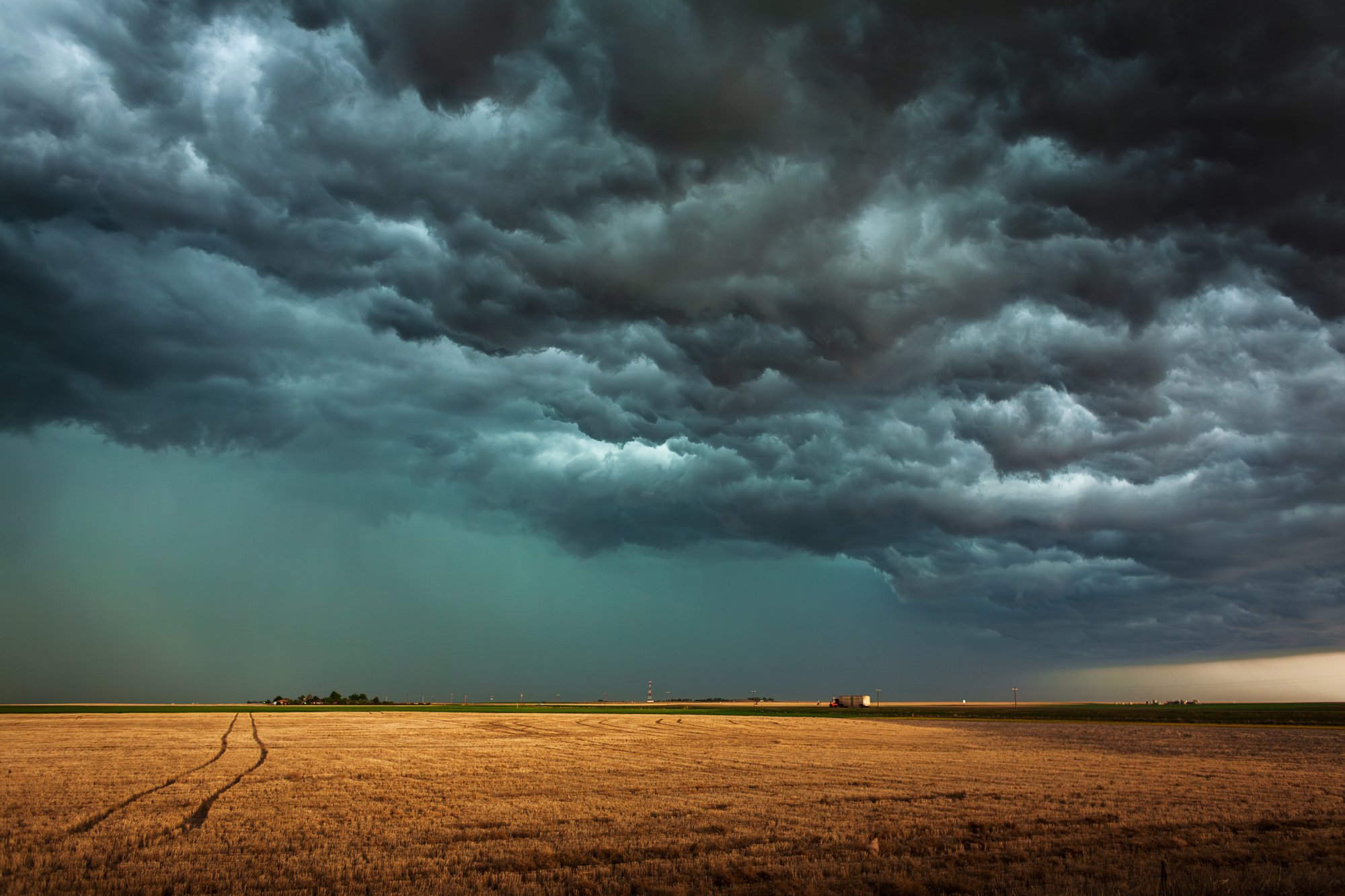
JC: Returning to storms for a moment—are supercells and tornadoes new, or are we just paying attention differently now?
CS: Tornadoes can happen anywhere in the world. The most tornado-prone place on the planet is actually Bangladesh—but you wouldn’t chase there because the infrastructure isn’t there, it would be too dangerous.
The United States has what I call the perfect playing fields. You have the jet stream dipping down and looping back up around Texas and Oklahoma, and warm, moist air pushing in from the Gulf of Mexico. When these collide, you can get rotation—different wind speeds at different elevations. Supercells are isolated individual storms—unlike a storm front or shelf. From a satellite they can look like a white circle, up to 50 miles wide and reaching up to 75,000 feet.
Traditionally, only about 2% of supercells produce a tornado. But as the Gulf of Mexico gets warmer and pushes more warm moist energy, we’re seeing more tornadoes, more outbreaks—hundreds in very short periods. And instead of touching down briefly, some are sustaining across states. That level of persistence and destruction feels new.
And then there’s the built environment. In places where tornadoes are a fact of life, people are still doing stick construction. If there’s anywhere you could imagine building with the land—half-earth homes, turf roofs—the Great Plains would be it. But there’s a mentality about what a house “should” be in the US.
I remember Greensburg, Kansas—wiped off the map. Walking through what had been a pizza place: roof gone, front gone, and a table still set with fork and knife like nothing happened. Two-by-fours spearing straight through brick. Debris is no joke.
And when they rebuilt, they did things like glass houses. Not thinking about environment—thinking, “Here’s our chance to be fancy.” Glass. In tornado country. It’s wild.
JC: Let’s talk about storms versus icebergs. They feel like opposite subjects—one fast, one slow. How does the act of photographing differ?
CS: In both situations you have only seconds to make a photograph. With icebergs, I’m usually on a boat or ship and I’m not captaining it—we’re moving. It’s rare I get to say, “Can you back up?” There have maybe been two captains in my entire career who let me circle an iceberg again.
With storms it’s higher stakes because there’s danger involved. We know we have 30 seconds. The people I chase with know: They tell me, when I say “get in the car now,” I say it once. I’m not going to say it again so you can get “one more.”
So you have to be hyper-present. And ironically I spend less time living in the viewfinder. I’m looking with my eyes, then the camera comes up—bang. I’m not doing spray-and-pray. Most of my favorite images are a single frame. One frame because there was no time for another.
JC: That danger is real. What motivates you to take those risks?
CS: In the beginning it was awe. Just being overwhelmed by awe. To stand before something 50 miles wide reaching up into the sky—the light, the colors, the smells, the sounds—there’s nothing like it. It’s overwhelming.
I felt something similar the first time I saw icebergs. I remember crying because my brain couldn’t comprehend what I was looking at. I thought of my grandfather’s words: This is our ancestors’ water. How many ancestors is that? How much time is that? What are we part of that is beyond numeration?
Both cloud and ice are transient—there for a moment, gone the next. That correlates back to us. We’re fleeting too.
JC: When people see the work in person—as prints—what do you notice? What do you hope happens?
CS: I love going to exhibitions where people don’t know I’m the photographer. I walk around and listen. With Storms, I hear fear: “That looks scary.” “I could never do that.” They can’t imagine it’s real.
With the ice, people say, “I’ll never look at ice the same way again.” That’s meaningful to me because I’m trying to make a portrait of an iceberg—not just a shape or object, but a glimpse into its being, its personality, its life. But I also hear: “I could never go there,” as if it’s beyond their world.
In both cases, people feel like the subject is outside the realm of their personal existence.
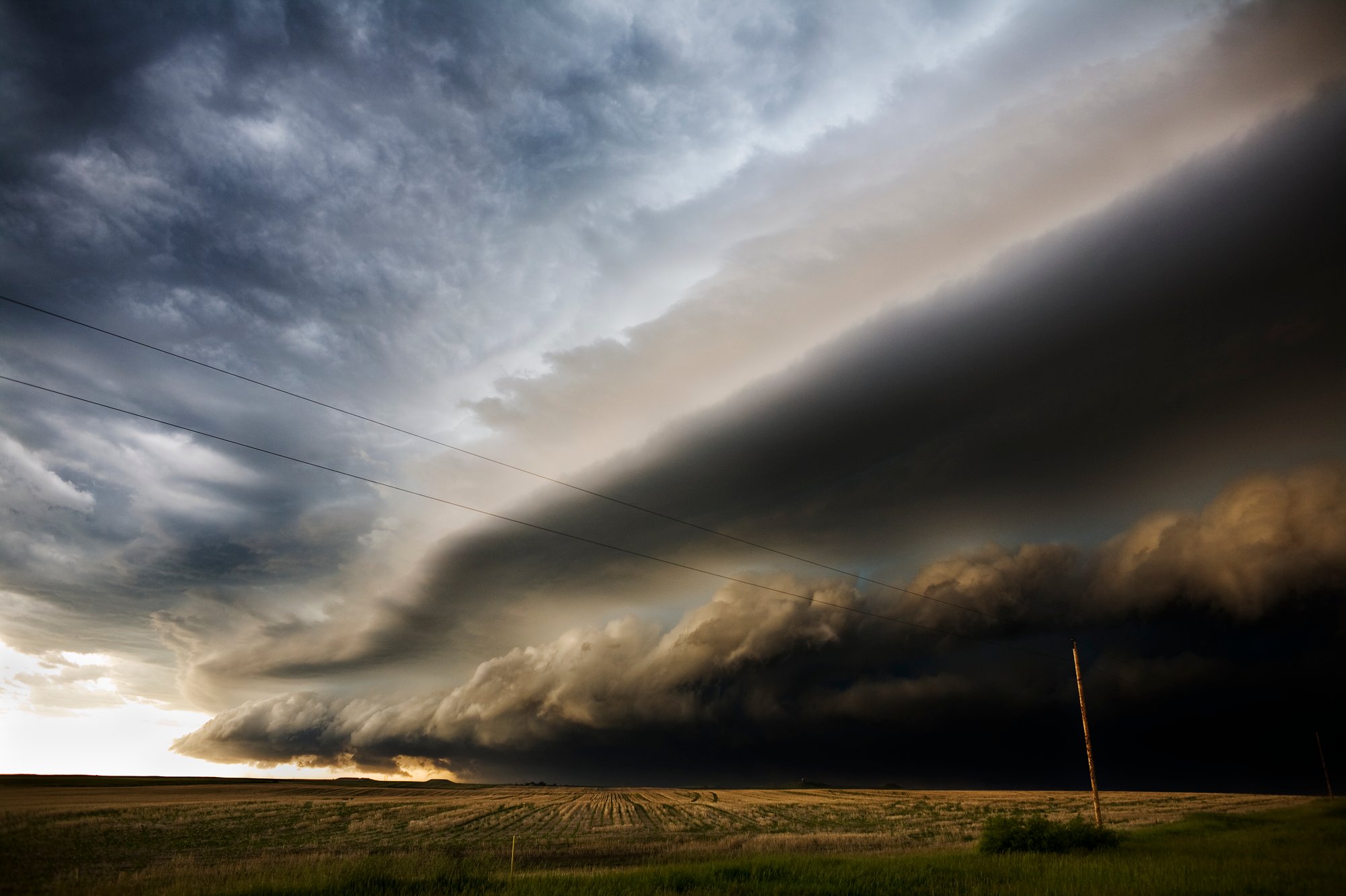
JC: Does your work with icebergs and the storms trigger anything like grief for you?
CS: More and more, yes. It got really bad in 2011. I left the Arctic and thought it might be for good because I was so depressed. There was so little sea ice. We were coming across bears all the time. I had anxiety dreams about having to get away from a bear.
I felt like we weren’t moving fast enough. Nobody was taking it seriously enough. And my images weren’t having a significant impact. I had this feeling: If I’m not part of the solution, I’m part of the problem.
That’s when I became a TED Fellow—they mentor you to speak more articulately. They put us in rooms with powerful people—Al Gore, Bill Gates, others. I don’t know what impact it had, but it got us to the table. I later became a Knight Fellow at Stanford. I took nonfiction writing classes—that became the text for my first book. I took acting classes for being on stage—learning to commit. I took executive communication classes so I didn’t feel uncomfortable in rooms like that.
At the same time, in my private life I was reducing single-use plastic, switching to wind and solar electricity providers, reusing and repurposing, planting food, thinking about materials. Those changes mattered. It was like a weight coming off my shoulders—my footprint felt smaller.
And something shifted in the work. My early work was very noir. But later I started seeing more color. I realized something in me was lifting—brightening. Maybe not hope exactly, but a sense: if I can change in my own life, the world can change.
JC: You’ve also moved—first Ireland, and now Denmark. What’s changed for you in this new chapter?
CS: Being sent to Ireland in 2017 gave me distance—Buckminster Fuller’s idea that you can’t solve a problem from inside it; you need to step out. I started thinking about building refuges—pockets where biodiversity could survive and re-seed itself. Ireland seemed perfect for that.
But the reality there was different. As an Indigenous person, a person of color from the US, it was fascinating to witness generational trauma—what it looks like in communities. Still, I’m proud that by the time I left, I’d influenced neighbors: insulation, solar panels, even electric vehicles. That matters.
Now I’m in Denmark. We found a rural property in South Jutland—two hectares, an 1870 farmhouse, well maintained. We installed geothermal ground-source heating, solar panels, a battery, hyper-insulated. It’s consistently warm. Full south-facing, so even when it’s gloomy there’s light. And it’s a different way of living.
I’m trying to stay much closer to home now. If you’re in Denmark, “close to home” can mean Iceland, Greenland, Svalbard, Norway. And it’s spectacular.
JC: As we wrap up, is there anything central to Storm—as a theme—that you want viewers to understand when they look at these photographs?
CS: Many people look at my storm photographs and see terrible beauty, or menacing power. And what I was reminded of doing the work is something like the power of Shiva. People think of Shiva as the destroyer—but Shiva is also the creator. You cannot have creation without destruction.
Part of the fertility of the Great Plains is because of storms. I’ve seen wind literally sucking up soil—and because of charged particles in the atmosphere, that soil becomes electrically charged. When it falls with rain, it’s fertile. It has energy in it.
It’s easy to say all destruction is bad. But a storm implies something that will pass. You weather a storm. We don’t live in a perpetual state of storm—it’s an event.