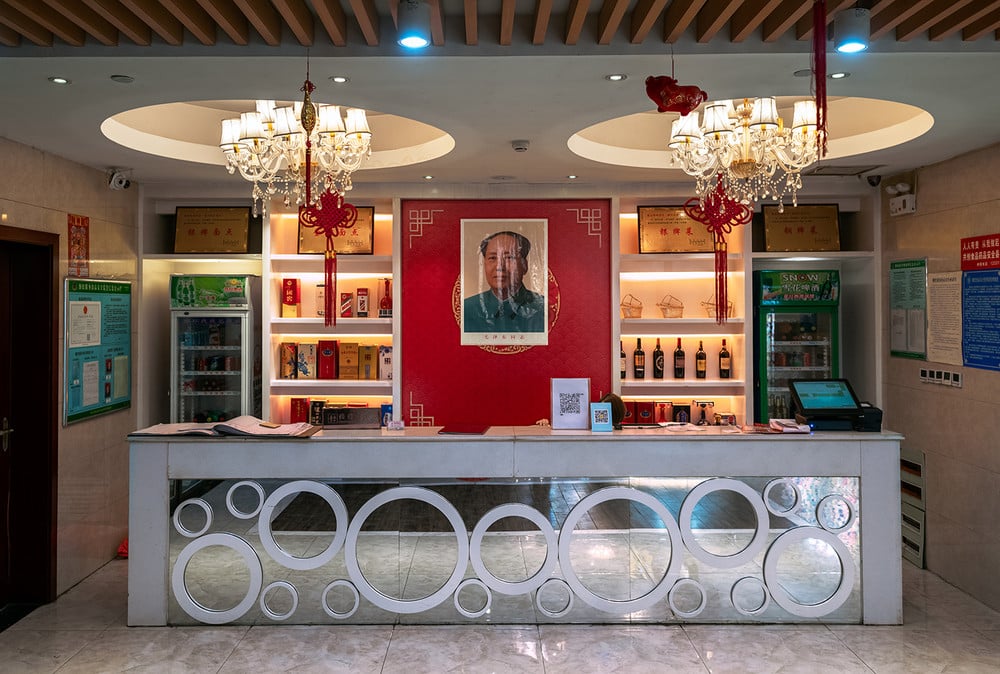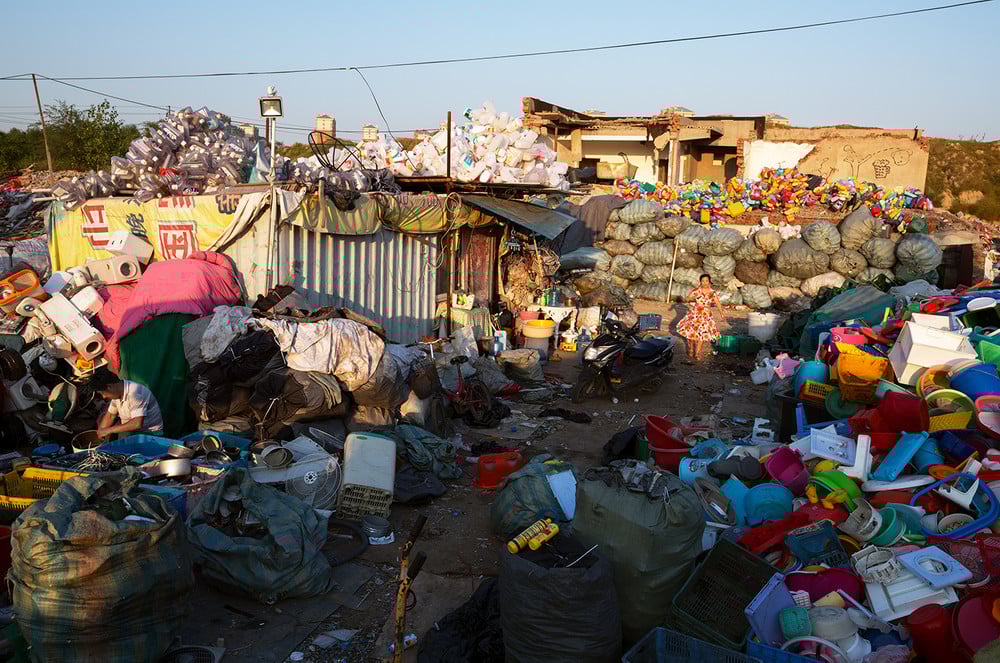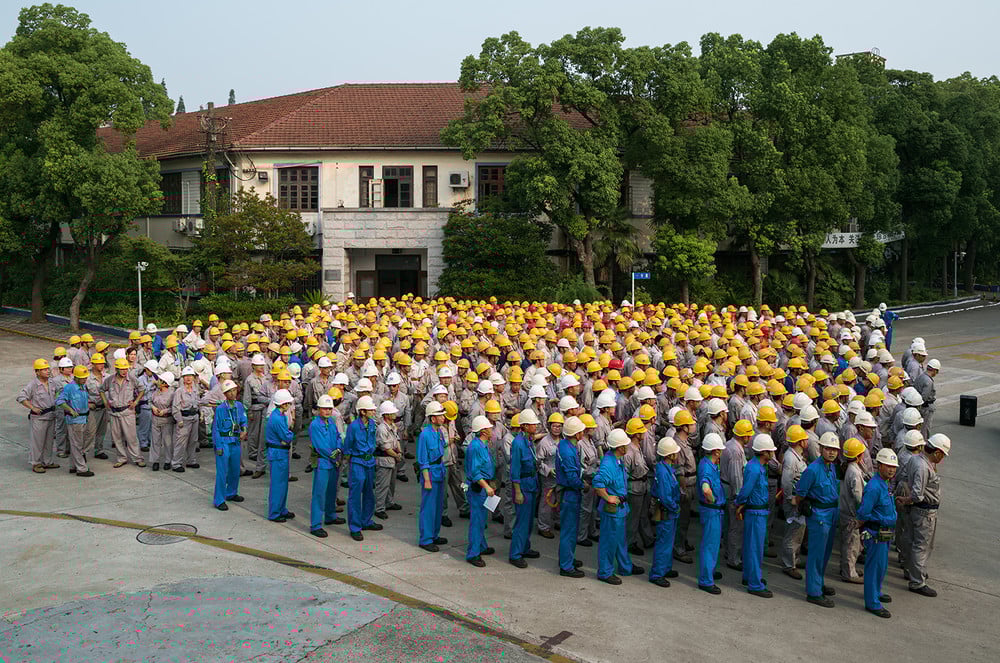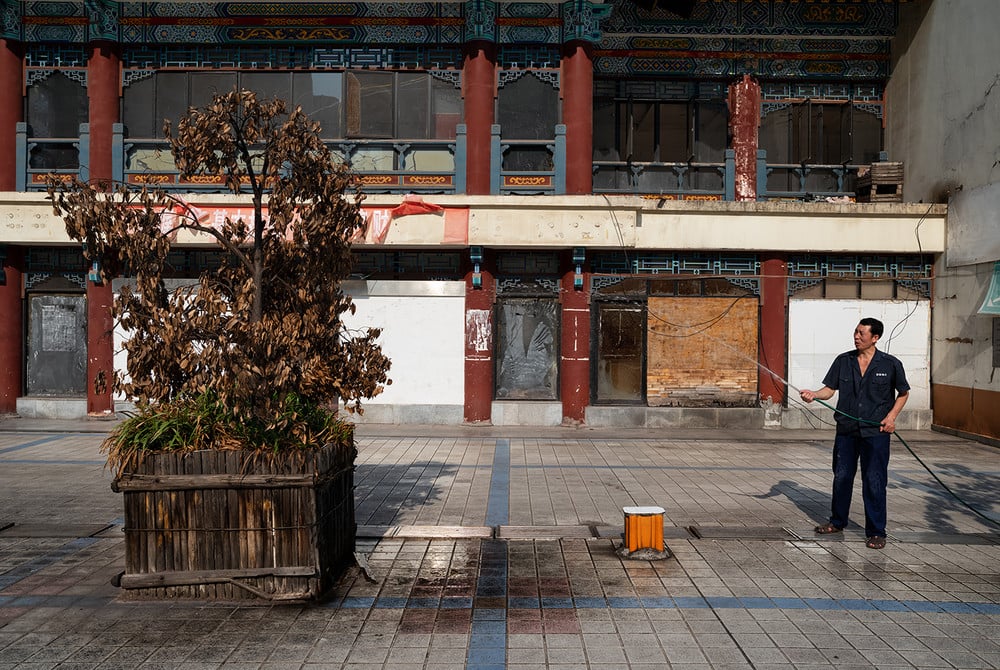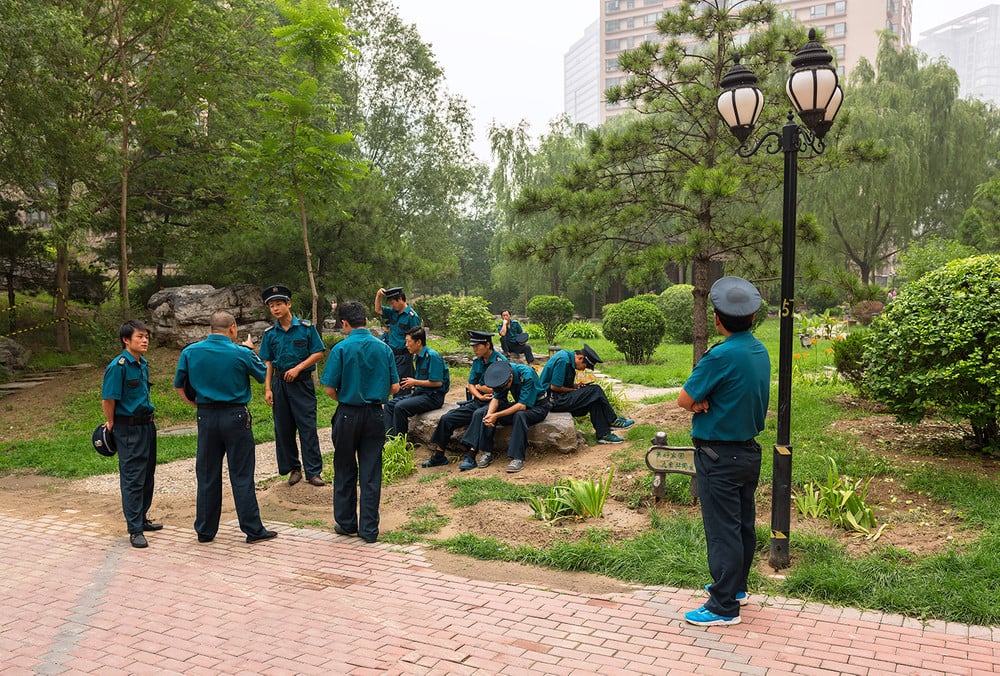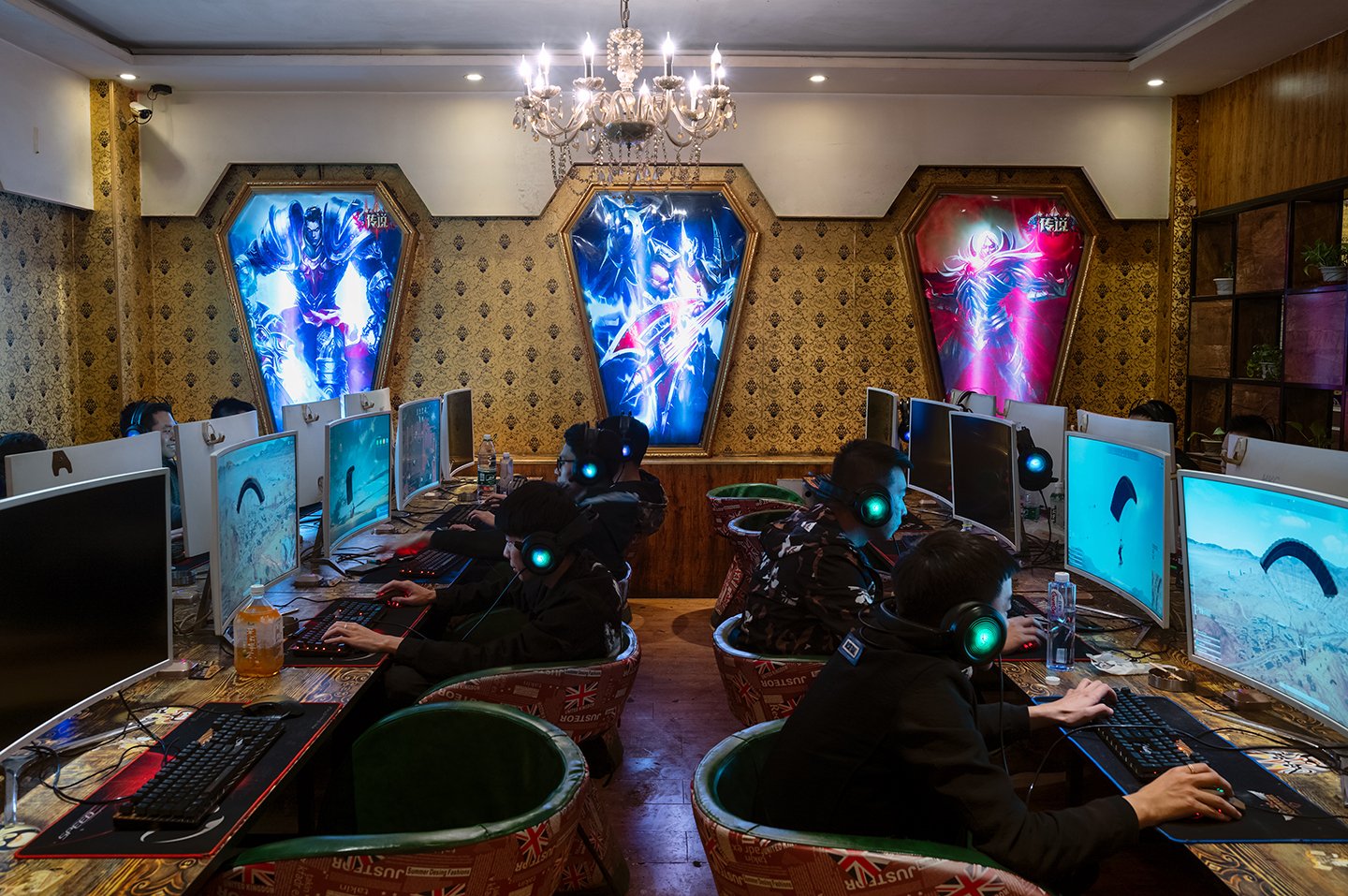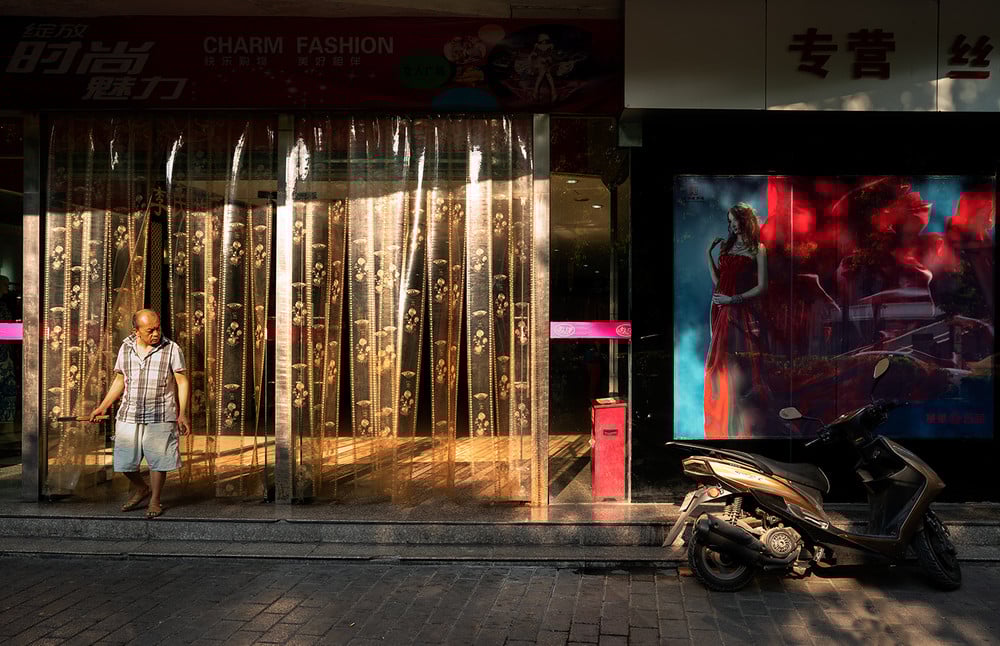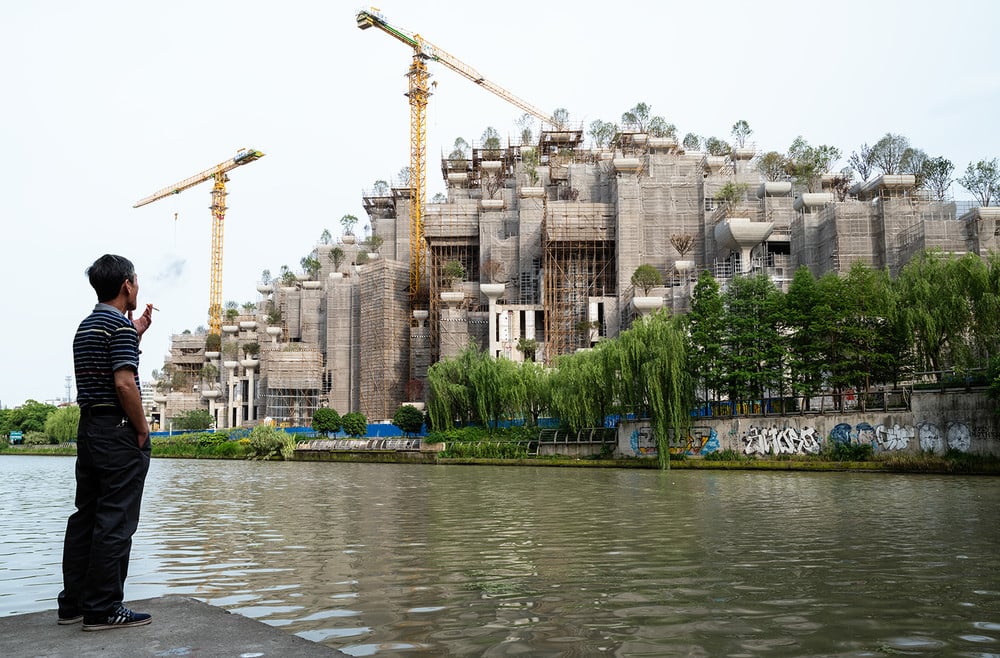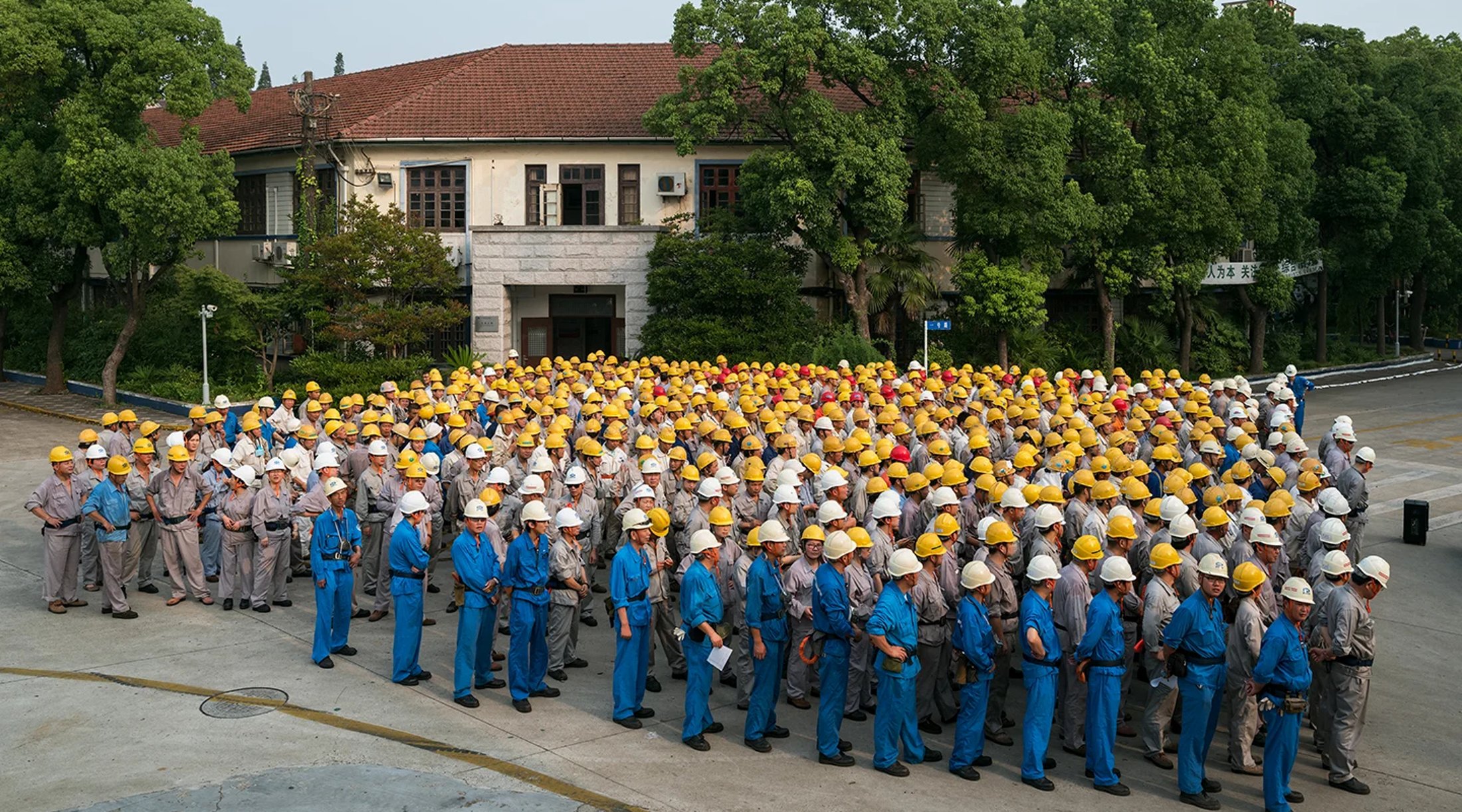
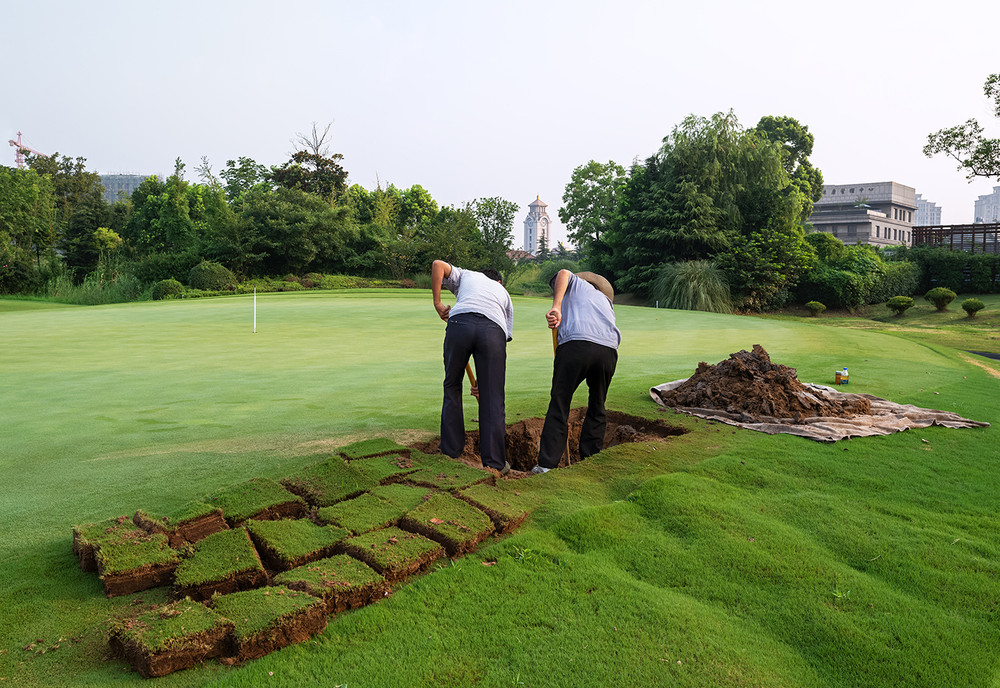
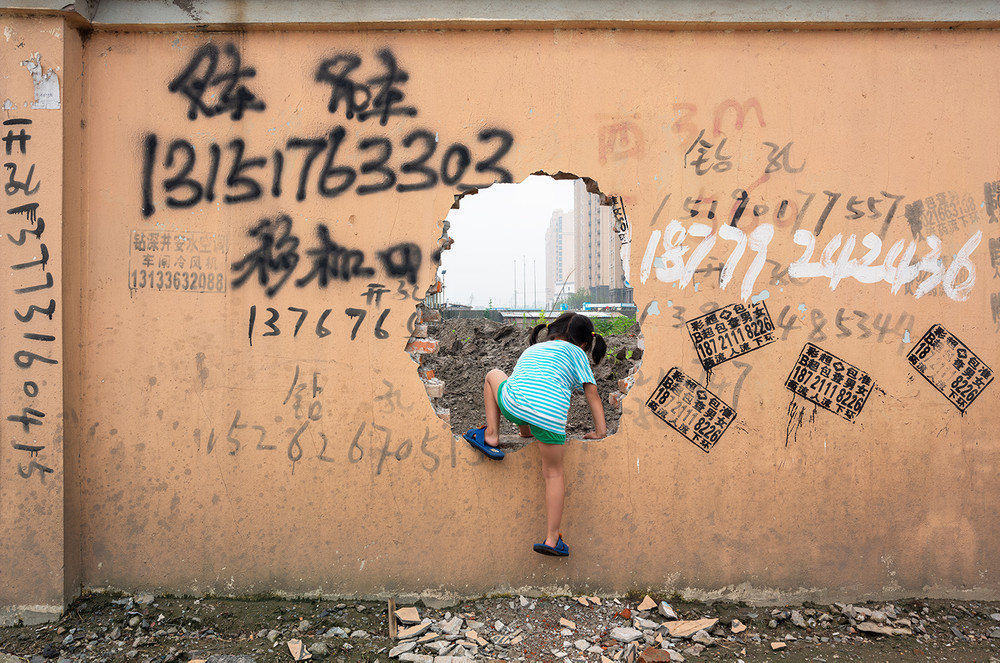
Some sayings are so ubiquitous that they lose their impact; a case in point is the phrase “patience is a virtue.” For Daniel Postaer, the line describes his process to a tee. “I believe in letting the world and the moment unfold,” he explains. The Los Angeles-based photographer has an eye for the cinematic and a well-tuned radar for the strange but true. In his images, a pair of men dig a hole on a green lawn, a grid of perfect squares of turf behind them. A crowd of workers shot from slightly above wear hard hats like candy buttons. A young girl climbs through a hole in a wall, as if a portal to another dimension, like Alice through the looking glass.
The looking glass might be an apt description for the scenes that make up Postaer’s multi-year project, Mother’s Land: 故土. Photographing in China since 2014, he sees the scenes he has captured as an amalgamation of the past, the future, and an alternate present—a look at his mother’s origins and what could have been his own experience. Postaer’s mother’s journey was one of movement and change. “My mother was born in the outskirts of Shanghai in 1948. When she was three years old my grandfather Joe and my grandmother Cecilia fled mainland China to Hong Kong, where my grandfather had siblings that had also left China,” the photographer recounts.
“He was part of the Nationalist army in his younger days and, as insurance to the Chinese government that they would return, they left behind my Auntie Mei Mei, who was one year old. She was raised by a grandmother, and then moved between aunts and uncles. From Hong Kong, my mother moved to Toledo, Ohio at the age of 16 where my grandfather started one of the first and few Chinese restaurants. I don’t think it’s accurate to say they fled China and never looked back. Because I’m sure that he did all the time. But he did not talk about it. He buried it,” Postaer explains. “My grandfather was a quiet, reserved man, and from conversations with him, it seemed as though he had suppressed his experience as a young man in China because he was trying to survive and take care of his family in America.”
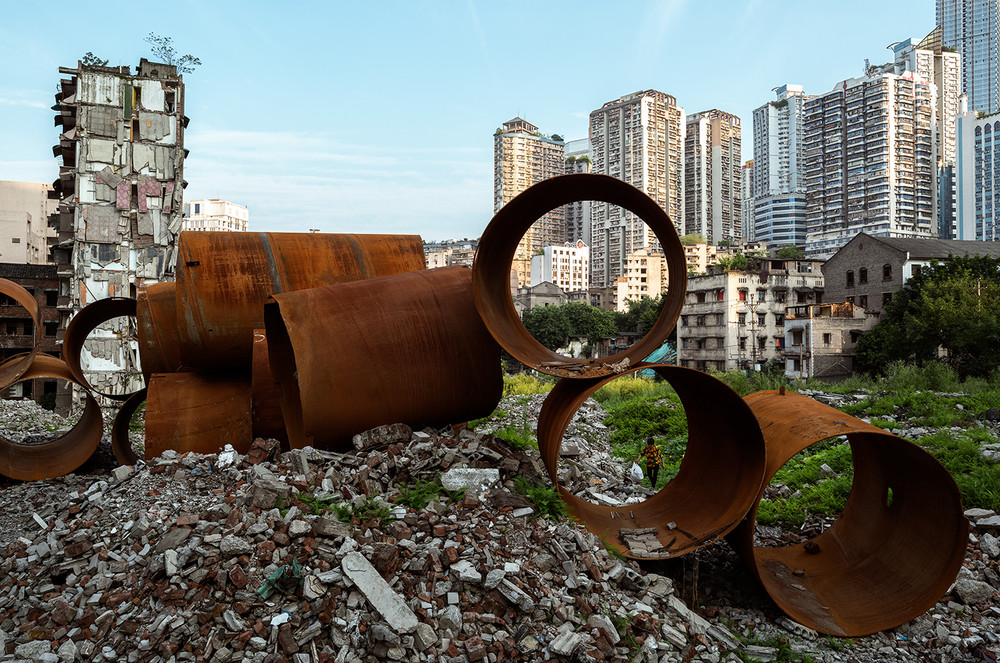
For Postaer, this silence created a generational void. Growing up in Chicago and Los Angeles, he was an average American kid but yearned to know more about his background. In 2004, he moved to Shanghai to learn the language and figure out who he was. The experience was transformative and years later, after building a career in sports and brand marketing, he returned to the US and took up photography. But China was still alive in his mind and entering his dreams. After studying photography, he answered the siren’s call, returning with his camera. “Even though I first began photographing this project in 2014, it feels like it all began in 2004 when I moved to China.”
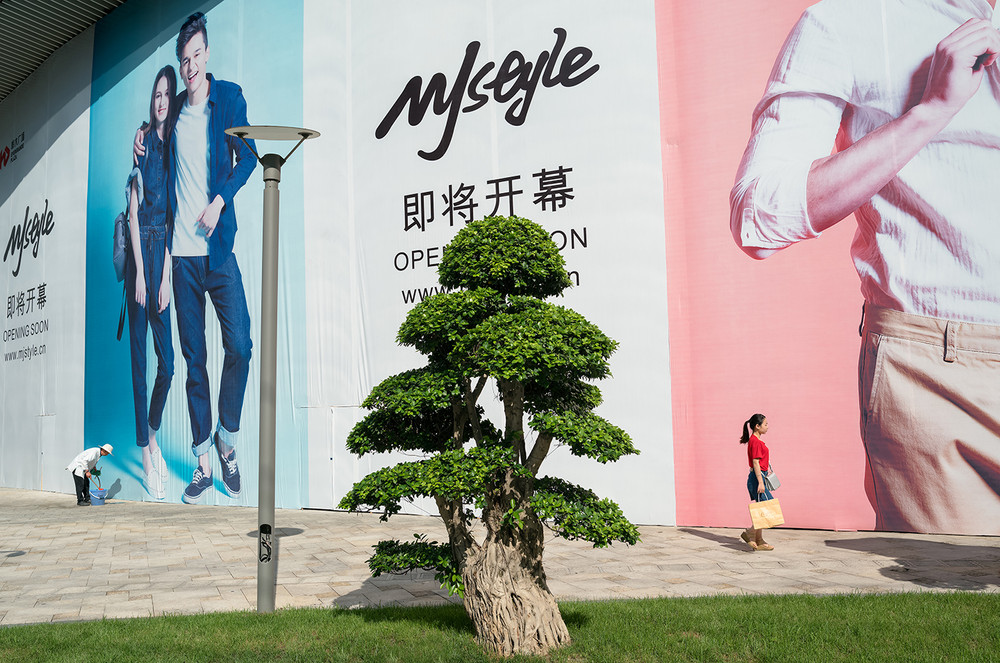
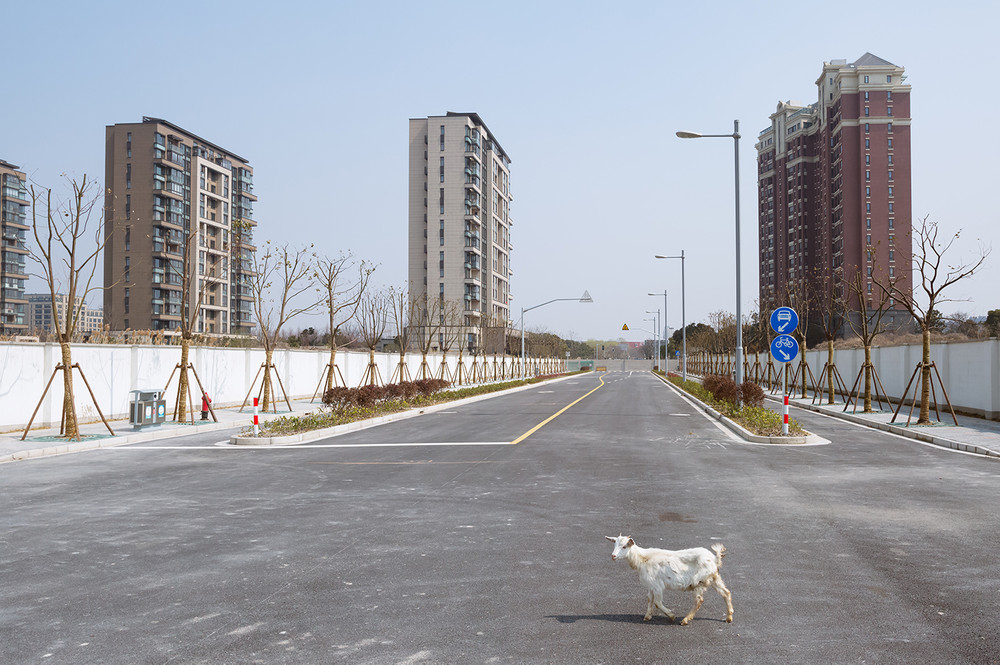
As he re-encountered the country through the lens, he began retracing his steps. An office building of workers bent over their desks late at night brought his memories back to his early Shanghai years—a self-portrait in a sense. A quiet street of young trees and the only inhabitant of a block of new high rises—a goat—wanders into the frame; a clever, strange comment on the rapid expansion and development Postaer has witnessed. “The locals used to joke that the national bird is the crane,” he quips. His images are named after their locations and feature two dates, one addressing the date the image was made and the other referring to the final print date. This span of time is inherent to how he thinks of his work. He describes his process as “constant conversation.” The work unfolds between layers of time that are built into his editing workflow. “The call that I had to go photograph mainland China was rooted in that desire to pause time so that I could understand more deeply,” Postaer reflects.
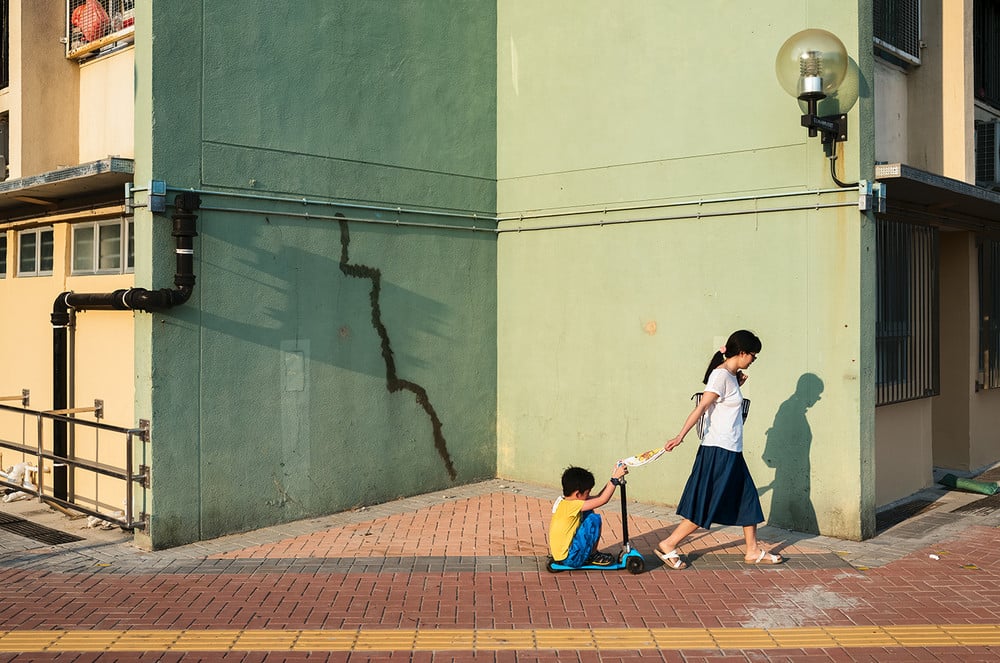
In one picture, a diorama-like scene of soft pastels and complimentary shadows and pipes, a mother pulls a young boy along on a scooter. Postaer describes making it as an exercise in chance. “Chance is something that I welcome into my photographic process. There’s this surrealist notion of chance that I’ve experienced whilst working. That picture was taken in the neighborhood that my mother grew up in in Hong Kong, called Diamond Hill, on the Kowloon side,” the photographer explains. “That morning and subsequent days, I decided to explore the area that she grew up in. I had the address of her former home, but it was gone by then. So I just explored the neighborhood. And I got this strange feeling there. I could feel my mother. I could also feel that wonder of what it would have been like if I had grown up there—and then a photograph like that happens, right?
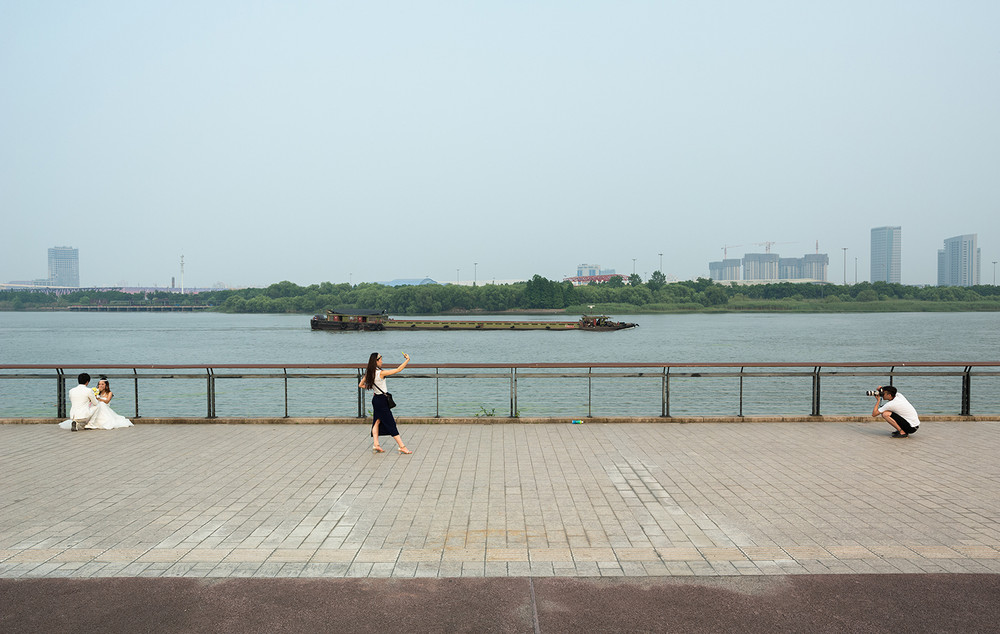
Postaer’s work puts a spin on another time-centric concept: to know the present, one must understand the past. To bridge a generational void he returned to his family’s origins, found parts of himself, and followed his instincts. Living in China gave him a compass to navigate by—a sense of the possibility of being both an insider and an outsider all at once. It also helped underline that no story can ever be fully known, but there is a wealth of riches in the attempt. Time is fleeting. But for Postaer, “photographs do have that chance to endure, as a form of evidence, of time and place. They bring me closer to an appreciation of the wonder and an acceptance of the absence.”
Editor’s Note: Daniel Postaer was the winner of LensCulture’s New Visions Awards 2025 in the “Place” category. His first monograph, Mother’s Land, will be released this year by Deadbeat Club Press.