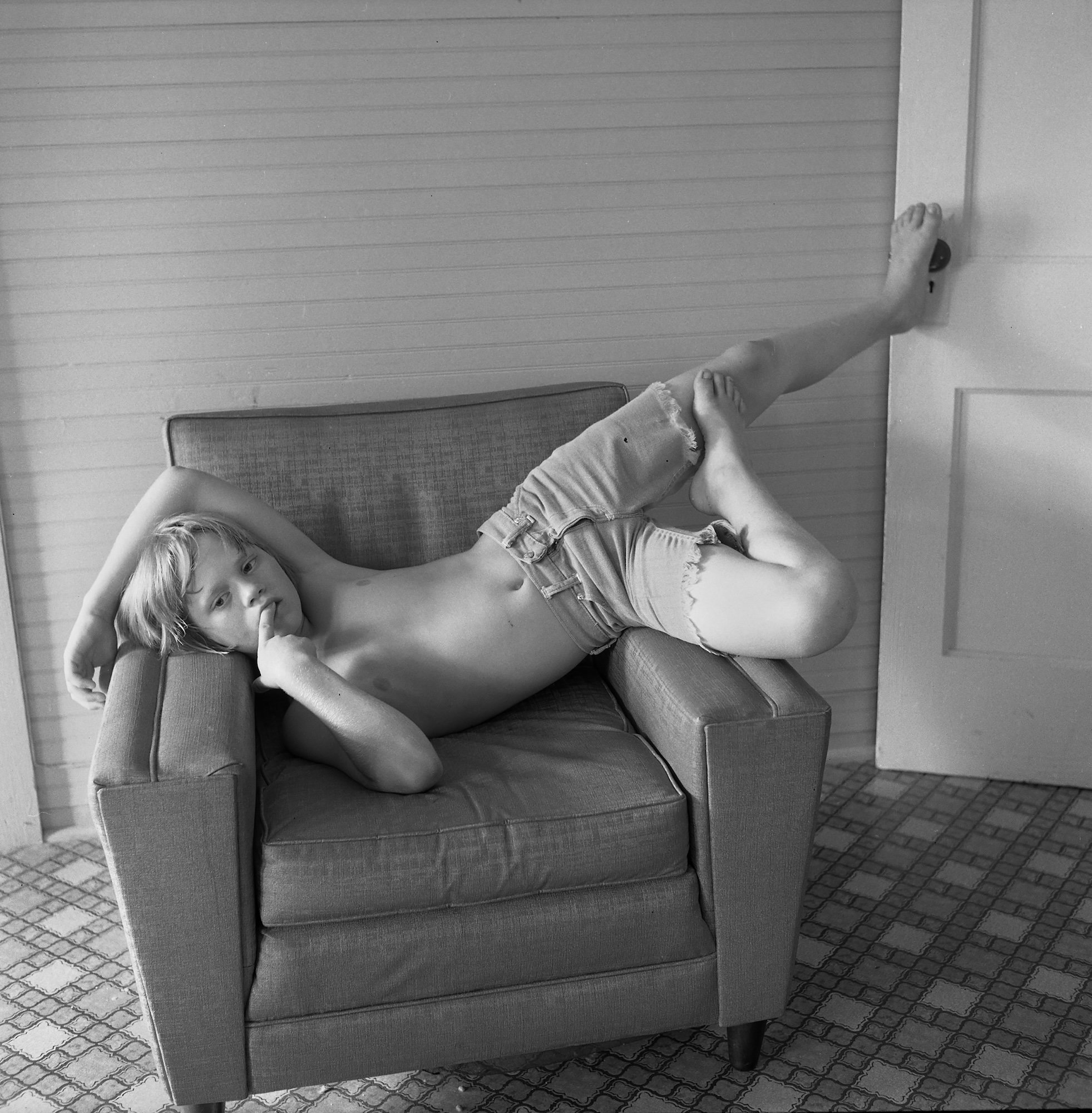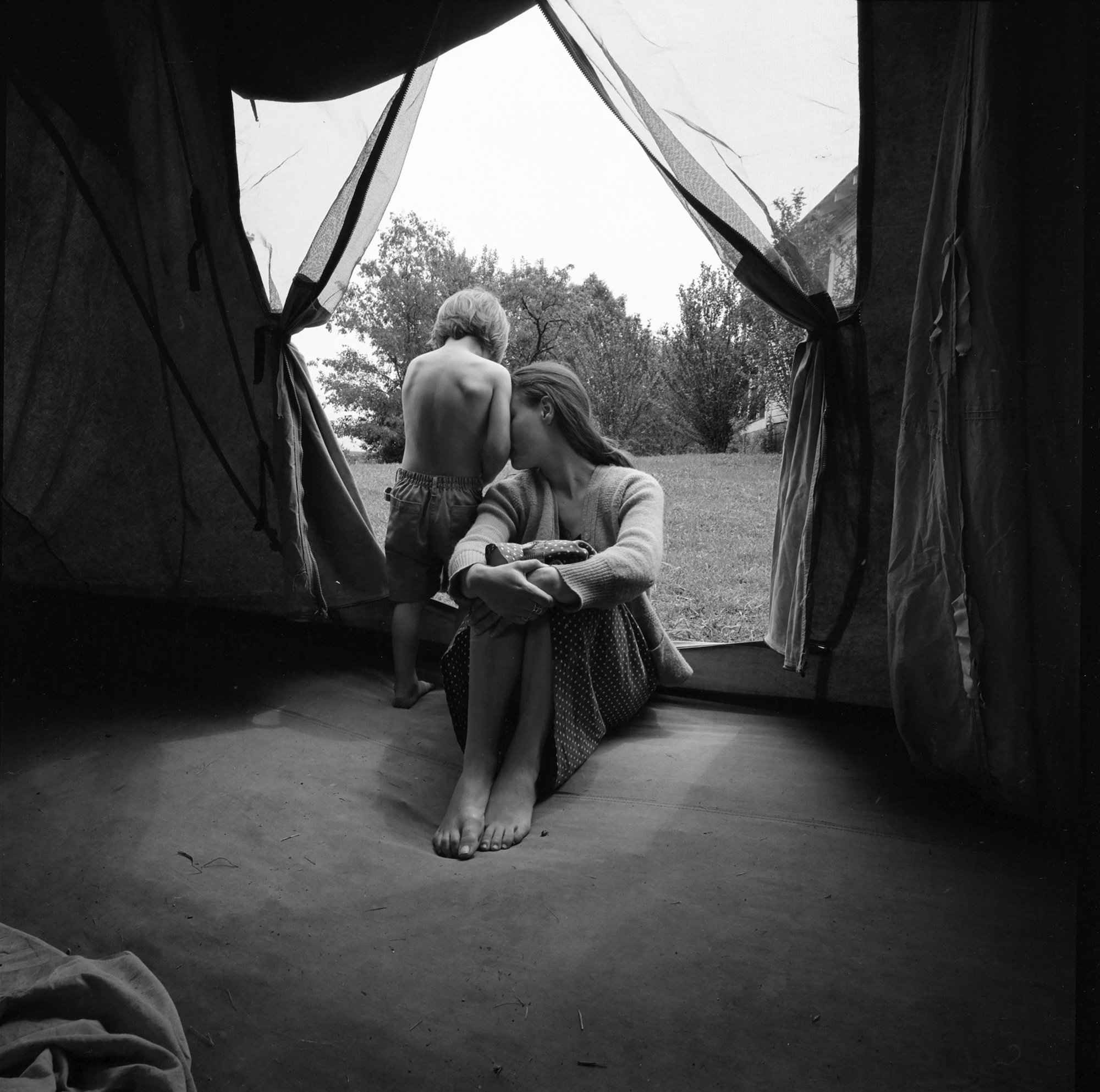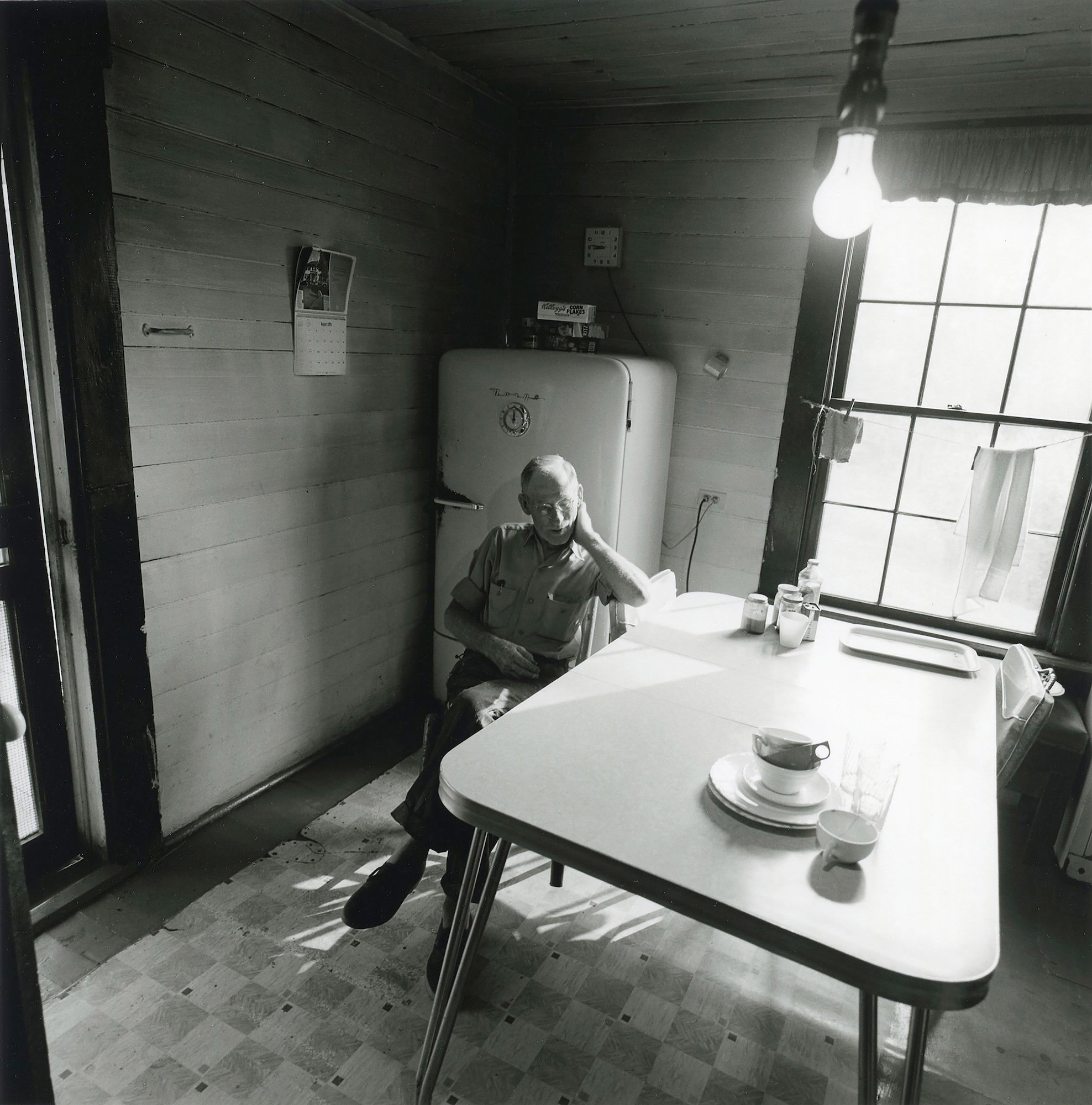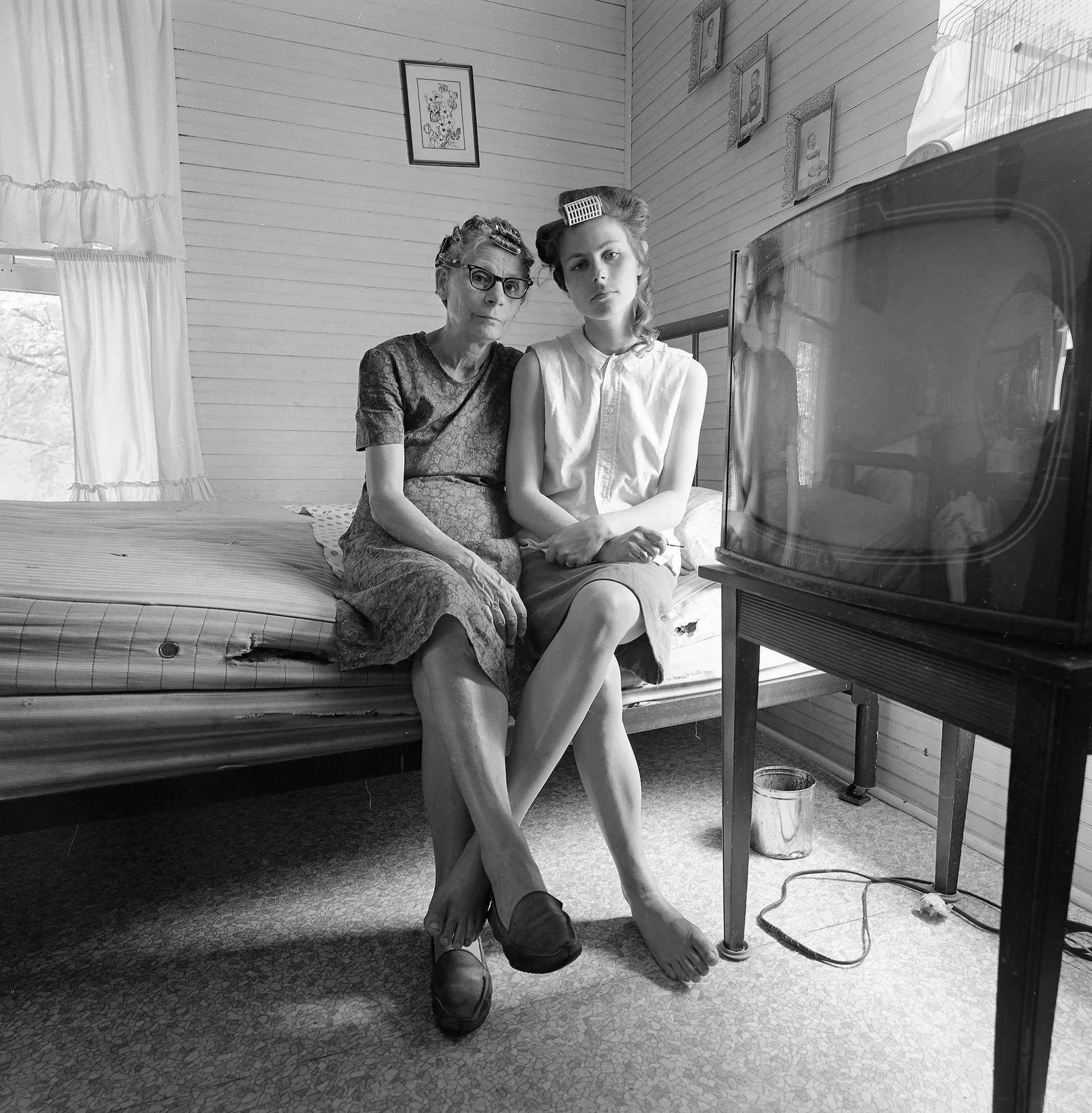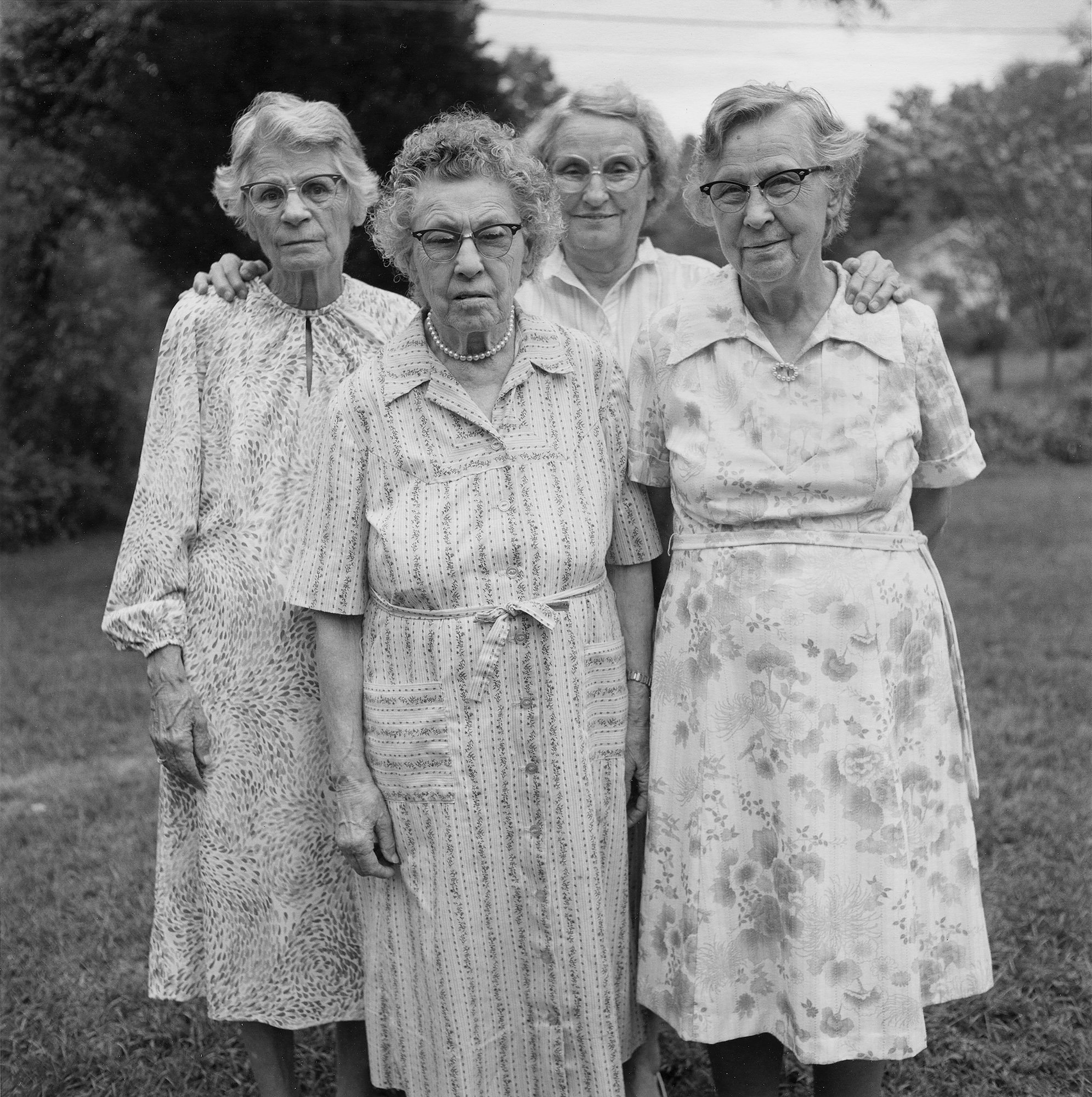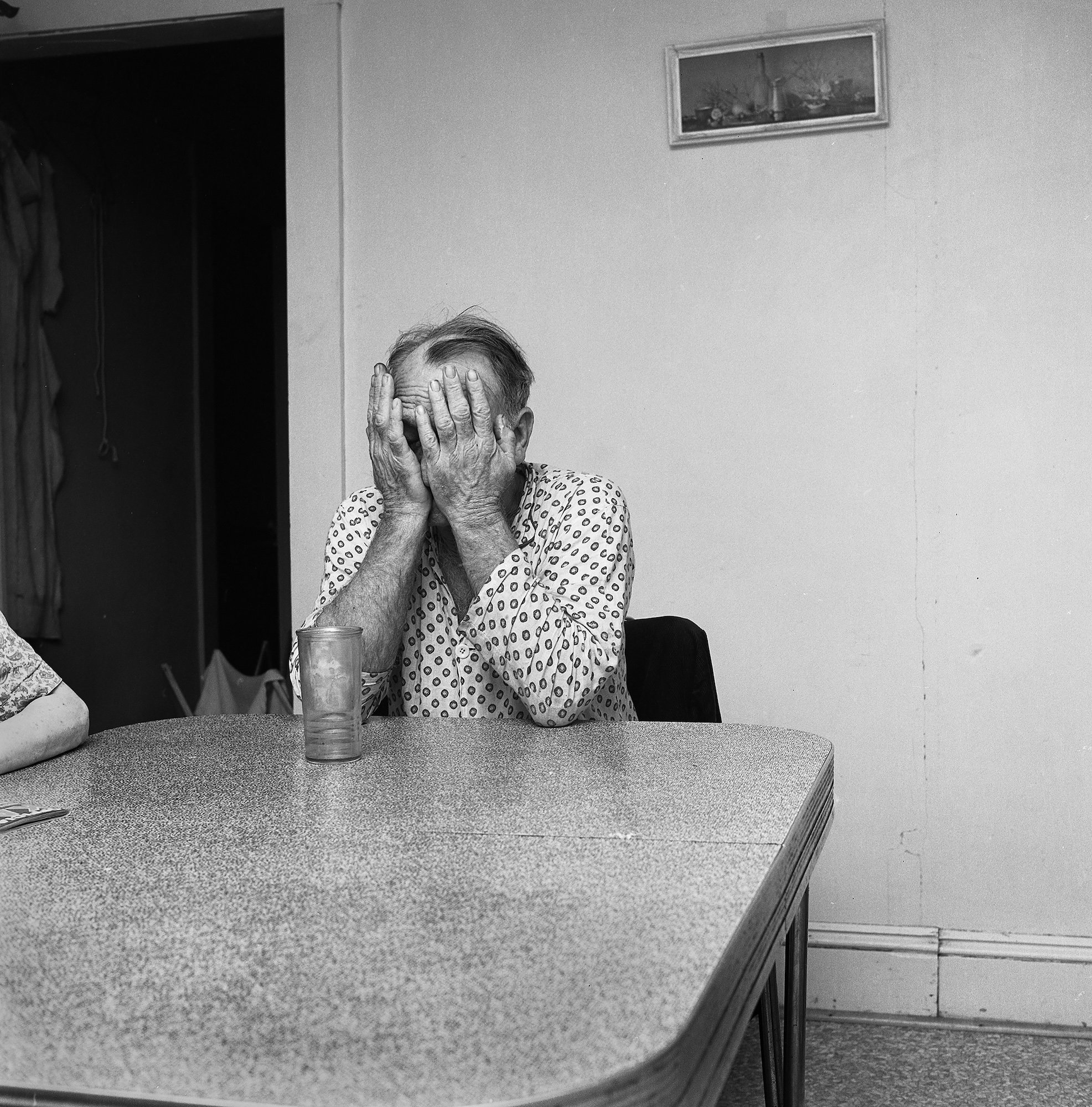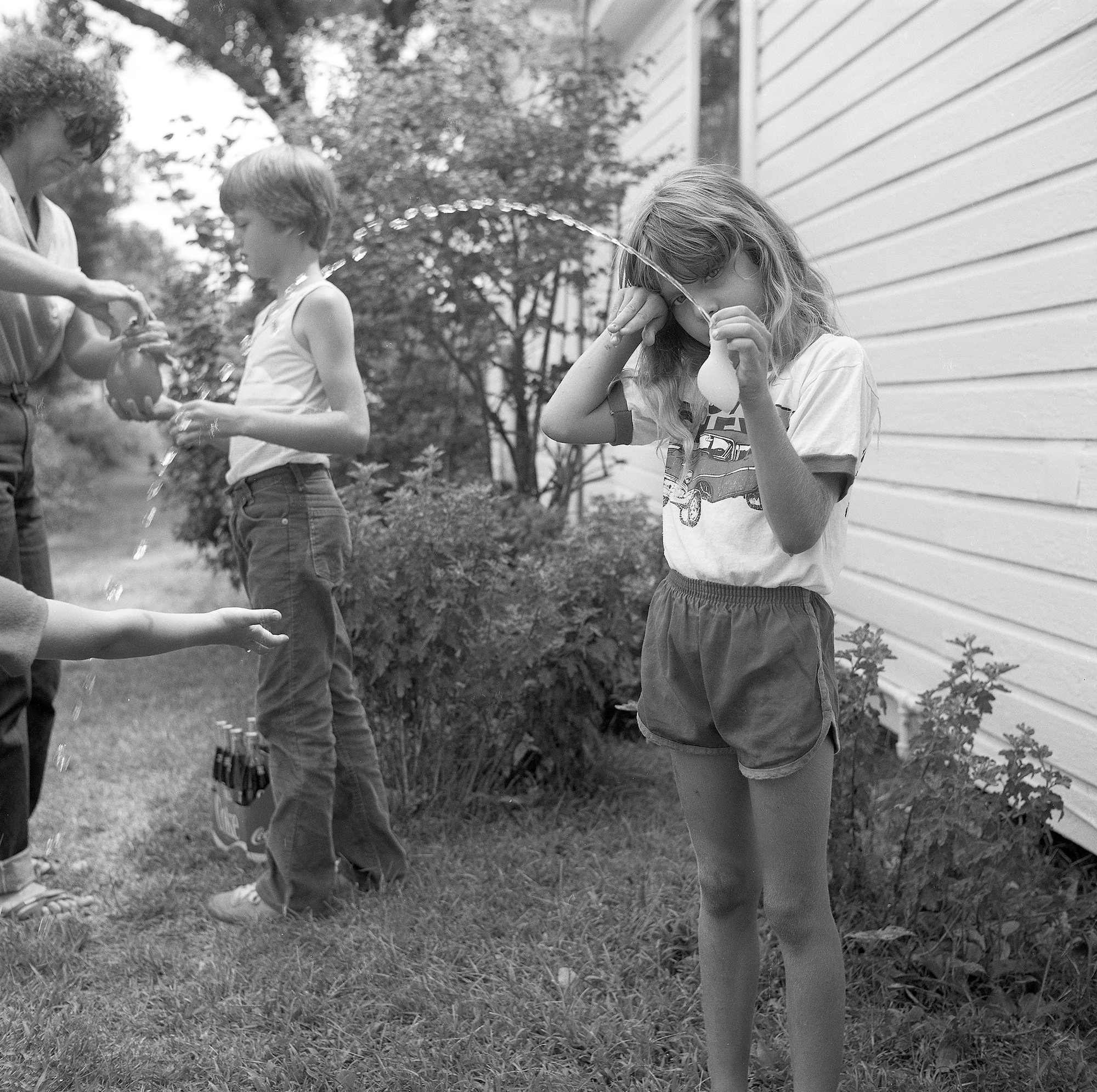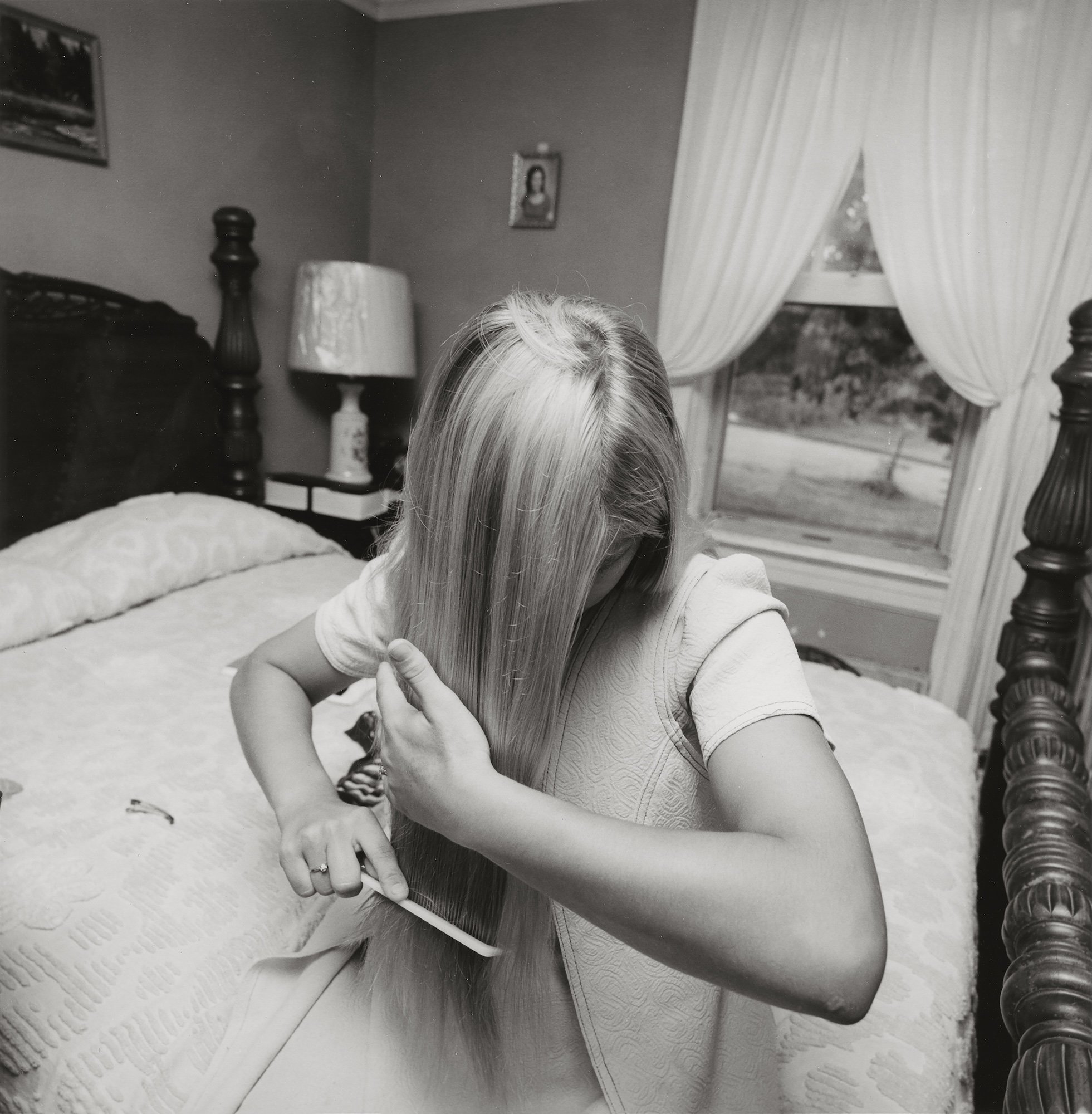
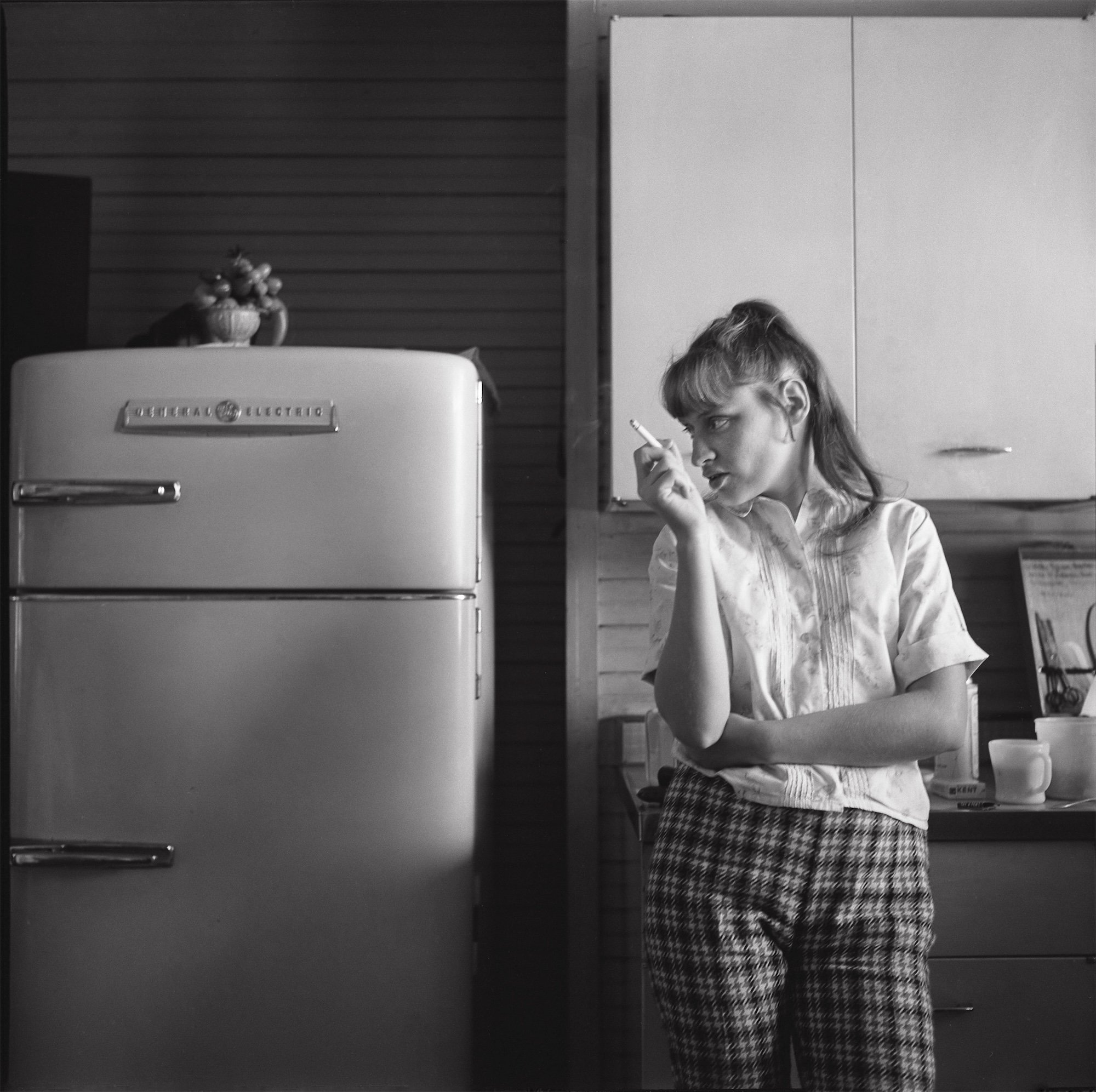
Published on the occasion of Emmet Gowin’s current exhibition at Pace Gallery, Baldwin Street: Photographs 1966-1994 borrows its title from the street on which four generations of his wife Edith’s family have lived in Danville, Virginia. It begins with Gowin’s introduction: “Through my marriage to Edith Morris, in 1964, I entered a family freshly different from my own. I admired their simplicity and generosity and thought of the pictures I made as agreements. I wanted to pay attention to the body and personality that agreed out of love to reveal itself. My attention was natural duty that could honor that love.”
“Attention,” as Mary Oliver wrote in her essay Upstream, “is the beginning of devotion.” While the recipient of her attention was the natural world and Gowin’s was family, their work and words—if not world views—are interrelated. Both are infused with poetic vision. Baldwin Street visually manifests Gowin’s devotion. Devotion to his subject—primarily Edith and her extended family. Devotion to the photographic event as an empathetic, collaborative act. And devotion to seeing with humility, authenticity, and care.
Gowin’s spiritual upbringing is evident in his photographs. He was born in 1941, a mile from Edith’s family’s home, to a father who was an authoritative Methodist minister and a mother who was a pianist from a Quaker family. In the conversation between Emmet and Edith about his parents, Edith notes, “She was a much more gentle person, a much more spiritual person.”
Gowin was drawn to his mother’s temperament and to the Quaker principles of egalitarianism, pacifism, and modesty that she embraced. In response to Edith, Gowin says in the conversation that he was at least 70 years old when he realized that he was “unconsciously modeling” himself after his mother, not his father. “I think I just trusted women better than I trusted men.”
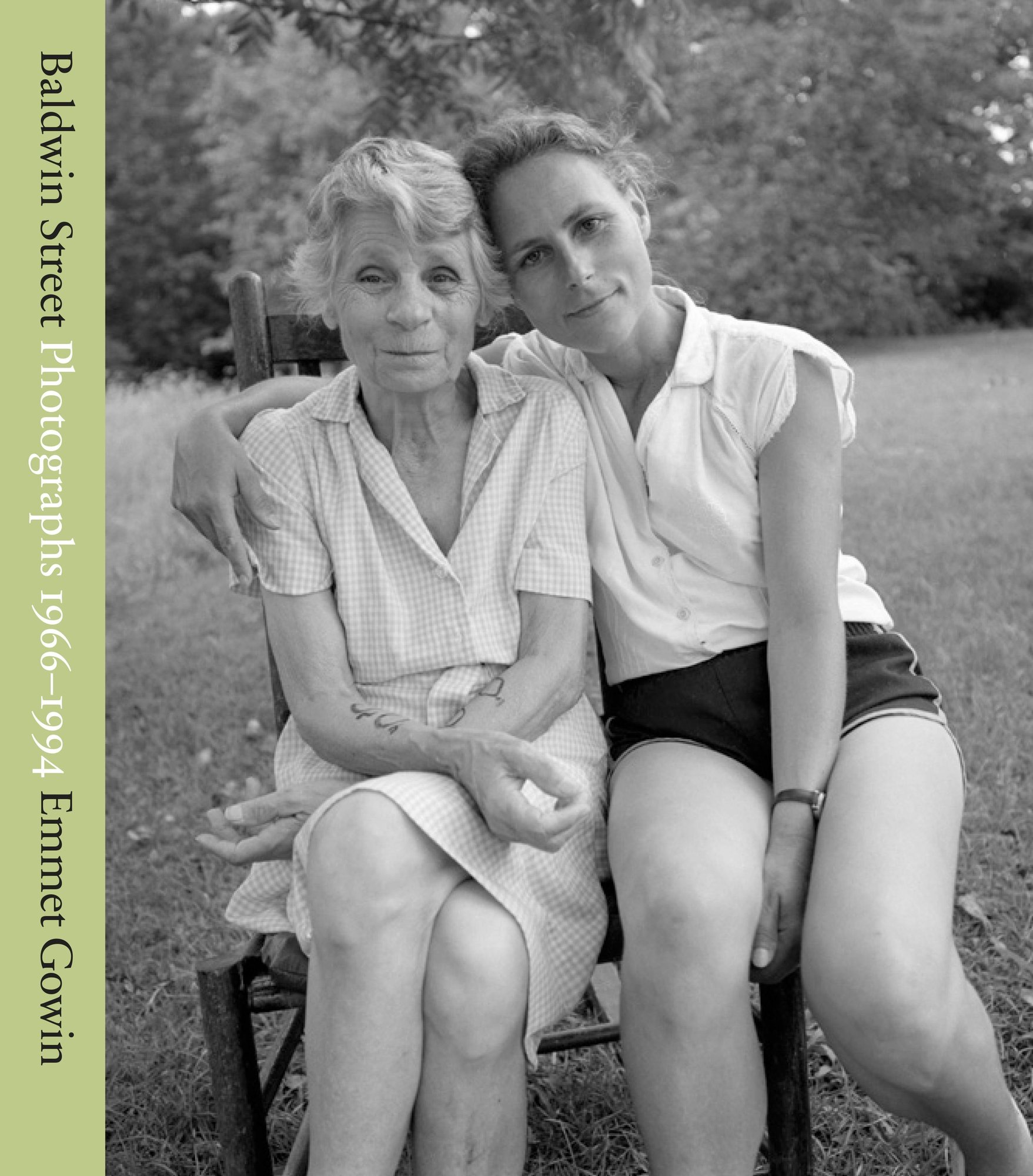
Two of those women are on the cover of Baldwin Street. Reva and Edith, Danville, 1984 shows mother and daughter clad similarly to how they had been in Gowin’s pictures from 1964—Reva in a cotton gingham dress, handmade from the fabric she worsted at the mill, and Edith in a summer shirt and shorts. In some ways not much has changed on Baldwin Street in 20 years. The familial bond is firm and Gowin’s devotion remains resolute. Reva and Edith share a chair. Edith, with her arm around her mother’s back, leans into her. Their heads touch and create a circular negative shape that echoes those on Reva’s forearms and the one that her thumb and finger form—an unconscious gesture, perhaps, of completeness. Edith’s watch is a reminder of time, which Gowin’s images will endure.
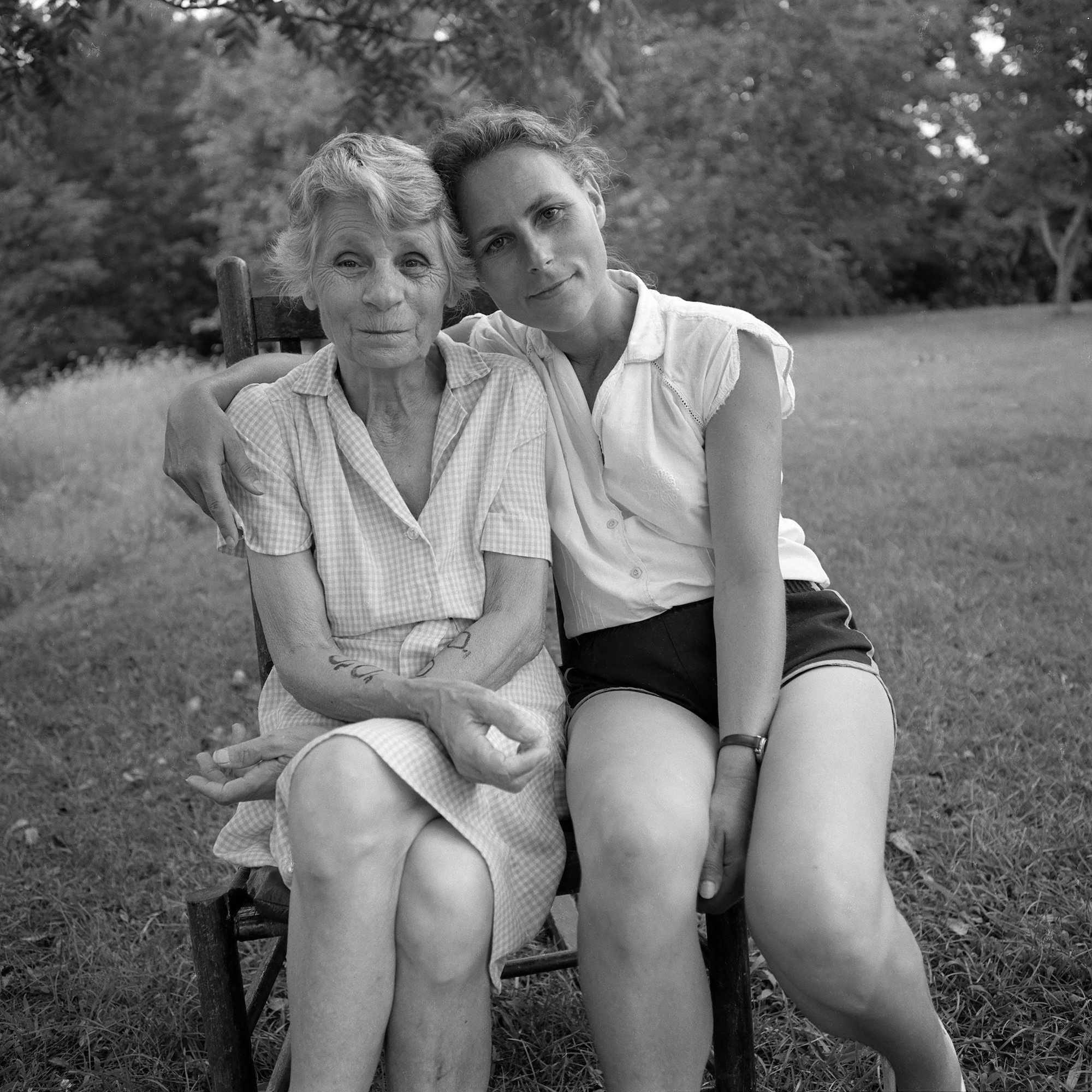
Reva and Edith is also reproduced in the book, opposite a quote that embodies Gowin’s photographic vision: “In praise of small things we see.” His words may be a nod to one of his influences, Walker Evans, and the landmark book, In Praise of Famous Men, Evans co-authored with James Agee that documents the lives of sharecropper families in Alabama during the Great Depression.
Other photographic influences are perceived in Gowin’s images including Eugène Atget, Robert Frank, Henri Cartier-Bresson, and Harry Callahan, with whom Gowin studied in graduate school from 1965-1967 at the Rhode Island School of Design. Before then, he studied fine art at the Richmond Professional Institute. This training, and his natural proclivity for drawing, is evident in the formal elegance of his photographs.
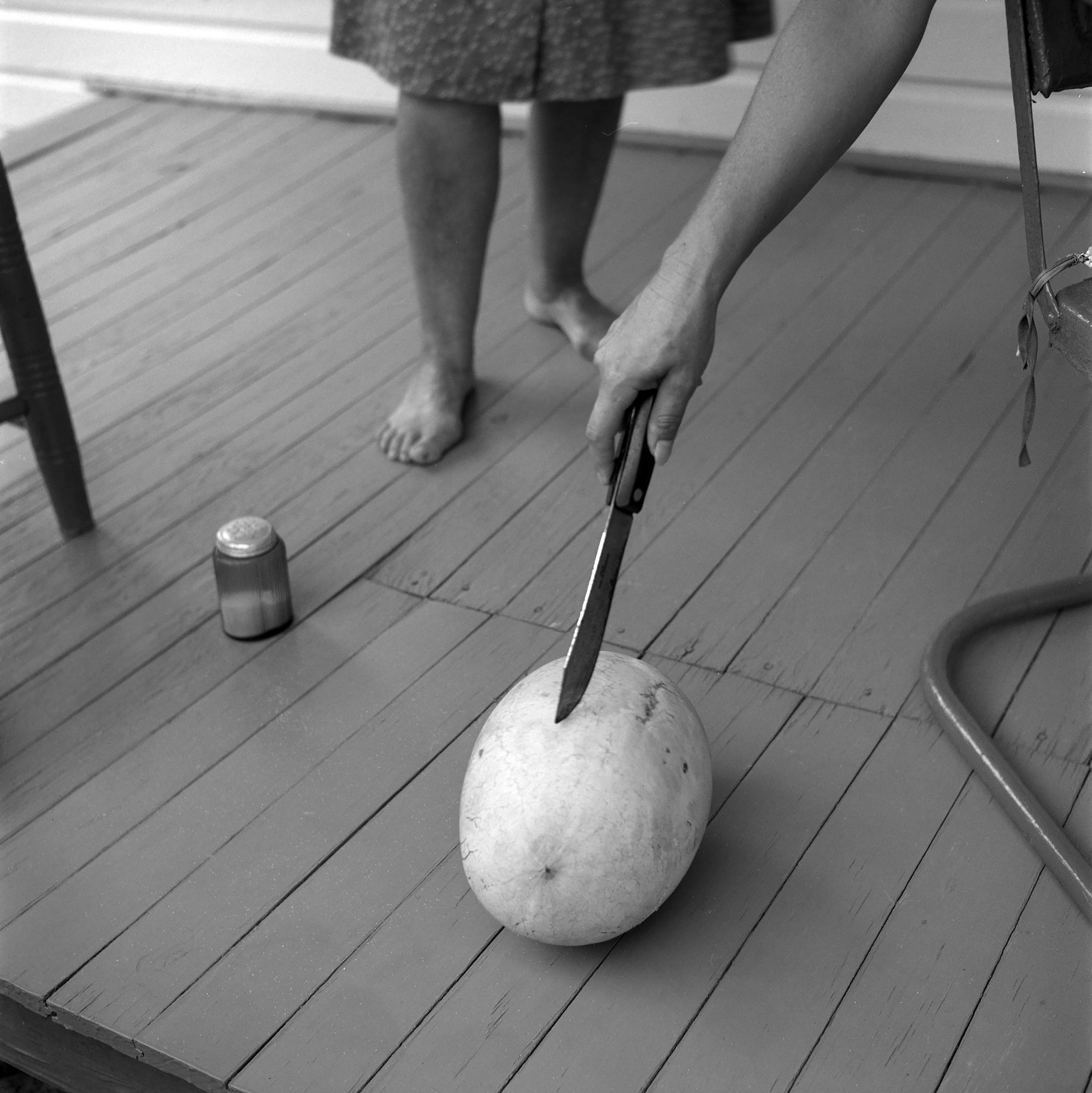
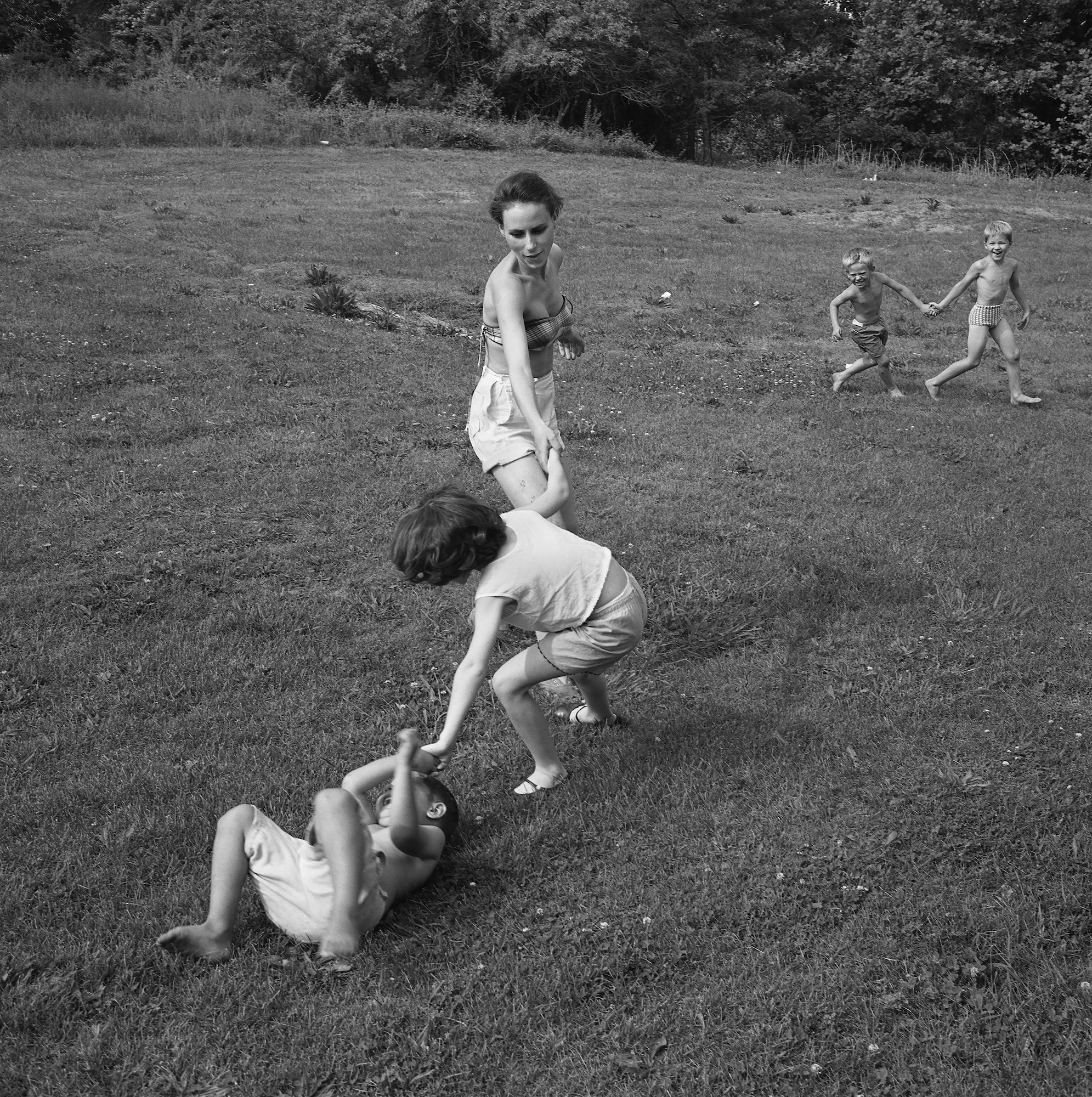
In Gertrude’s Melon, Danville, 1982, a large melon is about to be sliced on the porch floorboards and eaten with salt from the shaker in the scene. A bare foot in the background abuts a hand holding a knife, creating one of several shapes in the square image. Gowin’s use of the elements of art—line, form, space—and their organizing principles—balance, rhythm, variety—energizes the image as it does in Children’s Games, Danville, 1979. Framed by nature are Edith and six children at play. Some are in their own world’s—upside down in mid-cartwheel, chasing a ball—yet they are all of this Danville world. In Crack the Whip, Danville, 1966, Edith and four children play on the lawn. They are linked by lines, by light, by laughter. Opposite the image Gowin writes, “On days when things were happening, I might be taking seven, eight rolls of film in one huge deluge of wanting to see.”
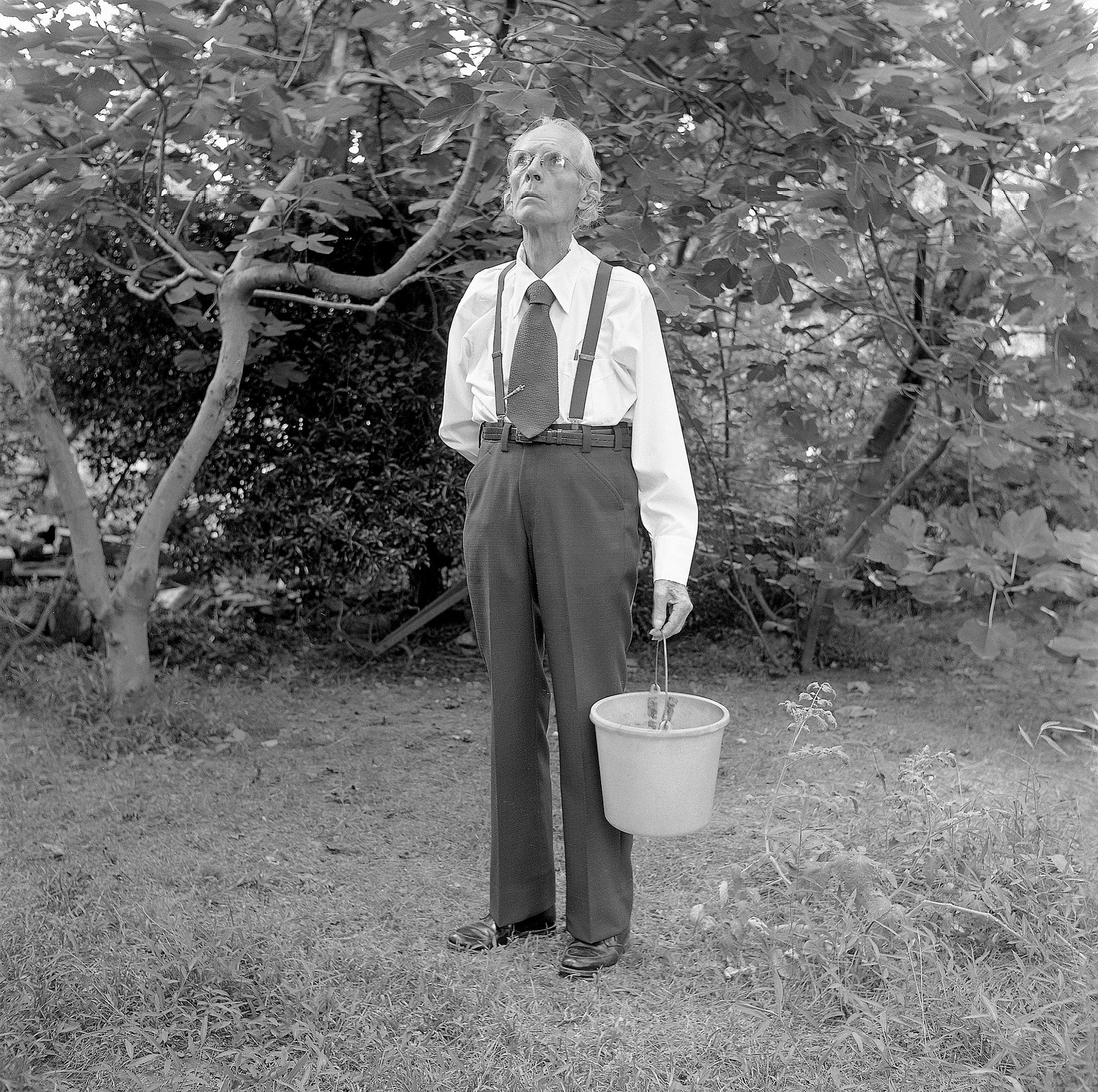
While most of the 70 images in Baldwin Street are from Danville, an exception is Collecting Figs, Pastor Gowin, Ocean View, Virginia, 1976, a portrait of the photographer’s father. Shown in the frame’s center dressed as if he has either just delivered a sermon or is in the midst of delivering one, his head is tilted toward heaven. In the conversation with Emmet, Edith says, “Look how delicately he’s holding that bucket.” Indeed it might slip from his frail fingers. Pastor Gowin’s wife had just died and as Gowin replied to Edith, “It totally humanized him.”
In Fall 1965, during Gowin’s first semester at RISD, a month after he and Edith had moved to Providence, he received a draft notice for induction into the army. Gowin drove back to Virginia and applied for conscientious objector status. Edith stayed in Providence. While he was in Danville, he stayed with her mother. It was during those days, with the Vietnam War in the backdrop, that Gowin made the photographs that began Baldwin Street. Though not political in their intention, the images are timely reminders to bear witness, to honor, and, above all, to love.
Editor’s note: Baldwin Street: Photographs 1966-1994 is on view at Pace in New York until April 25.
ISBN: 9780691293035