On a recent cold February day earlier this year, crowds gathered outside New York City’s landmark Stonewall Inn. They held signs that harkened back to the activist group ACT UP (Aids Coalition to Unleash Power), called out censorship, and waved flags for LGBTQ pride. They were responding to the US federal government’s removal of the words ‘transgender’ and ‘queer’ from the website of the Stonewall National Monument. Fifty-six years prior, in 1969, a police raid on the tavern led to three days of protests and riots. The crowd that gathered was diverse, prominently including the gay liberation and transgender rights activist Marsha P. Johnson. The action would come to be called the ‘Stonewall Uprising,’ marking a new phase in the gay rights movement.
In erasing these terms from the website—a repository of historical significance—the government was attempting to rewrite history, to wrangle it into their partisan control.

As the United States government and its functionaries continue to ban books, dismantle institutions and pursue oppressive measures against vulnerable groups, institutional archives find themselves in a position that is both fragile and powerful. Fragile in how vulnerable they are to attacks and powerful in the sense that one attempts to silence what one fears. Amid this moment of chaos and uncertainty, a new group exhibition, To Conjure: New Archives in Recent Photography at the International Center of Photography calls for an alternative archive; one focused on the future as much as the past.

In the dictionary, to ‘conjure’ means to cause a spirit or a ghost to appear through some sort of ritual. An additional definition, outdated in use yet surprisingly timely, means to implore someone to do something. And so the artists and curators of To Conjure are both speaking to spirits past as well as making the case for an expansion of archives. An archive here is not restricted to documents or even photographs; we see fabrics, etchings, video, and collages too. To Conjure was curated by Sara Ickow, Elisabeth Sherman and participating artist Keisha Scarville, and features the works of Widline Cadet, Koyoltzintli, Tarrah Krajnak, Shala Miller, Kameelah Janan Rasheed and Sasha Wortzel.
In a roving, far-reaching archive, where does one begin? Perhaps we’ll start with the title—a mouthful that feels like a grammar exercise—a bit uneasy on first blush but with practice, or immersion, gels together. An infinitive verb, a colon, an adjective describing time, a noun for records of the past, a return to the present and the times just elapsed, and of course photography. Photography, no matter the subject, is a record; a historical mark to view again or be lost.

On the top floor of the museum, the exhibition hovers above two more traditional archival shows—a survey of the works of Weegee and one on labor in America—in a nice bit of exhibition scheduling. As a triptych of shows, the full experience is expansive with To Conjure adding a new and rich archival layer into the mix. The first room is composed of works spotlit against aubergine walls. The layout of the exhibition moves from darkened spaces to bright light and back, from black and white images to fluttering fabric and aquatint lithographs.
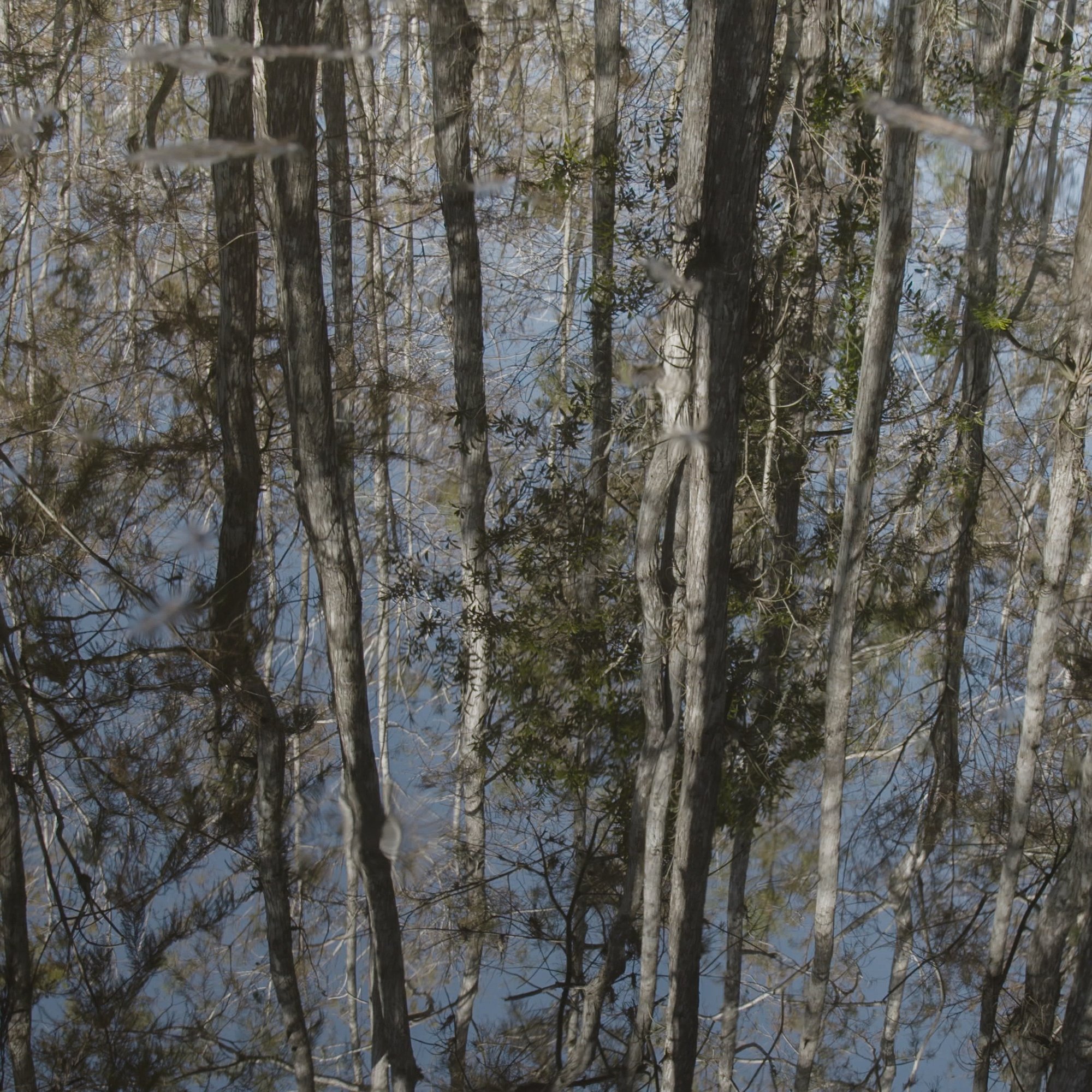
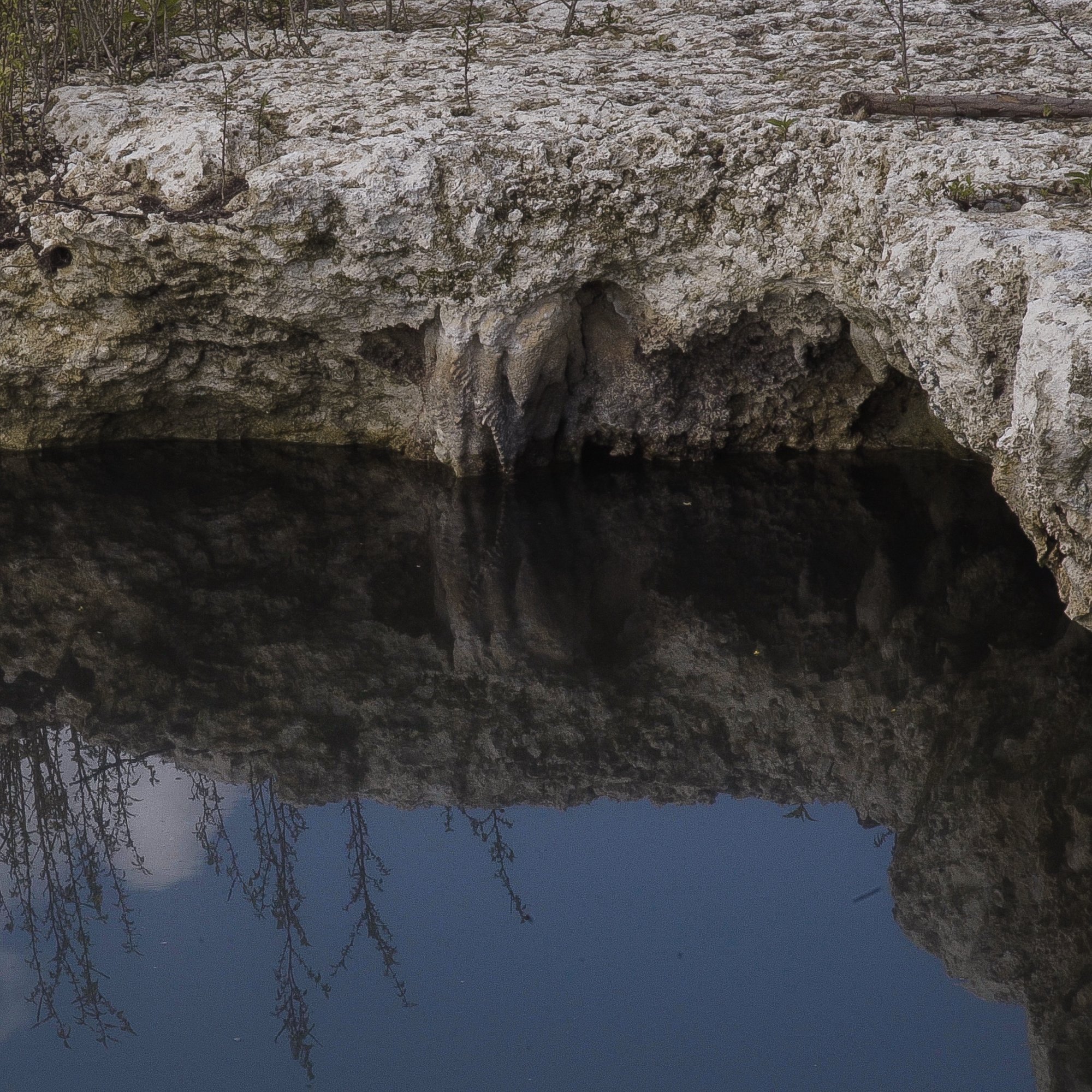
The first work one comes upon is Sasha Wortzel’s images and video of the Florida Everglades, a site of colonialism and environmental destruction. The landscape captured is both fecund and treacherous. The land itself is an archive, the violence of both history and weather impressed upon it.

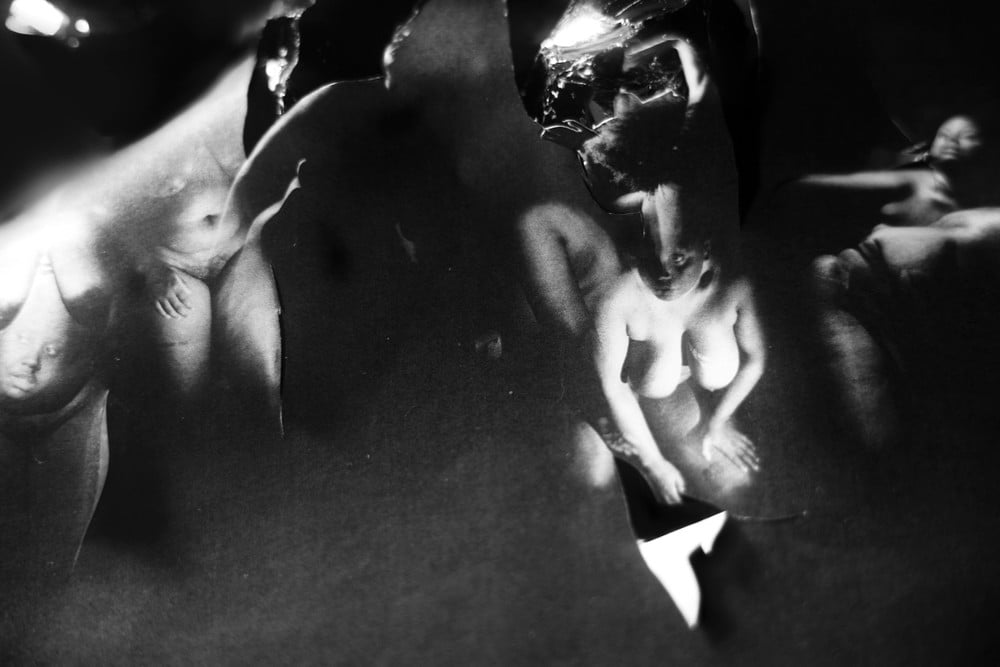
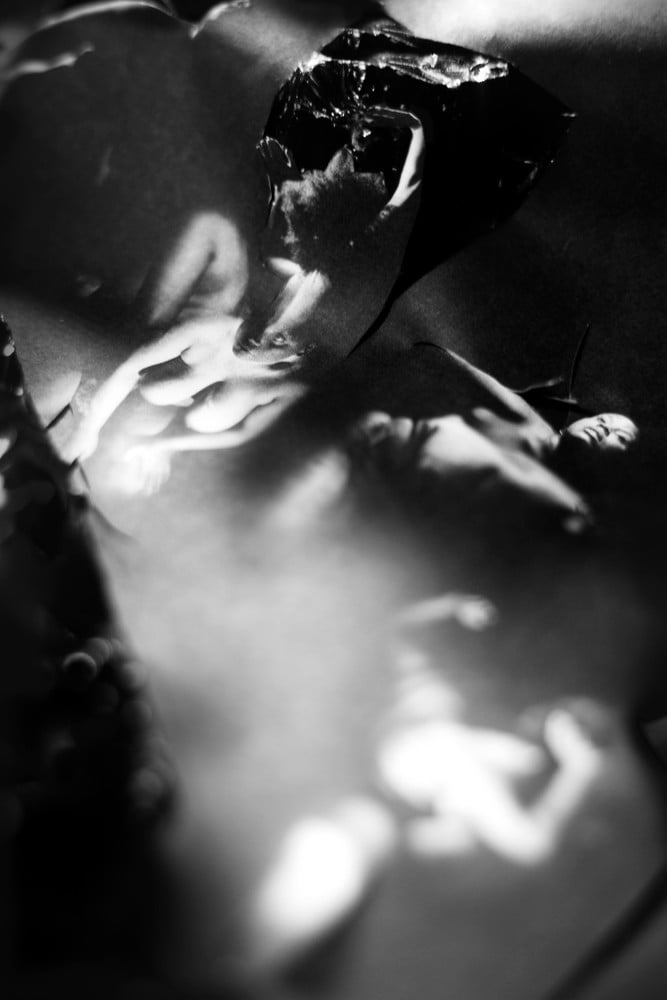
Tarrah Krajnak’s installation—images of crowds taken from political and pornographic magazines from 1979, the year of her birth—are projected onto a wall and pedestals. The space of the installation feels eerie. Accompanying the tableau is a lightbox illuminating negatives in which the artist has captured herself moving through the scenes. The ghostly pale grays against the sharp white light speak to the voids in archives as well as the artist’s journey to reconnect to the space she left upon adoption.

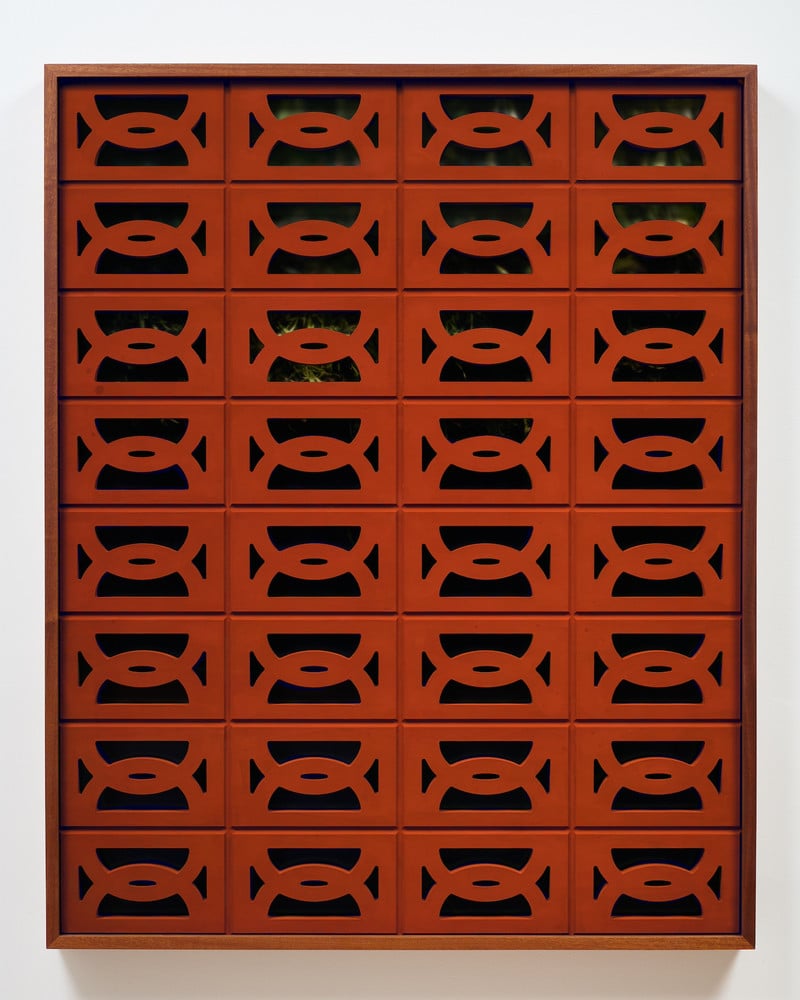
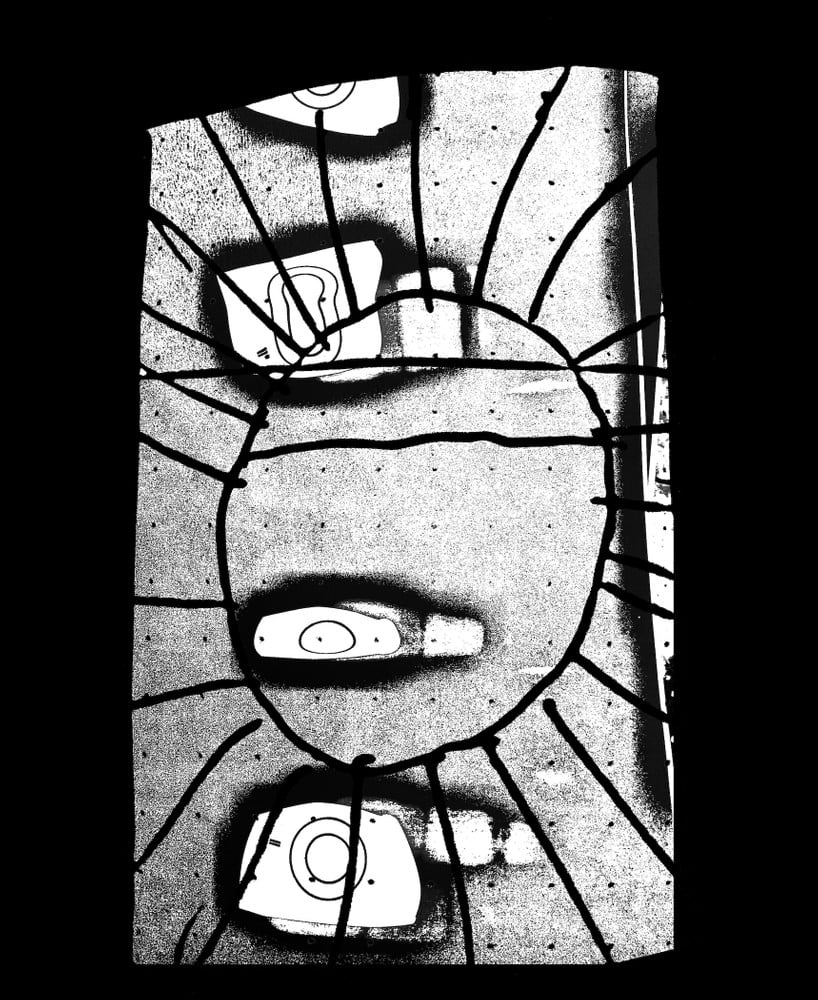
In Widline Cadet’s photographs, the past and present converge. Whispers of Haiti emerge in more local surroundings, such as the bright reddish-orange breeze block that obscures a Los Angeles view in An Elusive Echo. In other images such as To Chase the Sky, one has the sense of a scrap of a dream being captured before it fades from memory. Three women hover on the edge of darkness in an image whose title, Ghost Feelings, seems to haunt much of the artist’s work. Dreams and the subconscious are the origin of Kameelah Janan Rasheed’s aquatint lithographs. Rasheed refers to her prints, composed of layered sections of photographs, text, and gestural marks, as “an archive for the immaterial.” Informed by African-diaspora spiritual practices, the undulating circles, brushlike patterns, and snippets of sentences feel grasped from a waking dream.

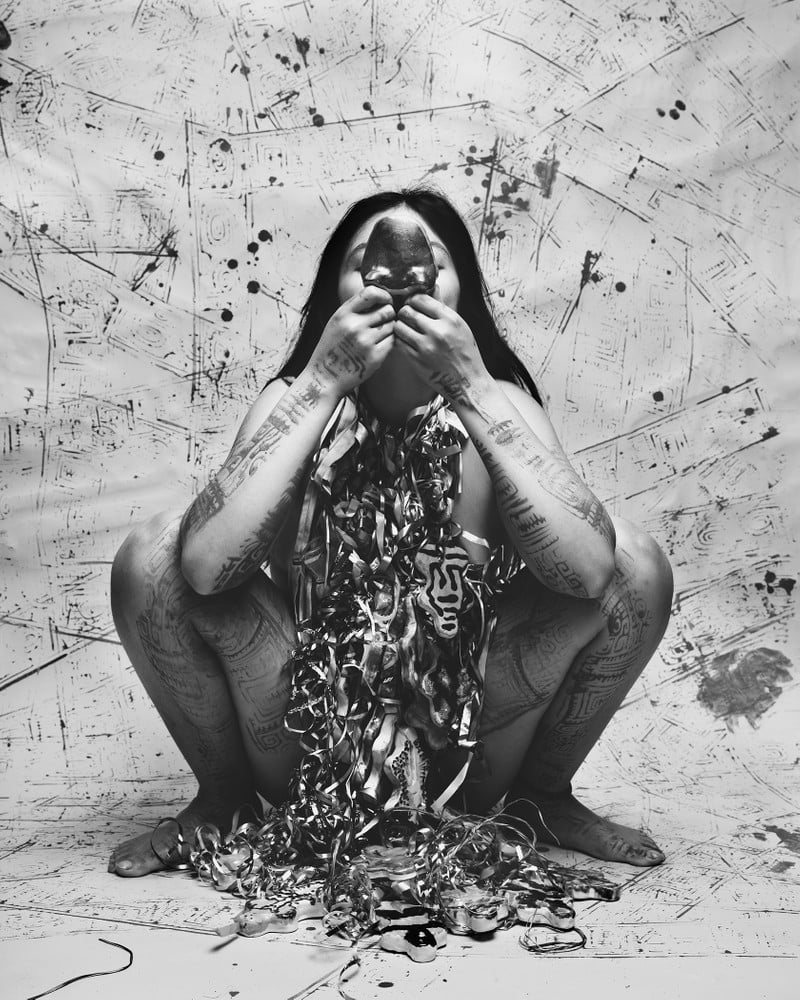
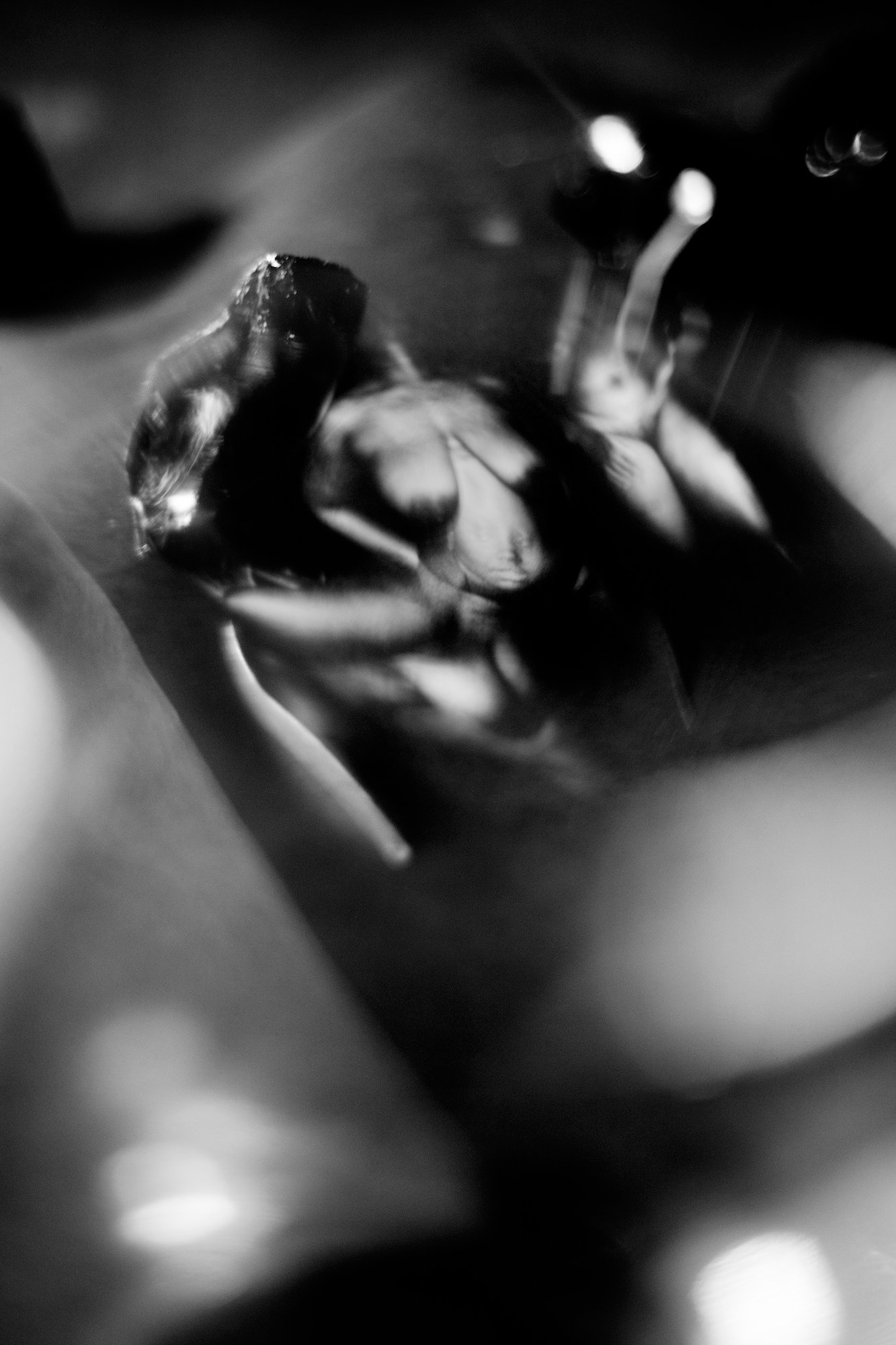
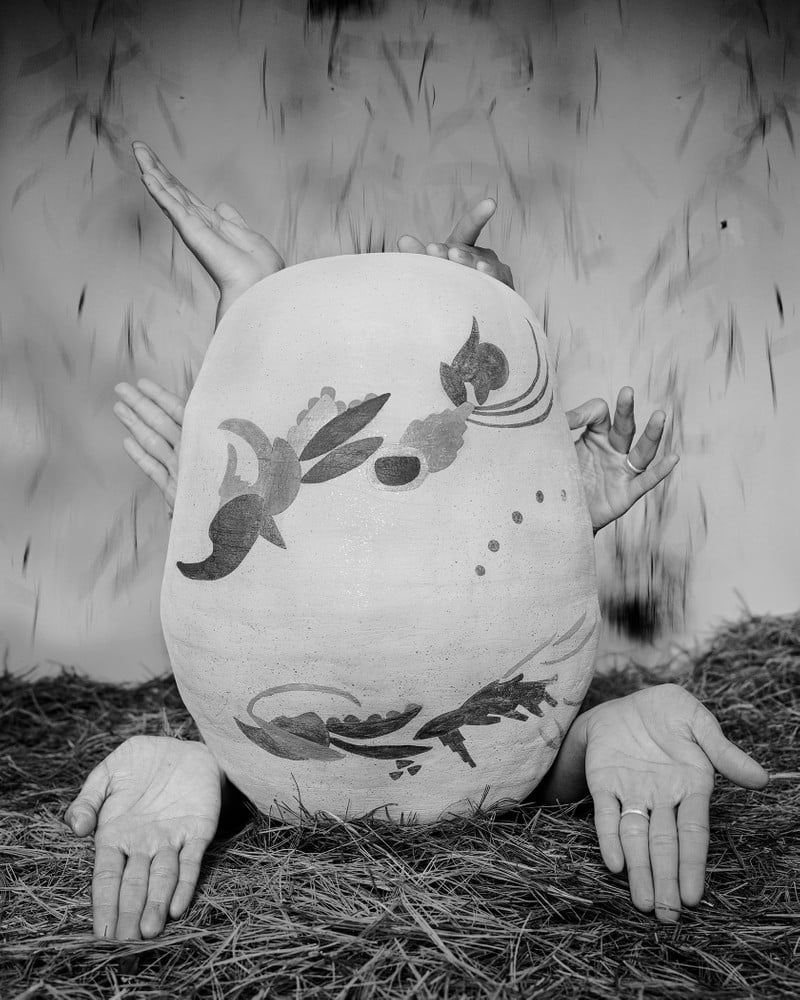
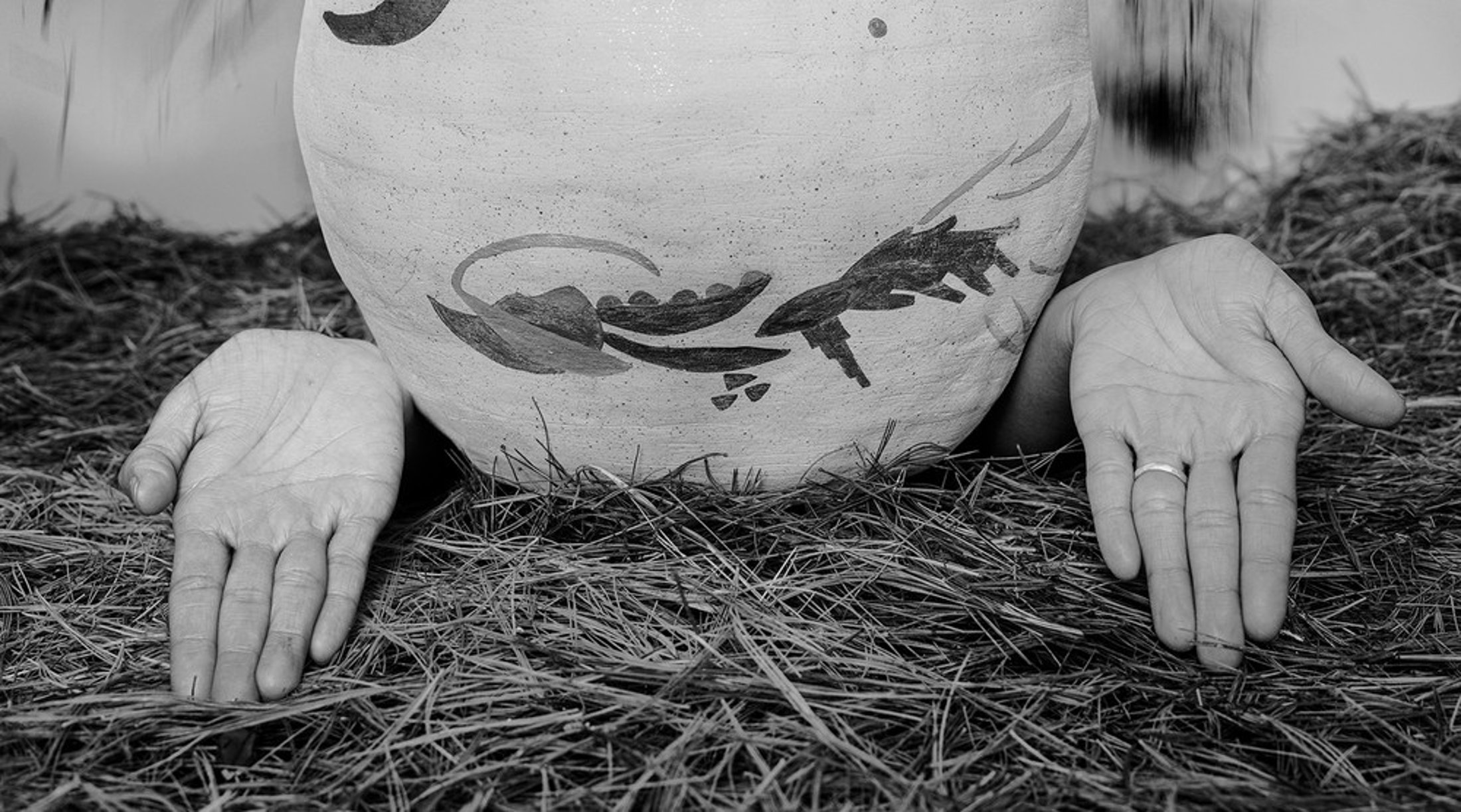
The black and white images of Koyoltzintli are informed by her research into Indigenous acoustic instruments. The images are alive with markings, movement, and music. She photographs herself, and in one incredibly affecting image, her daughter as well, connecting the past with her own future. Working in the realm of fiction, Shala Miller’s Obsidian features a black and femme character, at times doubled in images, with hand-scrawled captions hung below.

Keisha Scarville’s work in particular shines, positioned throughout the space in color and black and white. Using her late mother’s clothing in her photographs, she creates a sense of presence in her absence. In Scarville’s hands, the archive is a spiritual place.
To Conjure traces its inspiration back to a 2008 ICP exhibition curated by Okwui Enwezor, Archive Fever: Uses of the Document in Contemporary Art. Enwezor referred to archival forms as “[…] a conceptual and physical space in which memories are preserved and history decided.” Whereas the artists in that outing looked to institutional archives, the ones assembled here have begun to build their own—familial, personal, collective, empirical and sensorial.

An exhibition about archives, or simply archival discourse, may seem like nothing new. Yet at this very moment, as archives are under attack, the question is should one retreat, hold their breath, and trust in systems? The artists of To Conjure prove that one way forward is through creative action and ownership. At times, as in many group exhibitions, the breadth of work almost seems too much.

And yet, Scarville, in her exhibition text, ties the works together and pushes against neat summations gathering up the roles of artists in all their complexity. “They are conjuring not in service of resolution within the archive, but for its expansion. They conjure to create, to question, to breathe, to witness, to spill, to break, to convene, to cut, to cloak, to name, to exist.” In a time of change and fear for so many, building an archive for the future is an act of defiance—sprawling, poignant, and beautiful.
Editor’s note: To Conjure: New Archives in Recent Photography is on view at the International Center of Photography until May 5, 2025.