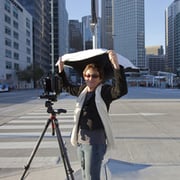
Photography, to play with a well-known phrase, is a many-splendored thing. A record, an impression, an exchange, a surprise, a science, an art—a mixture of all of the above, capable of capturing a spectrum of joy, anguish, confusion, and the quotidian. It is also a form of attention in which the person behind the camera decides to press the shutter and etch a moment into permanence.
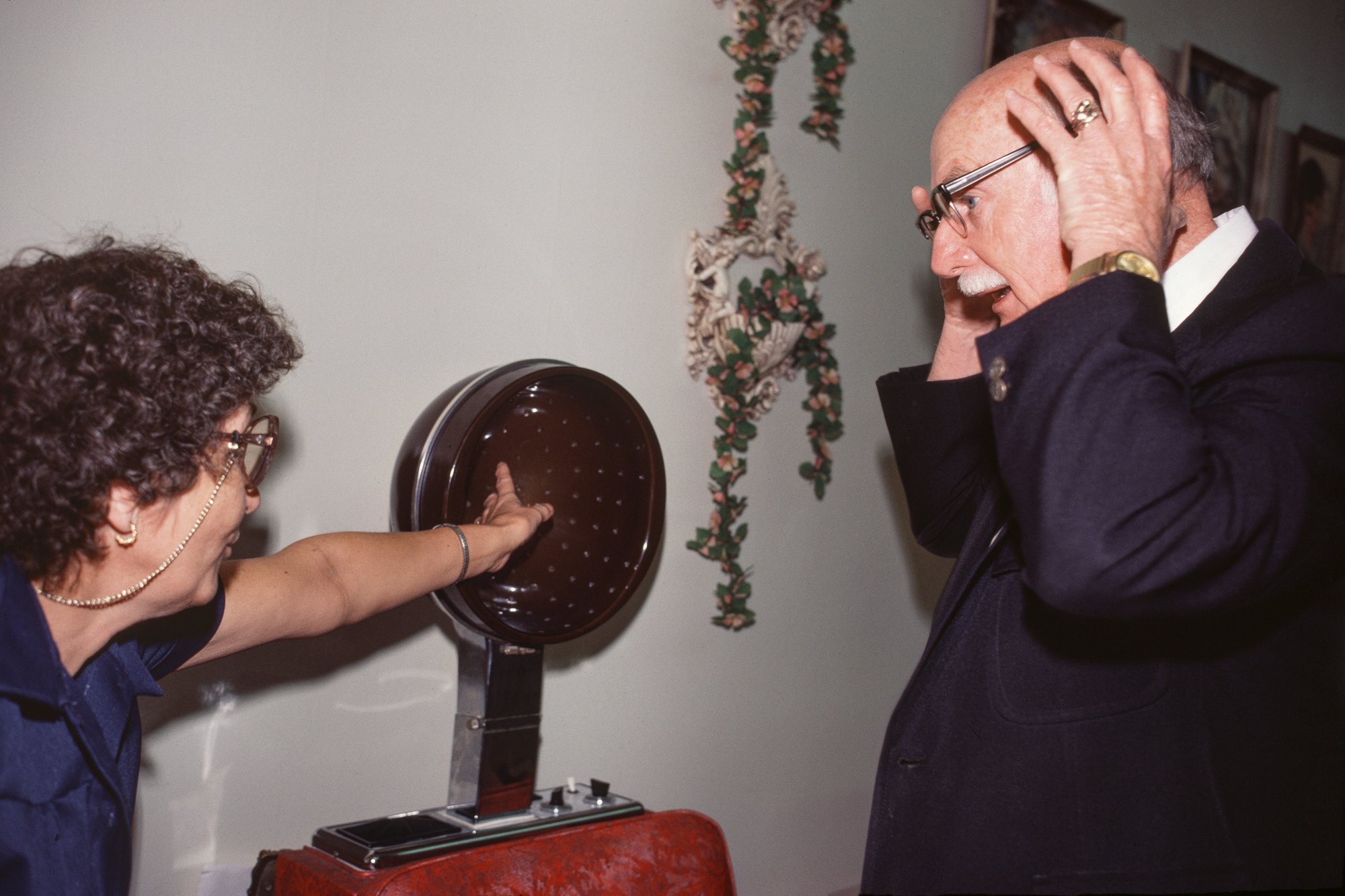
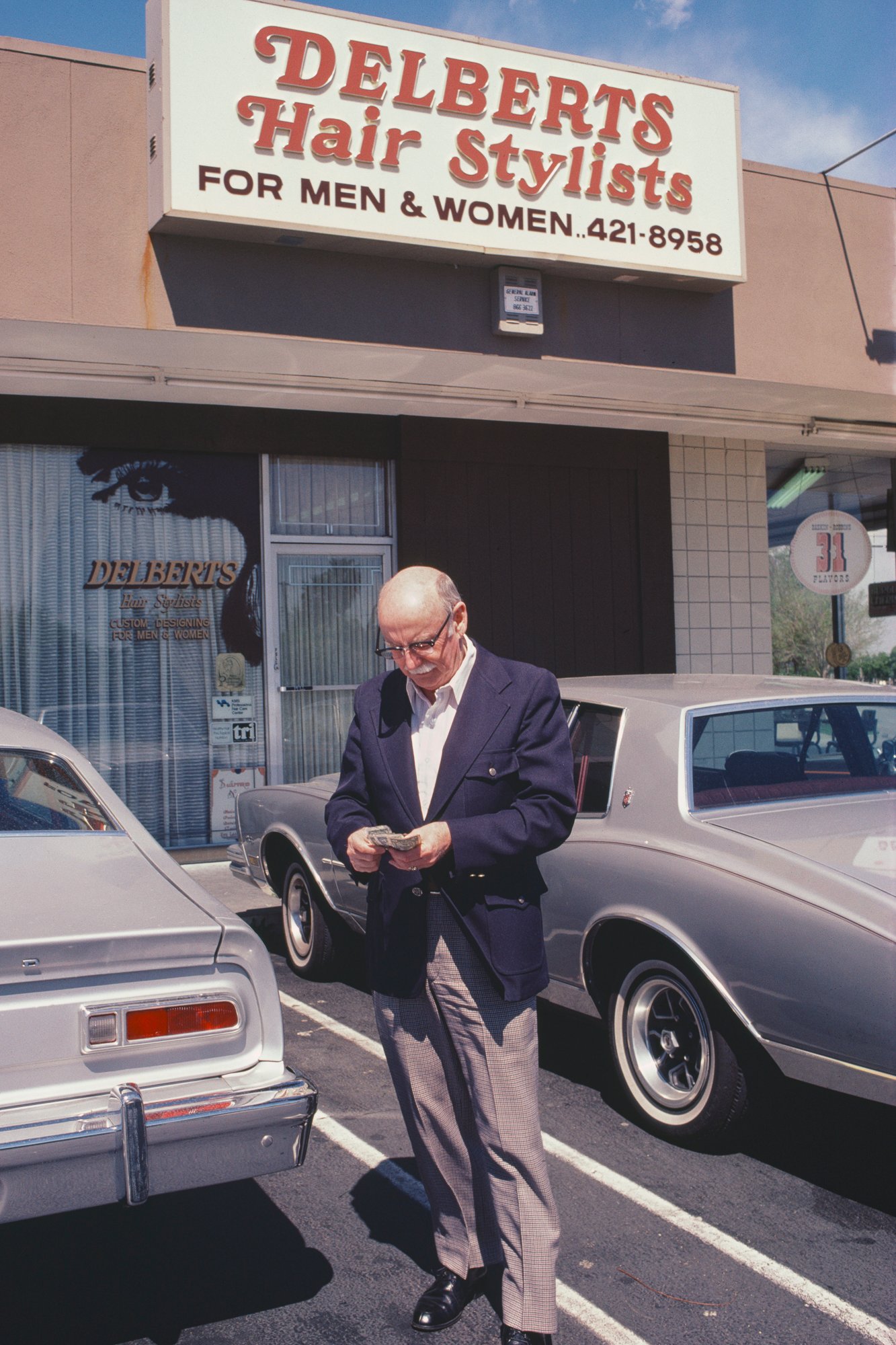
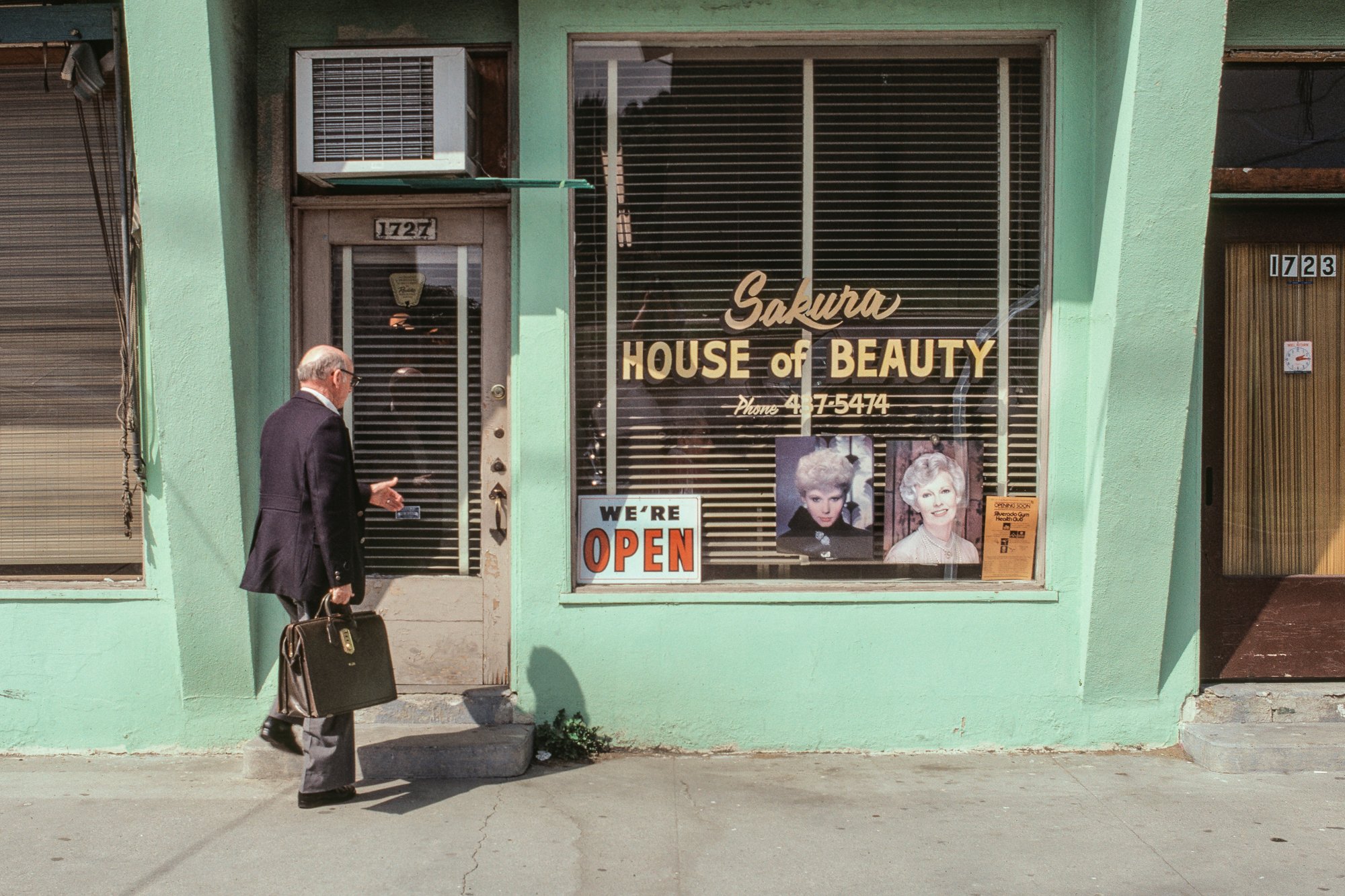
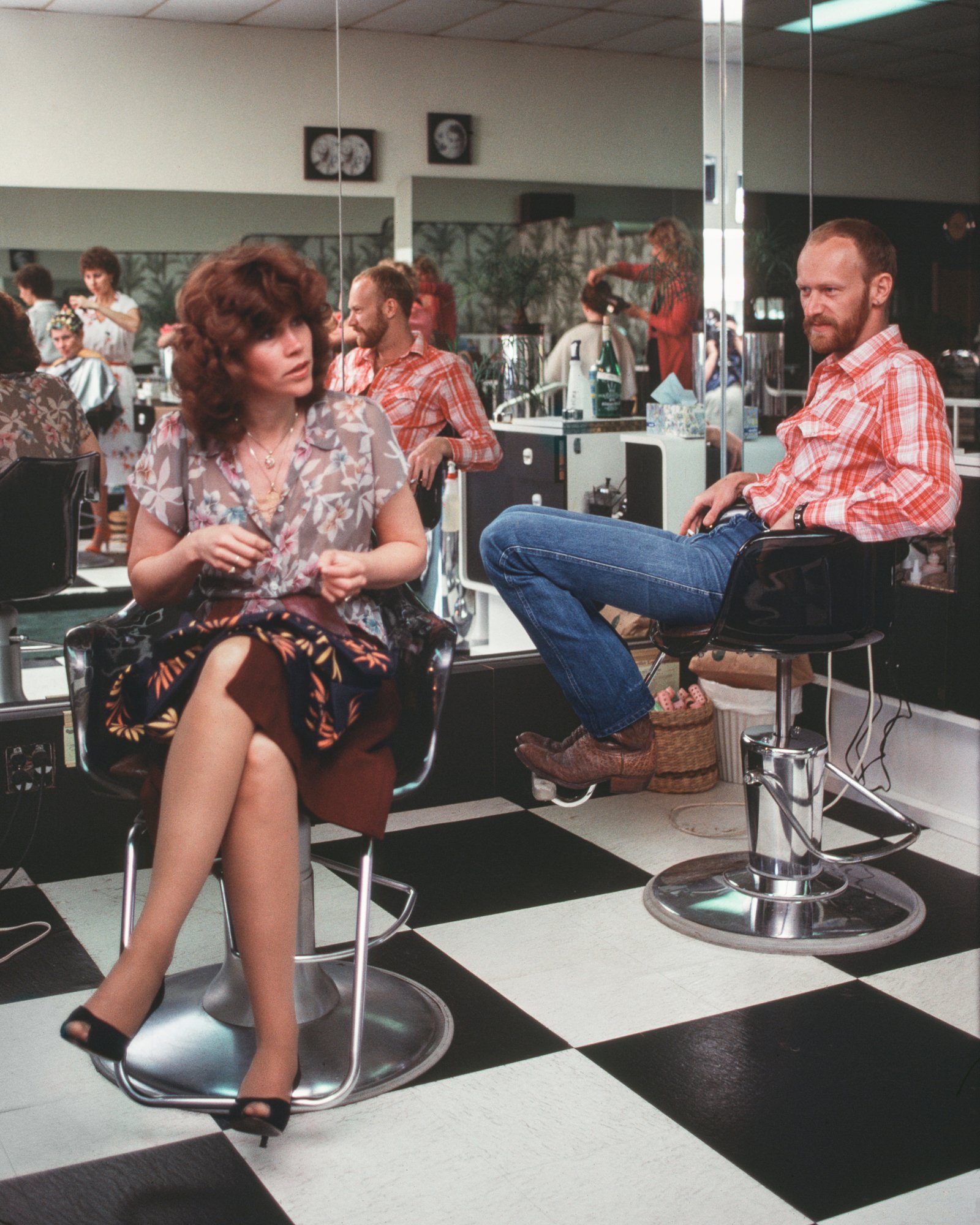
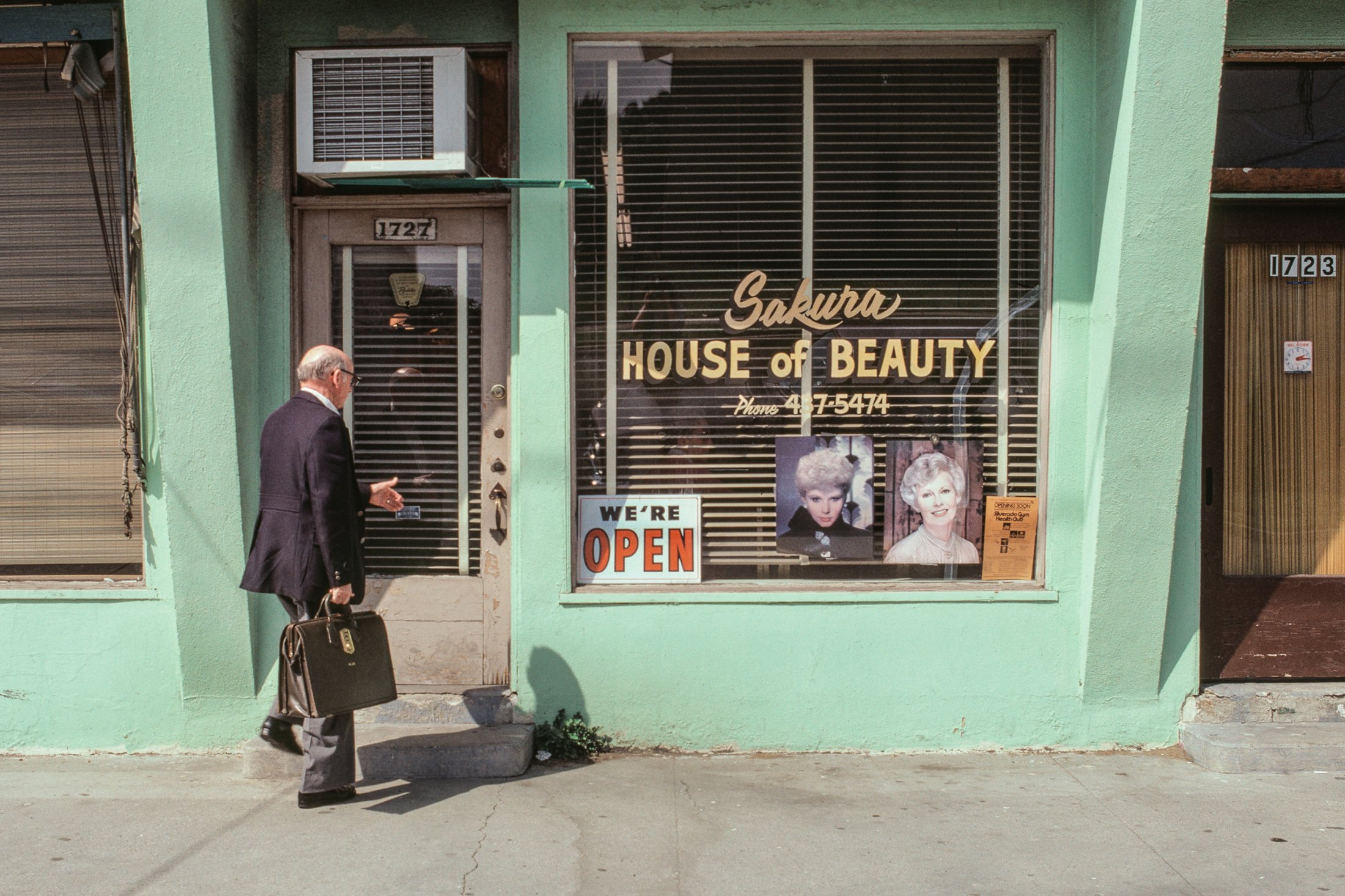
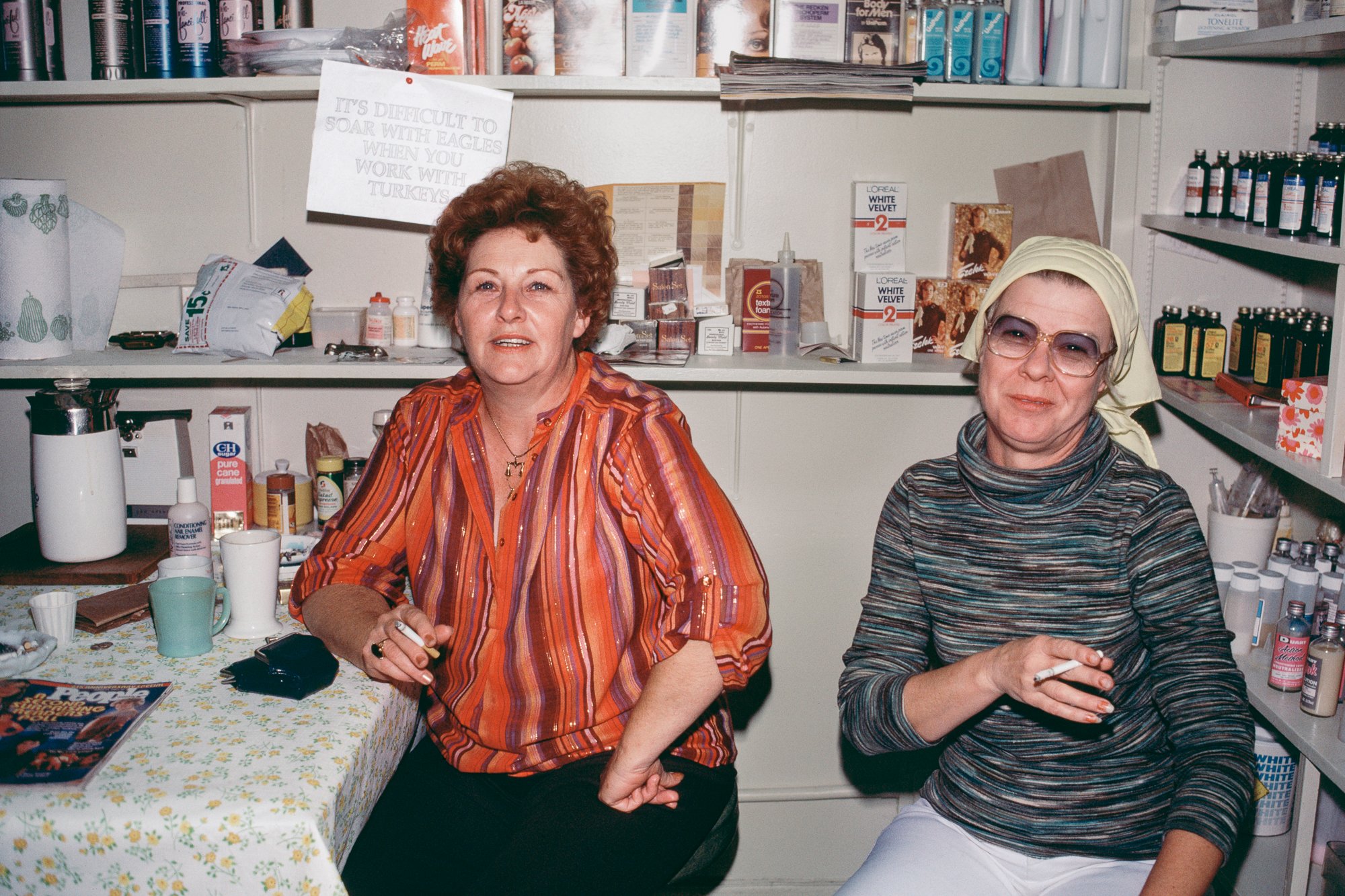
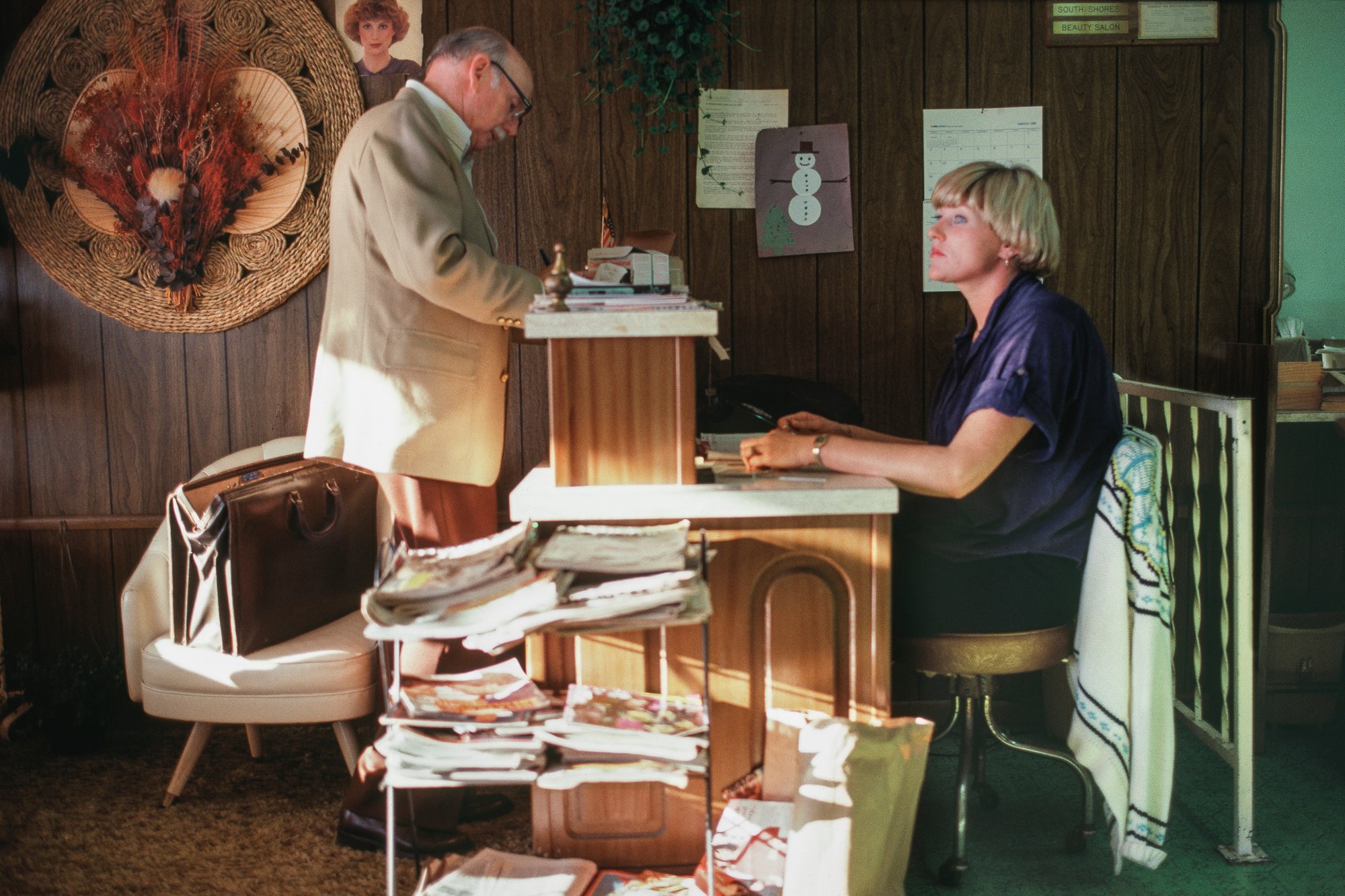
Bay Area-based artist Janet Delaney describes photography as “a currency of love” when describing her decades-old work, Too Many Products Too Much Pressure, recently published by Deadbeat Club. Photographed in 1980, the project documents her soon-to-retire father as he makes his rounds as a beauty industry salesman. We see salon owners, fellow salesmen, customers, and Delaney’s father, Bill, the star of the show. What began as a feminist undertaking to interrogate an industry that contributes to unrealistic beauty standards ended up providing the artist with a new understanding of her father—his sacrifices, his anxiety, his personality—and ultimately his love for his family.
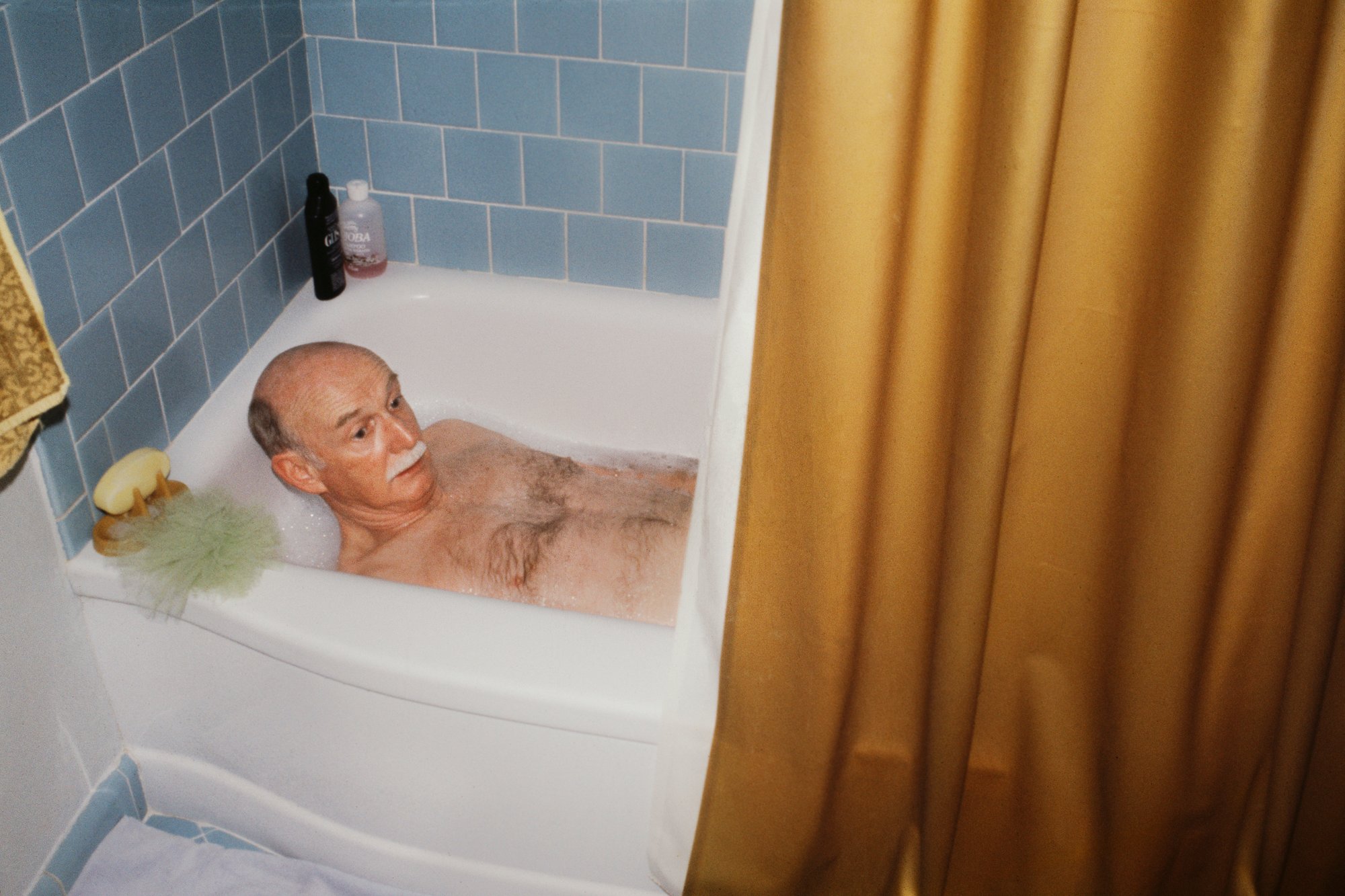
Delaney’s father grew up in Chicago, where he was placed in an orphanage and adopted by a couple who died before he reached the age of 10. He would go on to live with his adoptive grandfather and then serve as a houseboy for a wealthy widow until he turned 18. Photographs were not present in his childhood, but would later become an important part of the family life he went on to build and surround his children with. “My father really photographed a lot, and my mother’s family had a treasure trove of images. I can look back at pictures from World War I, soldiers who went off to war in Europe and my grandmother on the sheep ranch in Tacoma, Washington. I grew up with this obsession with learning about my life through photos,” Delaney observes.
“Photography gives you some degree of power,” she notes, “Early on, while I was in high school and in college, the Vietnam War was happening; it was a very challenging time, and it gave me the capacity to get stuck in. To take pictures, you know? It led me to the interior world of anything I was doing. It was like a passport. I could use the camera to try to make sense of everything that was going on around me.”
During her graduate studies, Delaney decided her approach would be to photograph close to home. “I was interested in turning the camera on my own life, to talk about bigger issues of feminism and what I saw as the tyranny of the beauty industry. Because my dad sold beauty supplies, I’d grown up surrounded by products designed to transform women into an idealized form,” she explains.
Together, they drove around to visit his clients, and the artist was introduced to women who knew all about her, as her father spoke warmly about his family while plying his trade. “I learned how hard my father worked. I knew his job was consuming. He worked 9am to 9pm many days, and on the weekends, he did paperwork and drove back into Los Angeles from our home in Compton to drop off his orders,” she remembers. “He worked on commission, so it was stressful. I also saw how wonderful he was with the women he worked with, and how much he respected them. He had the necessary humility to be able to spend time in a woman’s world. But I also saw how he felt that his job was not worthy of much respect, it was not ‘manly’ and that bothered him a bit.”
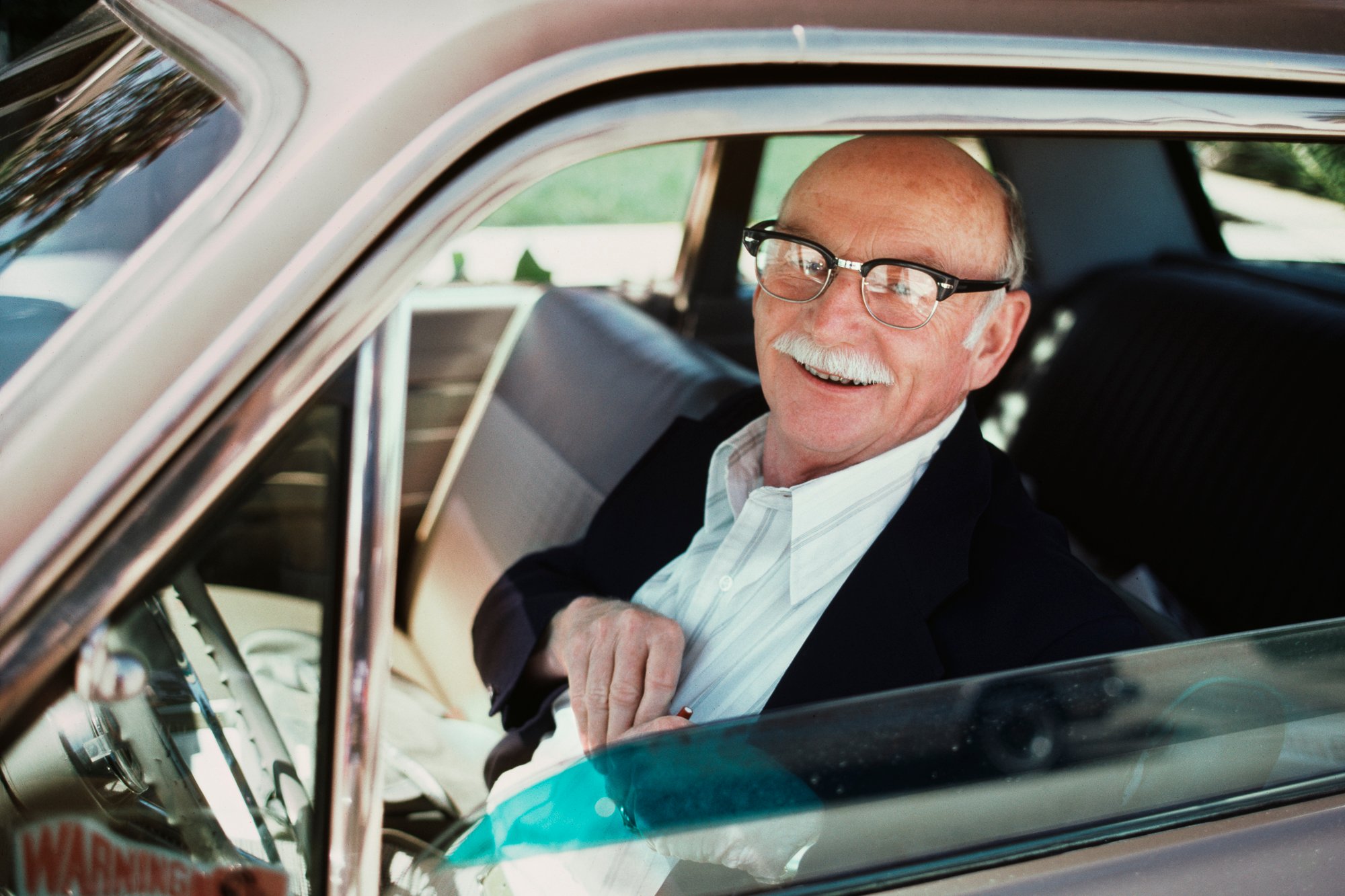
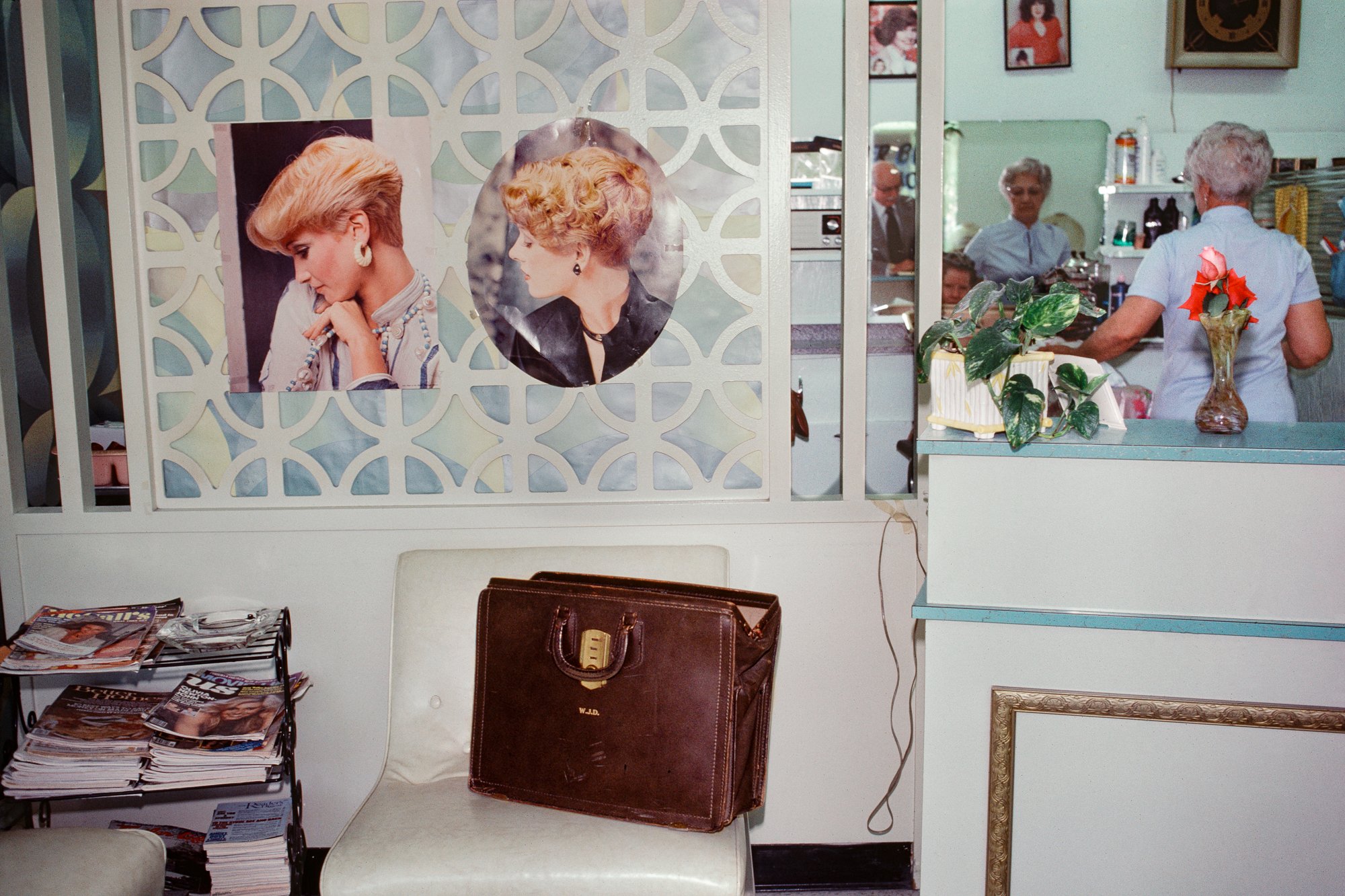
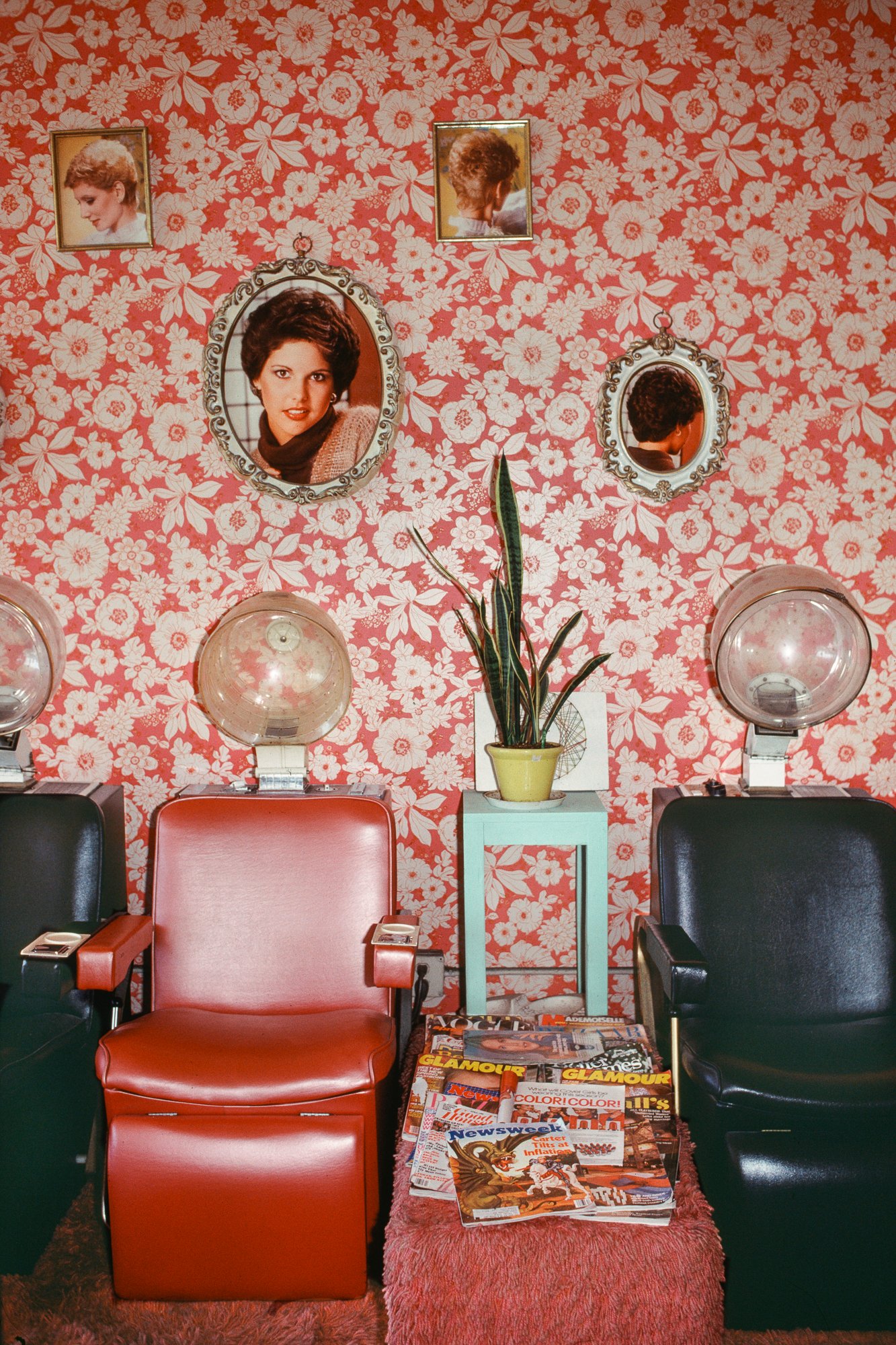
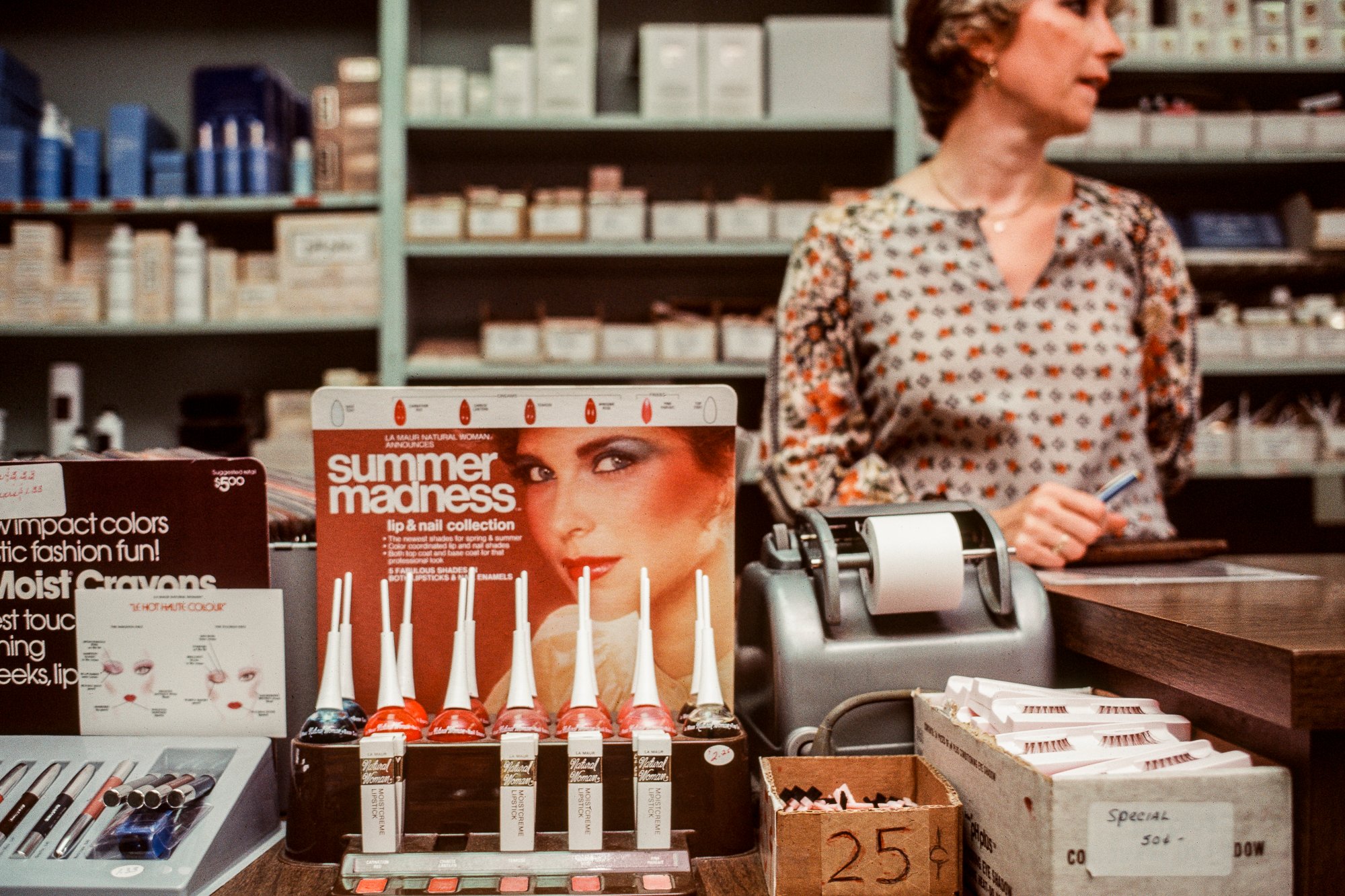
Too Many Products Too Much Pressure has a particular rhythm. Across more than a 100 pages, we see Bill in his car, paperwork piled on the seats as he navigates the streets of Los Angeles, anxiety mounting. The tempo is frenetic as we move with him from storefront to car to storefront on repeat. He banters with customers and pitches products. He appears both stressed and at ease, laughing and lighting cigarettes. Detail shots show interiors, the bric-a-brac of a working stylist, piles of magazines, and hairspray.
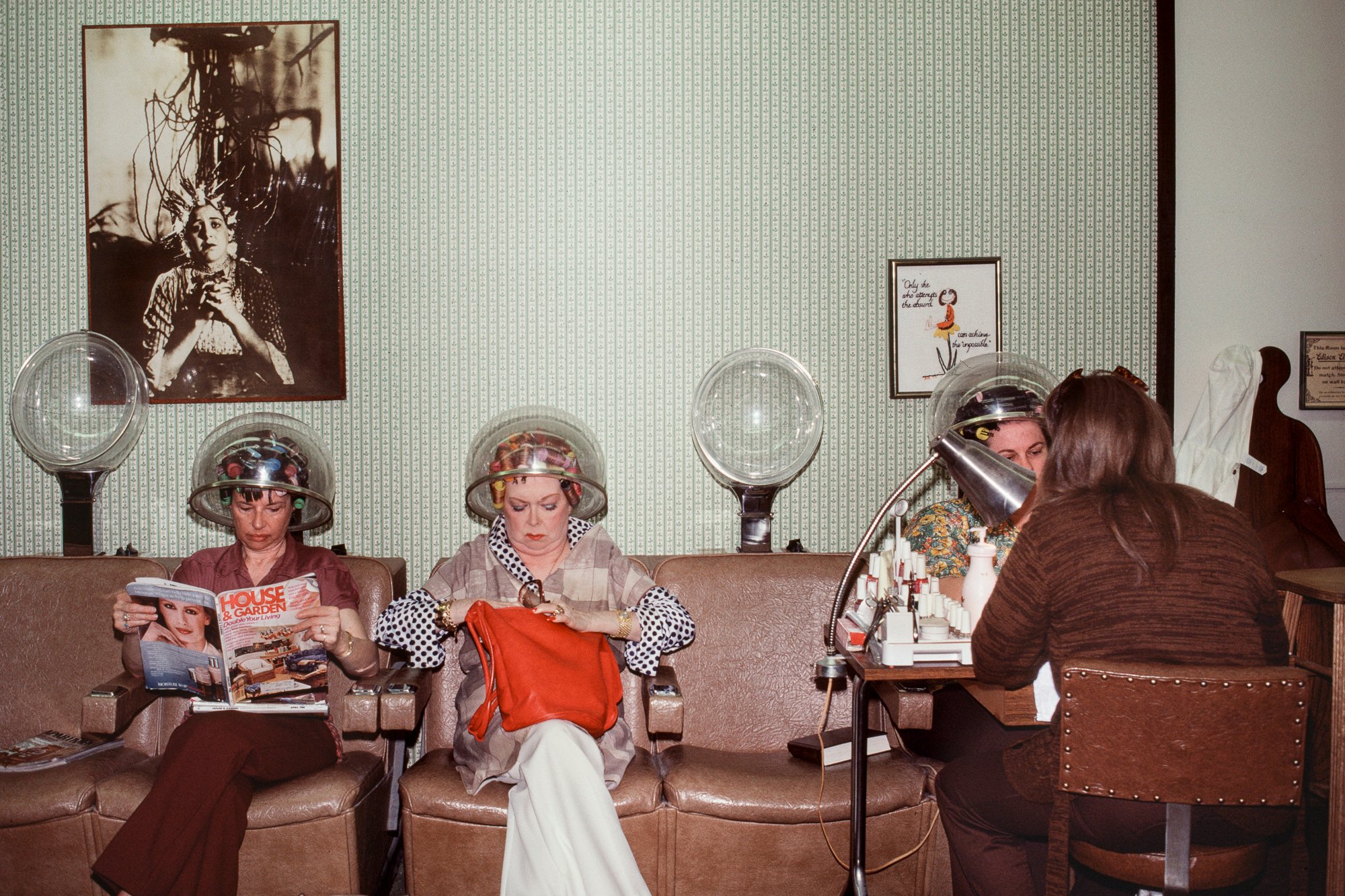
Whilst photographing, Delaney also recorded conversations in the salons, and the book’s designer, Clint Woodside, puts the text to work. We see conversations laid out in the manner of a screenplay and Bill’s own observations in bright blue text, allowing the viewer, much like a film-goer, to watch the scenes unfolding and get a sense of his internal world. He is direct about the industry and the economic reality of being a salesman, and also of the important, comforting role that a salon can hold for clients. Delaney’s photographs do a beautiful job of showing not only the weight of the work—Bill is always ‘on’—but also how much his customers truly seem to like him, teasing and inquiring after him. “The shop owners and beauticians all greeted me very warmly because they loved my dad,” she says.
In the book’s two texts, an introduction written by the artist and a closing piece by her mother, we get expanded perspectives on Bill and his work, both what it gave him and what it took out of him. Delaney’s mother, Connie, writes: “All day Saturday, Sunday, 7am to midnight, calls came from customers who suddenly remembered something that they had to talk to him about. He became a part of their lives, and they became a part of his life too. He’s really had an extended family if you want to call it that.”
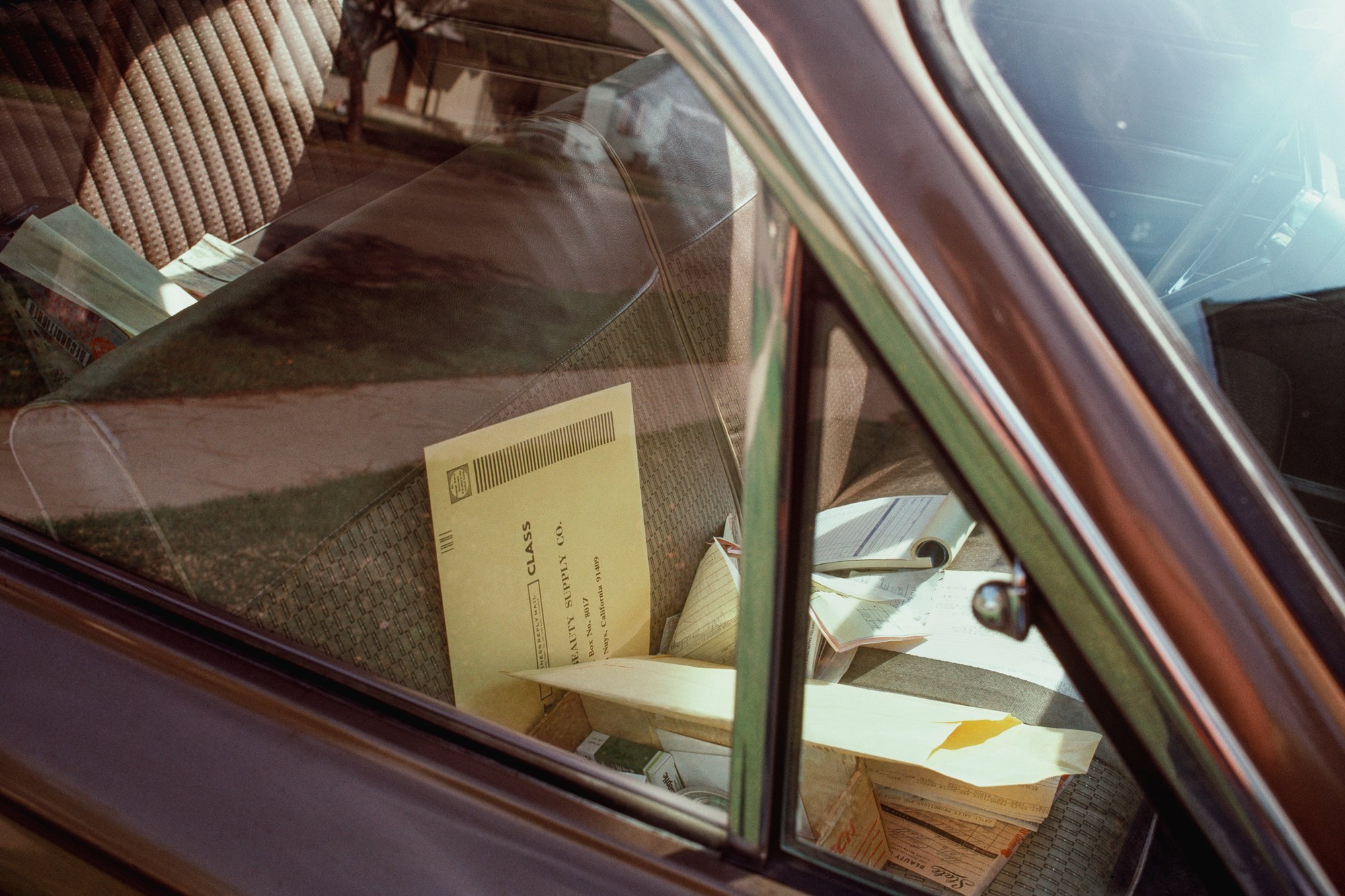
Family, connection, and community reverberate throughout the book. Though it may feature a family stitched through with commerce, it speaks to the intimate relationships that have disappeared from much of our economic systems. Woodside’s design doesn’t shy from the language of marketing, placing images of Bill driving next to or on top of crops of enlarged beauty advertisements, signaling the dizzying nature of the job. In a world increasingly moving away from in-person relationships, the idea of a middleman—a conduit between businesses—has been replaced with ever-growing monopolies.
“As we move to mass production and mass marketing and massive stores and online shopping, we remove so much of the human touch. What can we do to compensate for the alienation that comes with all these conveniences of scale?” Delaney asks. In the banter between Bill and the salon owners and employees, the business of the matter still has that personal touch, or as Connie writes: “This business of making people feel good, he knows how to do it. There is a sincerity behind it that makes it ring true even though you know that many of the things he’s said, he has said over and over again, but he says it with such charm and real integrity that you just believe him.”
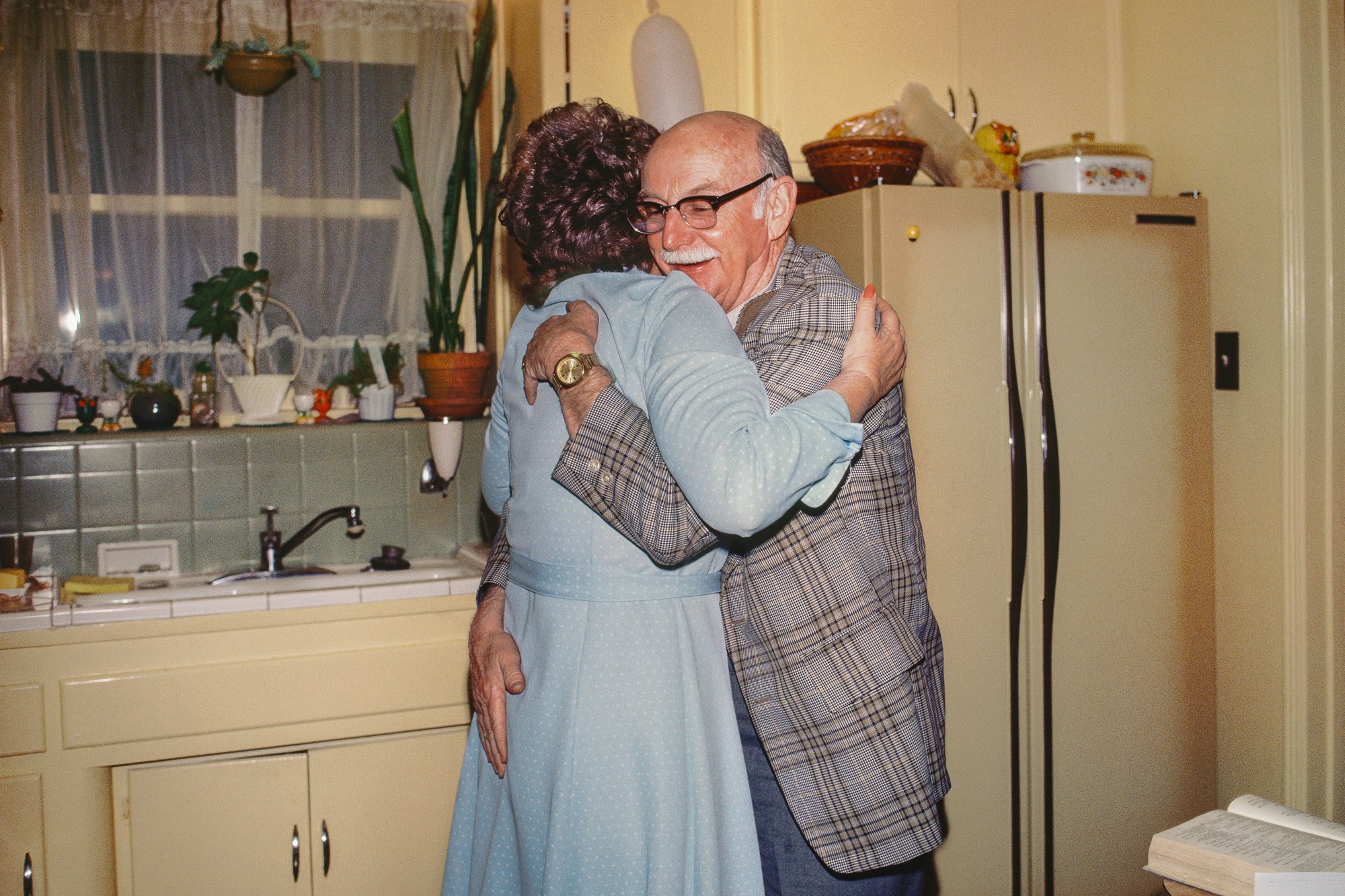
In concluding her text, Connie writes of Bill: “Now that he is retiring, all the accolades and all the obvious attention that he is getting from these people that he has been dealing with all this time shows how they have felt about him emotionally. This should prove to him that he has greater rewards than he ever anticipated or expected out of any kind of career that he could have had.”
The practice of photography, of exchange and attention, can be an act of love, whether we realize it at the time or not. “This idea of being acknowledged was at the core of my work,” Delaney explains, “I really have been rewarded from giving photographs back to people who were not normally acknowledged. Before we had this omnipresent image capacity, where everybody is a star, it was special. That was the motivation. It’s a currency of love that was really very motivating for me to make those kinds of connections and for my dad to be able to share this with his neighbors, these were men that he had spent time with, and he was very proud, I think, to be able to show that he had been the feature of this.”
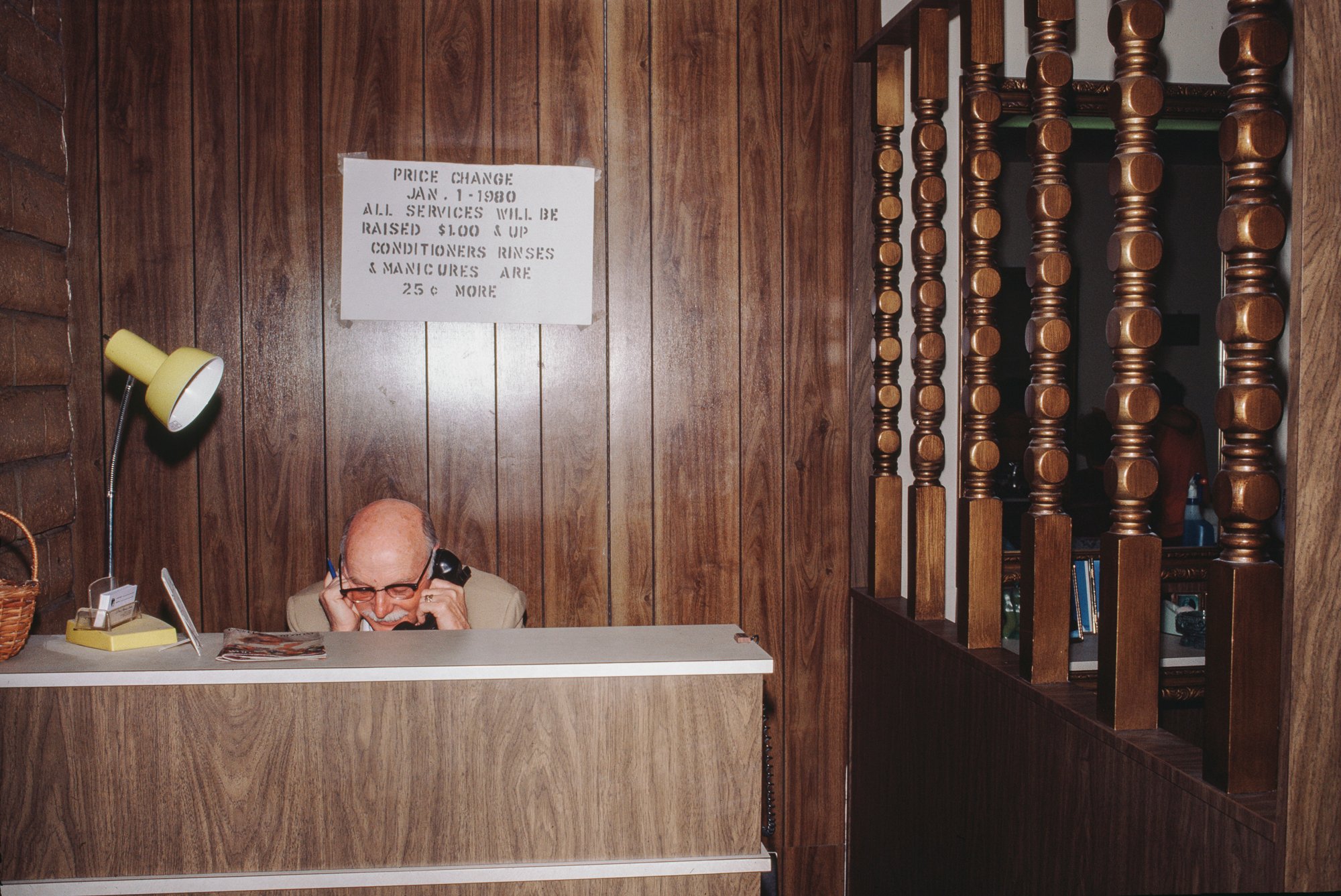
Too Many Products Too Much Pressure captures a working world that we have lost and are poorer for. It is also a study of how our ambitions can change and deepen, surprising the maker and the doer along the way. In returning to her project decades later, Delaney reflects, “My original intentions of critiquing the beauty business were overridden by the real story of hard work and love. Though I did not take down the beauty industry, I have managed to share a good and important story about work and fatherhood.” Across its pages, her publication demonstrates that to give our attention is a worthy facet, or perhaps more fittingly, a splendor of photography. To use Bill Delaney’s words, “You gotta love it.”