Much like a river, Bratislava-based photographer Jozef Macak found that by moving through an area—naturally, reflexively—his imagery would flow too. The river in question is the Buriganga of Bangladesh, the main protagonist of his latest project. The country has been called the ‘Land of Rivers’ as it is home to anywhere between 700-1,200 rivers according to various reports.
The Buriganga, which means ‘Old Ganges,’ was once the final section of the mighty sacred river, emptying into the Bay of Bengal. It has since shifted its course and can now be found along the outskirts of the capital city of Dhaka. Macak’s photographs, gathered in the project Tides of Life, capture the daily activity teeming alongside and within the river.
Macak is a self-taught photographer, and his initial journey with the medium was slow. “I began around 10 years ago, but it was a long road,” he explains. “I started traveling at some point in my life, quite a lot. And then I realized, since I was traveling, I should get a decent camera and maybe learn some basics, starting with composition.” Seeking out interesting vistas as he travelled gave him the chance to practice capturing landscapes and the rituals that took place within them. It also introduced him to how a globalized media has changed photography, with photographers clamoring to get the same perfect shot, visiting the same places. “I got a bit disillusioned. I saw how so much is staged.”
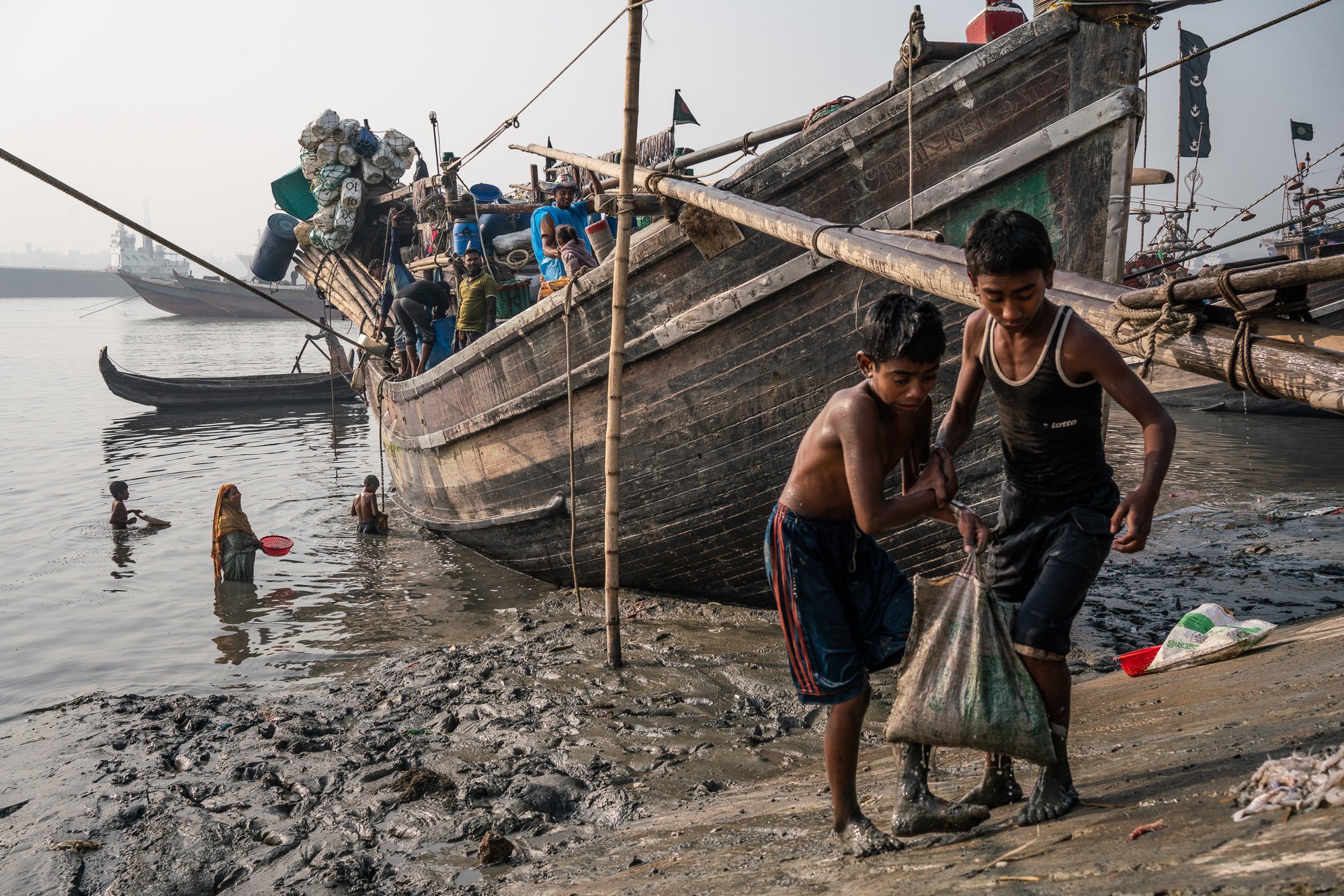
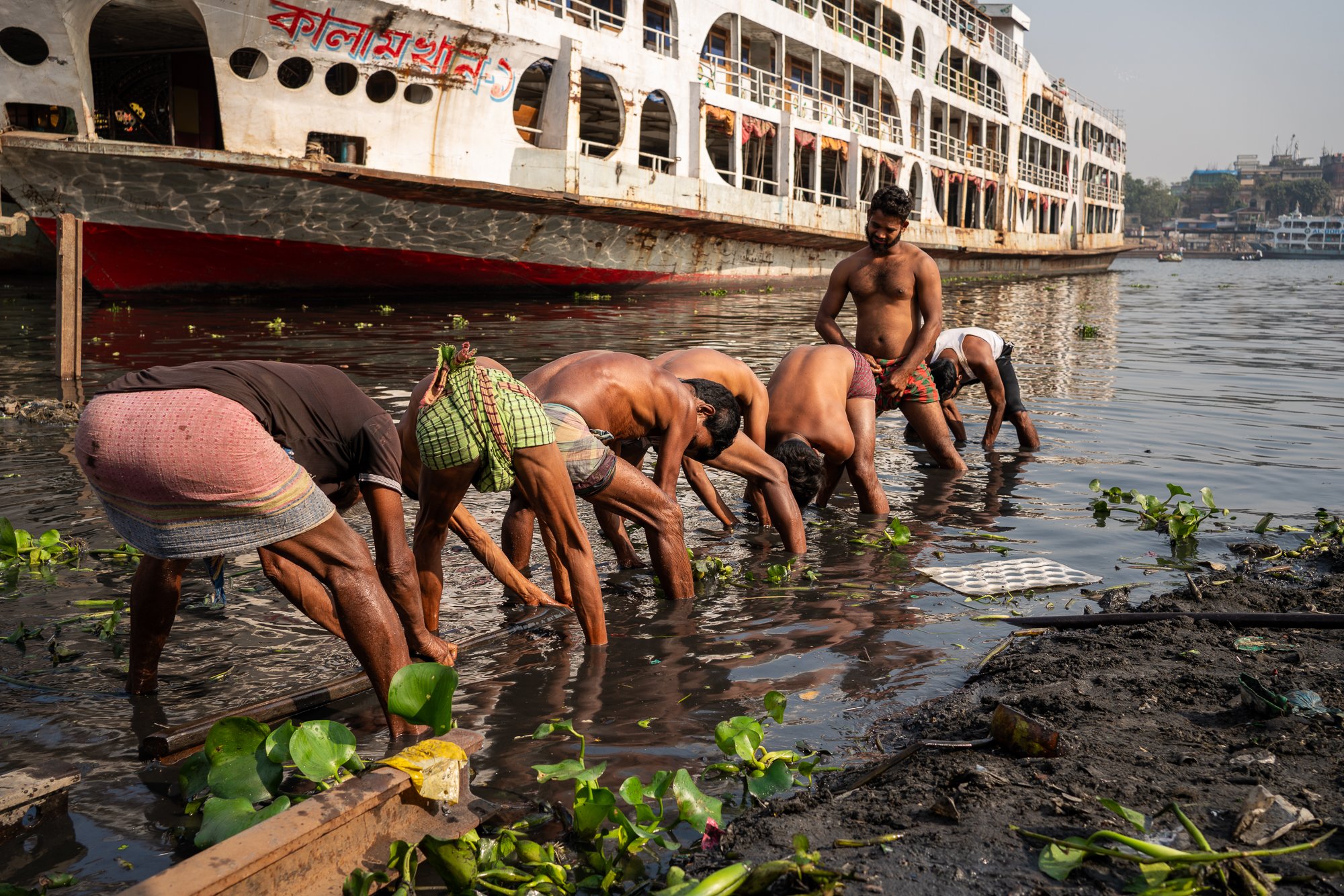
It was in street photography workshops that he found a new, personalized way to shoot. “That’s when it clicked, and I changed my way of looking at things completely. Instead of chasing the picture, I learned to really just enjoy the road and look around.” When Macak found himself in Dhaka, the Buriganga beckoned. “I love rivers in cities,” he notes. “Whenever I’m in a city, I love to spend time around them. People’s lives are deeply connected to them. In Dhaka, this area, in particular, is very lively.” The Buriganga of Macak’s images is the backdrop to many things—transport, industry, amusement, and rest. It is also the most polluted river in the country, from years of illegal dumping of industrial waste and untreated sewage.
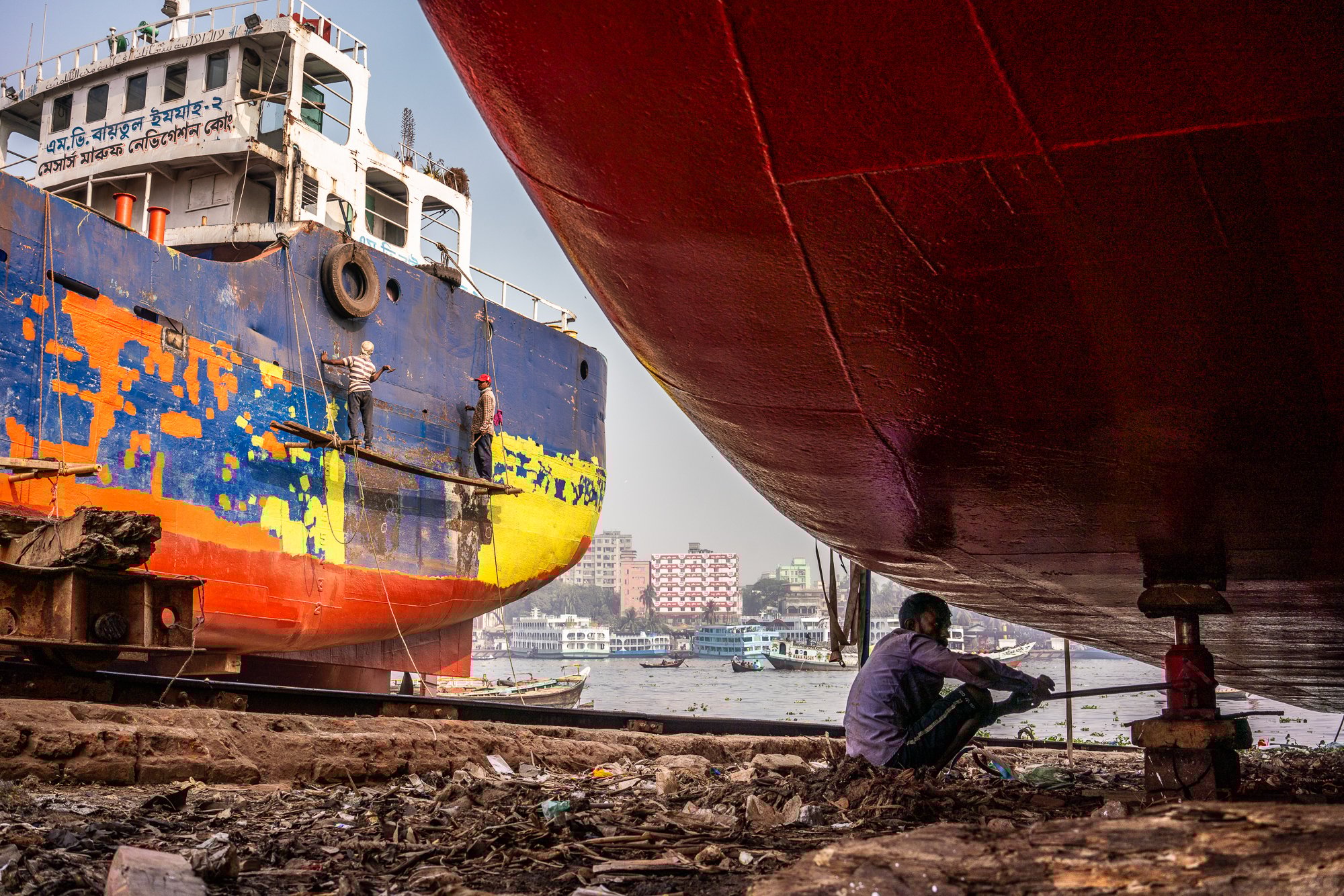
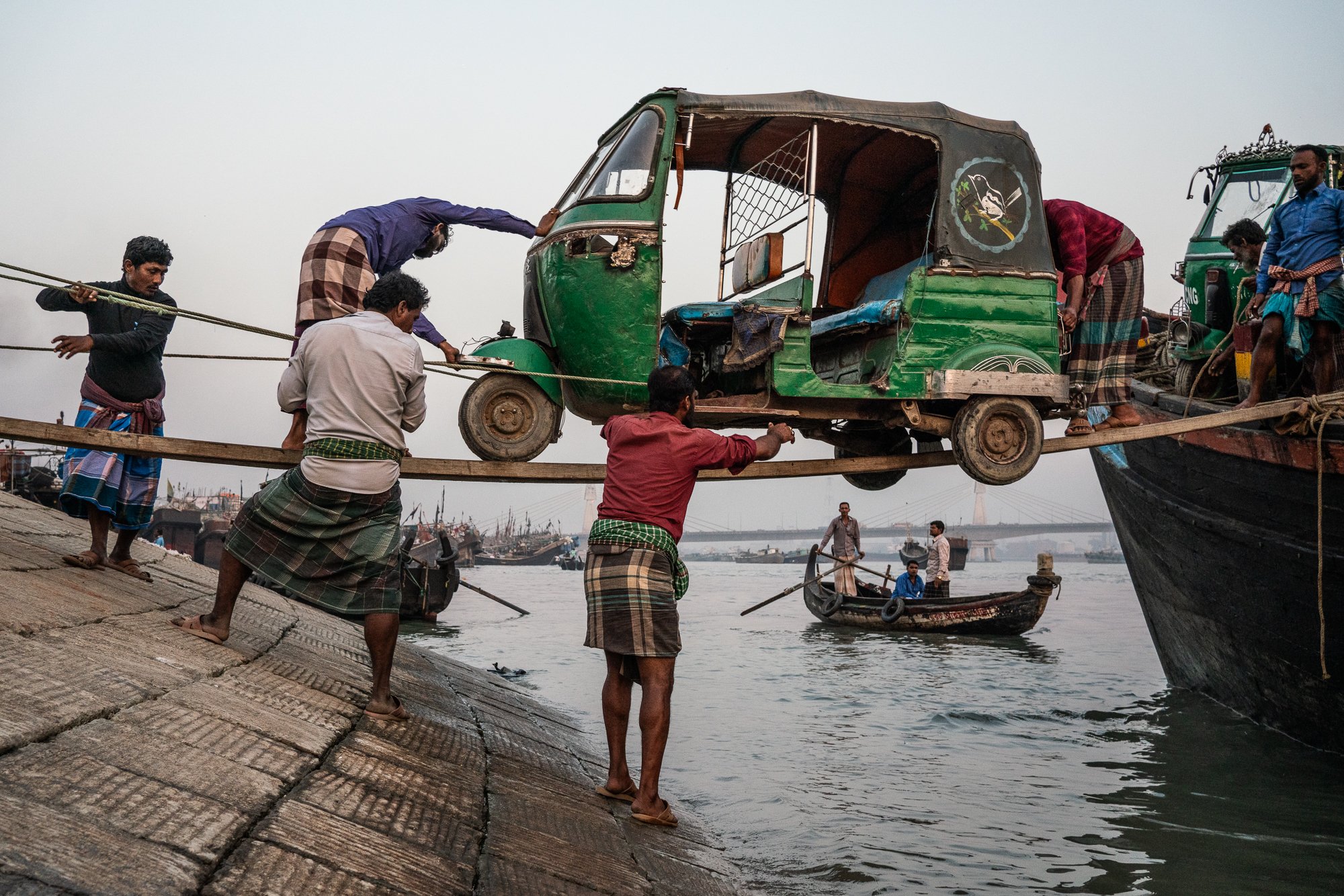
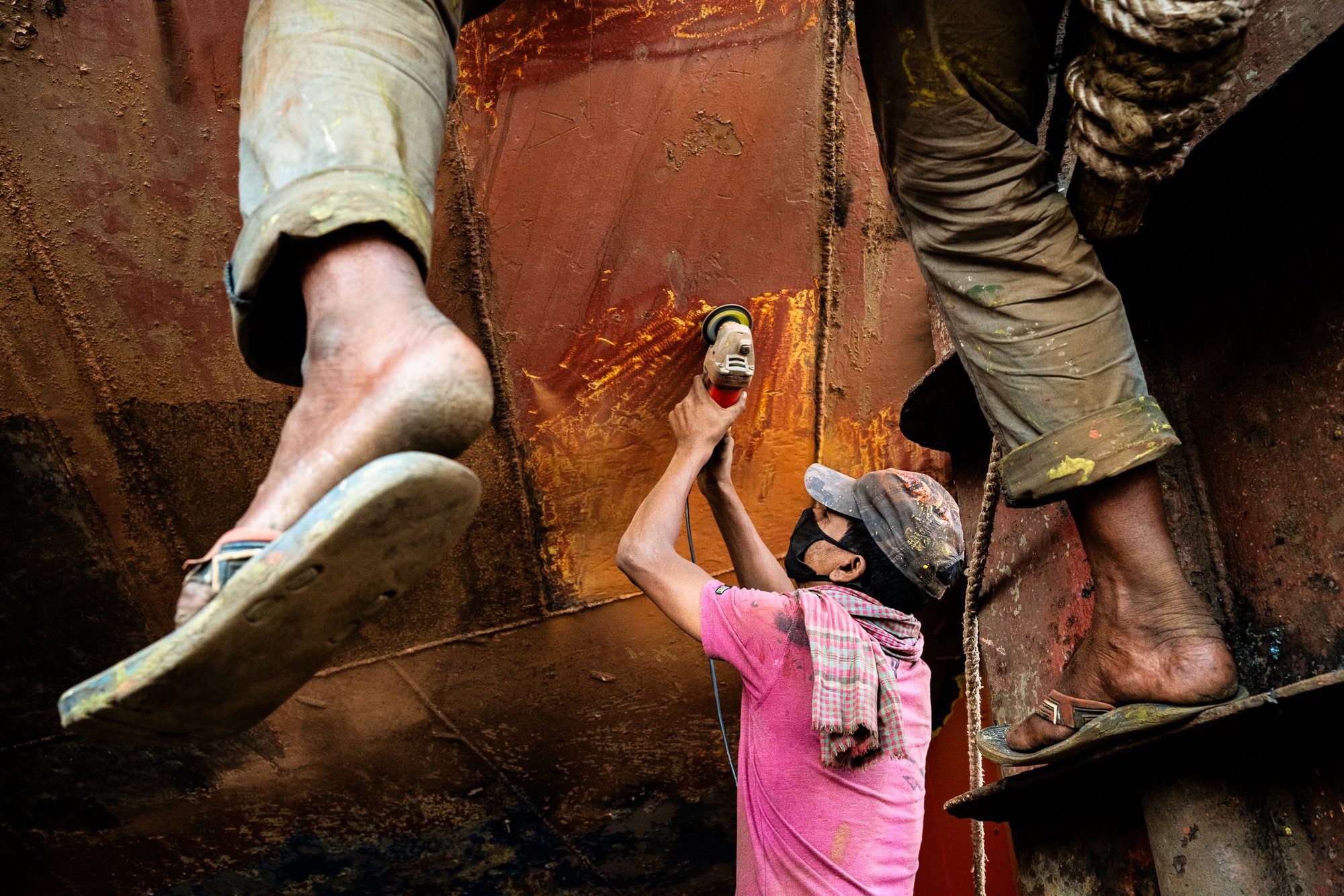
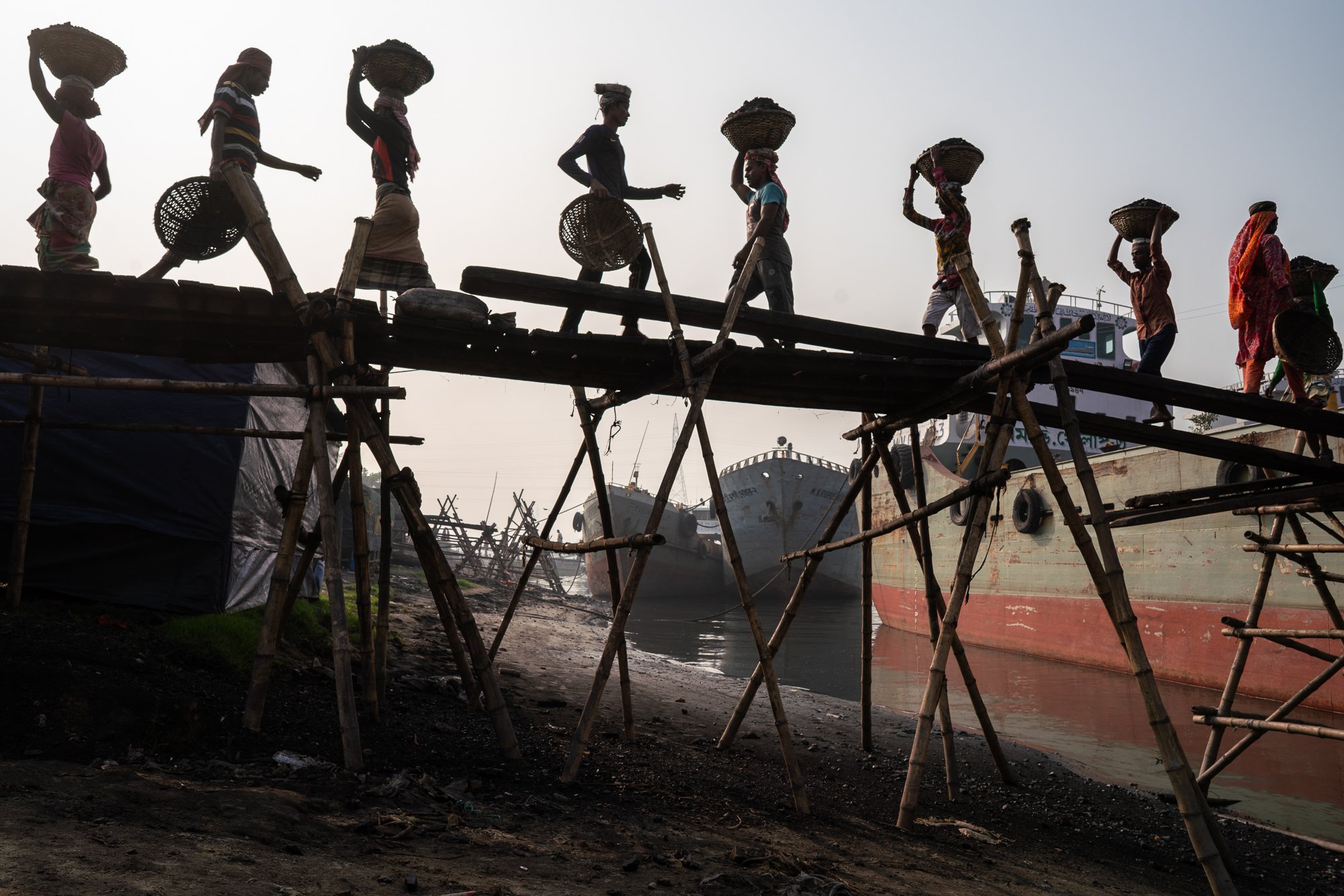
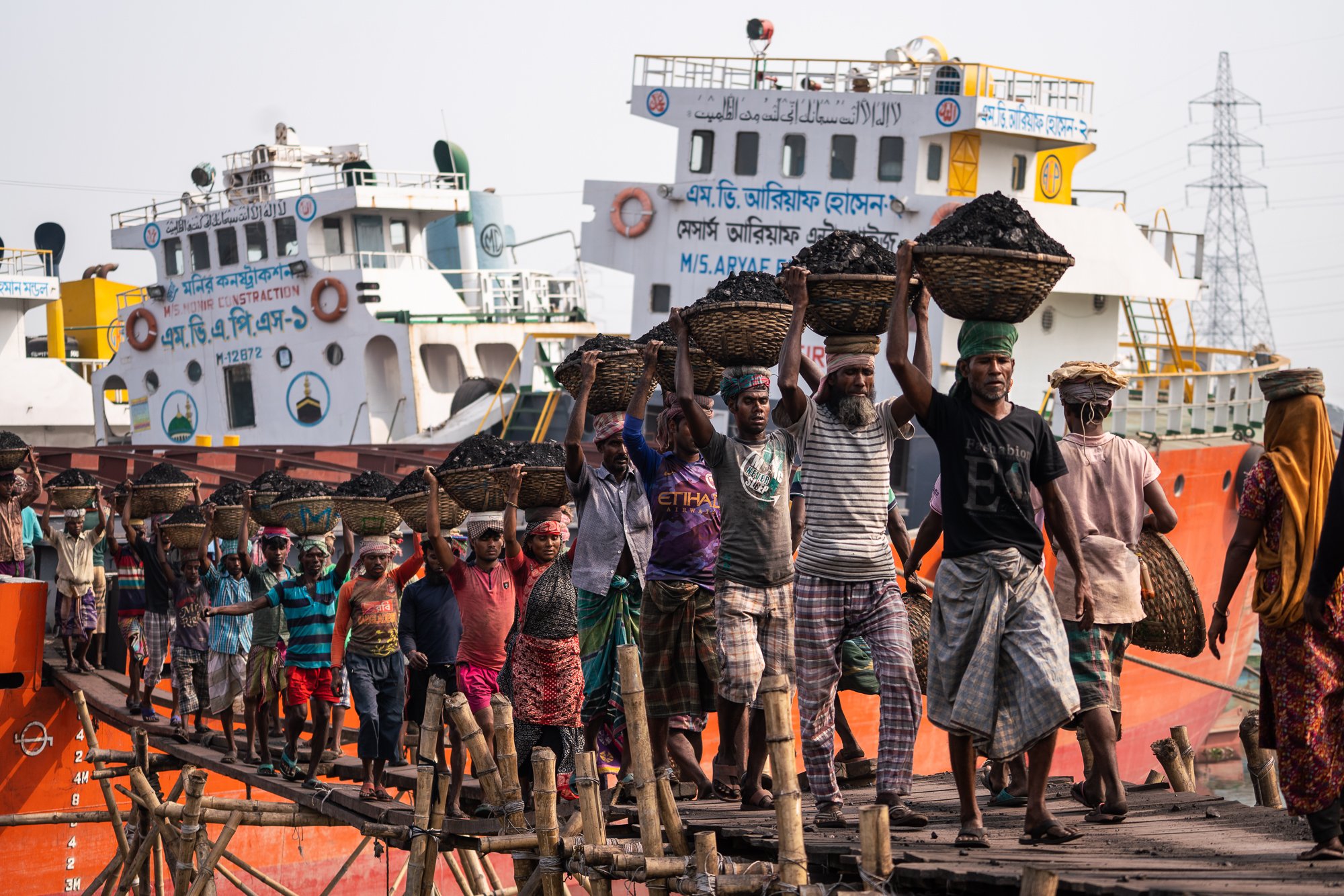
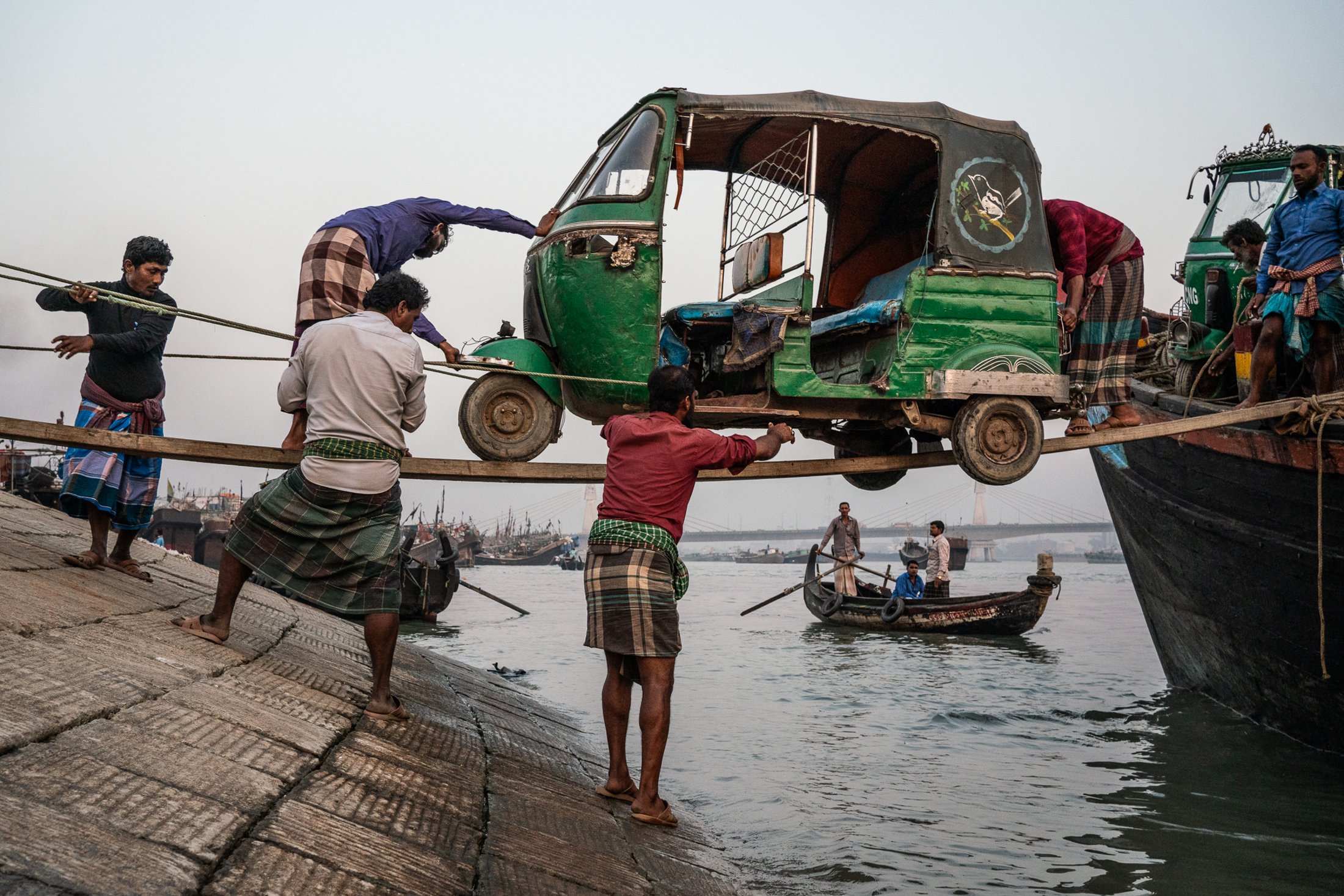
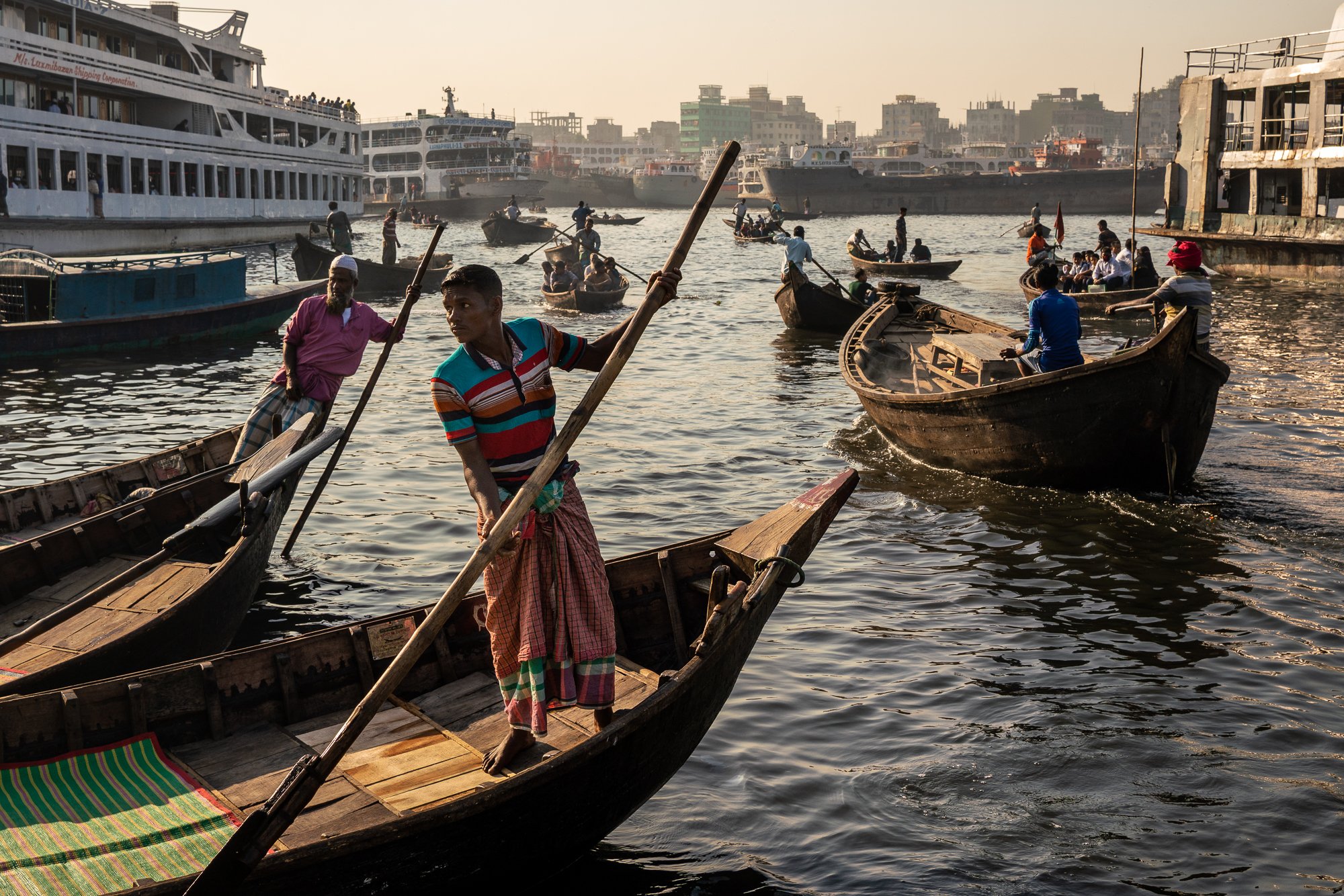
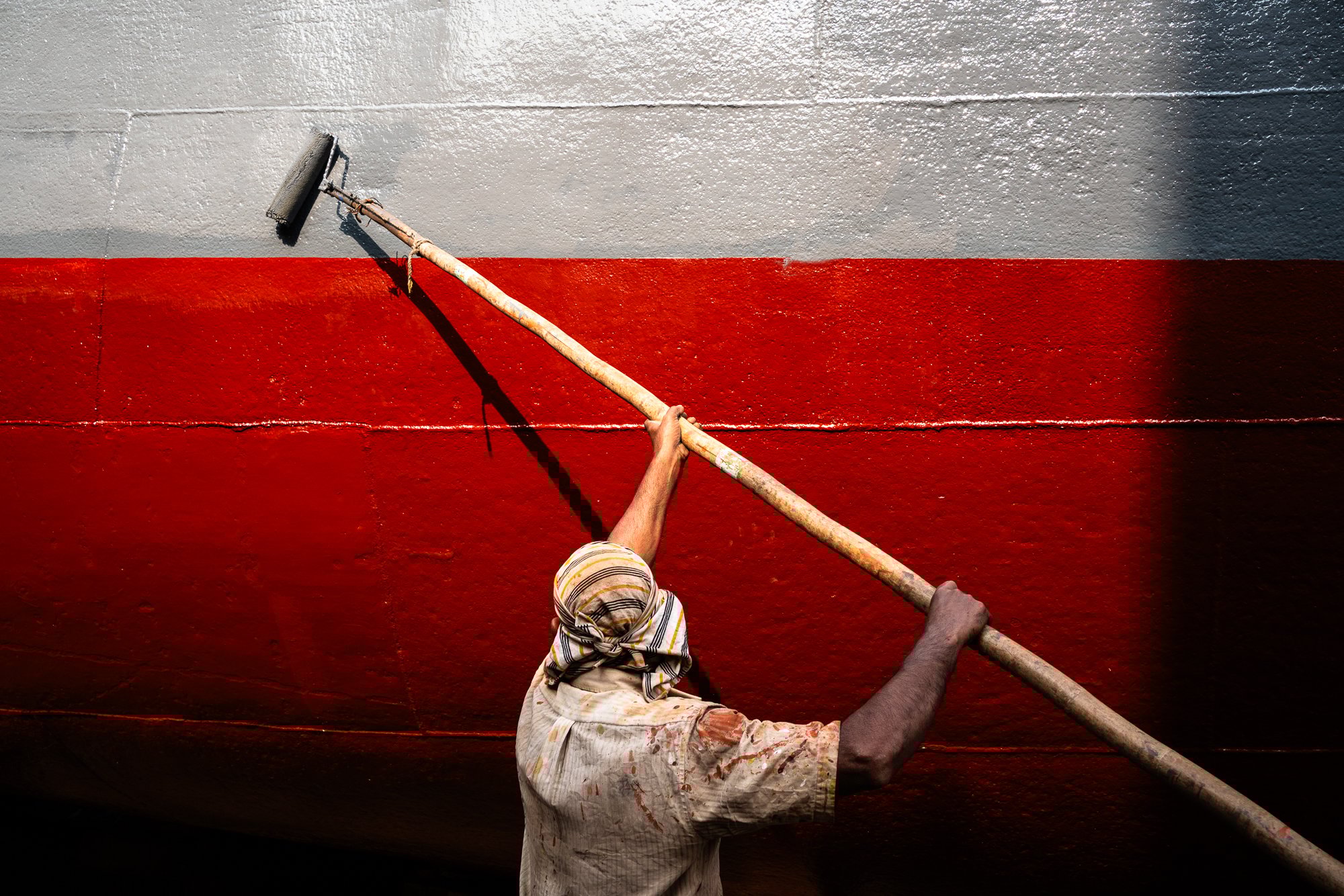
Macak speaks to this, noting how ecosystems have been pushed to the edge. The Buriganga is considered to be close to “biologically dead”: no longer performing the full extent of its ecological functions and struggling to sustain life. Yet, it still plays a hugely important role in daily life. This is where Macak trains his lens, to capture the bustle of boat traffic, the work at nearby shipyards, and the ingenuity of rigged-up bridges for unloading cargo. “I wanted to capture the people whose lives are tied to the river. I wanted to have this insight, and that’s something that I try to do, to find a bit of humor in the streets,” he says.
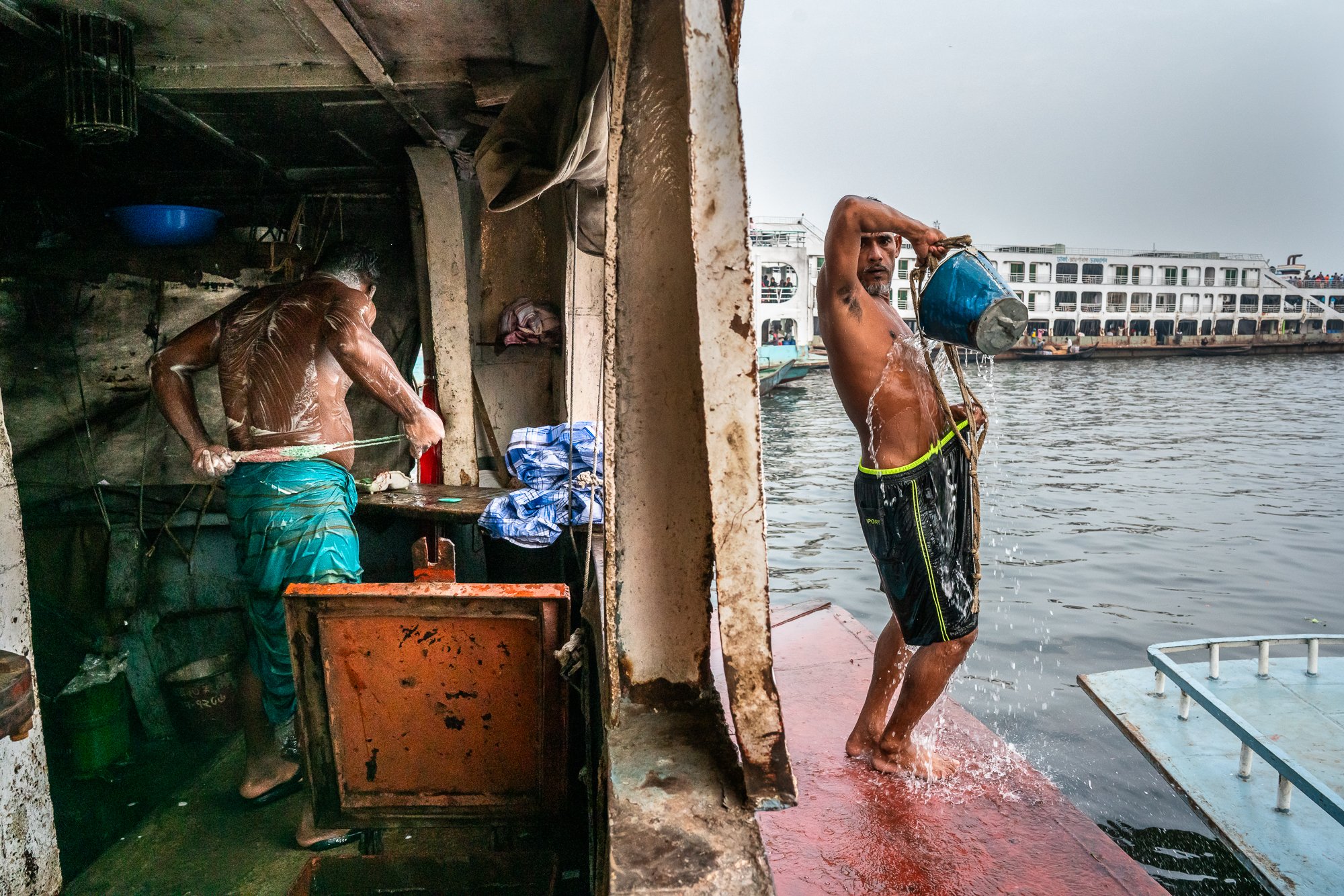
In incredible balancing acts, everything from coal to a tuk-tuk is offloaded from waiting ships. Men rig up an impromptu shower on a ferry, while others navigate a sea of small boats. Everywhere, diagonal lines lead the eye through constant motion and activity. It is this focus on the movement and habits of those along the river that underscores the severity of its problems. It is both a lifeblood and a quiet threat, offering both nourishment and harm. It is also home to millions of people, who find their way around and through it out of necessity.
On the banks of the Buriganga, Macak stopped chasing a perfect picture. What he found instead was a complex tableaux of resilience and persistence that plays out daily on the banks of this dying river.