“Come closer to the common mystery. Attend to the ordinary… It is wisdom that sees the ordinary with amazement.” A quote from Lao Tzu’s Tao-Te-Ching, written around 600 BCE, closes Lars Tunbjörk’s Office/LA Office. The few thousand decades that lie between the ancient Chinese philosopher’s astute observation and the Swedish photographer’s now-iconic photobook—republished by Loose Joints in 2024, 23 years after it first came out—seem small. Lao Tzu’s sentiment echoes through Tunbjörk’s long career, which was guided by seeking out the profound meaning that can be found in ordinary situations.
There is even a Swedish expression that pays tribute to his wry, critical gaze on everyday life: ‘Tunbjörkare’ or a ‘Tunbjörkland’ is used to describe a place with specific and slightly odd qualities. From campsites to shopping malls to the suburbs, Tunbjörk photographed the commonplace as a self-described “alien.” Unconcerned with exotic subject matter, his images nonetheless feel made by a traveller in an unknown land. They are both familiar and weird, charged with an enduring intelligence that continues to give us new meaning long after the fact.
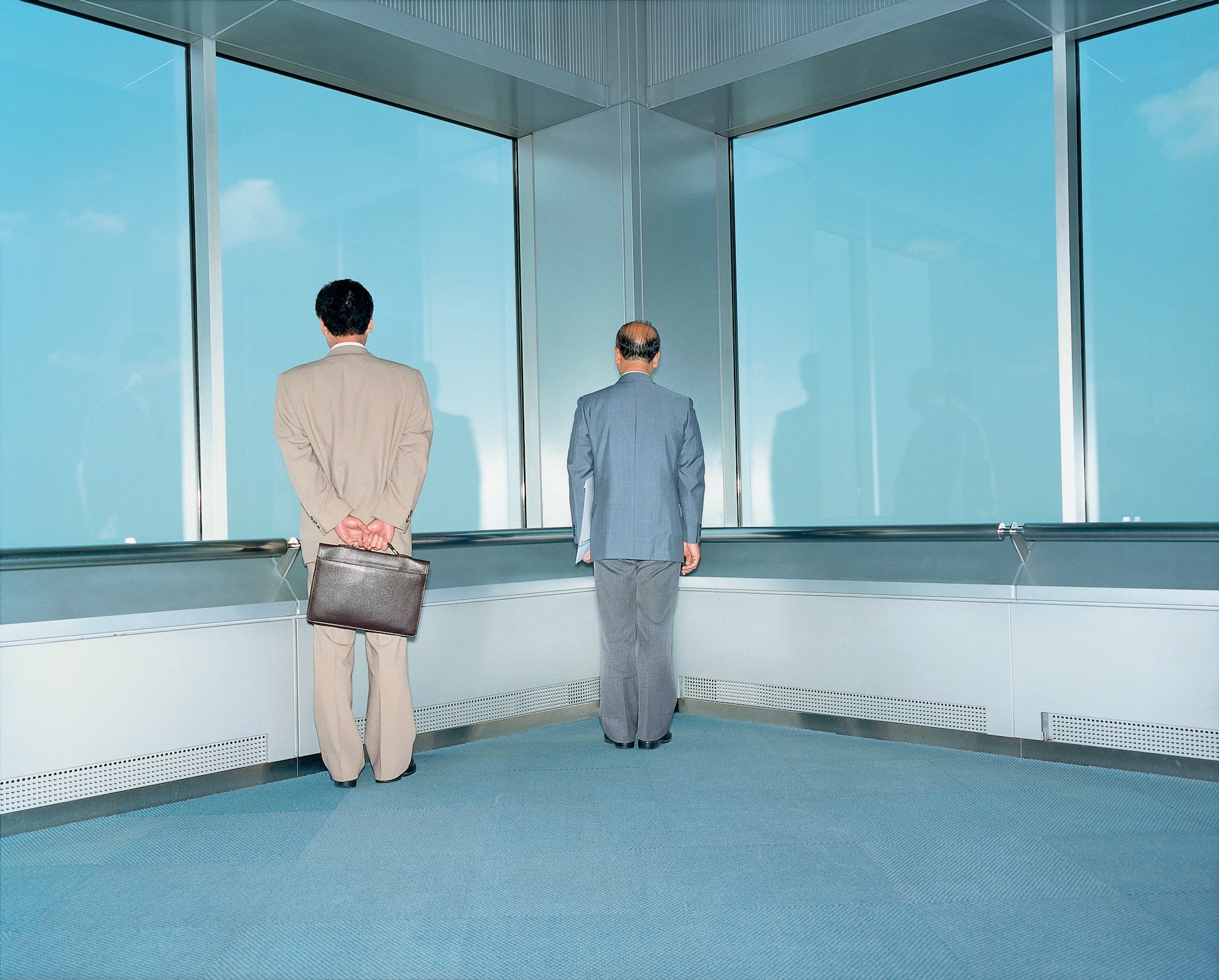
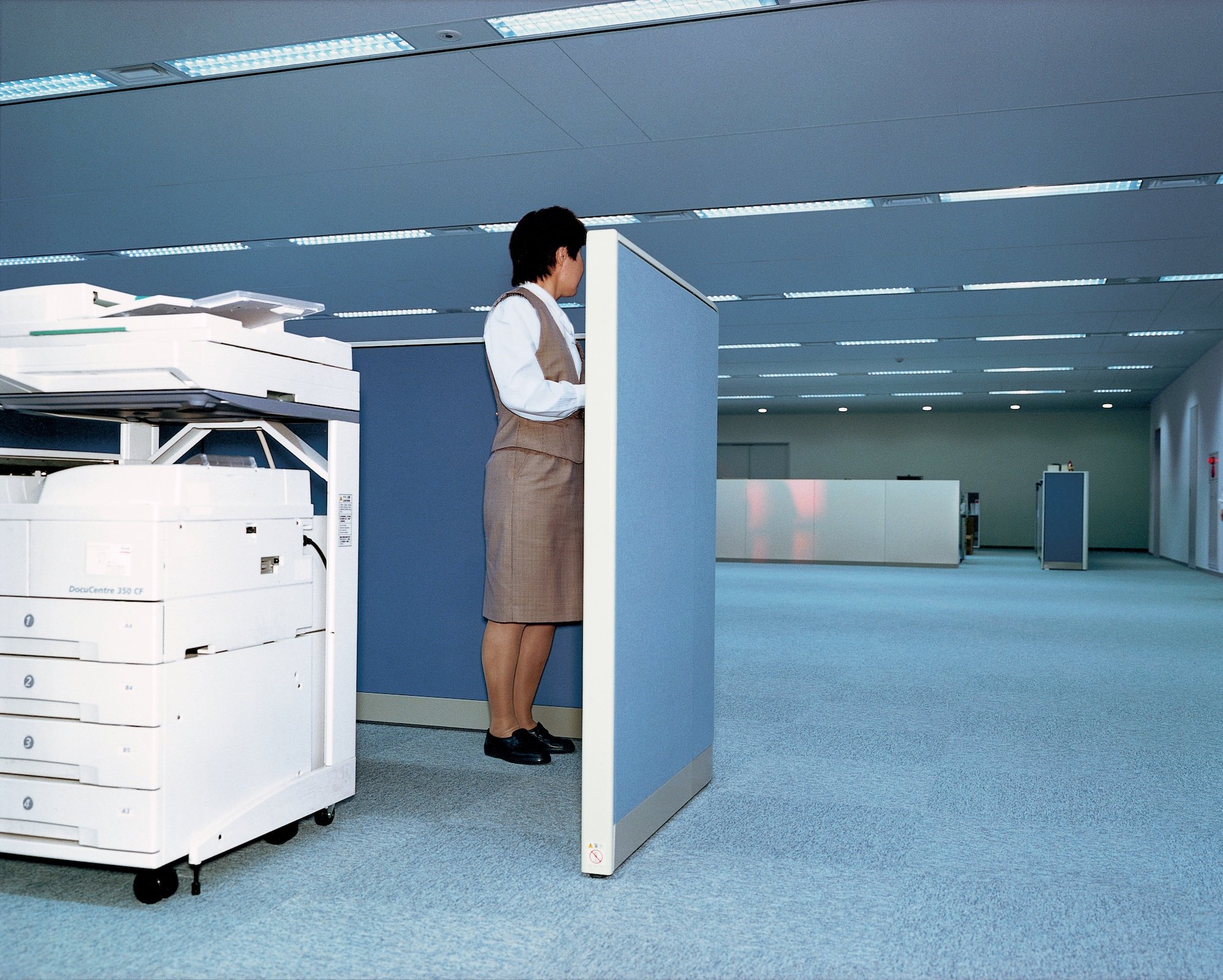
In Office/LA Office, the photographer amuses himself with what was then the most ordinary yet “closed and secretive” of spaces in the Western world: the office. Made in the 2000s, the book captures a universal type of corporate dreariness. Everything is horrible, whether it’s in Stockholm, Tokyo, New York or Los Angeles—a bonus addition in the Loose Joints reissue.
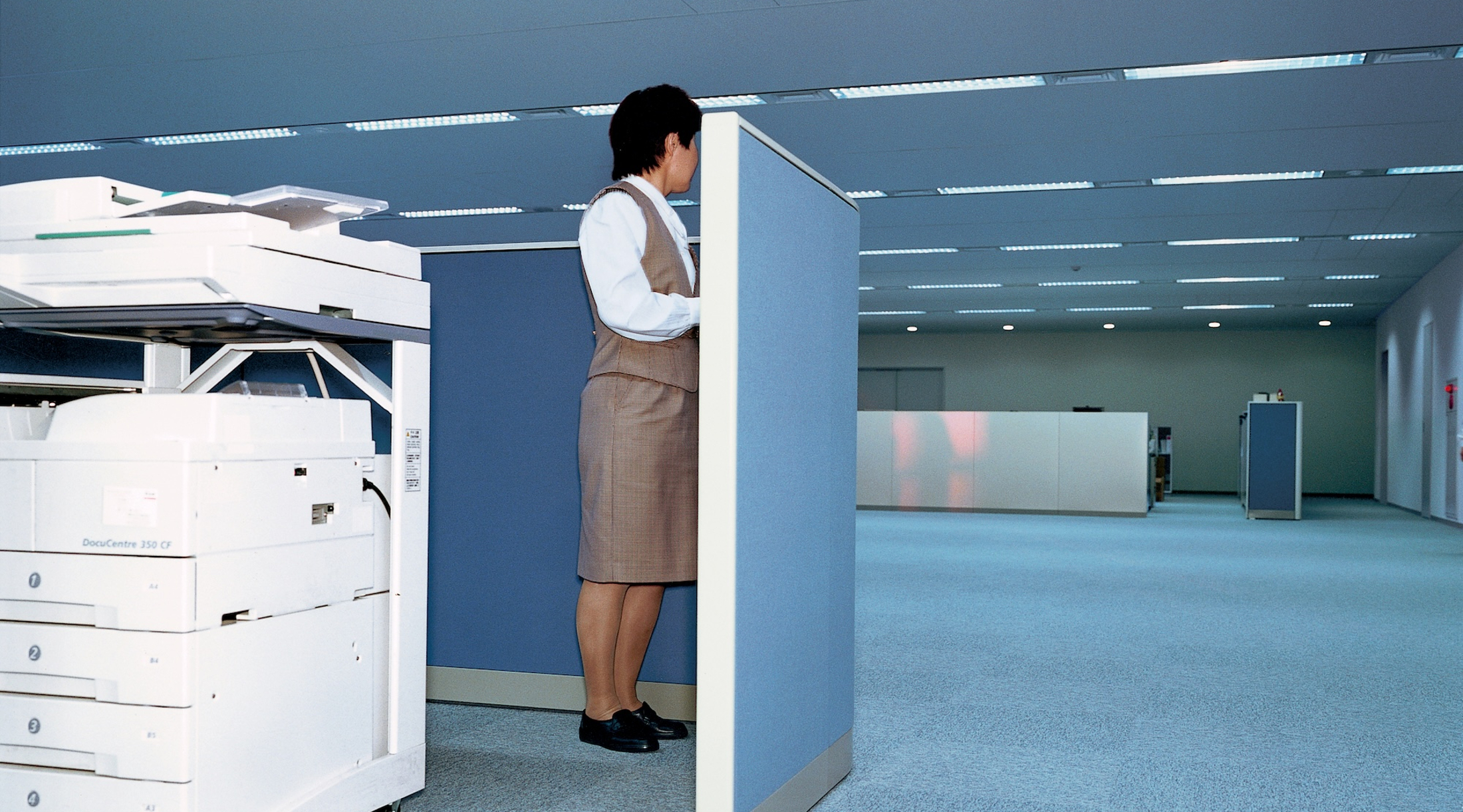
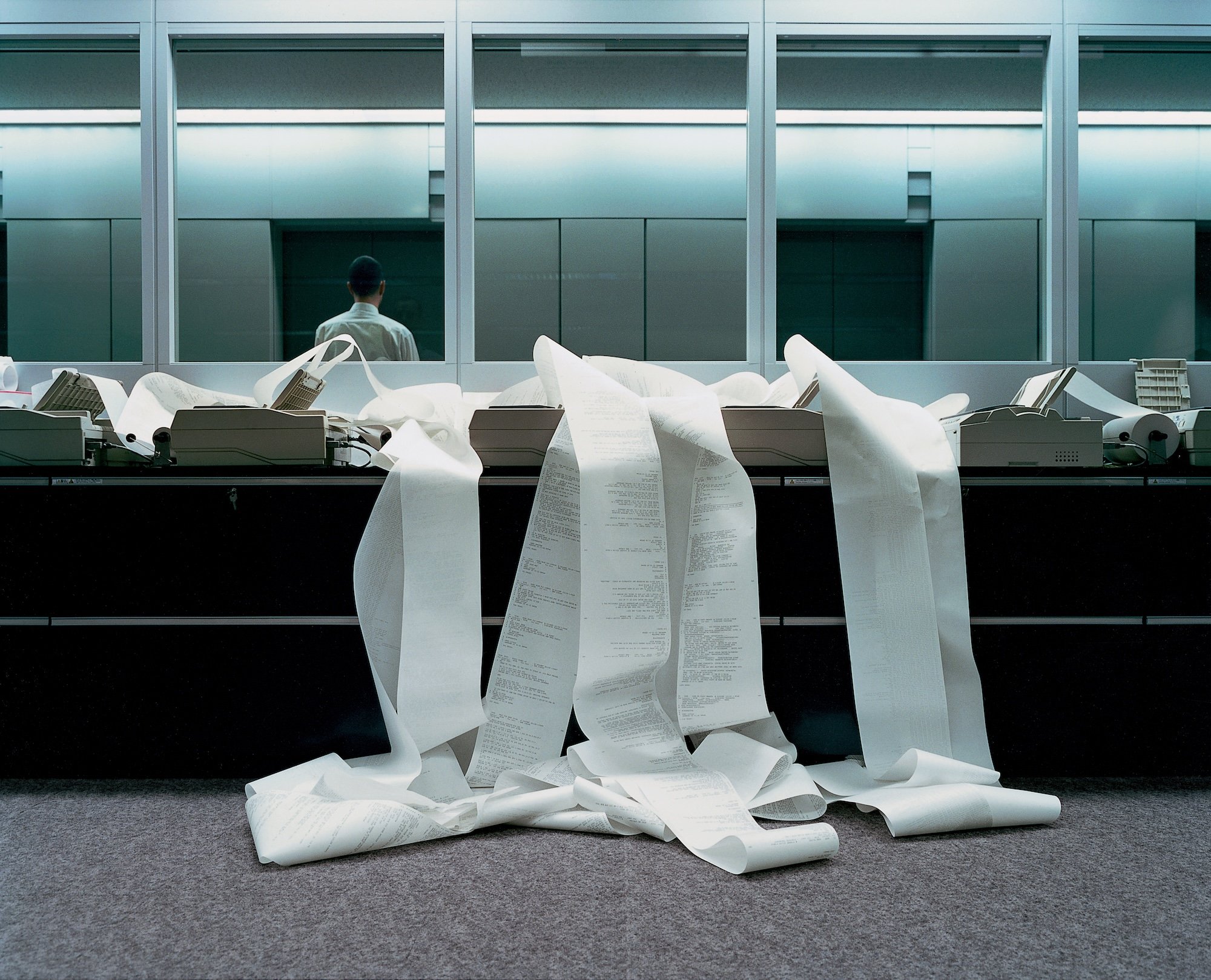
Different shades of grey and icy blue dominate the palette of these spaces, with the occasional pop of color (to make sure employees stay awake?). Floors and chairs are covered in the kind of unappealing fabric that looks itchy and people are dressed in restrictive and drab officewear. Trapped within an endless cycle of chaos, stress and boredom, there is no concrete sense of what any of the anonymous workers that populate these offices are actually doing.
Probably “bullshit jobs,” as the book’s essay by American anthropologist David Graeber points out. The author goes on to elaborate on the type of profession that serves little purpose or real contribution to society yet causes irrevocable psychological damage to those carrying it out who must pretend what they are doing means something. Two decades after its initial release, bullshit jobs are still on the rise with the advent of technology weaponized to ensure we work more, not less. But the context it happens in and the way we are able to visualize it has changed radically, adding multiple new layers onto Office/LA Office.
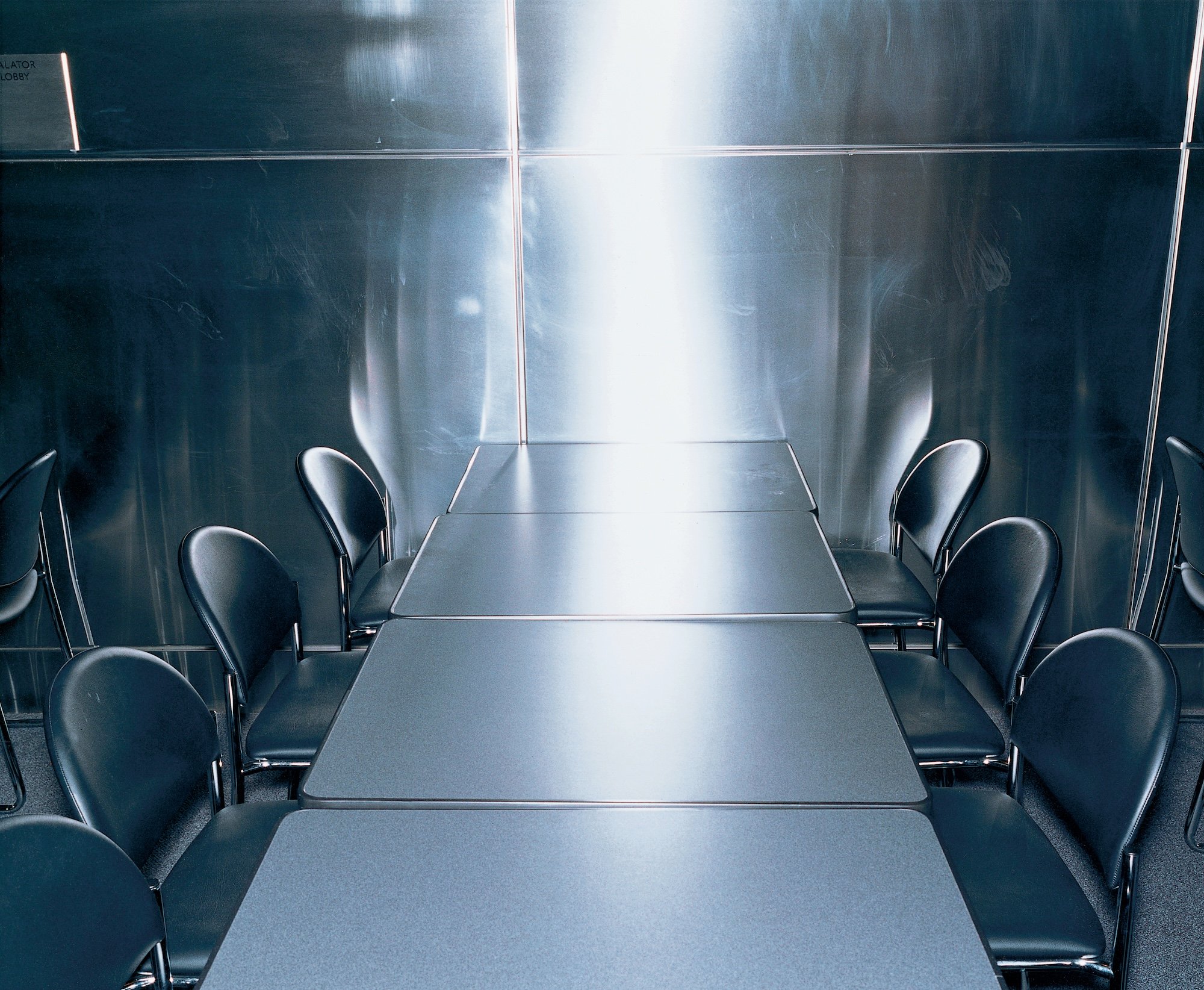
What would the photographer himself, who passed away in 2015, make of his 20-year-old images today? The dozens of empty chairs now seem haunted by the pandemic—a premonition of the ‘new normal’ invoked by those surreal three years where everything turned upside down. What was once the most common of spaces became foreign, unsafe, and most bizarrely, an object of longing.
Post-COVID, the office has struggled to fully reclaim its place in the landscape of our everyday life. Bedroom offices and hybrid or remote working have become more and more common. Tunbjörk’s offices seem almost like a period drama from a different time—more moodboard images for the TV show Severance or the unlikely 90s Officecore trend dreamt up by Gen Z than daily reality.
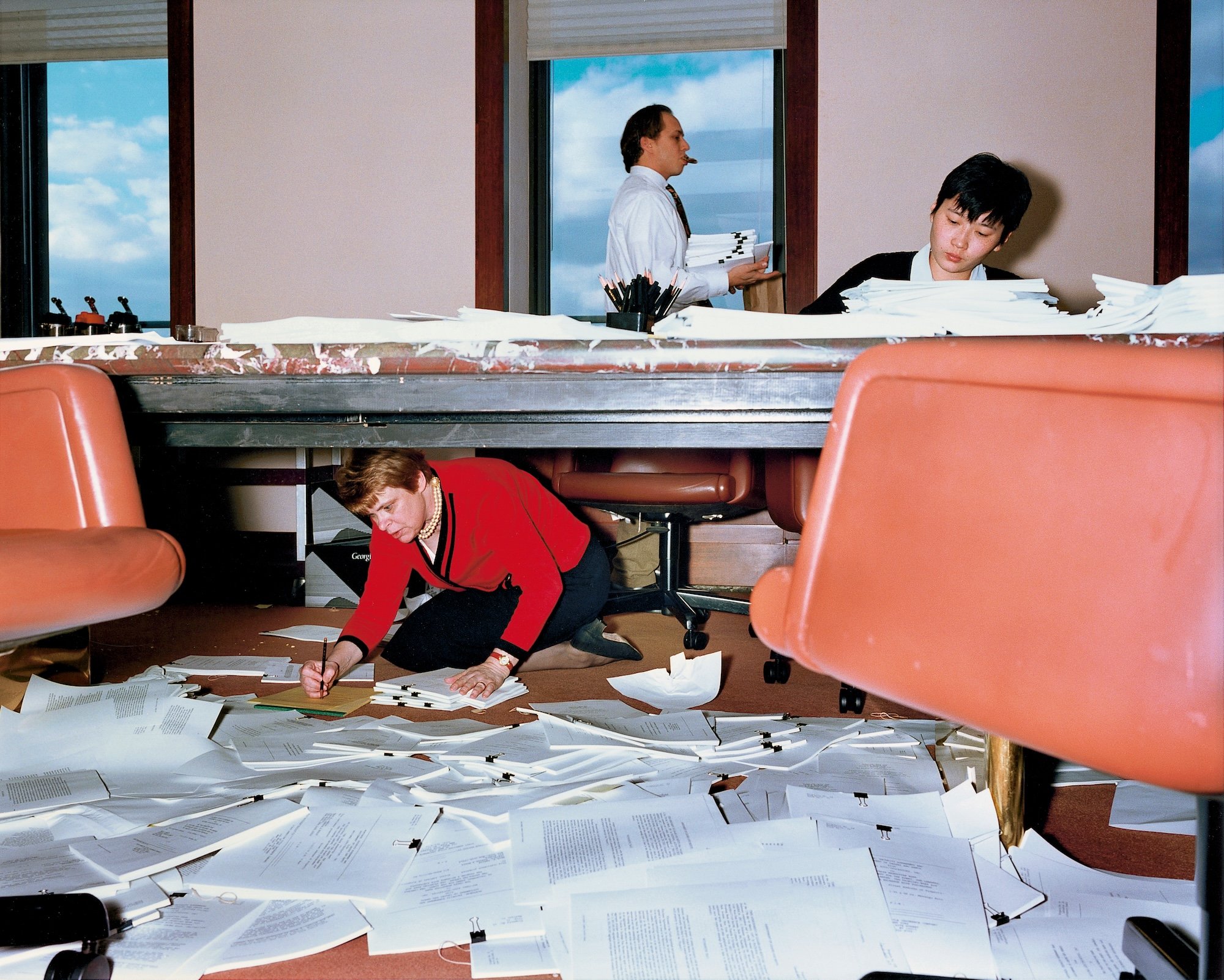
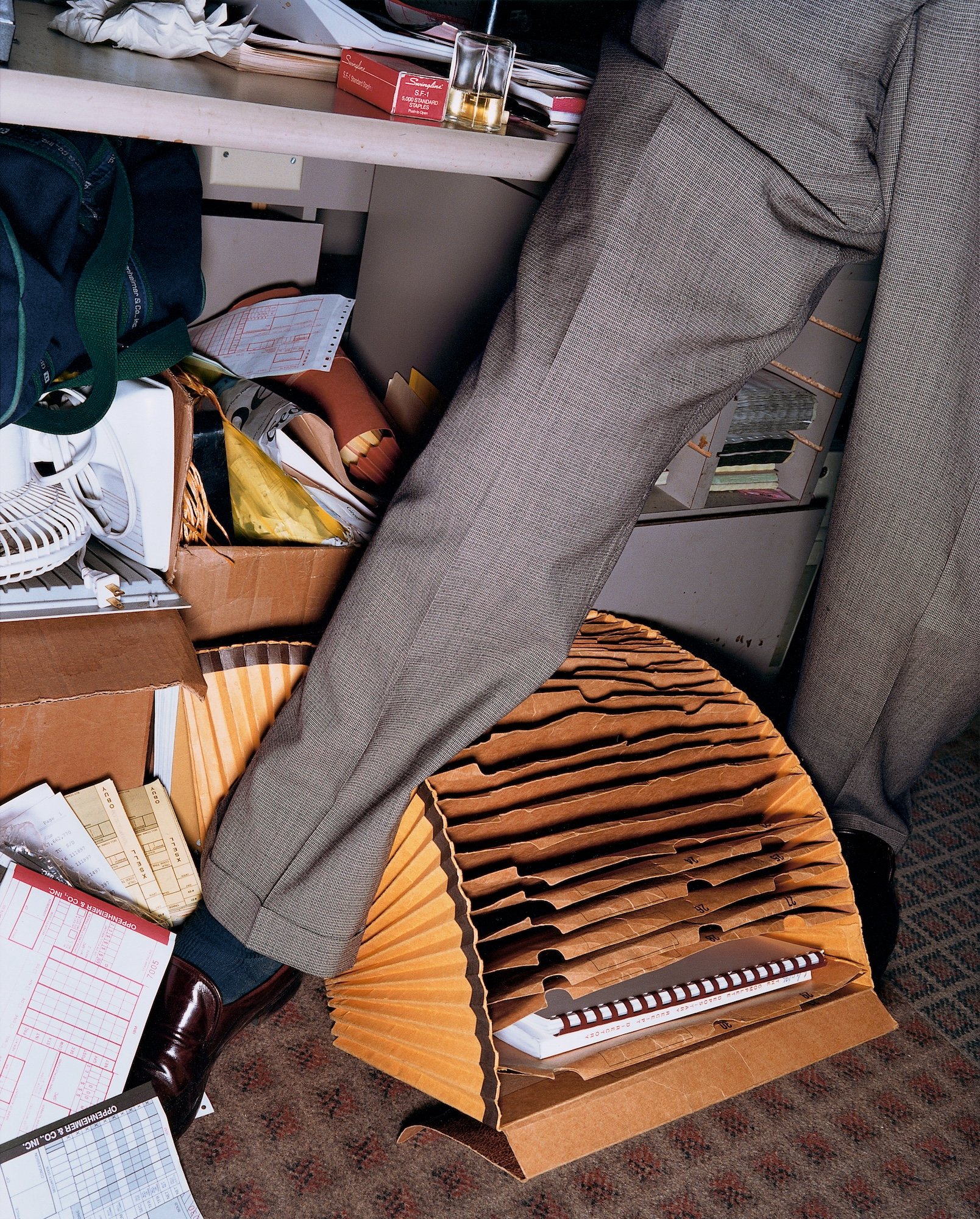
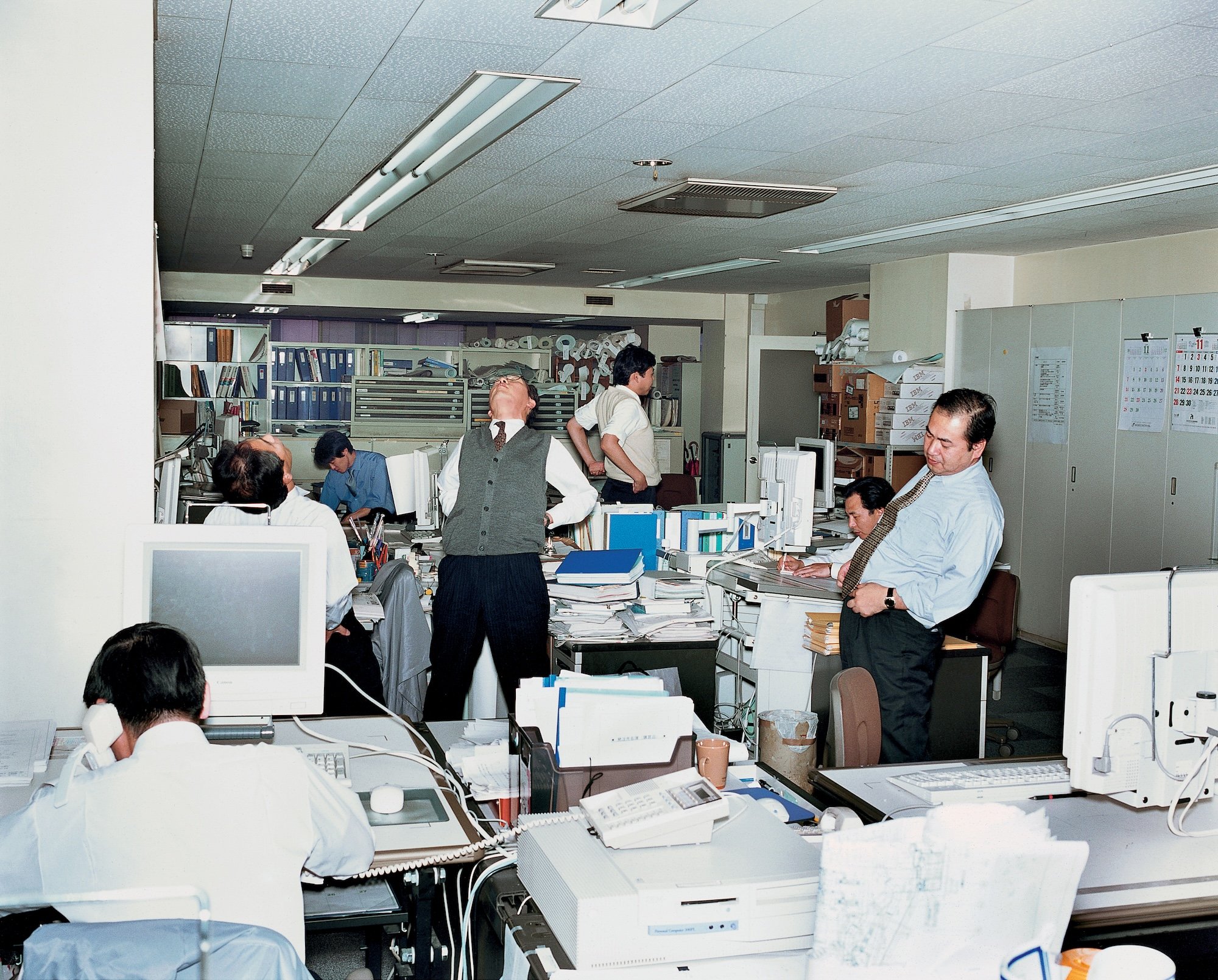
In our era of invisible labor, where the boundaries of work and home life have all but dissolved and devices are slender and slick, the physicality of Office/LA Office strikes deep. Here we can see the absurdity of corporate life play out in all its glory: everything is on show. Stress is high and time is short in the maze-like environment pictured in the book. Lunch is eaten at the desk on top of a notepad that stands in for a table. The human body seems clumsy and inconvenient. We either see people contained by strict, formulaic architecture or at war with it, scrambling under tables or reclining in uncomfortable office chairs to try to find a moment of relief.
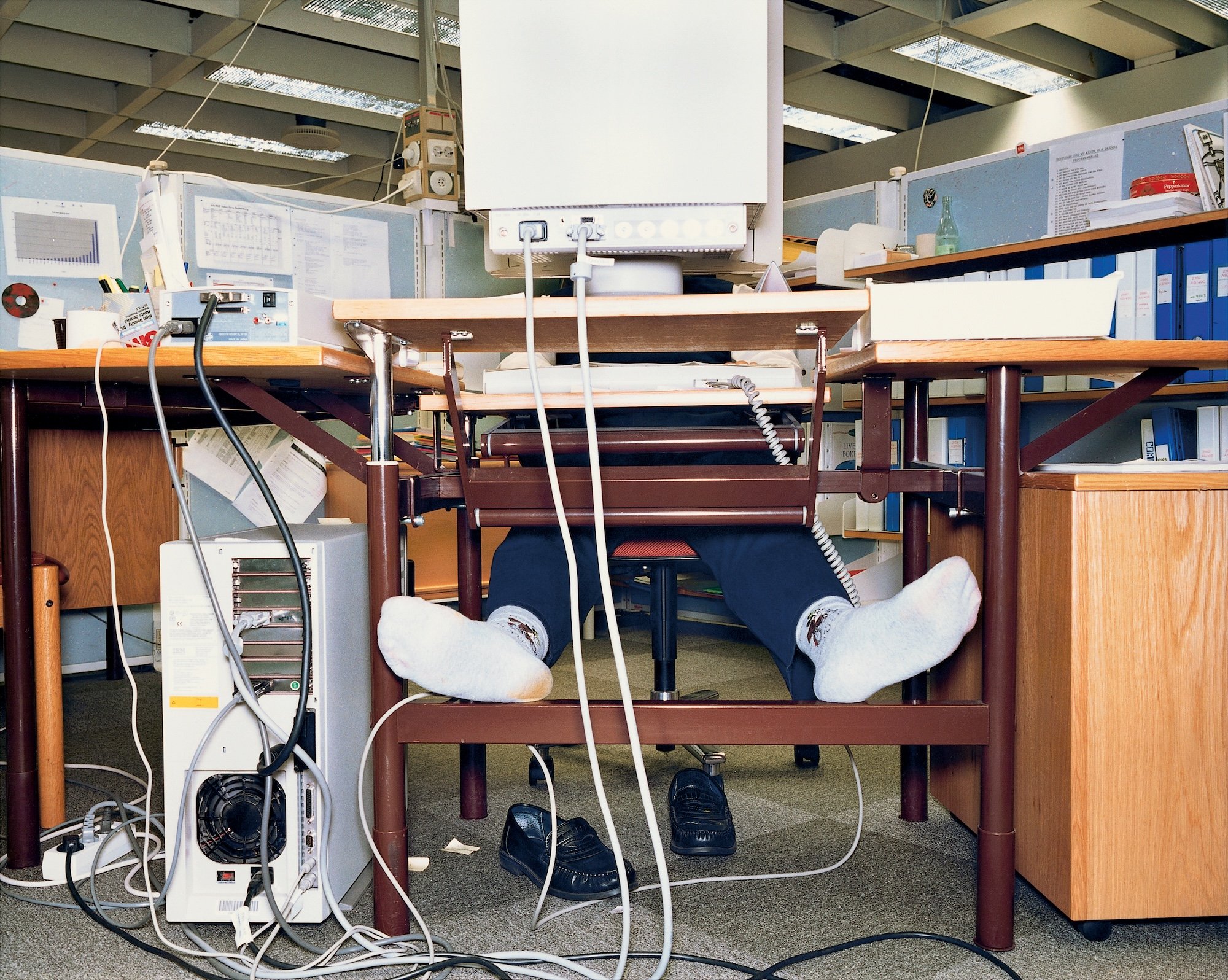
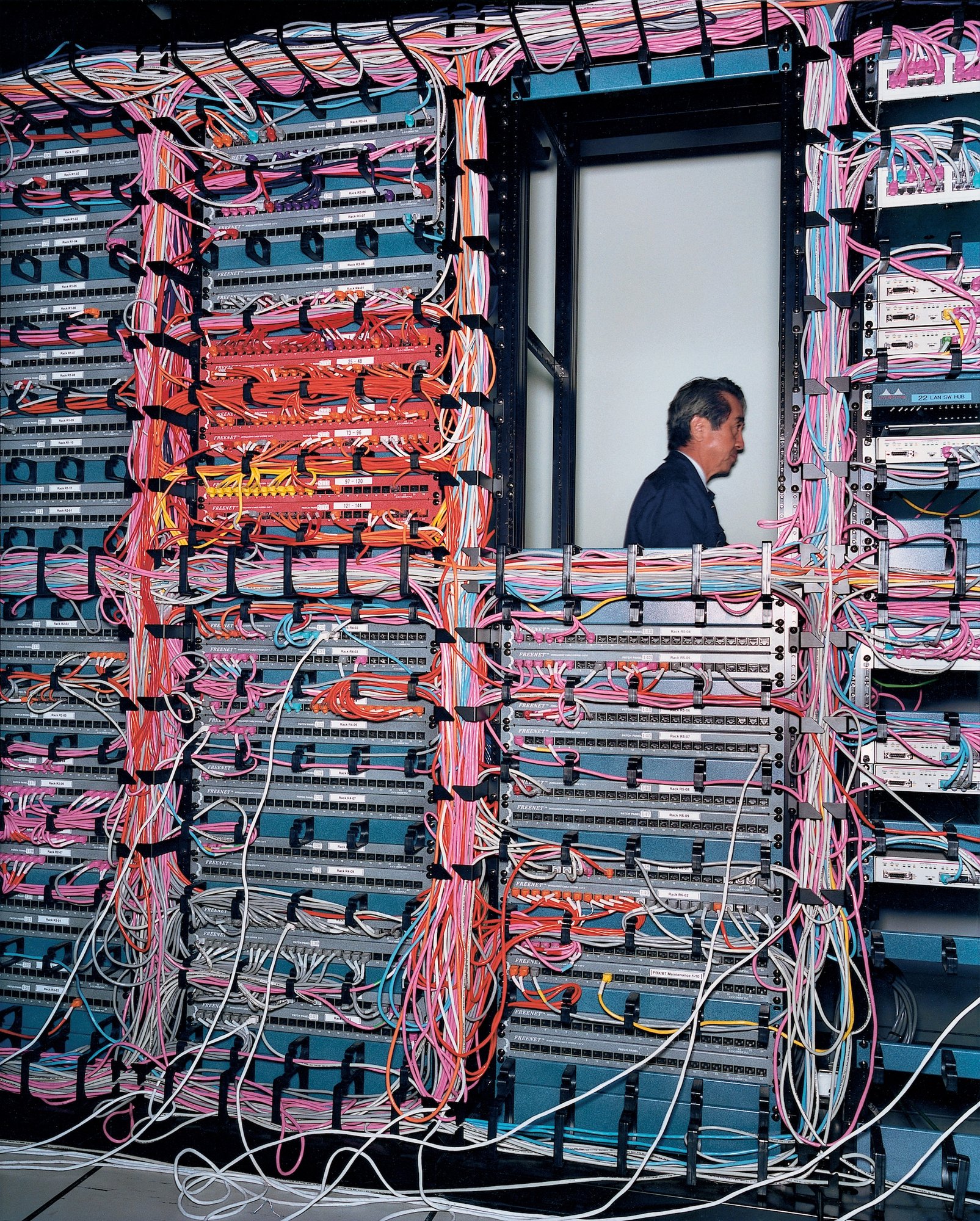
Traces of whatever work is being accomplished are everywhere in the stacks upon stacks of paper and overflowing folders. The technology of the time is imposing and messy too: big, chunky computers and snakelike tangled wires. A few sad houseplants fail to do their job of softening the cool atmosphere of the office.
Nowadays, corporate attempts to control our time and bodies—to reach peak optimization and efficiency—can look a little different though they may feel similar. Offices are often decked out in a friendly, fuzzy disguise. There are a lot of plants. ‘Perks’ like craft beer, pingpong tables and work socials lure people into hanging around work, if they come in at all. Time management and measurement have also migrated into the slippery realm of the digital. The inner workings of work are harder to visualize. The habitat of Office/LA Office, once natural to many, is perhaps becoming extinct.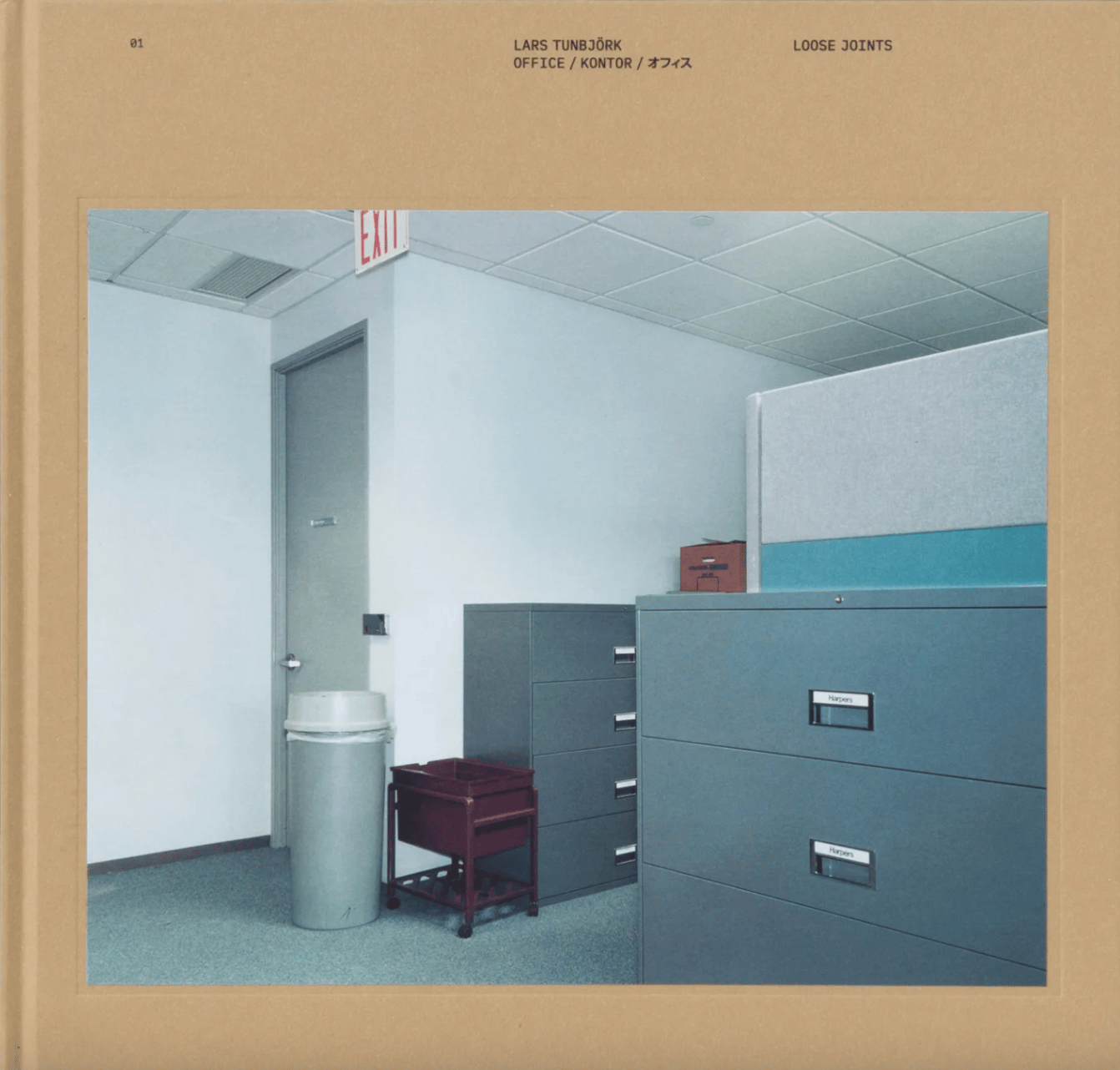
ISBN: 978-1-912719-61-7