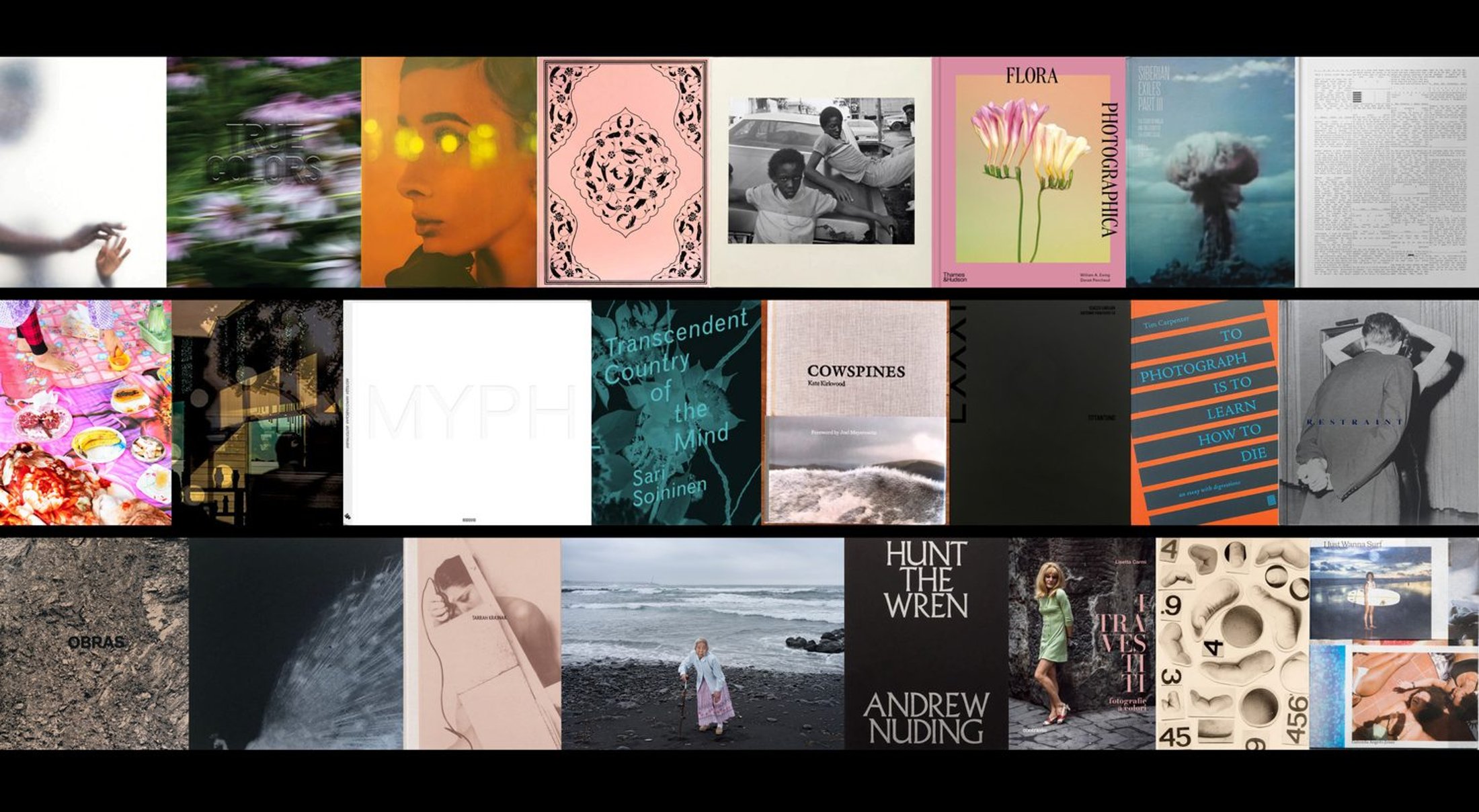
38 curators, artists, editors and photography experts share their personal favorite photobooks from 2022 — a delightfully diverse list of great recommendations.
Compiled by LensCulture Editors
Favorite Photobooks 2022
38 curators, artists, editors and photography experts share their personal favorite photobooks from 2022 — a delightfully diverse list of great recommendations.
For this end-of-the-year list, we asked friends and colleagues around the world to recommend their personal favorite photobooks of 2022. As you will see, it’s an eclectic mix, and this compilation represents a wide range of personal tastes. As such, there are many other great books that deserve attention but did not make it to this short list. Likewise, these titles do not pretend to be the “best” books of the year, but they are personal favorites that these photography experts like to share with their friends.
We believe photobooks are some of the most intimate and rewarding ways to engage with a photographer’s work and vision. Well-designed books welcome us into whole new worlds and different ways of seeing—and they can be compelling objects of art themselves. It was fun and surprising for us to compile this list of favorites, and we hope you will discover some inspiration here, too. Enjoy!
Sentimentality is a queasy word for many artists, one to steer clear of, lest emotion overwhelm. Yet when handled well, walking a line between the simple and complex, it can make a work glow. In How to Raise a Hand, the Italian artist Angelo Vignali finds the sweet spot. Using a trove of over 300 prints of his illustrator father’s fingers, Vignali explores memory, grief, and the immediate use of photography itself with compelling results, asking how we connect across time and absence. Paired with a fitting essay by Benedetta Casagrande entitled “Molting, Molding, Mourning,” the book of images does just that, constructing and deconstructing ideas of family, loss, and love through a lens that is beautifully weird, warm, and poignant.
As a teenager, Sabih Çimen attended Girl Quran Schools schools in Turkey. These schools have a singular curriculum. In a process that can take up to four years, the girls focus entirely on memorizing and reciting all 604 pages of the Holy Quran. This singular focus is rigid and demanding. Before attending, Çimen imagined these places as a kind of prison. But once inside, she found her classmates to be bold and creative. A self-taught photographer, Çimen later returned to these schools to depict this unexpected flourishing of the human spirit. Hafiz is a book of dualities. Çimen’s photographs and writing – both exceptional – are simultaneously incisive and mysterious. The book feels like a secret that’s too good not to share. -Alec Soth,Photographer
Zora Murff takes an unwaveringly direct approach in his latest monograph. This uniquely American project leads us into race relations, self-awareness, and the problems that decades of moderacy lead to. True Colors is made more special with the inclusion of many burgeoning art stars like Widline Cadet, Tay Butler, Aaron Turner, Jay Simple and Rana Young. It’s also enormous and filled to the brim with imagery. Everyone should own a copy. -Kris Graves, Founder,Monolith Editions
I keep coming back to Farah Al Qasimi’s Hello Future. As an object, I found the book intriguing at first sight on the shelf, and the images have stayed with me since. The bright colors and brilliant compositions are presented as full bleed images, with subjects assured and to be discovered. On the cover, a figure is surrounded by lush fruit, vibrant patterns, and familiar comforts. Al Qasimi made this work in the Persian Gulf, a landscape that is otherwise visually unfamiliar to me. Flipping the pages feels like an exploration of place, through familiar surfaces, patterns, and texture. -Cortney Norman, Associate Director,Yancey Richardson Gallery
Killip currently has a retrospective show at the Photographers’ Gallery and this is the book to accompany the exhibition. Edited by Ken Grant, a close friend of Killip’s, it tells the story of how he grew to become the most influential post war British documentary photographer. Working in large format he was based in the north-east of England during the 70’s and 80’s where he photographed the dying breath of British Industry. These images were central to his book In Flagrante, which was published in 1988. It was a different book, to what we knew before, very close up, very subjective and captured the feel of time in a moving way. -Martin Parr,Photographer
Absent of an essay or any explanatory text, this monograph of photographs illustrating commonplace American social rituals benefits from the opacity. Left to puzzle over the connections between quiet images of people in familiar settings such as high school dances, military ceremonies, marriage receptions, and sporting events, one soon begins to identify a running theme of simple human touch. The expression of desire through physical contact is counterbalanced by the restraint imposed by social protocol. Other leitmotifs including questionable consent, uncertain homosociality, race relations, and socioeconomic imbalance all contribute to the blood boiling beneath the skin. The psychological and compositional complexity of Ken Graves and Eva Lipman’s photographs are showcased with intelligent consideration in this book of tasteful and disciplined design which sets its audience adrift in a sea of familiar, often uncomfortable human interactions. -Brian Clamp, Director, CLAMP
In the year that brought photobooks by Irish photographers such as Mark Duffy, Bernadette Keating, Brian Teeling, Gregory Dunne, Helio Leon, and Eamonn Doyle, the last gem to arrive is Andrew Nuding’s first book, Hunt the Wren. Skilfully conceived threading documentarian and studio approaches, the work focuses on Irish pre-Christian traditions around Puck Fair and Wren’s Day. The performative nature of the rituals, the playfulness of the costumes, and the exquisite touches of creativity in the studio, all becomes one in his retelling of folklore. The publication is a large format, elegant, modern book, with silver ink over its black matt cover. Its portfolio approach unequivocally asks the reader to enjoy every single image, as one easily does. Not to be missed! -Angel Luis Gonzalez, Director, PhotoIreland
A brilliant reenactment of Weston’s iconic nude studies, where Krajnak as photographer and subject reclaims and re-write male-dominated history while challenging white standards of beauty. Gorgeous prints by Krajnak, beautifully printed by TBW!! -Monique Deschaines,Director, Owner,EUQINOM Gallery
To me, this beautiful photo book by Japanese photographer Miho Kajioka represents where book design, execution and content “blend” in a fantastic way. Every photo book should be published with equal care. The square “bleeding” photos are designed in a leporello format. Miho herself about the book: “Shortly after the earthquake, tsunami and nuclear accident of 2011, I found a blog about peacocks that had been left in the evacuation zone, within the 20-km limit. I began to imagine those peacocks, walking through the empty city with their beautiful wings spread. This is a new version of my previous book “So, where did the peacocks go?” -Roy Kahmann, Kahmann Gallery
On Rape is the second chapter of Abril’s long-term project A History of Misogyny following On Abortion, published in 2018. Abril’s diligent research presents a historical visual essay of difficult and concealed gender-based realities that have affected women’s rights and those stereotypes and misconceptions that prevail today. Despite how uneasy it might seem to address the topic of rape and its multiple manifestations, Abril does so in an intelligent and, most importantly, caring way, whereby she shifts the focus of blame from the survivors to the institutions responsible for upholding the power dynamics that excuse the abuse from perpetrators, and continuously fail to protect women. -Raquel Villar Pérez, Curator atPhotoworks
Historically, the most familiar foreigners to Japanese people have been Koreans. Unlike today’s climate of respect for diversity, there seems to have been a thick gap of “understanding” between us and Korea that is unimaginable today. Every country has a history of its people being tossed about and suffering hardships, and in Kim Eunju’s photobook, we encounter a large body of documentation accomplished by facing her subjects with great care. The portraits of people are so quiet that we cannot see the wounds at first glance, but they are powerful enough to make us wonder what was going on deep down. Not only is her photography strong, but her statement of purpose is powerful. It is rare to encounter work of this caliber. -Yumi Goto, Publisher, Curator, Author, Director of Reminders Photography Stronghold
My favorite photobook of 2022 is Obrasby Sophie Barbasch. The artist lived in Brazil (her step-mother’s country of origin) for a year on a Fulbright Scholarship, photographing life along the route of the Transnordestina, an unfinished mega-railroad project. Like the railroad, this publication possesses the formal qualities of a work in progress. It has a tactile double-weight matte softcover that gives it the feel of a sketchbook, and risograph images that convey an untethered traveler’s movement through the bright light of the desert. While tracing the would-be train route, Barbasch met Brazilians who told her stories about droughts, sacred spaces, the emergence of labor unions, corrupt judges, and different political regimes. In Obras, she conveys these experiences through images with elements of traditional black-and-white documentary photography, as well as a shifting subjectivity that keeps the narrative elusive. -Liz Sales, Art Writer and Educator
Take a trip back to Hollywood Boulevard in 1975 and check in at the St. Francis Hotel. Penny Wolin did just that. A wide-eyed artist from Cheyenne, Wyoming, she lived for three weeks among the other dreamers of fame and fortune in this pay-by-the-week residential hotel. Her simple and straightforward approach examines each resident, room by room. In the manner of Bill Owens and Jim Goldberg, she allows the personality and details of each subject to come out in a caption nestled under each picture. The book has a strong presence with its pebbled fabric cover, tipped in leather title, and pages from the hotel’s original ledger, front and back. Some of the most profoundly empathetic and honest portraits I’ve seen. -Michael Foley, Foley Gallery
This book features photos of Black women and nonbinary surfers along with personal essays by Angotti-Jones. I Just Wanna Surf has the intimacy of a zine and the heft of a memoir. It is a beautiful, poetic meditation not just on surfing as a sport but also on Blackness, womanhood, sisterhood, and the importance of chosen family. -Danielle A. Scruggs, Photographer + Photo Editor
The Italian photographer Lisetta Carmi died last July at the age of ninety-eight. During the 1960s she was the first to document an Italian LGBTQ+ community, ignoring the taboos of the time and revealing the social reality of marginalized groups. Her 1972 book I Travestiti (Transvestites), about the people who lived and worked in the former Jewish ghetto of Genoa, caused a scandal and many bookstores refused to sell it. Now, fifty years after its publication, Contrastobooks publishes a new volume, strongly wanted by the photographer herself, with unpublished color photos found in her archive in 2017. A real treasure. These images make up a large and complete corpus that allows a new reading of Carmi’s long, remarkably empathic work with the transvestite community of Genoa. -Elena Boille,Deputy Editor, Internazionale
Published by Radius Books, Ann Hamilton’s Sense is not only my favorite book of 2022 but it is the most beautiful book of the year. It is in every way an artist’s book, combining text as a graphic element, the use of a matt paper and inserts of varying size throughout. It requires the viewer to use multiple senses as one journeys through the pages. A visual and tactile exploration of seemingly simple images that together form a visual mood that is poetic in nature. As Hamilton writes,” A book is an exchange between a writer and a reader, a maker and a viewer, is a conversation, is an ongoing form of giving and taking.” Sense is all of these and so much more. -Deborah Klochko, The Lawrence S. Friedman Executive Director and Chief Curator, MOPA
Thoughtful and conversational, Tim Carpenter’s book-length essay shines throughout—thanks to his own insights illuminated by gems from his fellow photographers, poets, painters, musicians, philosophers, curators, and others. And like my best-loved poetry and photography books, I read To Photograph Is to Learn How to Die from beginning to end the first time—of course interrupted by the delightful meanders woven into the book, which are marked in red and blue ink. From now on, I’ll revisit my favorite passages whenever a little light—or enlightenment—is needed, including this quote by Marilynne Robinson: “Wherever you turn your eyes the world can shine…” -Rebecca Norris Webb, Photographer
When I first saw Baldwin Lee’s photographs from the American South, I was stunned. How was it possible that I had never seen these quiet, wonderfully gentle, and soulful images of the lives of African Americans in the South in the mid-1980’s? Part of that mystery is explained in a thoughtful interview with him at the back of the book. Lee no longer photographs, and his reasons for no longer doing so are complicated—and pose intriguing questions about the nature of creativity, ambition, and the passage of time. Although I’m sorry to hear that Lee no longer photographs, I’m very glad he saw fit to bring out this book and let the world see this remarkable body of work. -Alex Webb, Photographer
Baldwin Lee’s exquisite self-titled monograph was far and away my favorite photography book published this year. While the book contains a mix of architecture, landscapes and portraiture, it is the portraits of Black Americans that give the work its stunning power. During his exploration of the American South between 1983 and 1989, Lee took nearly ten thousand large format photographs and wore out three cars. Setting out on his first trip, Lee explains that he wasn’t at all sure what he was looking for, but, as he explains in an essay accompanying his recent show at the Howard Greenberg Gallery, “Upon completion of the trip I had a revelation: in my pictures of Black southerners, the camera aligned my own conviction of what matters with the life and lives of those who matter.” With a clarity of purpose and a deep well of empathy, Lee has, without question, created a book that matters. -Melissa O’Shaughnessy, photographer
Cowspines by Kate Kirkwood offers a unique perspective of enigmatic landscapes. Framed by cows’ backs, this fresh observation of the Lake District and exposure to the elements creates a breathtaking series. In an environment that’s been extensively photographed, Kate captures the spirit of something new. Her connection with the cowsis apparent throughout the intimate composition of the creatures in their habitat and the time she spent with them on a farm in Cumbria. The viewer does double takes as many of the cows are indistinguishable from the land, forming shapes that blend in harmony. Fascinating yet familiar, these subtle cow-scapes “hide in plain sight.” -Mee-Lai Stone, Picture Editor, Culture, The Guardian
To enjoy Ottantuno, you need silence, darkness, time and a torch. This might bring you closer (but still too far) from the sensorial experience that the book unveils: seven years of loving wanderings among the forests and monumental trees of central Italy, undertaken by the author and his grandfather, nonno Tonino. With a preface by Jane Goodall, Ottantuno is a hymn to nature and humans’ atavistic relationship with it. The artist book is a book of love. Printed in 501 copies, it is heavy and large: the weight of secular trees and the immensity of far away stars draw you in and lead the way. Let them guide you. -Arianna Rinaldo, Art Director, Educator, Curator, PhEST
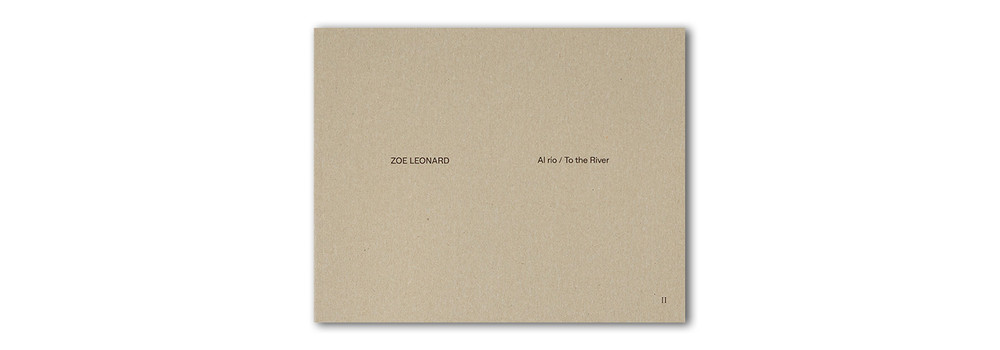
Al río/To the River by Zoe Leonard. Published by Hatje Cantz.This two-volume exploration of the mythical Rio Grande (known as the Río Bravo in Mexico) invites close-looking at the landscape and a reconsideration of inherited historical narratives about the 1200 mile stretch of the US-Mexico Border. Leonard’s four-year photographic documentation of the river, inspired by the 2016 US Presidential election of Donald Trump, reveals the tension between the natural characteristics of a river and the political role it performs as a border. Subtle and nuanced – sometimes cinematic – sequencing of images in Volume 1 is followed by bilingual poetic and political perspectives by a multiplicity of voices from different countries in Volume 2. Leonard’s focus on the symbolically charged river questions the notion of borders, evokes the complexity of borderlands and their communities, and addresses pressing questions of our time such as climate change, immigration, displacement, cultural identity, infrastructure, law enforcement, and surveillance.
Sandra Cattaneo Adorno has been a part of Women Street Photographers since its first annual exhibition in 2018, and I always marvel at the freshness and inventiveness of her work. Her third book, Scarti di Tempo, includes images that defy the expectations of the viewers and make them question what they are seeing: using reflections and a few composites of her own creation, Sandra was able to evoke moods and feelings that transported me to another dimension, the one of poetry and dreams. Sandra’s vision is redefining street photography through her very personal rhythm and the magic of her mysterious images. -Gulnara Samoilova, Founder,Women Street Photographers
“A photograph is a secret about a secret,” Diane Arbus once said. “The more it tells you, the less you know.” And reading between the pictures of Emily Graham’s debut photobook, you sense this maxim – or something like it – is the real driving force of her narrative. Ostensibly, it revolves around the unsolved mystery of a golden owl buried somewhere in the French countryside, and the treasure hunters who, 30 years on, haven’t given up finding it. Purposely – and pleasingly – enigmatic, her photographs are full of cryptic motifs that point to clues and possible solutions. Or do they? Because once immersed in this pictorial riddle, anything and everything takes on significance; there’s a pervading sense of the uncanny, amplified by her use of divine light and muted, dream-like colors. Yet Graham isn’t too concerned with the story itself, never mind solving it. The impulse is not to decode or even document. The clues point to obsessions, not solutions. And ultimately, we are on a different quest here: the human need for answers; the search for destiny and meaning. –Simon Bainbridge, Author, Editor
The story is based on Marju, an Estonian who was deported to the Kazakhstan border where she witnessed the detonation of the first hydrogen bomb in 1953. Claudia Heinermann traveled to Kazakhstan in search of traces of the Gulag camps where Marju’s father and other Baltic nationals were imprisoned, and to unravel the history of the nuclear test site in Semipalatinsk. She wanted to know if there was a connection between the Gulag system and the Russian atomic project that marked the beginning of the Cold War. She spoke with former employees, who had worked at the test site under secrecy, and went to villages that had been in the fallout zone for years. She spoke with eyewitnesses who in their youth had seen the mushroom clouds rise and the earth tremble. Marju, now an elderly woman, spent 25 years fighting for a tribute in the Estonian capital Tallinn for her compatriots who suffered in exile from the tests. Wonderful long term photography project which is now very topical again with the recent developments in this area. -Reinout van den Bergh, Curator, BredaPhoto
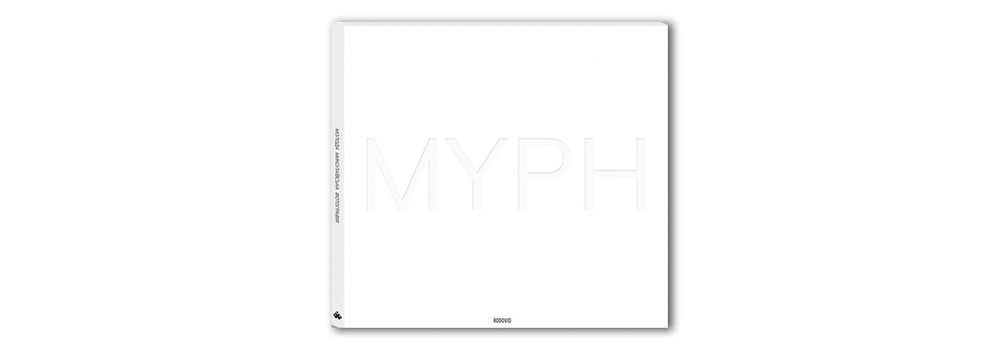
The Mykolaiv Young Photography School in Ukraine was established by Sergey Melnitchenko while he was still in his twenties. Its mission is to expand imaginations. It arose in a city known for its conservatism that now sits perilously close to the southern front of the Russian invasion. Yet this is a book filled with sensitivity, originality, and hope. In the work of sixty young graduates of the school we find the remarkable creative tenacity of a generation who lift their eyes to look beyond the immediacy of war to seek and find the expressive freedom, empathy, and insight afforded by making art. - Alasdair Foster, Writer, Curator, and Publisher, Talking Pictures
When she was in her mid-20s, Finnish photographer Sari Soininen had an LSD–induced psychotic episode that had a mind-bending effect upon her grip on reality. Later, she started making a series of photographs as a way to process her experience, and Transcendent Country of the Mind is the resulting publication. Full of iridescent skies, gnarled trees and watching eyes, the book takes us on a hallucinogenic odyssey through the world as Soininen saw it during that time. It takes an exceptional artist to be able to recreate sensations beyond just vision for the viewer – to make us feel something of what they felt – and Soininen does it in this book to incredible effect. -Joanna Cresswell,Freelance Arts & Critical Writer, Editor, Researcher
Italian photographer Cristiano Volk’s Laissez Faire is a beautiful simple object that brings us in a dystopian world where human relationships are in danger because of an overexposure to technology. A claustrophobic edit mixes with a clever use of the color that gives these well-executed images a disturbing sense of perfection. I don’t know if we need a miracle — as one of the images explicitly says — to chance the status of things, yet I much appreciate Cristiano’s effort in offering us this raw interpretation of the time we are living. -Giuseppe Oliverio, Founder and Director,PhMuseum
Flora Photographica is a sumptuous feast for the eyes. The cover alone is enough to seduce you, but this is a serious, beautiful book with considered essays, fantastic design and an abundant selection of over 100 artists exploring botanical life within their photographic practices. This is Ewing’s second volume on the subject of flowers and the sequel does not disappoint, extensively covering the period since the first book in 1990, underlining the unwavering tradition of artists’ exploration of flowers. -Matthew Flowers,Managing Director, Flowers Gallery
I must admit some bias here, as Diego is a photographer I have known and worked with for years, and many of the images in this book were made on assignment for The New York Times. But it was really wonderful to see his beautiful, scrupulous documentation of the downward spiral of Lebanon collected and artfully edited into a photo book by Sarah Leen.
Diego, a Spaniard, moved to Lebanon from Pakistan in 2014 and has truly captured the mood and atmosphere of a country struggling with the twin perils of ineffective government and crumbling infrastructure; and of a proud people who find themselves in extraordinarily difficult circumstances. Michelle McNally, the former Director of Photography at The Times, used to tell photographers “Don’t show me what a place looks like. Show me what it feels like.” I’ve internalized that advice, and now regularly give to photographers that I work with, but this is something that no editor needed to tell Diego. It’s what he’s done here so magnificently — shown us what it feels like to live in modern Lebanon. -Craig Allen, Senior Photo Editor, International Desk, The New York Times
This book really knocked me off my feet. It’s a very intimate, completely engaging, extended story of the dead and lost. In O Livro da Patrícia,we’re facing a painfully dense and moving story: David-Alexandre Guéniot’s mourning for his partner, the Portuguese photographer Patrícia Almeida (1970-2017). It is the story of David’s pursuit of the image that will remain of Patricia after her death. Patrícia had left the project of a Personal History of Photography unfinished — and David proposes to finish it. If photography were an art of visible things, then perhaps it would be the worst possible means of dealing with the blindness of love. Rare books like O Livro da Patrícia become the condition for the survival of their authors. Patrícia’s book is a book for forever! -Ângela Ferreira, Curator, Researcher, Writer and Artistic Director, Fotofestival SOLAR in Brazil
For years Mattia Zoppellaro has been documenting the European free party/techno scene. As an underground music fan, he was not only a participant at the events but also a close member of this free roaming family. The result is the book “Dirty Dancing, an illuminating new perspective on a subculture that’s long been riddled with harmful stereotypes and legal persecution. Says Zoppellaro about his first “Illegal party”: “I will never forget the acrid smell and the hostile people who greeted us at the door. But once inside, I have never taken it off. In the following years I frequented that scene all over Europe, following that community, dancing to their music and above all my way through it”. In this modern age, ‘Dirty Dancing’ serves as a nostalgic reminder of a not too distant past, where the emphasis was on the freedom to dance when and where you wanted regardless of uniform expectations.
My favorite photo book is called, “Une part de jour assez douce” translating to “That mellow side of daylight” by French photographer, Nathalie Audrain. In this book, Audrain focuses on the need to remember beauty in case it disappears. She touches on themes to do with a chronic medical condition she has and the relationship she has with her son. Everything about the book is intentional, from its physicality (the book is soft-covered, it has a “soft touch” effect) to interspersed contributions from architects and other artists. As you move through the book, you encounter a series of well sequenced bright images. It’s amazing how Audrain is able to make every day objects and settings seem so meaningful. Audrain’s book is a testament to the saying, “Enjoy the little things, for one day you may look back and realize they were big things.” -Anne Nwakalor, Founding Editor, No! Wahala Magazine
I didn’t know much about Prarthna Singh’s project documenting the protests against India’s Citizenship Amendment Act in the Delhi neighborhood of Shaheen Bagh in 2019 when I came across some portraits of several of the women on her Instagram. I immediately tracked down her self-published book, and, when it arrived, I fell into this world that she reconstructed so beautifully and was completely blown over by the cumulative effect of the layers she built up using portrait after portrait of the protesters (mostly Muslim housewives who had little history of previous protest) and some of their children, all interspersed with letters, images of the encampment, drawings by the children, and other ephemera from that moment. It evokes something far beyond what is plainly visible on the separate pages and serves as a real witness to a moment in time that the Indian government attempted to erase from collective memory while also being a beautiful object in itself. -Amy Silverman, Photo Director
Nowadays, the issues of propaganda and the use of culture for political purposes are acute. The photographer Toni Amengual refers to the experience of the “eternal classics” and ironically presents the “Way of the Cross of Art” along the sharp stones of the road of the political history of society. It’s a small book about the size of a prayer book (partly its photos depict the religious art of Rome), but the scale of the book changes when you hold it in your hands: the print is very detailed, and the design of the book with half-folded pages gives a sense of more volume and innuendo than you might expect from a palm-sized book. -Irina Chmyreva, Author, Curator, Researcher, Art Director
This book is the first and only book that is available to learn about the very core of Japanese photography: photography magazines. In my opinion, Japanese photography and its rich culture were nurtured by photography magazines, yet because of language barriers they rarely reached outside of Japan. For many western readers, the book will not only provide deeper context on how some of the most important works by photographers like Daido Moriyama and Masahisa Fukase were created, it also provides access to the texts that have never been translated and shows the scope of different paths photography took and how Japanese photography developed its unique visual language system.
Of the many books I looked at this year, one certainly stands out: Matter by Spanish artist Aleix Plademunt. It is a beautifully designed marvel in editing and sequencing. I spent quite some time with it and am fascinated. The images in the book span almost 10 years of work, each informed by an extensive index. The juxtapositions on the pages are captivating — the images enter into an intriguing visual dialog, and they oftentimes work like the visual associations in Aby Warburg’s „Bilderatlas Mnemosyne“ — learning about the world through photography! I couldn’t recommend a book more strongly! -Robert Morat, Robert Morat Galerie
Top Awards include: Full publication with Nazraeli Press, valued at more than $25,000, Los Angeles Exhibition, Cash Prizes, Solo Feature on LensCulture.