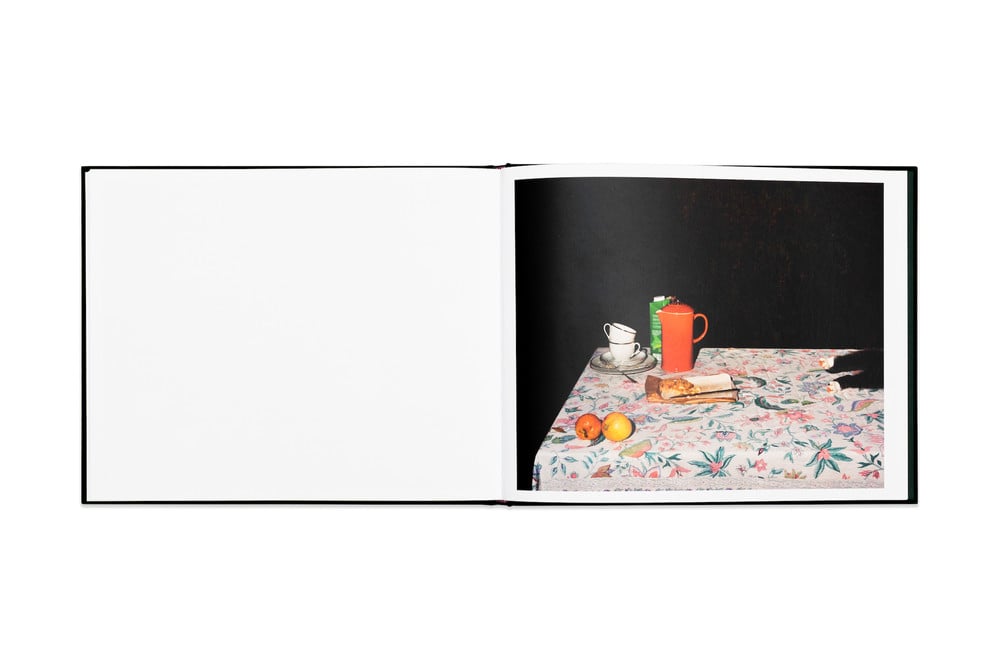
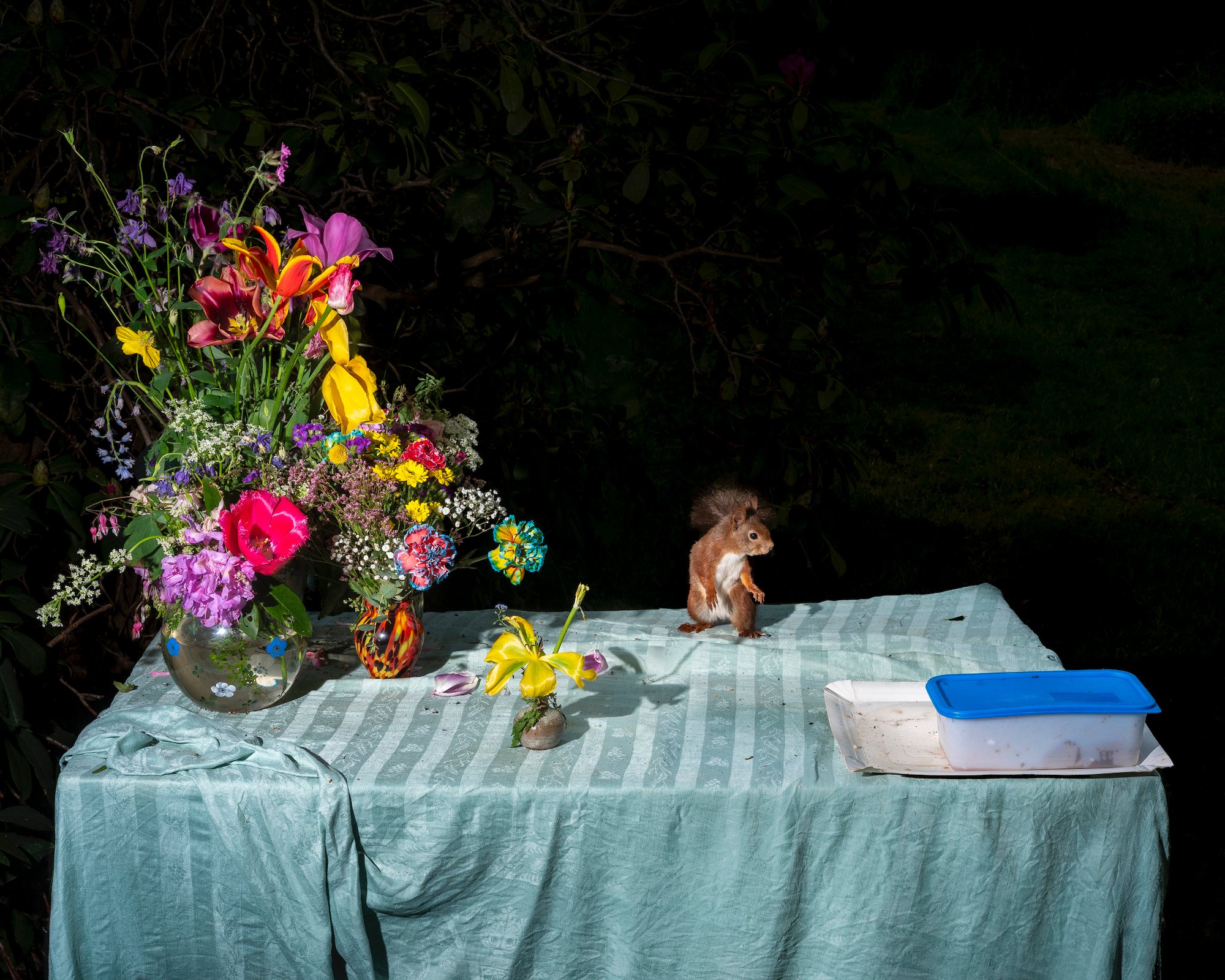
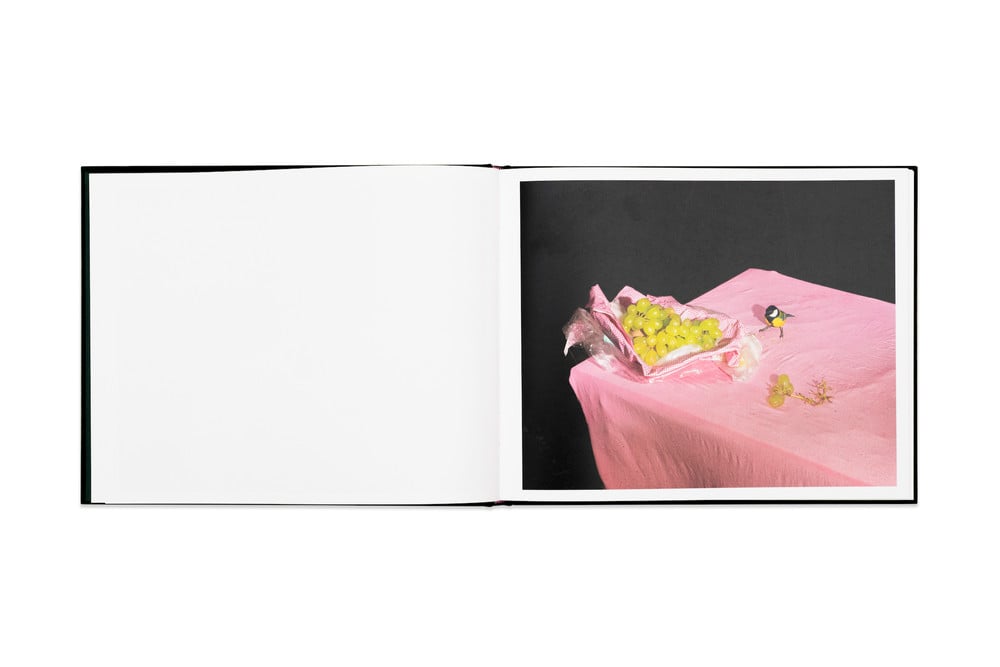
“One afternoon, in the first lockdown, I saw a squirrel jumping on our garden table,” begins the tale that led to the birth of the enigmatic Plates I-XXXI by the German photographer Lia Darjes. This small observation—not an uncommon one to make during the long and tedious days of the pandemic—transfigures into something quite magical in her new book. Between its covers, we tumble down an Alice in Wonderland-esque rabbit (or racoon, mouse, ant) hole to a collection of theatrical scenes where a host of animals feast at the photographer’s well-dressed garden table in the dead of night.

“Of course, I’d seen this little spectacle a thousand times before, but at the time I was actively looking for my next topic,” Darjes explains on the origins of the project. “My previous project Tempora Morte had encouraged me to once again dedicate myself to my passion for still life. I saw the squirrel and thought: Hmm, can I perhaps recreate that?” Her imagination captured, the photographer came up with a new nocturnal routine: she would leave the crumbs and dirty plates from finished meals at her or her friend’s garden, set up a camera with a movement trigger and see what happens.
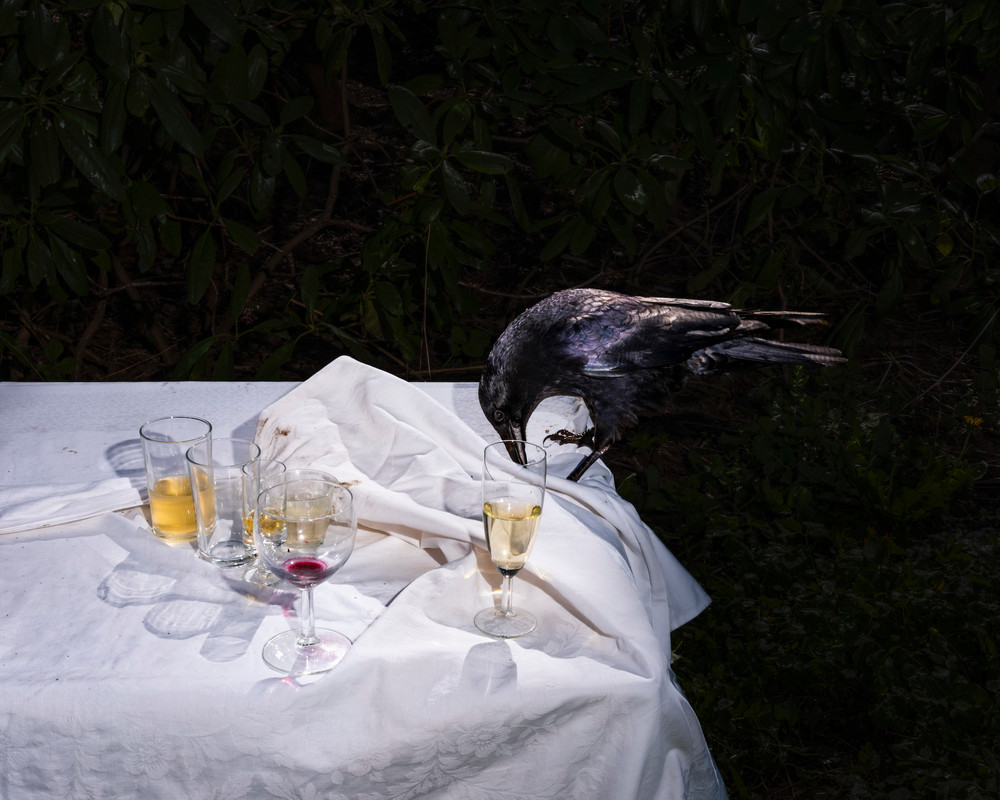
The remnants of Darjes’ meals become elaborate tableaux laid out for her fortunate dinner guests. Inspired by the still lifes of the Dutch Golden Age, her photographs have carefully-considered decoration: bright table cloths and lavish flower arrangements that set the stage for her banquets of tangerines, nuts, watermelons, grapes and cherries. Unlike the domestic scenes of the 17th century paintings however, which reflected on human mortality, the still lifes of Plates I-XXXI are injected with a mysterious, animal energy that exists beyond our control. It’s wild, grubby, lively—an unknowable life radiates from Darjes’ furry subjects and their secret nighttime comings and goings.
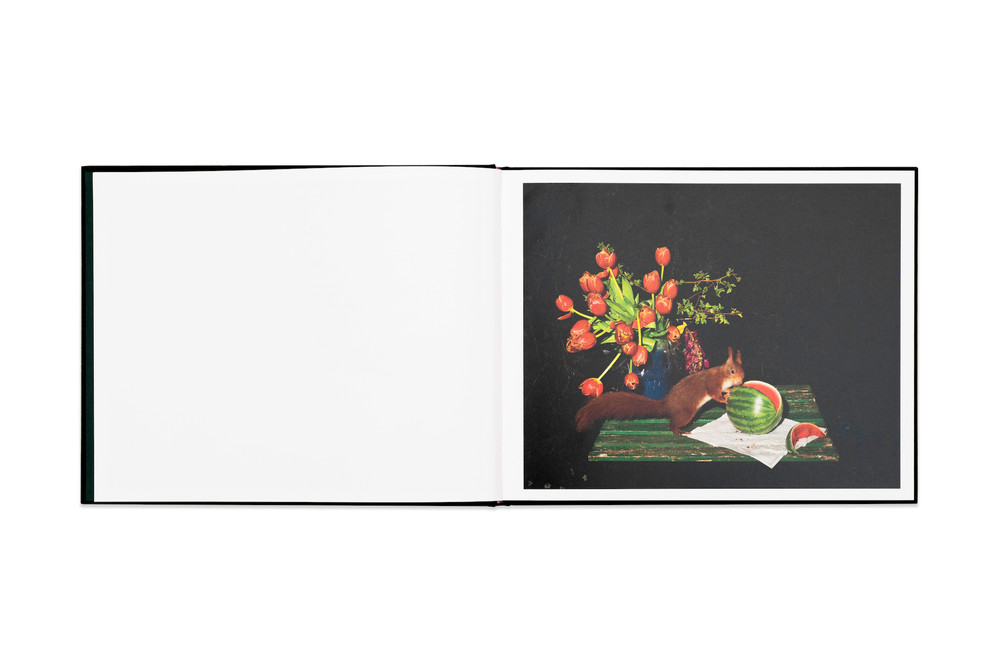
“I feel that still life is often considered a dead genre in contemporary photography. But I don’t think it is,” says the photographer. “Objects are narrators of human reality, and still life can address questions about our societies.” In Darjes’ version, the control that usually shapes the genre has to be relinquished to chance as the whole process is guided by the unpredictable behavior of her collaborators. To ensure the animals were left to explore the table in peace, the photographer was rarely there to press the trigger, filling the resulting images with a sense of anticipation. Like an anxious party host, she often wondered: “Would anyone come? They are so unreliable and never show up when you want them to.”
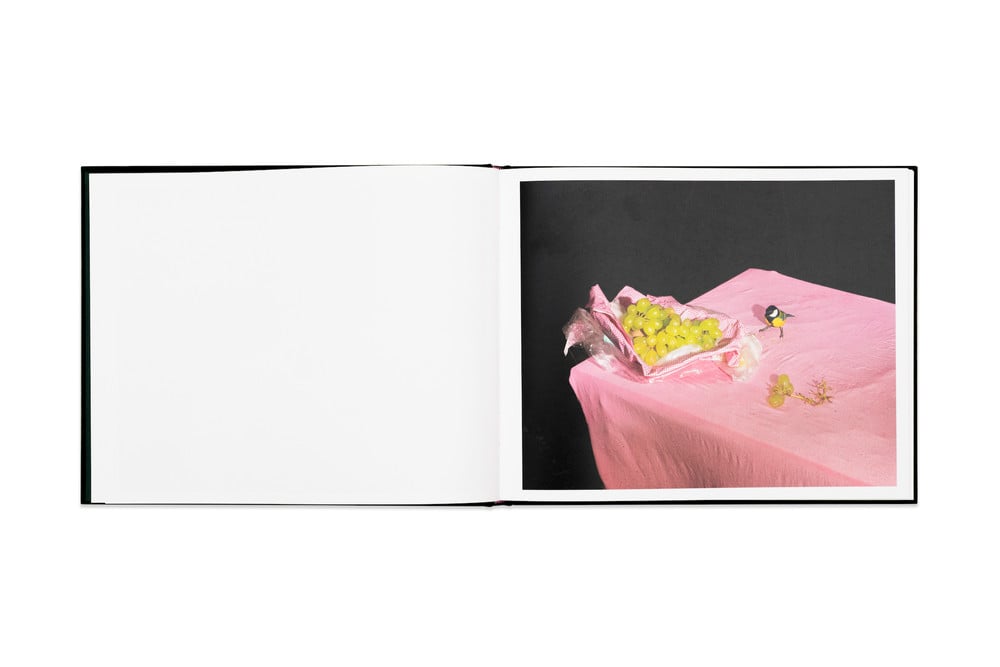
But, as the 31 photographs that make up the book testify, come they did. “My greatest joy was when I came back to my camera after a night, a day or even a few days and found a good picture,” Darjes explains. “In the beginning, I used to run to the camera with my heart pounding, waiting to see if there was anything there. And of course the disappointment was just as great when it didn’t work out.” Each picture is completely different from the next, charged with the hushed thrill of bearing witness to these private dining events.
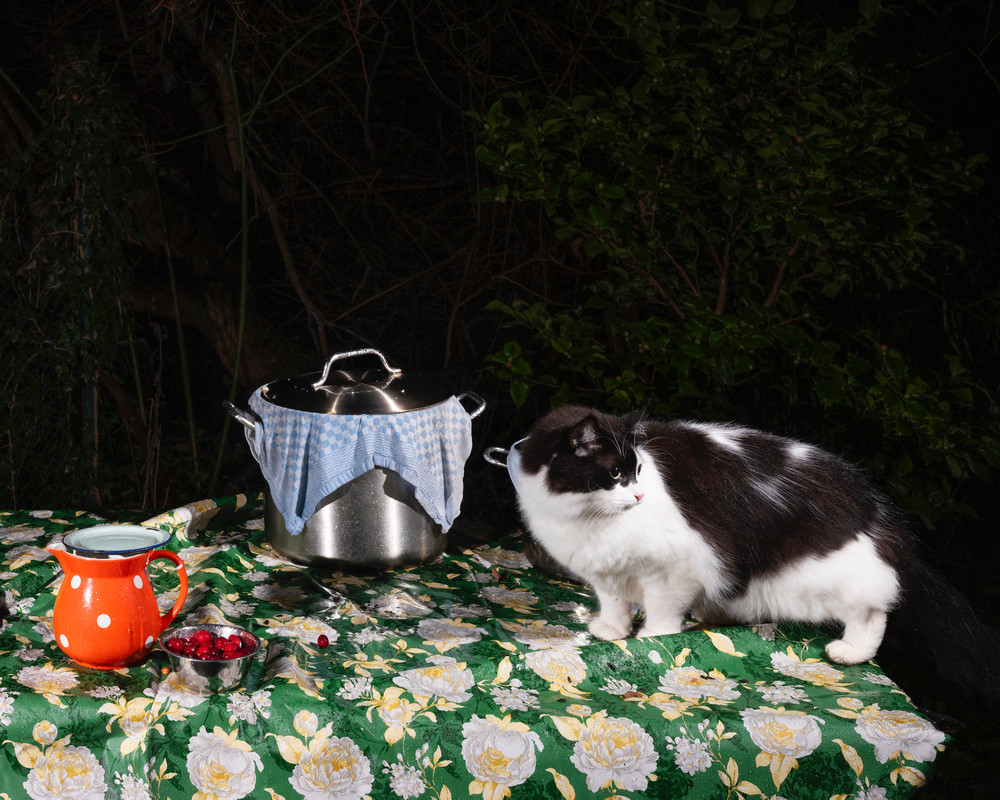
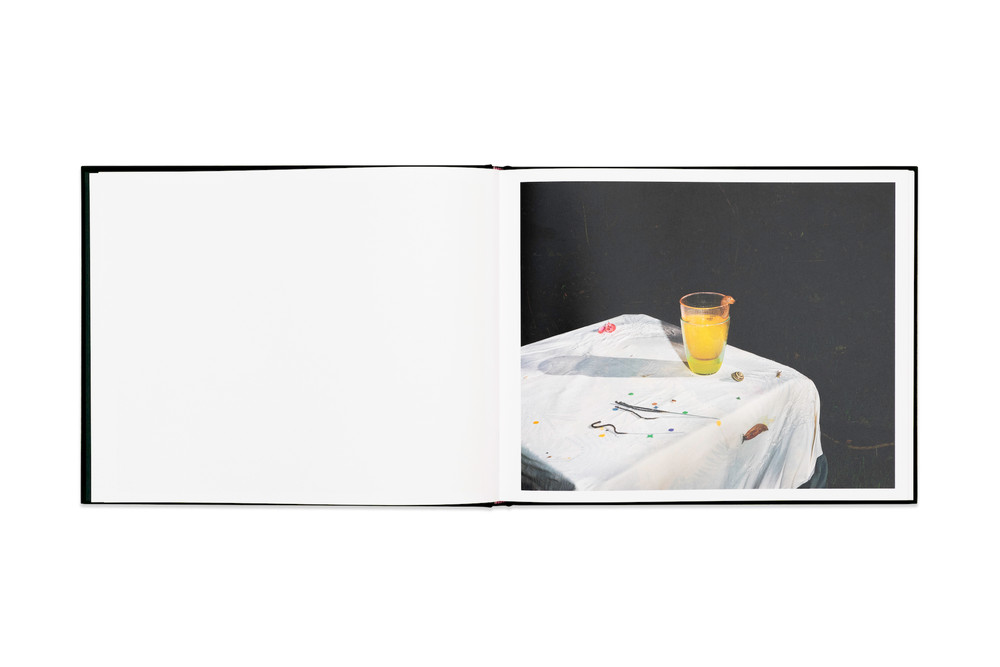
A playful dance between the way humans normally use things and the way they are made wonderfully strange again by the animals that leap up to explore the table emerges through the pages of the book, intertwining our world with theirs. Paw prints trace the intrepid discoveries of a raccoon that is sniffing around a bunch of pink flowers. A tea cup takes on gigantic proportions next to a small red-breasted robin that has landed next to it. Sometimes it’s a party for one: a stripy cat making its way through stacks of bowls, candy colored cake icing and candles still stuck to their surface. In another picture, the remnants of a celebration—burnt out, spirally sparklers and little stars of confetti—attract a new round of guests: a wasp, a snail, two slugs, one clambering out of a bright orange juice.
Echoing the excess of the human dinner parties that appear to have taken place earlier in the night, there is a bawdy sense of festivity among this second wave of visitors. Unaware of our curious gaze, Darjes’ subjects busy themselves with all they can get their paws on with little restraint. A rat knocks over a glass with flowers. A huge swarm of fruit flies gorge on leftover watermelon. In one photograph, we see just the legs of a cat, the rest of its body out of frame, stretched out as if lying down after overindulging in the teacup of milk perched just to the left. A few animals stare down the camera, as if caught red handed by its illuminating flash.
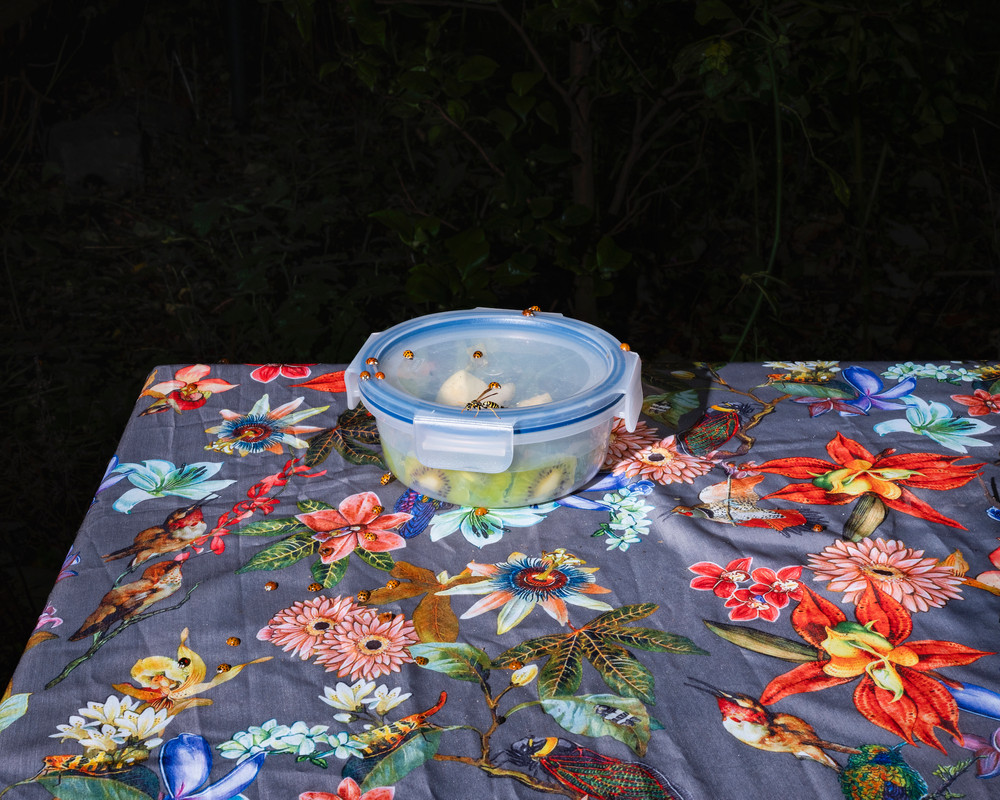
Using a bright and bold color palette, Darjes artfully creates the stage for these scenes to play out, sometimes even picking tablecloths with flowers and animal motifs for human-made images and their natural counterparts to meet. “In old (art) books and catalogs, there was often a ‘picture section’ where the pictures were printed better than the rest of the book. In German, this part was often called ‘Tafeln,’ in French ‘Tableaux’ and in English (list of) ‘Plates,’” says Darjes.
“As far as I know, these terms come from the printing process, as the images needed proper ‘plates’ to be printed. They were then often combined with Roman numerals. At the same time, all three words also reflect table culture.” The result of Darjes own collection of plates is a series of lively still lifes that feel anything but still, where two table cultures convene.