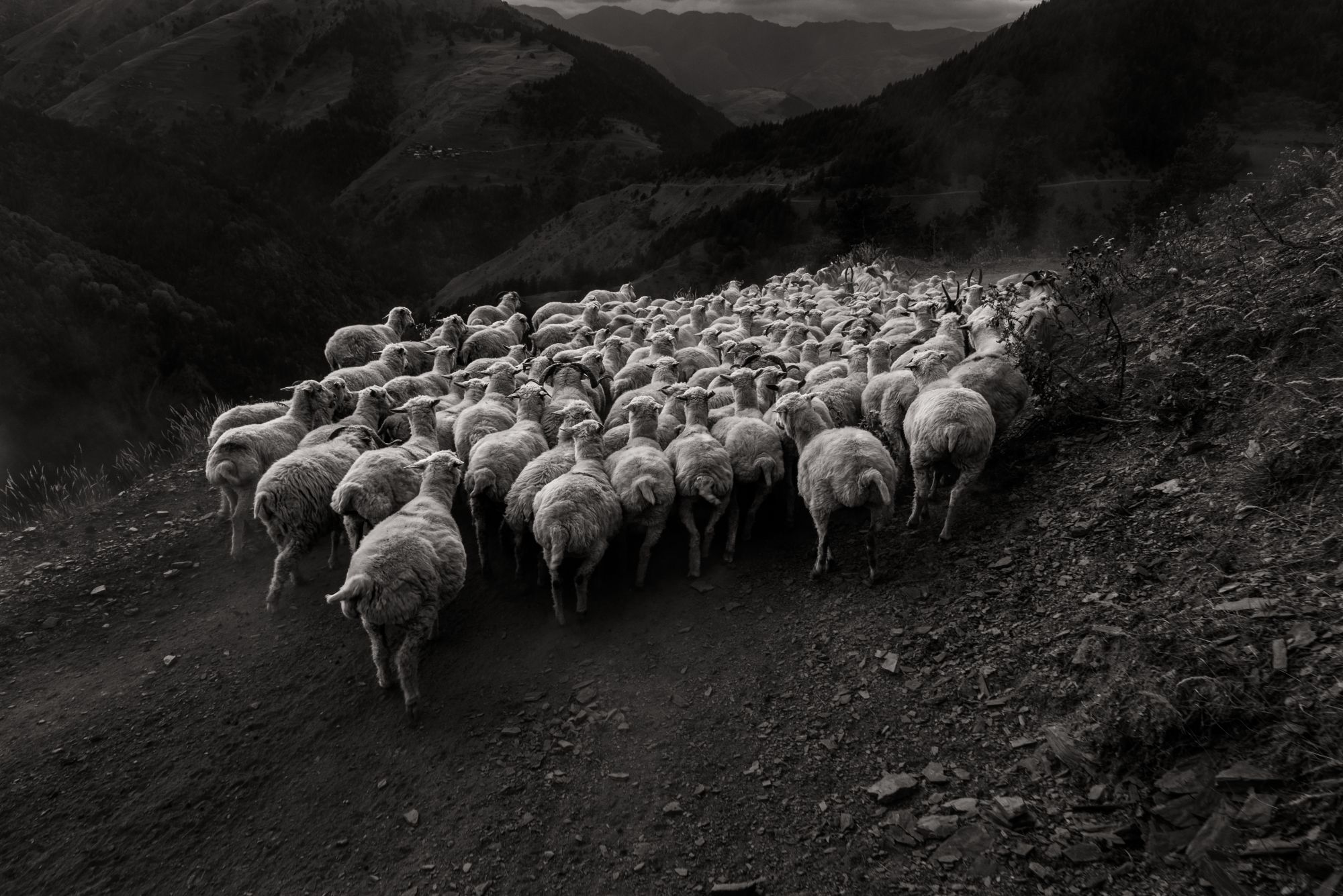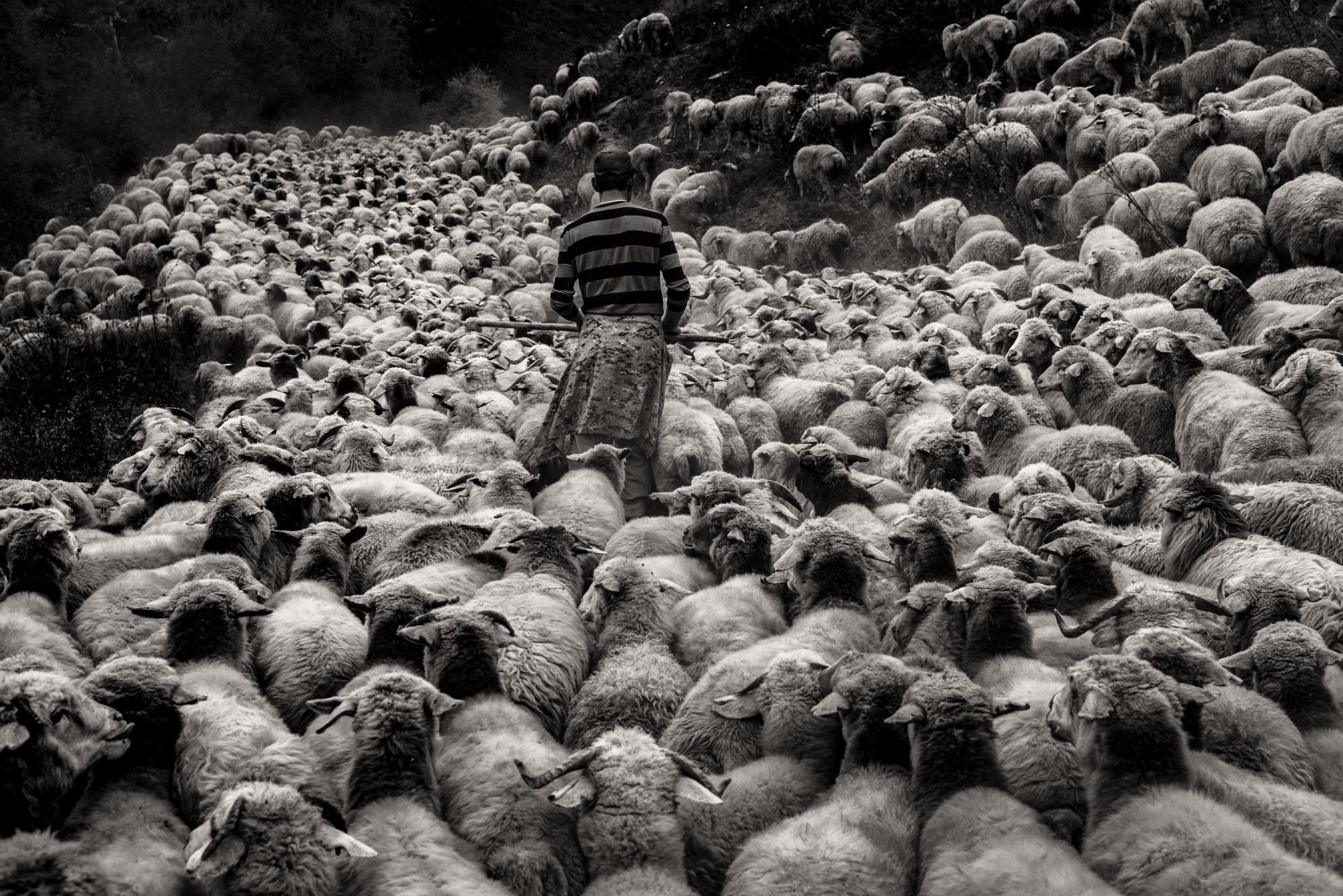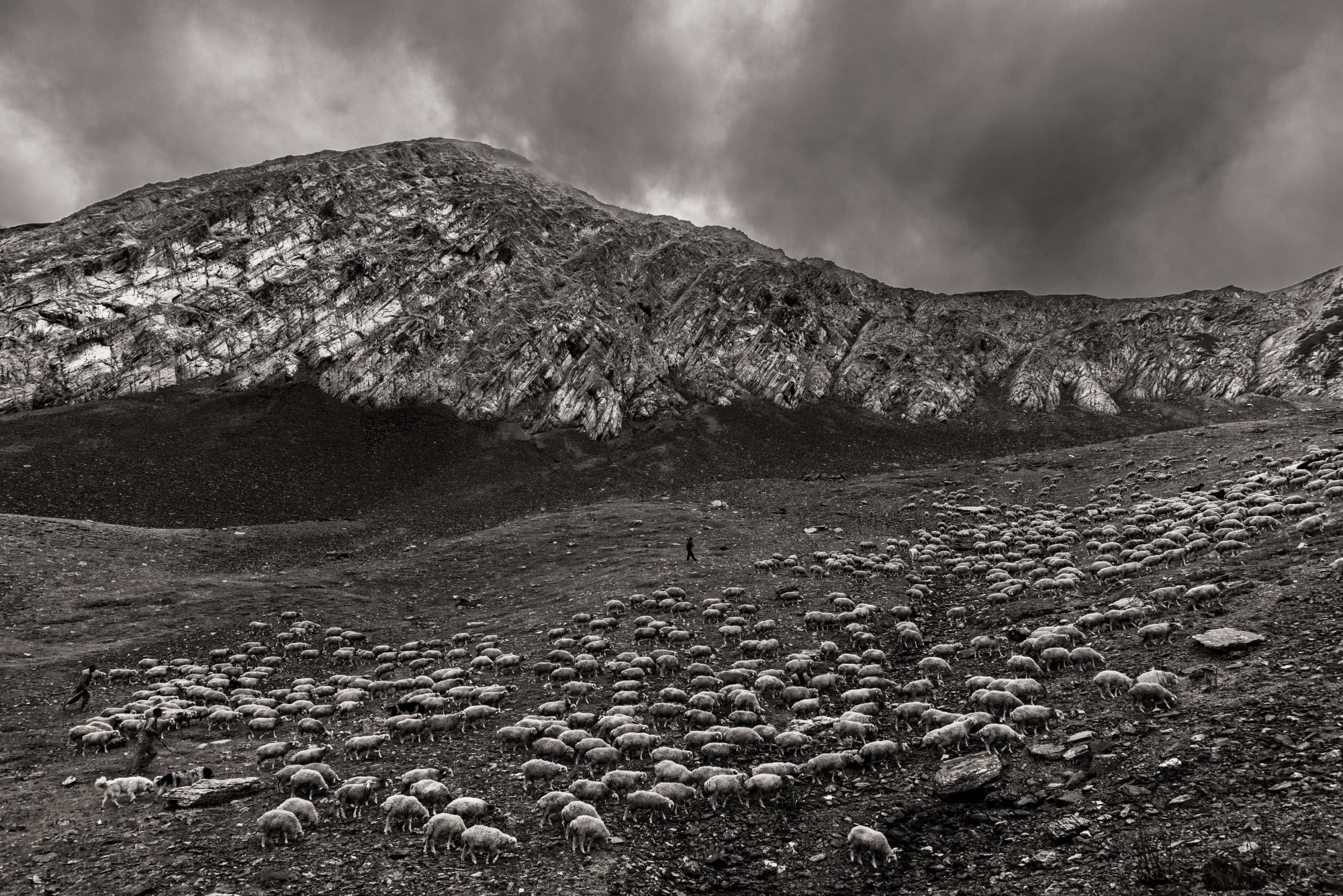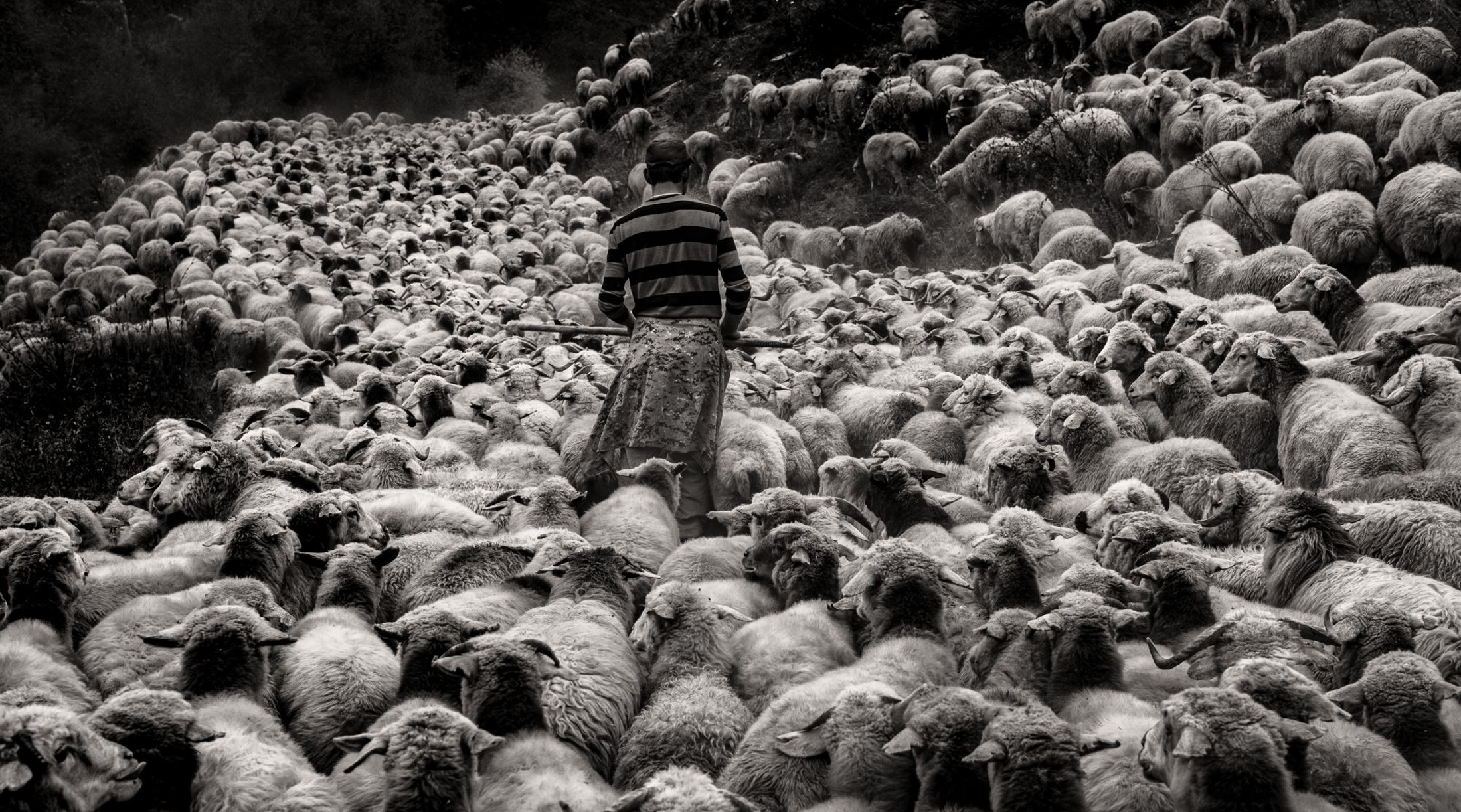
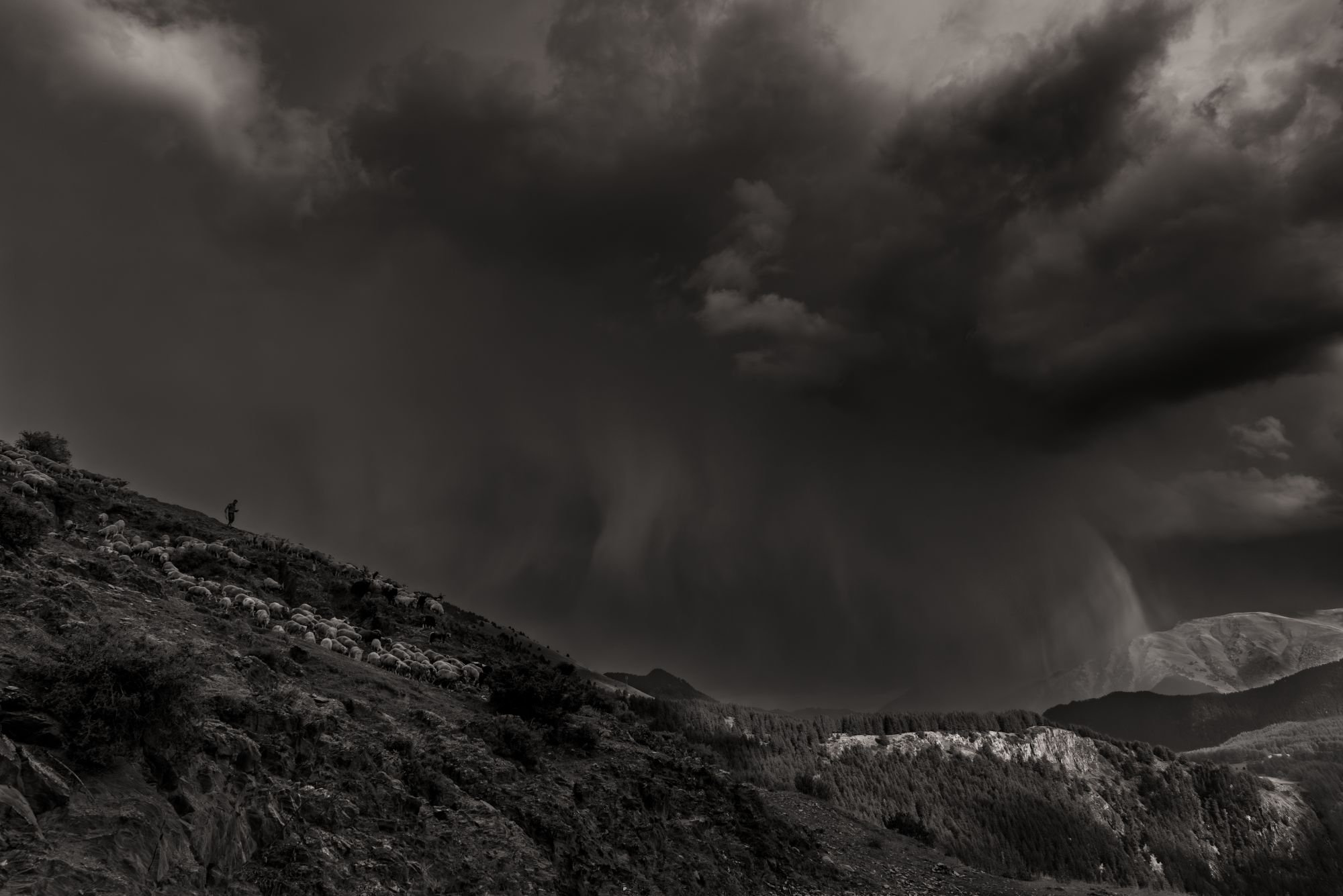
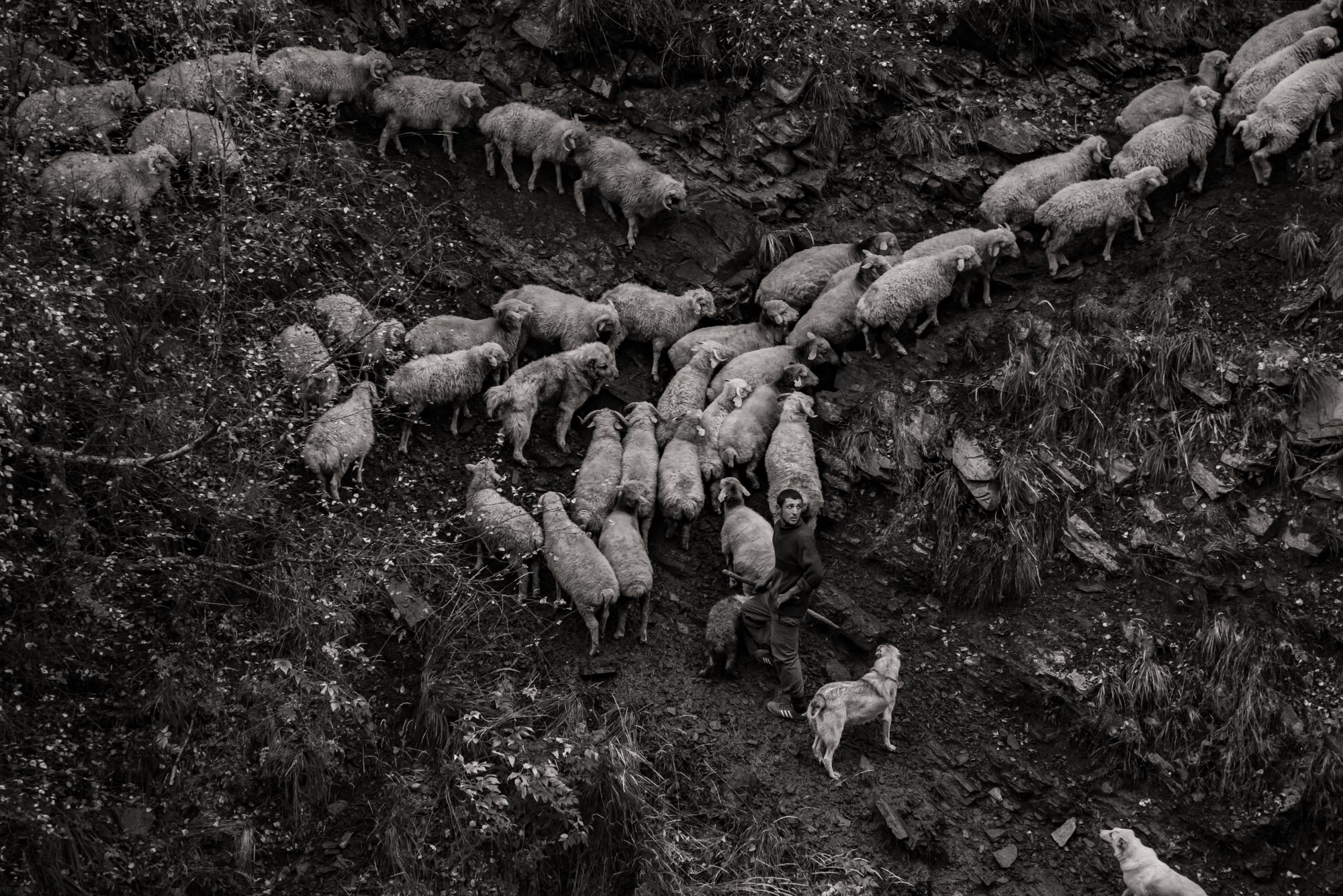
A shaggy white line, like a fraying belt, stretches from one end of a scrubby gray surface to the next. Zoom in closer with a squint and the line breaks up into individual forms, a shifting, buzzing flock of sheep on the move. At one point they swarm around a man, kicking up a cloud of dust, before nearly disappearing on a ridge under dark, stormy skies.
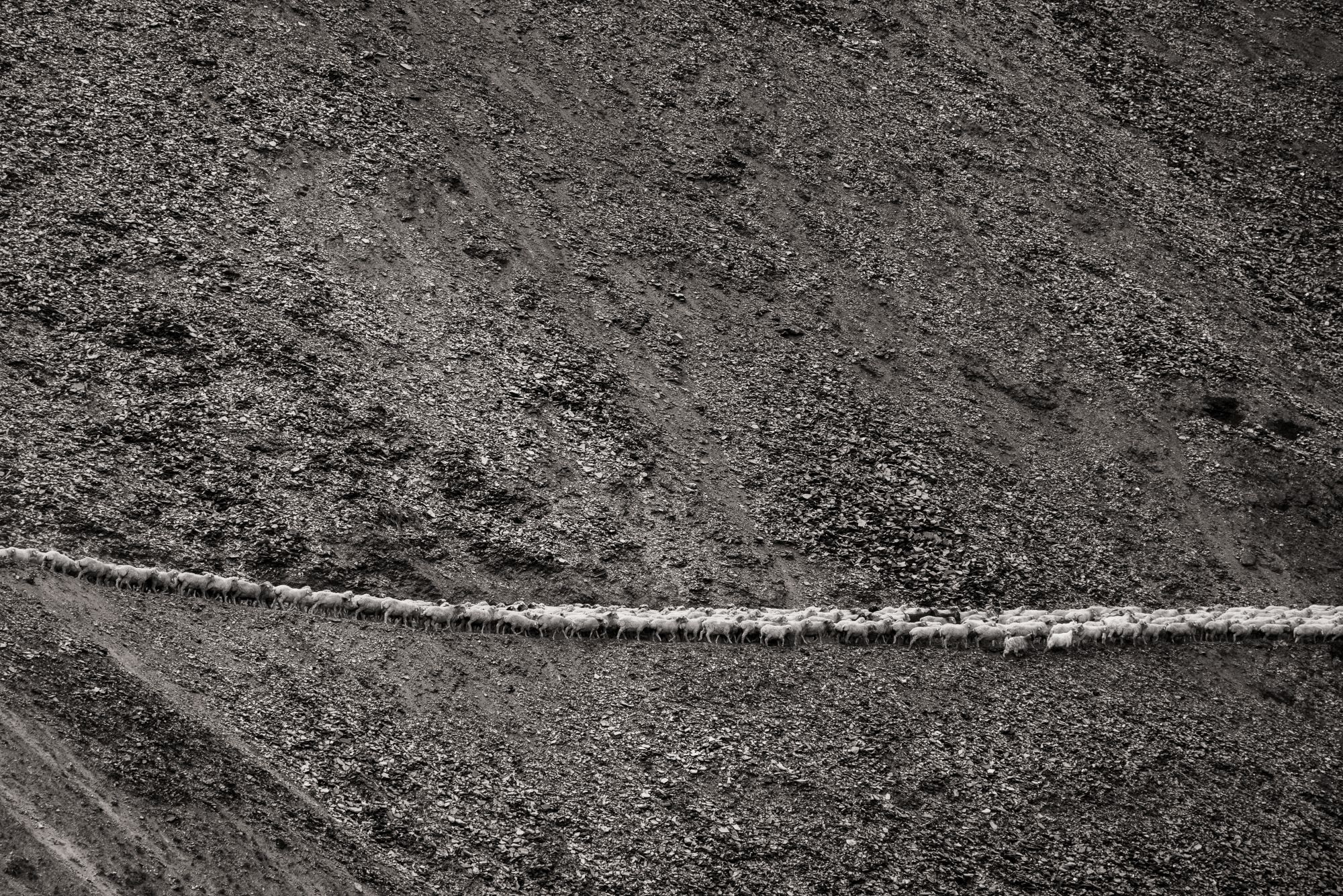
In the remote northeastern highlands of Georgia, a journey has been taking place for thousands of years. As autumn sets in, shepherds ready their sheep to make a perilous journey from the Tusheti highlands of the Caucasus mountains through the Abano Pass and down to the warmer pastures of Vashlovani in southeastern Georgia. Since the earliest days of animal domestication, seasonal journeys such as this one have taken place. This practice of moving animals from one grazing ground to another is called transhumance. As modern life has sped up, the nomadic movement of these shepherds remains a constant, set to the earth’s rhythms.
In 2015, Maurice Wolf landed in Georgia after a nomadic journey of his own. The Australian-Dutch photographer first came to photography through the gift of a Minolta X-300 and found his way into a job at a photo shop when he answered a fellow customer’s question while standing in line. But it was Walker Evans’ book First and Last, a retrospective publication of the American photographer’s work, that truly hooked him to the medium.
“My girlfriend told me later that I was mesmerized for 3 days, and I remember thinking, I would like to be able to do this too. I was searching for the ‘why;’ what’s going on with these pictures?” he says. “And basically, it always comes down to the fact that it’s real—there’s no layer of ego around it. It’s not because he wants to show how good he is technically, it’s just the real deal. One of my other favorite photographers is Lee Miller. These are the photographers who have a very good, approach of, ‘I don’t give a fuck, and this needs to be done,’ no egos,” he says. “There’s always a red thread with these people. I think that they are sincere in what they do, and they don’t care if people look at their work or not, they just have to do it, and I think that’s kind of necessary. So when I got older, I thought, maybe that’s the thing, you don’t do it for anyone else but yourself.”
Those words would prove prescient. Wolf had spent two decades living in Berlin, working a series of jobs, often in nightlife, as his daughter grew up. Photography faded into the background but never left. “I realized at one point that photography was never gone. Because photography is not only about taking pictures—it’s also what you translate your life into. For me, it always translates into pictures.”
The pictures would flood back in once Wolf moved to Georgia in 2015, 12 years after the country’s Rose Revolution which led to reforms and a shift towards closer integration with Western Europe. Upon leaving Berlin, he first ventured to the US, spending time in the open landscapes of Wyoming before heading for Australia, only to find his way back to Europe. Georgia, bordered by Russia, Turkey, Armenia, and Azerbaijan, proved to be an inspiration, even a revelation. “I just started shooting again, after 20 years. I had hardly taken any pictures for all that time.”
With an invitation from a friend, Wolf headed up into the mountains to meet and travel with a group of shepherds. “Georgia is a very small country; it is as if everyone knows each other there. For example, if my car were to break down, I could call the number of a friend. Doesn’t matter where I was. And this guy will say, ‘I cannot come, but I’ll make sure someone will be there in 20 minutes.’ And some uncle of a best friend’s girlfriend’s nephew will come.”
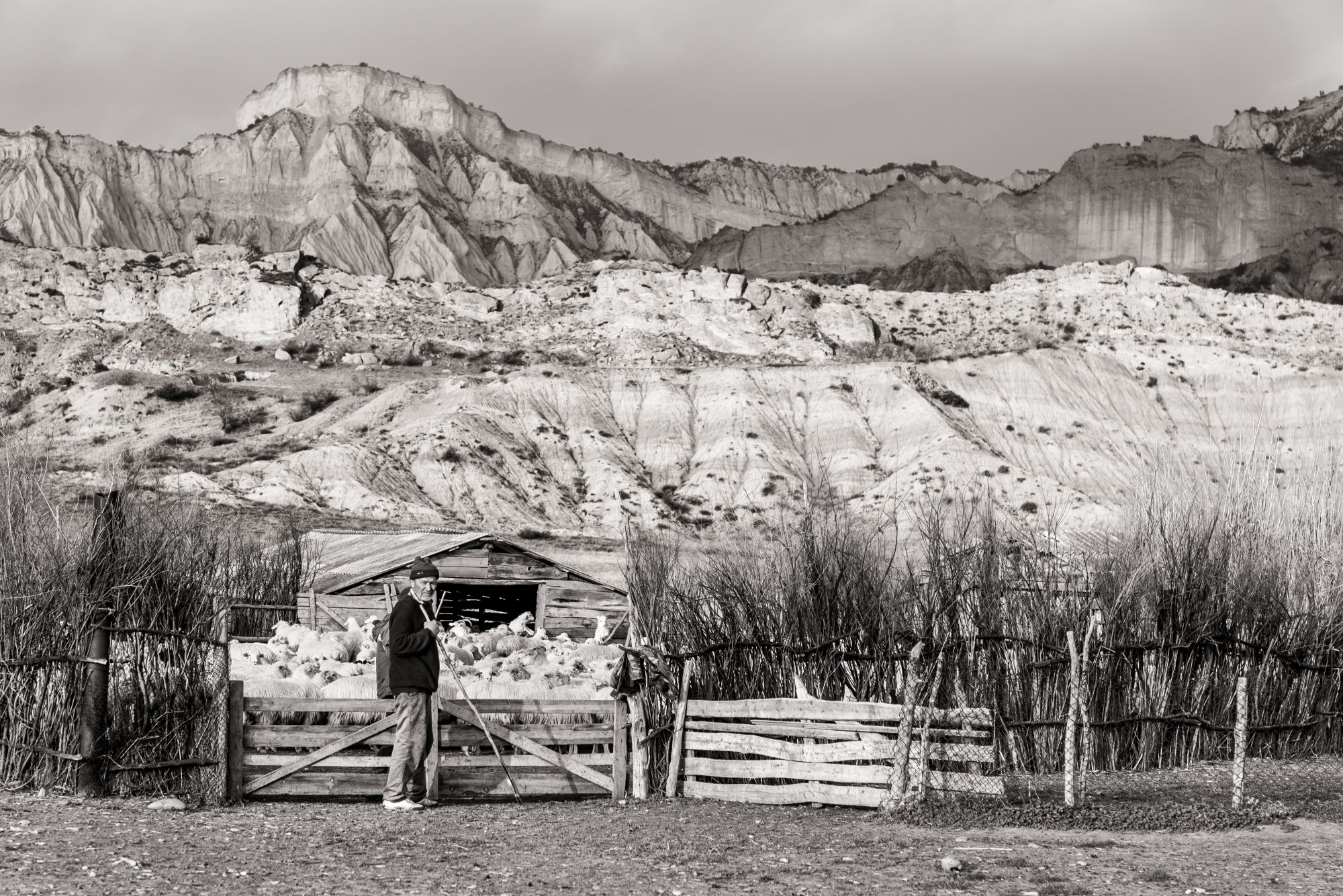
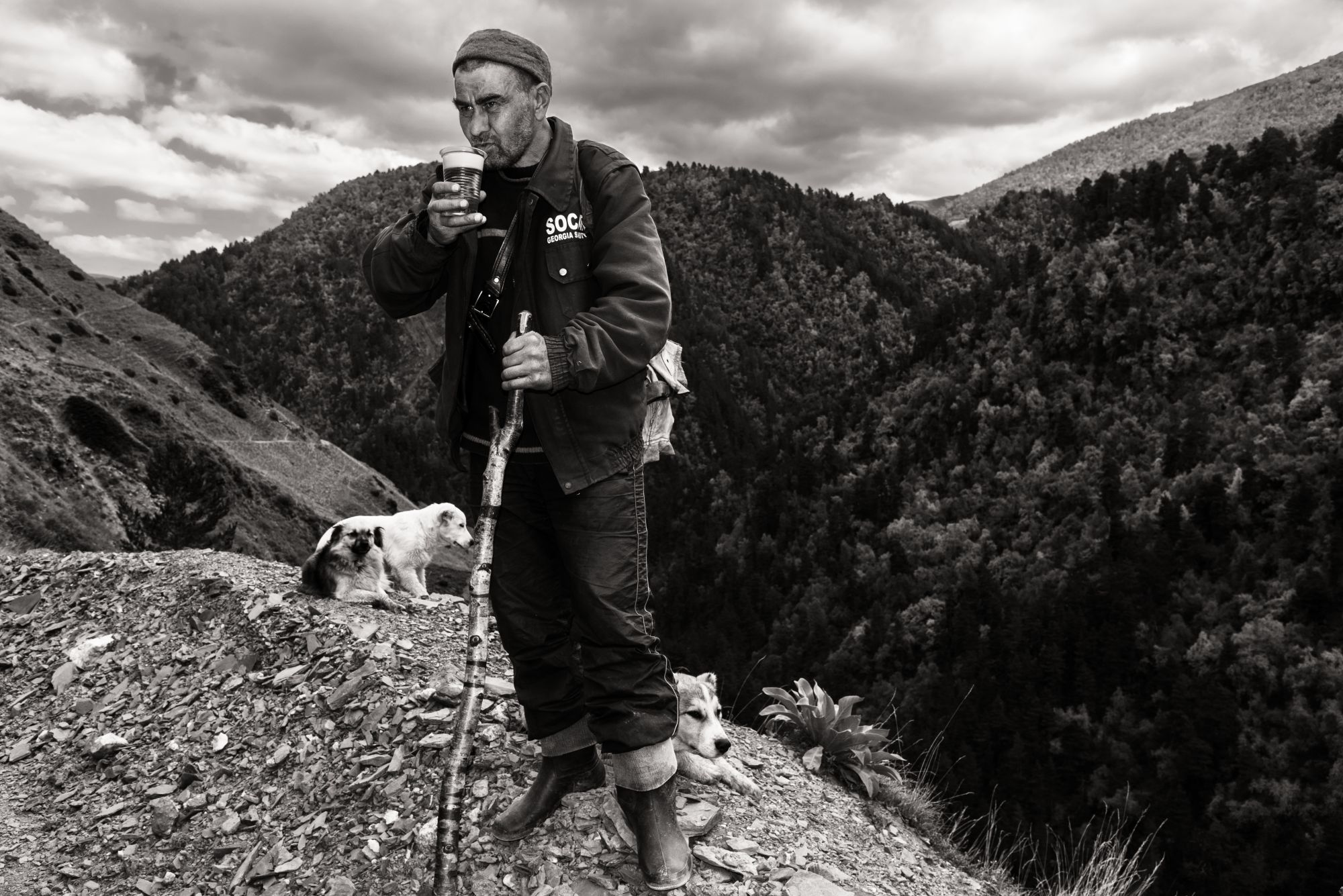
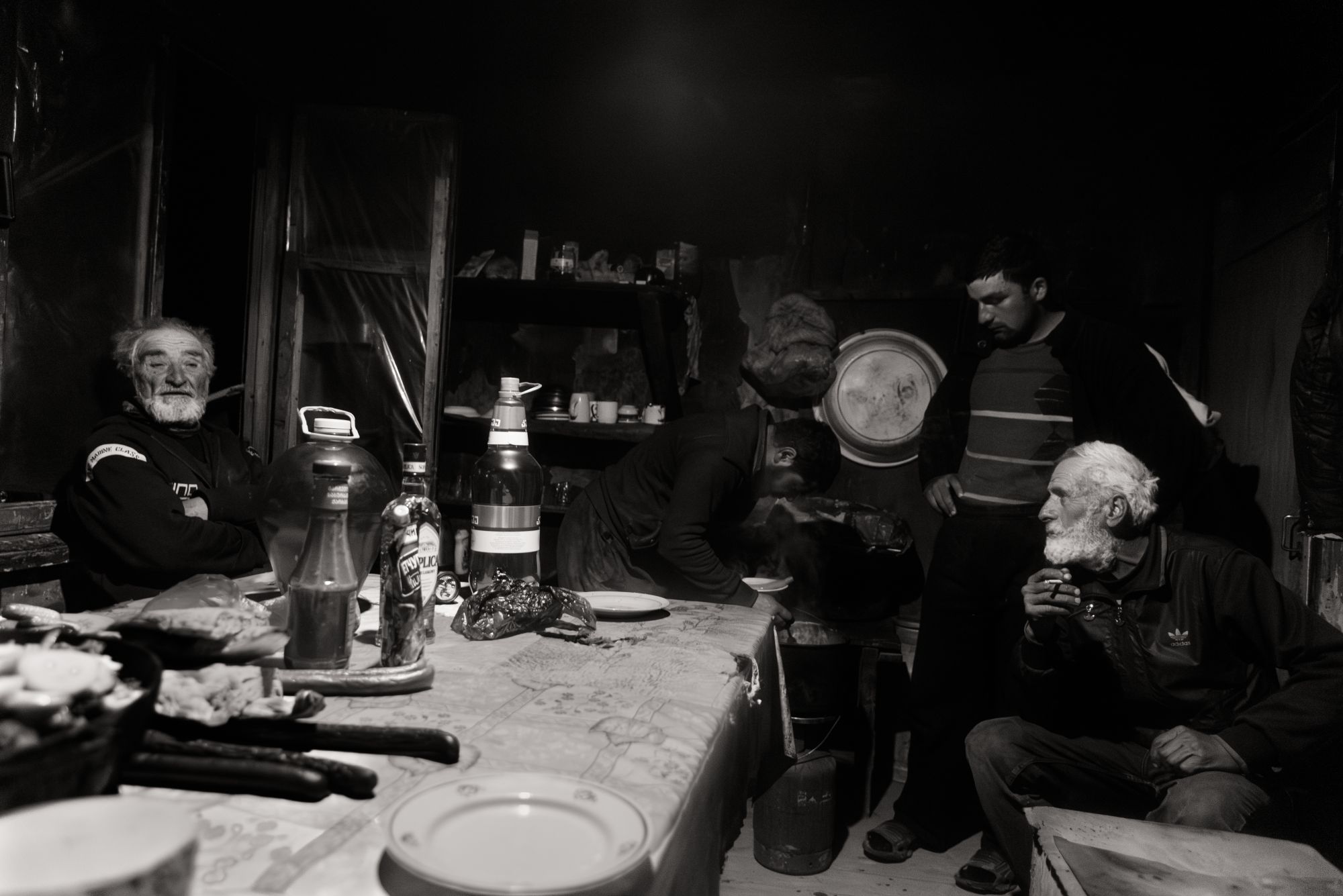
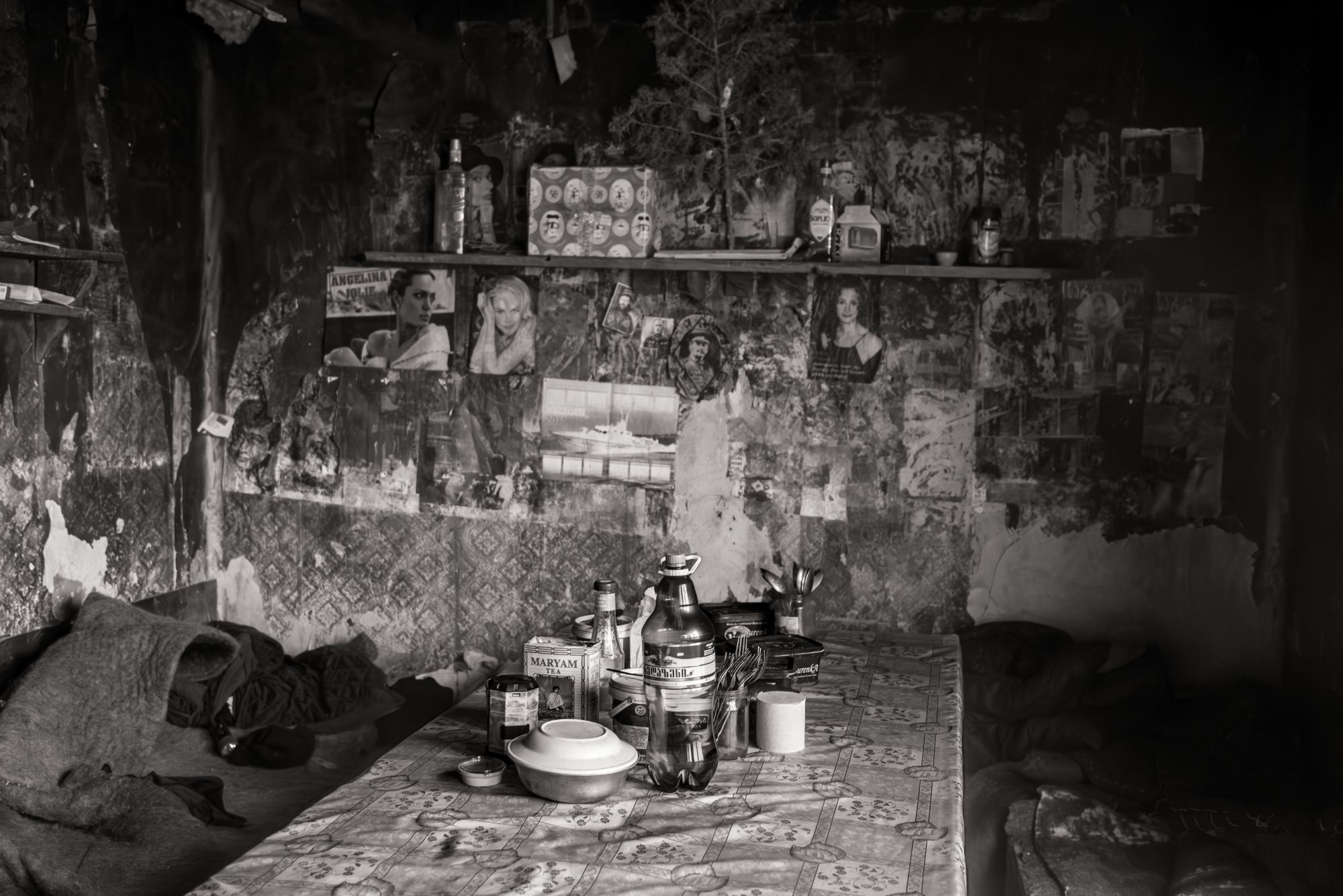
This openness and generosity have set the stage for Wolf’s immersive, detailed black and white photographs. The experiential aspect of his work is important, allowing himself to become accustomed to a space in order to fully depict it. He captures time, from the fading images tacked up over layered wallpaper in shepherd’s huts to the ancient ritual of migration, updated with plastic cups, cell phones, and the odd logo on a jacket. A viewer can hear and smell his images—the hiss of a single light powered by a car battery and the odor of wet wool and clouds of dust haunt his photographs.
For Wolf, settling into the routines of the communities he photographs is natural. In this case, it meant arriving in camp to share meals and “an ungodly amount of wine and chacha” as they waited to set out on their walk. Once they started walking, a journey of three weeks or so, it meant keeping up the pace and finding his vantage points. He photographs from high and amidst the scrum, picking up the pace and physicality of the work, and the atmosphere of the downtimes. “I think I have a talent to very easily switch into an environment, and adapt myself very quickly, and become kind of invisible. I like to go somewhere where I have no clue of what to expect, because I think that makes you the most open to surprises, to go carte blanche, more or less, and see what happens.”
Throughout Wolf’s life, he’s translated his experiences into pictures, whether mental or physical. Roaming across the country and over mountain passes, he’s strung together a slice of life that might seem hard to fathom for many. Amongst the shepherds of Georgia, we are given a glimpse into a world as old as time, thundering with life. “To make a long story short, I went from one magic situation to another with my camera,” he says. “Which, for me as a photographer, as a storyteller, it’s gold.”
This project was awarded a special Juror’s Pick in the LensCulture Black & White Awards 2025. See all of the other winners here.