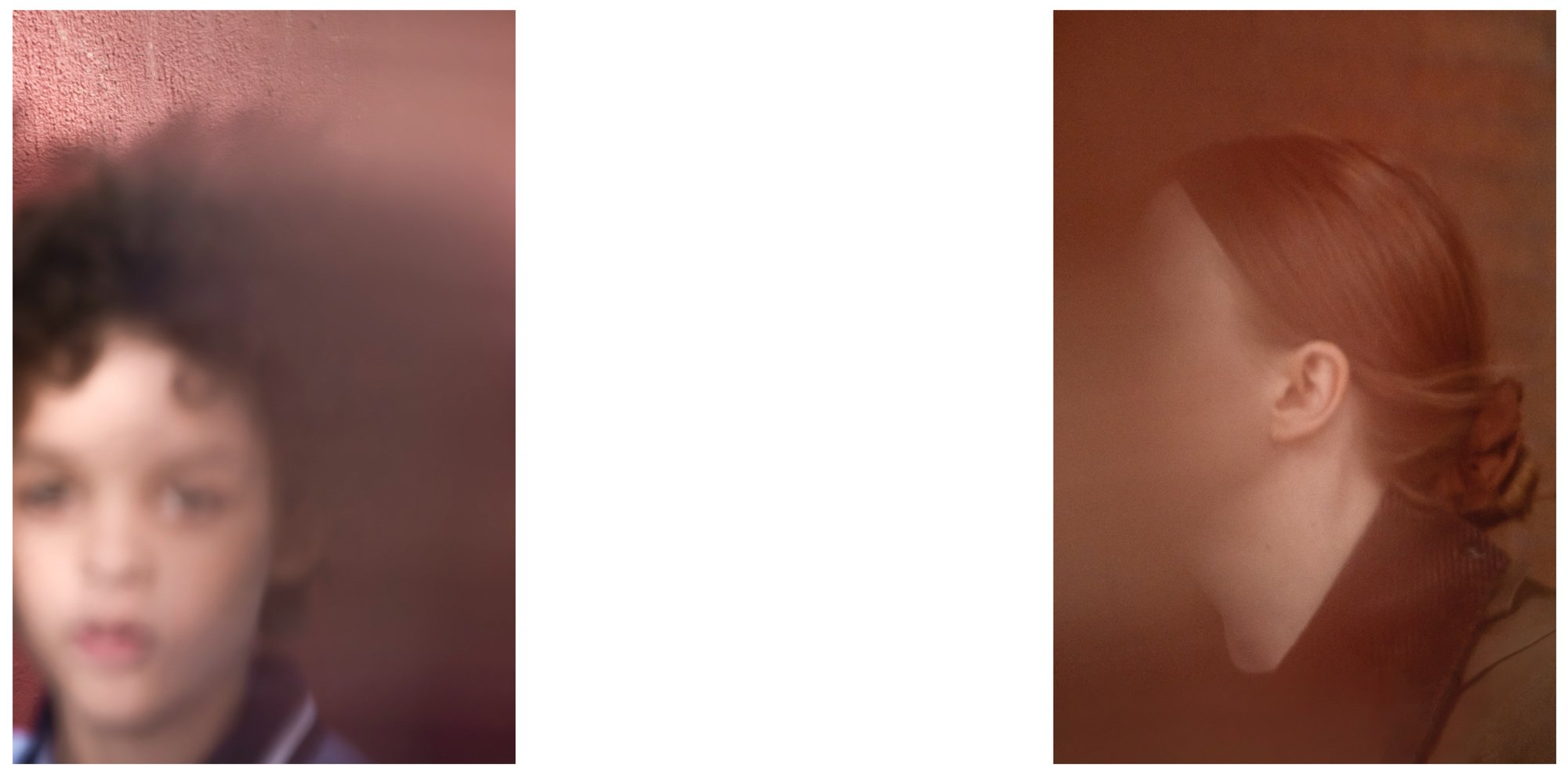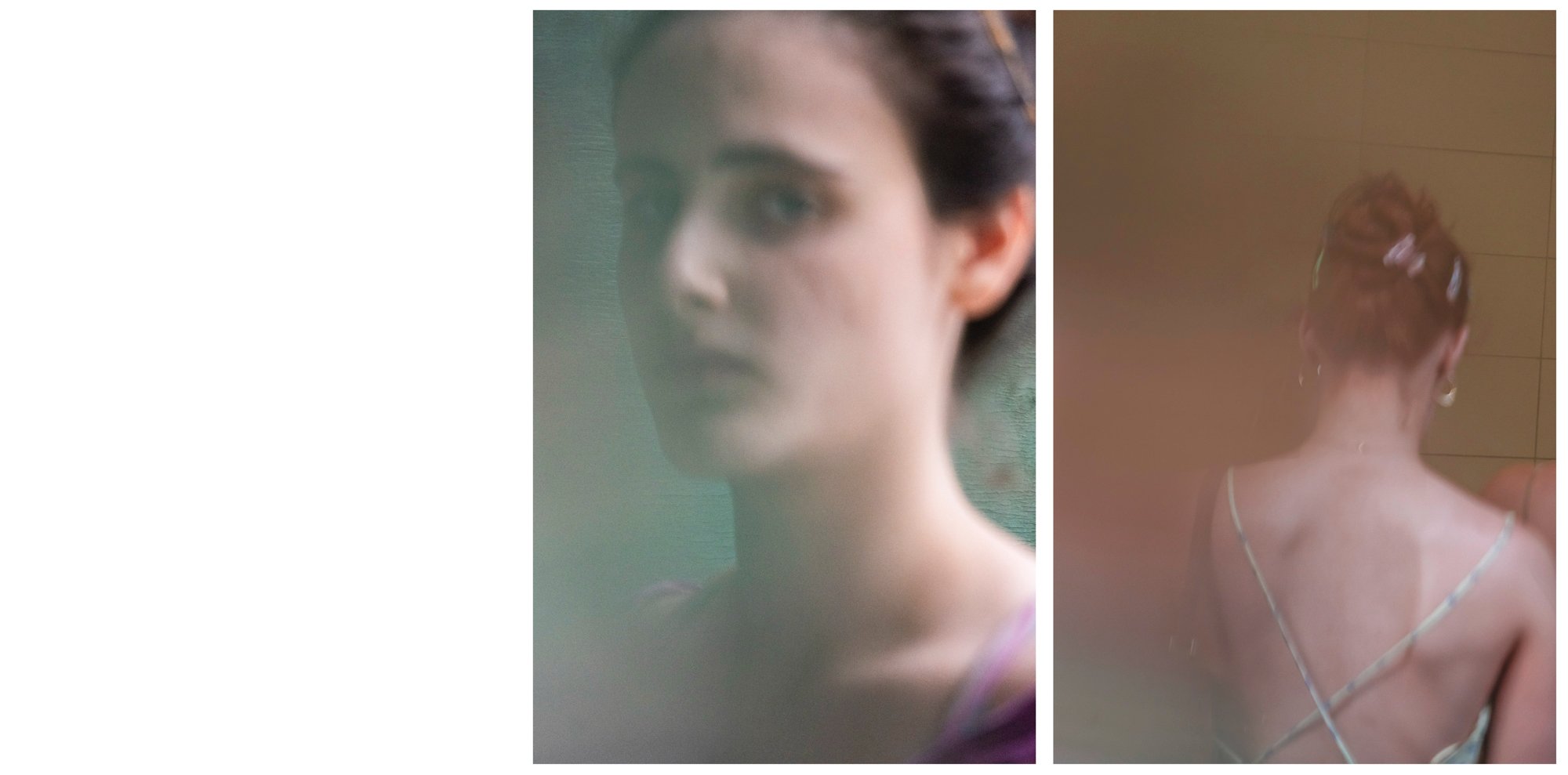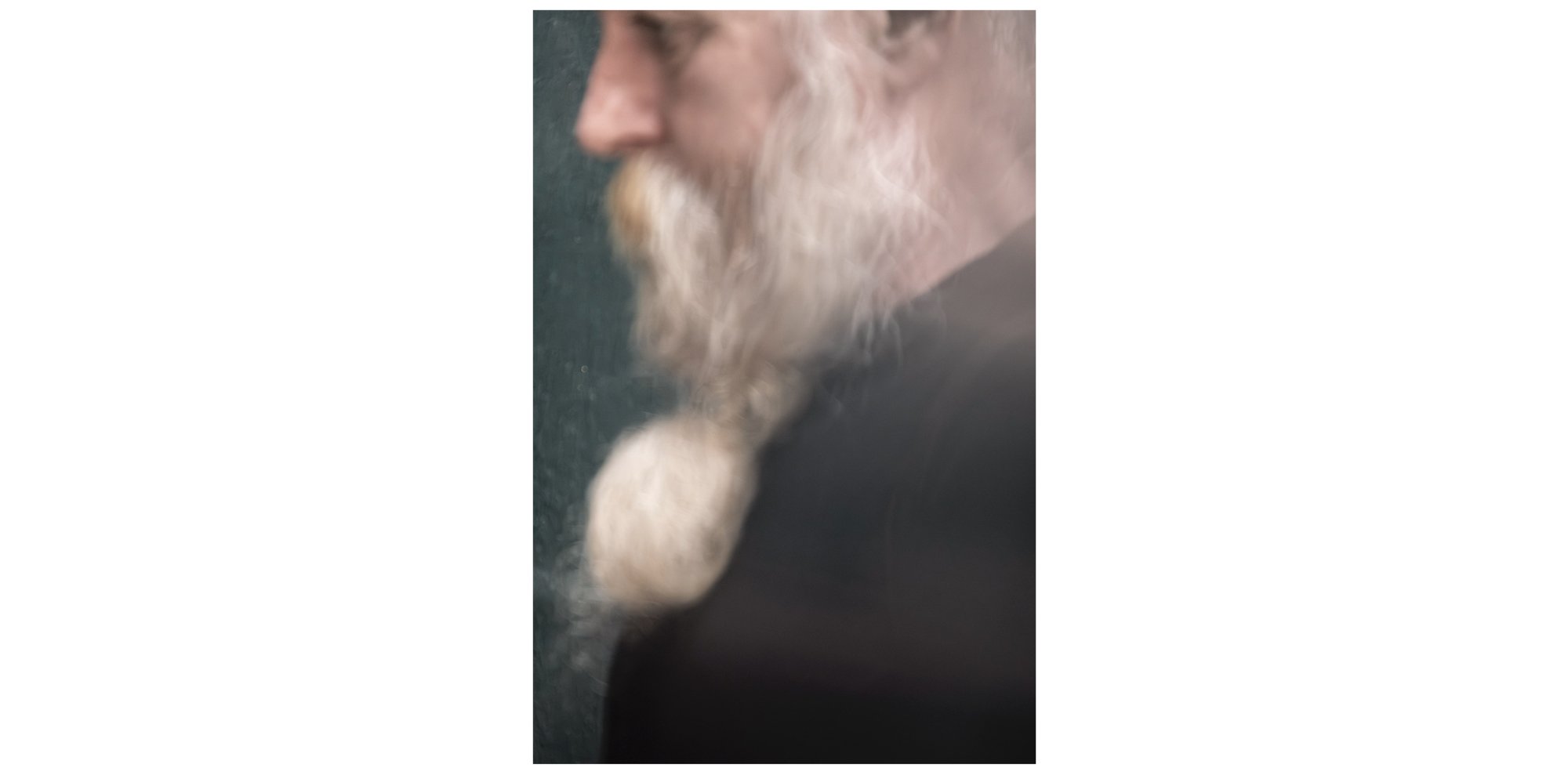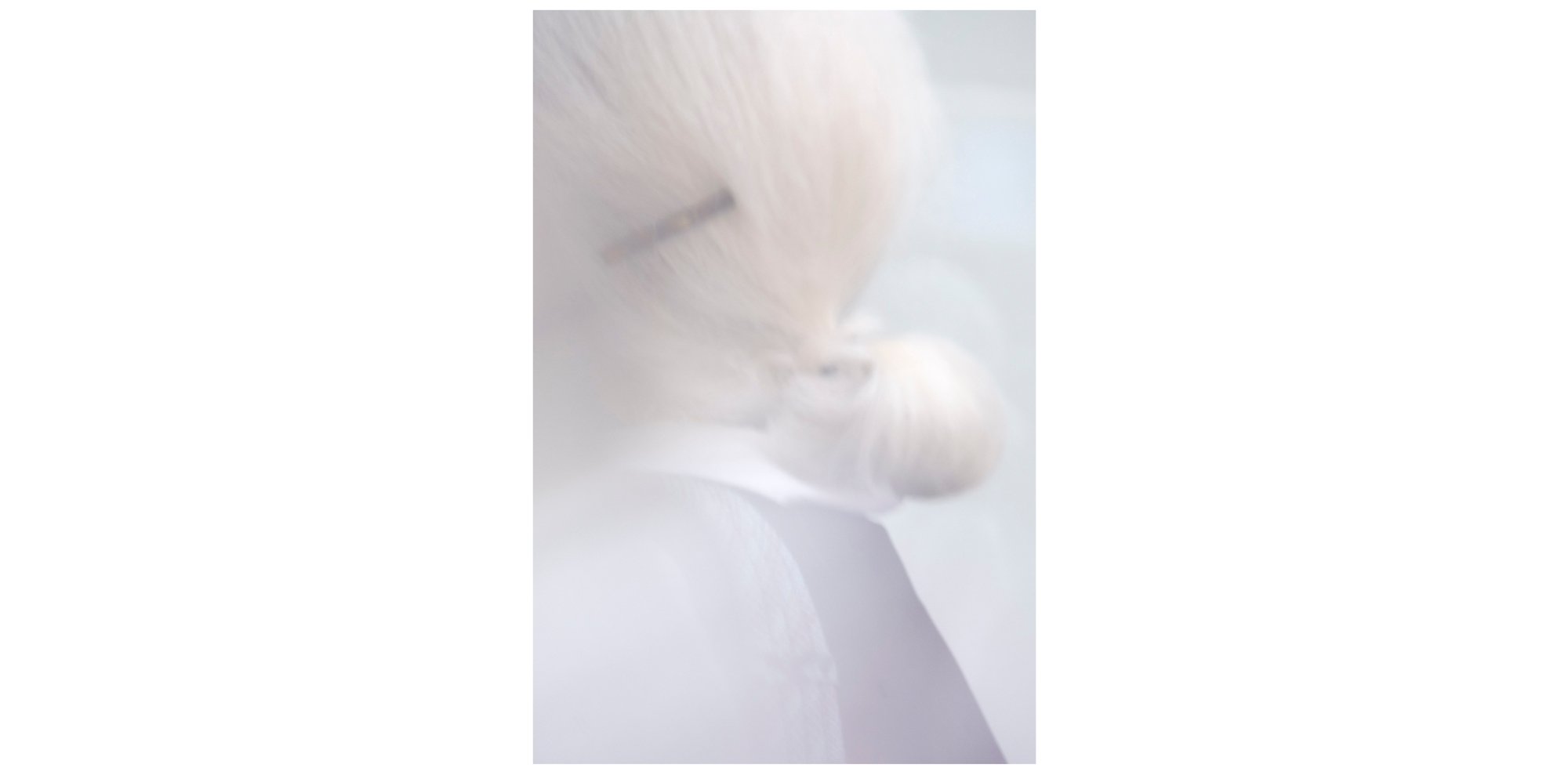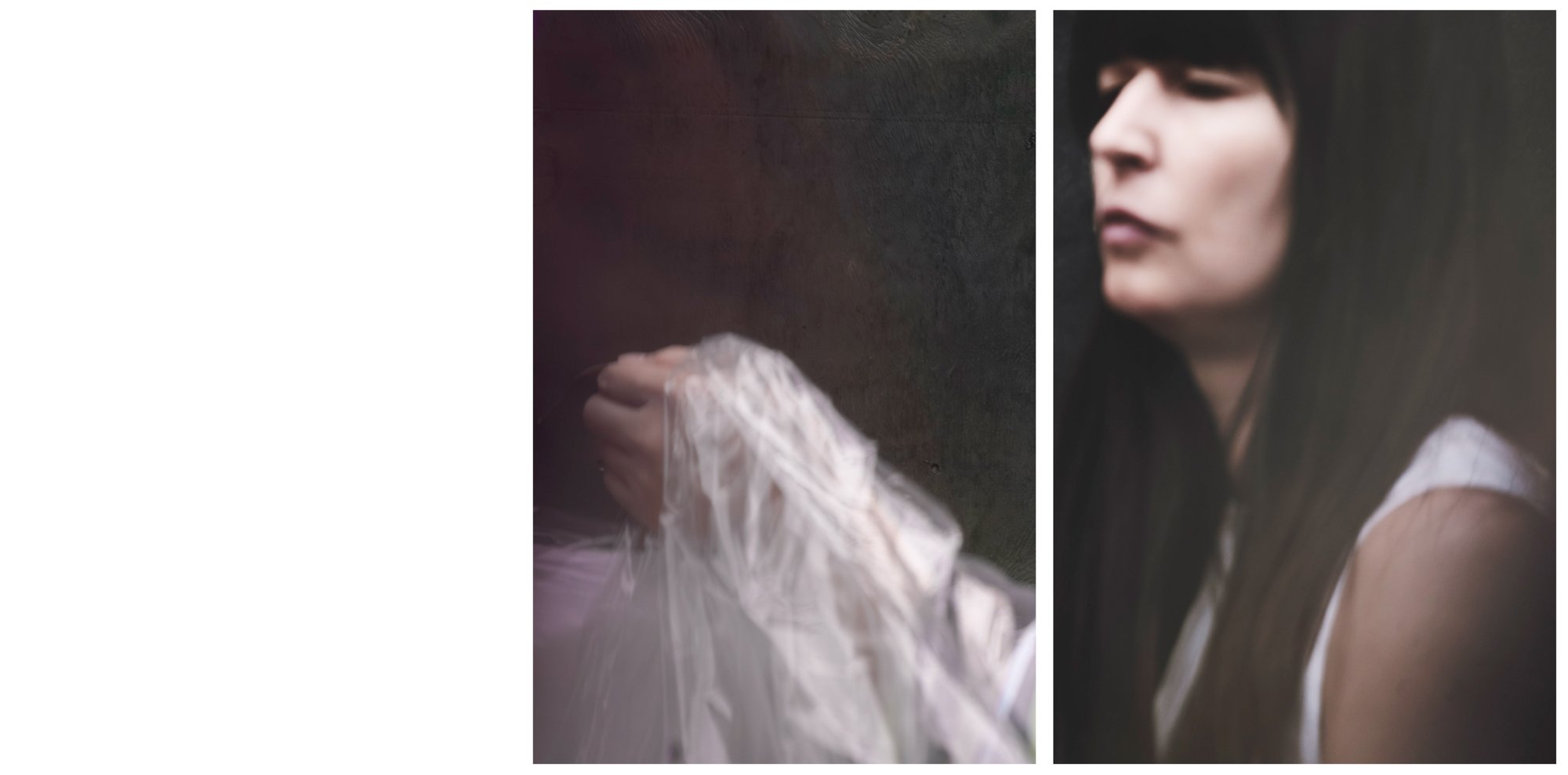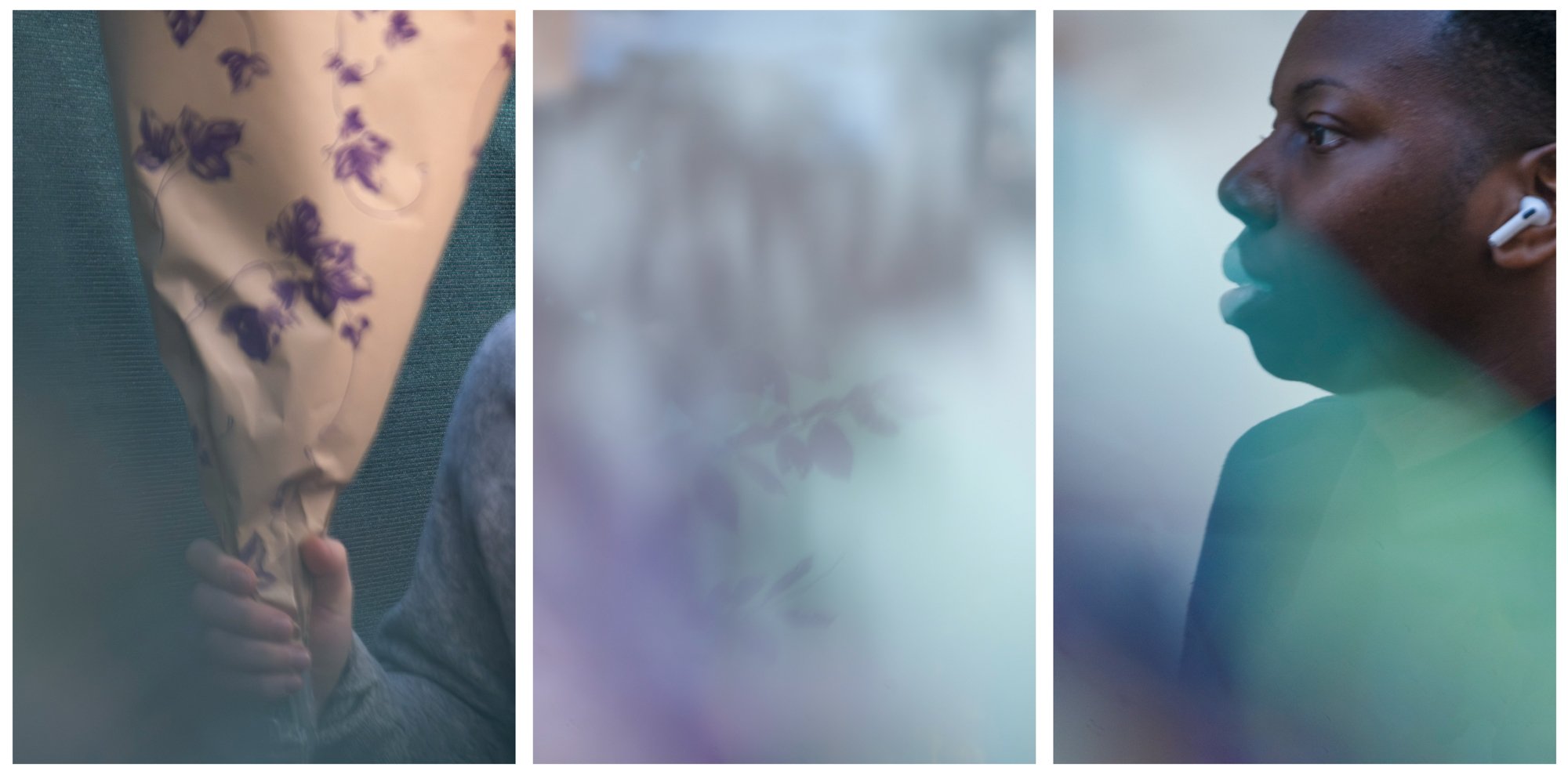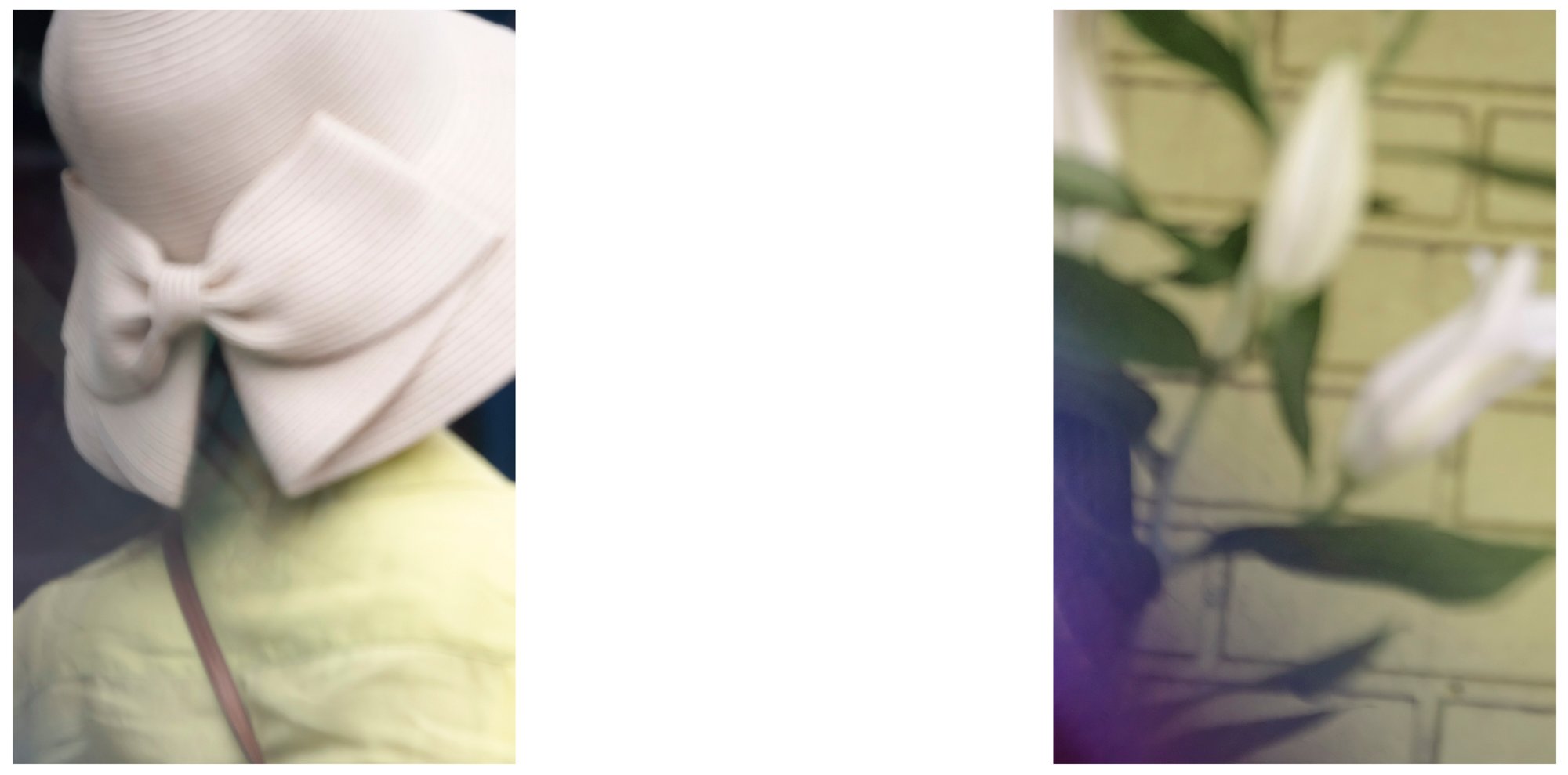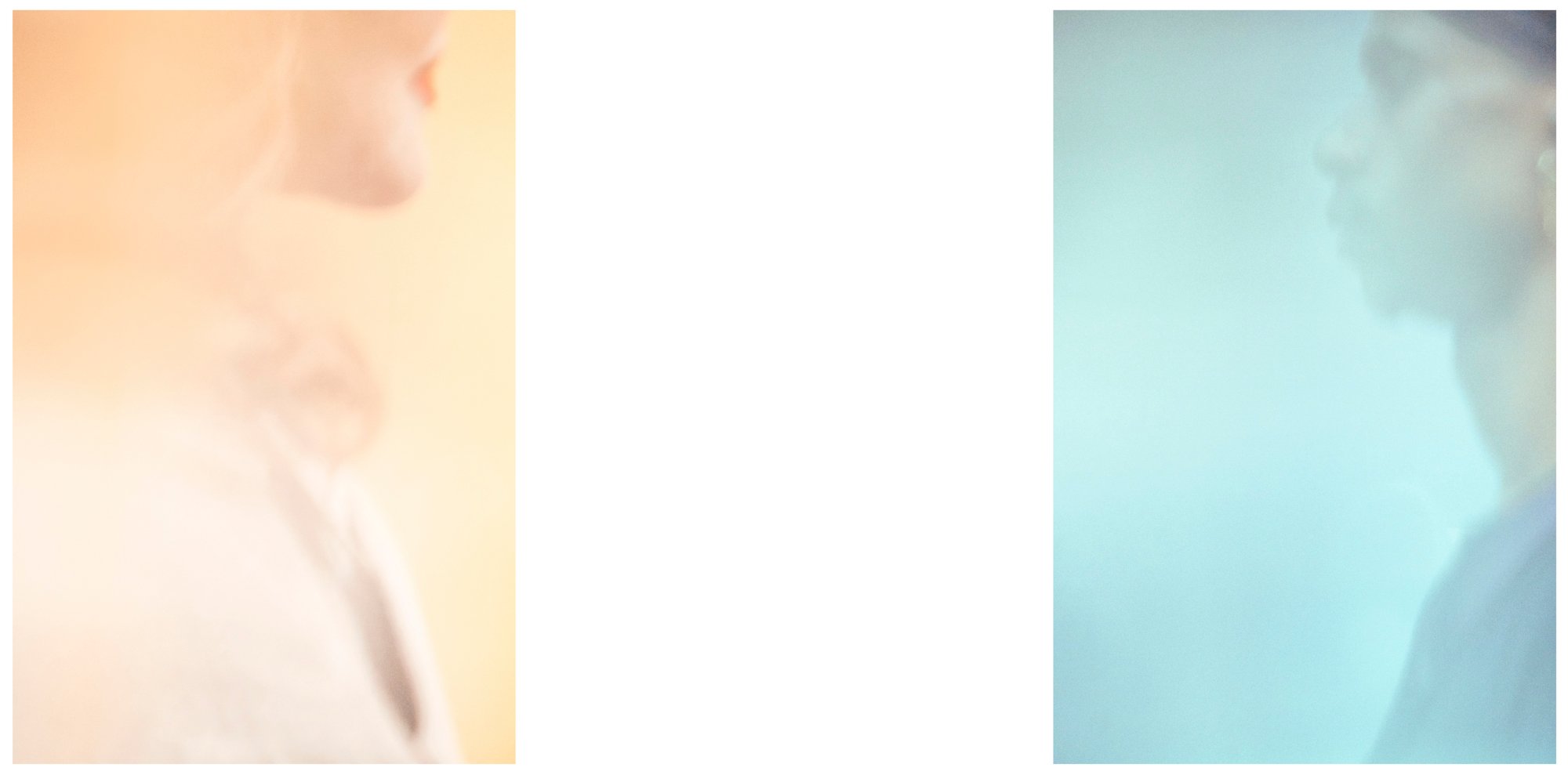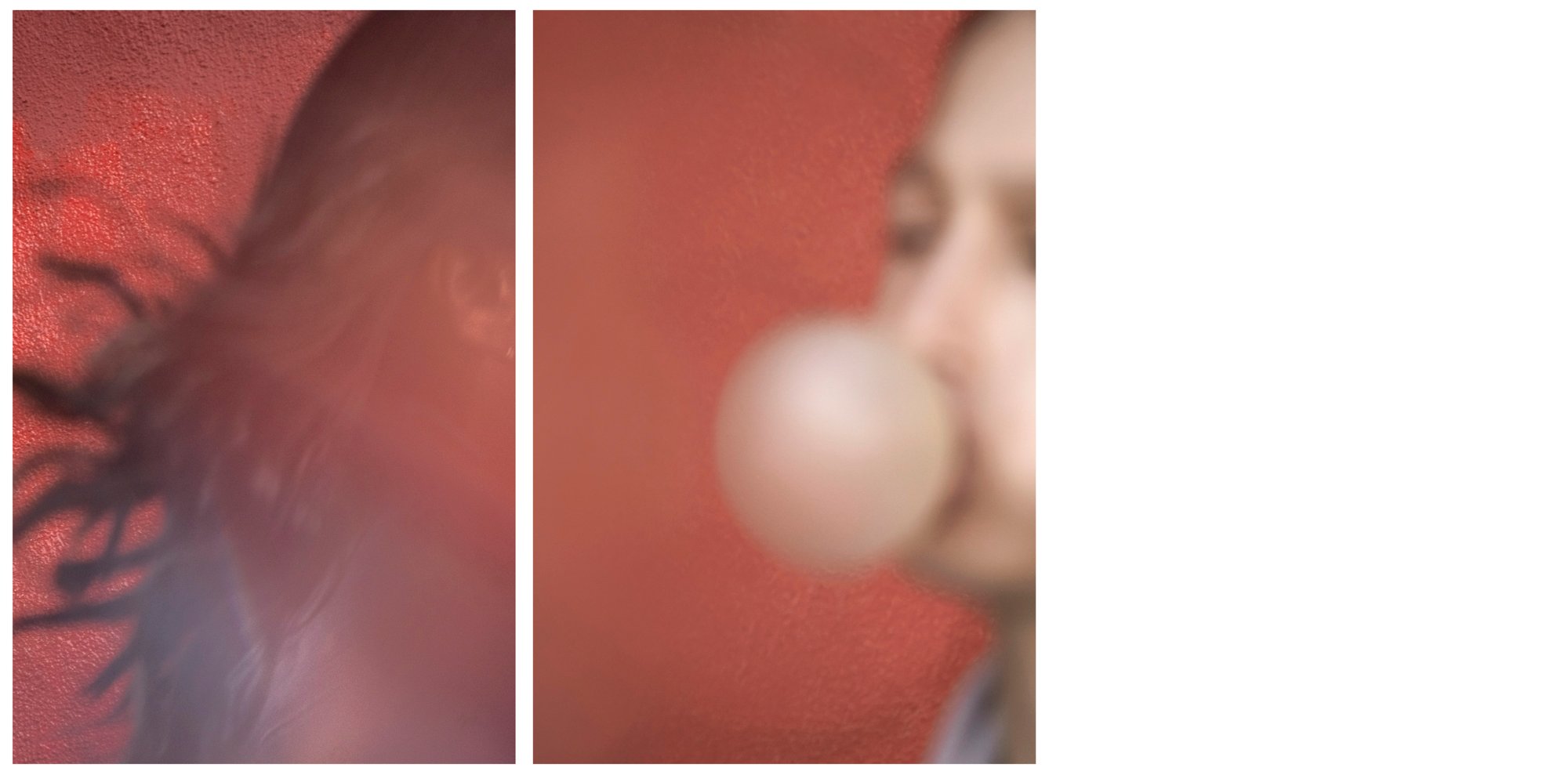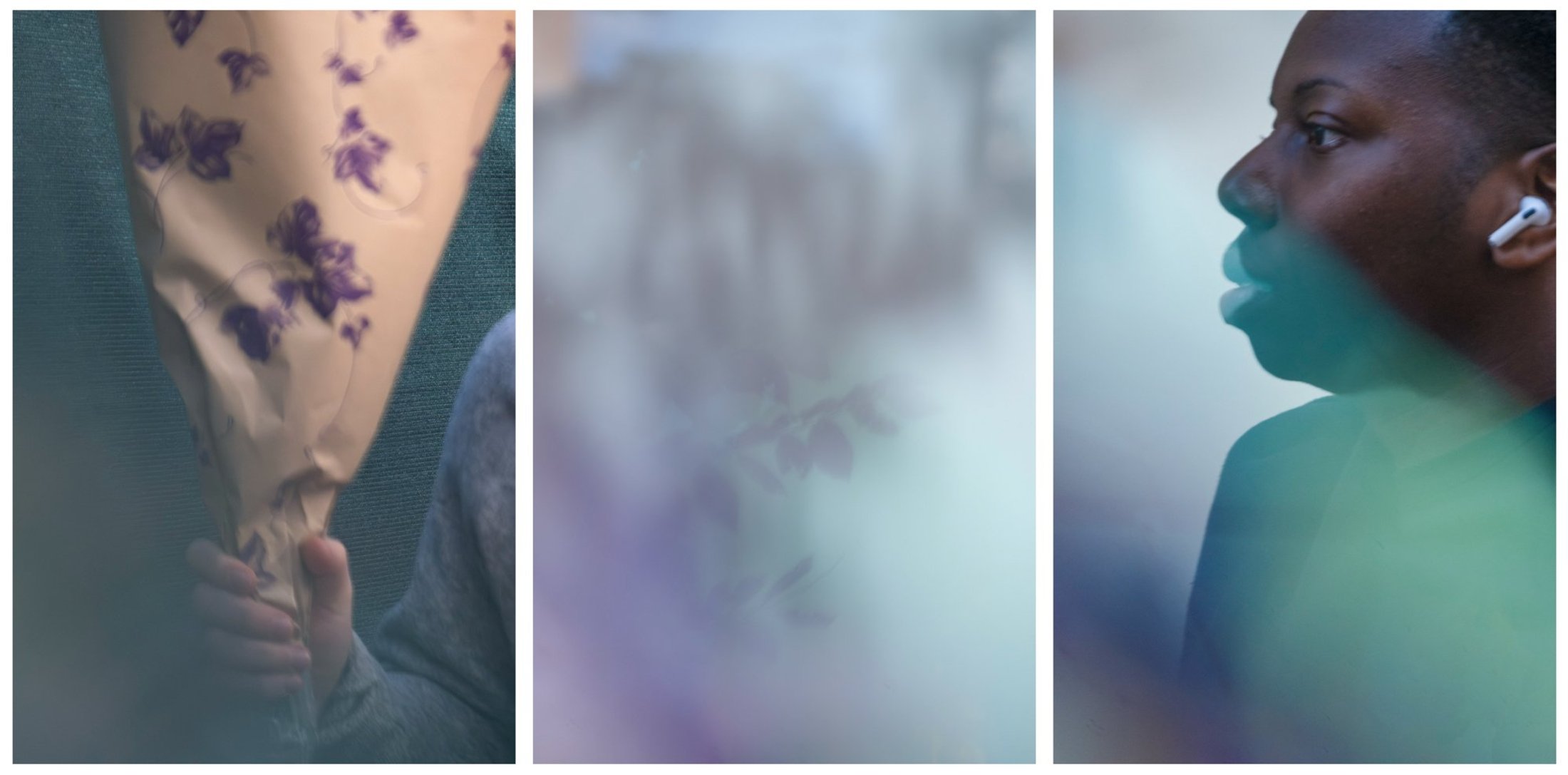
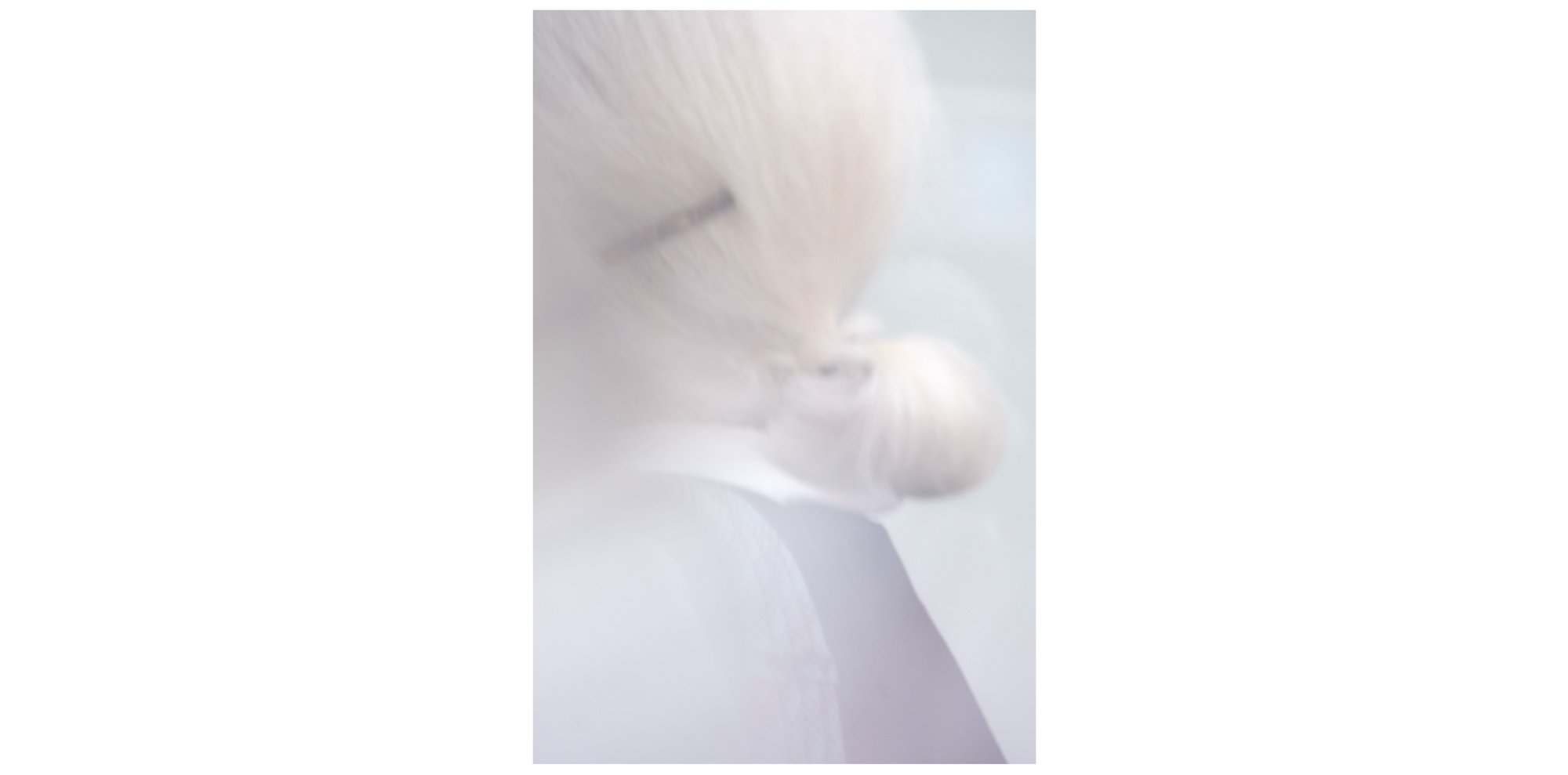
Rallentando. It rolls off the tongue, the musicality apparent in each syllable. The Italian word refers to a gradual decrease in speed. The chorus begins to soften, the tempo is teased out, the voices slow down. Through the lens of photographer Nina Welch-Kling, the chaos of city streets begins to thin, and people pass along in drifts of color as if buoyed along by a breeze.
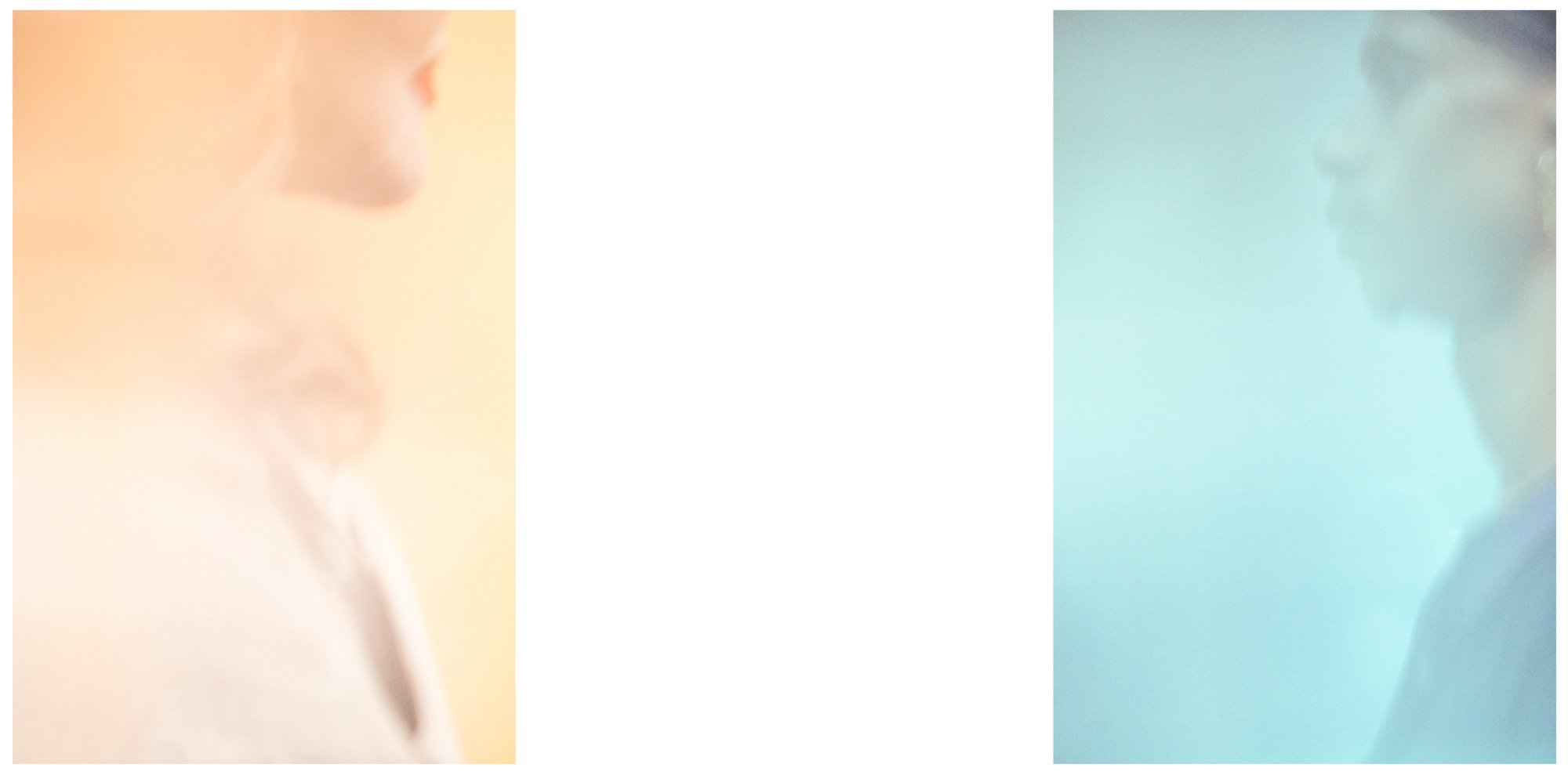
Here a blush of pink, there a wash of robin’s egg blue. A face lost in a terracotta fog and a decorative bow referenced in the supple form of a lily. Red lipstick against a creamy orange hue and two skinny straps crisscrossing a back. The wind blowing through dark hair and the peachy pink of a bubble before it bursts.
Welch-Kling’s images dance through what feels like a dreamworld, but in everyday parlance are a series of moments on city streets. She finds her individual notes and builds a composition, with pauses and breaths, motifs that repeat and build. The atmosphere is equal parts joyous and mysterious, but more than anything, it is charged with presence. The layout of the images, often arranged in pairs bordered by varying lengths of white, builds a sense of physically moving through space. “Your eye starts to look,” Welch-Kling explains, “as if you were on the street—which is not a static vision. It is a vision of multiple fragments of people; it’s not stagnant.” Each image is a turn of the head, offering a glimpse in time.
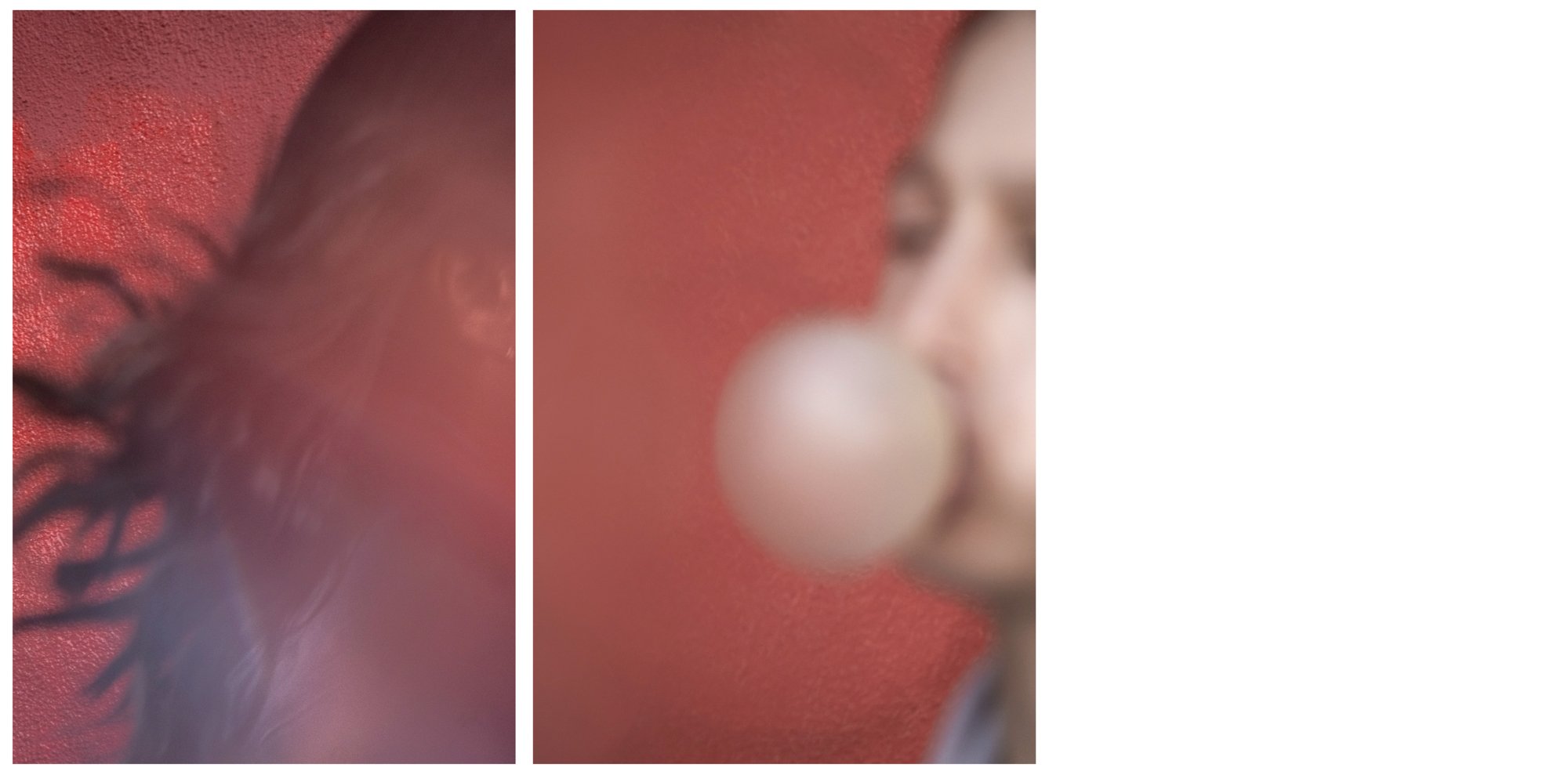
This series of movement and gentle gestures is ephemeral, transporting us through physical space. Welch-Kling notes how it differs from a more traditional notion of street photography. “Street photography is generally this one singular image. In Rallentando, you have to journey through the whole series to understand the full story.” She refers to the project as “streets transforming, passing into musical notes within a symphony of everyday life.” The viewer is there on the street, swaying along with the passersby.
Welch-Kling has been in New York, a city made famous by street photographers, for over 30 years. Yet, it was in the small-town Germany of her childhood that she developed her love and skill for observation. “When I grew up in Germany, you could spend so much time sitting in a cafe, just observing. It was kind of like a personal cinema, watching the people passing by. And in your head, you think of where they’re going. You look at what they’re wearing and try to imagine their lives.”
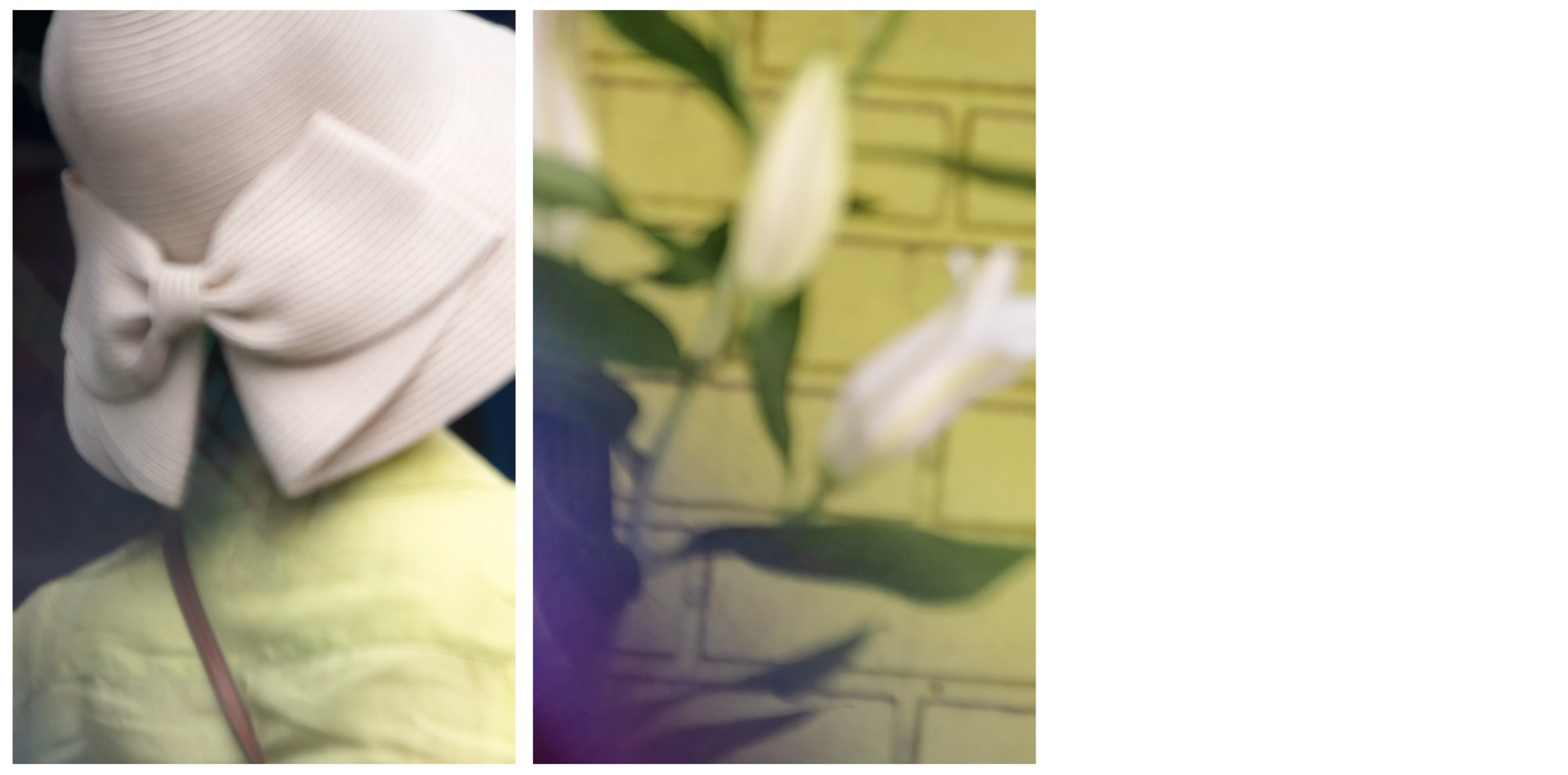
Rallentando began as the photographer was finishing another project, Duologues, a series of surprising image pairings producing uncanny relationships. In search of a new perspective, she put on a different lens and went out into the street to try something new. She took a photograph that was a blurred field of color. Intrigued, she began to pursue this loose, soft style, aiming for a consistent vision. Devoid of logos and free from phones, though a single earbud does appear, the photographs are timeless studies of color and gesture.
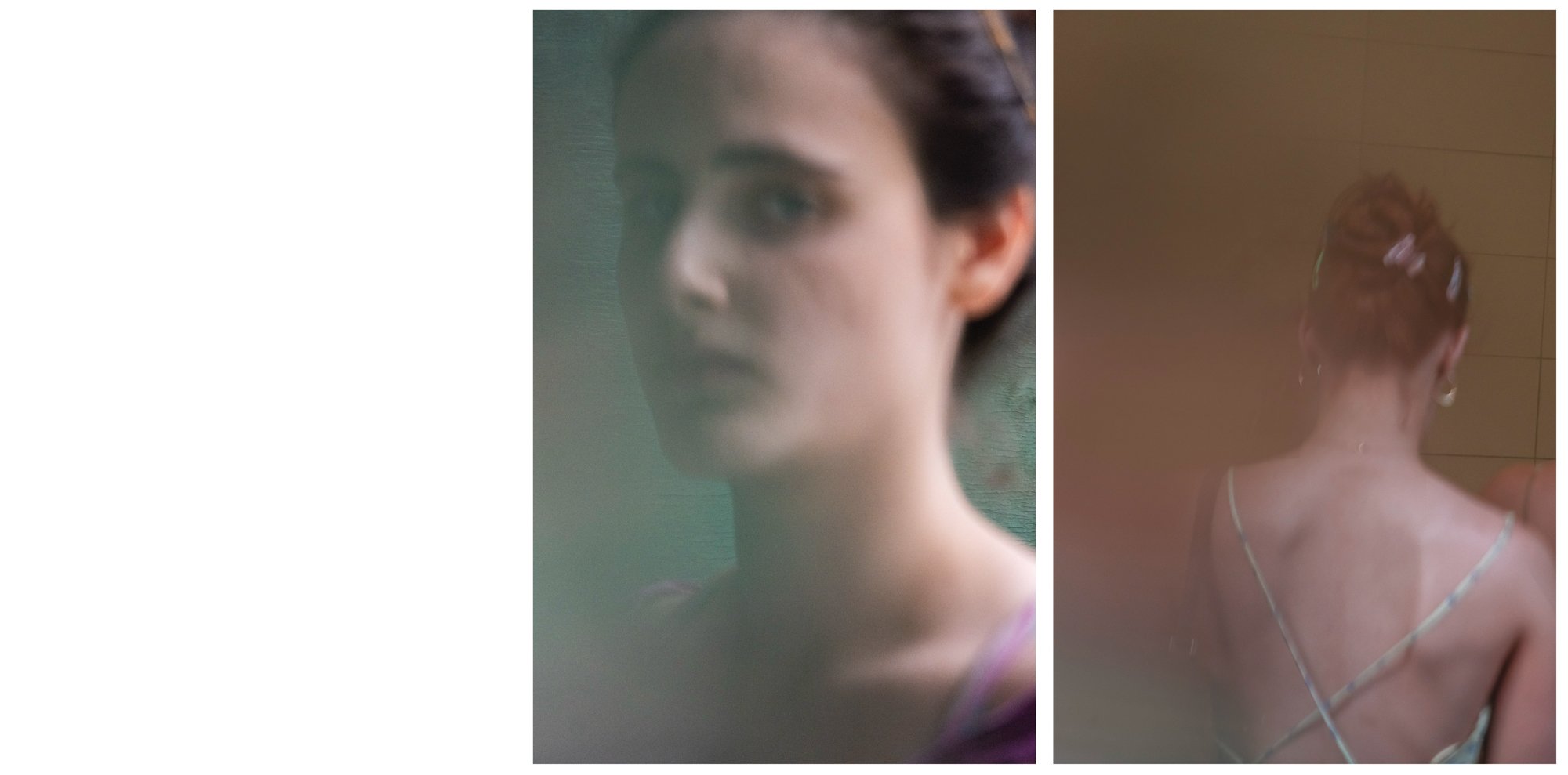
Her subjects are everyday people passing through her neighborhood. “These were people who came and went from work. And all of a sudden, they looked like they stepped out of a painting,” she explains. People emerge from the crowd and return to Mark Rothko-esque washes of color. “This is street photography—you find the ordinary and make it into something extraordinary. It’s so much about being in the moment. And when I take out my camera, I’m in that moment.”
And so, like a conductor in full command of her orchestra, Welch-Kling brings her symphony of moments to life for the audience, each individual gesture building towards a transcendent, shimmering whole.