“They draw a straight line, place a comma at the end, and, suddenly, start a new paragraph.” In his observation of the swallow, French author Jules Renard reads the sky like a book. Written in 1894 for his collection Nature Stories and quoted in an essay on the work of Rinko Kawauchi in her publication Des Oiseaux (On Birds), this beautiful comparison of flight to language illustrates the age-old inspiration that birds have had on the human imagination. Here, the writer recasts a gulp of swallows zipping around its surface as punctuation—or perhaps even as writers in their own right—inviting us to look up in search of meaning. To decipher their movements as a mysterious visual code.
Del Cielo, the exhibition currently on view at ROSEGALLERY in Santa Monica, invites us to do the same across the work of five photographers who at some point in their varied practices have been enamored by the symbol of the bird. Yet their shared winged subject is the only thing that binds together the work of Graciela Iturbide, Masahisa Fukase, Jo Ann Callis, Rinko Kawauchi and James Gallagher. Each artist works in their own unique visual language, allowing birds to metamorphose through different meanings across the walls of the gallery.
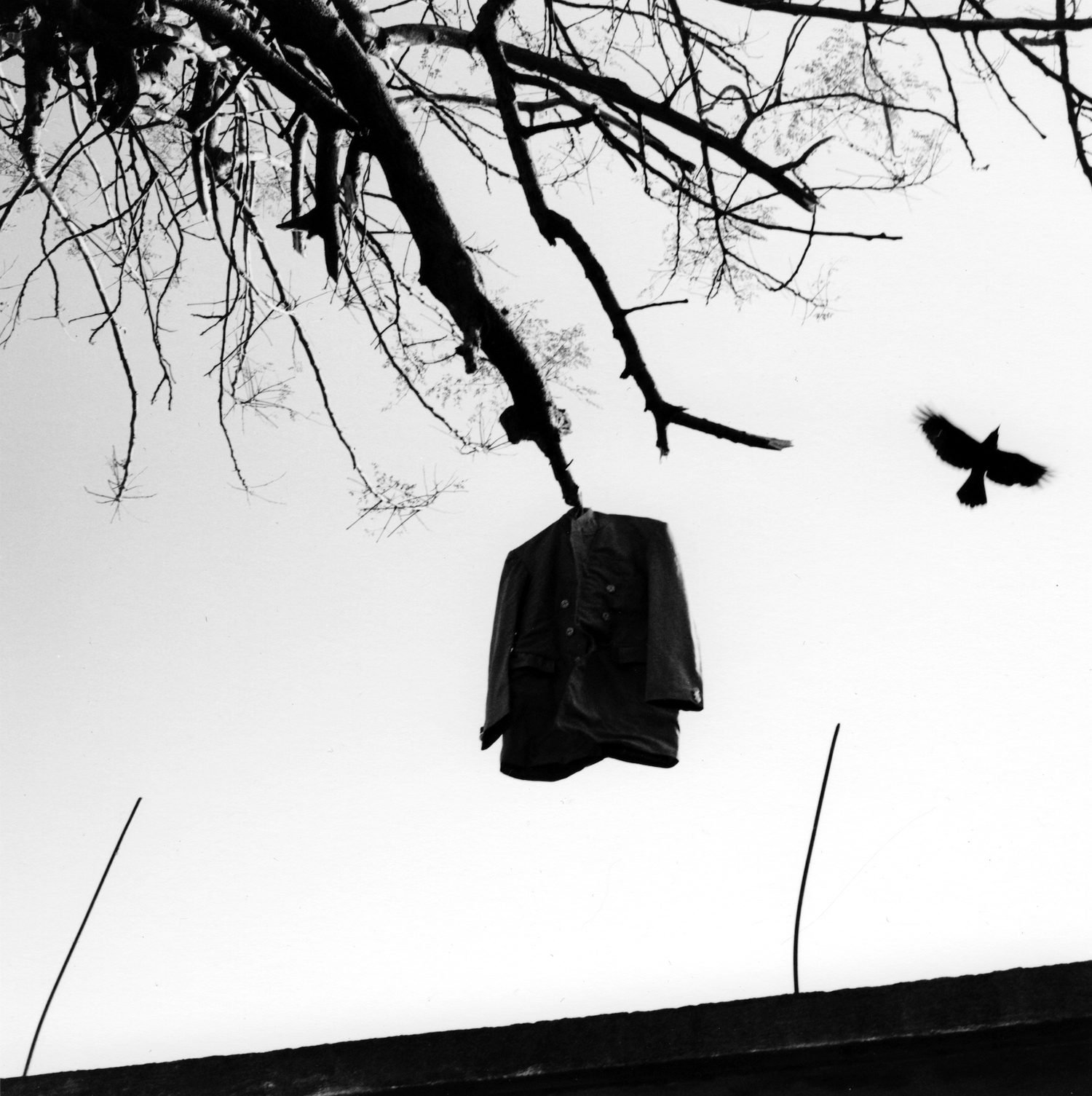
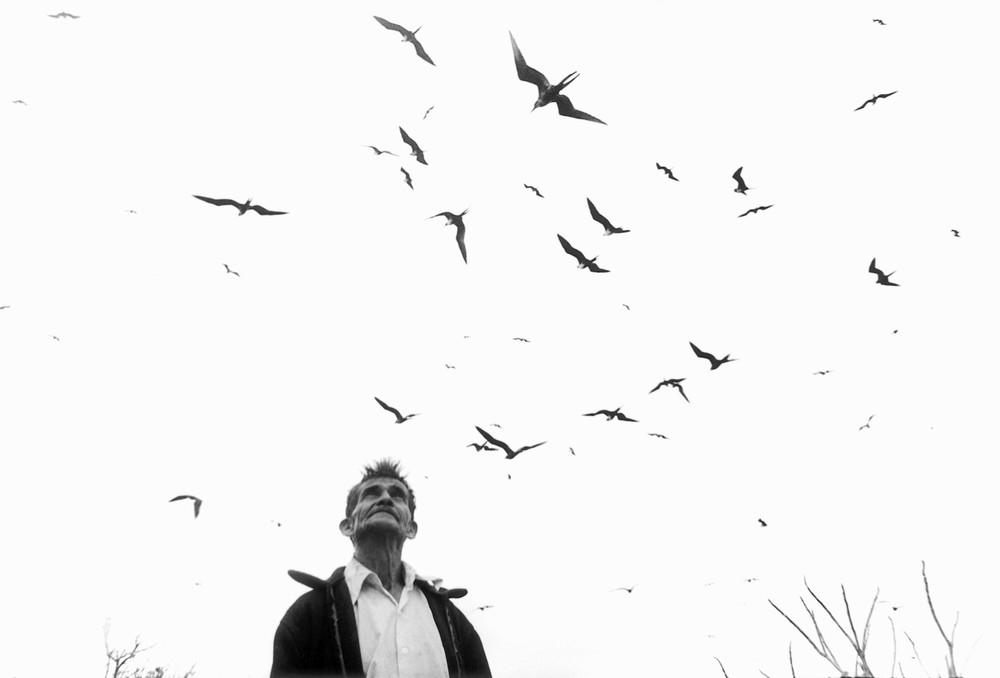
The birds that initiated Del Cielo were those flying through the skies of Mexican photographer Graciela Iturbide’s series Pájaros. Then slowly but surely, more were discovered across the gallery’s roster of artists and soon the theme of the show had emerged as if by its own accord. For Iturbide, it was a flock of movement during a moment of intense grief that drew her attention skyward. The photographer was documenting the burial of a newborn baby, reckoning with the solemn imagery of death when the sun’s intensity was momentarily softened by the birds flying above her. “I wondered if I was dreaming, but it was a reality,” she notes in the exhibition essay. “From then on, instead of cemeteries, I started to photograph birds—birds in flight because they represented liberty. Taking those photographs set me free from my suffering.
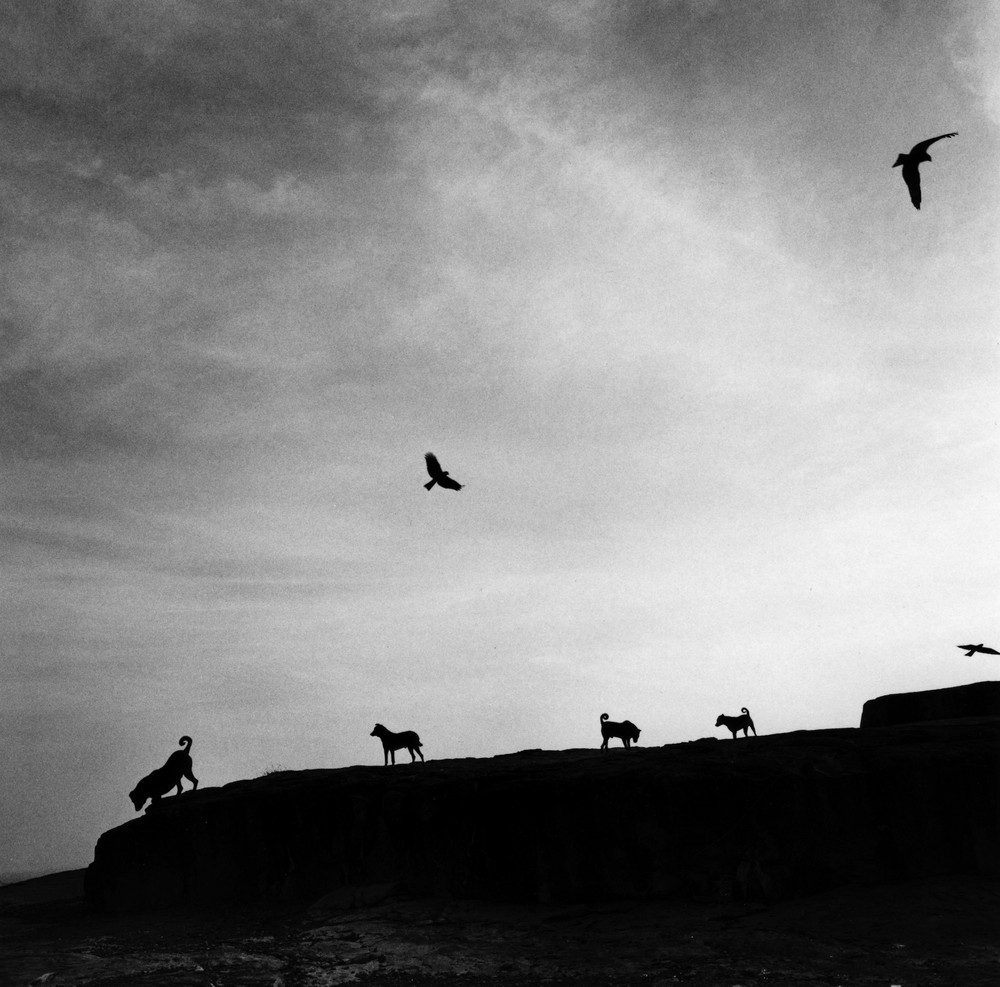
This dance between weight and lightness, death and freedom, stasis and flight, crops up across many of Iturbide’s images. The movement of the birds is almost melodic, her lens tracing the grace and release of flight. Constellations of fragile bodies etched in the sky, at times signalling an escape from whatever human suffering is occurring on the ground, at times swarming above it like a dark omen.
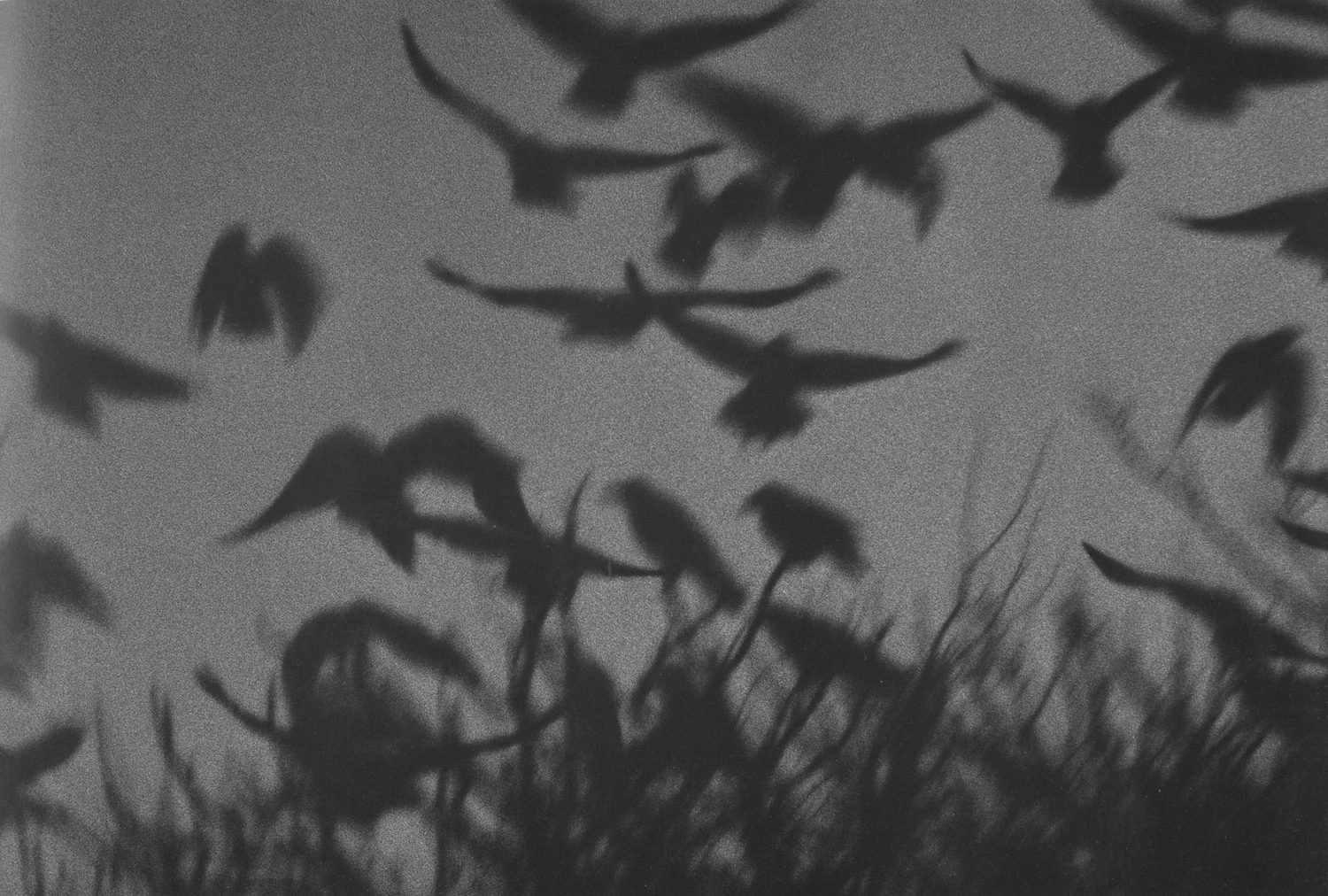
The birds of Masahisa Fukase’s The Solitude of Ravens, however, seem to provide no release from this shared theme of grief. Taken during a period of great darkness following the end of the photographer’s 13 year marriage, his images are dense and heavy with his sorrow. His skies are a solid gray, his birds so thick a black that all details have been swallowed. Where Iturbide finds freedom from heartache in flight, Fukase finds his grave solitude reflected by the ravens he photographs.
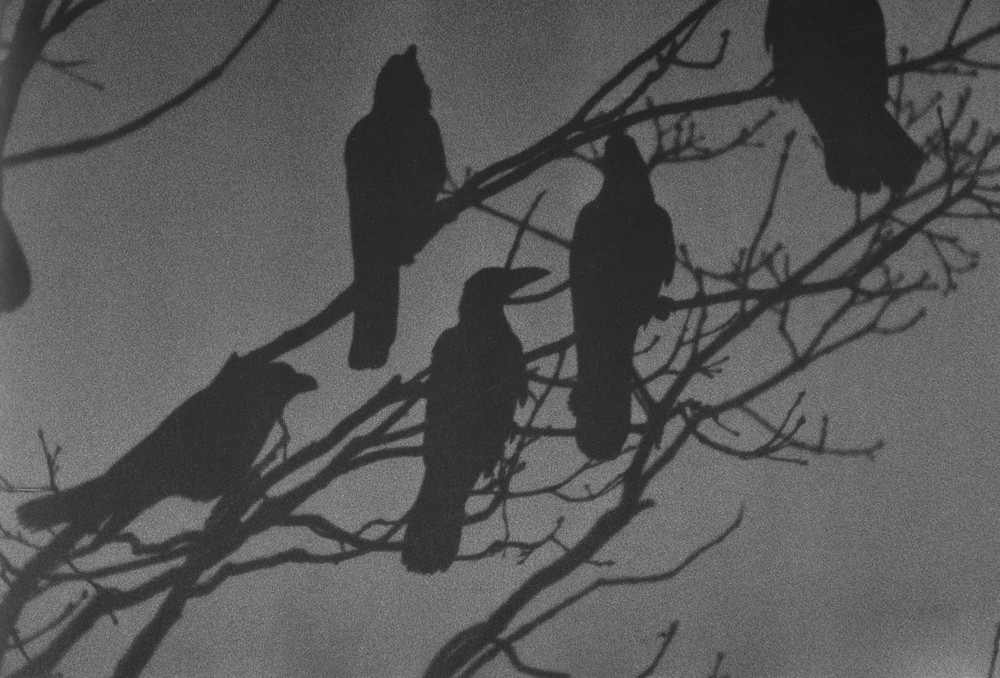
In Japanese mythology, the raven is seen as a winged messenger moving between physical and metaphysical worlds; a creature of the in-between, of duality embodying both light and dark. A portal into the depths of the photographer’s despair, the beauty of these prints is a desolate one, made tender only by the sense of kinship Fukase finds in these sinister outlines.
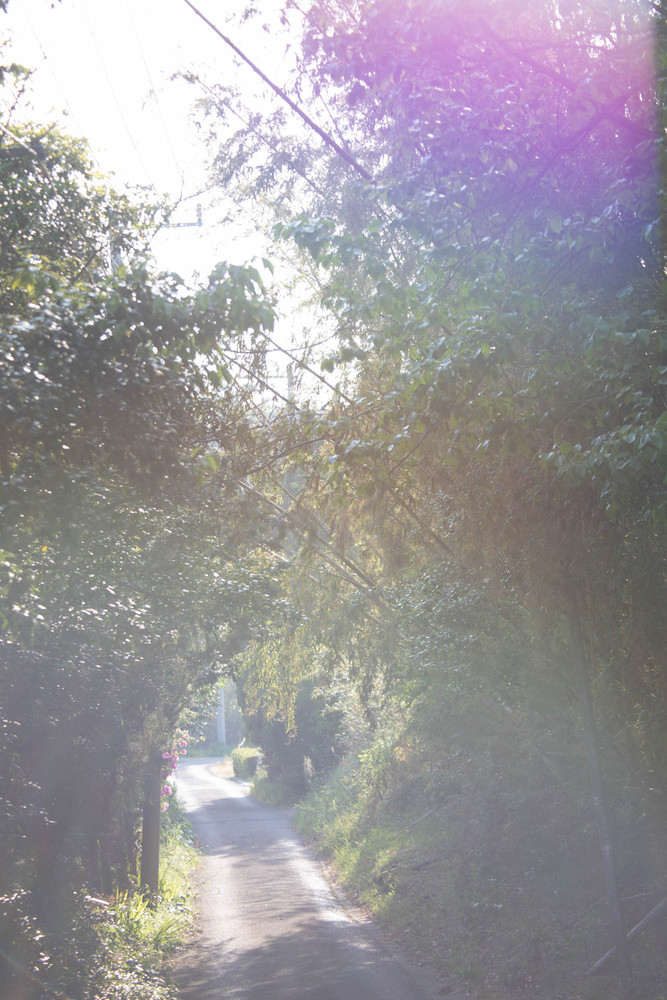
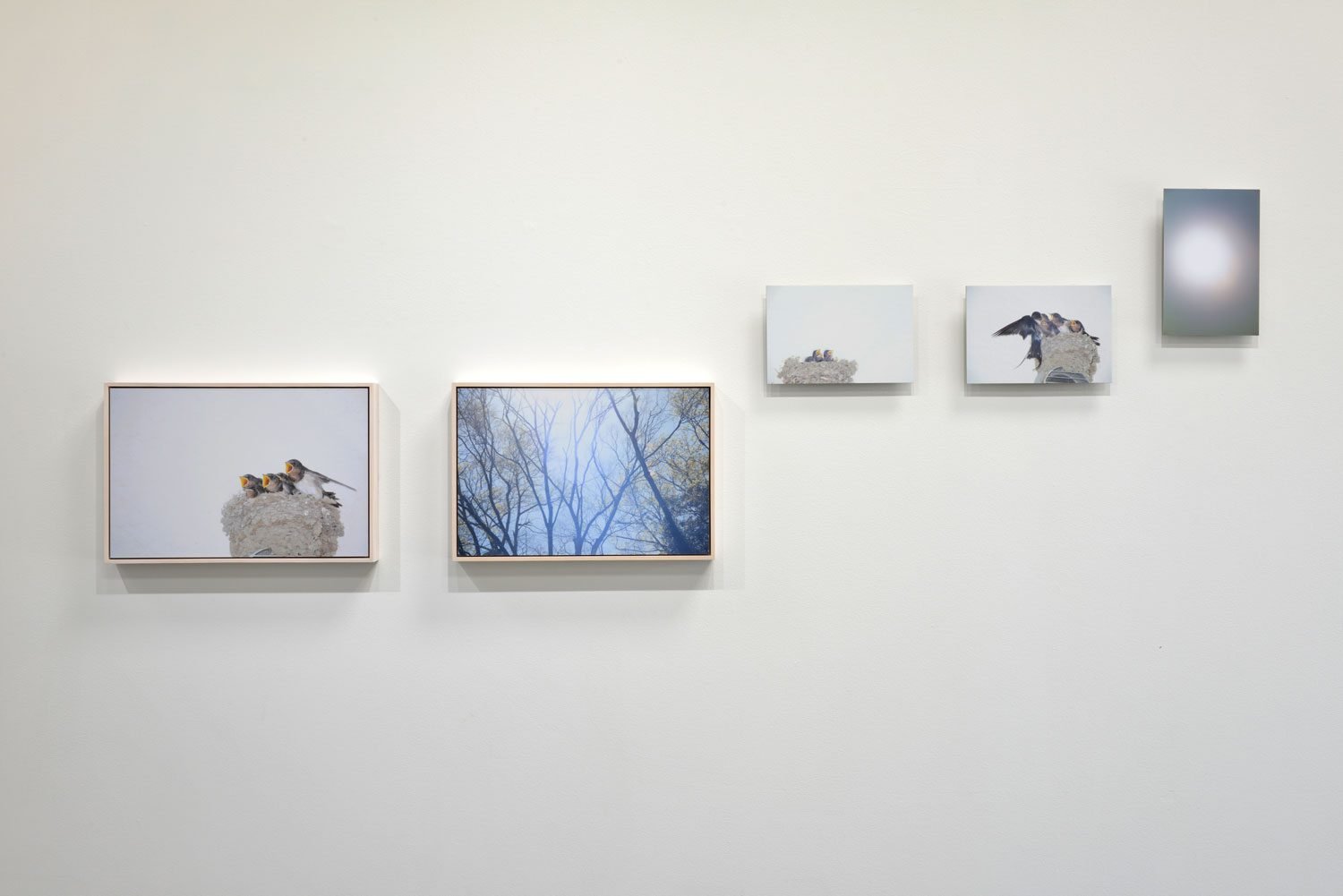
Continuing the cycle of life and death present in the space is Des Oiseaux (On Birds) by Rinko Kawauchi; a work that gestures towards new beginnings rather than the end. Here, the photographer chronicles the day-to-day goings on of a family of swallows, observing the parents’ task of feeding the young and finding parallels in her own domestic routine as a mother. Shot during the pandemic, the images are firmly grounded in ordinary, everyday life. Located far from the dramatic, monochrome worlds that Iturbide and Fukase present to us, these quiet images bring us right into Kawauchi’s locale to observe life as it is lived by the other creatures she shares the building with.
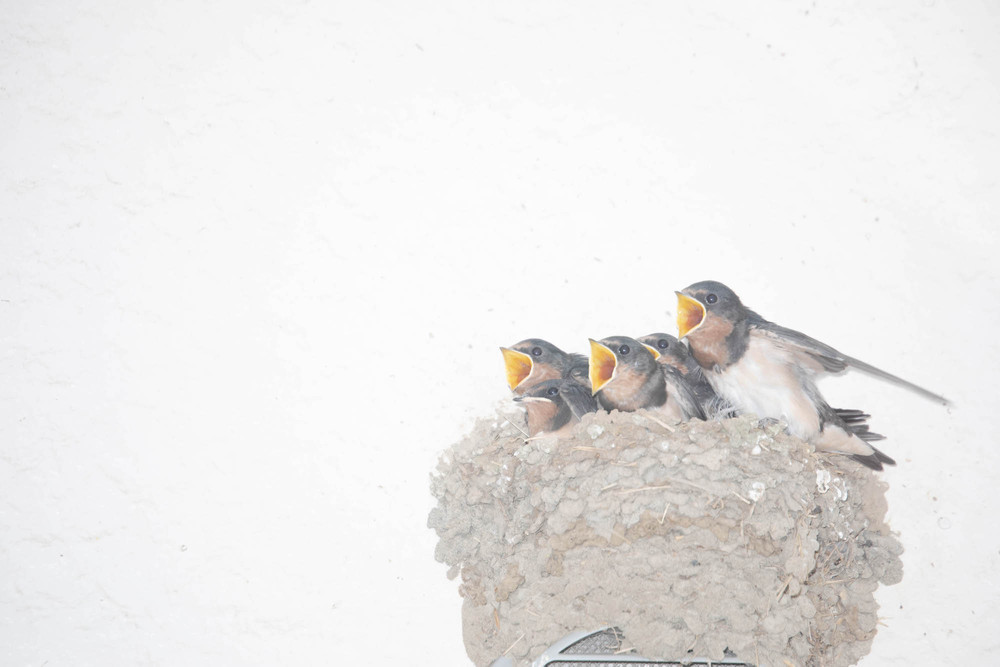
Rendered in her signature muted tones, one image shows a bundle of open-mouthed chicks waiting for their parents, bright yellow beaks open-mouthed, pleading and hungry. Amidst a period of claustrophobia and isolation, discovering the maternal rhythms of the swallow and recognizing her own life mirrored was a tiny revelation for the photographer. “The sight gave me a new perspective—it made me think that merely being able to feed your child is fulfilling a vital role as a parent,” Kawauchi says. “I felt encouraged, and my emotions, closed and shut in, seemed to find release.”
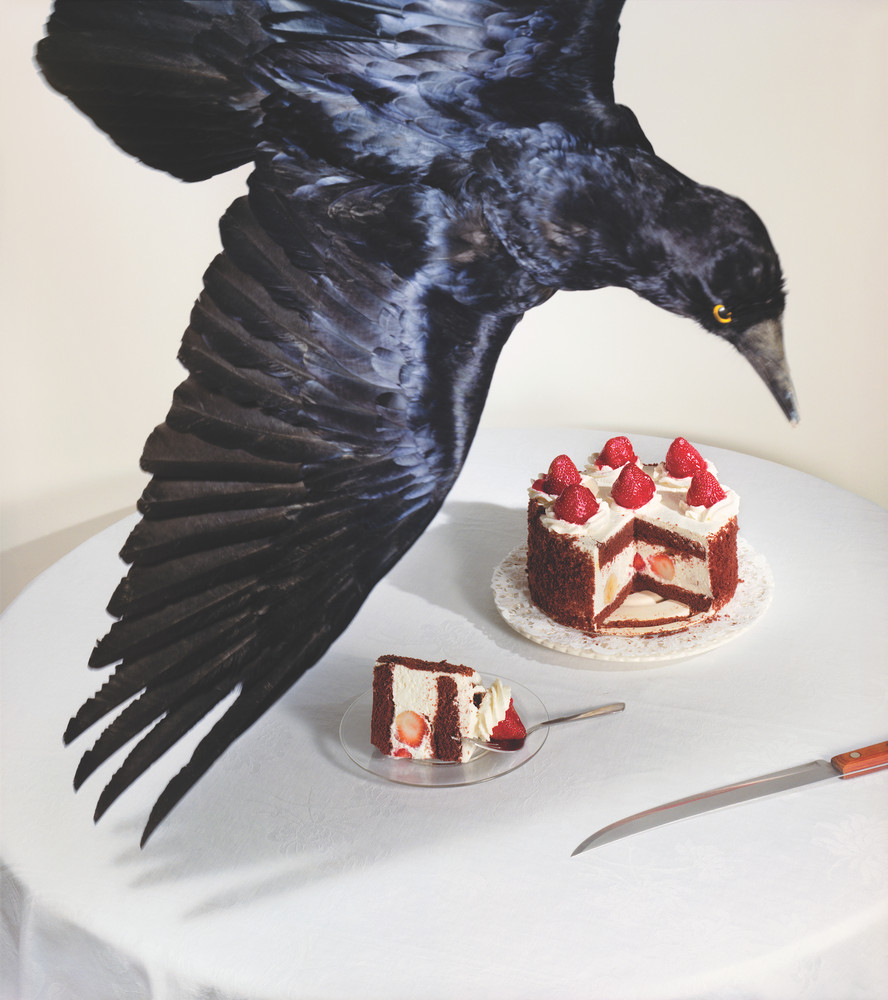
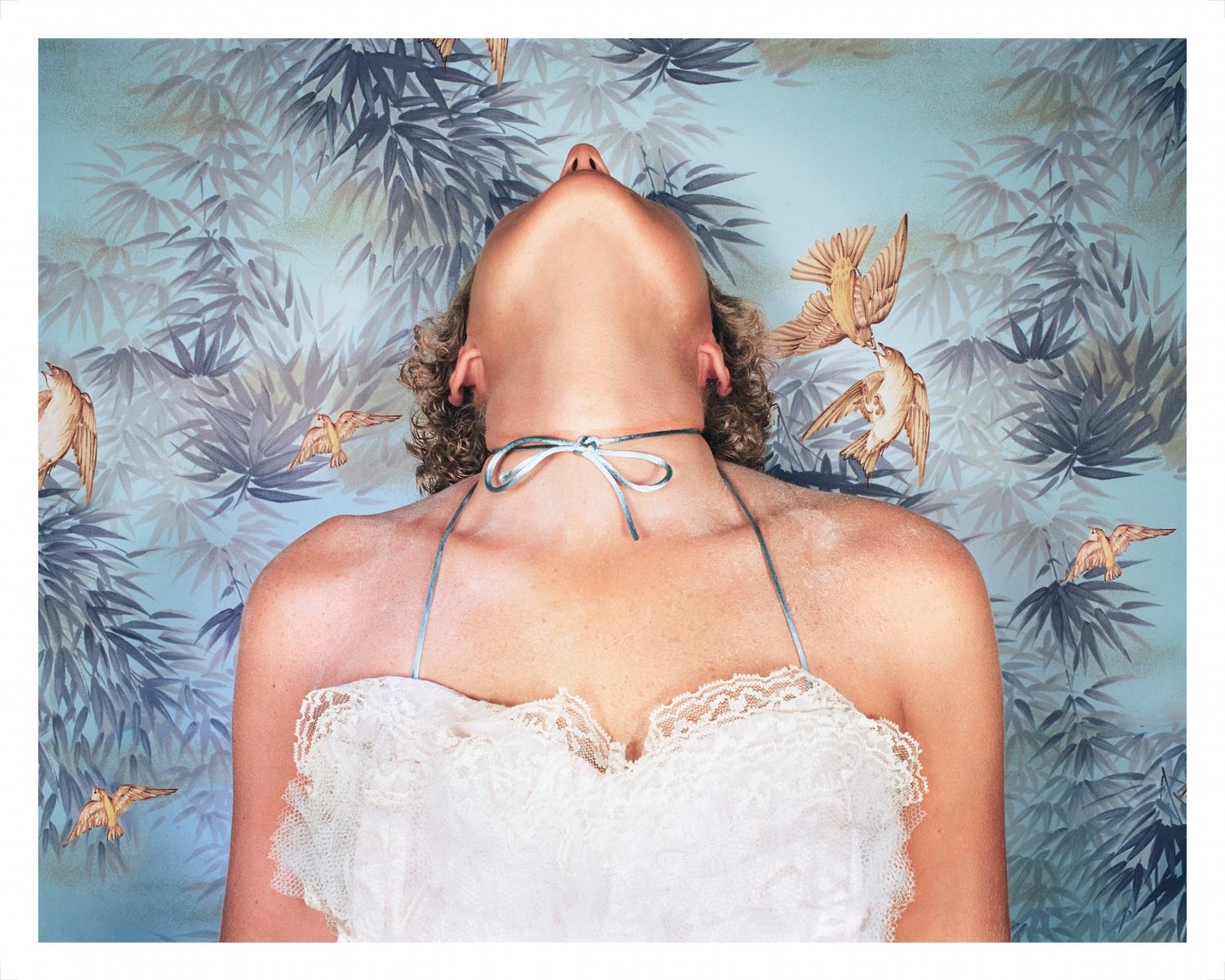
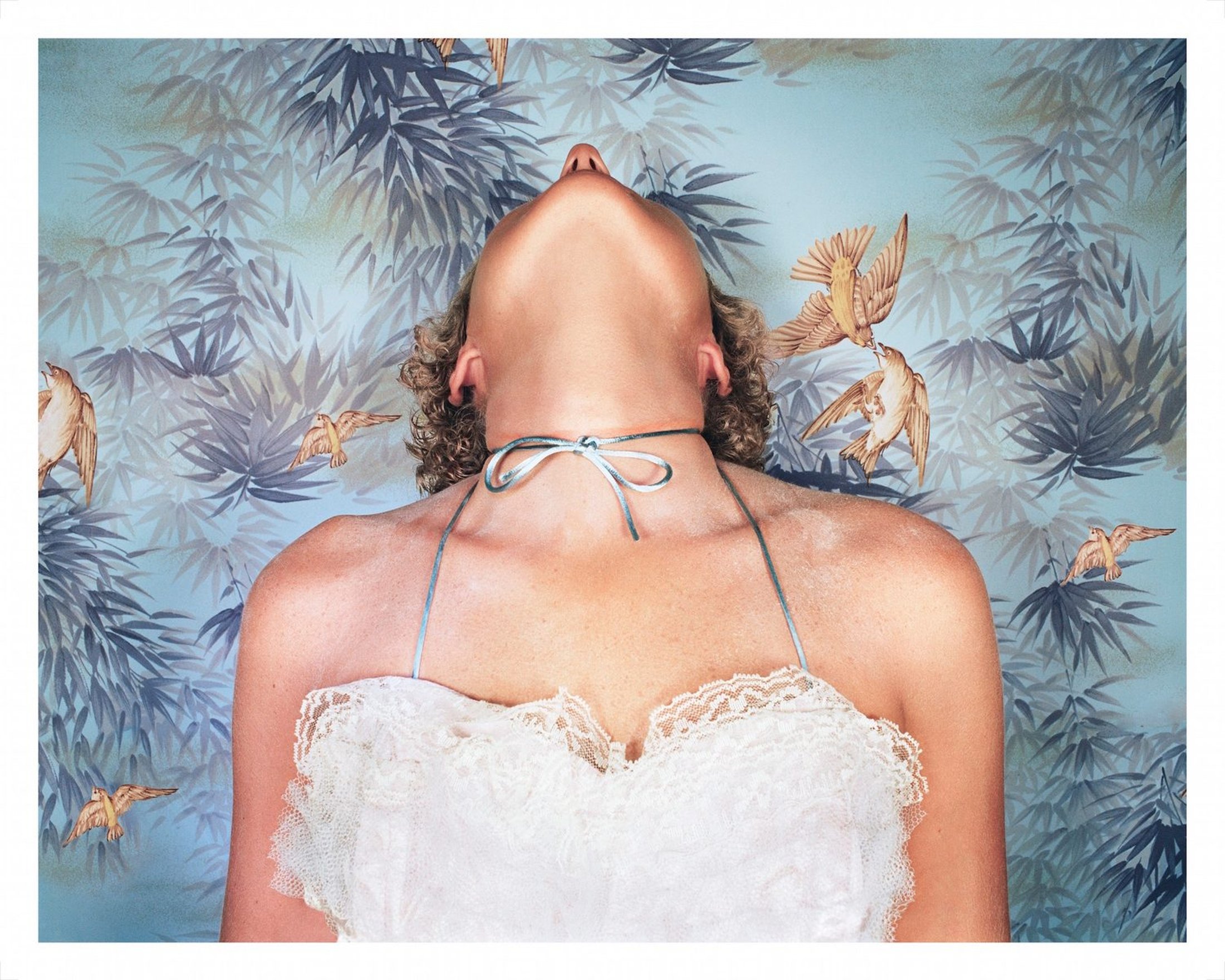
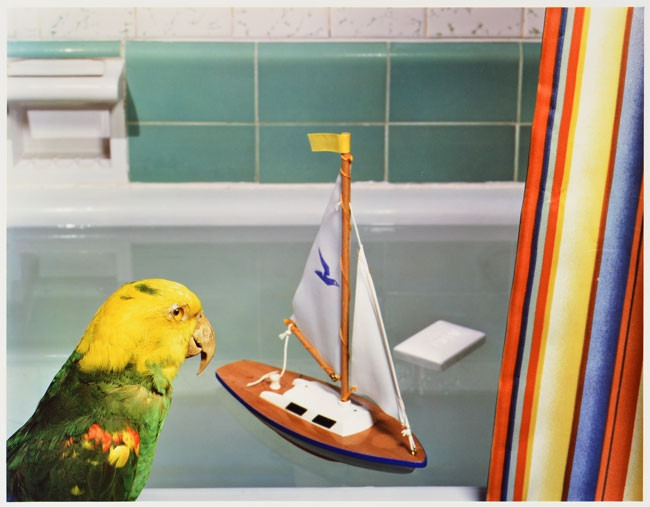
In the rich and saturated work of Jo Ann Callis, it is the birds that enter her home, turning up in the unlikeliest of places. A parrot watches over a toy boat in a bathtub, a raven soars over a juicy birthday cake; these are no ordinary domestic interiors. Describing her mysterious scenes as akin to a “room in your mind,” the odd elements that find themselves in each other’s company defy the laws of the everyday, resulting in dreamlike images where something always feels a little off. In one picture, the bird becomes an image within an image, embedded in the very fabric of a house in the form of wallpaper.
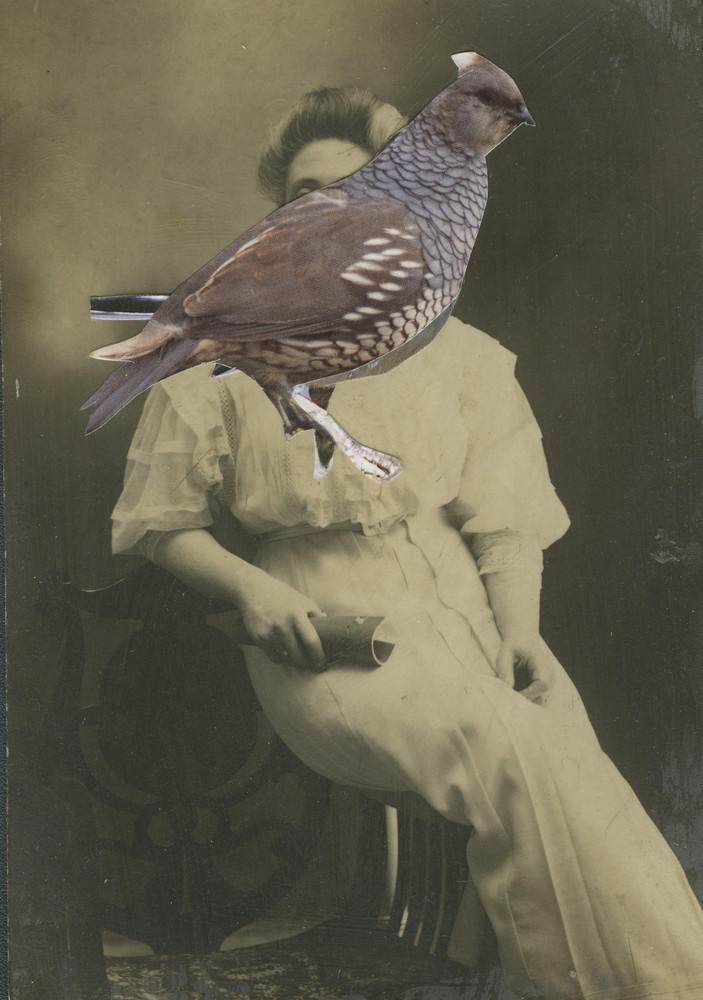
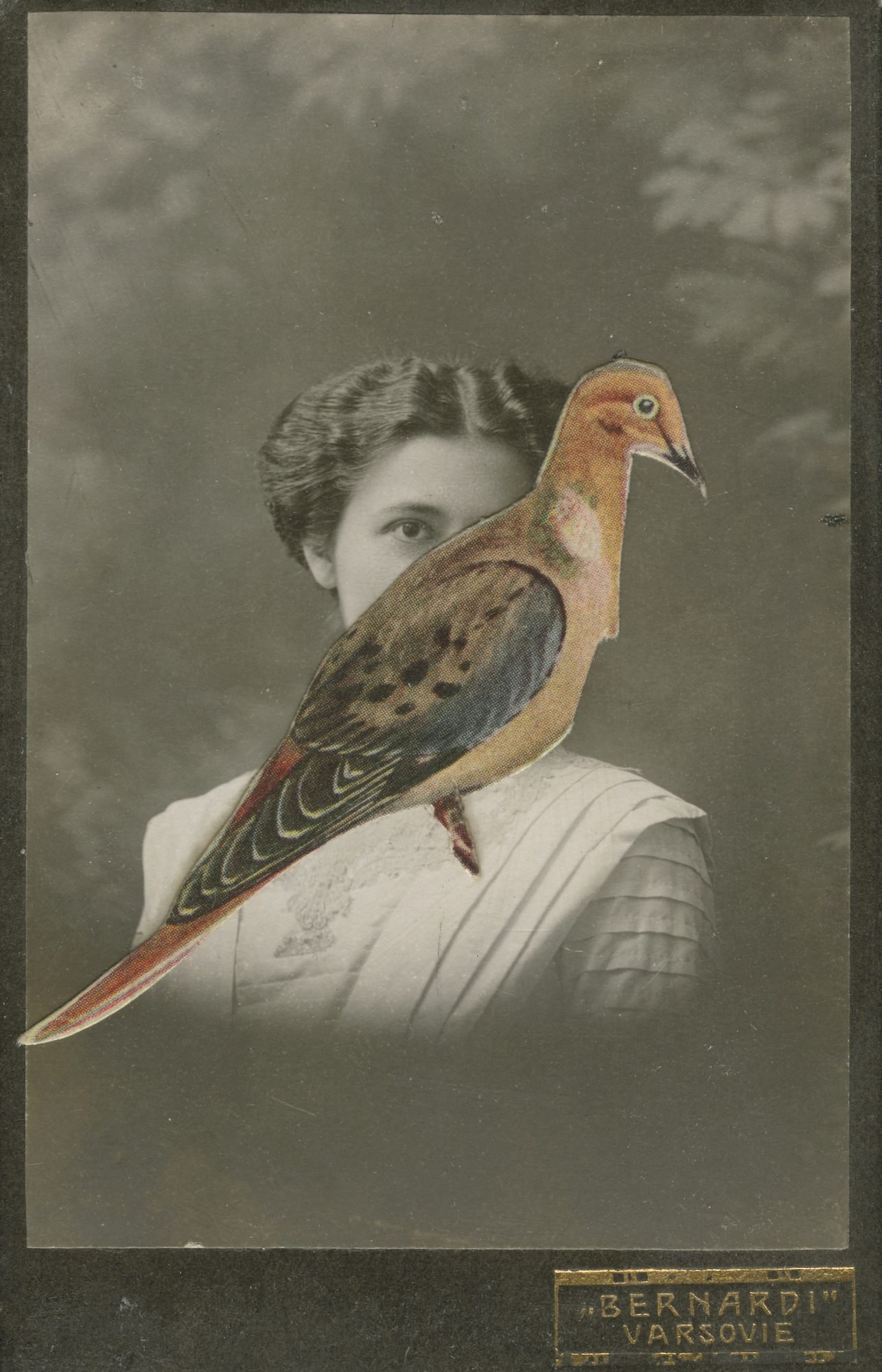
Taking flight from our physical realm and into more surreal dimensions, the last birds that make up Del Cielo are repurposed found images that take on a new life in the James Gallagher’s collages—an obsession prompted by the arrival of a wounded bird on his doorstep. The artist’s assortment of vintage birds land not on branches, stoops or balconies but rather on the sepia-toned faces, laps and shoulders of the anonymous subjects in the old studio portraits he has collected over the years. “The results gave an exciting jolt of energy to all the tired stares…adding new life to faces frozen in time,” Gallagher says.
Exploring both our shared exterior world and the interior lives of the artists on view—their grief, daily lives and dreams—each variation on the theme offers something new. The birds of Del Cielo, plucked from their flight and preserved in time by the images across the gallery walls, allow us to pause and reflect on what might have been a series of fleeting moments.
Editor’s note: Del Cielo is on view at ROSEGALLERY in Santa Monica until 25 November. LensCulture is honored and delighted that Rose Shoshana, owner and director of ROSEGALLERY, is on the jury of this year’s ART Photography Awards.