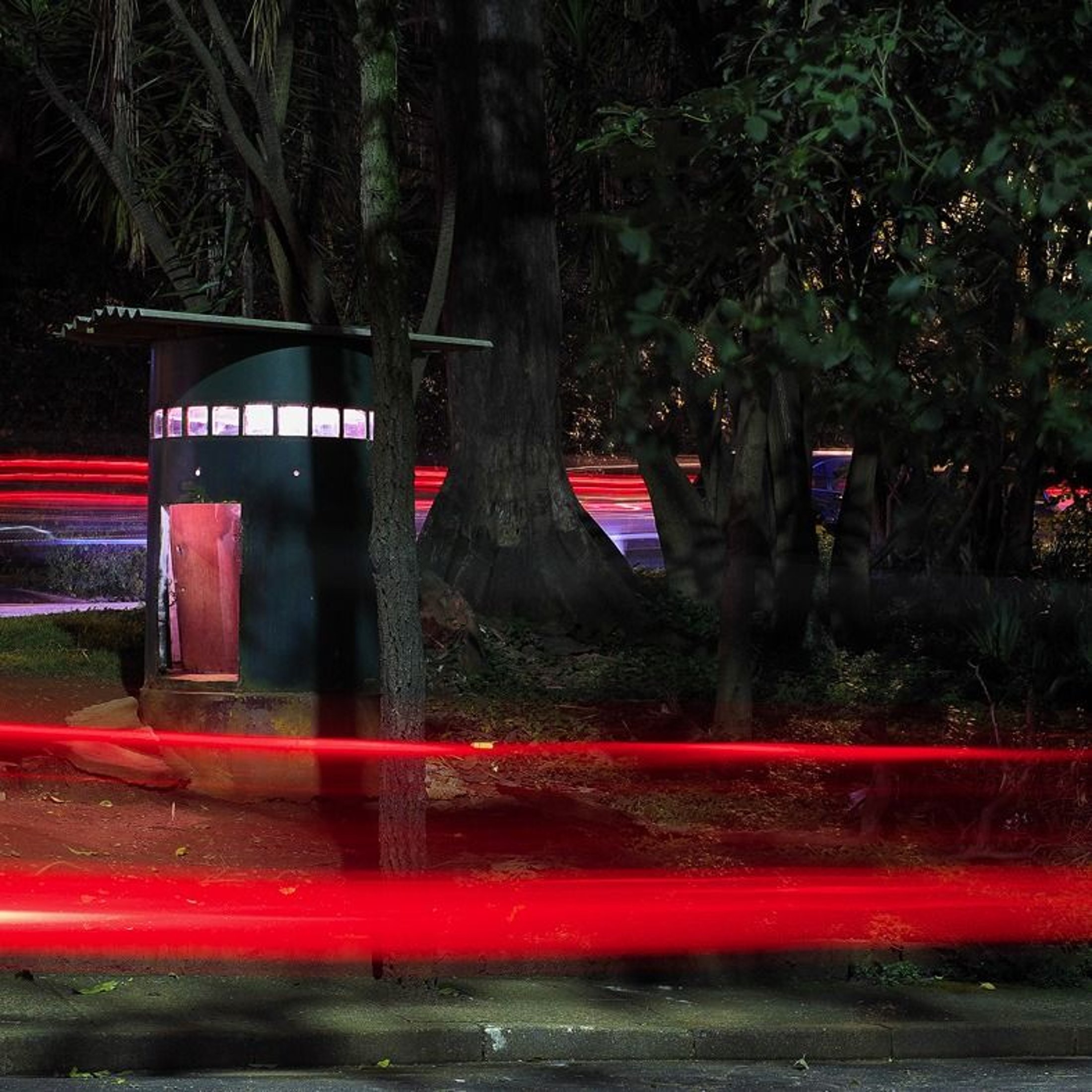
Private sentry boxes are a common sight across Brazil's big cities. These outposts exist primarily to protect homes from robberies. Usually, a guardhouse covers the area of one block, but this varies greatly. © Stefan Schmeling
The first guardhouses were created when a group of residents joined together and asked City Hall if they could place a guardhouse on their street. They then bought a sentry box and paid someone a modest salary to sit in the box all day. There was no legal contract, just a verbal agreement. © Stefan Schmeling
João, night sentry. He has two brothers who also work as watchmen. © Stefan Schmeling
Most of the watchmen live far away from their guardhouses (as they tend to be placed in the nicer, more expensive neighborhoods). Some watchmen spend up to two hours getting to work. © Stefan Schmeling
In the early 90s, the private guardhouses spread like a fever across Brazil's big cities. In São Paulo, there are now tens of thousands of sentry boxes scattered throughout the city. © Stefan Schmeling
Rafael, night sentry. © Stefan Schmeling
Theoretically, guardhouses must be registered at the City Hall and there are standards for how they should be installed. In reality, there are very few controls. More than 75% of guardhouses do not have up-to-date legal registration or are completely illegal. © Stefan Schmeling
The interior "decor" of a guardhouse. © Stefan Schmeling
As the years passed, the absence of a legal contract led to a deep instability in the employee/employer relationship. Thus, many guards nowadays have taken over their guardhouses as personal businesses. © Stefan Schmeling
Jailson, night sentry. © Stefan Schmeling
Today, most watchman work for themselves. Once a month, a neighborhood watchman knocks on the doors of the houses in the area and requests a contribution for his service. The contribution varies, from R$ 20.00 (€ 6) to R$ 70.00 (€ 23). Some residents choose to pay, some do not. © Stefan Schmeling
The watchmen normally work from Monday to Saturday and they alternate in two shifts of 12 hours, usually 7 PM / 7 AM. Some guardhouses only have a guard overnight. © Stefan Schmeling
Usually the electricity in the guardhouses is provided by a nearby lamppost or from a house that is being watched. © Stefan Schmeling
Lorival, night sentry. © Stefan Schmeling
Seu Angelo, night sentry. © Stefan Schmeling
There are some watchmen who sell their sentry box to other watchmen. In some cases, a watchman becomes a local entrepreneur, owning several guardhouses at once. These kingpin guards employ other guards for a fraction of the monthly income. © Stefan Schmeling
A television or a radio (if a guard is lucky enough to have one) is the best way to pass the time and resist sleep. © Stefan Schmeling
In the summer, it becomes too hot to stay inside the sentry box. In the winter, the boxes are not warm enough. © Stefan Schmeling
Lindomar, night sentry. © Stefan Schmeling
Flávio, night sentry. © Stefan Schmeling
An abandoned sentry box. © Stefan Schmeling
Josivaldo, night sentry. © Stefan Schmeling
Bola, night sentry. © Stefan Schmeling
Most of watchers I spoke to told me they accepted the job on a temporary basis in order to make some money. However, they ended up stuck in their sentry jobs when another opportunity never arose. © Stefan Schmeling
Raimundo, night sentry. © Stefan Schmeling
It is impossible to generalize the type of person who becomes a night sentry. There are as many stories and situations as there individuals who take up the job. © Stefan Schmeling
There are guards who have been working the same sentry boxes for 15 to 20 years. Some of the old-timers have a great relationship with the residents and love what they do. Many others regret spending so little time with their families (they sleep when at home) and dream of finding another job some day. © Stefan Schmeling