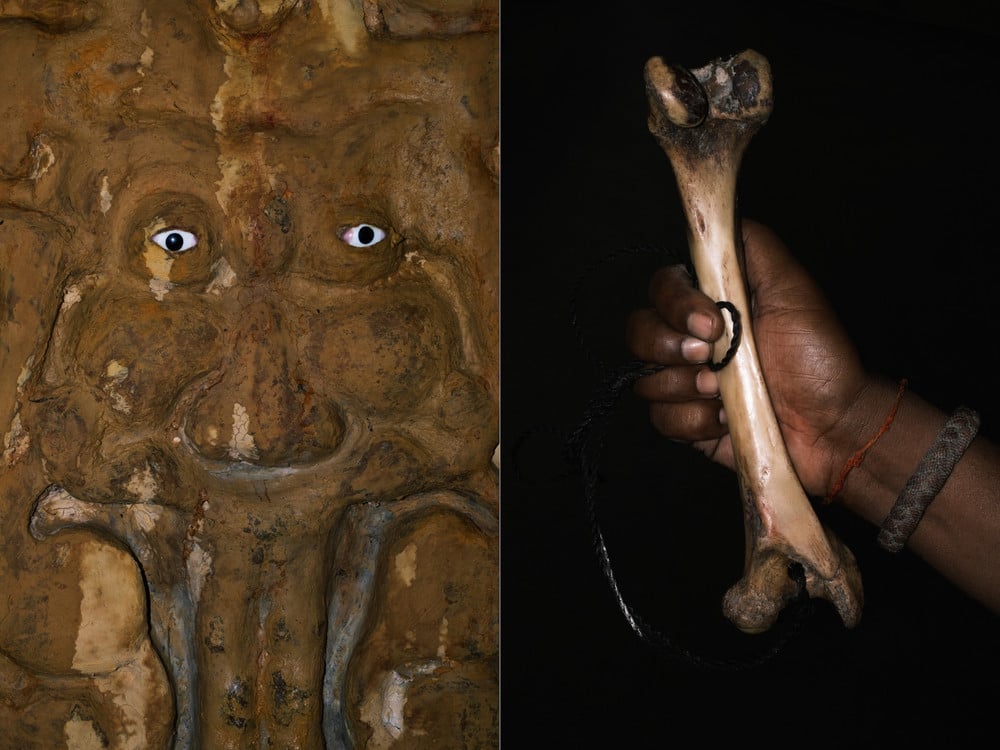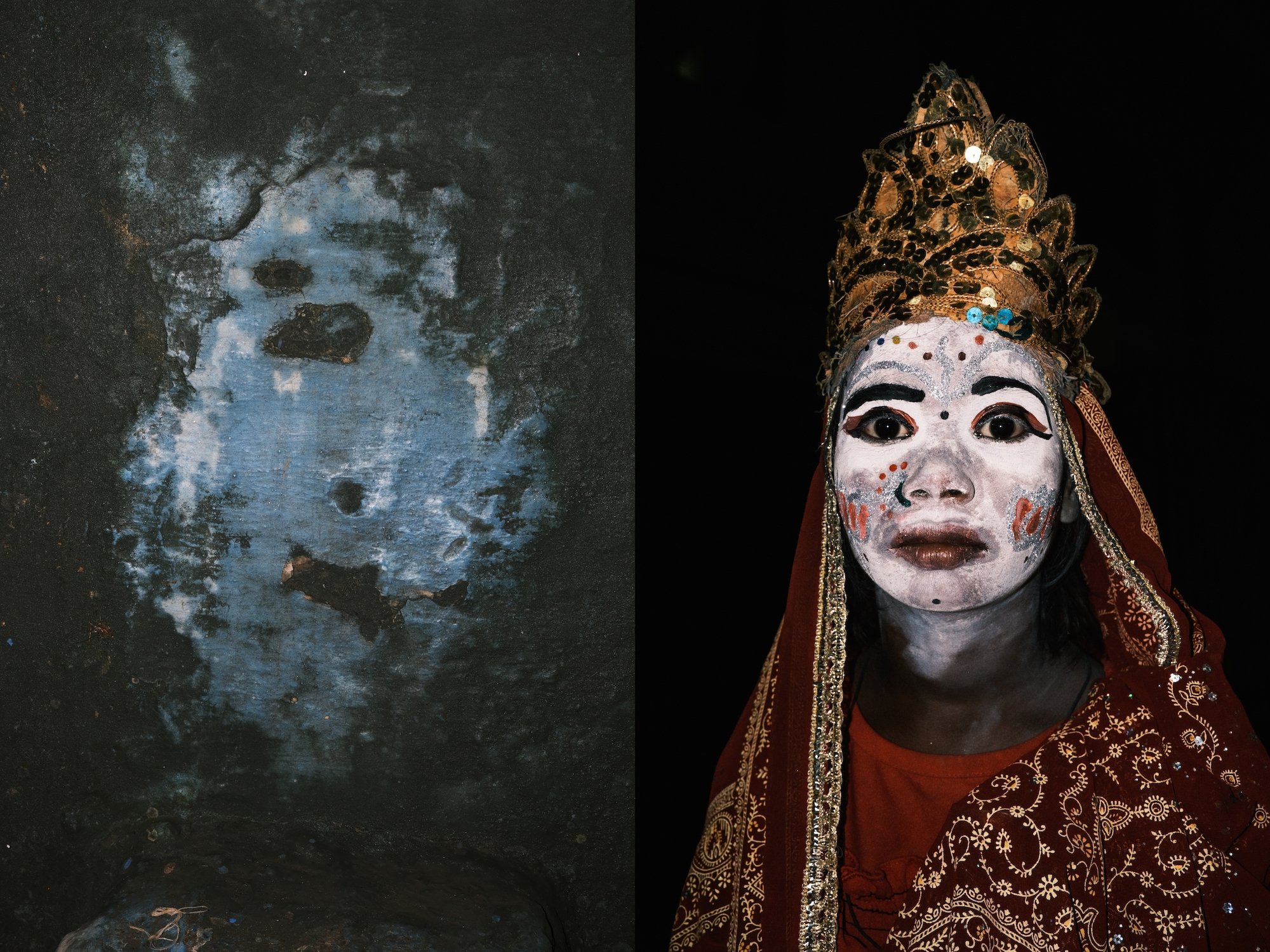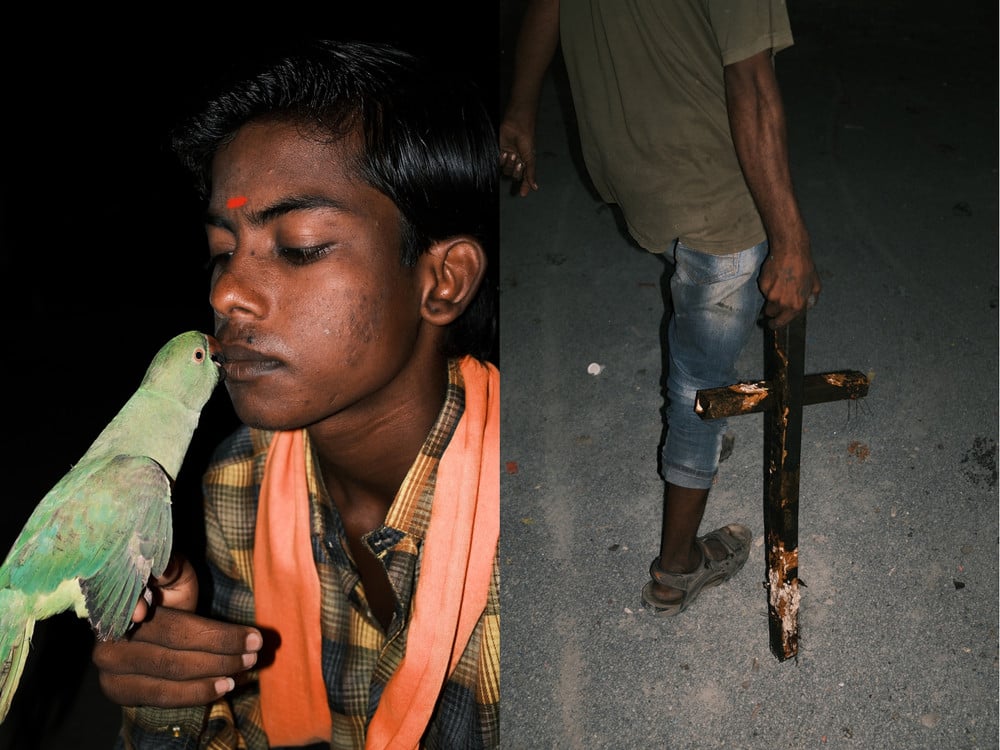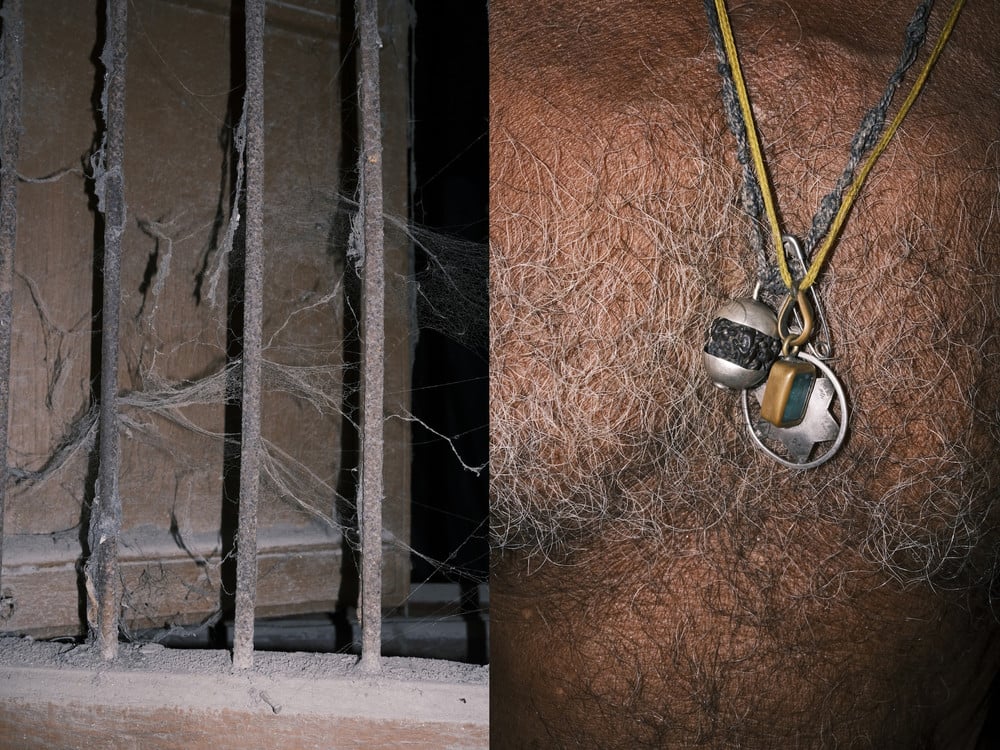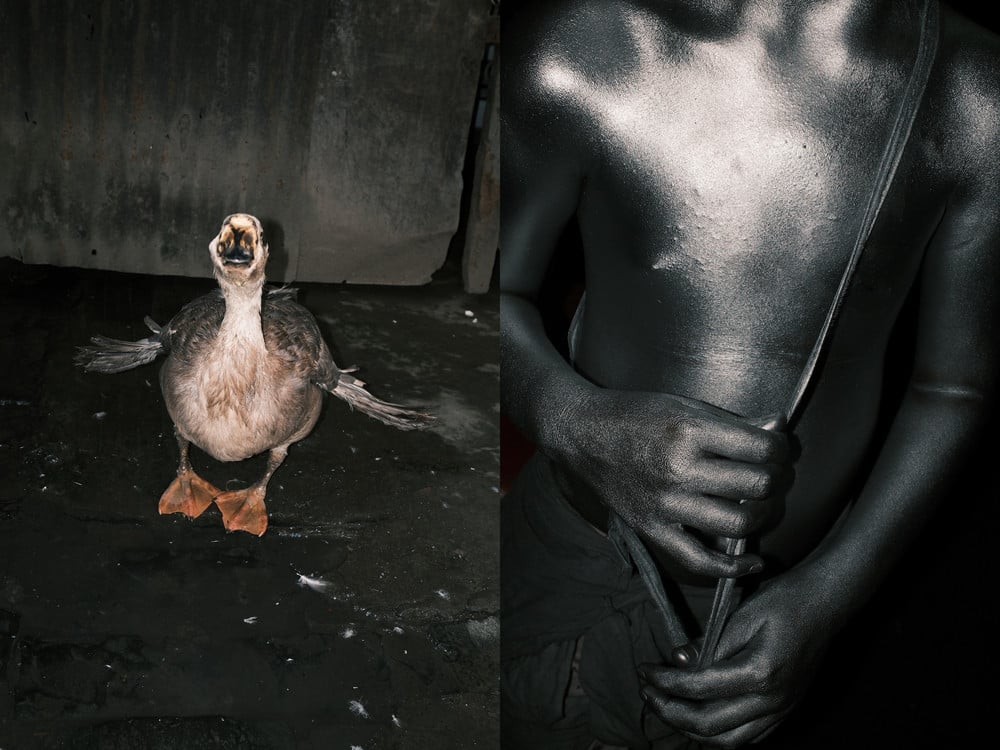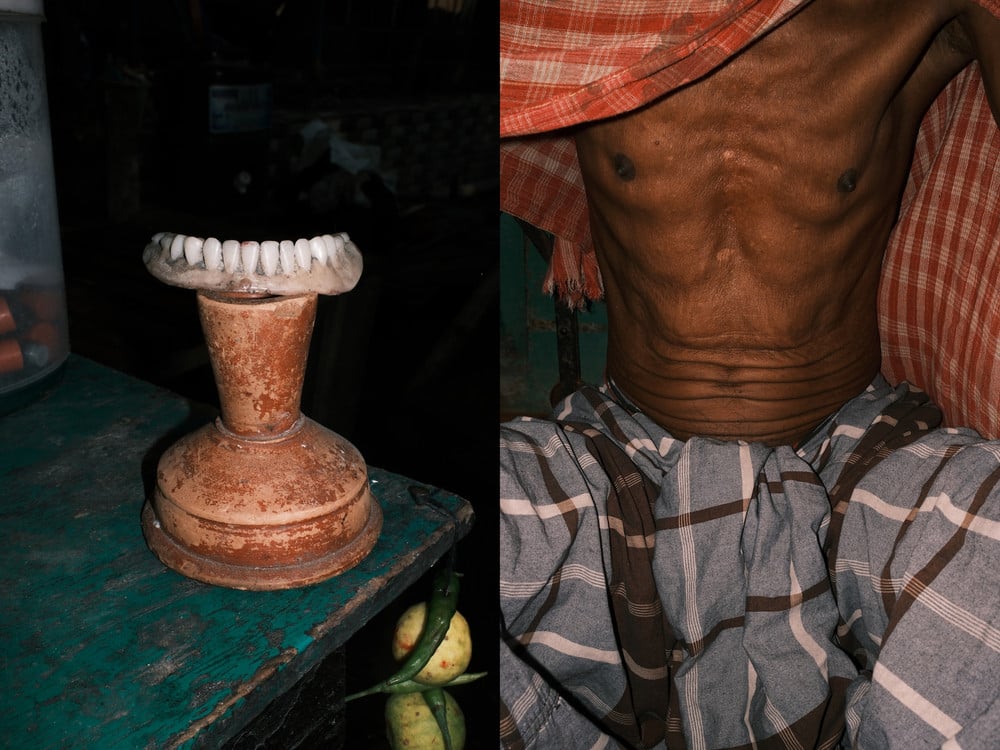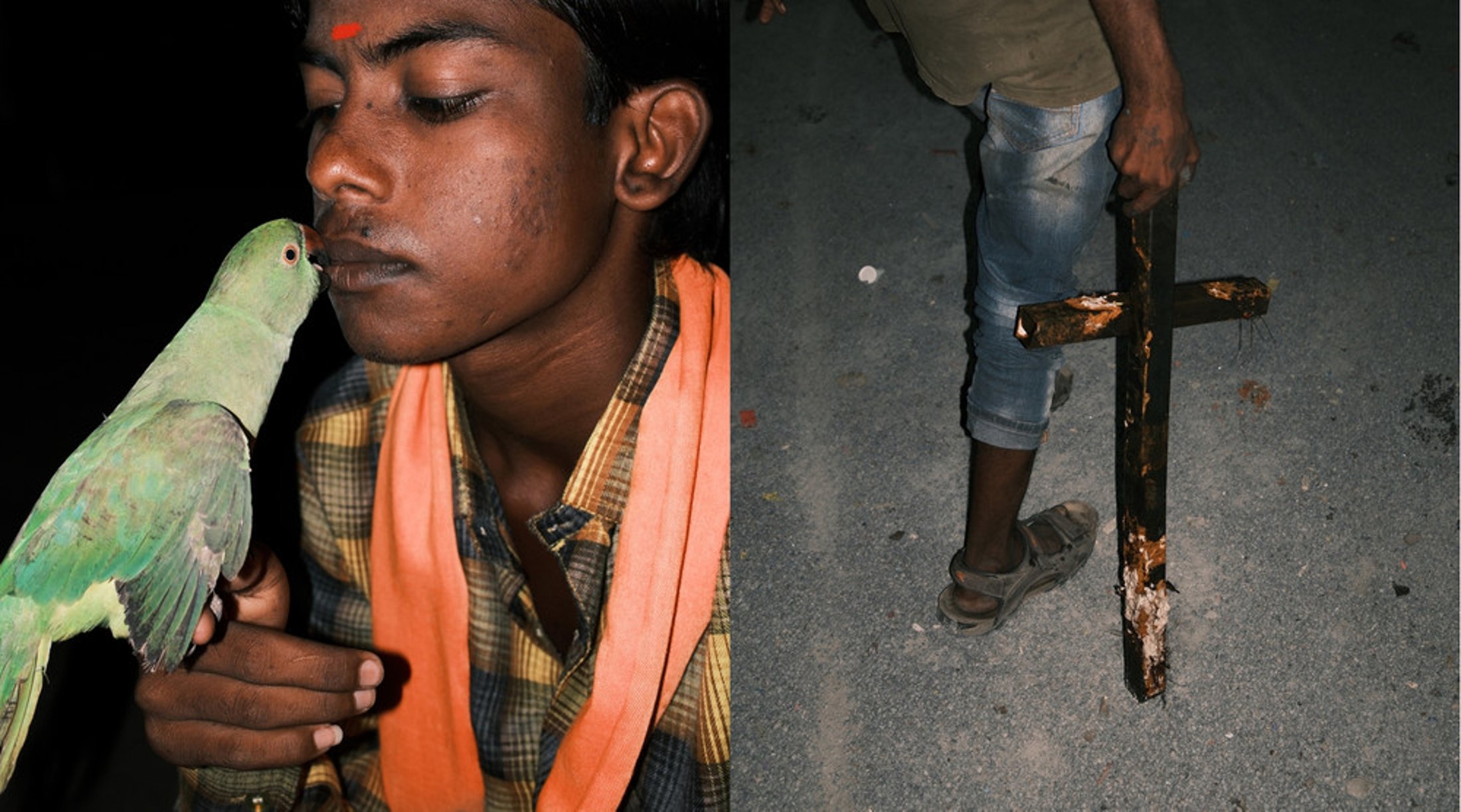
Vinod Venkapalli’s In Absentia is charged with a dark and unsettling energy. This is unsurprising, considering the series emerged out of a time of personal hardship. Around a year ago, Venkapalli found himself struggling to find a release for his emotions. A friend suggested they take a trip to Varanasi together, so the photographer went along with his camera. “Unknowingly, I was shooting a lot of pain,” he says, explaining how during this time, he was also in the process of losing his faith. He began to question how God could exist in a world with so much suffering. These thoughts led him to the central premise of In Absentia: what if God was to leave?

The photographer ended up travelling all over India. The images that emerged are equally powerful and distressing. Some of the scenes are difficult to look at, of animal torture, for example. “Animal sacrifice has always riled me up,” says Venkapalli, who fosters pets at home. “But there is a contradiction because when people do something like this, it’s out of innocence… Many will see it as barbaric, but my main intention was to show that people are innocent, and it’s that same innocence that makes them do things like this.” In that sense, the work is about showing evil in society, rather than individuals. “It was a lot to do with faith, pain, and also the very need to photograph: to go out and feel united with people who are also feeling something similar,” he says.

Venkapalli has seen recent success as a photographer but growing up he never thought it would become a career. His grandfather was a hobbyist photographer, so he always grew up with a camera, but after university he worked as a consultant for a year and a half. Eventually in 2015 he took the plunge to pursue photography full-time, while working as a freelance journalist for Reuters, and having his images published in The New York Times and The Washington Post. “But photojournalism is too fast, too short-lived for me,” says Venkapalli. He prefers to work on long-term projects that allow him to dive into each narrative “layer by layer.” While his older work was about documenting problems in the outside world, his personal work now focuses on capturing “internal landscapes and what I feel.”

This is reflected in how he sees photography, among his other creative practices. Venkapalli also draws, makes ceramics, and has recently taken up singing. Each expression satisfies a different aspect of his creative life, he explains. Singing is a solitary act—“it’s for myself, not for others”—while drawing and sculpture are more calming activities, done alone at home. “Photography has always been something very personal for me,” he says. “It’s where I run to when I feel anxious or lonely or sad.”

In Absentia emerged from such a moment. But beneath all the tension and discomfort he portrays, Venkapalli offers a message of solidarity in humanity’s shared struggles. It’s a reminder that in times of despair, or beneath the ruins of society, perhaps we too can find something pure to hold onto.