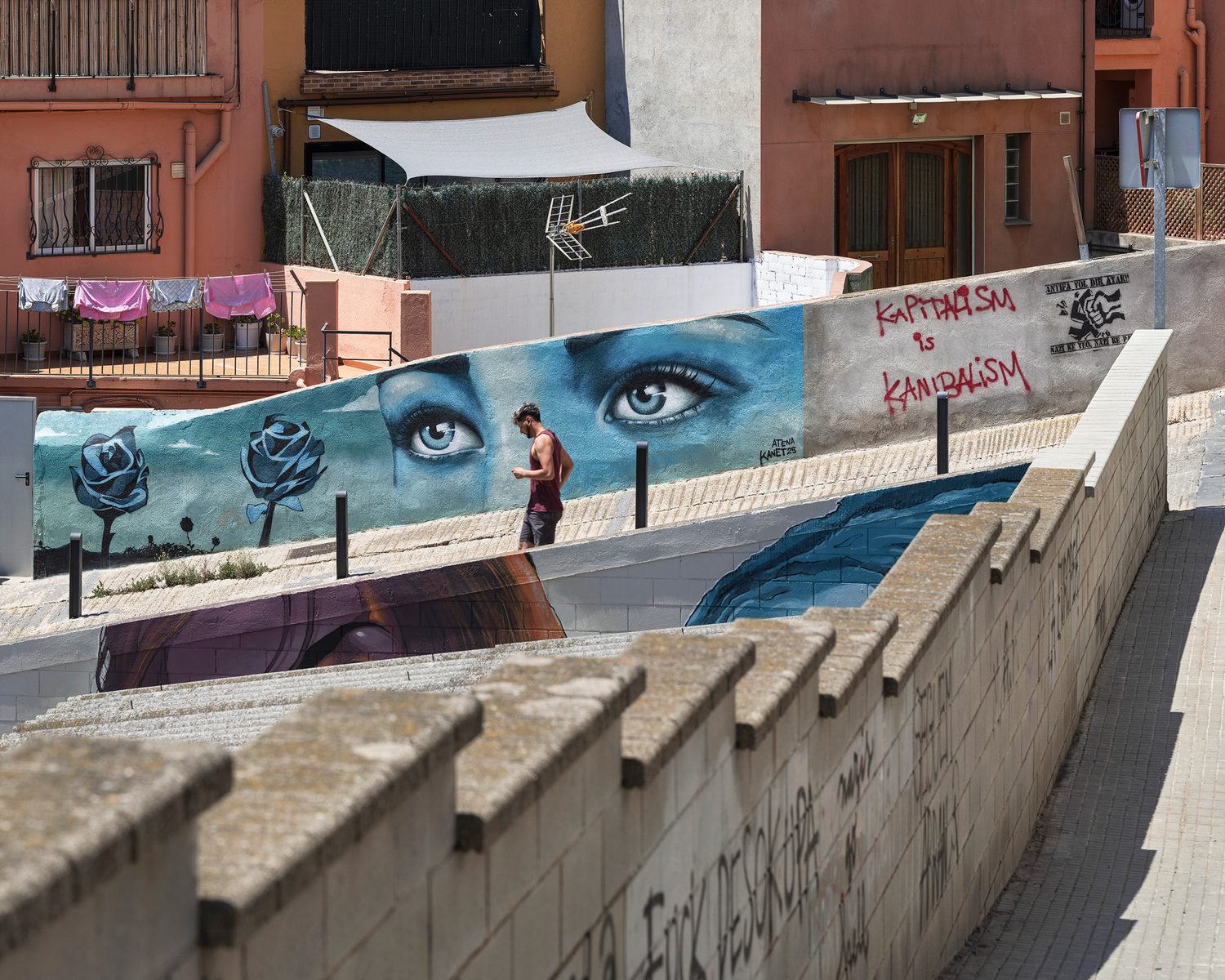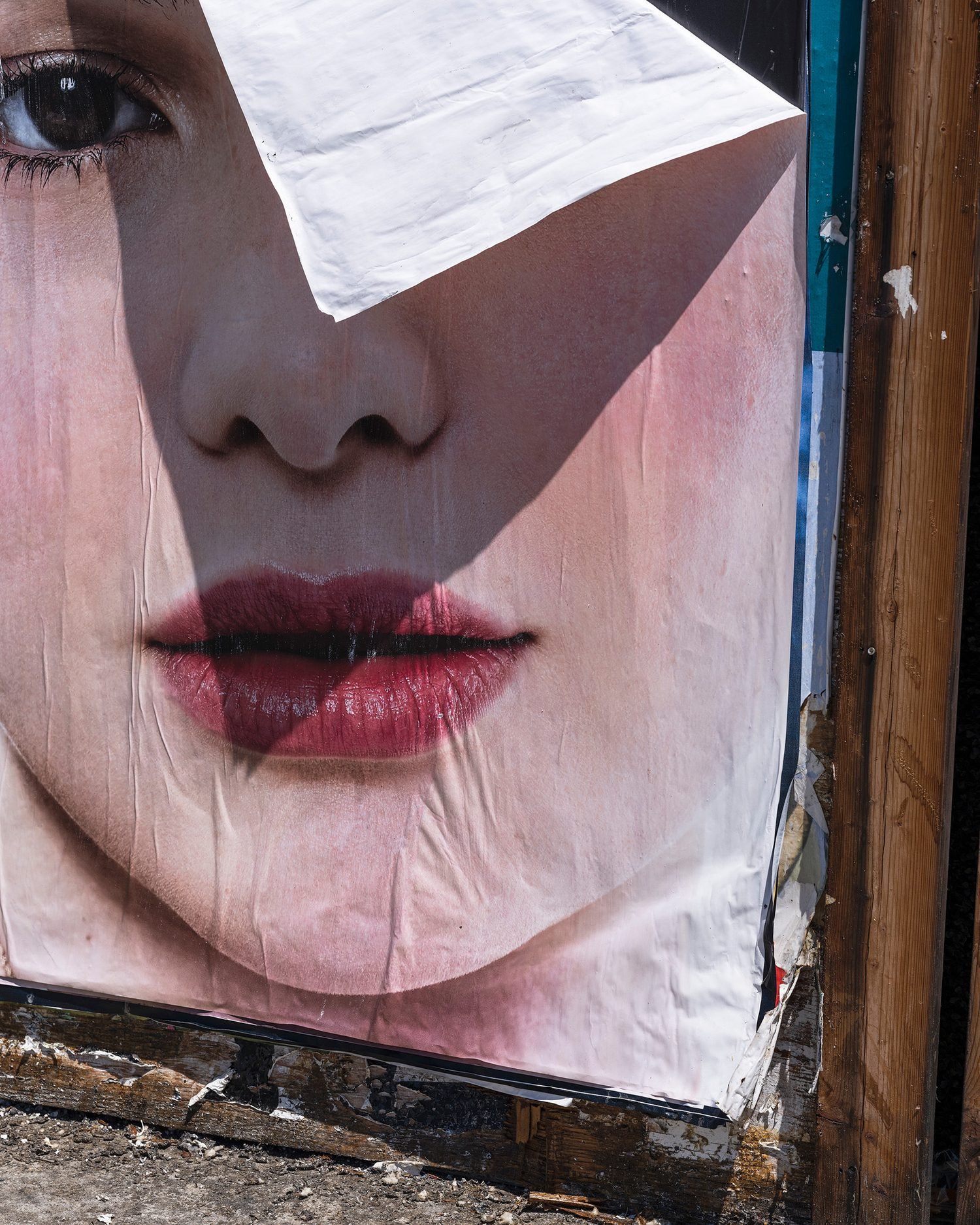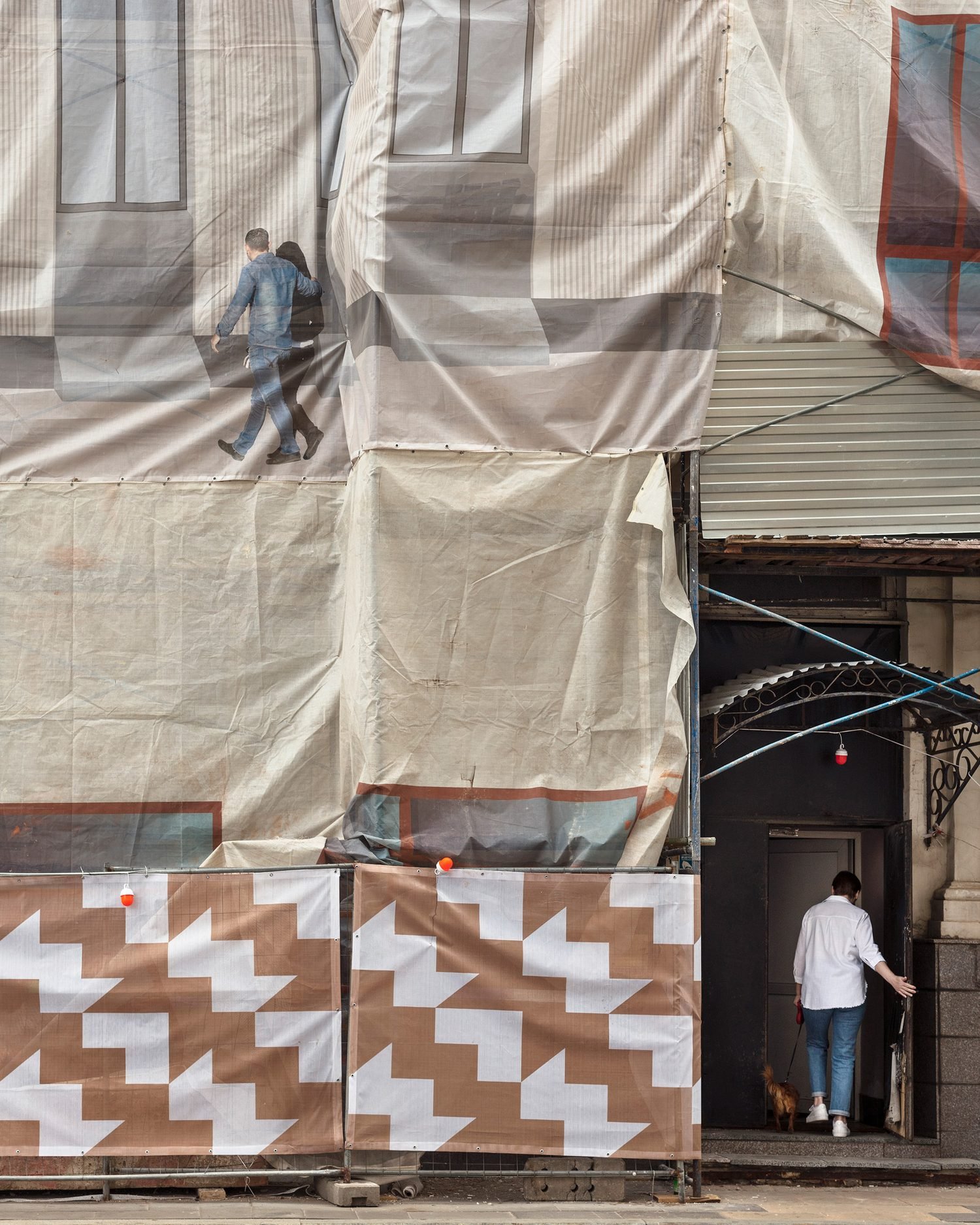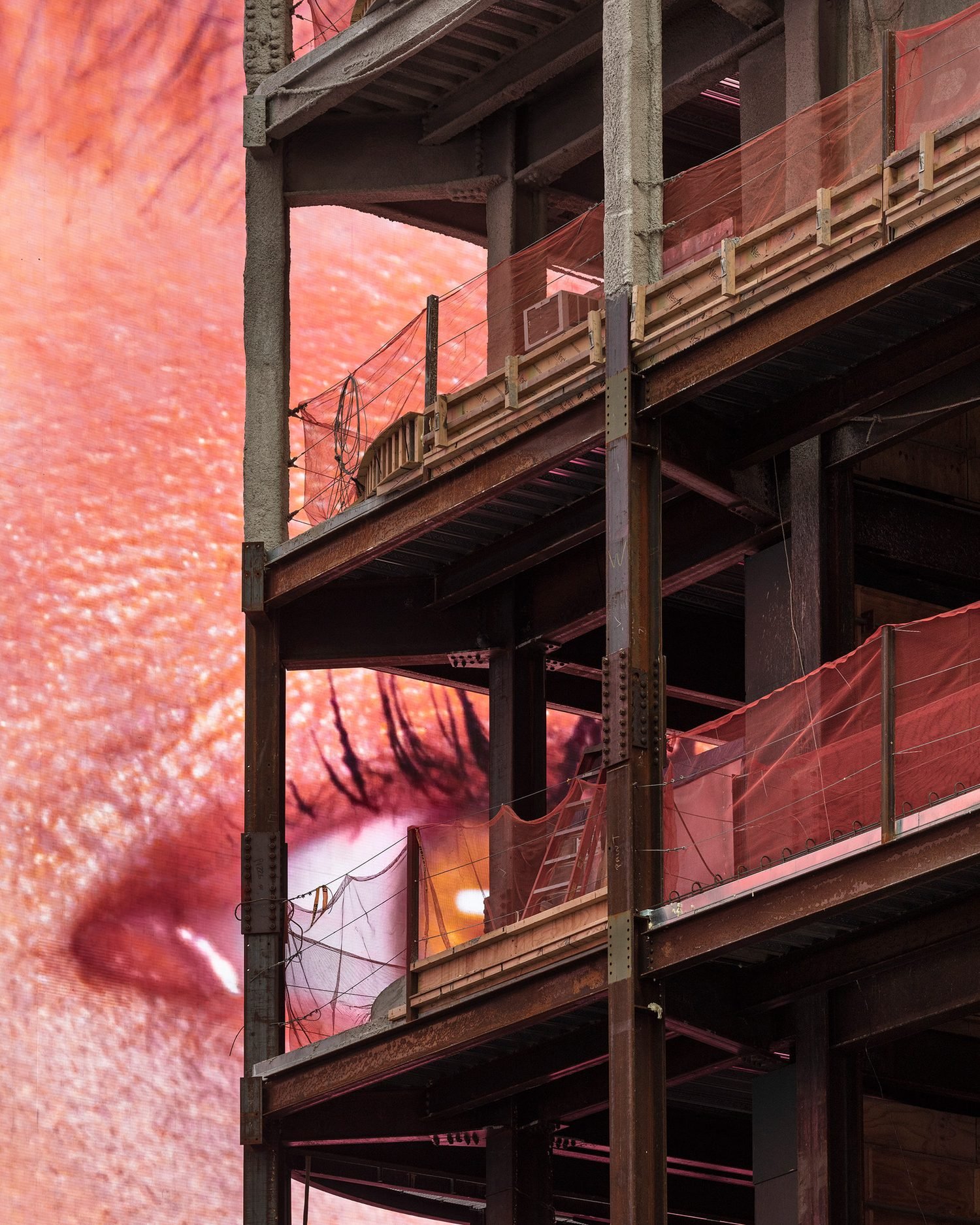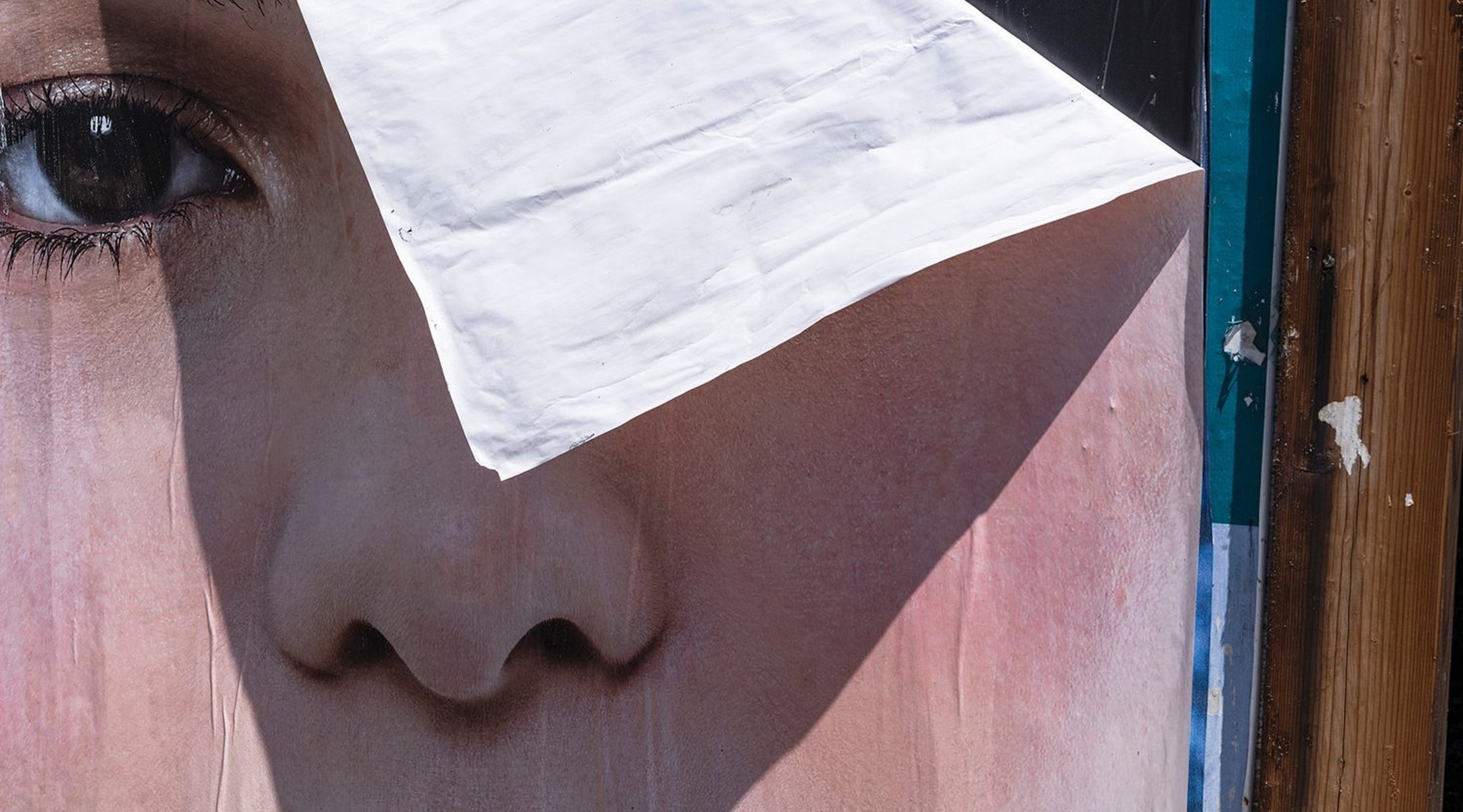
In Anastasia Samoylova’s latest body of work, Image Cities, we are taken on a sprawling international tour through the world’s most significant urban centers, which together form a powerful interconnected global network of cultural and economic influence.
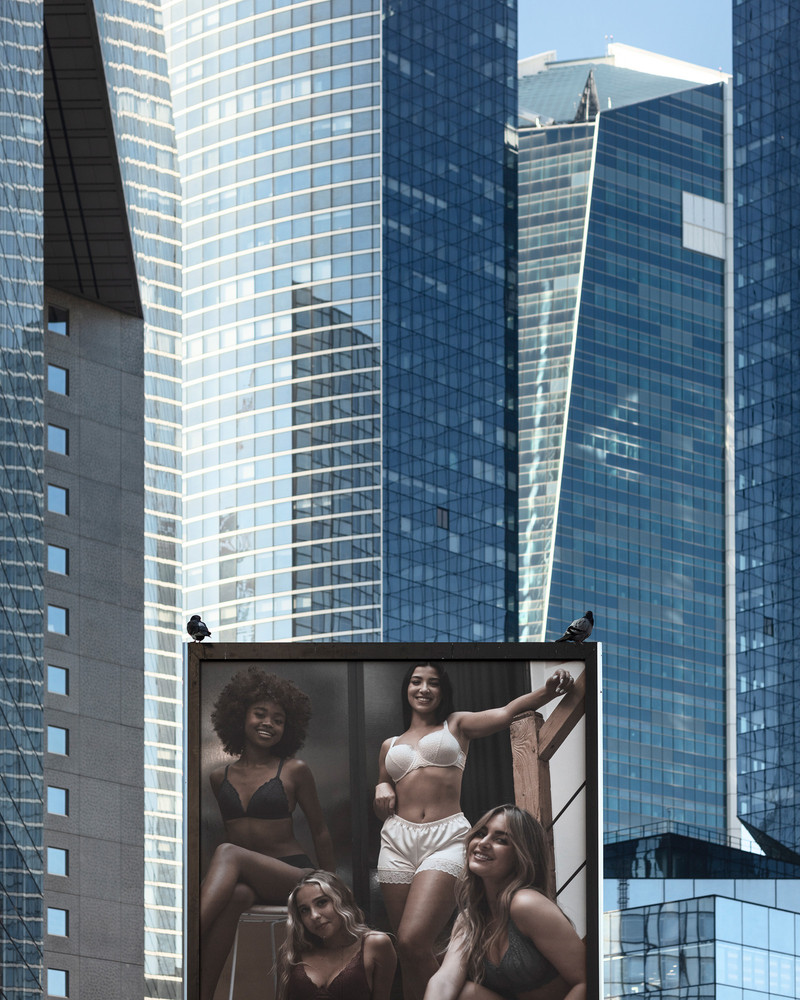
Throughout 17 cities including New York, Paris, London, Zurich, Tokyo, and Milan among others, Samoylova trains her lens intently on the public-facing images that saturate the surfaces of these metropolises to form a critical and lyrical study of how such images exert their influences on urban inhabitants. In doing so, the artist shows us not what is unique to these places but what is the same: the ominous and creeping homogeneity of commodity culture that is manifesting from an increasingly corporatized planet.
In this interview for LensCulture, Samoylova speaks to Gregory Eddi Jones about working between documentary and studio photography, her influences and the chasm between images and reality.
Gregory Eddi Jones: Ana, to begin the discussion on Image Cities I think it’s worthwhile to discuss your initial entry into street and documentary photography. Much of your early work centered on a dedicated studio-based practice, and you have since developed three robust bodies of location-based projects with Image Cities being the latest in this cycle. How and when did this pivot occur?
Ana Samoylova: The particular kind of observational photography I do has evolved organically from my studio practice. It might not be immediately apparent from looking through my books, but if I selected a set of images from each one to illustrate that point, the layered, collage-like compositions and predominantly flattened space would give away the interconnected conceptual and formal concerns. All of my projects are ongoing and cyclical, whether it is documentary photography or collages made in the studio. The notion of place—and the historical and contemporary photographic representation of places—have been consistently central to my work.
GJ: When you initially set out onto the streets to begin this strand of your practice, what kinds of photographers were you looking at to inform your approach? I know Walker Evans is a big influence on your work. Are there others who you’ve looked toward, or who’ve made work that you’re interested in conversing with?
AS: In the transition from studio to documentary-style photography, I actively sought inspiration by looking at photobooks every morning before going outside to photograph. Similar to how you can’t be a good writer without being a good reader, this practice of looking is critical in the formation of a good image maker. My range of influences is vast, ranging from Germaine Krull, Berenice Abbott, Barbara Kasten, Lee Friedlander, Daido Moriyama, Jeff Wall, Wolfgang Tillmans to many painters and multimedia artists, both historical and contemporary. I even have a whole series, Breakfasts, that is an homage to my ever-expanding list of inspirations. In this project, I document my breakfasts arranged on pages of various artists’ books, imagining the conversations we could have over coffee.
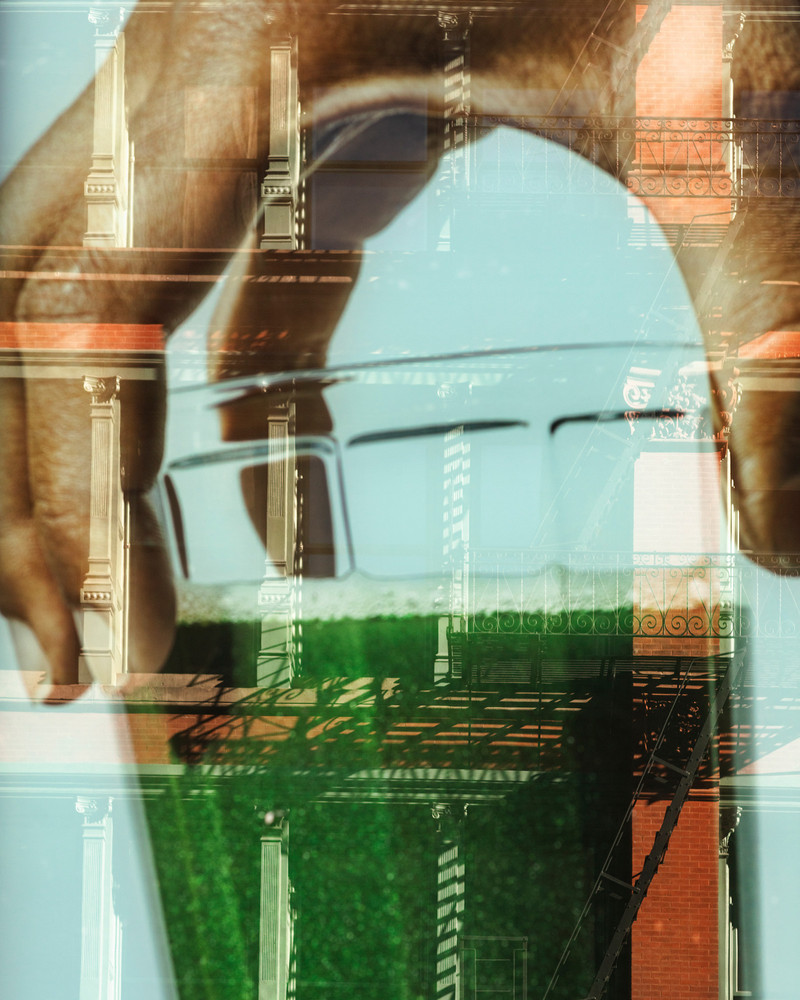
GJ: I also think your use of a telephoto lens on the street is particularly unique in the street and documentary tradition. The results seem to create a voice that’s not unlike the collage-like work from your studio practice. I wonder if you could speak to this a bit, and I’m also curious to hear how such distance, when you’re photographing, affects the relationship you have to your subjects.
AS: I first began using a longer lens to minimize optical distortion when photographing for my Landscape Sublime project in the studio ten years ago. Because of my digital camera limitations at the time, I also had to photograph each tableau in multiple takes, combining the photographs of its parts into a single image with more resolution to be able to produce larger prints. When I started with documentary photography in 2016, I switched to wide and normal angle lenses but immediately saw their negative effect on my composition. There was too much visual clutter, and I wanted to focus on the details instead. I prefer the in-between state of a close-up view without being too claustrophobic. But given the distance, the images often appear as collages or superimpositions, which they aren’t. A formal play is involved; optical intrigue is part of the joy of making images for me.
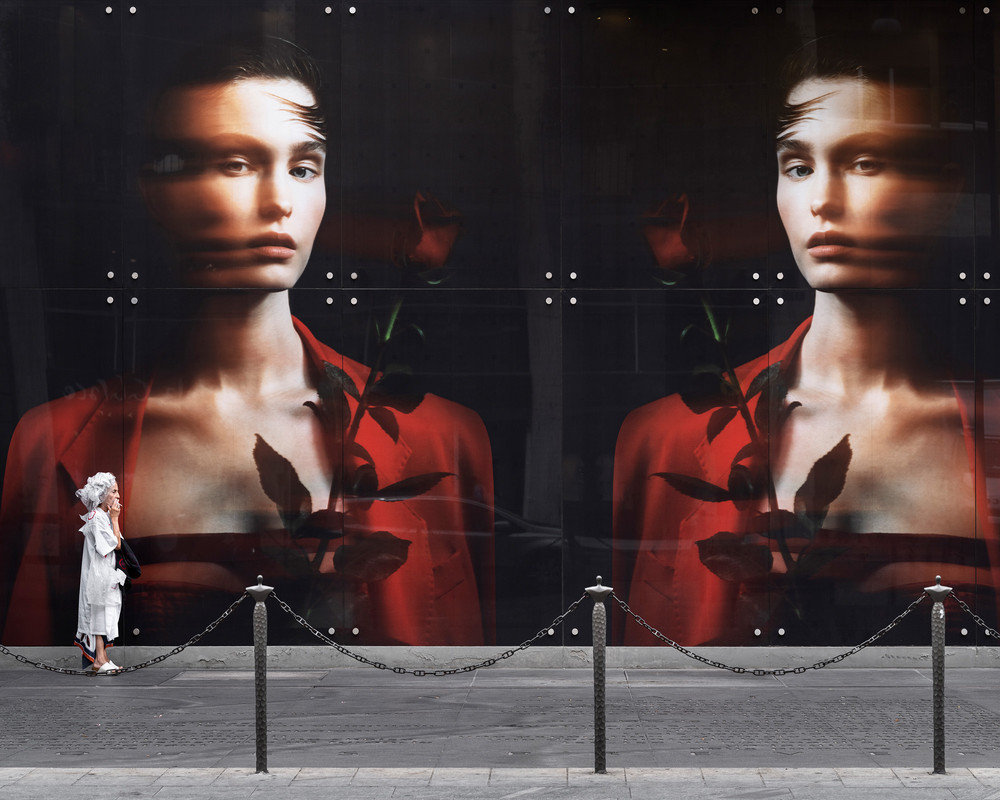
GJ: What struck me first when viewing the Image Cities monograph you just published was the global scope of the project. Was it 17 total cities that you photographed? Could you speak about how this work developed, where the initial idea came from, and when you realized how these pictures could come together under this thematic umbrella?
AS: One of my favorite films is Playtime by Jacques Tati. In 2021, I saw it on the big screen for the first time. I was struck by a scene at a travel agency in Paris, where the colorful posters advertising various global destinations featured identical modernist steel and glass skyscrapers superimposed over the iconic landmarks of each city, obscuring the views and homogenizing the look of those distinctly unique places. While Tati was prophetic in his poster predictions, I wanted to see these places with my own eyes and document them from the position of a contemporary visitor living in a globalized world.
I chose my 17 cities based on a list published by Globalization and World Cities Research Network (GaWC), where they are assessed through four criteria: accountancy, advertising, banking/finance and law. Essentially that research identifies and ranks the world’s most influential urban centers. In 2020, London and New York were assigned the top ranking, ‘Alpha ++.’ Paris, Tokyo, and several Asian cities shared the ‘Alpha +’ position. Los Angeles, Amsterdam, Toronto, Milan, Frankfurt, Mexico City, Madrid, Brussels and Moscow: ‘Alpha.’
While the GaWC list provided the initial map of locations, I did not intend to be didactic in my documentation. There are many omissions due to Covid-related closures at the time as well as an awareness of my carbon footprint. Most European cities were easily accessible by train, which determined some of my choices.
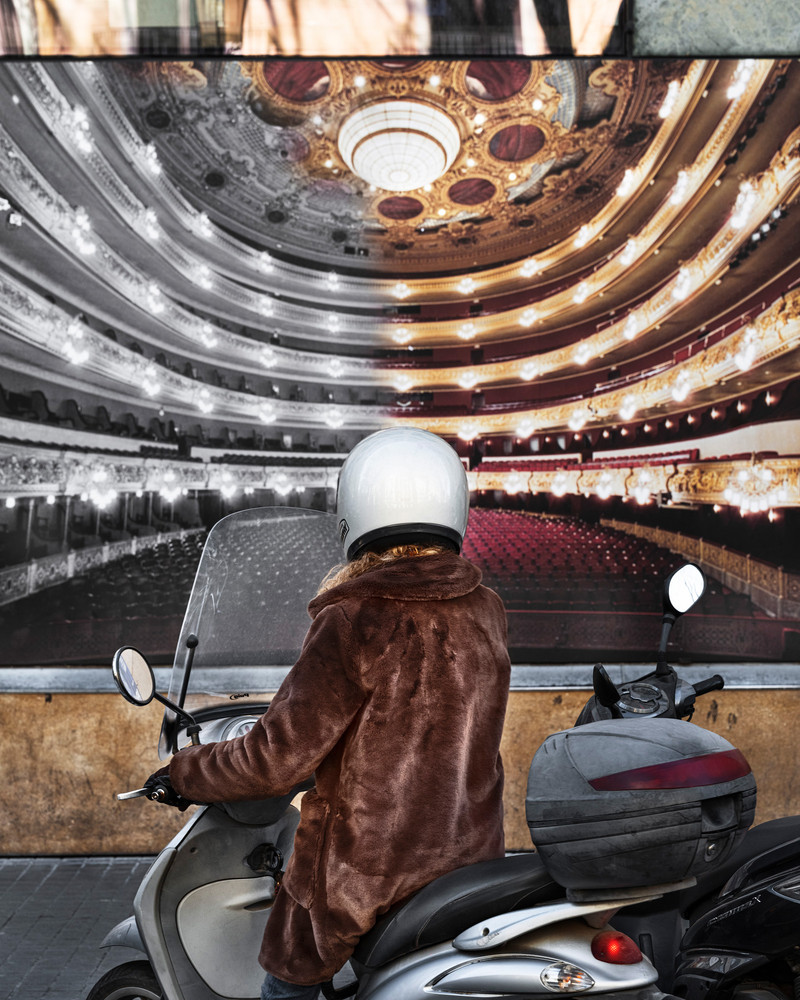
GJ: In these travels, were there any surprises you encountered, particularly in the gaps between what your experience in a city was vs what you expected? These are all cities that are, by and large, tourist destinations, and I’m sure that there can be quite significant differences between the public perception of a place, and its nature and feeling in reality. Perhaps this is a small question in relation to a larger one, as much of Image Cities deals with the identity of urban areas and the tensions between the local and the global.
AS: Have you heard of Paris Syndrome? It is a psychological disorder characterized by severe emotional distress and disillusionment experienced by some tourists upon visiting Paris. Symptoms include feelings of disappointment due to the stark contrast between the city’s romanticized image and the reality visitors encounter, leading to a temporary breakdown of mental health. I can see similar terms being invented for a feeling of deja-vu that occurs when visiting many modern cities due to the prevalence of the same megabrands and their uniform seasonal advertising, the same kind of efficient glass and steel architecture, the same clothing on people staring at the same phones.
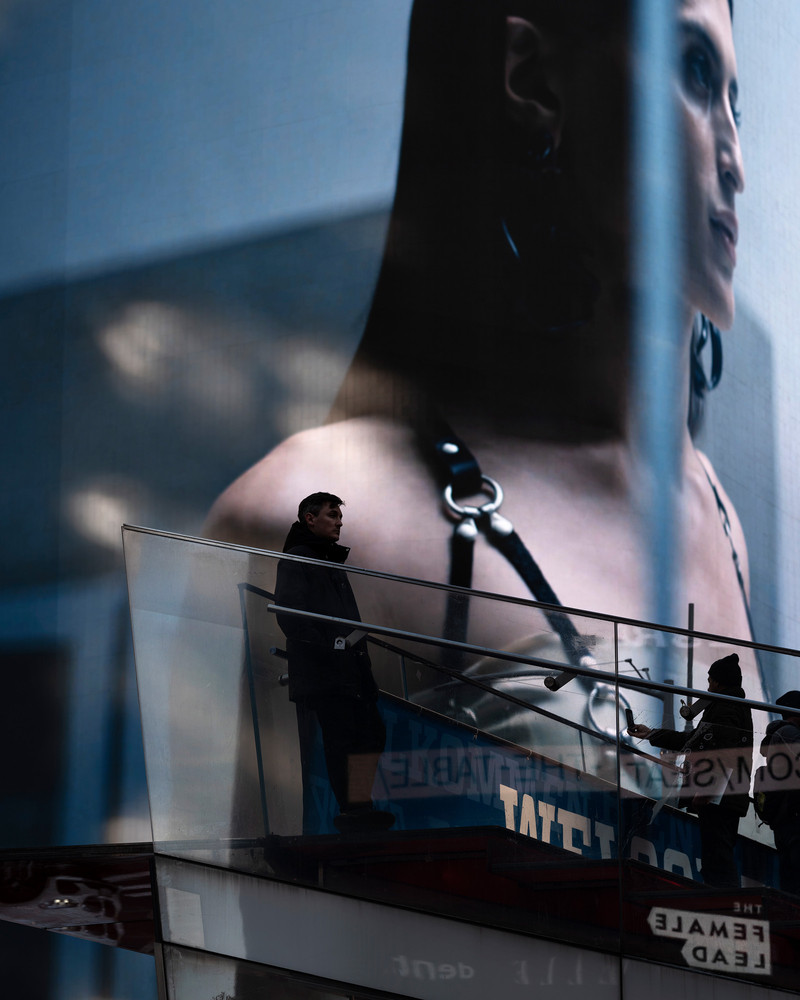
GJ: As with your early work in Landscape Sublime, a lot of your focus in this new work is on the role of photography in the common public consciousness, and just what it means for us as a shared society to have these images, these entities, as places of congregation for shared meaning. What do you feel is at stake for your viewership as they enter this world you are documenting, a meta-visual world of sorts?
AS: In 1967, the same year that Tati’s Playtime was released, Guy Debord published The Society of the Spectacle: “The spectacle is a social relation between people that is mediated by an accumulation of images that serve to alienate us from a genuinely lived life. The image is thus an historical mutation of the form of commodity fetishism.”
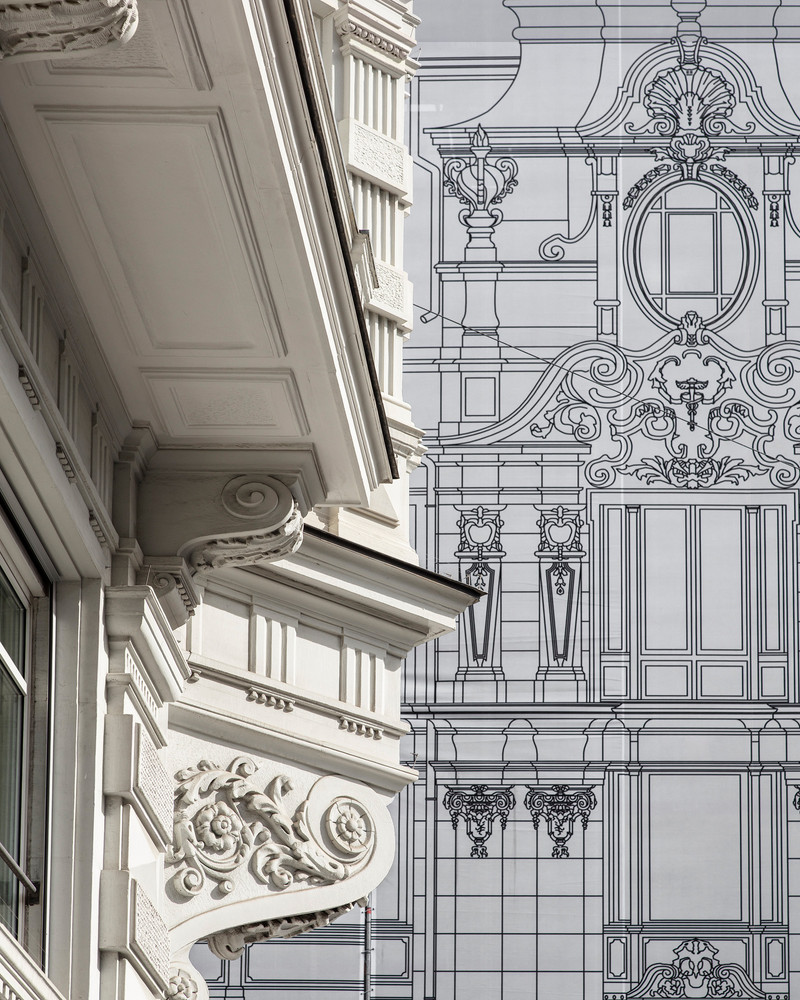
It is easy to see how idealized advertising images reproduced on a monumental scale and plastered all over these cities function as distraction and propaganda for consumption in the already overconsuming world, questioning the very concept of a “genuinely lived life.” Another prevalent type of image in public space is the architectural renderings that cover construction sites, allowing us to imagine the future appearance of the city along with its present and past.
Based on the glamorous, sleek versions of residential and commercial developments in most metropolises, the future increasingly excludes the working and middle class. Occasionally signifiers of cultural heritage and the country’s historical legacy are visible in some of those construction site renderings or advertisements. Many influential global cities share a colonialist, imperialist history and are actively making reparations, which are not always met without resistance. My project alludes to the complex histories of these places while focusing on the present moment and the images accompanying these cities’ current visual narratives in their public spaces. It is by no means comprehensive.
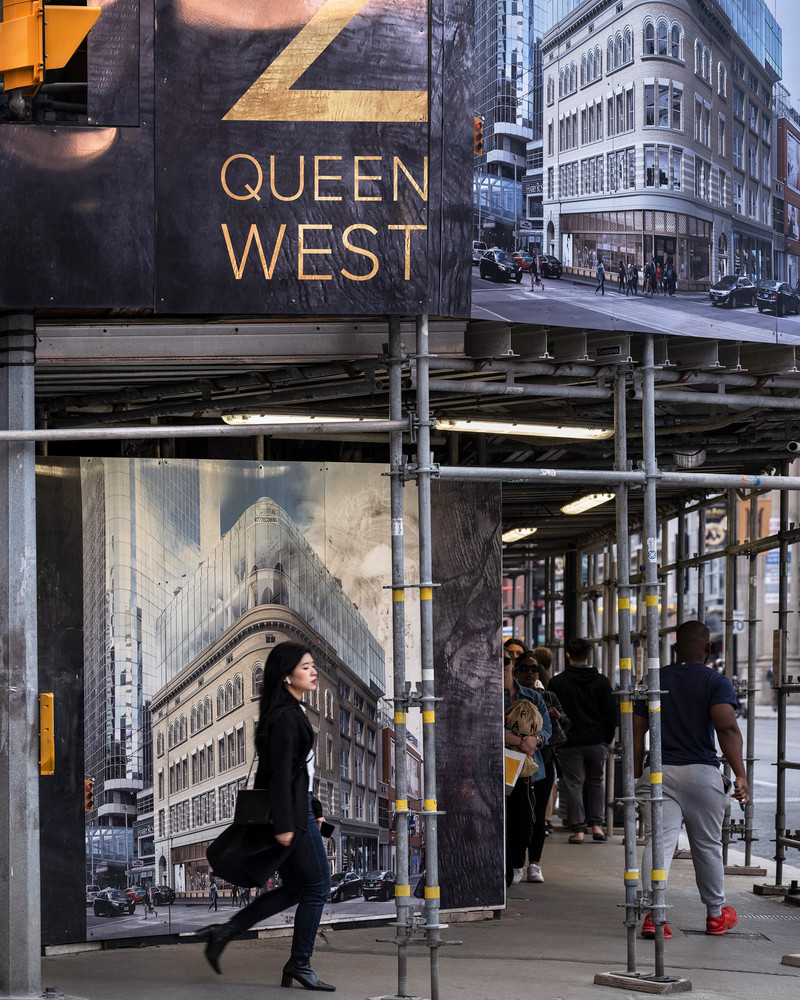
GJ: This might be a hard question to answer, because it can oftentimes feel like the very air we breathe, but how do you think this saturation of media and advertising affects us, our perceptions of ourselves, of others, and of community? I feel like we take for granted just how far from our more natural origins we’ve come. Public spaces are littered with ads and slogans and persuasive images…there’s a certain toxicity that comes from that, something that’s been in our blood for a long time now. It feels dystopian when we step back to view it from an outsider view, yet this condition is systemic in public life, isn’t it?
AS: All images have an agenda. They are not innocent. My photographs of images permeating public space allude to the prevalence of images in our lives beyond the public sphere; they are central to the contemporary human experience. What choices would we be making if there hadn’t been all this advertising for where to live, what to wear, drive, eat, and who to look at?
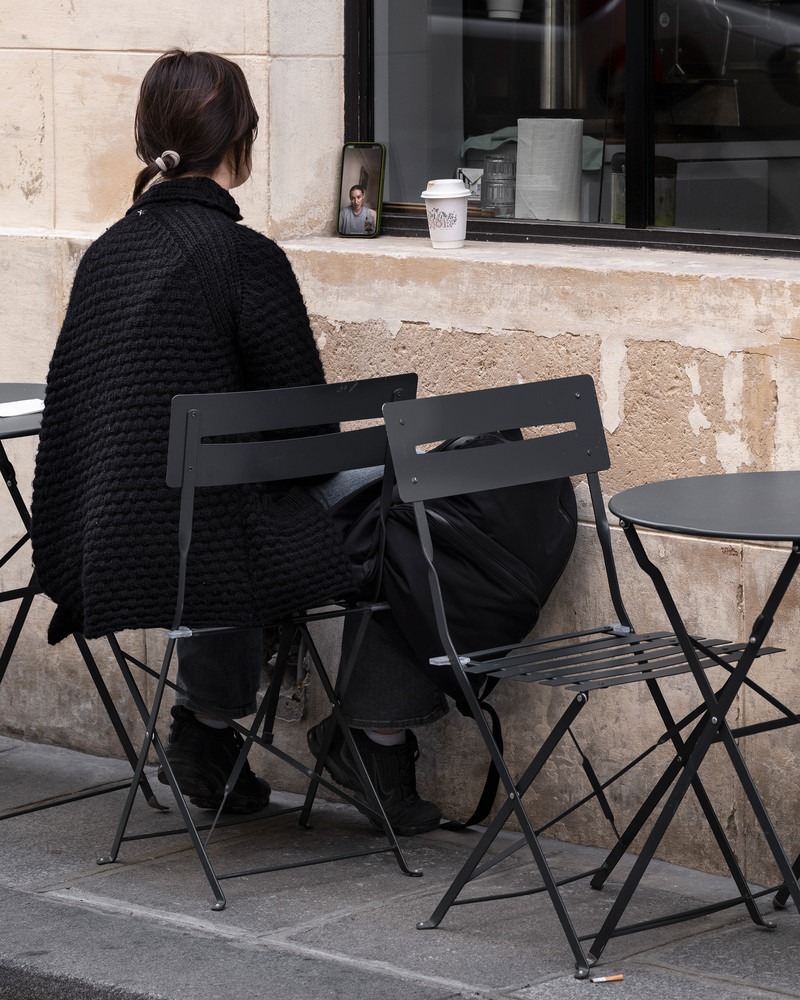
Image-obsessed social media has exacerbated this issue, from economic displacement, to over-tourism leading to serious environmental consequences to eating disorders in young people. I did not intend to photograph people engrossed in their smartphones for Image Cities; that was simply the majority of people I came across in the busy locations I visited to make the work. The same images we see on our phones manifest in physical form in public spaces—but public spaces cannot be turned off.
Once, at an exhibition of the project, I was asked whether I was worried about copyright infringement closing in on brands’ images in my photographs like that. I responded that it was an authentic documentation of my experience as an everyday pedestrian who didn’t ask or consent to seeing all these images that demand my attention. You can choose not to read a text when you glimpse at it, but you cannot unsee an image. If anything, my images are a reclamation of the power of an everyday person to detach and analyze exactly what ideas we are being sold in all this visual bombardment.
GJ: Image Cities is now your third major body of work that deals with location-based conditions. It follows Flood Zone, which documents geographies in flood prone areas, and Floridas, which catalogs public political and cultural manifestations of the state of Florida. Each of these projects create such an interesting tapestry of ideas. Do you have an idea of what your next work will focus on?
AS: Several projects are in the pipeline, including another climate one—this time global—for which I am actively applying for grants. Location projects require a lot of logistics and resources. Right now, I am back in the studio making paintings and collages based on my extensive archive of Florida images. In 2016, I made a set of paintings on printed canvases, so this is yet another cyclical return to studio practice. I also recently made a slideshow of 500 photographs from Image Cities to be projected as a two-channel video. It was inspired by Wolfgang Tillmans’ Book for Architects video that I saw at mumok in Vienna while shooting for the project. It will be screened at the Converge 45 Biennial in Portland this August.