
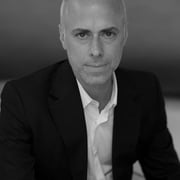
Chris Pichler: I think so too. Thanks for the invitation. I’m very happy to be doing it.
To get started, what made you fall in love with photo books?
I grew up in a family that was very book oriented. My grandmother was a very well-known author of books for adolescents and we were just all avid readers. So yeah, I grew up with books and I became interested in art and especially photography near the end of high school. And I realized quickly that I actually prefer the way photographs look in books than I do as framed artworks on the walls.
In the mid-80s I was at Arizona State University, which had a very robust artist’s book program at the time, which I looked into a little bit. But I was really turned off because it was more about these very ornate, precious, handmade, one-of-a-kind books with handmade paper and leather and feathers. They were very ’80s. I much preferred something grittier. I was making books of my work, just one-offs using photocopy machines. I learned how to rasterize them all very, very lo-fi and I loved that look. So I think even then, I realized I wanted to be a publisher.
You said that you prefer to see photographs in a book rather than on a wall, but what does a photo book do for photography that an exhibition can’t do?
I think it’s because of a few reasons. One is it’s just so modest. There’s something so modest about a reproduction. And I love beautiful prints. I have some prints by Frederick Sommer, and I get it. I love anybody who can make objects at that level. But I think also it’s a very intimate experience looking at a book. It’s just the person looking at the book and the book itself. Whereas if we’re in a public space looking at pictures, there’s a lot of self-consciousness, I think.
When you encounter a new body of work, what tells you that it might be ready to become a book?
That’s a very almost instantaneous intuitive realization. I don’t ever go out and actively look for projects to publish. And we publish now probably 25 books a year. In all, we’ve published about 800 books over that past 38 years. I’m 60 and I started when I was 22.
That’s a nice lifelong passion!
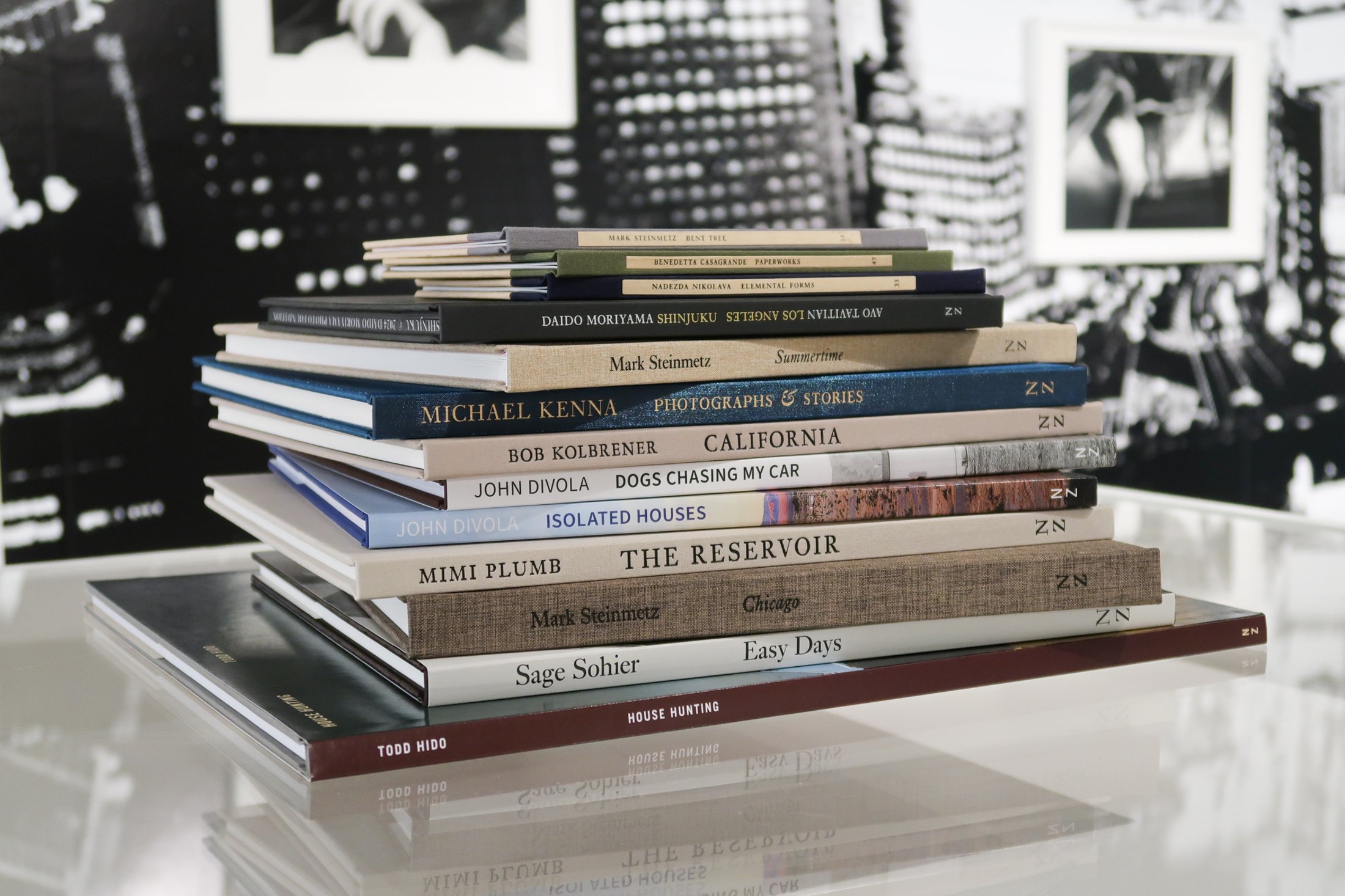
Yes. I’m very grateful that I’ve been able to do that. And when I look at the books that I’m working on right now, none of them were the result of a search or a hunt for things to publish. Probably 60% of them or more are books by photographers I’ve already published before. Because if I have a good relationship with somebody or a good experience with a photographer, it’s just natural that we’ll continue to work together. So books by Mark Steinmetz, Sage Sohier, Todd Hido, Michael Kenna, there’s many, many by each of these. And then to balance that, it’s pure chance. I’ll be walking along and see something. We don’t accept submissions because we just don’t have the bandwidth for that.
I do try every year to do one or two portfolio reviews because I think it’s important that I’m out there and that I look at work by people who want to show it. Because I remember how it was when I was starting out going to a bookstore and they wouldn’t want to see my books. I know the feeling and both parties have to make an effort. It’s really kind of chance. Sometimes somebody I have a relationship with will share with me work by somebody that they know or work that they’ve seen.
But it’s really important to me to remember that there is work that is so beautiful as an exhibition that wouldn’t function for me as a book. And there’s work that would probably not be a very interesting exhibition that makes a beautiful book. It’s a different medium.
Also, I think with books, there’s a different life span. If there’s an exhibition and nobody goes to it, that’s a disaster. If we publish a book that I really love and it doesn’t sell very well at the beginning, that’s okay. I didn’t publish it to try to sell a whole bunch. I published it because I think it’s important and it’s a big world and I think eventually good books find their homes. So some books I think are probably published before their time. And we’ve published books that sat pretty inactively for a year or two and then something happened and they sell out. So books have a much longer trajectory than do exhibitions, obviously.
For this new prize that we’re launching and you’re going to publish the first book, the prize doesn’t require — or even accept —a finished dummy. Photographers are asked to submit 20 to 30 images and a brief statement. What can you get from that as a publisher? Can 20 to 30 images tell you what you need to know?
Absolutely. Yes. I’m not interested generally in books that have a lot of pictures. Once it’s more than 40 to 50 pictures, I think people get attention span anxiety. I hesitate to pick up a book if it’s got 200 pictures in it because I won’t be able to look at all of them. I lean towards books that have fewer images that make you want more when you’re finished with it. So a lot of our books have 20, 30, 40 images. And so seeing a body of work with 20 to 30 images, that’s kind of a bullseye for me.
You work with some of these superstar photographers who are just always on. It’s always great work. So what makes you willing to take a chance on someone who’s not known yet?
There’s a few reasons for that. First of all, everybody was not known at some point. I try to strike a balance between books by photographers virtually everybody is familiar with and books by photographers that almost nobody is familiar with. And I think those two approaches actually help each other and make the whole catalog stronger. So if we only publish books by superstars, I think it would be kind of soulless. If we only publish books by people who nobody’s heard of, it’d be hard to run a business like that. But I think it’s important that there’s a balance. It’s like a recipe.
How important are the book fairs for you?
We’re going to the San Francisco Book Fair in two weeks and there’ll be hundreds of publishers that I’d never heard of. It’s wonderful. But book fairs are not really any more an important part of our marketing strategy. They used to be. The Frankfurt Book Fair, which I went to from before I started publishing even, that I went to then for the next 20 years, that’s how I met distributors in different countries. That’s how I met key bookstores or key chains in various countries.
Now these days, there are only two fairs I participate in. One is the San Francisco Art Book Fair, and that’s just because it’s such a wonderful fair. It’s such an amazing vibe. It’s so exhibitor-friendly. And it’s a zoo. It’s a madhouse. It’s an exemplary fair.
And the other is a new fair, Show LA, which I actually started along with Giulia Zorzi, who owns Micamera in Milan, probably Europe’s best bookstore, and Keith Cullen, who’s the publisher of Setanta Books in London, who also distributes our books. The three of us founded a photography fair called Show LA. And the initial one was the end of February during Frieze LA this year, just a few months ago. And we borrowed the vibe of the SF Art Book Fair. At least we tried to.
We have a showroom in a building downtown Los Angeles called the REEF, where we’re all working together. Deadbeat Club is involved with several galleries, publishers, artists. And we’re pushing as hard as we can to make that an art building for Los Angeles with the building’s support. And they make it feasible for us to do this. So I feel like we have to do it. If we don’t, I don’t know who else can.
We wanted it to be small in terms of the number of exhibitors. So we had about 25 galleries and about 25 publishers. But it was international. Yeah. I mean, it’s 16,000 square feet, so the booths are huge. We had a lot of space to do this. And of course, we had publishers and galleries from California, but also from Japan and China and Korea and Italy and England. It was wonderful. And the second one will be in December, December 10th to the 13th of this year.
Your books are often remembered as objects as much as publications. And I wonder at what point does the material form become part of the meaning of the book itself?
Part of that grew out of the fact that when I started publishing just out of college in a new country without any money, I had to do a lot of hand work for the books. I couldn’t afford to go to a printer and order that. So I learned how to do very simple binding, just rudimentary. And we started doing things like we published a book by Frederick Sommer called All Children Are Ambassadors. There’s actually three covers and you can open it from either side. It was in German and English. And I had those basically small magazines printed, and then I glued the covers on. And I did that with a number of titles. I had a lot of time at night, I had a lot of energy to do that and it was fun for me. We published a book by Masao Yamamoto that was in a scroll format. It’s literally a scroll so long it’s glued together, maybe 30 feet long. We did a book with Frederick Sommer called The Box, which was literally a set of maybe 50 cards, three by three inches. They were housed in a plexiglass two-piece box. So that’s kind of where the handwork came from, that element. I could make objects. I couldn’t afford mass-produced generic books. But it’s funny right now, I mean over the years and decades actually the company grew. We sell a lot of books. So I can publish a book in any format that makes sense to me, but I find myself being more and more drawn to absolutely simple books, absolutely simple.
We recently did three books that are quite modest and beautiful. In January, we were working on an exhibition of work by Daido Moriyama and Avo Tavitian, two photographers whose work I adore, in Tokyo. And that was for an opening in April. You can’t really publish a standard book starting it in mid-January and having them in April. So we did three very simple books. We did Avo’s, Daido’s, and one by Mark Steinmetz called Lo-Fi Cats. It’s such a beautiful, modest format. So we did those three. The next six are in production right now. I think it’s an important format because, at least for me, it reinforces what my job is as a publisher. And that’s to show photographs in book form and not to overdo the outside of it.
How important is worldwide distribution for a photographer and for a publisher?
For us, it’s really important because we publish a lot of different quantities and formats. We have a series called One Picture Books, and for some of these new Lo-Fi books, we publish 500 or 700 copies. Other titles, we might print 6,000 copies in one print run. And so to sell 500 copies of a book by somebody who’s not really been discovered yet, say, or to sell 6,000 copies by a superstar, we need to go outside the US to do that. So we have very active distribution in France, in Germany, in most of Europe. And China is an important market for us. South Korea is an important market for us. So we need that kind of exposure.
And for a photographer, it’s incredible how well-known somebody can become in another country. Even sometimes they don’t become that well-known in their own country. We’ve published books by Americans who become very, very well known in France or in Japan much more than they do here.
And that opens up the world to them and brings them an audience they wouldn’t have had otherwise.
Right, exactly. Yes.
Is there some kind of advice that you might give to people when they’re thinking about creating a submission? Is there any kind of general advice that might help the jury to appreciate the work?
I am so often pleasantly surprised and even shocked when I see work by somebody who I was not familiar with before and the work is something I never would’ve thought to photograph or maybe it’s a subject I never even considered, but it’s clearly a big part of that person’s life and something they care deeply about. And so whether it’s a book of landscapes or portraits, cityscapes, objects, whatever it is, you can sense if it’s something that they’re really interested in. I’m not interested in trends and in fashions.
I think it’s good for somebody who’s considering to submit work to ask themselves why this work is important to them, why it might be interesting to others. Those are the reasons to publish something — this need to share what you feel is really vital.
I think it’s really important to ask oneself — whether it’s me as a publisher, whether it’s an artist or a photographer who wants a book to exist of their work — why? What’s the point? What do you hope to accomplish?
There is also an important distinction between why do you want to publish a book, and why do you want to make these pictures? And I think the best answer for both of those questions is because I just have to. I don’t know what else I would do with my time.

