“When you are suspended by a rope you can recover but every time I see a rope I remember. If the light goes out unexpectedly I am back in my cell.”
—Binyam Mohamed, Prisoner #1458
“I went down to the basement and turned on the light. I wanted to see my room which was exactly as I had left it...It was a strange feeling – seeing my black leather couch, my blue sofa bed, my glass fronted wardrobe, and my model shop again. I’d decorated my room when I was thirteen and had never changed a thing.”
—From “Five Years Of My Life: An Innocent Man in Guantanamo” by Murat Kurnaz, Prisoner #061
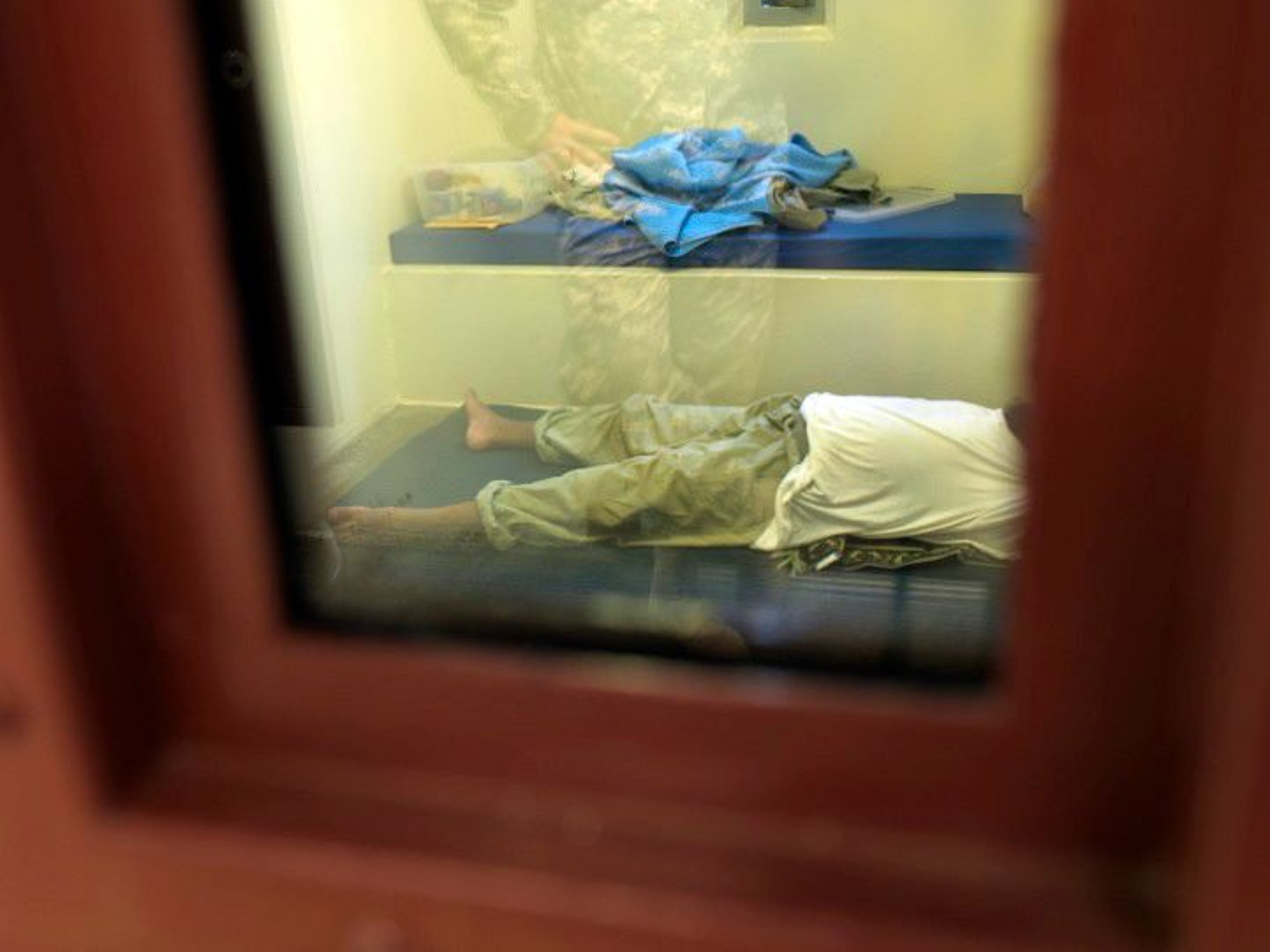
These images are from three places associated with the prison camps at Guantanamo Bay.
Rather than documents to monumentalize the historical fact of the camps, these images illustrate three experiences of home: the naval base at Guantanamo which is home to the American community and of which the prison camps are just a part; the complex of camps where the detainees have been held; and the homes, new and old, where the former detainees now find themselves trying to rebuild their lives.
The post-prison homes illustrate the contrast between the shared humanity of their domestic interiors and the spaces of the prison camps. Motifs of imprisonment and entrapment are present in both, resonating with the prisoners’ experiences — and coming to terms with them. Glimpsing the evening sun through a window is a simple thing but readjusting to having the freedom to do so may not be so simple. Like a net curtain, memories can obscure the view.
On the naval base an American community lives surrounded by razor wire in the last enclave of the Cold War. This is small-town America with a high school, golf course, a mall and familiar fast food chains. It is home to a community where I found echoes of a wider America traumatized after 9/11 by a new post-Cold War threat from a religion and cultures it does not understand.
The narrative is confused and unsettled as the viewer is asked to jump from prison camp detail to domestic still life to naval base and back again.
This disjointed edit is intended to evoke the disorientation of the process of incarceration and interrogation at Guantanamo and to explore the legacy of disturbance such an experience has in the minds and memories of these men.
Still life imagery of personal space and possessions follows a long tradition of symbolism and metaphor. My work draws on the ‘Vanitas’ style of 17th century Dutch painting in which objects like hourglasses, candles, skulls and flowers symbolized the passage of time and the transience of human existence.
— Edmund Clark took part in the 2009 Rhubarb-Rhubarb International Photographic Review.

Feature
If the Light Goes Out:
Home from Guantanamo
UK photographer Edmund Clark shows what remains of the US detainment center at Guantanamo Bay, and he also photographs the homes to which some of the former detainees have returned.
View Images
Feature
If the Light Goes Out:
Home from Guantanamo
Home from Guantanamo
UK photographer Edmund Clark shows what remains of the US detainment center at Guantanamo Bay, and he also photographs the homes to which some of the former detainees have returned.
If the Light Goes Out: Home from Guantanamo
UK photographer Edmund Clark shows what remains of the US detainment center at Guantanamo Bay, and he also photographs the homes to which some of the former detainees have returned.


Top Awards include: Full publication with Nazraeli Press, valued at more than $25,000, Los Angeles Exhibition, Cash Prizes, Solo Feature on LensCulture.
