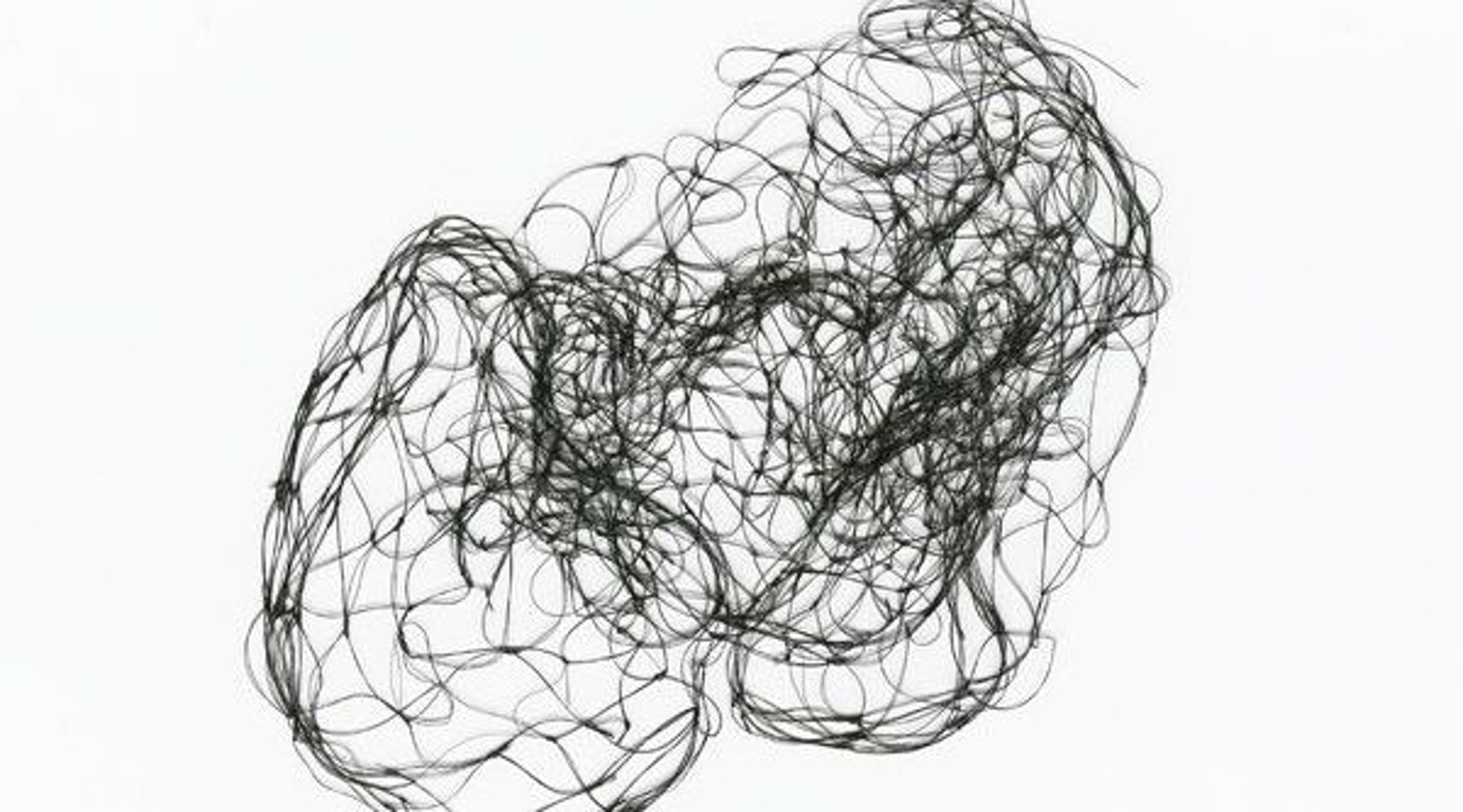
Although usually viewed as something ordinary, functional and familiar,
a second glance at a hairnet reveals an object of beauty and weirdness.
The webs of hairnets are delicate pathways capable of securing and unraveling
in equal measure, designed to serve the often opposite desires of freedom
and control.
Hairnets have been found in grave sites and archaeological digs dating
from the 13th century onwards. The nets used to make these digital photograms
were made from real human hair in the 1920s to 50s. They are delicate
and often hand woven.
The fact that these were made from real human hair sets up all kinds of
musings. Whose hair? Who knotted the net? Hair has always been a curiously
emotive thing. It never dies, and cuttings of it have always been treasured
as keepsakes. The Victorians in England perfected this with production
of hair lockets and memento mori. Yet far from being treasured
as relics, these hair nets were often discarded only to be discovered
decades later in the bottom of someone's dresser drawer.
— Elaine Duigenan
Editor's Note: See an earlier series by Elaine Duigenan called Nylons.

Feature
Net
First she made art with Nylon stockings. Now Elaine Duigenan is back with a quirky series of digital photograms made from vintage hairnets.
View Images
Feature
Net
First she made art with Nylon stockings. Now Elaine Duigenan is back with a quirky series of digital photograms made from vintage hairnets.
Net
First she made art with Nylon stockings. Now Elaine Duigenan is back with a quirky series of digital photograms made from vintage hairnets.


Top Awards include: Full publication with Nazraeli Press, valued at more than $25,000, Los Angeles Exhibition, Cash Prizes, Solo Feature on LensCulture.
