Ernestine Ruben is a new personal
hero of mine. We met a few months ago while we were both reviewing photographer’s
portfolios in Bratislava, Slovakia, and we became fast friends. She then
invited me to participate in a workshop she was conducting. Her way of
working, and the results she achieves, made me a fan for life.
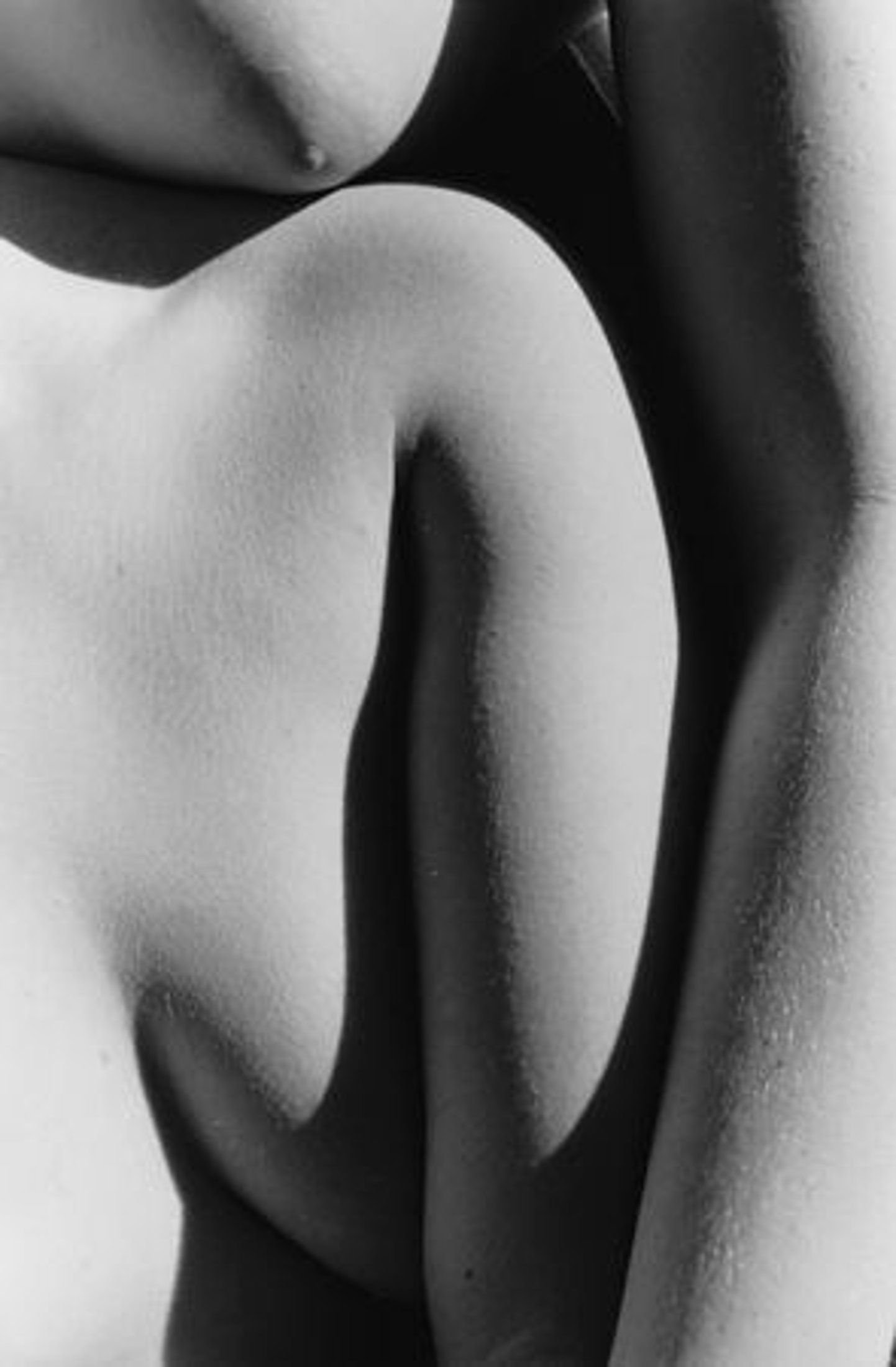
There is a playfulness in her images that draws the viewer in, and demands
careful study. The flow and ebb of plastic space is twisted, distorted
and puzzling. But it is accomplished “simply” with shadows,
light, cropping and framing. They lead to discoveries that delight the
engaged mind.
It is remarkable to learn that she waited until she was 48 years old to
begin her career in photography. She became practically an overnight success.
Twenty-five years later, she continues to push the limits of photography,
break new ground and to reinvent herself and her work.
Ruben grew up in a fortunate home that was frequented by painters, sculptors,
architects, designers and modern thinkers. Instead of toys and dolls,
she had abstract art and mobiles to spin her imagination as a young child.
So it seemed quite natural for her to study and teach art for many years,
and then, just as easily, to dive into photography later in life and create
truly wonderful abstract images from the outset.
She makes the bold claim that photography is the most abstract of art
forms. When challenged on that statement, she replied: “Photography
is abstract because it starts with a given — what the camera records.
The challenge is to transcend that. If you think about it, photography
is really deductive, because what makes it interesting — and abstract
— is what you take away. It’s very much the way a sculptor
works… While photographing bodies, for instance, I want to create
new bodies in the shadows.”
Ruben is energetic and restless, continually exploring new ideas and new
ways to work with old and new forms. Some of the early photos here inspired
members of the Mark Morris Dance Company to create new body shapes and
shadows for her to photograph. That collaboration grew to the creation
of whole new dance pieces with dancers interacting with projections of
her photographs.
She is currently photographing landscapes, then working the prints with
her hands and gum dichromate to capture the foggy web-like vision of someone
who is slowly losing her acute vision. A frightening reality for anyone,
but especially for someone who delights so much in looking and seeing.
Visit her website (www.ernestineruben.com),
to learn more about her work. And if you can, track down any of her books,
most of which are unfortunately out of print.
— Jim Casper

Feature
Bodies in Abstract
Ernestine Ruben plays with shadow, light, cropping
and framing to create dizzying abstract plastic space.
View Images
Feature
Bodies in Abstract
Ernestine Ruben plays with shadow, light, cropping
and framing to create dizzying abstract plastic space.
Bodies in Abstract
Ernestine Ruben plays with shadow, light, cropping
and framing to create dizzying abstract plastic space.
