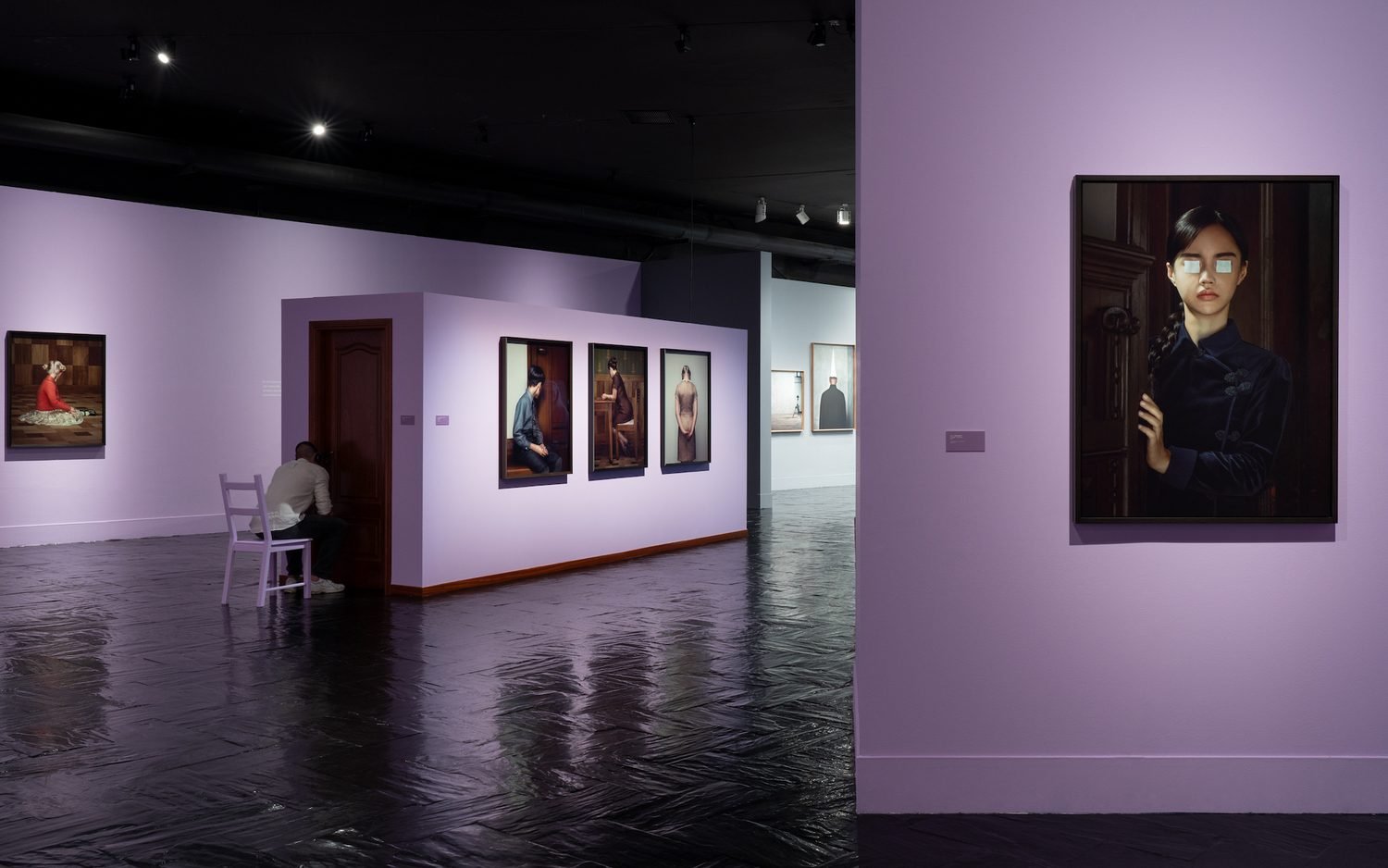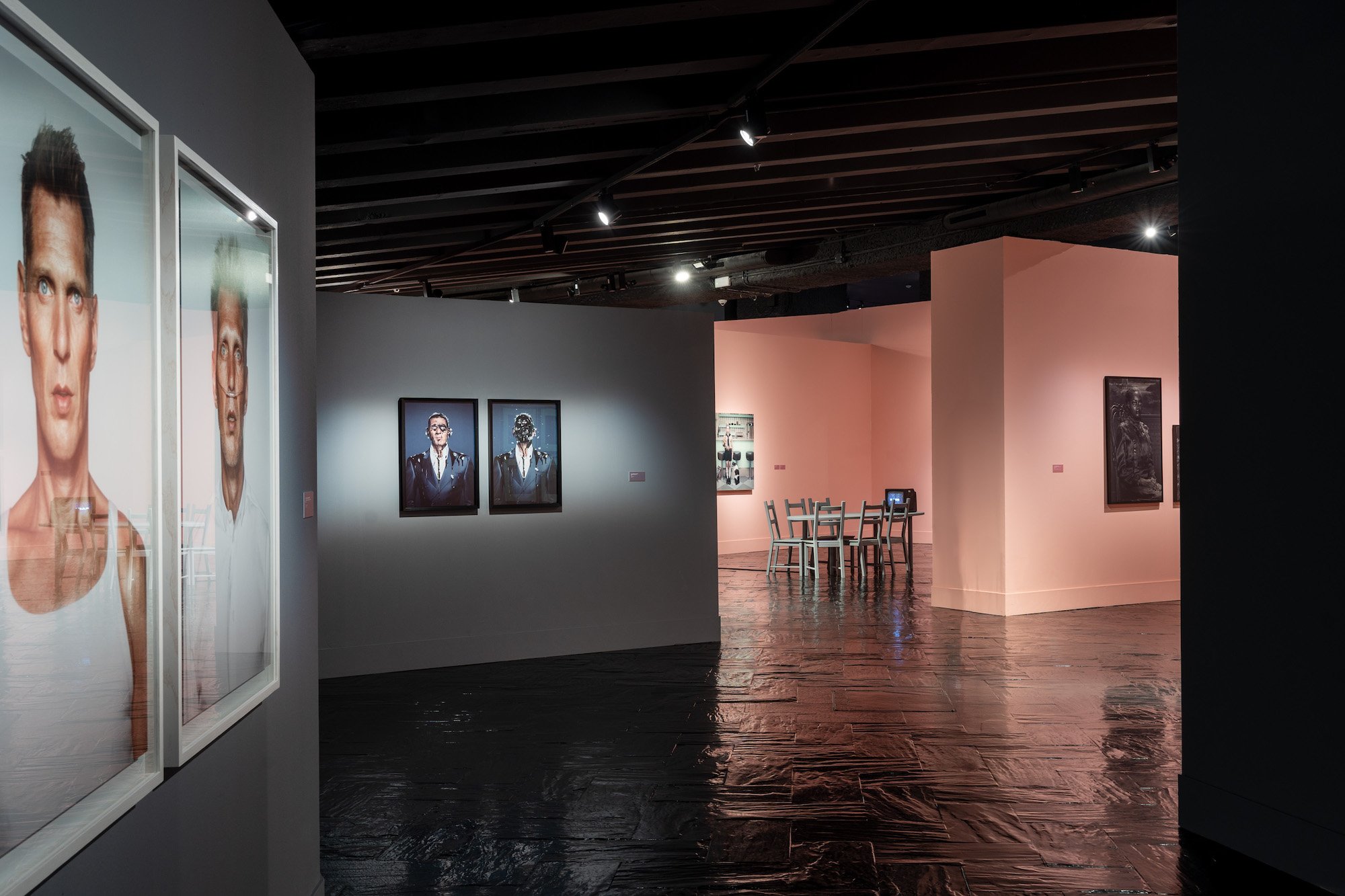
With its mix of still and moving images, Narratives of emancipation, desire and intimacy explores the work of renowned Dutch artist Erwin Olaf (1959-2023). The posthumous retrospective at the spacious cultural center Fernán Gómez—situated in the cultural heart of Madrid—is an audacious juxtaposition of the various series Olaf produced over time, revolving around three main themes: emancipation, desire, and intimacy.
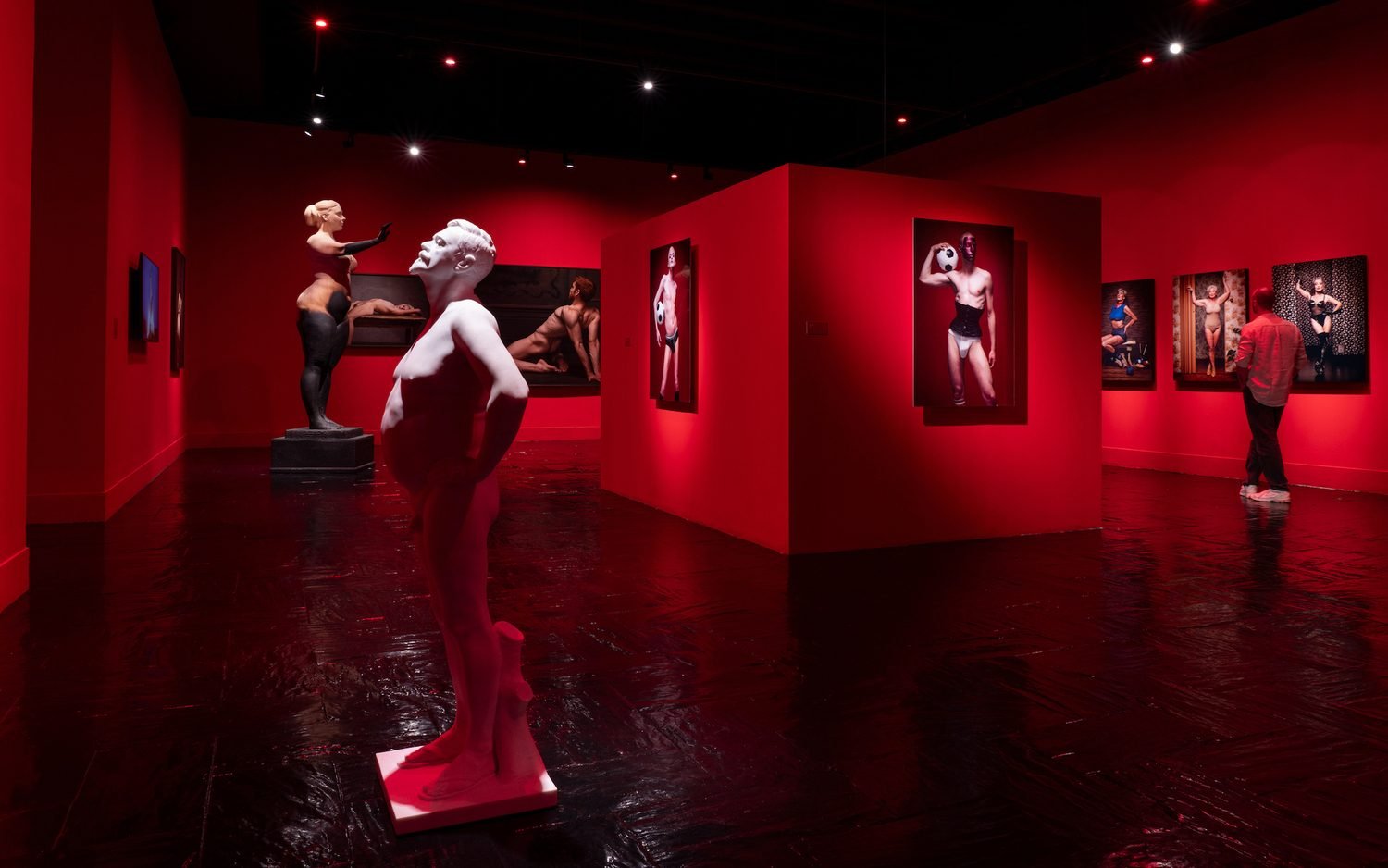
Imaginatively designed by Paco Barragán, the curator who closely collaborated with the artist for several years, the space itself creates different viewing contexts that invite viewers to experience the themes viscerally. Without adhering to any strict chronology, selected photographs, videos, sculptures and multimedia installations from a career spanning almost 40 years trace Olaf’s artistic development.

Initially positioning himself as an “angry young man,” Olaf’s heart was first set on making a mark for himself through developing a rather bold visual approach. This urge to seek an entry point through dissent is probably best exemplified by his infamous Princess Diana lookalike picture from the series Royal Blood (2000), comprising blonde models portraying celebrities that met a violent end. It explores our public fascination with fame and violence and has the look and feel of commercial imagery yet also retains its own aesthetic—an idiosyncrasy which eventually launched the artist into the highest echelons of fine art photography.

Olaf’s work then started to progress towards more abstract and lingering visual comments on society. In the exhibition, this artistic evolution becomes clear when seeing earlier works next to more recently produced series. The pronounced imagery he made early on in his career was directed at breaking society’s taboos then later developed towards a visual language that delicately balanced social concerns with a more inward, intimate relationship to self. It is a move from explicit activism to a more latent, under the surface examination of (art) history and how elements of the past are reflected in today’s society.

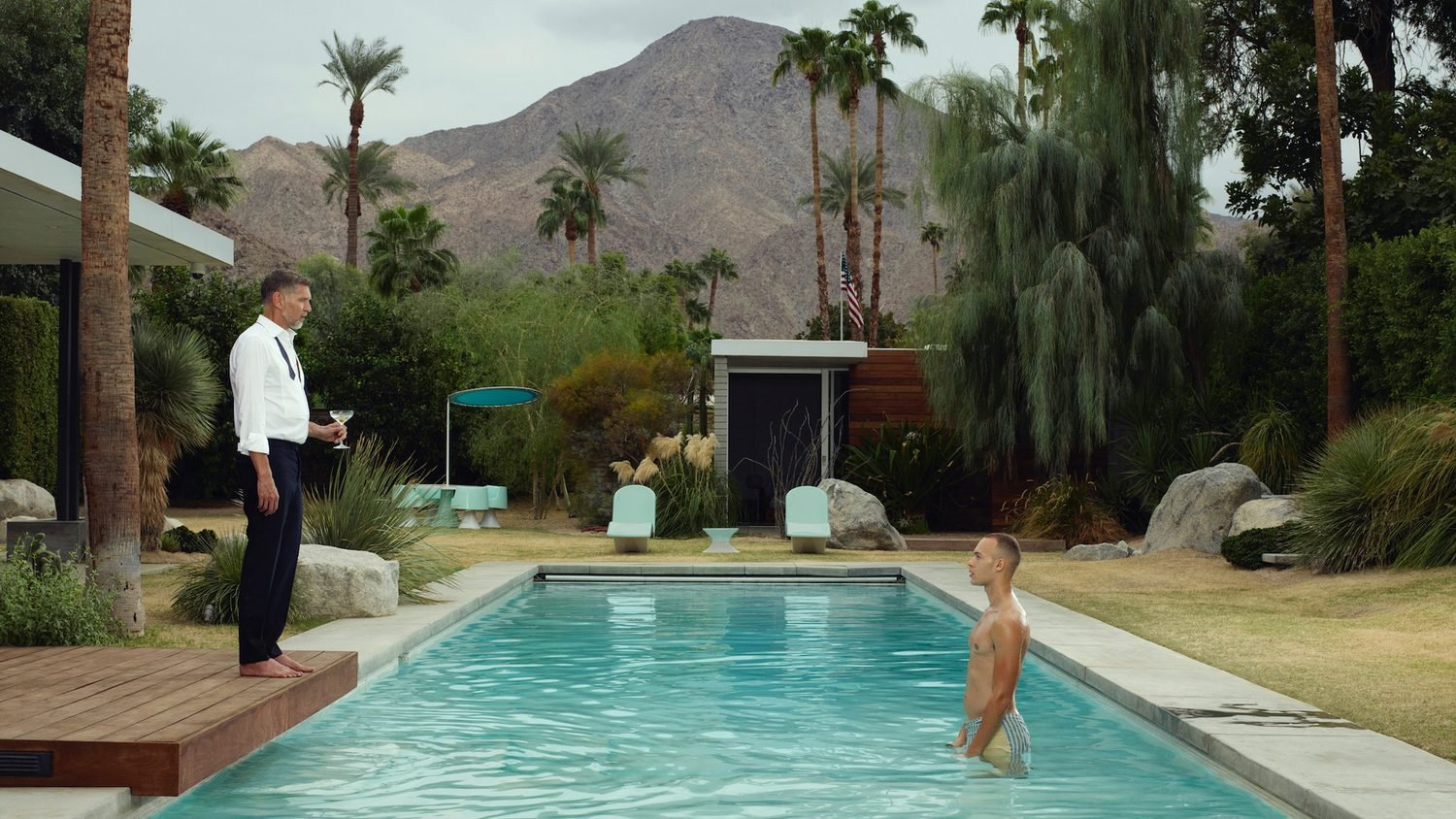
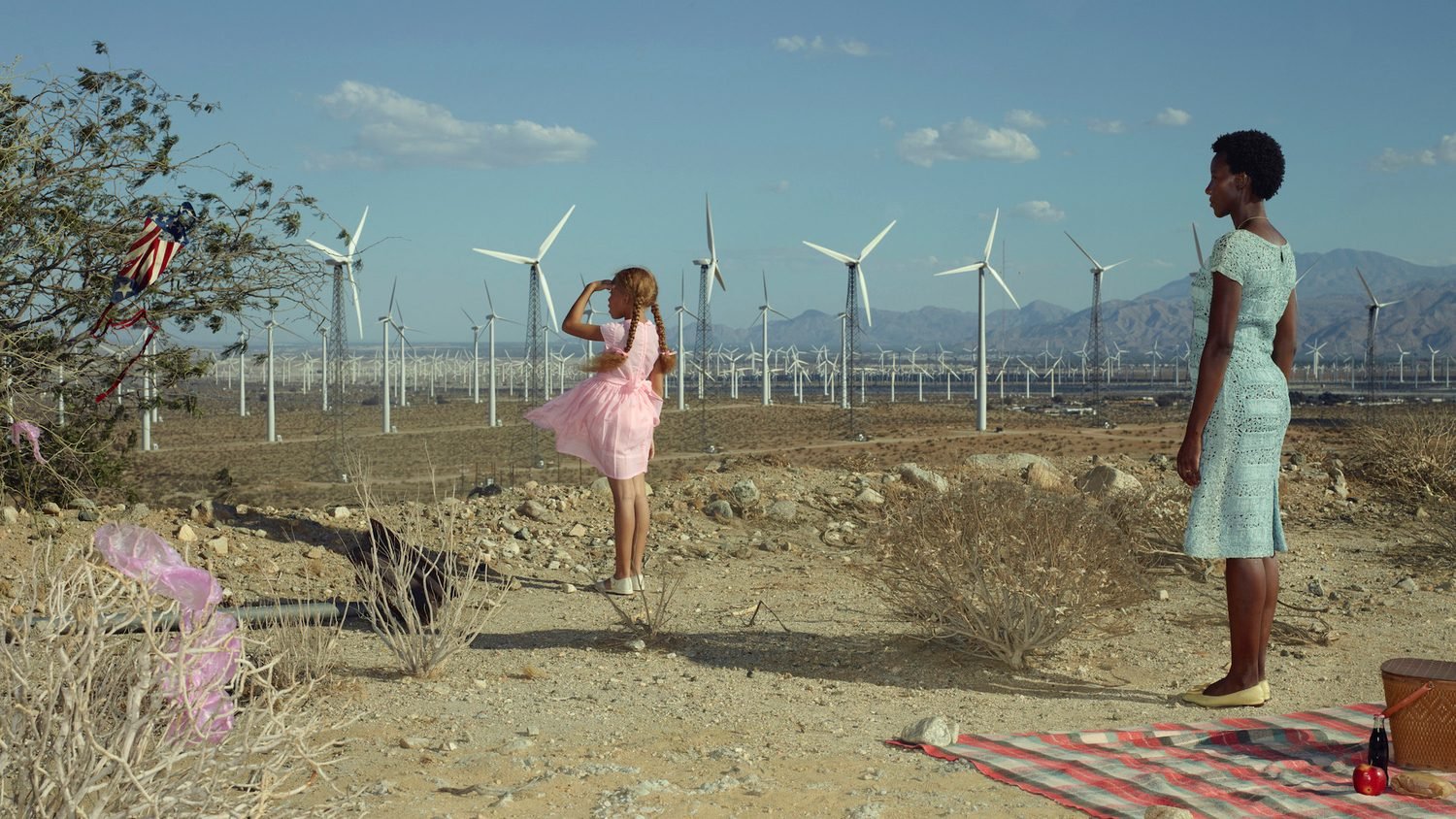
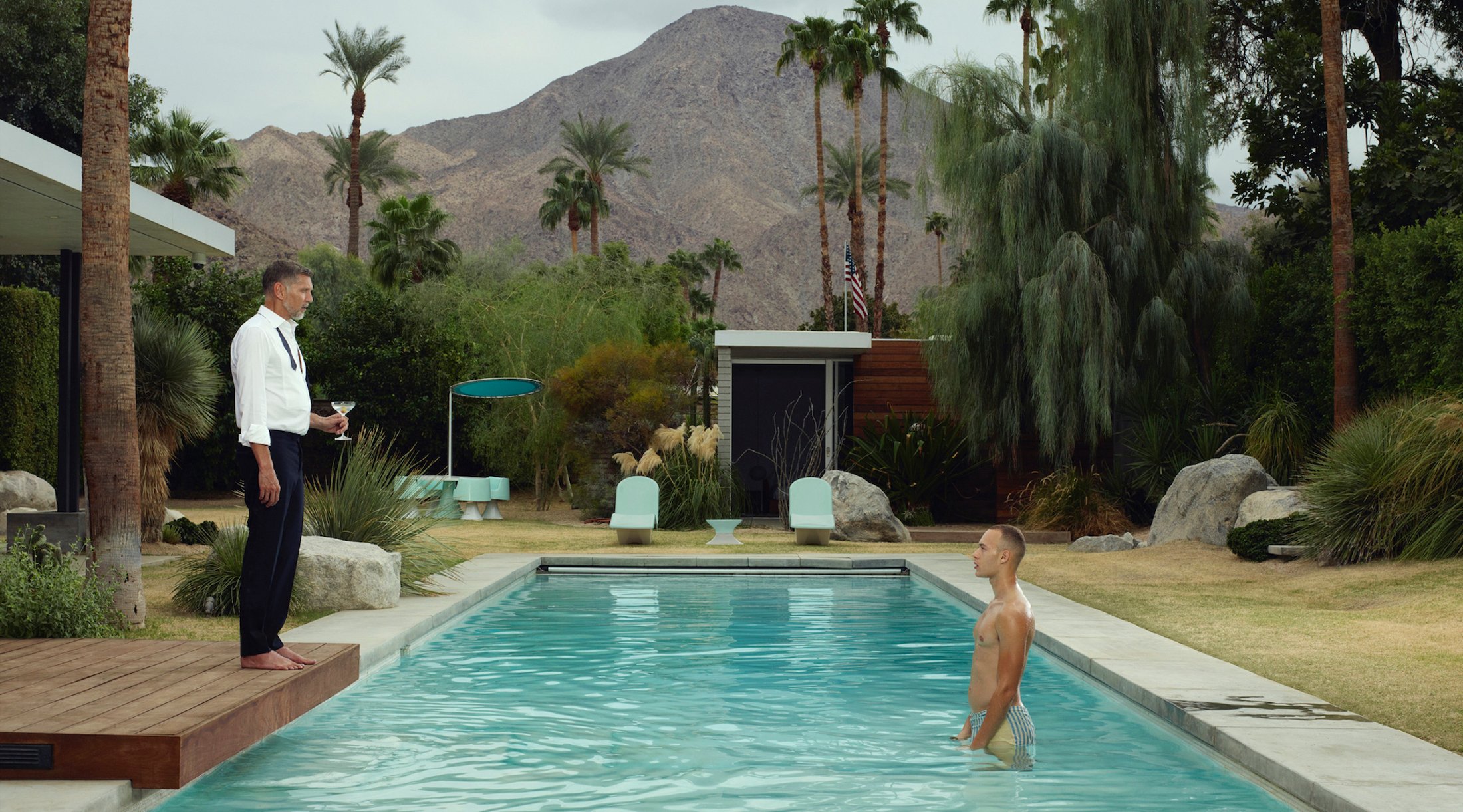
As he matured, Olaf also increasingly felt the urge to “research where photography’s stillness ends and film’s motion begins.” He started to include video elements in his series and over time, he gradually moved away from the safe space of his studio in Amsterdam to arrange shoots in exterior settings all over the world. Interestingly, the works that emerged from this change evolved towards more delicate hints of nostalgia and of domesticity, bringing together seemingly incompatible extremes of strength and vulnerability. These paradoxes are played out in Berlin (2012), which explores how today’s world contains echoes of the 20th century interwar period, but also in Shanghai (2017) and in Palm Springs (2018)—series that hint at the uncanny aspects of booming megacities and the communal dream for individual prosperity.

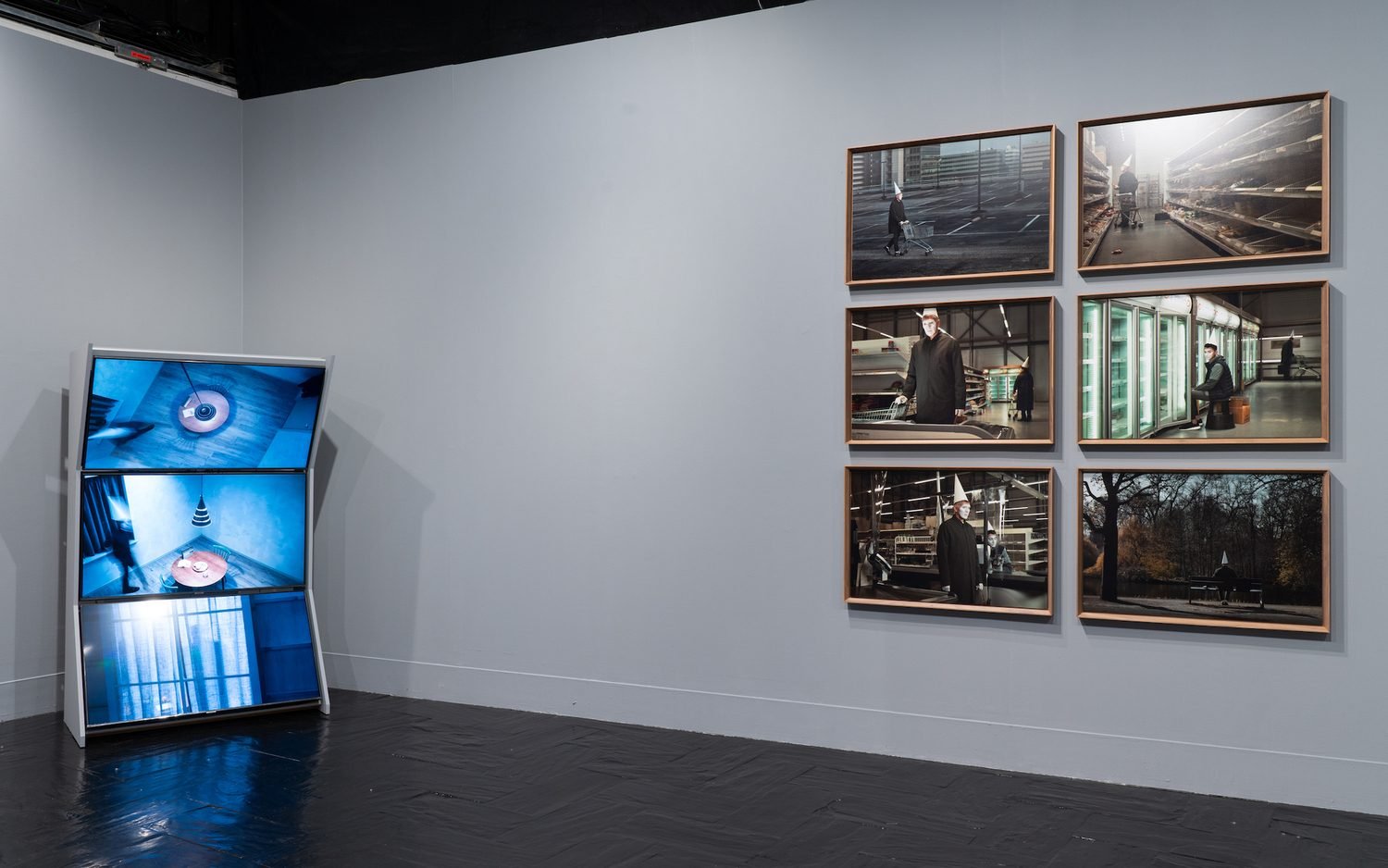
In what turned out to be the final stage of Olaf’s career, due to the progressive nature of his ill health and his decades-long battle with emphysema, a sense of isolation and broken communication rises to the surface. This becomes most apparent in the projects he produced between 2020 and 2021, Im Wald and April Fool. The extra-large monochrome prints of Im Wald are particularly impressive in their serenity, contrasting strongly with his more tumultuous earliest works such as Chessmen (1988/9), its imagery depicting tenderness loaded with a dark tone of disquietude.

Im Wald, inspired by the era of Romantic landscape painting but also embracing the visual language of American landscape photographer Ansel Adams, represents the pinnacle of Olaf’s relation to the real world and his deep fascination with the force of nature, overwhelming in its indifference to us. This recent work also includes a few images in which the artist acts as his own model—as is clear from this retrospective, the artist always had a strong urge to include self-portraits—and the piece in which he poses as the figure in Casper David Friedrich’s most famous painting, Wanderer Above a Sea of Fog, highlights this arrangement.
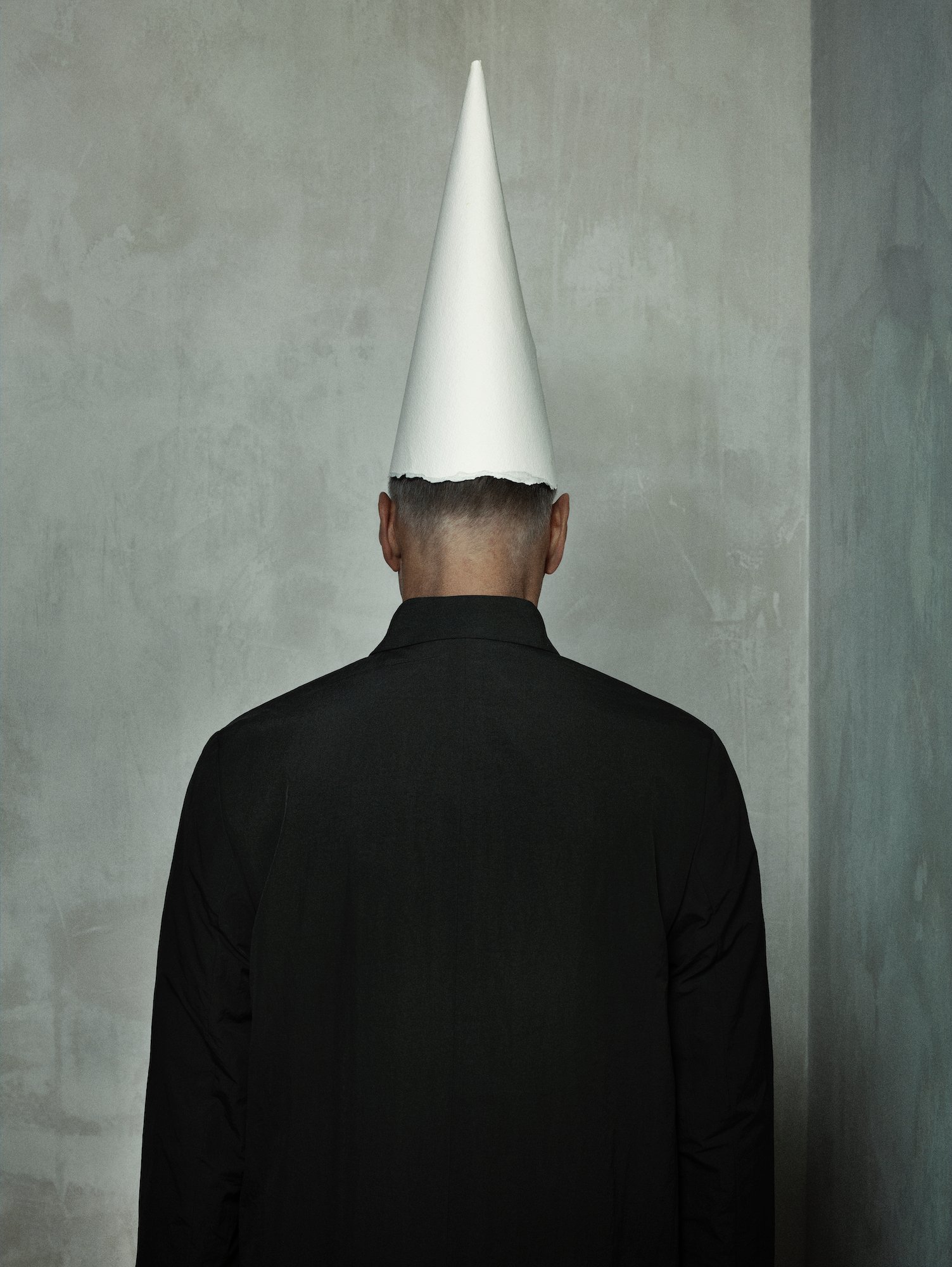
Working with mise-en-scène and highly theatrical compositions, Olaf massaged the situations on set towards moods that speak to no specific emotion yet always have a certain tension lingering underneath their surface. It is this very blend of sterile aesthetic with the drainage of emotions that give his images their magic-realistic appeal, which is to be considered as his ultimate artistic achievement.

The exhibition concludes with April Fool, a triptych video-installation that gives shape to the emotions that emerged from the surreal communal experience of the pandemic. Filmed from various angles adopting the perspective of a surveillance camera, we see Olaf himself acting out an impersonation of a melancholic pierrot clown, sitting alone at a kitchen table with a transistor radio. The work vibrates a sense of solitariness—a mood in a minor key felt by so many of us during the Covid-era, yet felt even more keenly by him due to his fragile physical condition.
What sticks with me most after visiting Narratives of emancipation, desire and intimacy, is that it is near-impossible to present a complete overview of such an extensive lifework in one go. Yet, produced with the dignity and dedication that Olaf’s work deserves, the thematic structure and dynamic of the display draw out the photographer’s underlying artistic motives, making this non-traditional retrospective an insightful introduction for those new to Olaf’s metier while visitors who are more familiar with his characteristic approach to photography get to see it with fresh eyes.