Built in the 1970s, the Metramo dam was supposed to bring water to the fifth Italian steel mill. The factory was never built, and the dam has remained unused ever since. It was included in the so-called “Colombo package,” the name given by the Italian Prime Minister at that time: an “emergency” asset package adopted to bring industry and employment to the Calabria region, the poorest region in the country. About 700 million euros were spent, but none of the facilities were ever used. Still today, their remains lie idle in the landscape. © Martin Errichiello & Filippo Menichetti
The arm of our friend Ibrahim, a seasonal worker from Senegal. The plain in Gioia Tauro is one of the region's biggest areas for the cultivation of citrus, the primary export in southern Italy; here, agriculture and fruit cultivation have been the primary export for centuries. Peasants worked the land, and the land gave back its richest bounties. Industrialization broke this cycle, causing instead a huge emigration from the region. Today, the fields are harvested by seasonal workers, who mainly come from West African countries. The city of Rosarno, a few kilometers away from Gioia Tauro, is home to one of the biggest camps in southern Italy, where almost 1,400 workers survive as day laborers. Episodes of racism and violence are common, and the situation between immigrants and locals has remained tense for decades. © Martin Errichiello & Filippo Menichetti
The remains of a detonating cord are burned after a controlled demolition. © Martin Errichiello & Filippo Menichetti
A controlled demolition of a section of the viaduct in the province of Cosenza. On March 2nd, 2015, a section of the bridge—a flagship of the national engineering triumphs of the 60s—collapsed during the primary demolition, killing Adrian Miholca, a 25-year-old worker from Romania. One year later, in March 2016, the process of “modernizing" the highway started again. © Martin Errichiello & Filippo Menichetti
This stratigraphy, brought to light by Italian archaeologist Fabio Martini during the last fifteen years, shows multiple layers of soil indicating climatic, geological and human evolution between 24,000 and 11,000 BCE. This dig is part of a larger archeological site located in the river Lao valley. © Martin Errichiello & Filippo Menichetti
A "Ficus Magnolioides" tree in Reggio Calabria, a few steps away from the only memorial plaque for the so-called "Reggio uprising." On July 5, 1970, the mayor of the city, Piero Battaglia, gathered 7,000 people in Piazza Duomo, asking them "to be ready to support the right of Reggio as the head of the region." On June 7th, just a month earlier, the Italian government had moved the regional administrative center from Reggio Calabria to Catanzaro. This caused further outrage in the population, whose city was already facing a severe economic and political depression. The whole city rose up, starting one of the longest urban revolts in recent European history. It lasted almost two years, and, for the first time, the army was deployed to contain the situation. Six people died during the clashes and hundreds were injured. The revolt started as a transversal demonstration, including all political colors and social layers, but soon the right wing took over, depicting the whole period as a neo-fascist revolt. Still today, in the collective memory, it represents a very controversial moment, whose narration remains shrouded in a mist of forgetfulness. © Martin Errichiello & Filippo Menichetti
The last stretch of the A3 highway, which cuts through the old fishing district of "Archi" on the edge of Reggio Calabria. © Martin Errichiello & Filippo Menichetti
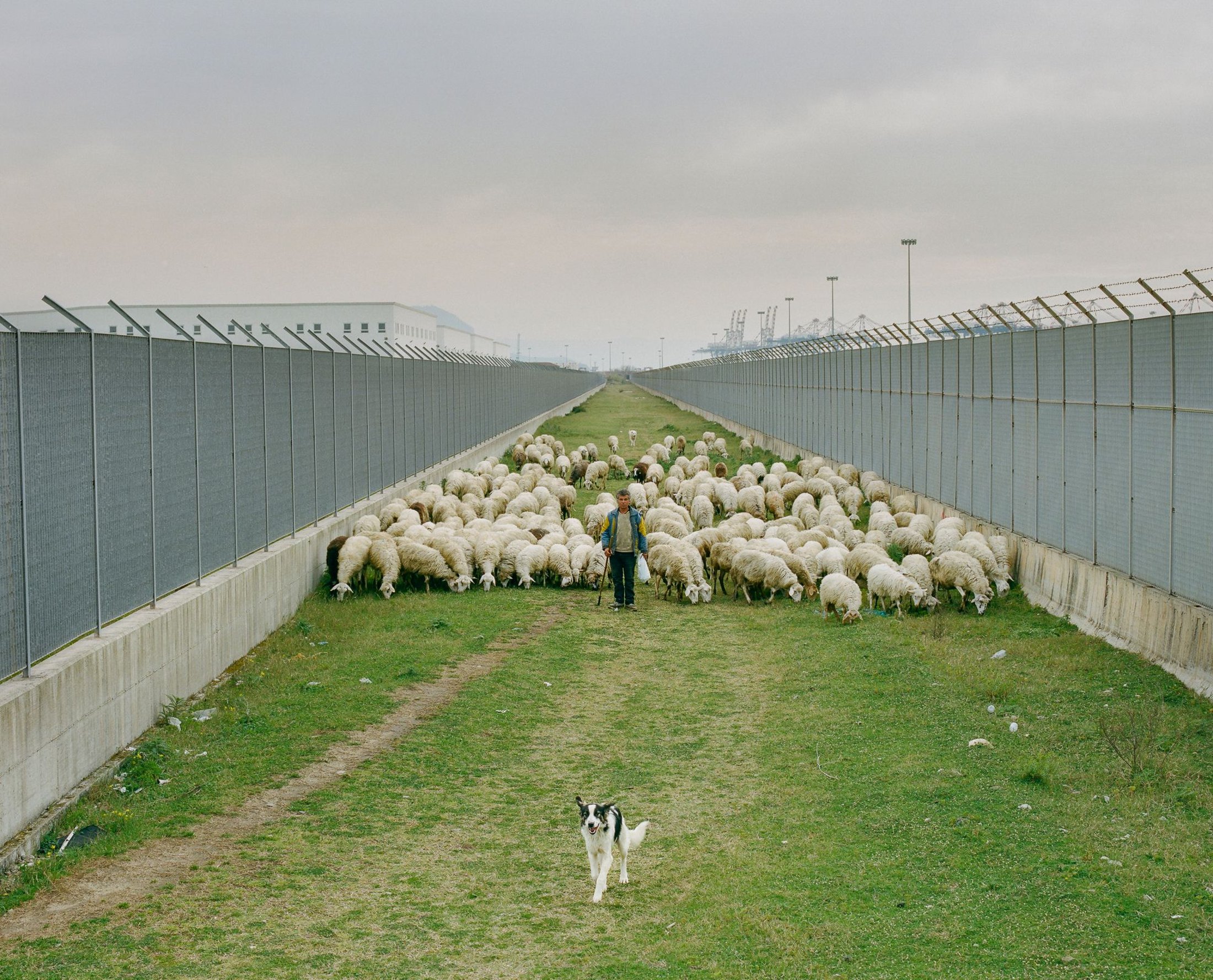
A shepherd grazes his herd in the industrial area behind the Gioia Tauro harbor, where the village of Eranova used to be before its demolition. © Martin Errichiello & Filippo Menichetti
A few kilometers away from the viaduct "Italia," in the Lao river valley is one of the most important archeological sites in Europe. Discovered in 1961 by the archaeologist Paolo Rossi, "Romito's Cave" houses relevant findings from the Paleolithic era, including the inscription of an "Uro," a prehistoric bull. It is said that the origin of the name "Italia" comes from the Oscan word "vìteliù," meaning "land of young cattle." The bull was an important symbol for the southern Italic tribes, and was often depicted goring the Roman wolf as a symbol of free Italy during the Social War (91-88 BC). © Martin Errichiello & Filippo Menichetti
Piazza del Popolo, Reggio Calabria. © Martin Errichiello & Filippo Menichetti
A tourist map showing the city of Reggio Calabria. © Martin Errichiello & Filippo Menichetti
A rock in the gulf of Palmi, a seaside village on the southern Calabrian coast. © Martin Errichiello & Filippo Menichetti
Image of clashes in Reggio Calabria taken from the Italian magazine "Annali d’Italia," 1971. © Martin Errichiello & Filippo Menichetti
Traces of hands in the abandoned factory "Ex Opera Sila," occupied in 2009 by African seasonal workers from Rosarno. This is where the so-called "orange revolt" started. © Martin Errichiello & Filippo Menichetti
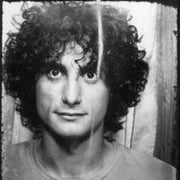
Portrait of a worker in a factory behind Gioia Tauro's harbour. © Martin Errichiello & Filippo Menichetti
Excerpts of the confidential reports from British Intelligence on the Reggio uprising. In those years of protests across Europe and the world, England kept a close eye on Italian politics to prevent communist activity. © Martin Errichiello & Filippo Menichetti
Literally, "Eranova" means “a new era.” This tiny community of local day laborers was founded in 1896. They wanted to rebel against the hard working conditions imposed by the nobles who, at that time, owned the land. At the end of the 1970s, after not even a century of life, the whole village of Eranova was evacuated and destroyed to make room for the fifth Italian steel mill. 200 families were displaced and 70,000 trees were razed to the ground, but no factory was ever built. These are some of the family pictures—in addition to recordings, videos and documents—we collected from the former inhabitants of Eranova. The composition includes the very first and last images of the short but meaningful existence of this village: a group shot, taken around 1904, and the image of a church, the very last building to be demolished. © Martin Errichiello & Filippo Menichetti
The original documents and operating manuals found inside the Ex Liquichimica of Saline Joniche, a former natural reserve not far from Reggio Calabria. At the beginning of the 1970s, it became an industrial complex included in the so-called "Colombo Package." In 1973, only two days after its opening, the National Institute of Health declared that the plant needed to close due to carcinogenic components found
in the animal feed that the factory produced. The employees were laid off immediately; they remained that way for another 23 years. After almost 40 years, the natural ecosystem of Saline Joniche is now reacting to the devastation brought by man. In 2015, in the area near the complex, the entomologist Francesco Manti made a peculiar discovery: he observed
the presence of the breeding nest of a butterfly, the African Monarch (Danaus chrysippus chrysippus), a migratory species rarely before seen in Europe. These images are video stills taken from Youtube. The video shows kids diving from the abandoned harbor at the factory of Saline Joniche. © Martin Errichiello & Filippo Menichetti