Wow. This is the largest and most comprehensive overview of photography from China ever exhibited in the United States (and perhaps anywhere in the world).
It is an ambitious and completely successful endeavor, touching on history, ethnic differences, dramatic cultural changes, politics, propaganda, repression, environmental concerns, human rights, scholarship and more.
Wendy Watriss and Fred Baldwin, the co-founders of FotoFest, are the curatorial geniuses who pulled this stunning and well-rounded production together, with the help of several other experts in the history of photography in China.
Photography from China 1934-2008 presents work by 34 Chinese artists, including two recently recovered archives from the 1930s and 1940s. The broad scope reveals the diversity of roles and styles that have shaped photographic art over the past 74 years in China.
Lens Culture is very pleased to be able to present 60 photographs from this remarkable series of exhibits. Yet this is just a small sampling of the riches that can be discovered at the exhibitions.
For our presentation, we work backwards in time, showing current work in both conceptual and documentary photography, then reviewing some tightly choreographed photography from Chairman Mao's Cultural Revolution, and then back to the beginning of state-controlled Chinese propagandist photography which emerged during the Japanese-Chinese war. The oldest work dates back to some beautiful ethnographic studies from 1934.
Here is a brief description of each of the major sections from this comprehensive overview:
CONCEPTUAL AND STAGED WORK - CURRENT PERSPECTIVES, 1998-2008
Individual shows of 10 current, multi-disciplinary Chinese artists address issues of identity, memory, spirituality, gender, urbanism, and the complex relationships between the present and the past in contemporary China.
Designed as a series of one-person exhibitions, these shows feature BAI Yiluo, CANG Xin, CHENG Lingyang, XING Danwen, LIU Lijie, SUN Guojuan, WANG Chuan, WU Gaozhong, YAO Lu, and ZENG Han.
CONCEPTUAL AND STAGED WORK - NEW PHOTO, 1994-1998
In 1996, two Beijing artists, RongRong and LIU Zheng founded the influential New Photo magazine, an independent, underground publication that circulated in Beijing’s art circles. The magazine signaled a burgeoning Chinese interest in photography as a medium of contemporary art, and marked an important turning point in the development of contemporary photography in China. FotoFest 2008 presents this new exhibition for the first time outside of China, with 15 artists who were published in New Photo magazine. The exhibit, curated by ZHANG Li and WU Hung, is organized by Three Shadows Photography Art Centre in Beijing. The New Photo exhibit features ZHUANG Hui, LIU Zheng, GAO Bo, GUAN Ce, JIN Yongquan, QUI Zhijie, AN Hong, RongRong, WANG Xu, ZHAO Liang, JIANG Zhi, ZHENG Guogu, SAN Mao, and HONG Lei.
INDEPENDENT DOCUMENTARY PHOTOGRAPHY, 1985-2007
In the mid-1980s, a new generation of Chinese photographers began to produce strong personal bodies of photo-documentary work outside official media and news agencies. The first to gain international prominence was WU Jialin with his work on Yunnan province. A chance discovery of this work by FotoFest co-founder Fred Baldwin at
Marc Riboud’s Paris apartment led to his first exhibition in the Western art world at FotoFest in 1996.
Two subsequent generations of photographers continue to develop independent approaches to documentary work.
LU Nan’s interest in the ethics of social interaction, led him to photograph the institutionalization of the mentally ill and underground Catholic communities in China. LI Lang’s early poetic work with the Yi People in central-western China has led to his current work exploring the human imprint on China’s landscape.
ETHNOGRAPHY, PHOTOJOURNALISM AND PROPAGANDA, 1934-1975
In 1937, at the age of 25, Sha Fei (1912-1950) had himself assigned to the Chinese Communist Party’s (CCP) 8th Route Army during the Second Sino-Japanese War (1937-1945). Sha Fei photographed combat and training with the Chinese forces allied with CHIANG Kai-shek, against the Japanese. He set up pictorial magazines to publicize the 8th
Route Army and its work in rural villages, and he organized a mass media system that became a principal part of the CCP’s propaganda system for the next 20 years, through the 1970s. After Sha Fei’s controversial execution in 1950, his work was blacklisted until the late l980s when his family and colleagues succeeded in rehabilitating his name. FotoFest 2008 exhibits the newly recovered work of Sha Fei for the first time outside of China.
Editors and photographers trained by Sha Fei during the war became leaders of major CCP pictorial news media and propaganda agencies, using photography as one of the primary media promoting Chairman MAO Zedong’s agenda during The Cultural Revolution (1966-1976). The exhibition curated by CHEN Guangjun and XU Vicky, founders of 798 Gallery, one of Beijing’s most respected photography galleries, shows how photography was choreographed to promote the message of collective solidarity. The exhibit, commissioned by FotoFest, features three photographers working for news publications during The Cultural Revolution: WENG Naiqiang, XIAO Zhuang, and WANG Shilong.
A long time ago, reflecting a growing interest by the Chinese in the peoples and politics of China’s western border regions near Tibet, ZHUANG Xueben (1909-1984) began traveling to China’s far-western border regions in 1934. His work from 1934-1939 is one of the earliest and most serious photographic examinations of ethnic minorities in these regions.
This is the first time this work is being shown outside of China.
____
As I have already said, this exhibition seems like one of the most important large-scale exhibitions of new or unknown photography in years.
The wide-ranging scope provides many cultural and historical contexts that are necessary to begin to appreciate the important nuances that appear in the contemporary work. Visual and stylistic references crop up repeatedly throughout all of the periods, and thanks to the thoughtful curatorial direction, we newcomers to Chinese photography (as indeed most of us are) can begin to recognize these patterns and references, so the experience of working one's way through this work becomes more and more rewarding.
If you have any chance to see it in person, give yourself a good four or five days to see it all and let it soak in. If you can't make it to Houston, you can purchase the excellent catalog (a beautifully designed book with several very insightful essays) from the FOTOFEST website.
My true hope is that this collection of work can travel the world (although it requires a lot of exhibition space), and that a comprehensive book will be published to present many more of the photographs and essays that comprise this exhibition. It is an important and generous contribution to the scholarship and understanding of the roles that photography has played throughout the modern history of China.
In the meantime, Lens Culture will continue to mine the riches presented in this collection. So, be sure to check back often as we add interviews, essays and articles about contemporary photography from China.
— Jim Casper

Feature
Photography from China 1934-2008
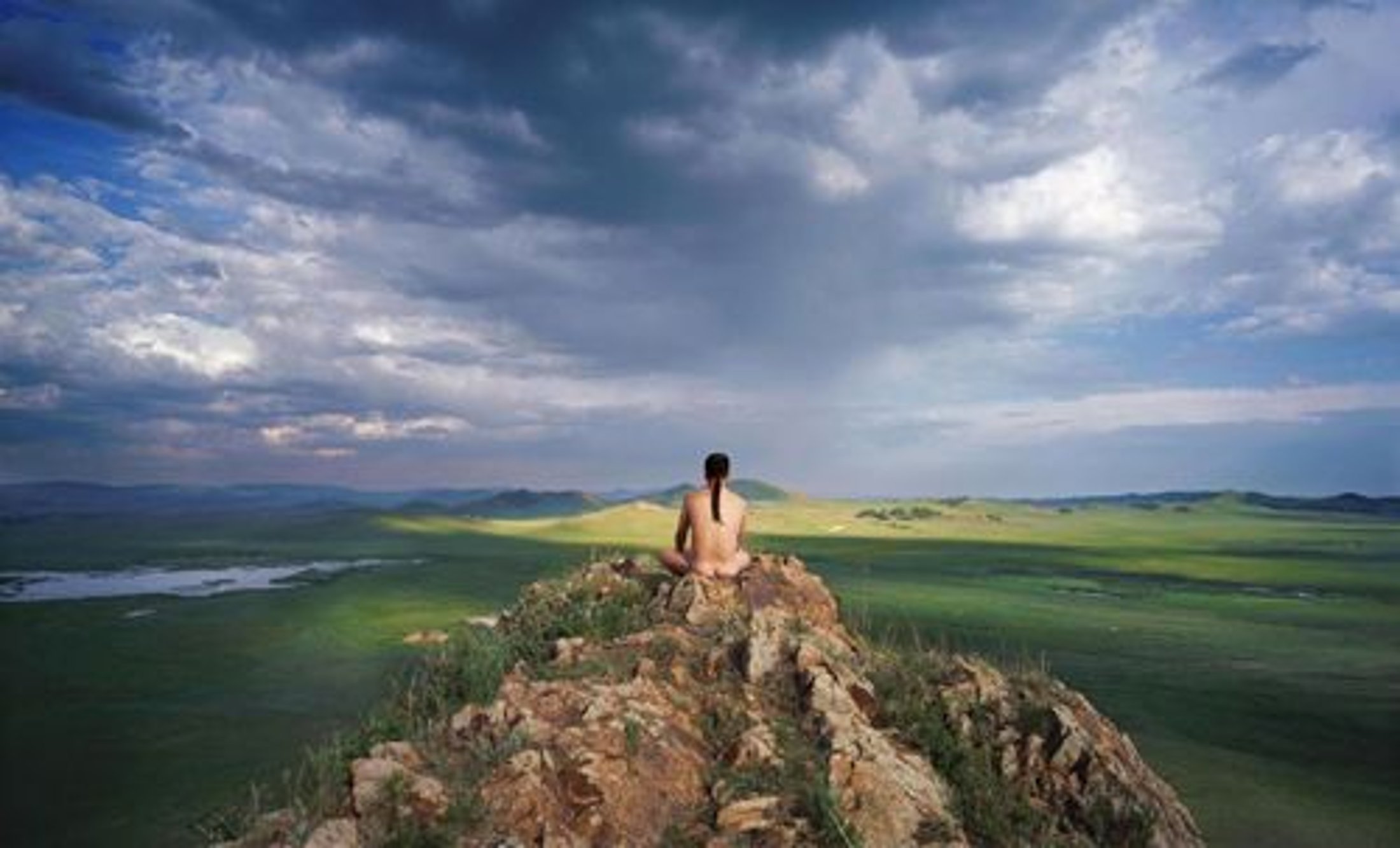
The world’s most comprehensive collection and overview of photography from China is premiering in a mammoth city-wide exhibition in Houston, Texas, as part of FotoFest 2008. Lens Culture is thrilled to present 60 photographs from the exhibition — many never seen before outside of China.
View Images
Feature
Photography from China 1934-2008
The world’s most comprehensive collection and overview of photography from China is premiering in a mammoth city-wide exhibition in Houston, Texas, as part of FotoFest 2008. Lens Culture is thrilled to present 60 photographs from the exhibition — many never seen before outside of China.
Photography from China 1934-2008
The world’s most comprehensive collection and overview of photography from China is premiering in a mammoth city-wide exhibition in Houston, Texas, as part of FotoFest 2008. Lens Culture is thrilled to present 60 photographs from the exhibition — many never seen before outside of China.

Top Awards include: Full publication with Nazraeli Press, valued at more than $25,000, Los Angeles Exhibition, Cash Prizes, Solo Feature on LensCulture.
