
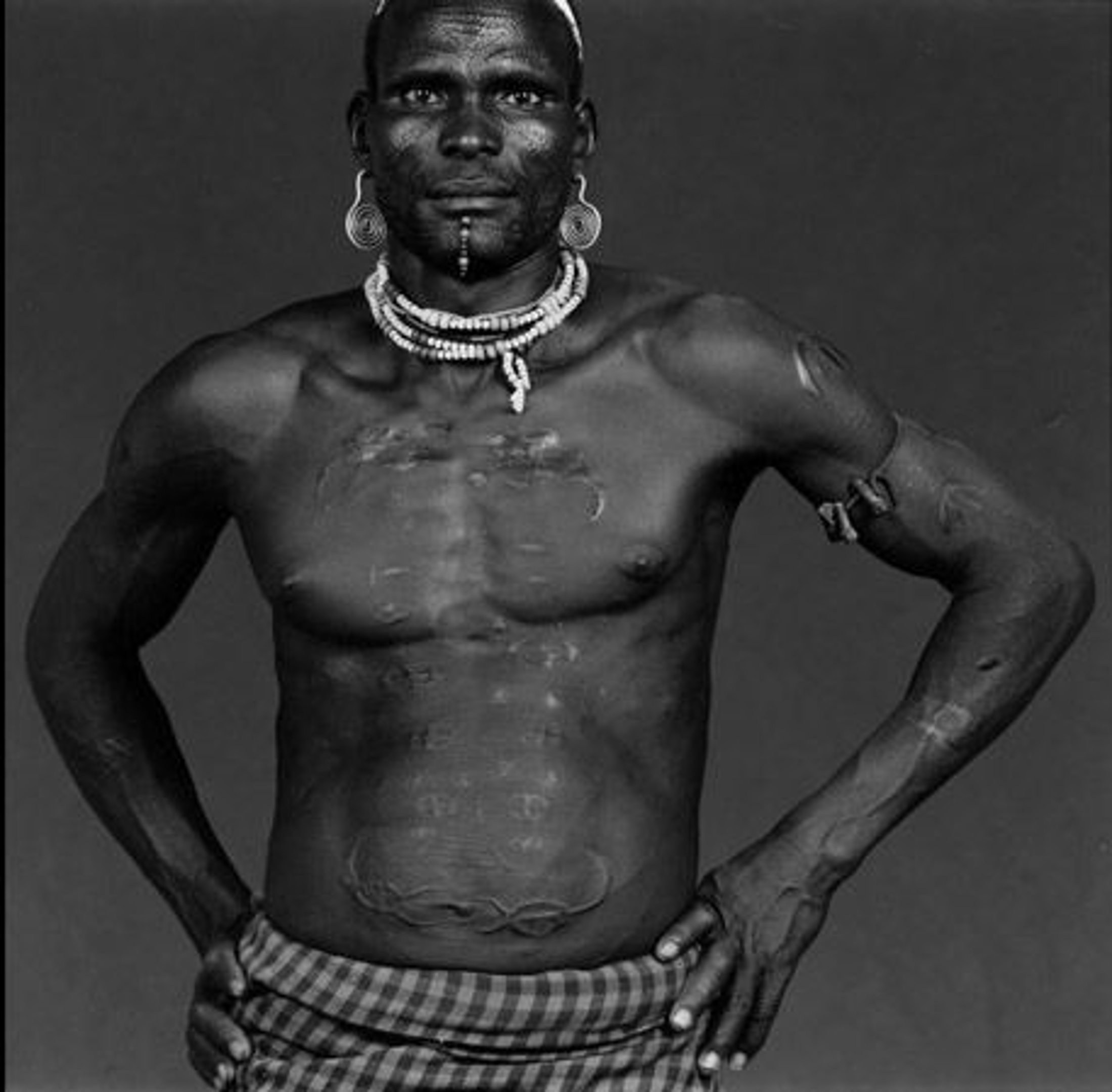

Isabel Muñoz has always
used her camera to move in close to her subjects — closer than we
would permit ourselves. She’s done this so well with sensuous dancers
in her series on the rituals of the Tango, Flamenco and traditional Oriental
dance. She has captured exquisite “fragments” of the acts
of intimacy and seduction with striking interplays of bodies, limbs, shadow
and light.
In her most recent work, shown here, she has challenged herself even more
by venturing into southern Ethiopia to photograph 21st century Surma,
Nyangatom, Bodi, and Topossa tribal members. Some of the warriors, like
the first one shown at right, kill their neighboring tribesmen as a matter
of pride.
Working with a portable photo studio (three cameras, backdrops, generators
and lights), Muñoz gets in close again, with striking photographs
that are rich with details: the leather-like textures of skin, drips of
sweat, patterns of scarification, piercing, mud and body paint, and elaborate
decorative body art. But these are not intimate portraits. Her subjects
stare directly into the camera with mask-like faces, fierce dignity and
palpable distrust in their eyes. The effect is especially unnerving because
the photographs and the people are so pristinely beautiful.
Although she cites Leni Riefenstahl as her inspiration to make these photos,
Muñoz chose to isolate and separate the people from their natural
surroundings, whereas Riefenstahl seemed to celebrate the whole of tribal
life. Riefenstahl's photos demonstrate a sense of lively cooperation and
collaboration between photographer and subjects at ease in their environment.
To my mind, Muñoz’s photos have more in common with the technical
beauty and intense scrutiny of Avedon’s series of drifters in the
American west.
In a tour de force at a recent solo show at Gallerie Seine 51 in Paris,
Muñoz displayed this current work in three unique formats: luscious
traditional silver black-and-white prints; larger-than-life platinum contact
prints; and exquisite digital color prints that shock you with their intense
vibrancy — and remind you that these people live in the 21st century.
Isabel Muñoz talked with me about this work in October 2005. Among
other things, she explained the intentionally seductive nature of the
body decorations; never completely gaining their trust; and the visual
ambiguities between the sexes.
You can listen
to a 10-minute excerpt of our conversation here.
She also recounts a bit of human nature that allowed her to gain a bit of trust with her subjects (3 minutes).
— Jim Casper
