The exhibition entitled “Personals” aims at investigating
and playing with the phenomenon of self-advertisement – those people
who send images of themselves to magazines or Internet sites, in the hope
of finding a suitable partner.
Modern technology facilitates the satisfaction of the enormous human appetite
for classification and selection, saving an average passive member of
consumer society both time and money in meeting even the most basic physiological
needs. However, not many of self-advertisers like to “get straight
to the point”. For that reason, the favourite password in the world
of personal ads is “friendship”. It covers the desire for
more intimate relationships, in the case of those whose longing is repressed
in daily communication on account of psychological or social obstacles.
It seems enough for a start to have a photograph, the “right”
and the most representative one, whether it was taken especially for the
occasion or chosen among some long discarded family or holiday snaps.
Now, every one is given a chance to be represented in the “ideal
light”, at least in this artificial space of collective privacy.
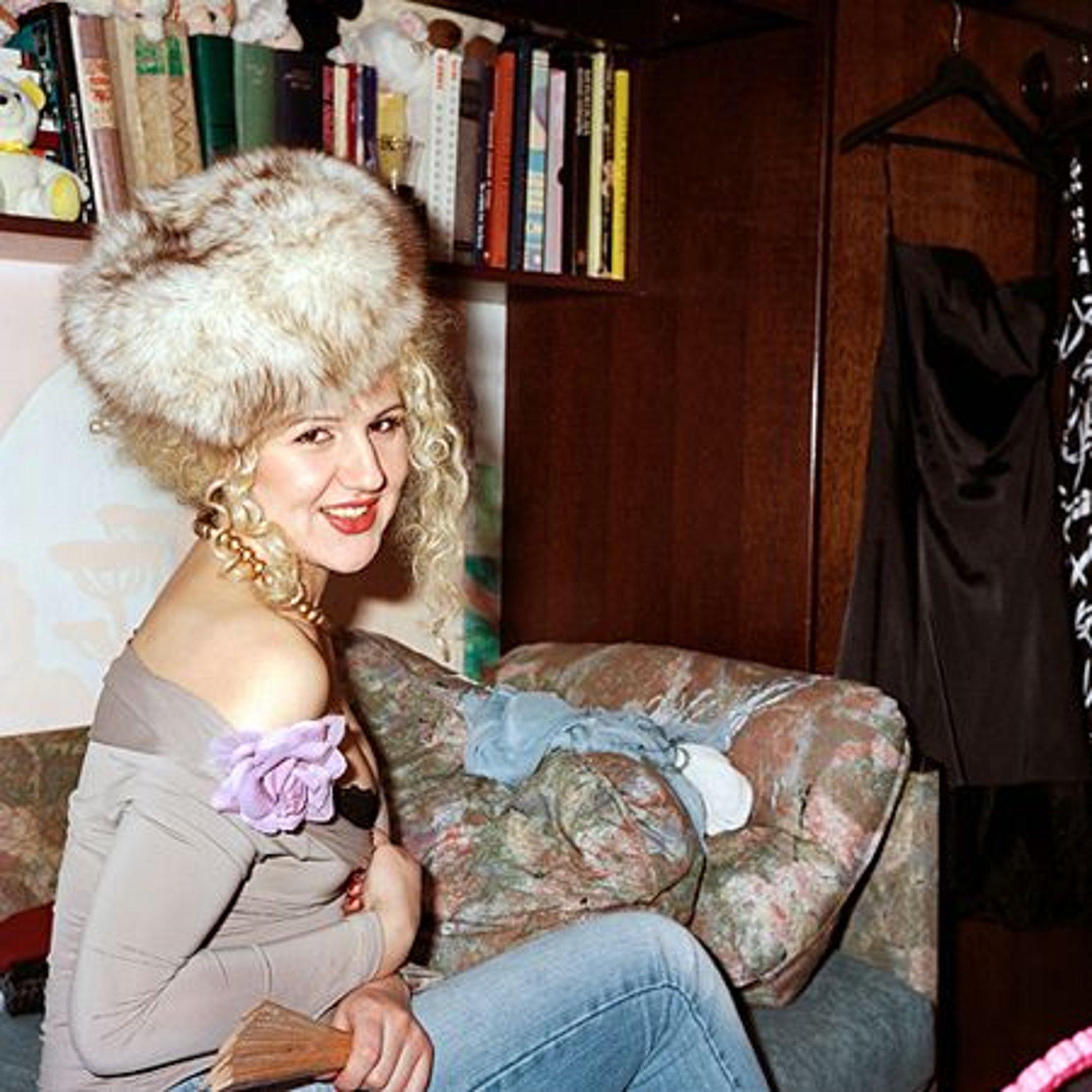
The characters in these photographs are unprofessional actors who, by
posing as if they are being photographed for their own personal ads, impersonate
aspirants to “happiness in love”. With a touch of humour,
they symbolize various degrees of self-awareness, attractiveness and sexuality.
The “right” photograph points to the fact that the whole process
of self-advertising is based primarily on visual appeal – the exchange
of looks is the necessary overture to anything that might succeed. Deliberate
parodies, the portraits of these people do not represent themselves; they
are the result of the photographic fiction – fiction that creates
a critical distance in order that, paradoxically, certain phenomena may
be more accurately perceived.
“Personals” do not linger in the intimate circle of their
protagonists or their imaginative world. They step out into the socio-economic
orbit, where the trade of “types“ from the human inventory
takes place. While the characters in these photographs give the impression
of being content and proud of who they are, their private traumas and
excesses do not escape exposure. It is therefore hard to tell whether
this phenomenon is the panacea for all sorts of personal sufferings, or
just another by-product of an already exhausted consumer society.
— Katarina Radovic, Belgrade, Serbia

Feature
Personals
Serbian photographer Katarina Radovic explores the desire to seduce — with fictional self-portraits posted in online dating services and sites like MySpace.
View Images
Feature
Personals
Serbian photographer Katarina Radovic explores the desire to seduce — with fictional self-portraits posted in online dating services and sites like MySpace.
Personals
Serbian photographer Katarina Radovic explores the desire to seduce — with fictional self-portraits posted in online dating services and sites like MySpace.

Top Awards include: Full publication with Nazraeli Press, valued at more than $25,000, Los Angeles Exhibition, Cash Prizes, Solo Feature on LensCulture.
