Playground, Laos. In Tad Khuang Si, the children enjoy pure, fresh water, come to bathe and have fun in the natural basin. Further on, the turquoise water mixes with the silt-laden dark Mekong. © Lâm Duc Hiên
Returning to childhood's shores, Laos. Emotions hurl at me like tropical rain: imperious, salutary, almighty. Through the downpour, I recognize familiar silhouettes: my grandmother Ba, the river's flamboyant bends, the street merchants…Within the confusion of emotions, the joy of being with my own people is blended with the dim sadness of my exile, like the phantom pain of an amputated limb.
A nurturing flow, Laos. Fishing is a major source of sustenance in Laos. Due to overfishing, biodiversity is decreasing. Additionally, building projects on the Mekong block the migration pathways while the introduction of exogenous species (such as the Tilapia) also have a negative impact. The fishermen above exhibits his handsome catch. He hopes to get $3 for it—a small fortune. © Lâm Duc Hiên
Lay Hua Fay, the light-boat festival, Laos. Celebrated on November’s full moon, this holiday brings people to the shores of rivers, lakes or ponds, to release little hand-made boats loaded with offerings and candles. According to scholarly reports, this tradition is a request for Mother Water's protection. Countless little boats gliding on the water, each hosting a secret wish. © Lâm Duc Hiên
Sacred Water, Laos. Monks in Tad Khuang Si admire the cascades' pure water, which is a part of many Buddhist rituals. As a token of respect and purification, monks and sacred statues are sprinkled with holy water during ordination ceremonies and Lao New Year festivities. © Lâm Duc Hiên
An emblematic companion, Laos. After a ceremony at Vat Phu, the elephants hired for the occasion cross the Mekong by ferry and return to the region of the Boloven Plateau. These sacred animals have always fascinated the Laotians. Today, there are only 500 wild elephants left in the forest. The rest have been captured and trained. © Lâm Duc Hiên
Iko shaman, 74 years old, Laos. Like many elders, she chews betel nut, tobacco, quicklime and areca nut wrapped in betel leaf. Her teeth become black and her lips blood red—criteria of beauty in these communities. Besides, it turns out to be a powerful remedy for preserving healthy teeth. Shamans play an important role in society, mediating disputes and offering input on community decisions.
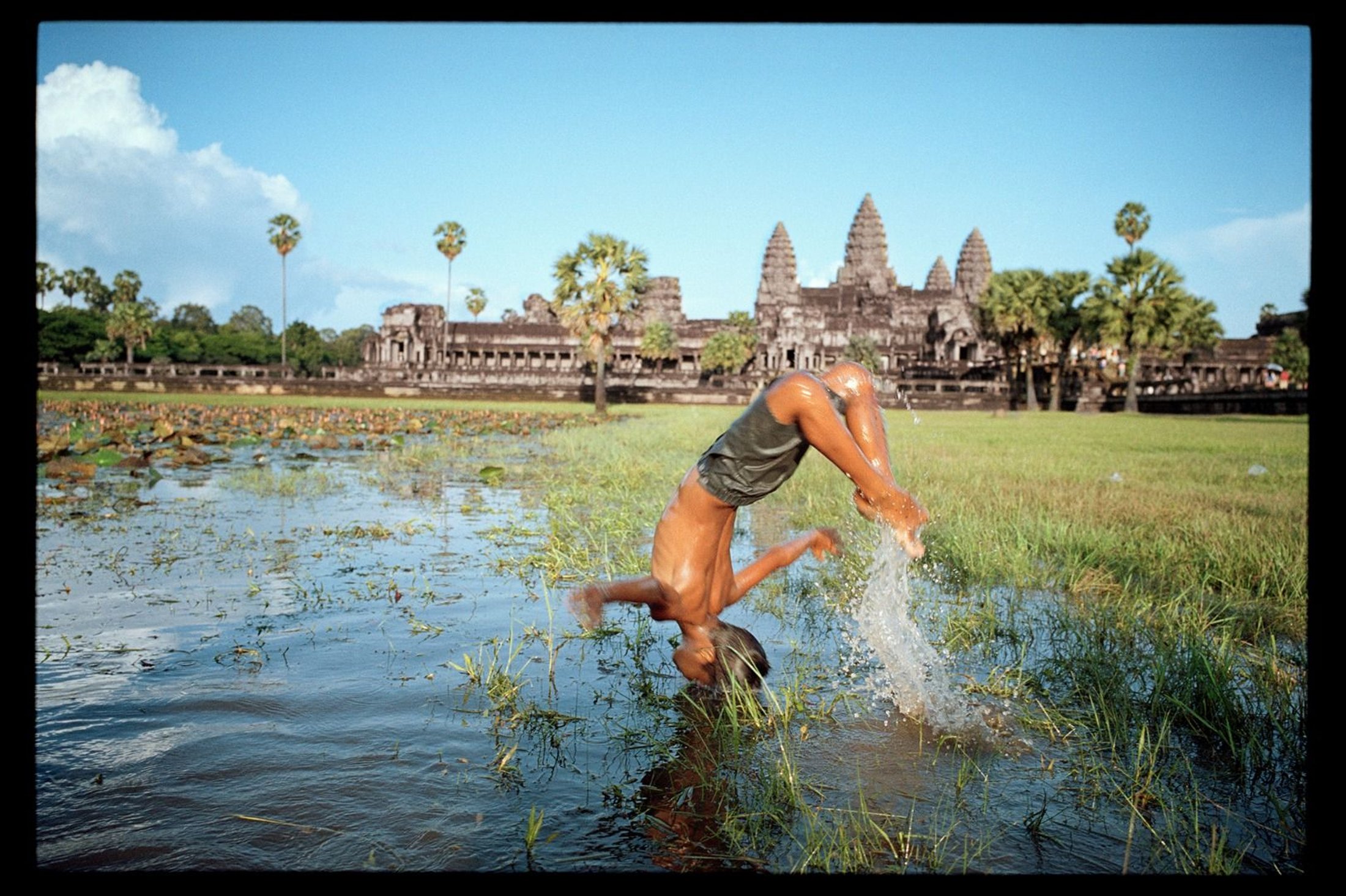
Angkor Wat, Cambodia. An architectural jewel built thanks to a mastery of water. The monumental city-temple was built in the 13th century. In order to overcome the area's long droughts, the city had to set up a hydraulic system of ditches and canals ensuring soil irrigation and drainage. © Lâm Duc Hiên
The Miraculous Tide, Cambodia. Fishermen wait for the fish arriving with the water inversion of the Tonle Sap, a unique phenomenon in the world. During the monsoon, the river's flow becomes so powerful that it forces the Tonle Sap to reverse its flow. This leads to fertile, regular flooding on the river's banks. Cambodia does not want to disrupt the river lest this "gift" disappear. © Lâm Duc Hiên
Major Upheavals, China. In the village of Xing Huo Shan, the sky generously showers on the paddy fields. The Lahu farmers wait for the rain to cease before they can return to their fields. The scene seems unchanging, contemplative yet major plans have been put forward to open up the region and increase its trade with the surroundings regions. The plans include damming up the Mekong. © Lâm Duc Hiên
Pilgrimage on the top of the world, Tibet. In early November, when harvest is completed, more than 20,000 people come from all over the region to make a pilgrimage. © Lâm Duc Hiên
Tibet. "Three days of wandering in this no man's land…coming all the way to this end of the world, but without finding the source…" The source of the Mekong has been disputed many times, though it certainly lies somewhere high in the Tibetan plateau. © Lâm Duc Hiên
Rice and water, the complex equilibrium. Vietnam. Agriculture is by far the biggest consumer of fresh water (about 90% of the water consumed on a global scale)—and rice production uses more water than any other crop. The challenge of water management is to constantly maintain a balance between resource preservation and water’s use in agriculture, fishing, and breeding. © Lâm Duc Hiên
Ca Mau and the Sea: The Odyssey of Refugees, Vietnam. The Ca Mau peninsula became one of the main points of embarkation for refugees in the 1970s and 80s. 300,000 people left the country from here, depending on small, precarious boats to bear them to safety. These were subject to the hazards of the sea and exploitation by the smugglers hired to lead them out of the country. © Lâm Duc Hiên
Mr. Tâm Hô, called "The Tiger"—84 years and 3 wars old, Vietnam. A force of nature, he has fought in three wars: the French, the Japanese and the American. Reptiles macerated in alcohol help him preserve his vigor and prevent rheumatism. He has created a famous nursery in the hopes of protecting the unique mangrove eco-system. © Lâm Duc Hiên