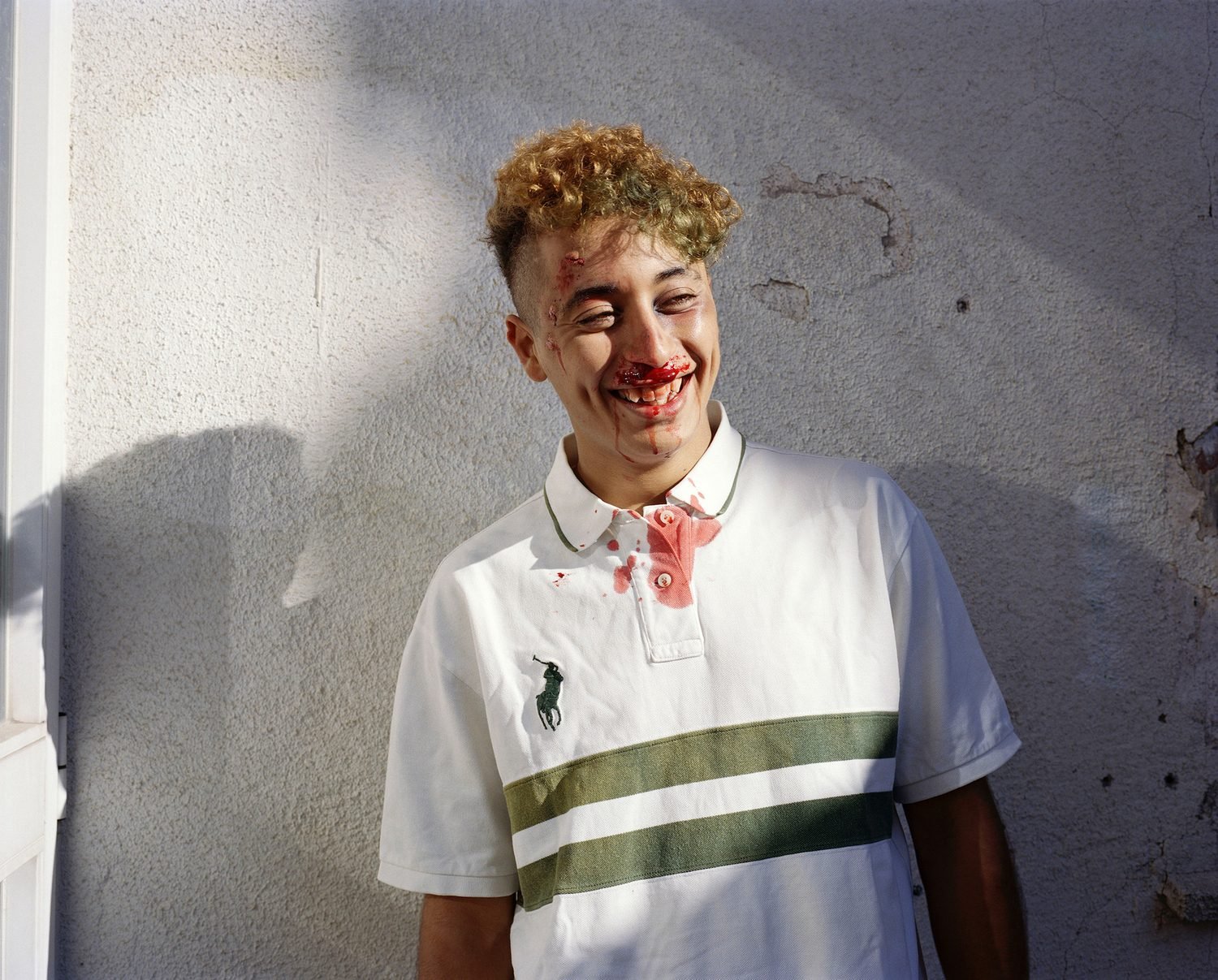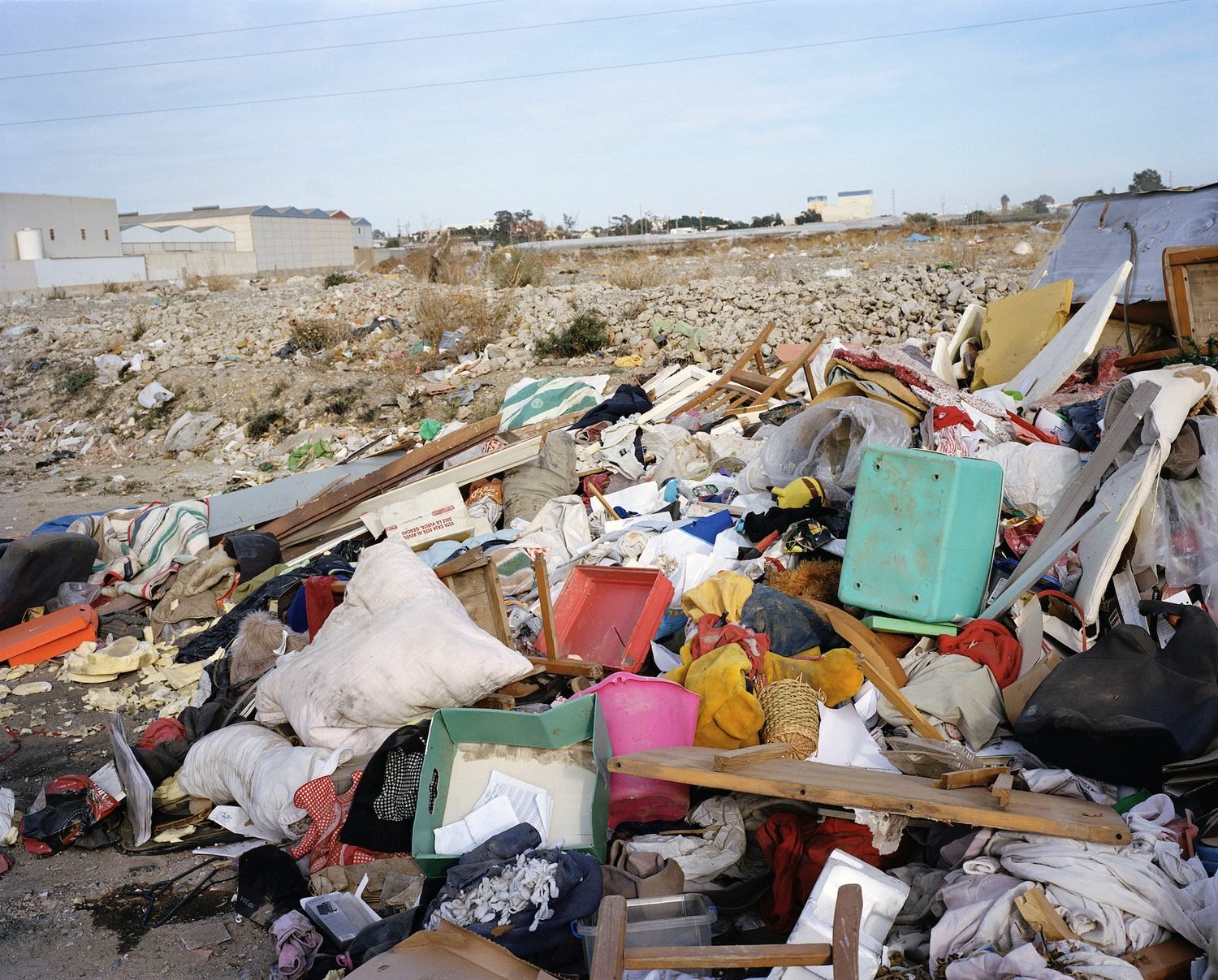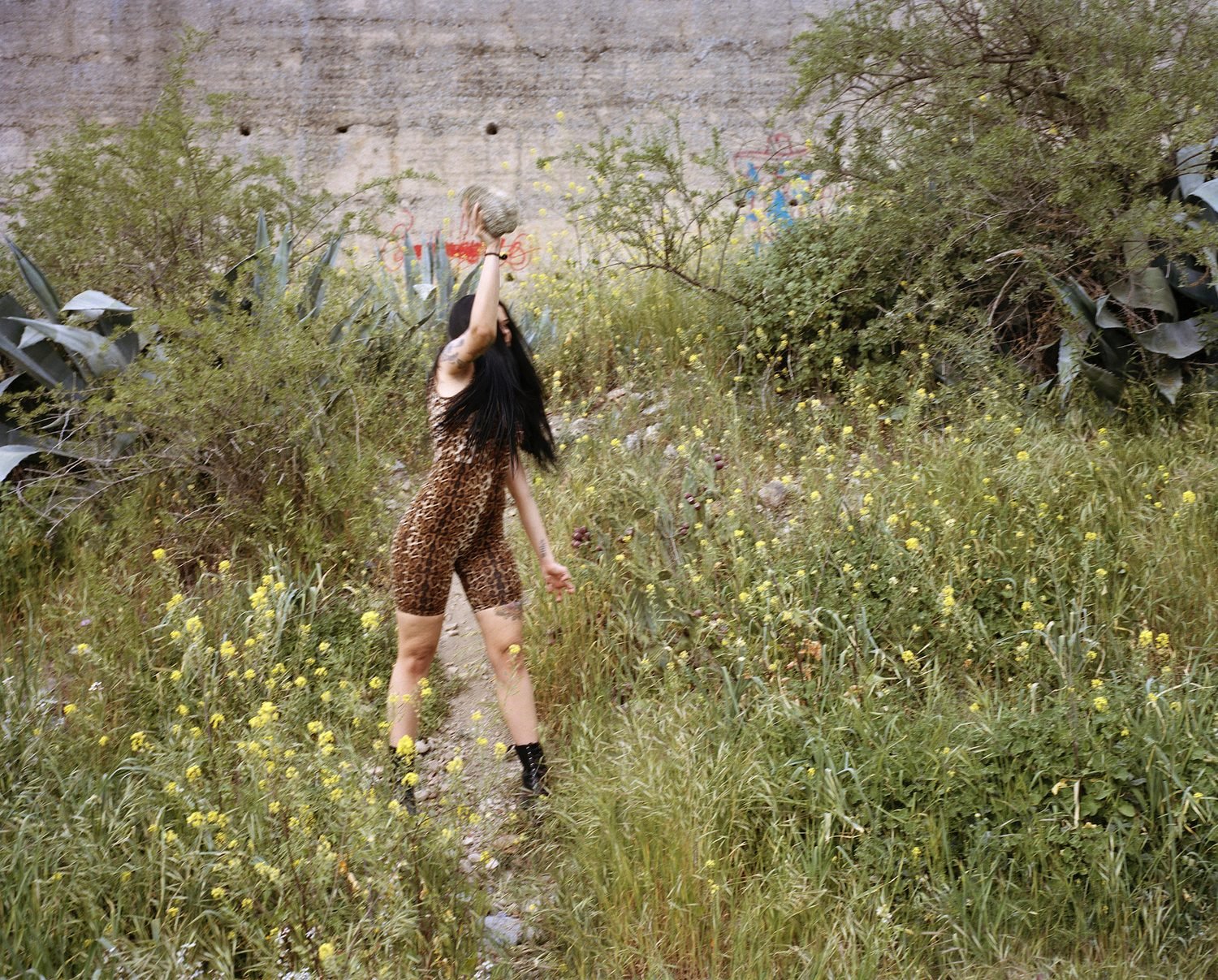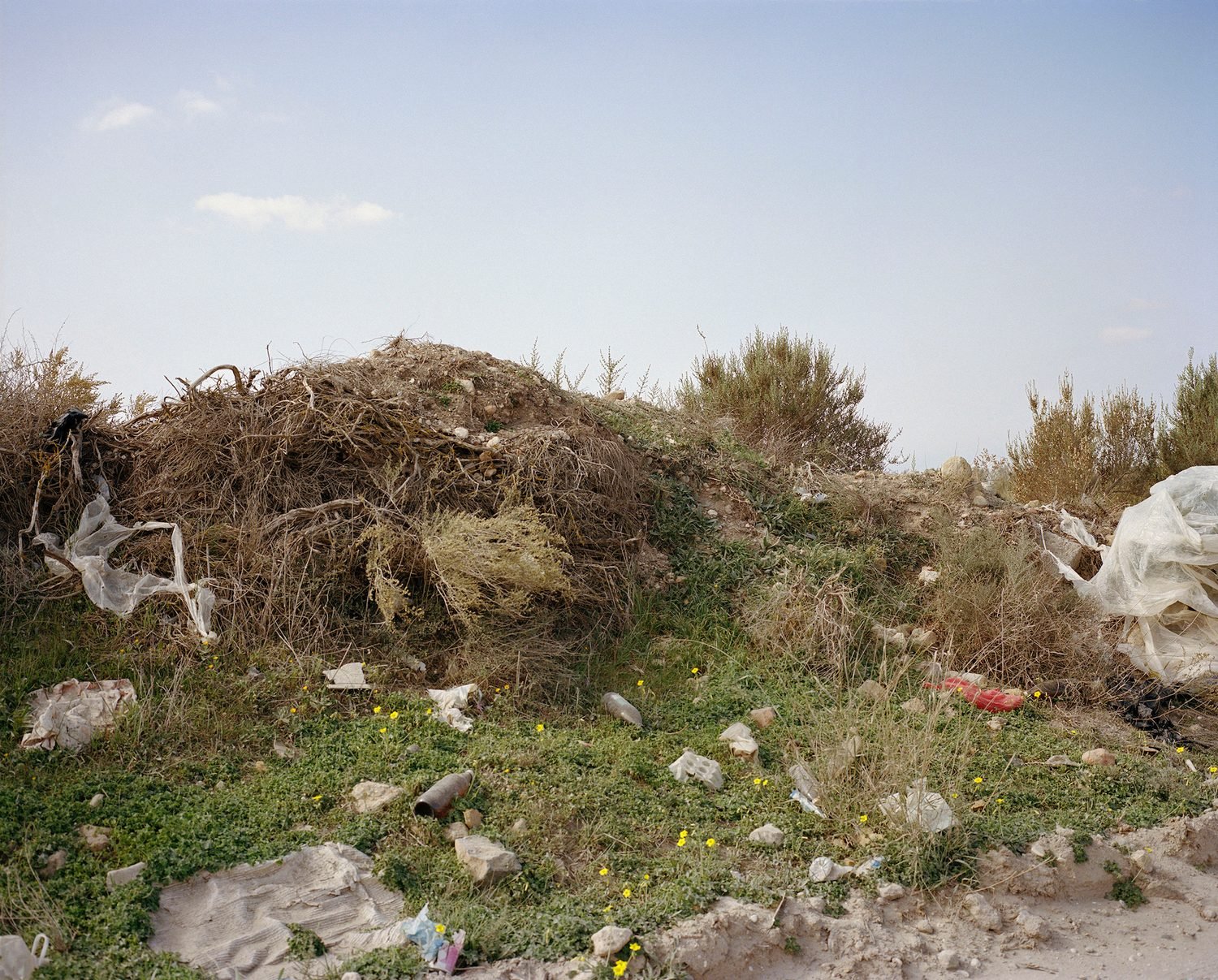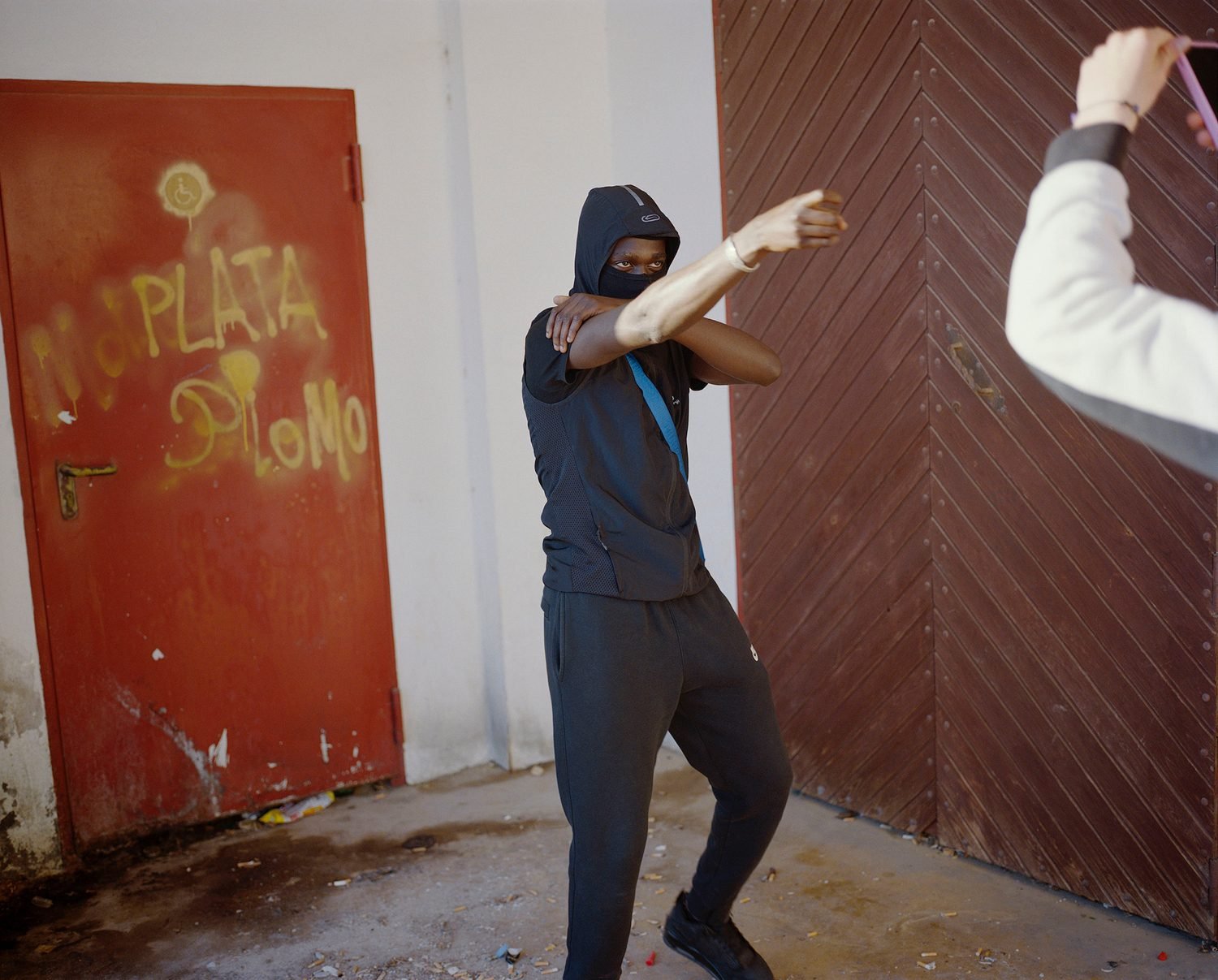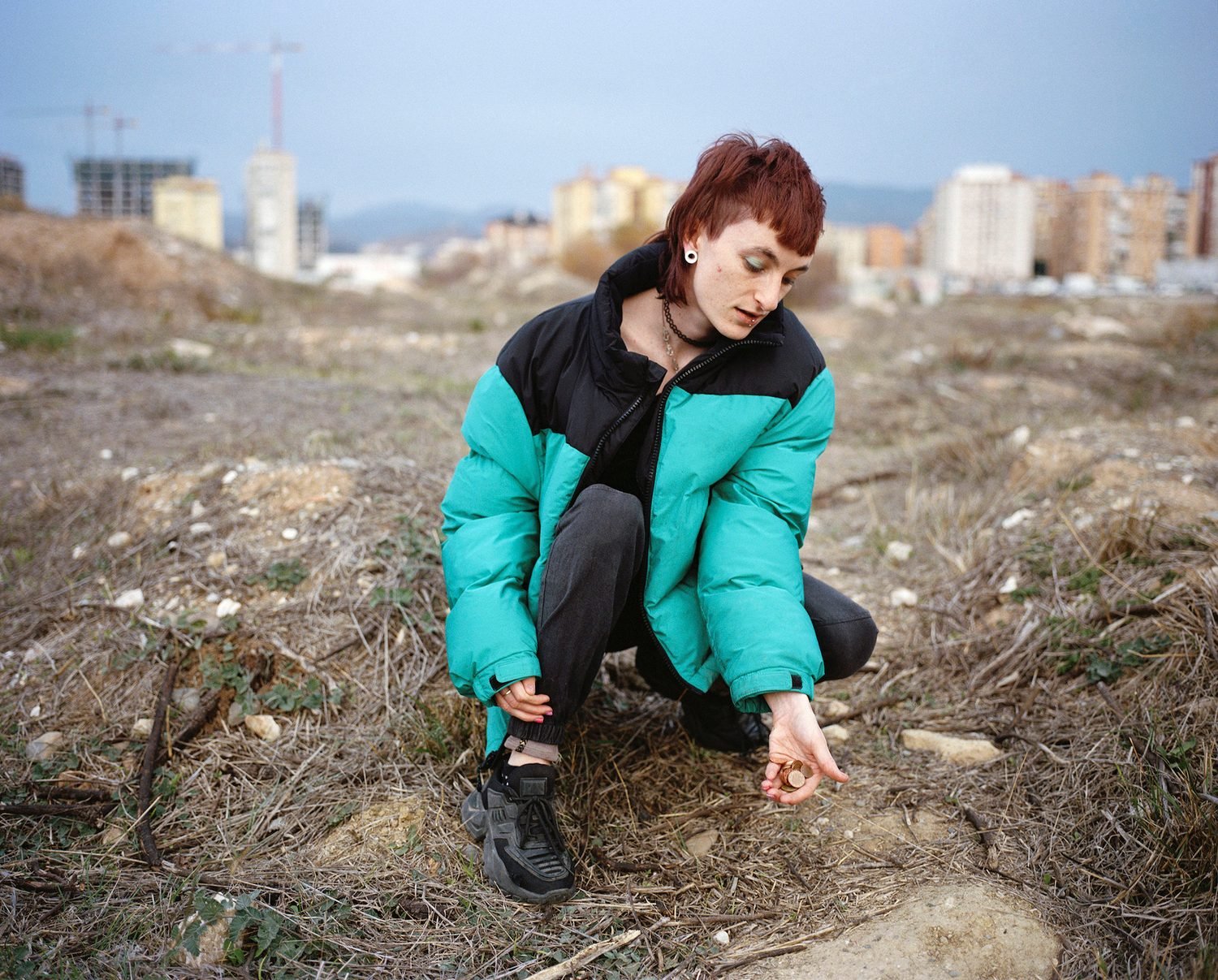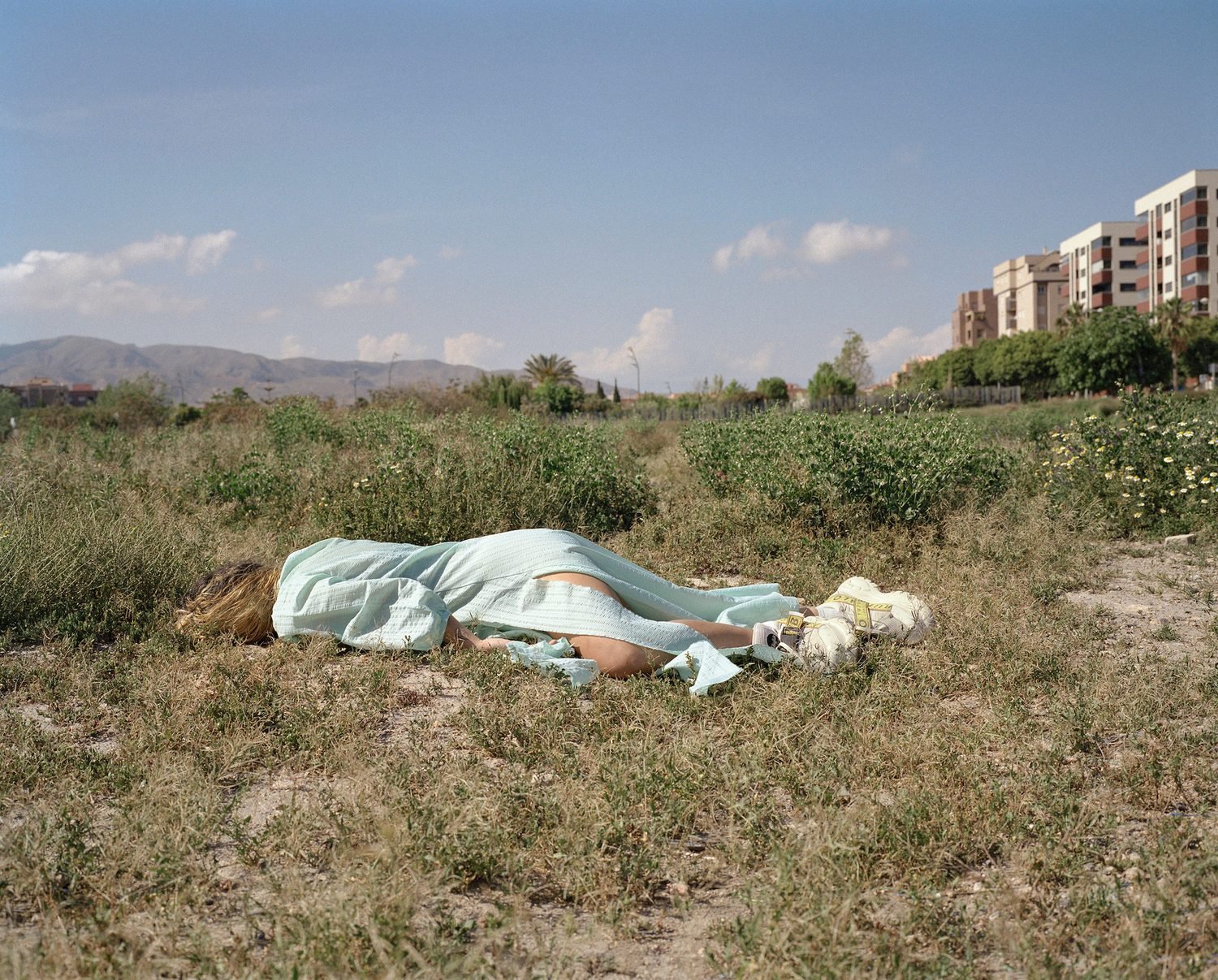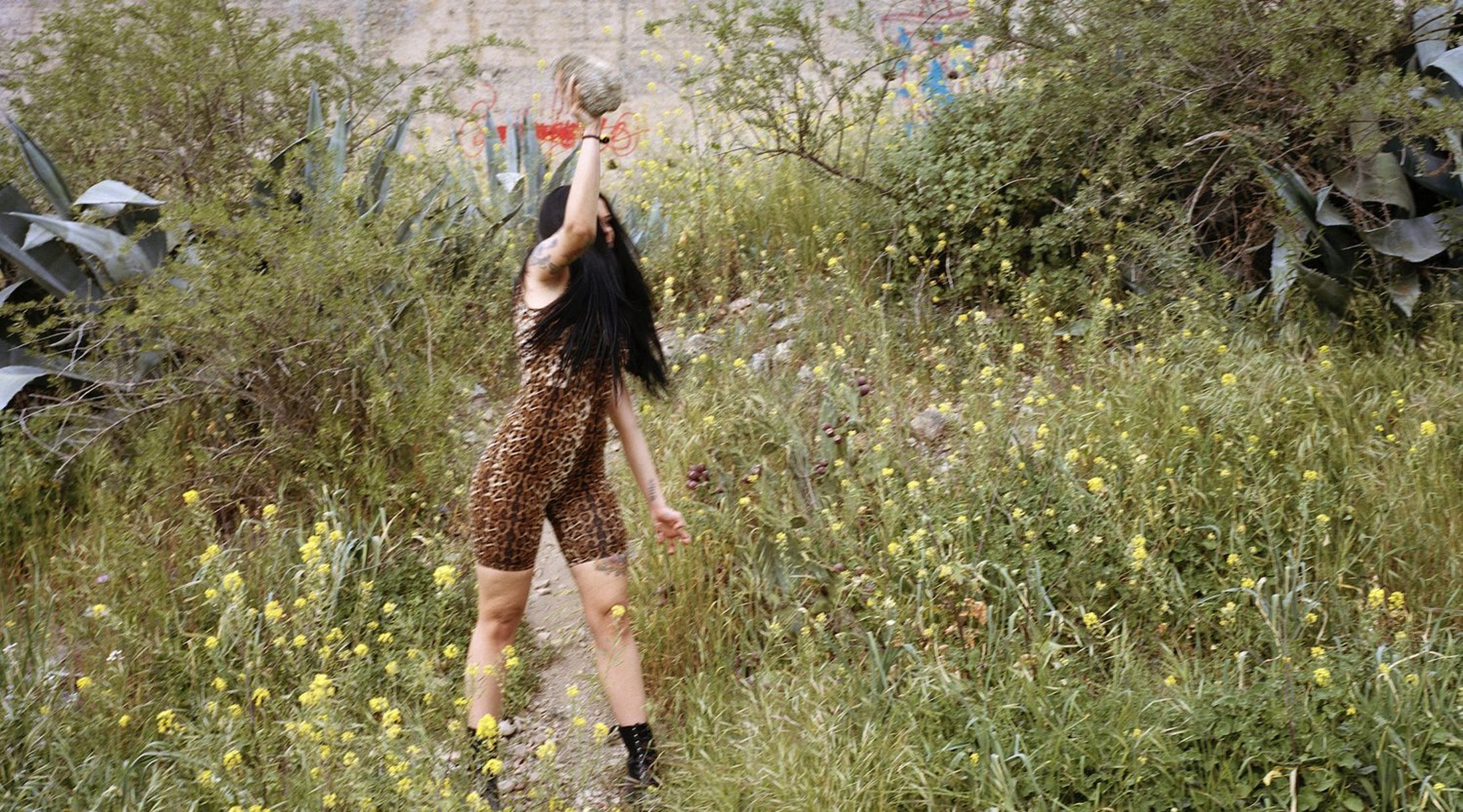
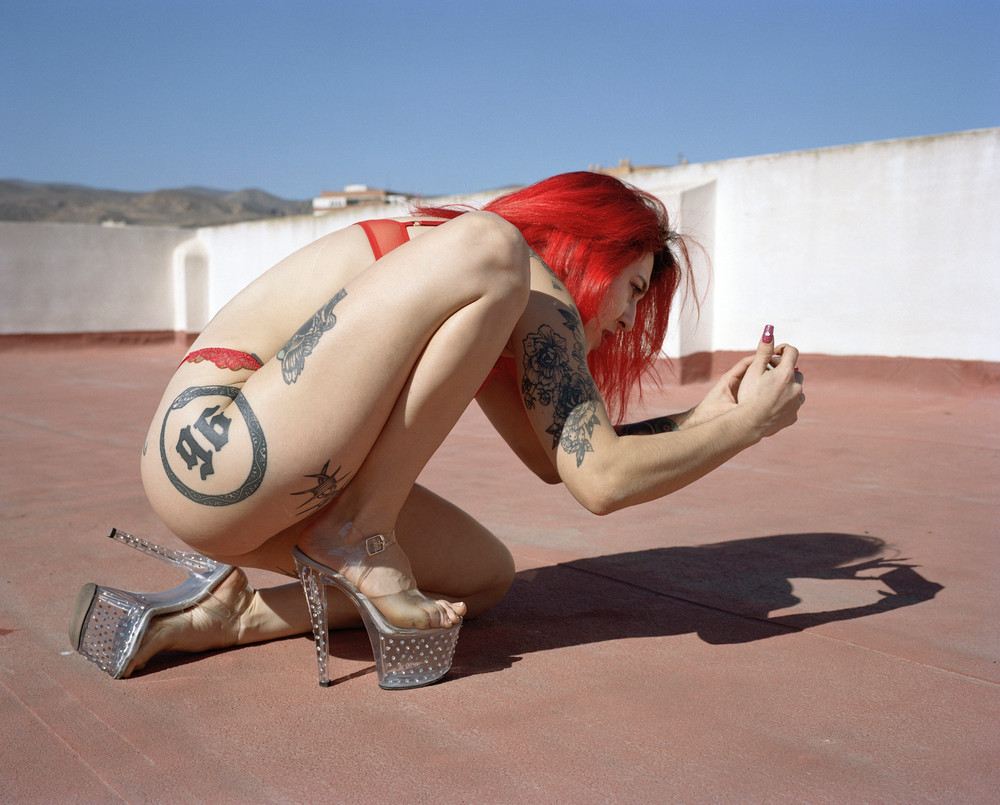
Movement, drama, and performance are central to Lúa Ribeira’s latest exhibition, Agony in the Garden, currently on show as part of this year’s PHotoESPAÑA festival in Madrid. These enigmatic images document Spain’s emerging trap and drill scenes, a subgenre of hip hop that originated in America in the 90s and 00s. Since around 2015, the genre has been adopted by a younger generation of Spanish artists that came of age through the financial crisis. Their music is often misunderstood, especially by the mainstream press, due to its explicit lyrics and some artists’ association with crime.
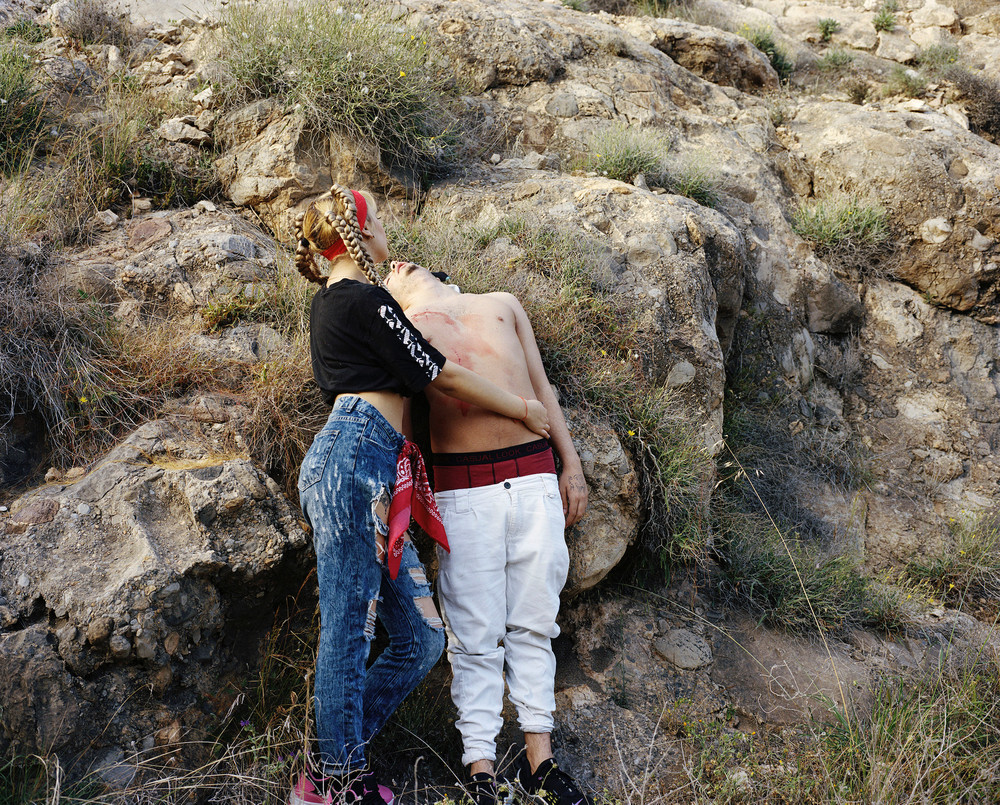
Ribeira has been listening to trap and drill for many years. During the pandemic she embarked on a project to understand it better. “These musicians articulated the present moment in a very eloquent way,” she says. “Sometimes, it’s not seen or portrayed as that. It can be seen as shallow or pose-y, but there is something rooted and fearless in how these artists are talking about the present moment and issues like the financial crisis, the pandemic, the climate crisis—this dystopian world that they have grown up in.”
She reached out to some of the rappers she was following, and from there the introductions snowballed. Many of her collaborators are musicians or dancers, and were happy to be photographed with the prospect of using the artwork for their own purposes.
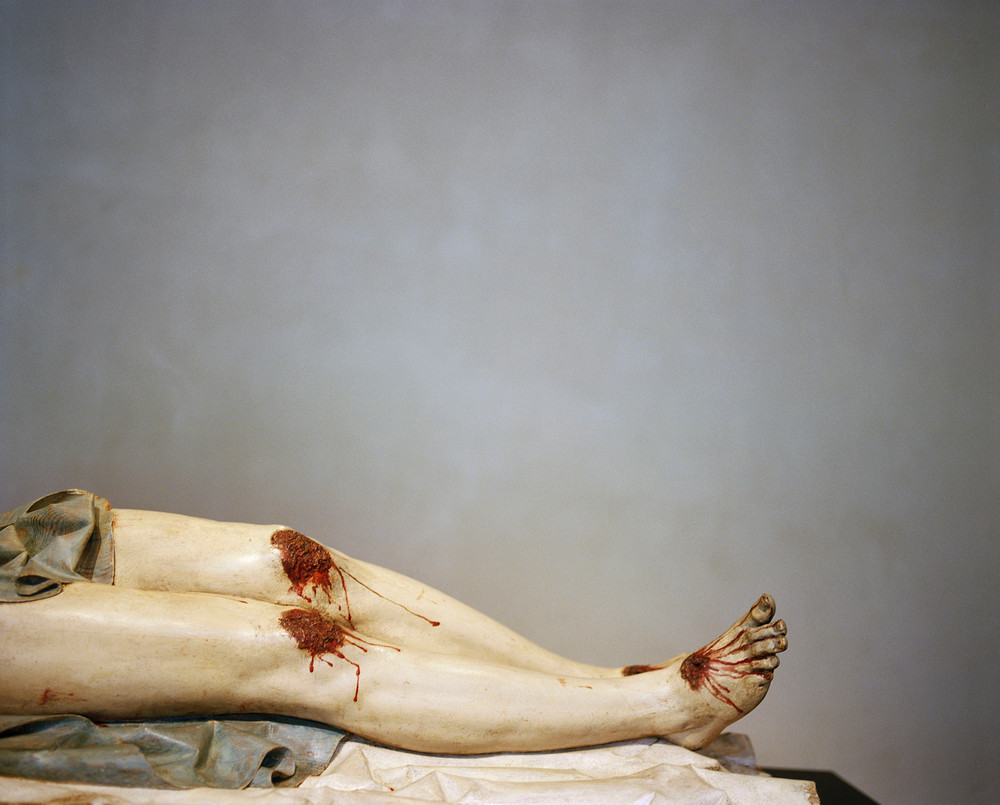
Religious symbols manifest throughout the series, most notably in an image that appears to resemble Jesus’ crucified feet, as well as in gestures that reference religious iconography. The project’s title, Agony in the Garden, is also taken from a passage from the bible, which marks a period of despair just before Jesus is crucified. “My work comes from the need to address very political topics and things that are happening now, but give them an angle that is more distant to try to connect it to something more human, existential, and emotional,” says Ribeira. “The connection to mythology or religion happened quite organically. It gives the work an ambiguity and removes it a little bit from the present.”
In one corner of the exhibition, there is a collage-like display of references. Tiny screenshots from makeup tutorials, anime, historical paintings and Ribeira’s own doodles—a web of research that visualizes the energy behind the work. “I started to see what trap music is, who the people are, what the music scene is about, beyond the stereotype of what a trap musician or music lover would be,” says Ribeira. “There are all these layers of our experience nowadays that seem to exist in the digital world… It’s also a reference to how people are using images nowadays.”
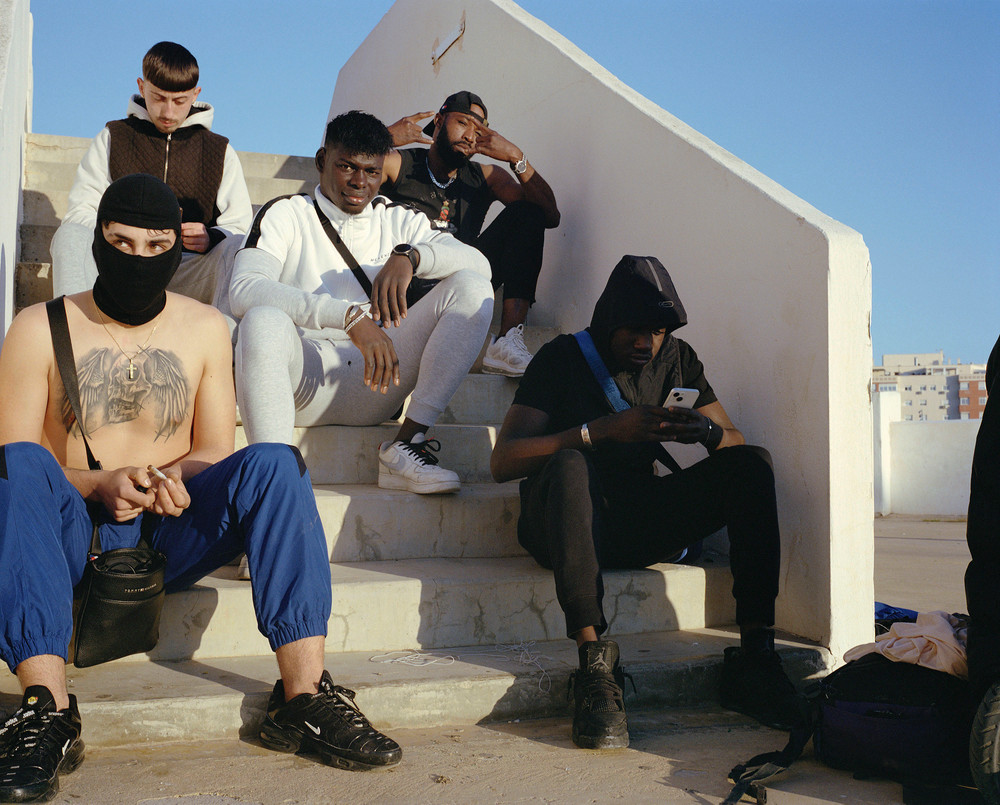
Agony in the Garden documents a youth culture, but beyond that it speaks to broader political themes, and the search for belonging and identity within that. “Music is a way of connecting as a group of people in the present,” Ribeira reflects. “Young people don’t have a lot of money or job opportunities. This music gives them space to communicate, experiment, and create.”
Editor’s note: Agony in the Garden by Lúa Ribeira is on show as part of PHotoESPAÑA 2024 festival, Madrid, until 25 August 2024.