
Maryna Syrovatka’s practice deals with transitions—moments when one’s life becomes interrupted, familiar structures dissolved and rebuilt anew. Her projects, and own life, have been shaped by the displacement caused by Russia’s invasion of Ukraine, and the individual stories of the people who had to leave everything behind. In Don’t Worry, I’m Fine, she met with new arrivals in her adopted home of Slovakia. In her studio, she created a space where difficult emotions and contradictions could be held.
On Butterflies and Dinosaurs focuses on a different stage of displacement: what happens when life has to start again at 60? Following Ukrainian men and women who now live in Bratislava, her latest project balances sadness and humor as it celebrates the resilience of a community of people who find themselves facing the challenge of starting over in a new place far from home. In her playful portraits, Syrovatka creates room for the paradoxical reality of what survival looks like—and the different ways this generation have found to cope with their situation.
In this interview for LensCulture, Maryna Syrovatka talks to Sophie Wright about photography as conversation, the work process behind her imaginative images and getting inspired by another generation.
Sophie Wright: You started your professional life as a lawyer. What led you away from law and into photography?
Maryna Syrovatka: It is actually difficult to answer because it did not happen overnight. Over several years, life around me changed: I became a mother, lost my parents, lived through the events that preceded the war in Ukraine and its beginning in 2014, and eventually moved to another country. I think each of these events played its own role, but honestly, what finally pushed me was simply the urge to try.
Photography had been present in my life since childhood. My parents taught me the basics of analog black and white photography. Developing film and making prints together felt like magic. But I was convinced that I was not a creative person. In the Soviet system, art education seemed very straightforward: either you could draw a vase or you could not. I could not, so I never even considered an artistic path. Photography remained a kind of forbidden fruit.
At the time, I was working as a lawyer in a large international professional services firm. I had experience, qualifications and a stable professional identity. Photography meant becoming a beginner again. I remember asking someone, “How do you know if that’s the path you might actually be good at?” They replied, “You never know. No one knows.” It was such an obvious answer, but also a great relief. There is no guarantee. I needed to hear that and stop looking for one. You simply have to try. I think that is also the beauty of life.
SW: Has your past legal practice shaped your artistic practice in any way?
MS: Much more than I expected. Law and art have far more in common than one might imagine. Both involve interpretation and judgement, and both are full of intricacies. A legal argument has its own shape, rhythm and frame. Every word and detail matters, and even a small shift can change the whole meaning.
When you practice law, you understand how complex the world is and how complex the people inhabiting it are. When I approach someone through photography, this complexity attracts me. It gives another dimension to the work. Legal practice trained me to listen carefully, pay attention to detail and avoid jumping to simple conclusions.
SW: The theme, or rather question, that seems to run through all your projects is what happens when life is disrupted. How crisis interrupts both our external and internal world, and how we rebuild. Why would you say photography is your chosen medium to speak about this?
MS: When something happens, whether it is a global event or a personal rupture, a person is ultimately very alone in their experience. It is always deeper and more complicated than it appears from the outside. For example, after Russia’s full-scale invasion of Ukraine, millions of people crossed into the European Union. But each person’s situation is a whole universe. Each person has to deal with the changes in their life in their own way.
For me, photography is not only a tool for taking a picture. The whole process matters. It gives me an opportunity to connect with someone and perhaps to say: hey, I see you, and I care about what is happening to you. Listening is a very important, though invisible, part of that process.
I love talking to the people I photograph and learning about their personal experiences, even when what they share is traumatic. This microcosm gives me a much better perspective on larger events, and an understanding or feeling that I can carry into the picture.
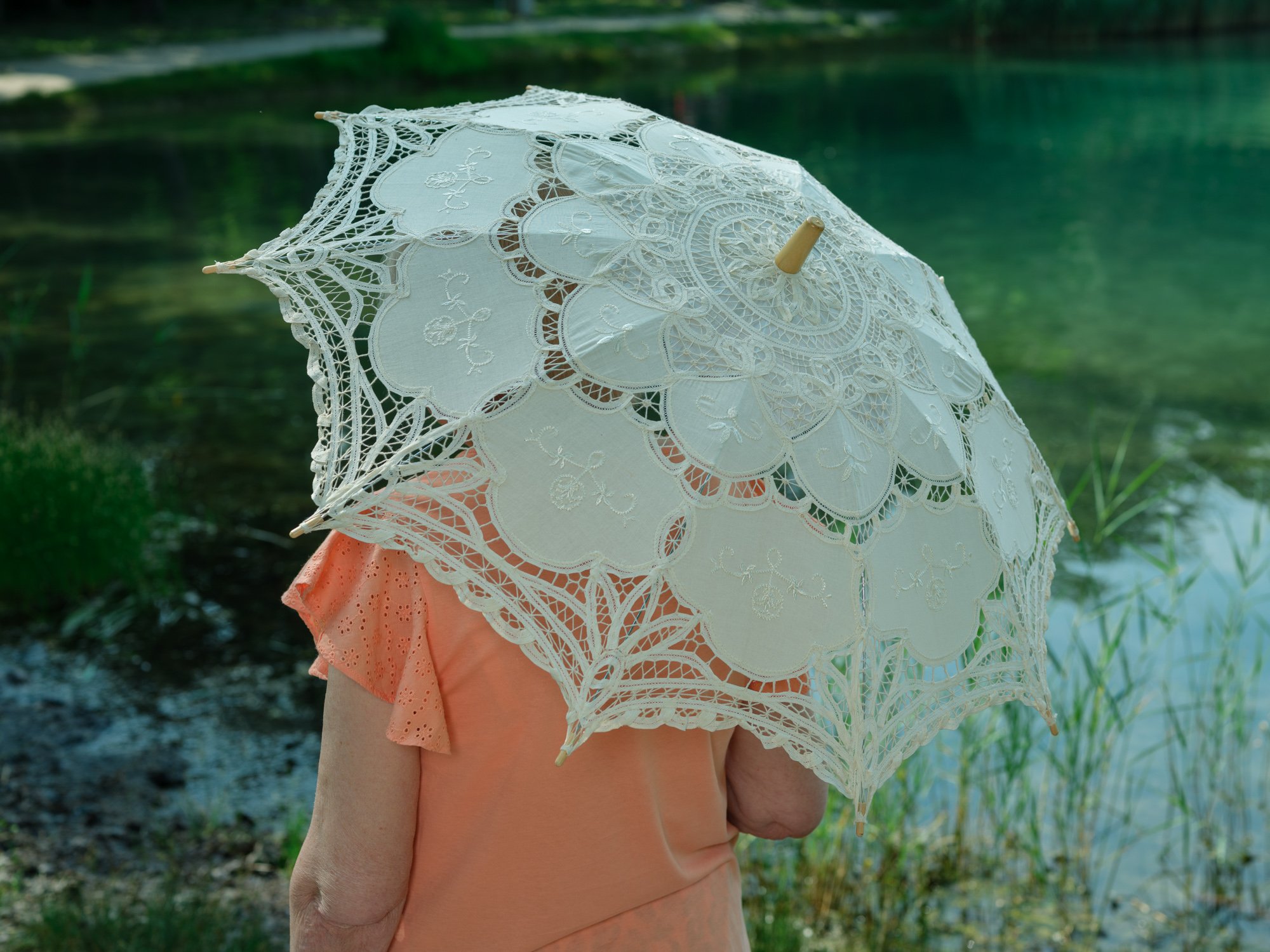
SW: You’ve described the studio beautifully as a space to “hold” moments of uncertainty and transition. Can you tell me a bit about your studio practice and its relationship to the themes you focus on in your work?
MS: I opened my studio in Bratislava in 2021, shortly before the full-scale invasion. I wanted it to resemble the studio spaces in Kyiv that I loved: minimal, but also warm and comfortable, not purely technical. When you enter, you feel that you have stepped into another world. There were still COVID restrictions, but also some hope that life was returning to normal. I was planning to begin with fashion photography. Then everything developed very differently.
When the full-scale invasion began, photography initially felt irrelevant. I started volunteering on the Ukraine-Slovakia SOS help line, trying to arrange transport, accommodation, medicine and other urgent assistance. Eventually, I burned out. I understood that I could not help everyone and needed to return to something I knew how to do and could sustain. That was how the studio acquired a completely different purpose.
Don’t Worry, I’m Fine became the first project I made there. The studio became a territory to which I could invite people. It was an intuitive decision to offer portraits and family photoshoots during the first days of the full-scale invasion, and then throughout the following months and years. The idea was not only to preserve memories, but also to offer some comfort and a possibility to talk and be heard. I spent much more time with each participant than I would during a usual photoshoot. It felt as though something very important was happening, and that these images and stories would matter much more in the future than they did at that moment.
Working in the studio is completely different from photographing someone in temporary accommodation, not only in terms of the resulting image, but also in terms of how the person feels during the process. For some of the people I met at the time, I am absolutely certain that being photographed in their temporary accommodation would have felt painful or intrusive. I did not want that.
In the studio, we talked, drank tea and made many photographs. It was important for me not only to take something from the encounter, but also to offer something in return. The studio made this particular kind of relationship possible.
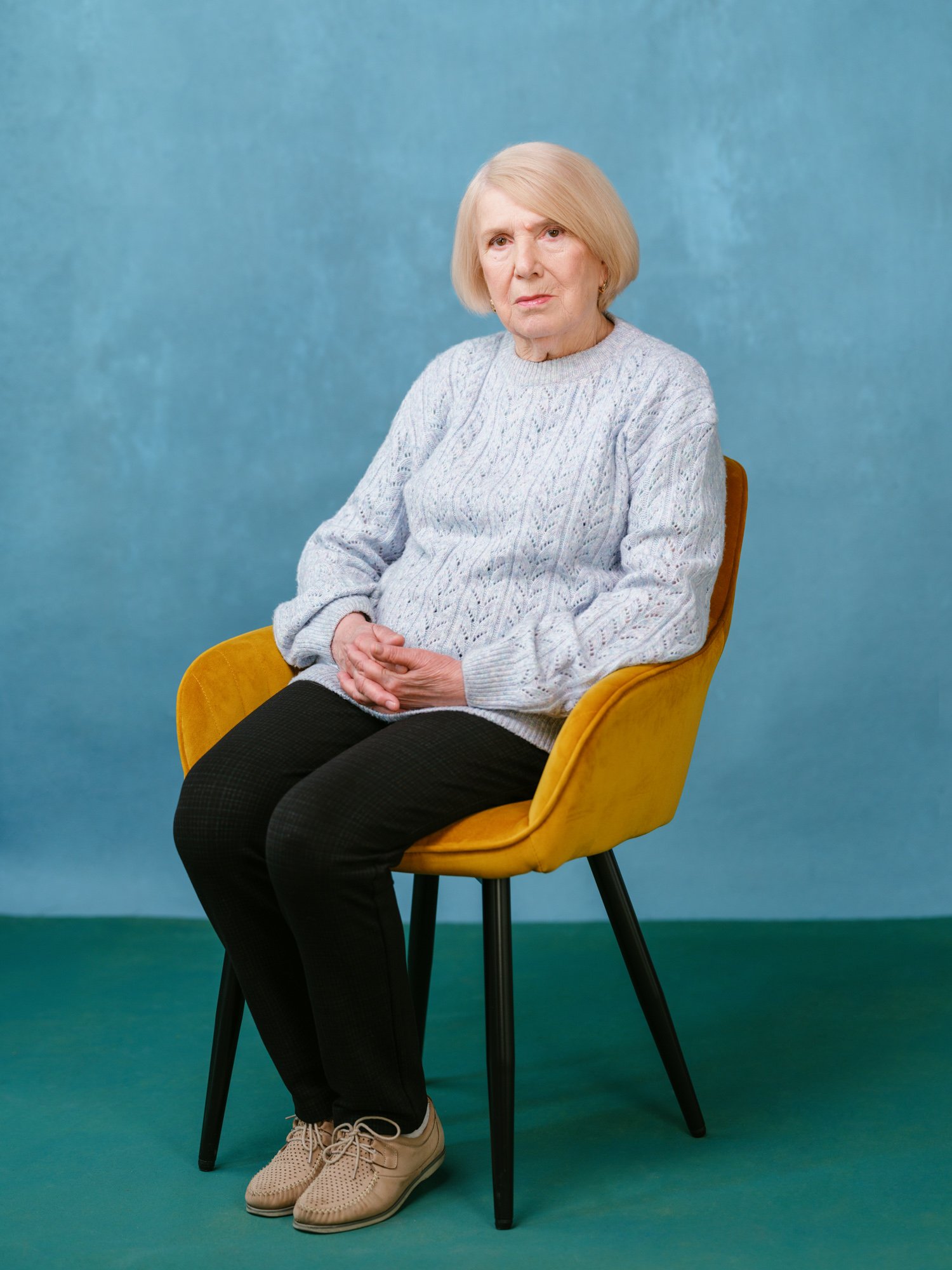
SW: How did this studio approach evolve into On Butterflies and Dinosaurs? What changed in your approach?
MS: Both projects began in the studio, but they developed very differently. Everyone in Don’t Worry, I’m Fine was photographed there. I did try photographing in other environments, but those images simply did not work. They disrupted the particular atmosphere and closeness that had developed inside the studio. The studio became the place where this time capsule was recorded.
I cannot really say that one project evolved into the other. In fact, I was in the middle of publishing the book and honestly doubting whether I would ever embark on such a large project on my own again. But what else can you do after having thoughts like that? Of course, start another project.
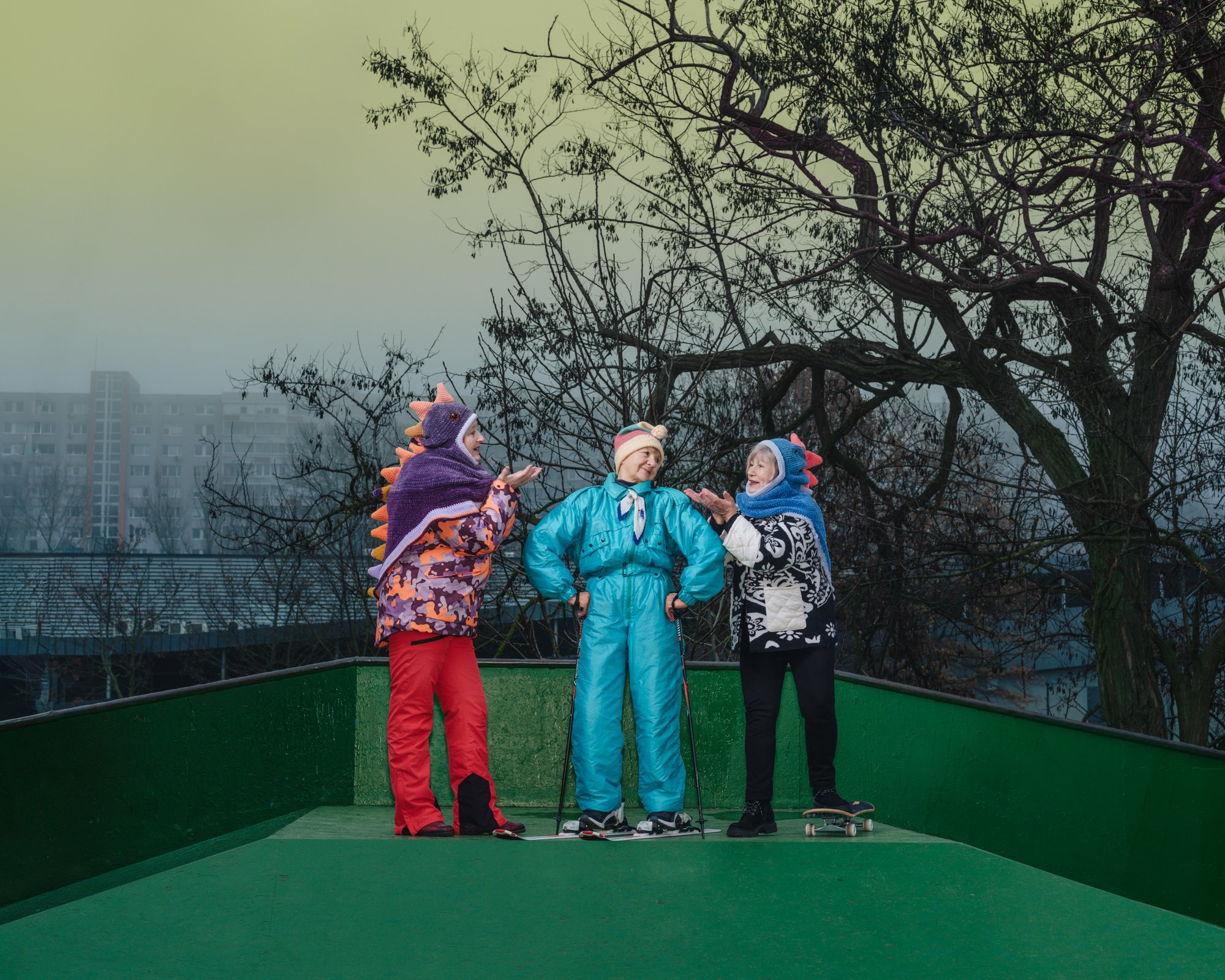
On Butterflies and Dinosaurs also began in the studio. We met, talked, recorded our first interviews and made portraits. From the beginning, however, the work was more colorful, constructed and playful. From the first moment I met these people, I knew the photographs would be colorful. Very soon, the project outgrew the studio. Showing the participants only within that restricted environment began to feel limiting. By then, many of them had become part of the city landscape. They had routines, activities and relationships in Slovakia, even though their situation remained unresolved.
Another important difference is simply when the projects began. Don’t Worry, I’m Fine started when the full-scale invasion was still new and people were living through its immediate shock, including me. I was making the project because I had this strong urge to do it and felt it was important. But there were also so many uncertainties and overwhelming emotions that made the process particularly difficult.
By 2024, I felt we had reached a certain plateau. People were beginning to make decisions: whether to return, whether to remain abroad and how to plan a life under conditions no one had chosen. By the time I started On Butterflies and Dinosaurs, they were already living inside this new reality and processing it in very different ways. The project needed a different visual language and a broader physical space.
SW: What drew you to focus on the specific age group of over-60s?
MS: There is a group for Ukrainian seniors at one of the community centres in Bratislava, organised by the NGO Sme Spolu, or We Are Together. It originally began as a form of psychological support, but the first meetings were difficult. People were so absorbed in their own grief and loss that they did not necessarily want to speak or listen to one another. Gradually, volunteers began offering different activities: dancing, painting, Nordic walking, morning exercises, choir rehearsals. The group eventually became one of the most active. They joined almost everything they were offered and began performing at different events.
Their drive drew my attention. To be honest, I expected to meet people who were simply devastated. Just think about it. Many of them were born during or shortly after the Second World War. They lived through the Soviet Union, its collapse, Ukrainian independence, the economic crises of the 1990s, and many other changes. When their lives had finally begun to settle, they were forced to leave again. If you look at it, their lives seem to fall between two wars.
SW: Tell me more about this mix of sadness and humour you’ve spoken about.
MS: The sadness is already built into the situation. The war has entered our lives on every level. Even though I live in safety, everything has changed permanently. While I was drafting these answers, six ballistic missiles struck the neighbourhood where close friends of mine live and where my family used to live. I closed my computer and started messaging everyone to ask whether they were safe. That is our new normal.
But this does not mean that everything has become grey. Often, it is the opposite. The background may be dark, but life remains extremely vivid. The humor and irony were not something I imposed on the project. They were already there, and they were also connected to social expectations about how displaced people should feel or behave.
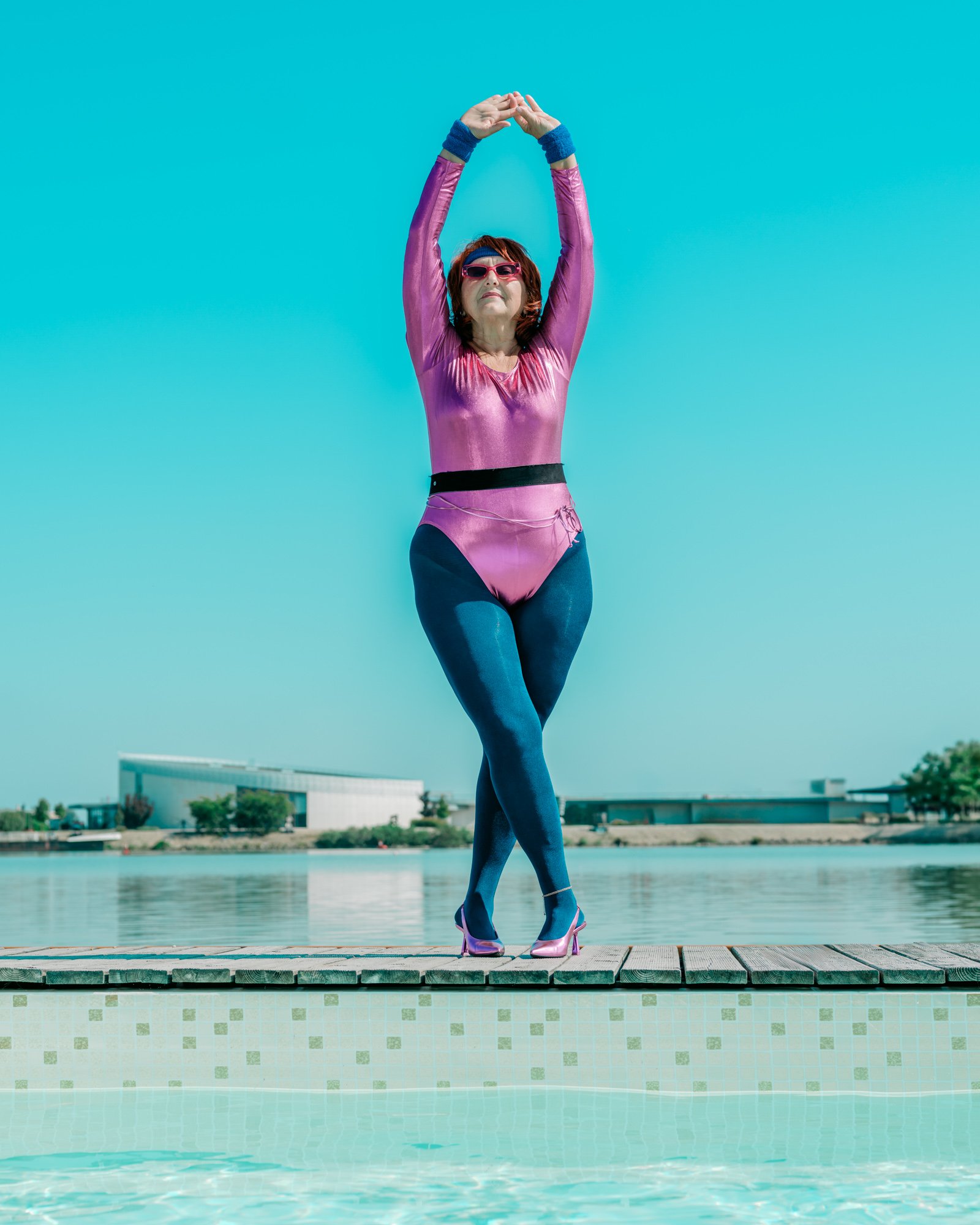
I remember one photoshoot by a swimming pool. One of the women asked, half-jokingly, “What will people say? That we are having fun here and taking advantage of social support?” That sentence stayed with me. It revealed the burden of those expectations. Having fun can be seen as inappropriate, yet at the same time joy is attributed to you simply because you are now in safety. This paradox exists in both Western and Ukrainian society.
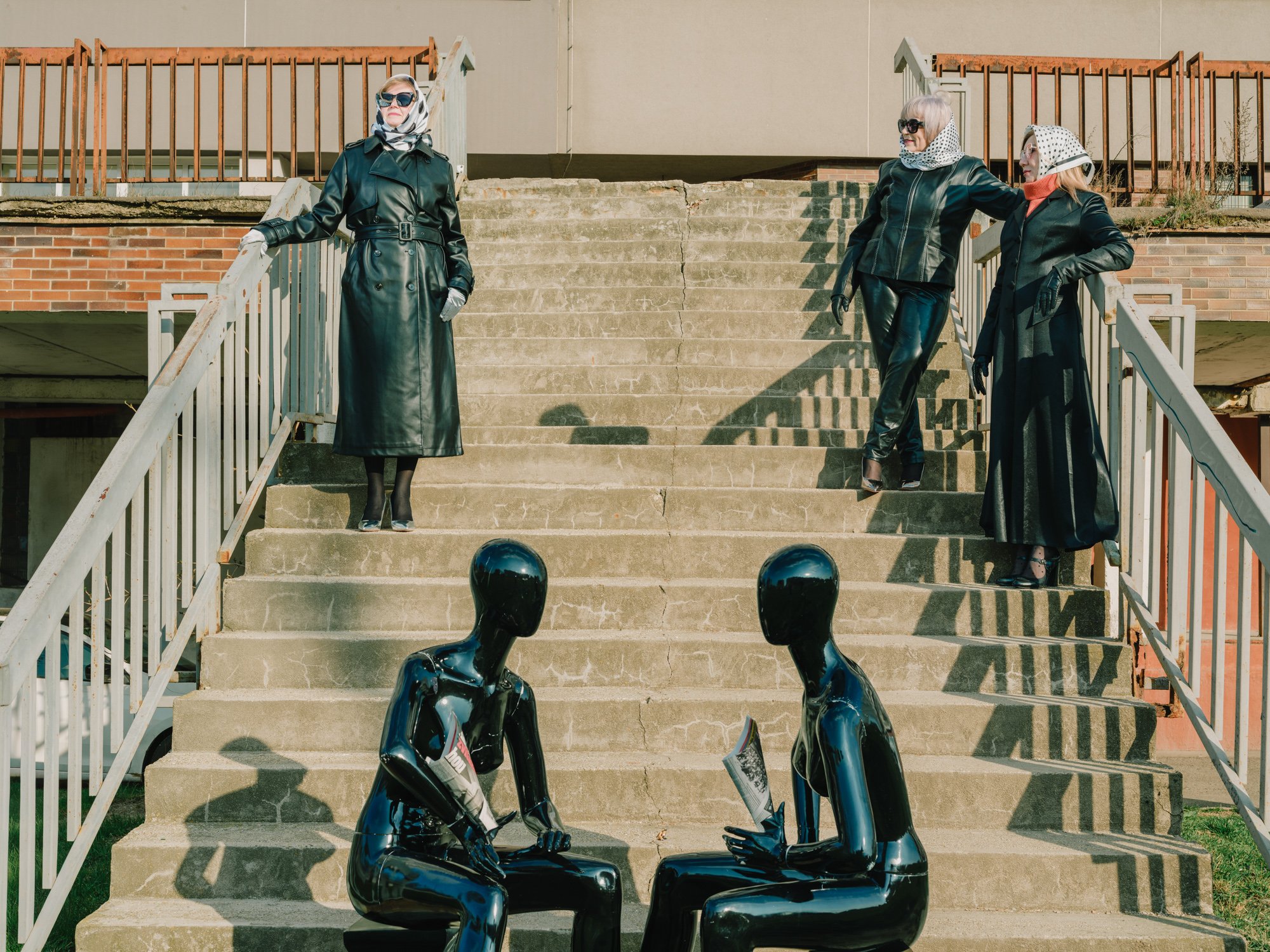
SW: How did you meet the people you worked with? As someone of a younger generation, did you feel like you picked up any wisdom through the process of collaborating?
MS: Most of the participants belong to the senior club I mentioned, or are connected with it through friends and acquaintances.
My mother always wished my late grandmother would dress up, do her hair and make-up, and go out for coffee with friends. But during the last 10 years of her life, she hardly went out at all. I think this was partly connected to a very Soviet idea of ageing: once you get older, you should behave according to your age and gradually withdraw from life. It is not a very motivating model. It is actually quite a frightening one. And I know many people in Ukraine still follow this pattern.
So when I met this group, their energy was something I actually needed. When you meet an 82-year-old woman who walks 10,000 steps every day, wears short dresses and performs several dances in a row onstage, it changes your perspective. It reminds you that life does not end at 30, 40, 50 or 80, even when something as terrible as war has interrupted its ordinary course.
It has also been educational in a rather amusing way. I realized that many of the archetypes I associated with the older Soviet generation no longer described the people in front of me. I approached them with my own stereotypes and, to my amusement, those stereotypes turned out to be mine, not theirs.
This is one of the reasons I enjoy working with them. I can rarely predict how they will respond. They can be playful, stubborn, stylish, ironic, difficult, curious or very direct. I admire their appetite for life, but I do not want to turn that into another simplified image of universal strength or heroism.
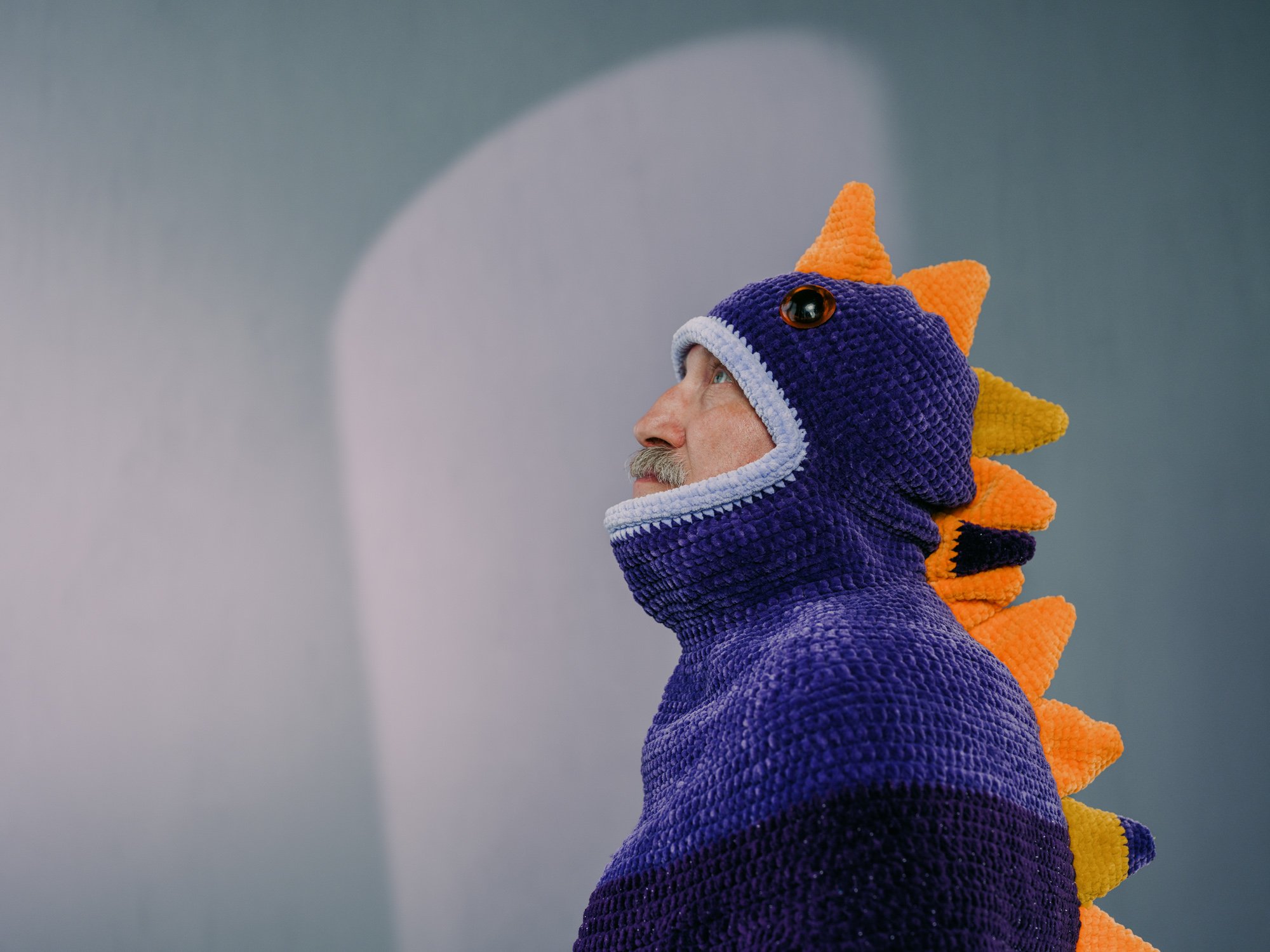
SW: There is brightness and a childlike sense of play to your portraits that offers a striking contrast to the stories of displacement the people in them must have lived through. Can you tell me more about how you arrived at this colorful universe?
MS: My first impulse was to search for a shared coping mechanism, some secret of strength belonging to this generation. Very soon, that idea collapsed. I was meeting very different, vivid people, and any attempt to find one common feature would have simplified them.
At first, I considered following them through their everyday routines and working in a more documentary way. But after some time, I understood that this was not enough. The photographs reflected the sadness already built into the situation, but left very little space for the irony and contradictions that emerged through the process.
Their reality is paradoxical. They escaped a war and arrived in safety, but no one could have imagined finding themselves in this situation late in life. This new reality can feel almost dreamlike and absurd. Color, staging and handmade elements allowed me to bring that contradiction into the photographs and create a slight shift from ordinary reality. Some of the absurdity probably also comes from the dark sense of humor Ukrainians have developed during the years of the full-scale invasion. The ability to laugh even in the hardest circumstances can become a way of coping with something that otherwise feels impossible.
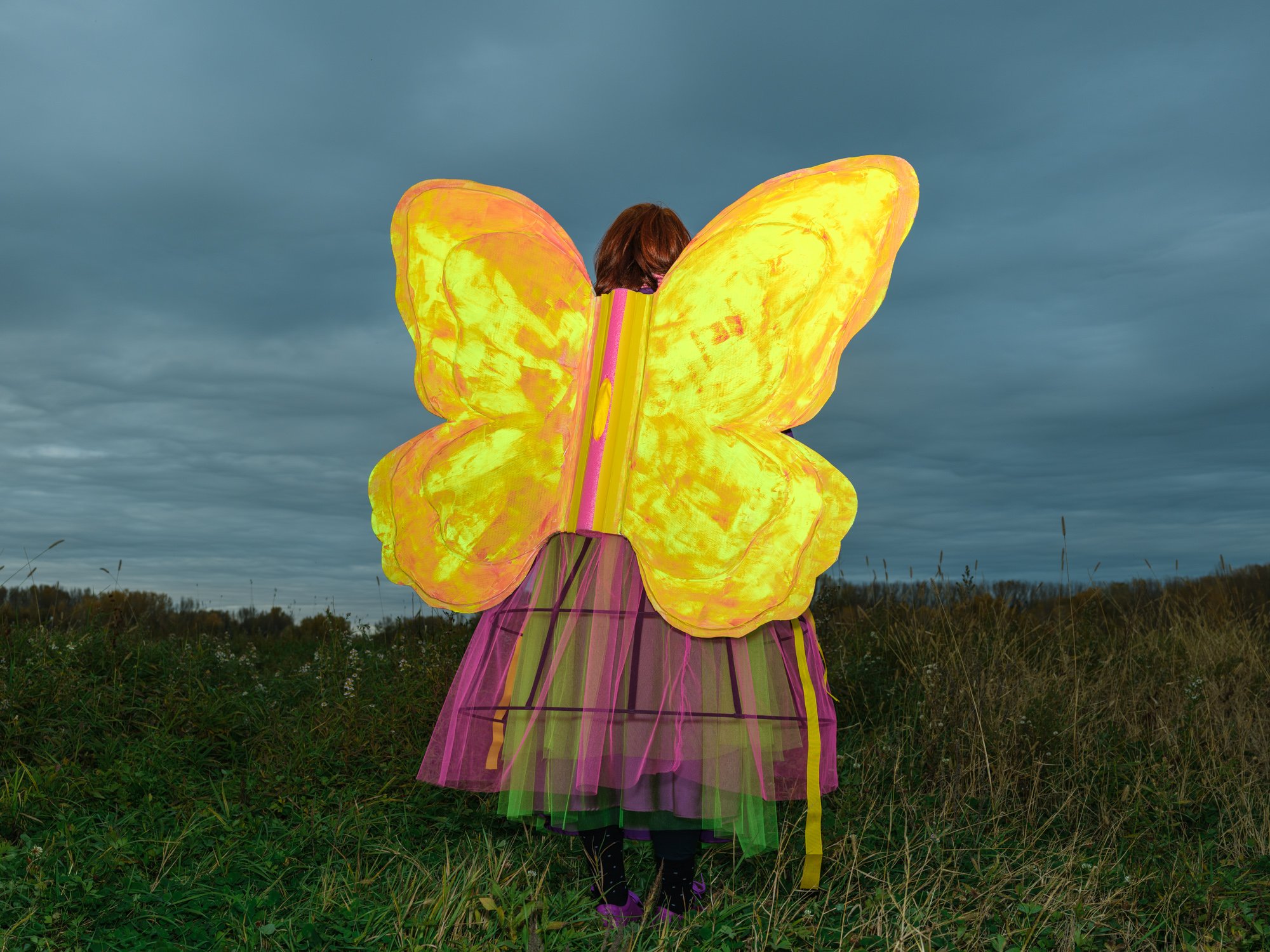
SW: Each image tells its own story. What was the work process like behind each picture? Did your subjects contribute to the idea?
MS: We began in the studio, with conversations. I needed time to get to know the people. Taken together, their stories became the basis for many of the ideas, but not in a literal way.
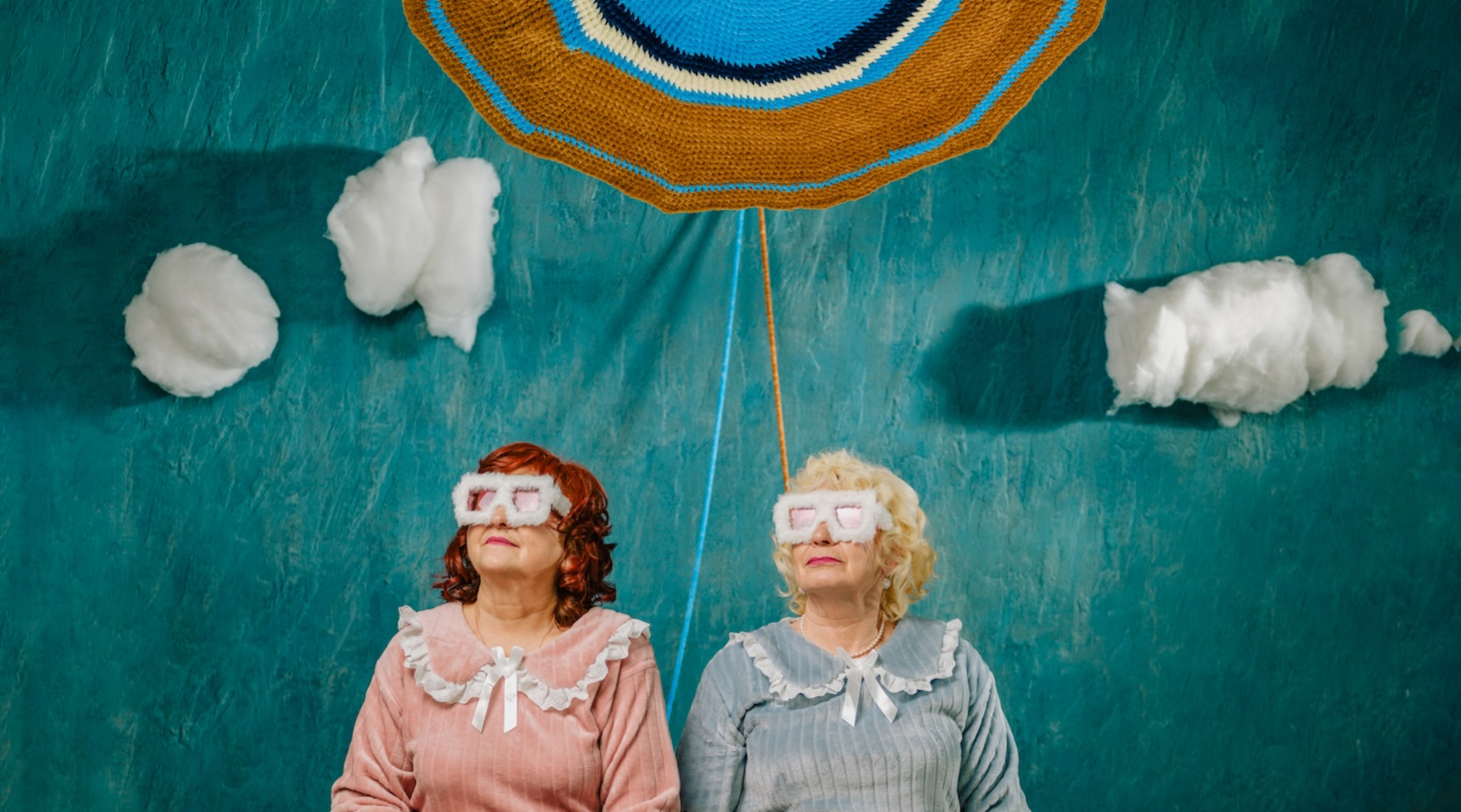
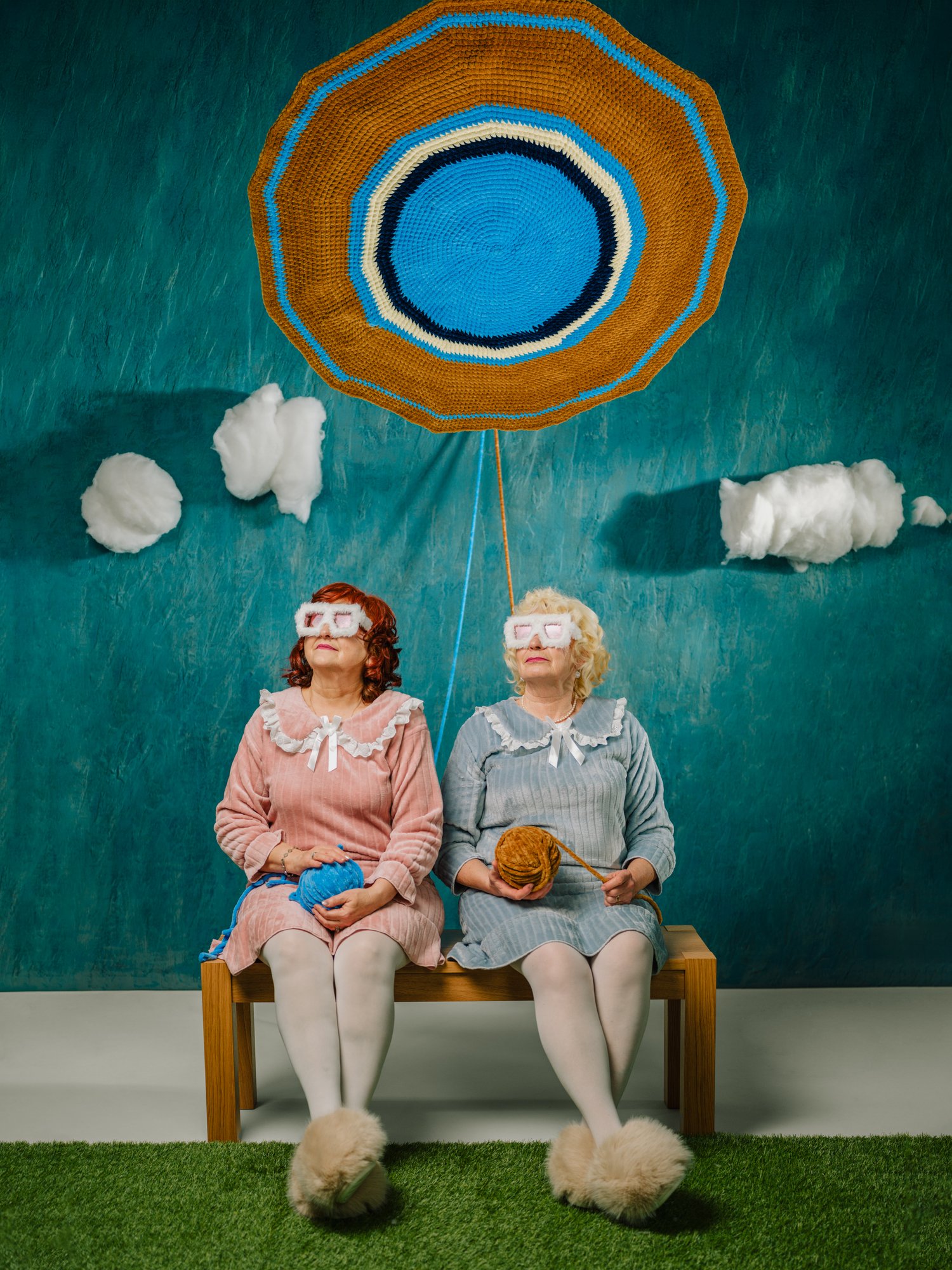
I did not want to illustrate what I had heard. I was more interested in the impressions these stories left with me and in translating them into a slightly displaced, sometimes almost dystopian visual reality. For example, the photograph of the two women knitting grew out of conversations with participants from Kramatorsk and Nikopol, two cities that have been heavily shelled since the beginning of the full-scale invasion. I had the image in my head for a very long time. I also had to knit the large carpet myself. It is quite big.
Usually, I arrive with a core, quite detailed idea. But once we begin, the participants are very active and bring their own responses. We usually make much more than I originally planned, which makes the final selection very difficult.
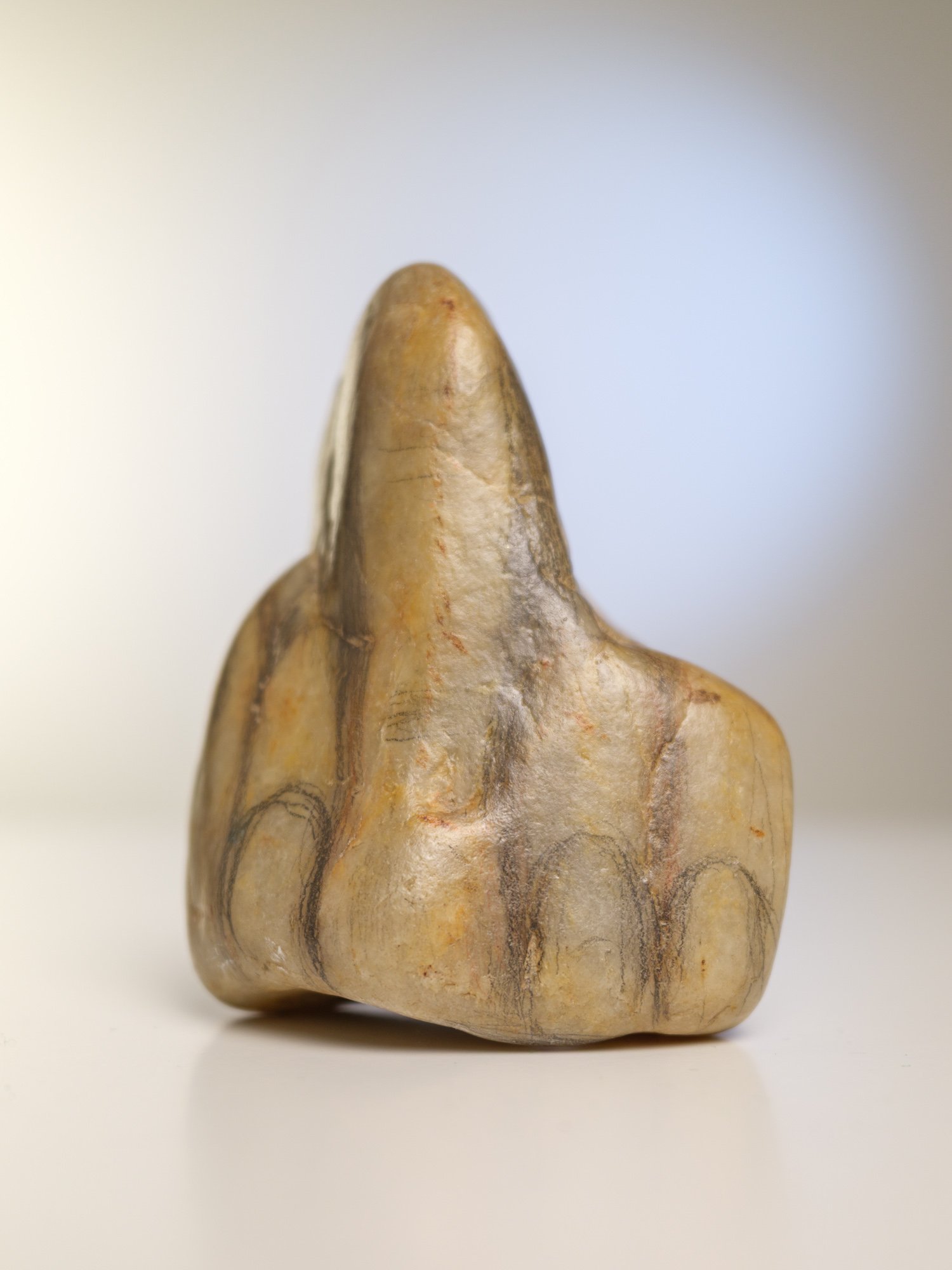
SW: Can you tell me about the photo Mrs. Nadia’s Answer to Putin?
MS: Mrs Nadia is a very creative person. She paints often and likes finding forms and resemblances in nature: in trees, clouds and especially stones. She frequently paints on the stones she finds, giving them another identity or perspective.
When she found this particular stone, it immediately resonated with her. She saw it as a gesture of defiance: “You won’t get me, Putin!” Whenever she feels sad, looking at the work makes her feel better. She has made other small works in response to the actions, and inaction, of political leaders. We later made a short reel in which she explains the work herself.
SW: And finally, how did you come up with the title?
MS: I had many working titles, but they all felt so flat, to be honest. Then one of the women came to the studio wearing a T-shirt that said “Stylish Butterflies.” She told me she had been a member of a senior club back in Ukraine. They did not want to call themselves grannies, so they chose “Butterflies” instead.
I loved it immediately. It was such a beautiful metaphor: fragility, beauty, fleeting moments. I knew butterflies had to be in the title, but I still could not find another word to balance it. Later, I was interviewing a couple and asked which stereotypes about their generation irritated them. The husband replied, “It’s very annoying that everyone sees us as dinosaurs.”
That was it: butterflies and dinosaurs. Afterwards, I knitted the dinosaur hats, and made these butterfly wings.
