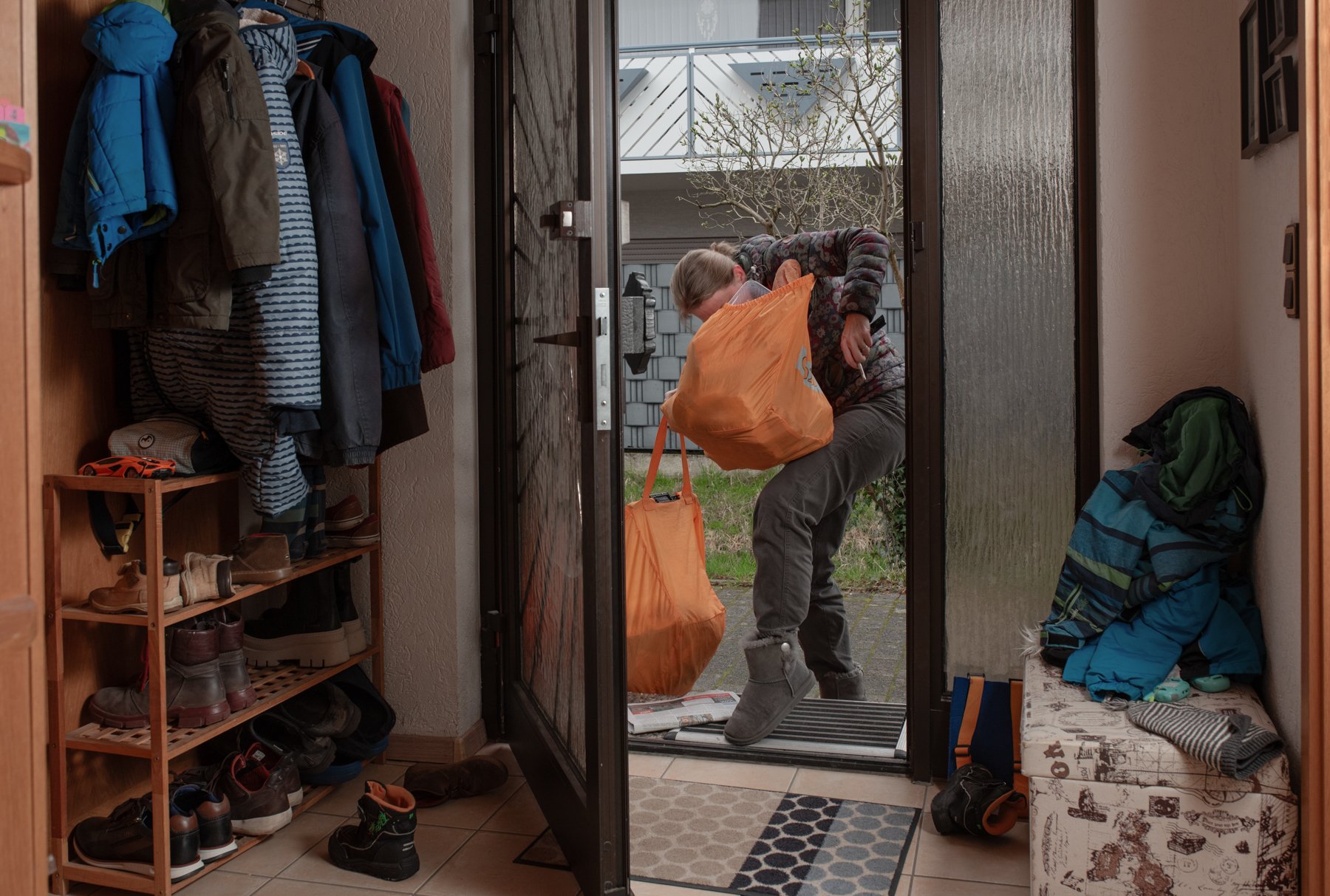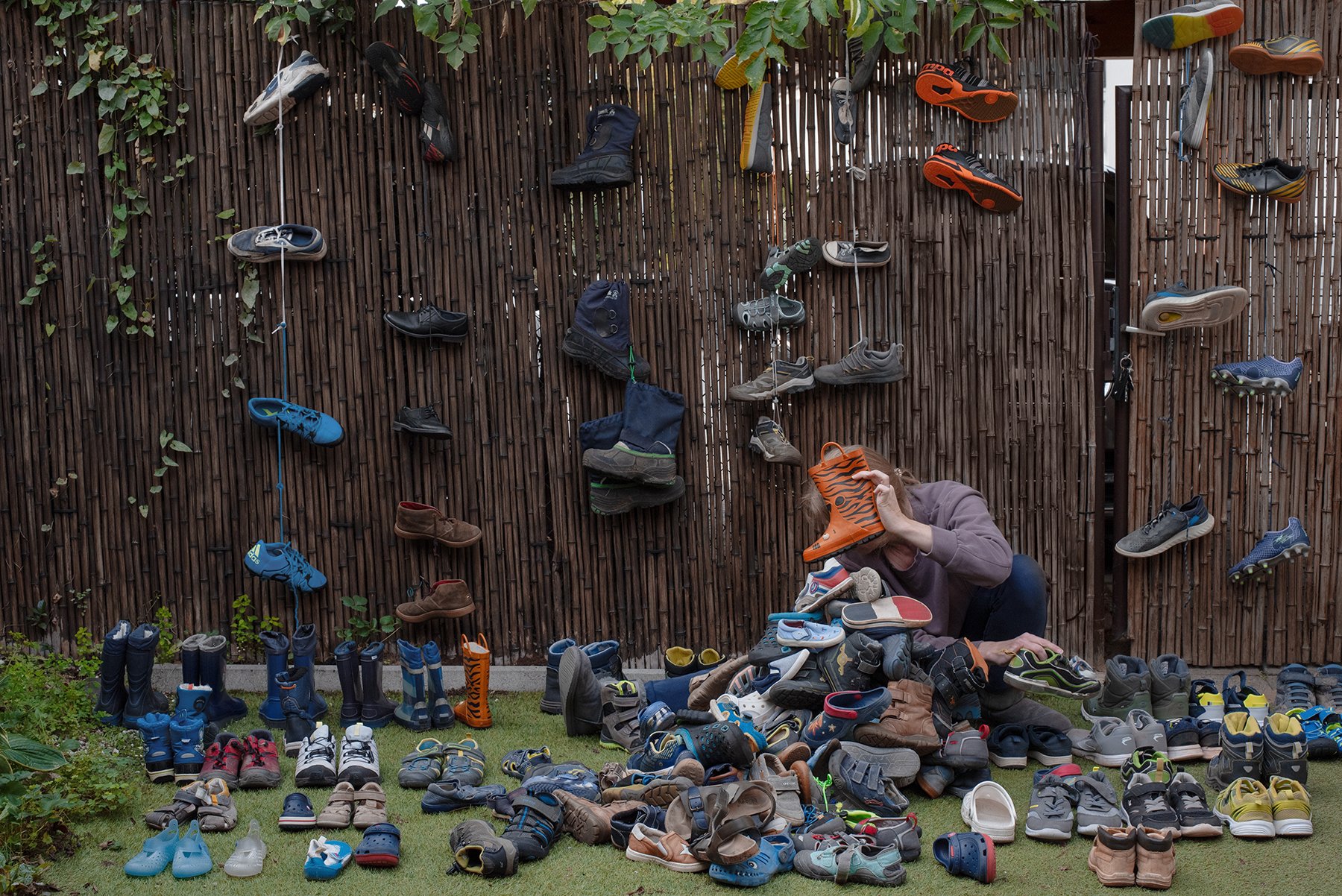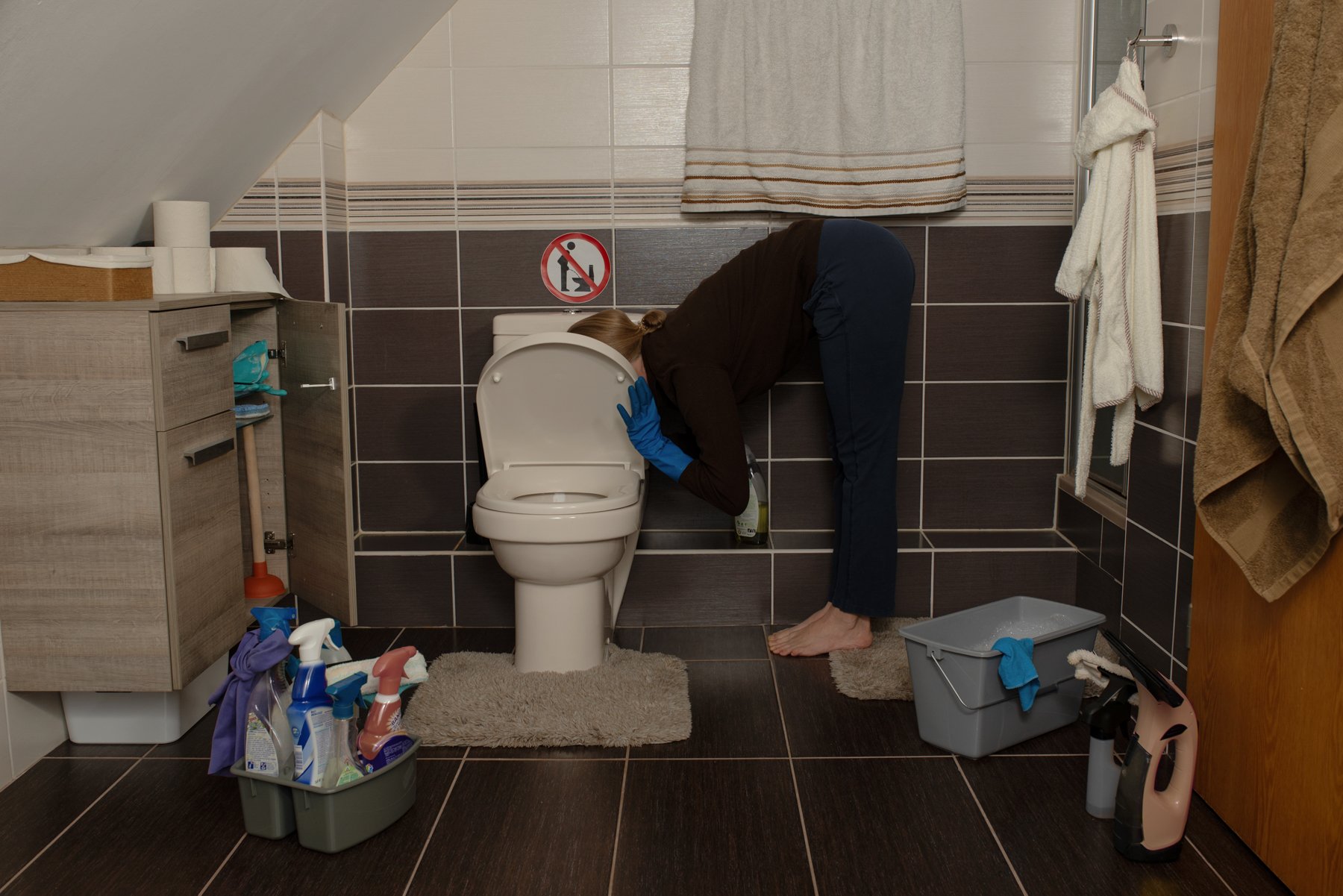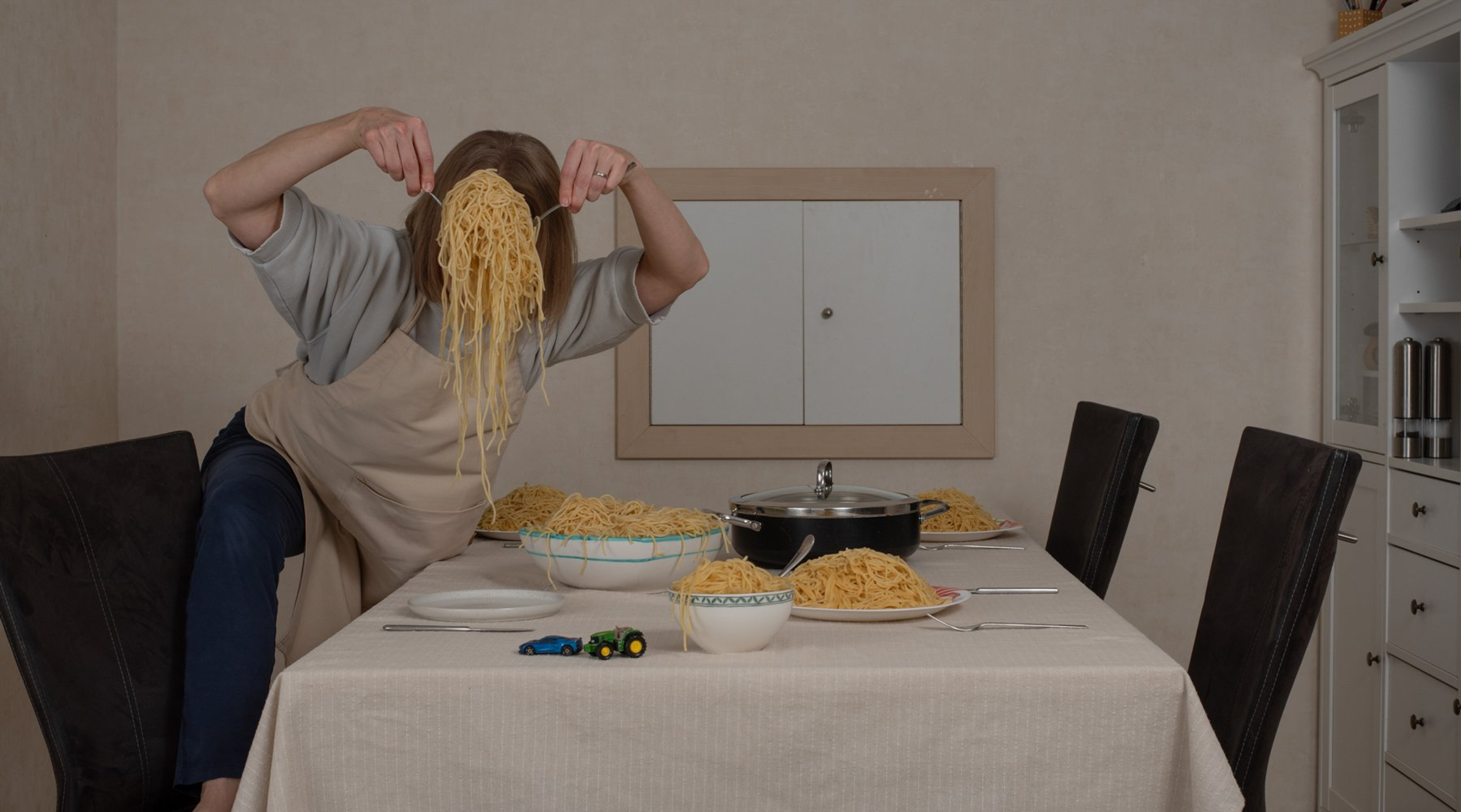
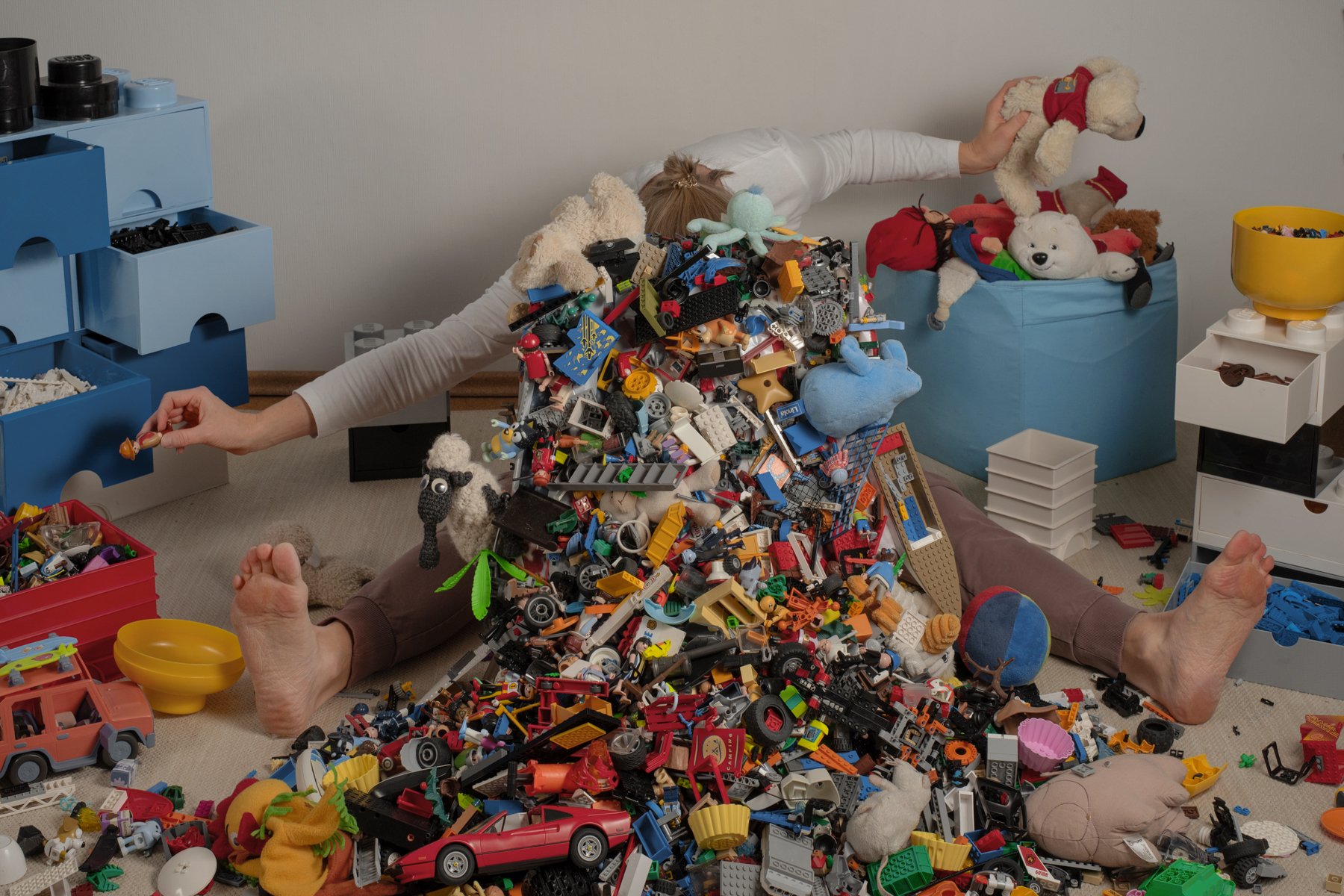
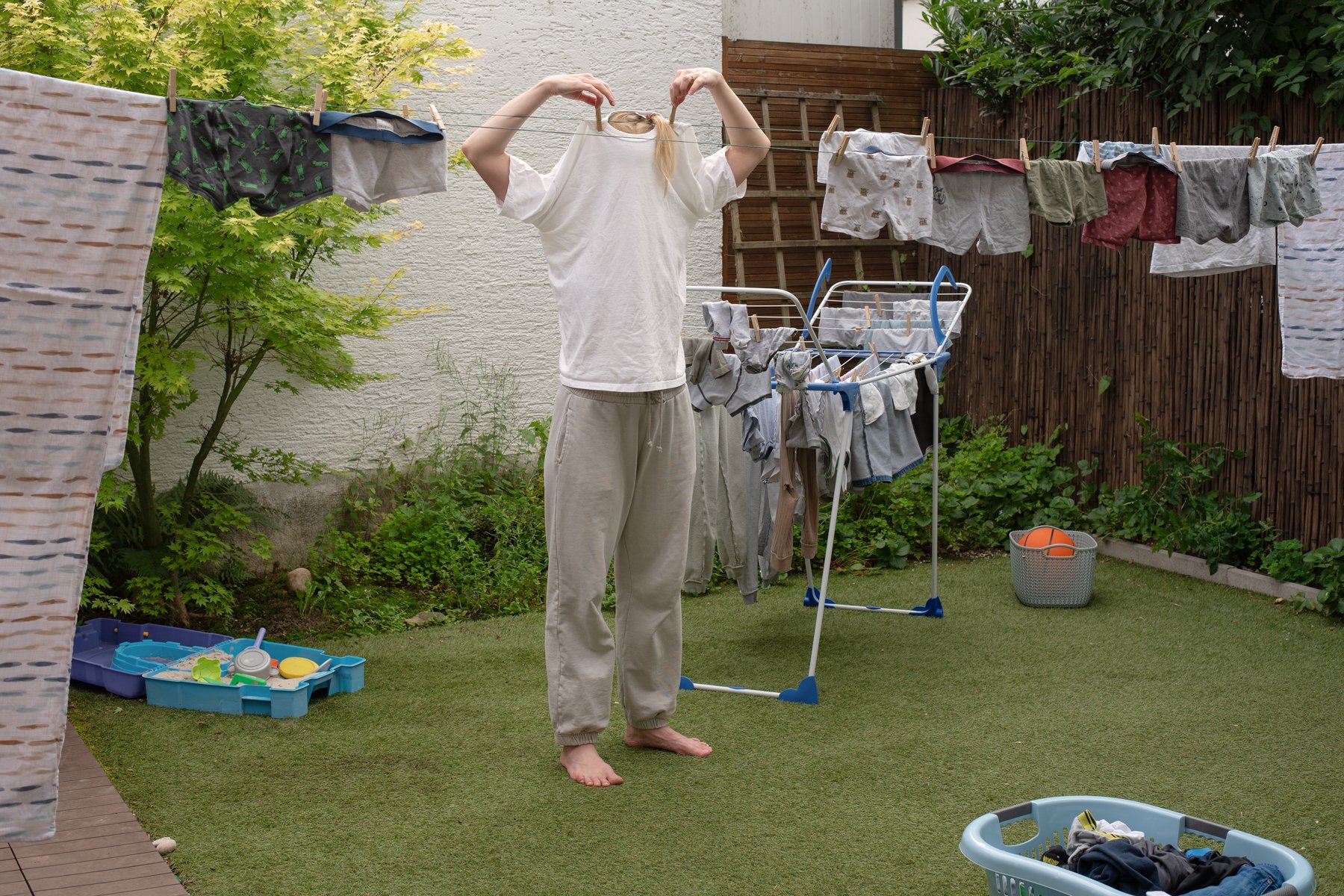
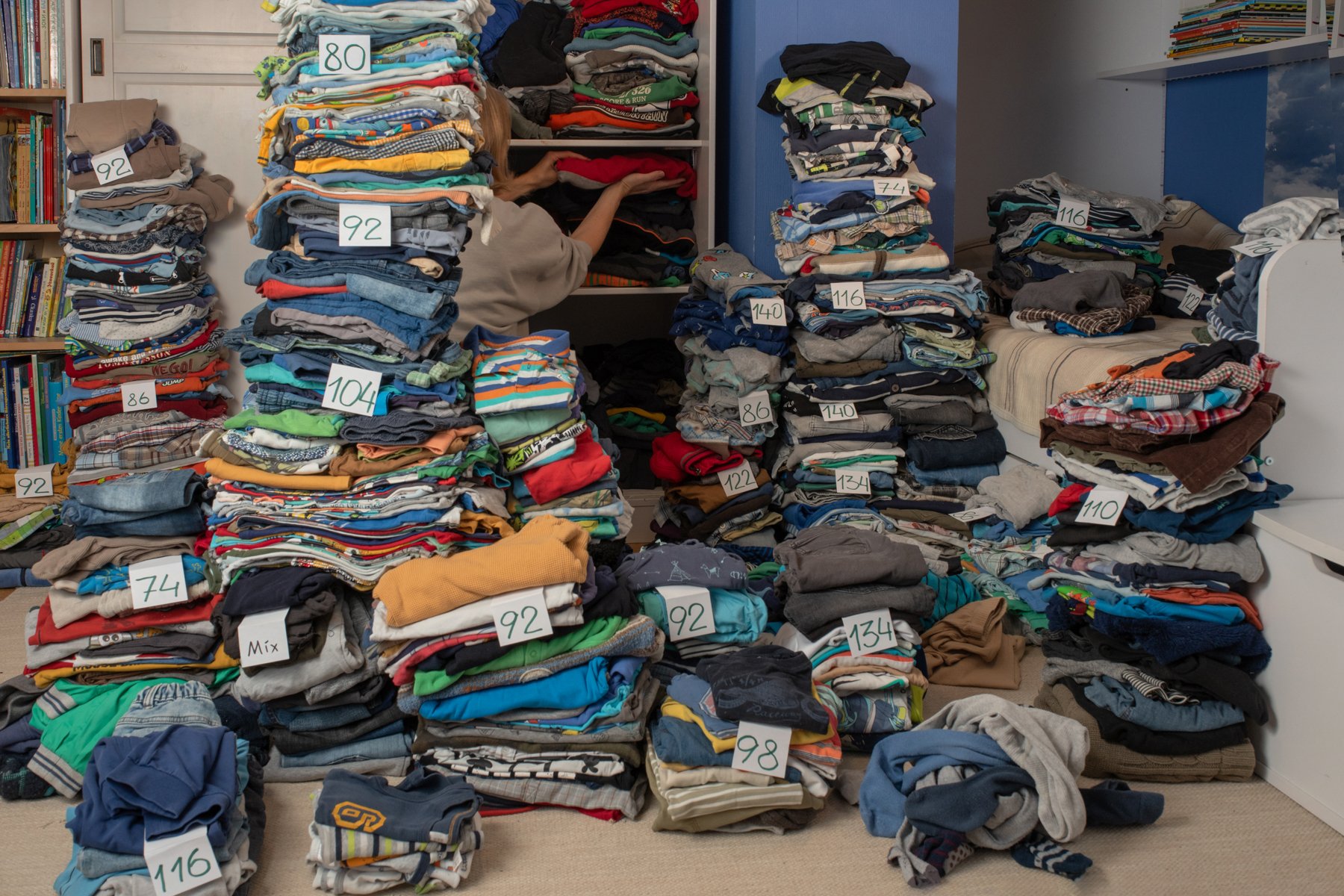
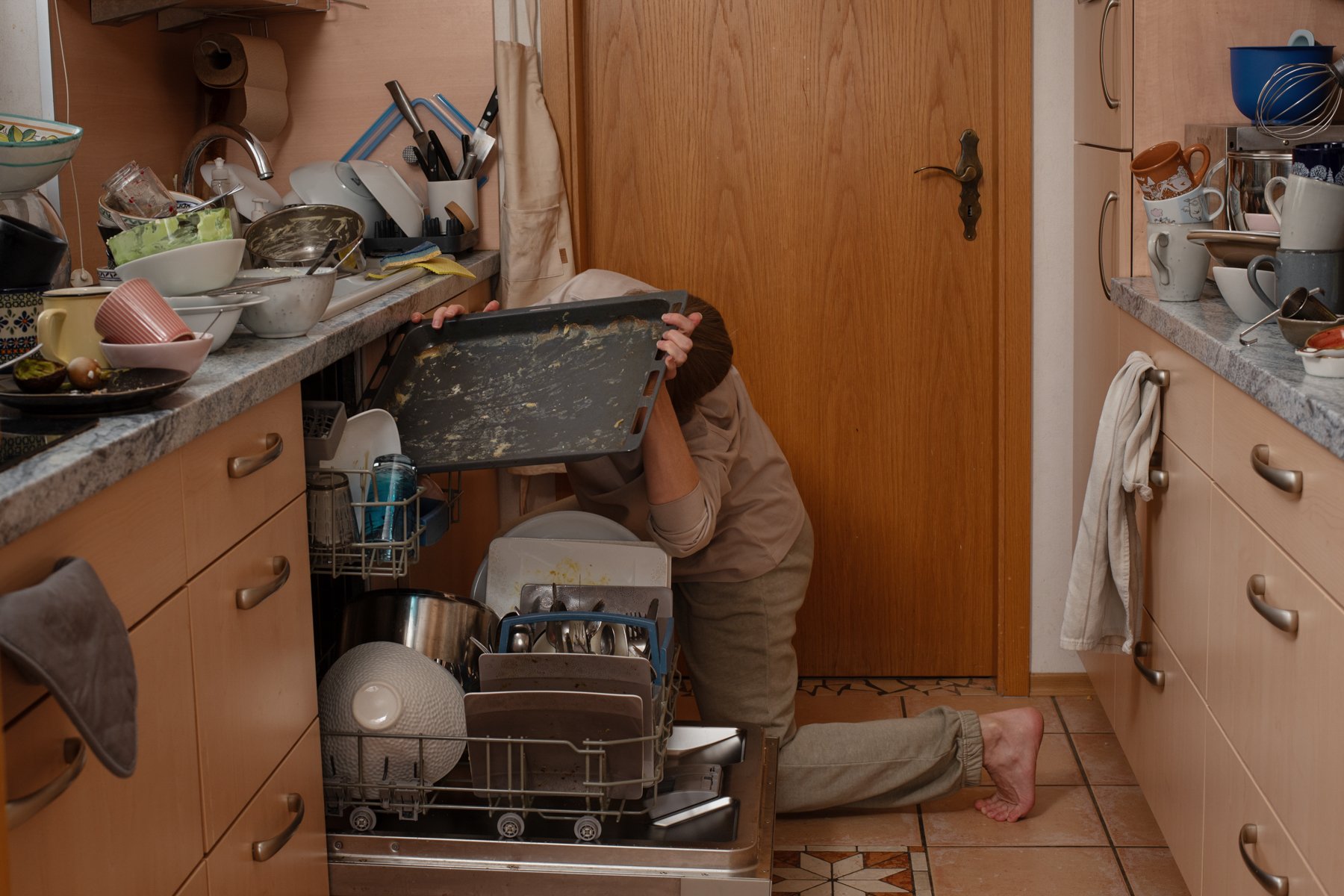
“I am officially a housewife,” says Olga Steinepreis introducing her new project. “Saying it out loud still embarrasses me because the word carries a shadow of idleness. Yet there is always work waiting, the kind that keeps a home alive and somehow appears to ‘do itself.’’’ The house in My Mother Doesn’t Work becomes a stage for this invisible cycle of work, full of dirty socks, dishes, erupting mountains of plastic toys. One sole figure is responsible for taming this frenzied environment—Steinepreis, whose body is pictured at work throughout various scenes of domestic labor.
Photography was an early presence at home while Steinepreis was growing up. Her father was an amateur who developed and printed his own photographs. “As a child, I was fascinated by watching an image slowly appear on a blank sheet of paper in the darkroom,” she recounts. “It felt almost magical.” Years later, the camera’s near-magical power to make things visible remains a defining feature of all of her imaginative projects. Unfolding in parallel with the birth of her first child, her own practice as an artist has allowed her to watch the evolution of her life from a distance, translating her feelings into staged photographs that hold the many—often invisible—facets of motherhood.
Steinepreis first picked up the camera to still time and document the new person she had brought into the world, before beginning to use it as a compass to navigate her way back to her own identity. “Many experiences of motherhood are difficult to explain with words because they contain contradictions: love and exhaustion, joy and loneliness, fulfilment and the feeling of gradually losing yourself,” she explains. To express this, the artist has developed a visual language steeped in surrealism and absurdity that is deeply rooted in this myriad of emotions she experiences in everyday reality.
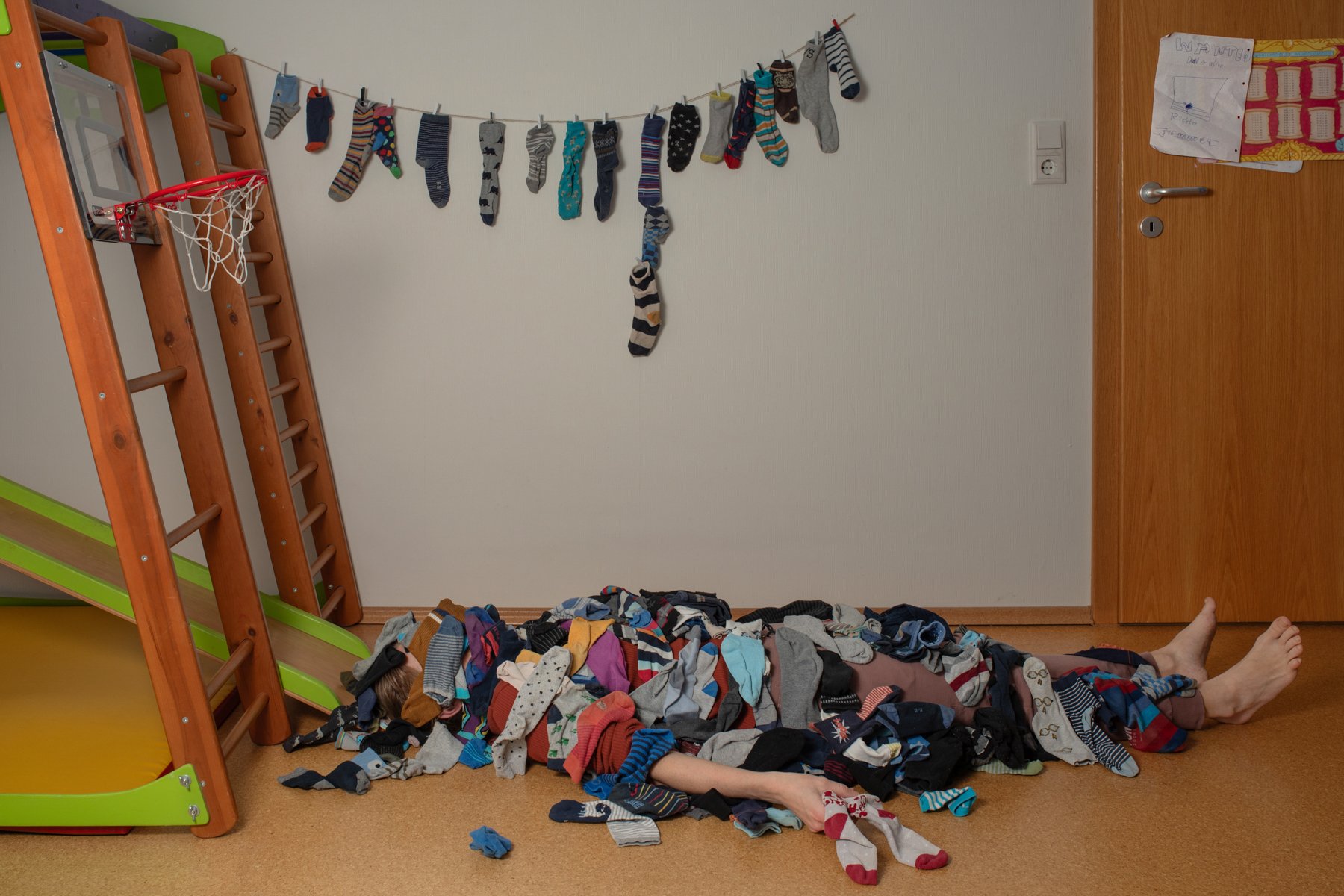
Both a self-portrait and a character that is being performed, the figure animating Steinepreis’ images morphs across projects. In another series, I’ve had a dream…, the artist is a shapeshifting being, stretched in different directions with extra arms and heads. She multiples herself, different selves staring each other down. In My Mother Doesn’t Work, it is things that multiply, drowning out the faceless body—invisible, unrecognized chores that rack up over time amassing to excess.
“Usually, my projects begin with something that refuses to leave me alone. It can be a sentence I overhear, an everyday situation, a feeling of discomfort, or a contradiction I don’t quite understand,” Steinepreis says. The earworm of My Mother Doesn’t Work was a snippet of conversation that she overheard during a conversation between her son and his friend. When asked what his mother did for a living, the artist’s son replied: “My mom doesn’t work. Well, she cooks, keeps the house clean, but she hasn’t got a real job.” The innocent remark returned to her again and again as she performed her daily chores at home.
“One day, while sorting a pile of laundry before putting it into the washing machine, I felt the urge to set up my camera and lights and took a photograph,” she explains. “That image never became part of the final series, but it marked the beginning of the project. It gave me the visual language I wanted to continue exploring and opened up a conversation I felt compelled to have through photography.”
In elaborately constructed scenes, Steinepreis’ frantic body disappears into the environment she has been tasked with keeping in working order. During the work process, artistic and domestic labor meet. “Before I can even begin shooting, I often have to prepare for the day in a very practical way. I cook meals in advance and try to free myself from as many household responsibilities as possible,” she says. “When I finally get to realize the vision, it becomes a very physical undertaking. I move furniture, rearrange objects, layer the scene with deliberate care, and craft the lighting to support the mood. It’s like staging a small theatre set.” Both humorous and upsetting, the dramatized version of everyday life that gets played here feels closer to reality than the pristine narrative of motherhood that dominates social media.
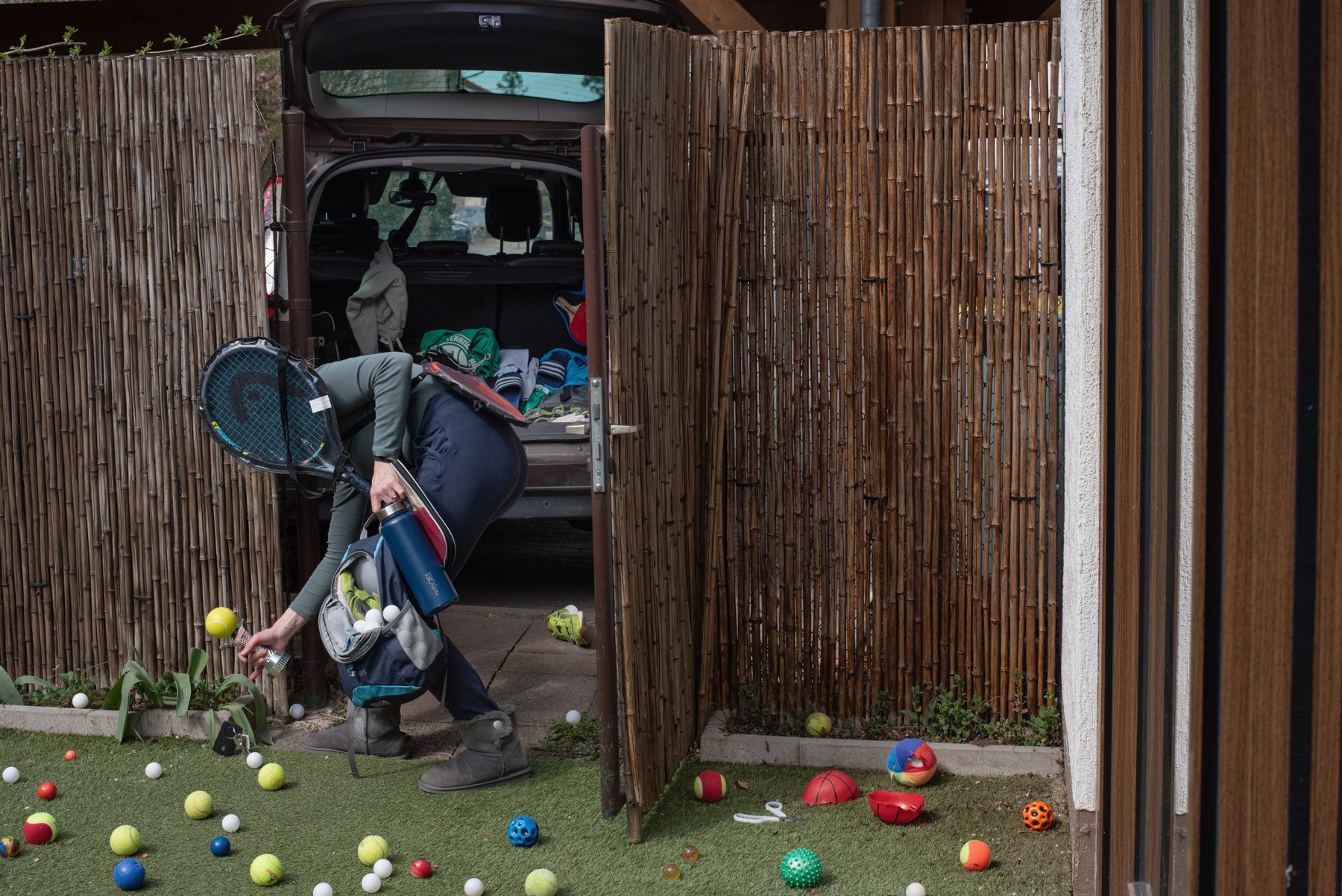
“Will I ever live up to this ideal? Who set this standard in the first place? The issue isn’t that these bright, beautiful moments exist—they absolutely do. The problem arises when they become the only acceptable narrative of motherhood,” the artist ponders. “There’s so little room for honest conversations about the exhaustion, the frustration, the invisible labor, or the slow erosion of one’s own needs beneath the weight of everyone else’s demands. A woman’s time, energy, and attention get reoriented entirely around others. Even small, everyday choices—what to cook, when to rest, how to spend her time—are made with everyone else in mind. Gradually, she can start to fade out of her own story.”
Across the projects that make up her body of work, Steinepreis goes beyond writing her way back into her own story to explore a more collective narrative. “I am not interested in portraying motherhood only as struggle or sacrifice, just as I am not interested in presenting it as endless joy.”