“Life is a beach,” or so they say. As an expression, it refers to the idea that life is easy and carefree, but we know better than that. So what if the saying was flipped? A beach is life. For the Brazilian photographer Rodrigo Koraicho, the beach is a stage upon which all things come together. “On the beach, you see humanity exposed—literally and metaphorically. You see vulnerability and boldness, desire and disappointment, nature and the human impulse, all simultaneously,” he explains.
One day, while on a family trip, Koraicho decided to go for a walk. Little did he know he was taking the first steps of a multi-year (and multi-miled) project. “The sand was alive—people talking, performing, flirting, chilling, dreaming. And there, I could exercise what I feel I do best in photography: meeting people, engaging with them, spending time, allowing those encounters to shape the work.”
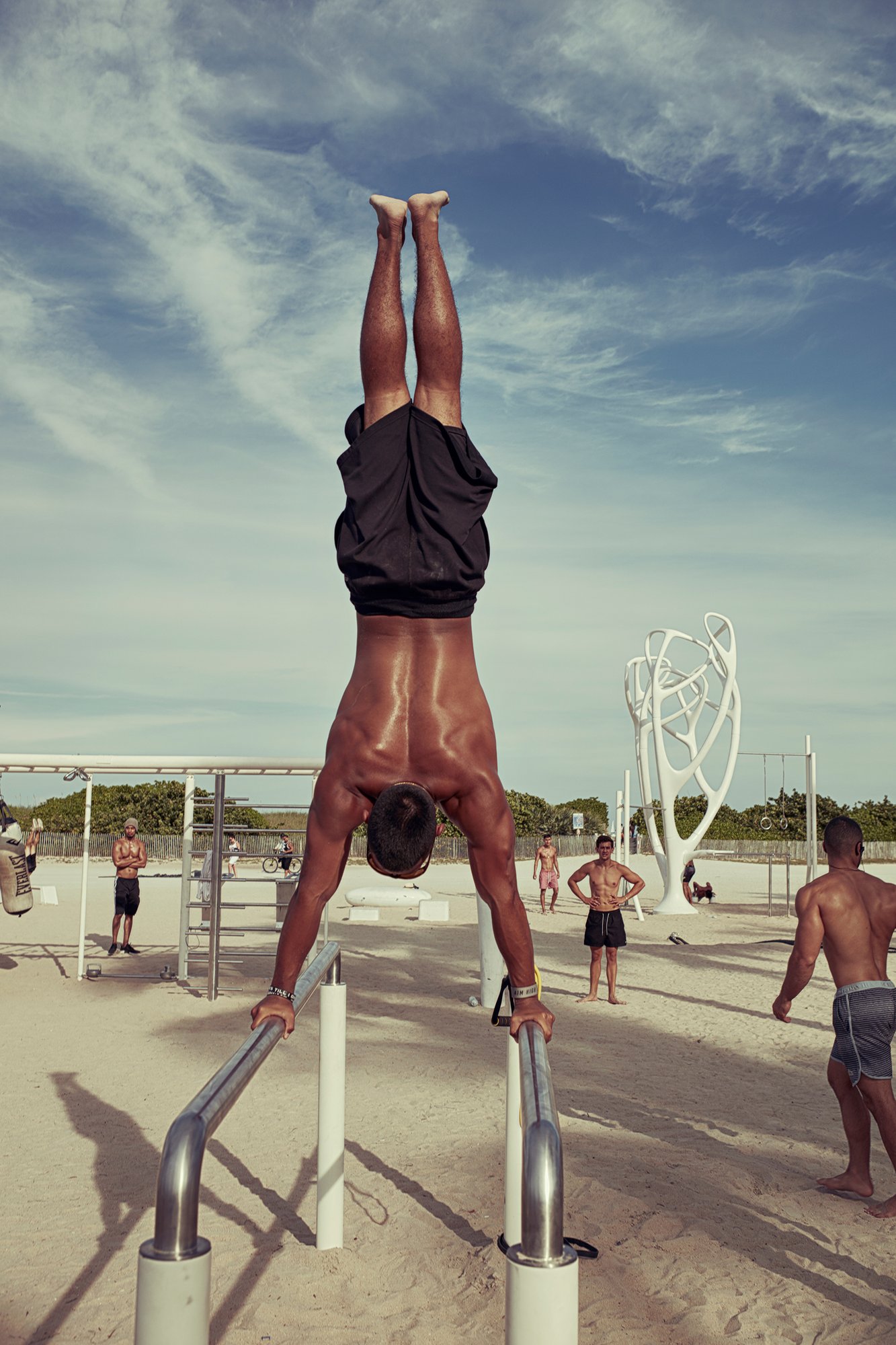
Over the past few years, he has walked and talked his way up and down Miami Beach. Traversing the beach, Koraicho found moments that danced between revelation and ambiguity, a slow reveal of experiences that began to build. “Miami brings together individuals from everywhere, and on the beach this diversity becomes even more visible—through gestures, colors, bodies, attitudes. That space showed me how a place like this can speak not only about itself, but about the world we’re living in—the fantasies we build, the illusion we inhabit, and the fragile realities underneath it all.”

Miami Beach is booming, drawing waves of tourists amidst high-rise constructions, against the backdrop of rising sea levels and temperatures and flooding that has become a regular nuisance. Koraicho captures the intersection of desire, spectacle, and consumption across this fragile spit of land. Miami is a mess of contradictions, a mirror of American life in which economic disparity, cultural identity and diversity, and the banality and shocks of the everyday all wash up together.
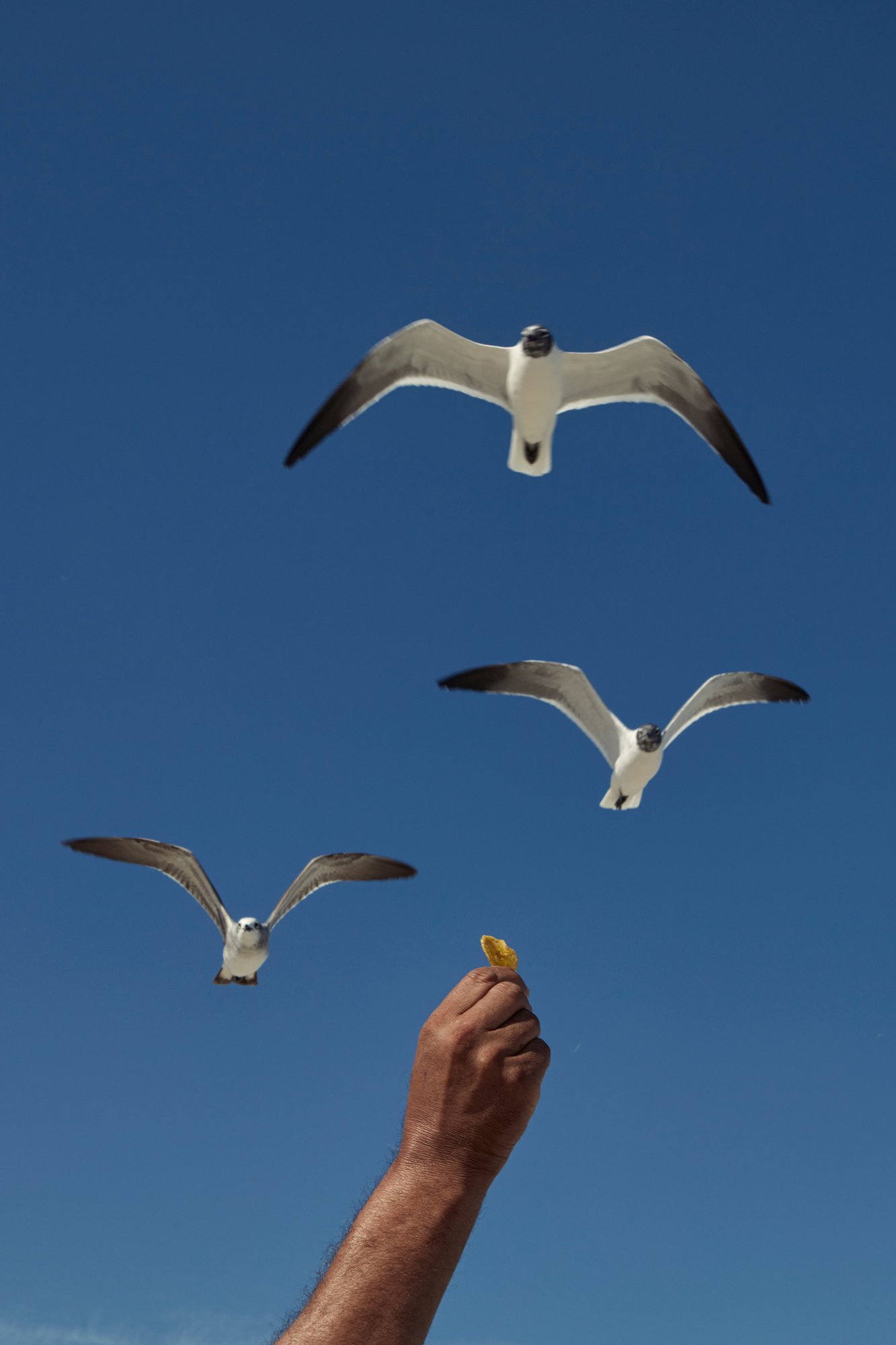
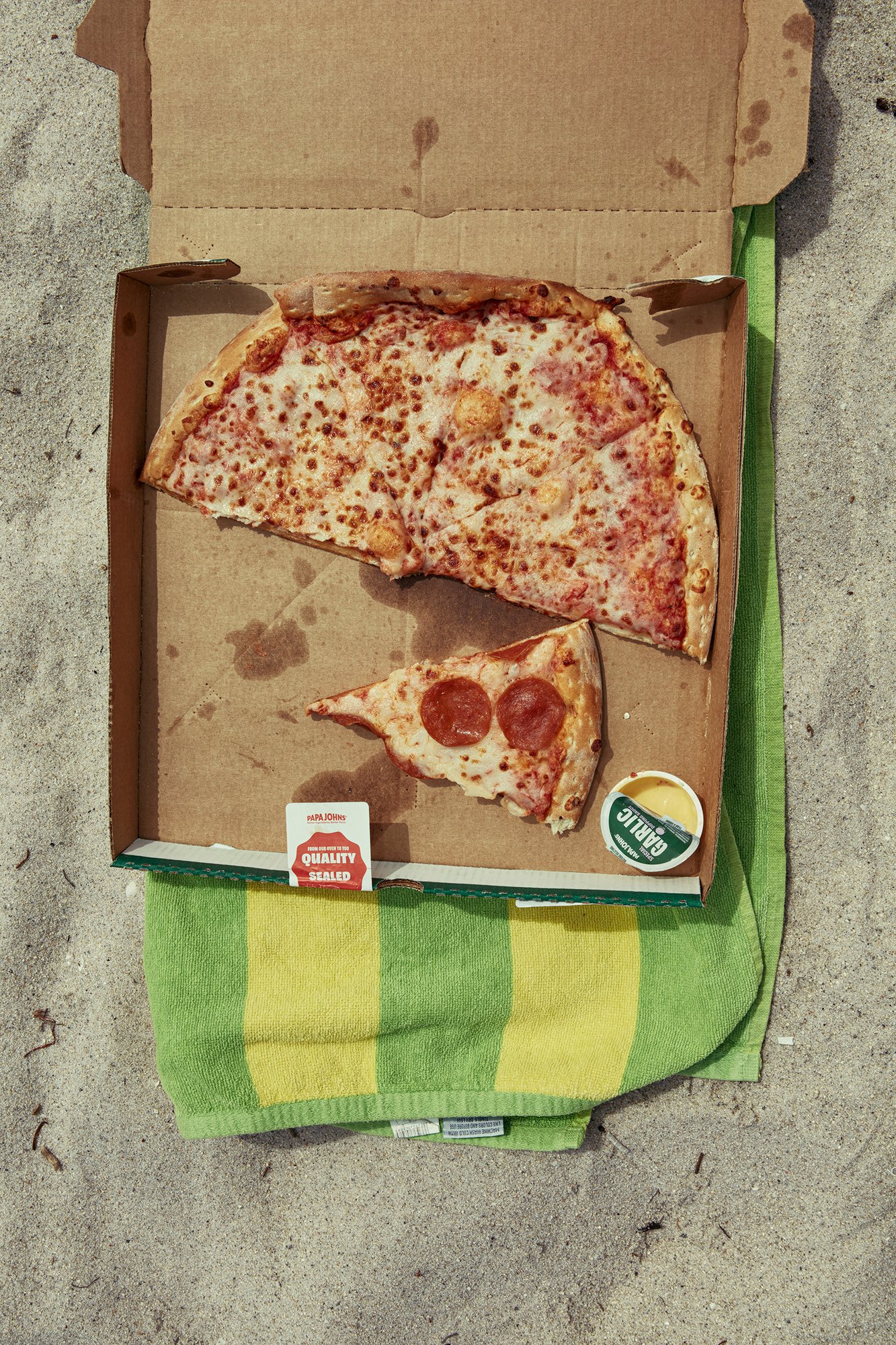
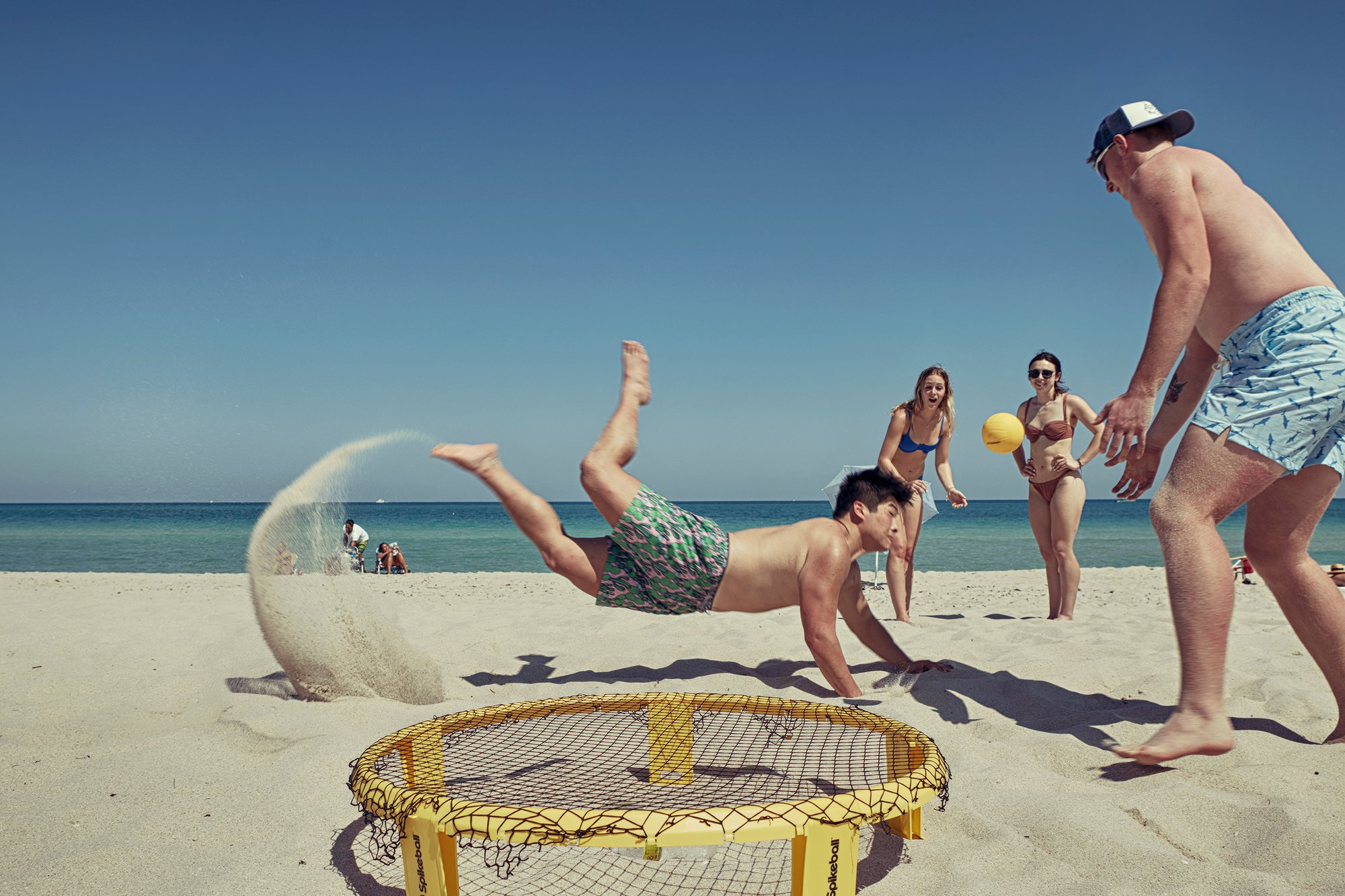
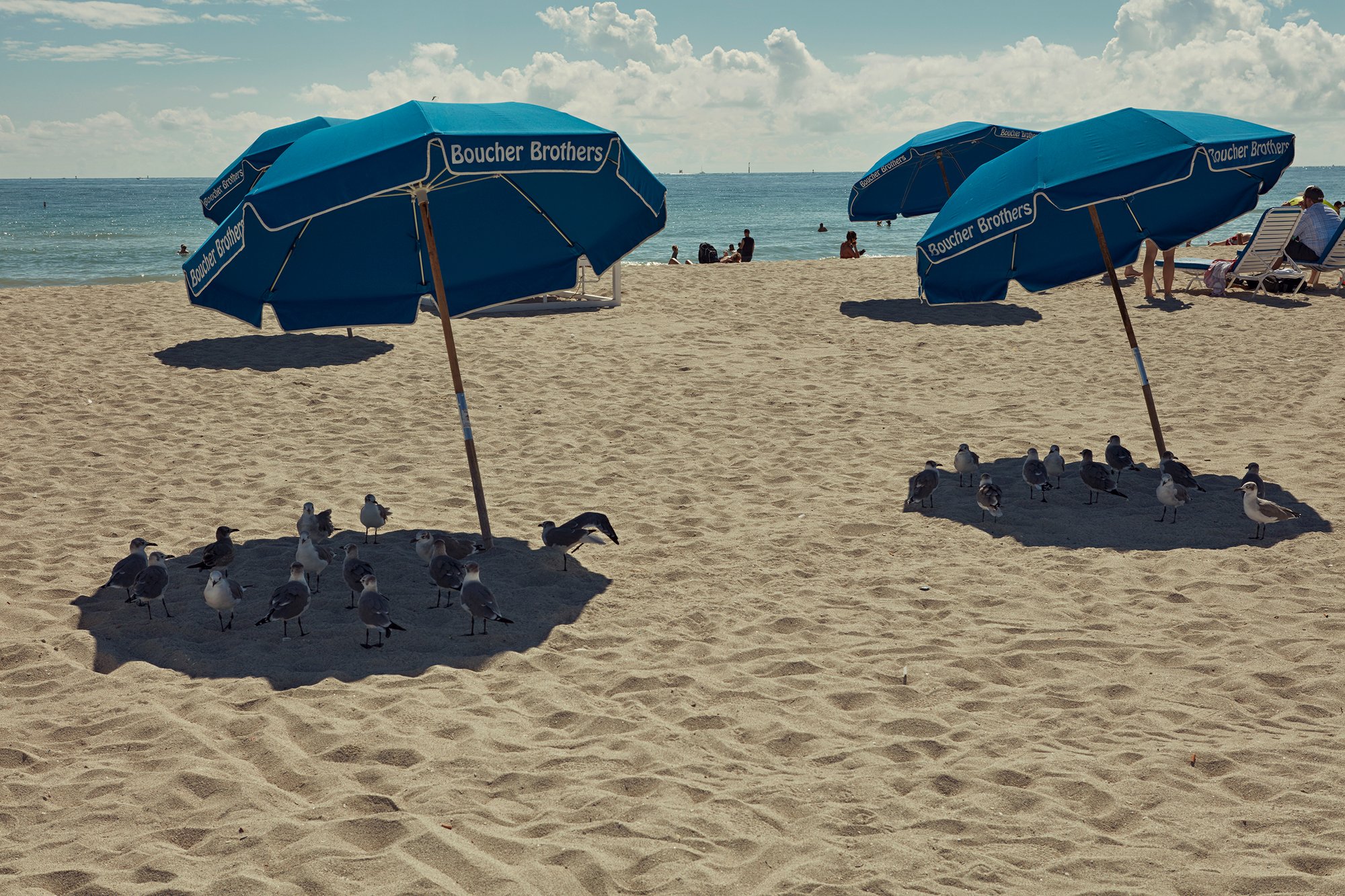
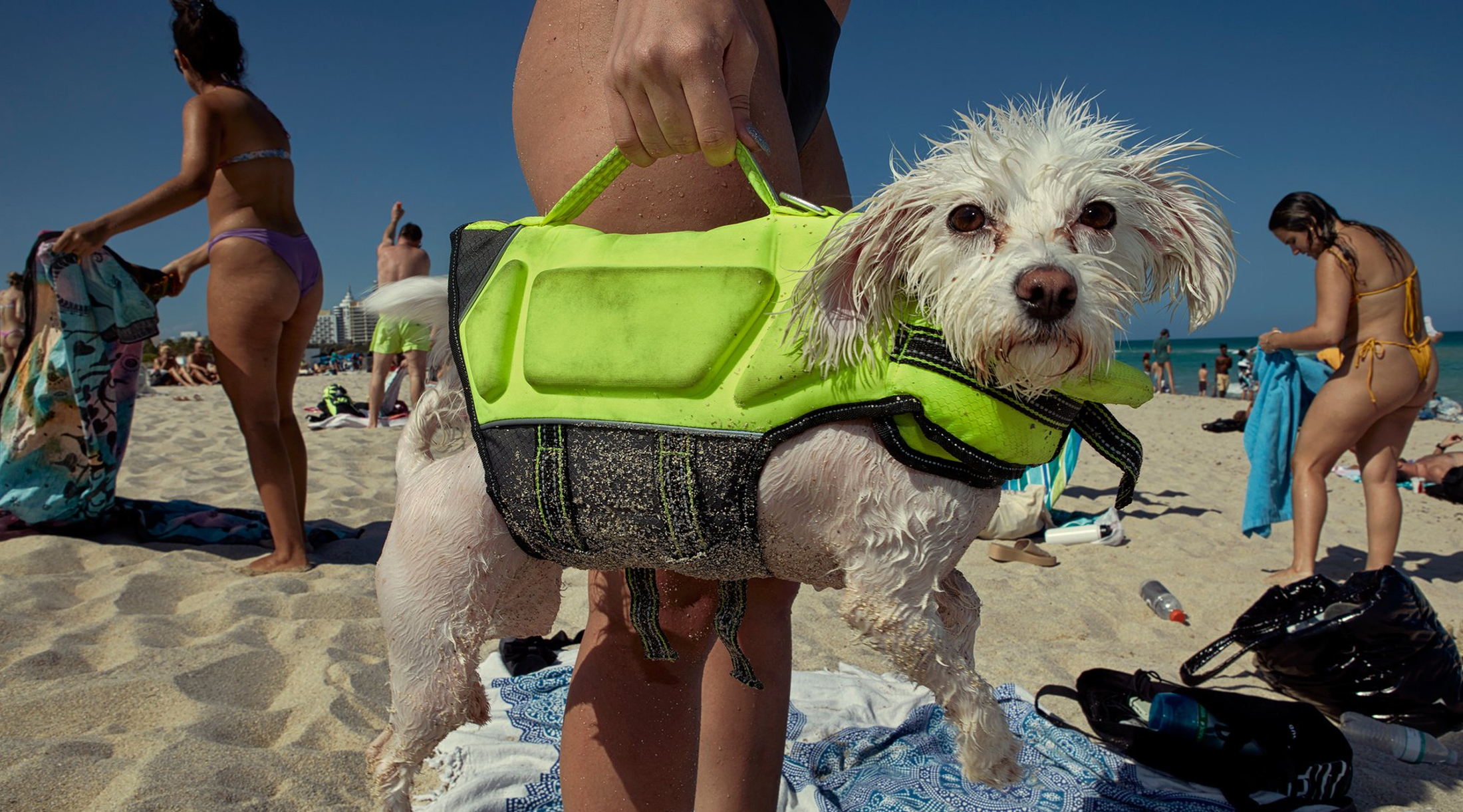
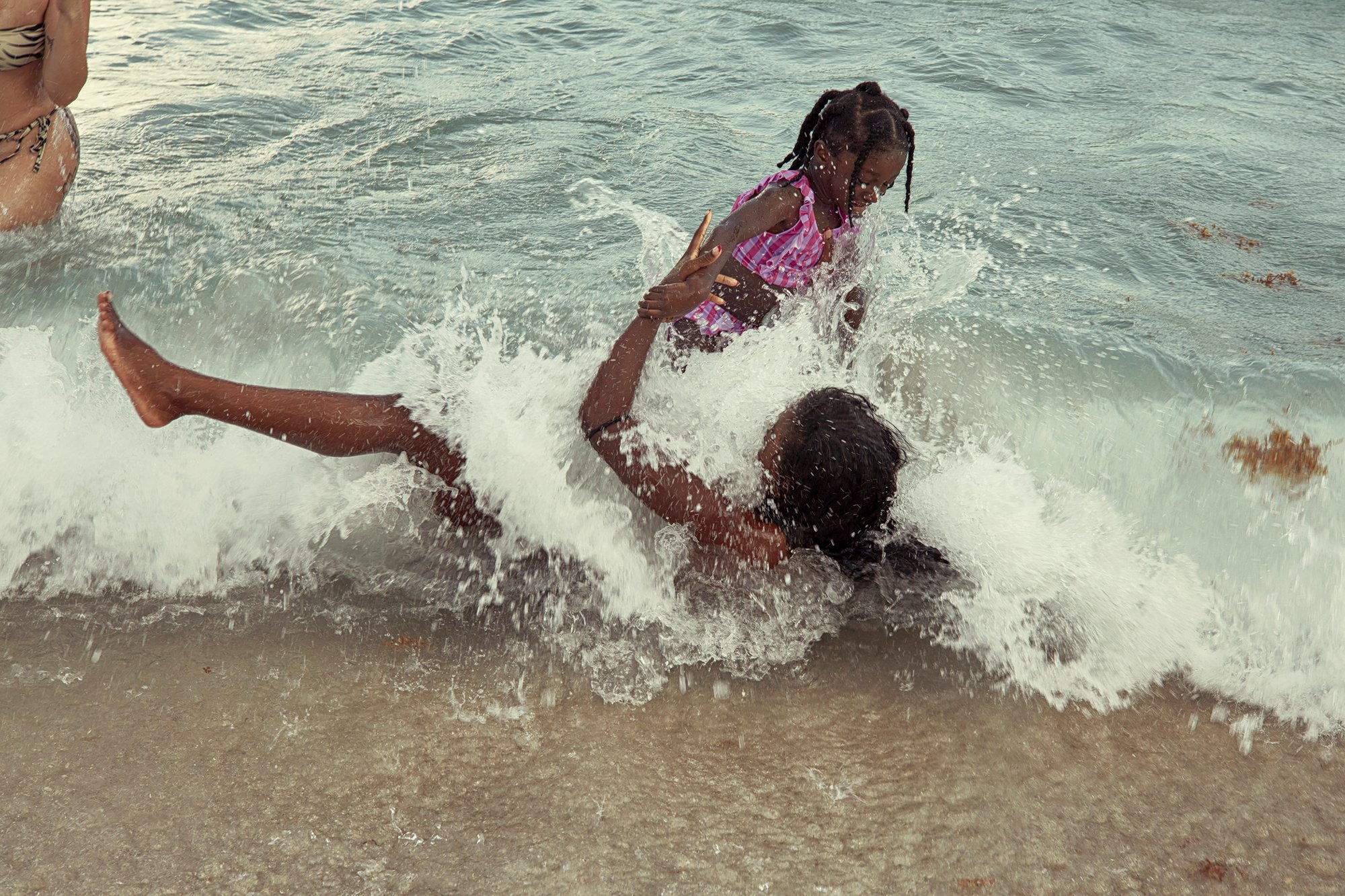
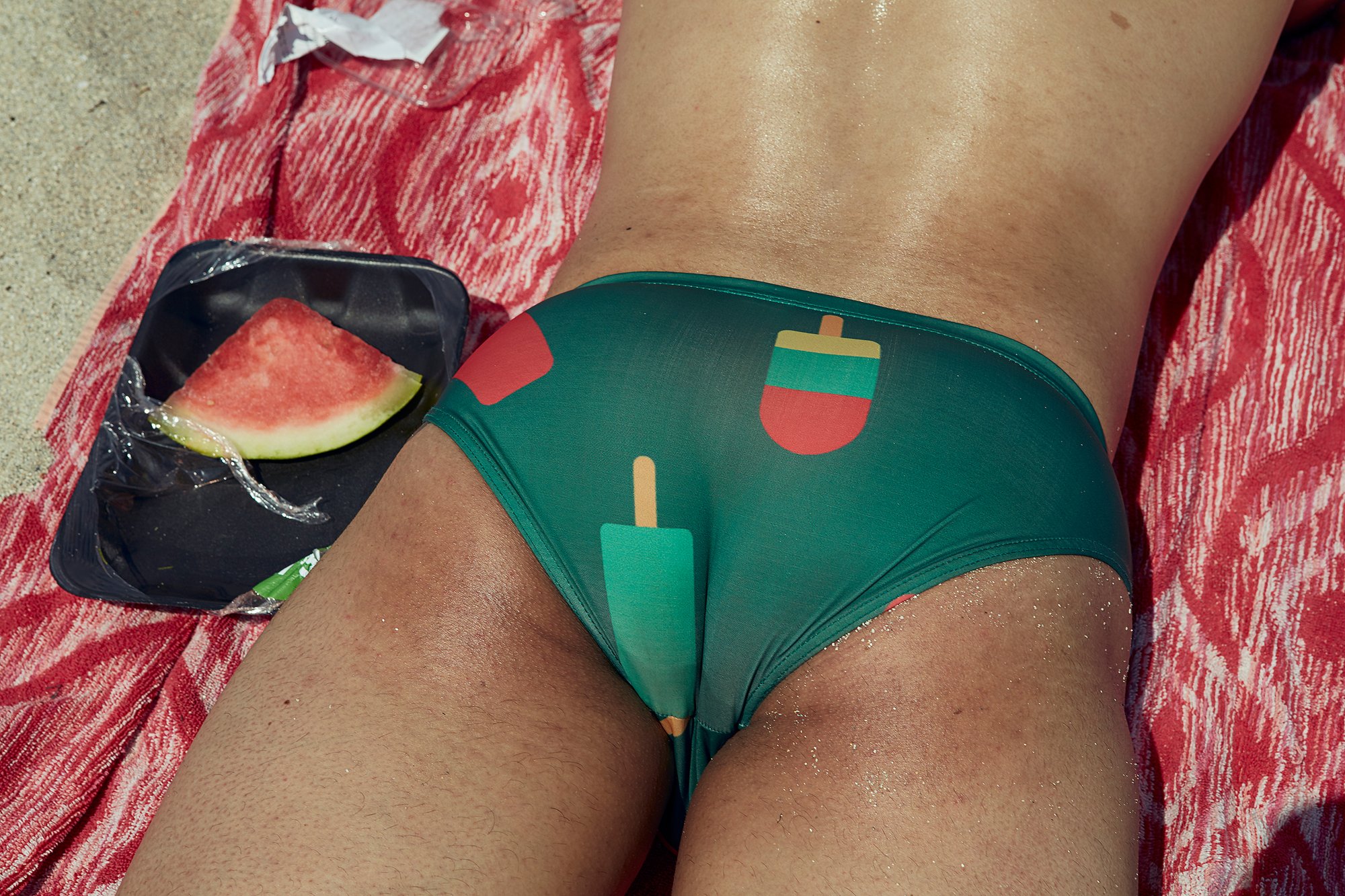
Bright blues, neon greens, and pinks play across the sand. Beachgoers in repose and mid-acrobatics fill the frame. “I was struck by how everything seemed to coexist on that strip of sand—beauty, craving, leisure, performance, and, at times, a sense of collapse—all exposed under the same bright light,” he notes. The beach is teeming with children and adults at play. There are Hello Kitty bedazzled acrylic nails, the fizzing delight of children tumbling to shore in a wave, and the painful-looking, peeling back of a sunburnt Trump supporter. Koraicho has a sharp eye for detail: the triangular forms of a watermelon wedge replicated in the popsicle print of a Speedo, the gulls catching a break in the shade of umbrellas.
Walking and observing go hand in hand, and Koraicho could almost be called a beach flâneur. “I prefer to let the walking and the encounters shape the direction of the work, without any rush. By doing so, I allow people and the place to reveal what is most genuine and interesting, often far beyond any preconceived idea. Many times you begin by thinking the project will unfold in a certain way, and time gently shifts it into something different.”
A beach is life—hot and pleasant, itchy, tiring, and fun. More complicated than it first appears, and always teetering on the edge of being washed out to sea. If you open your eyes and start walking, the epiphanies start rolling into view, like waves breaking onto the shore.