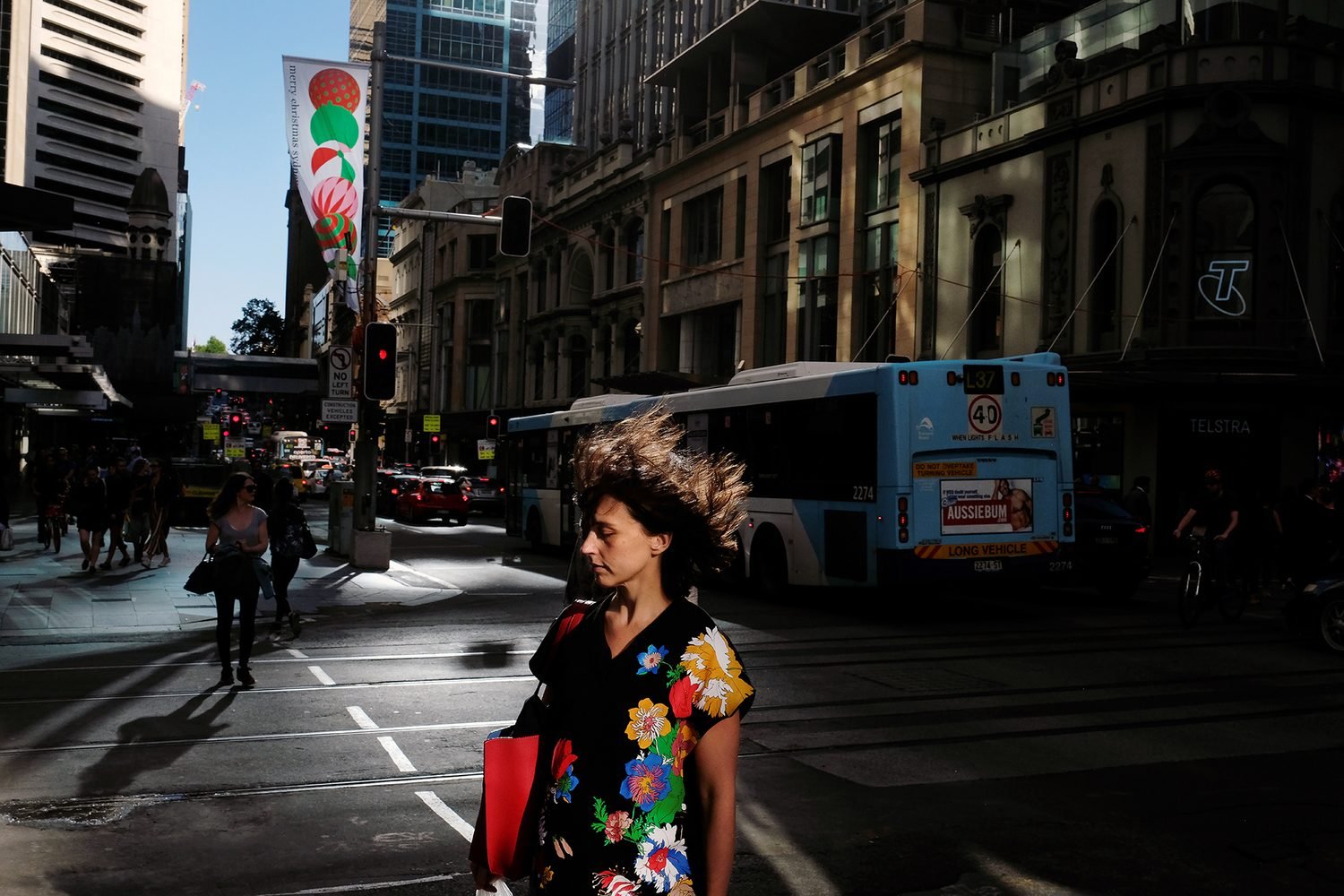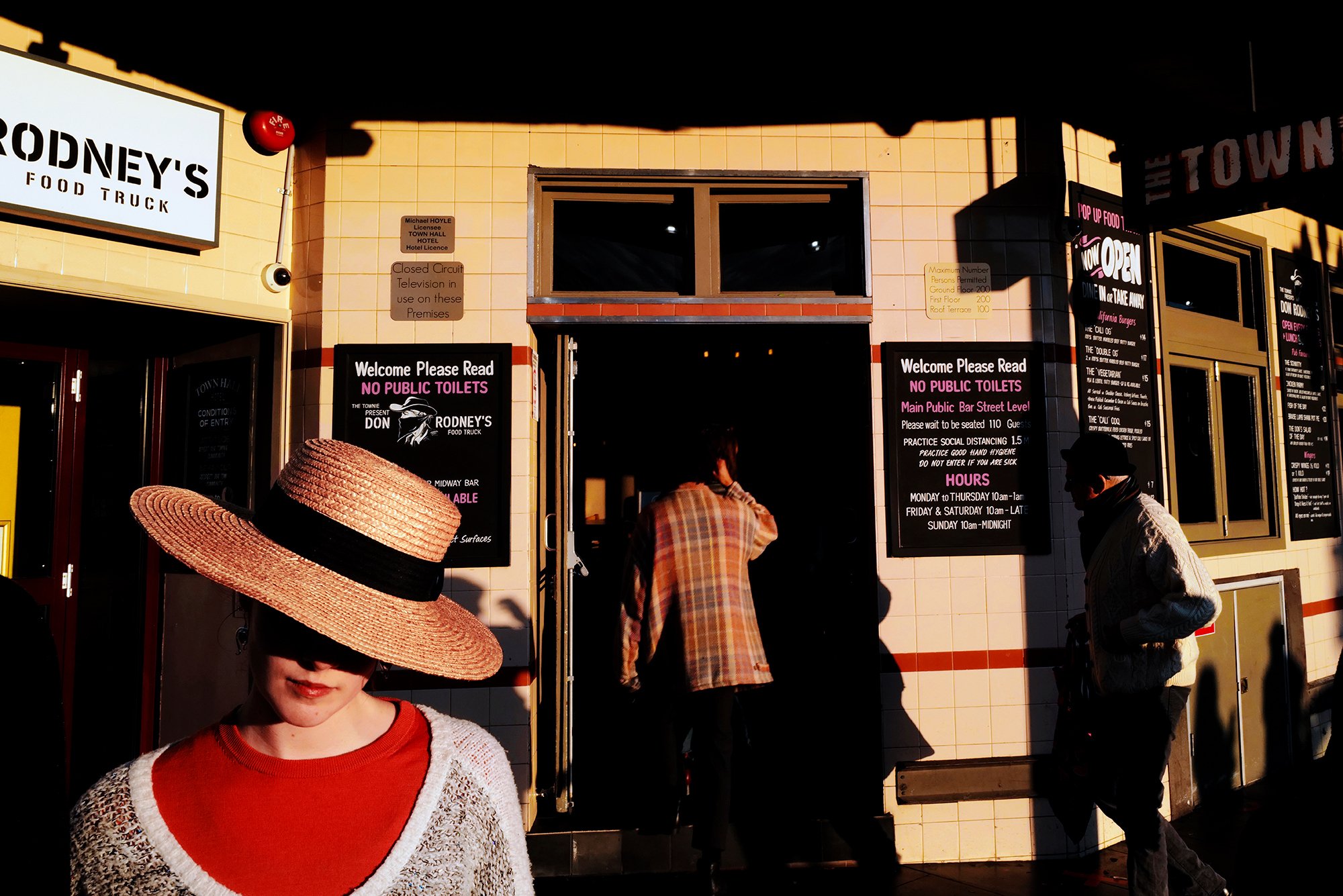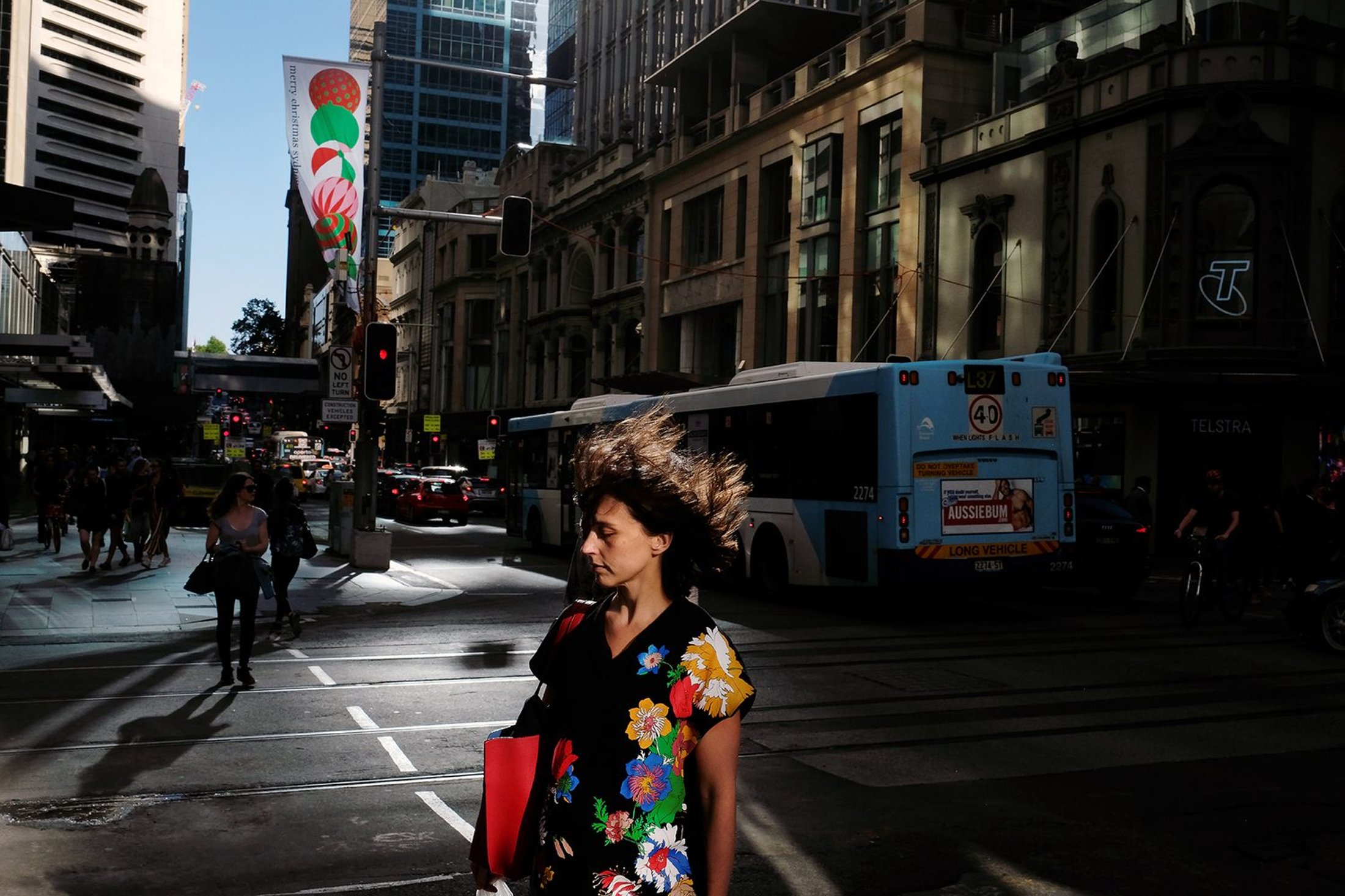
Sydney’s Central Business District acts as the backdrop to Sam Ferris’ cinematic photographs. When he was a newcomer, fresh from Melbourne, he took to the streets with a camera to orient himself and observe the district at play. In Visible Light is the outcome of over a decade of documenting the flurry of daily activity of its inhabitants as they navigate the difficulties of our current moment. In his dramatic photographs, the city is beautiful and tough, golden light drawing our attention to the hurried activity of its stressed streets and the people coursing through them.
To Ferris, the street has been a tutor. Over the course of many years, the photographer’s gaze on the city and his craft has changed. In photographing his new home, he found belonging, his understanding of the forces shaping the street and Sydney’s post-Olympic identity became more nuanced. In parallel, a mature vision emerged—the kind that welcomes failure and sheds influences in favor of revealing one’s own emotions.
In this interview for LensCulture, Ferris speaks to Sophie Wright about the mystery of the photographic impulse, chasing the surprise of the street and the paradox of being both a participant and an observer.
LC: When did you first take to the street with your camera? What first captivated you about it and what keeps you interested?
Sam Ferris: I came to photography relatively late. I was about 25 and working at a university in Sydney. To clear my head, I started walking everywhere. I liked getting a little bit lost. Eventually I started bringing a camera.
At first I wasn’t photographing people. I was interested in architecture, factories, warehouses and buildings that seemed slightly forgotten or on the verge of disappearing. Thinking about it now, those places probably reflected how I felt at the time. The people came later.
What captivated me then is probably what keeps me interested now. The possibility that something extraordinary can emerge from an ordinary moment. A gesture, an expression, a shaft of light, two strangers passing one another. Things that exist for a fraction of a second and then disappear forever. Fifteen years later, I still haven’t figured it out. Every time I think I understand photography, I make a picture that seems to contradict everything I thought I knew.
SW: How would you characterize your approach and the way it has evolved?
SF: I think early on I was probably chasing photographs that looked like work I’d seen before and admired. Now I’m more interested in photographs that feel like mine.
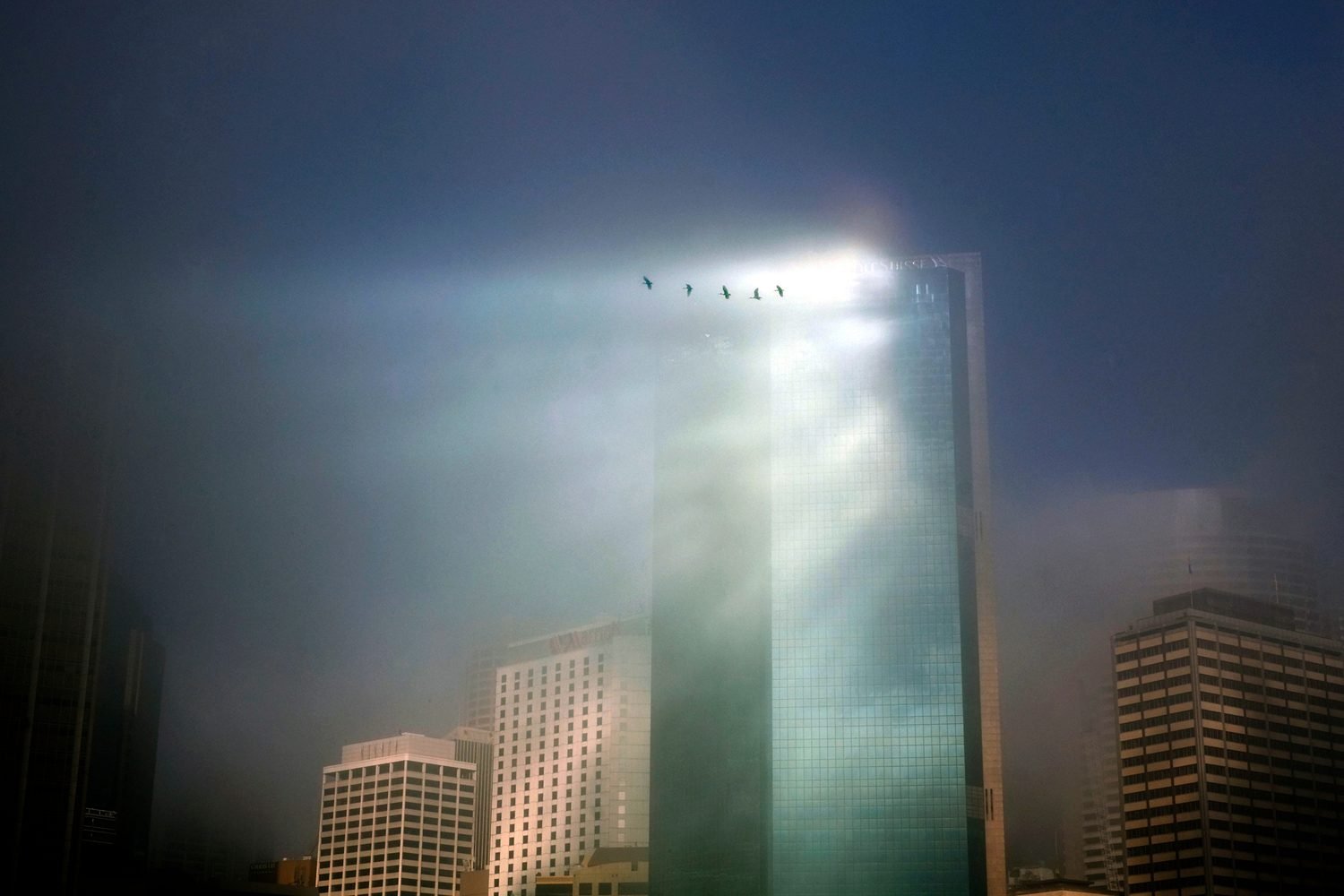
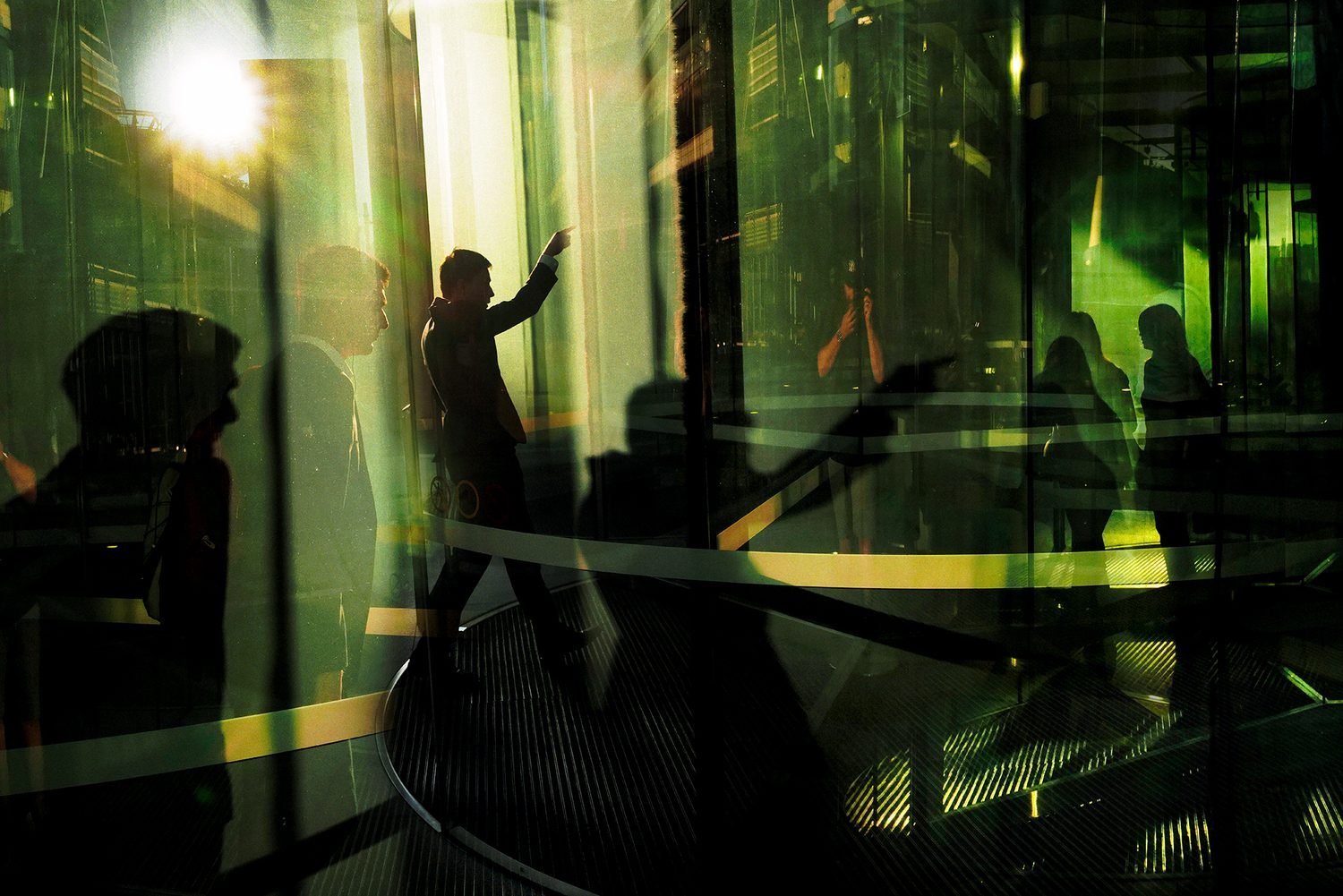
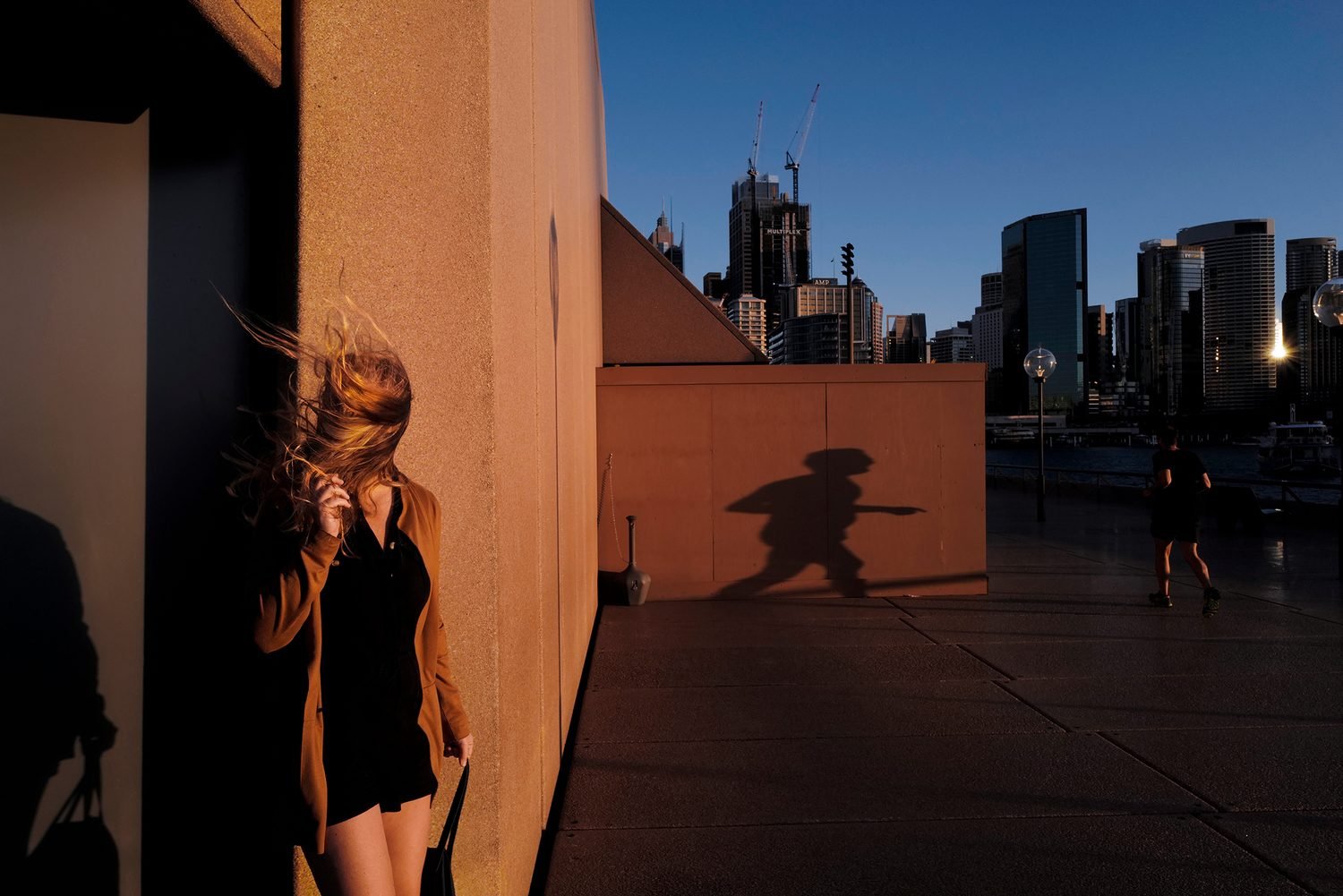
When I first started, I became fascinated by the visual side of things—composition, layering, color, geometry and especially light. Sydney’s light has a way of exaggerating the everyday. It pours down the streets between buildings, reflects off glass towers and creates these incredible pockets of illumination and shadow. I found myself drawn to those spaces over and over again.
But over time I realized that light wasn’t really the subject. The photographs I care most about now are the ones where the formal elements and the emotional elements align. A photograph might have beautiful light, but if it doesn’t say something about what it feels like to be alive—in that place, at that moment—I lose interest fairly quickly. The older I get, the less interested I am in showing people how clever I am and the more interested I am in showing people how I feel.
SW: In Visible Light focuses on Sydney’s central business district. What drew you there?
SF: The honest answer is that I didn’t really choose it. I moved to Sydney in 2008 to take up a position at a university. I didn’t know anybody here. I had grown up in the industrial suburbs of western Melbourne and suddenly found myself in this huge city whose pace completely disoriented me.
The CBD became a place I moved through almost every day. Over time, I became fascinated by it. Not because it was the beautiful place I’d seen on postcards—the beaches, the sparkling harbour, the golden light—but because it felt like something bigger in concentrated form. All of the city’s contradiction, its post-Olympics decline seemed to be compressed into a few square kilometres. It’s a city where the cost of living keeps rising along with my sense of anxiety. Both crowded and lonely, aspirational and exhausted.
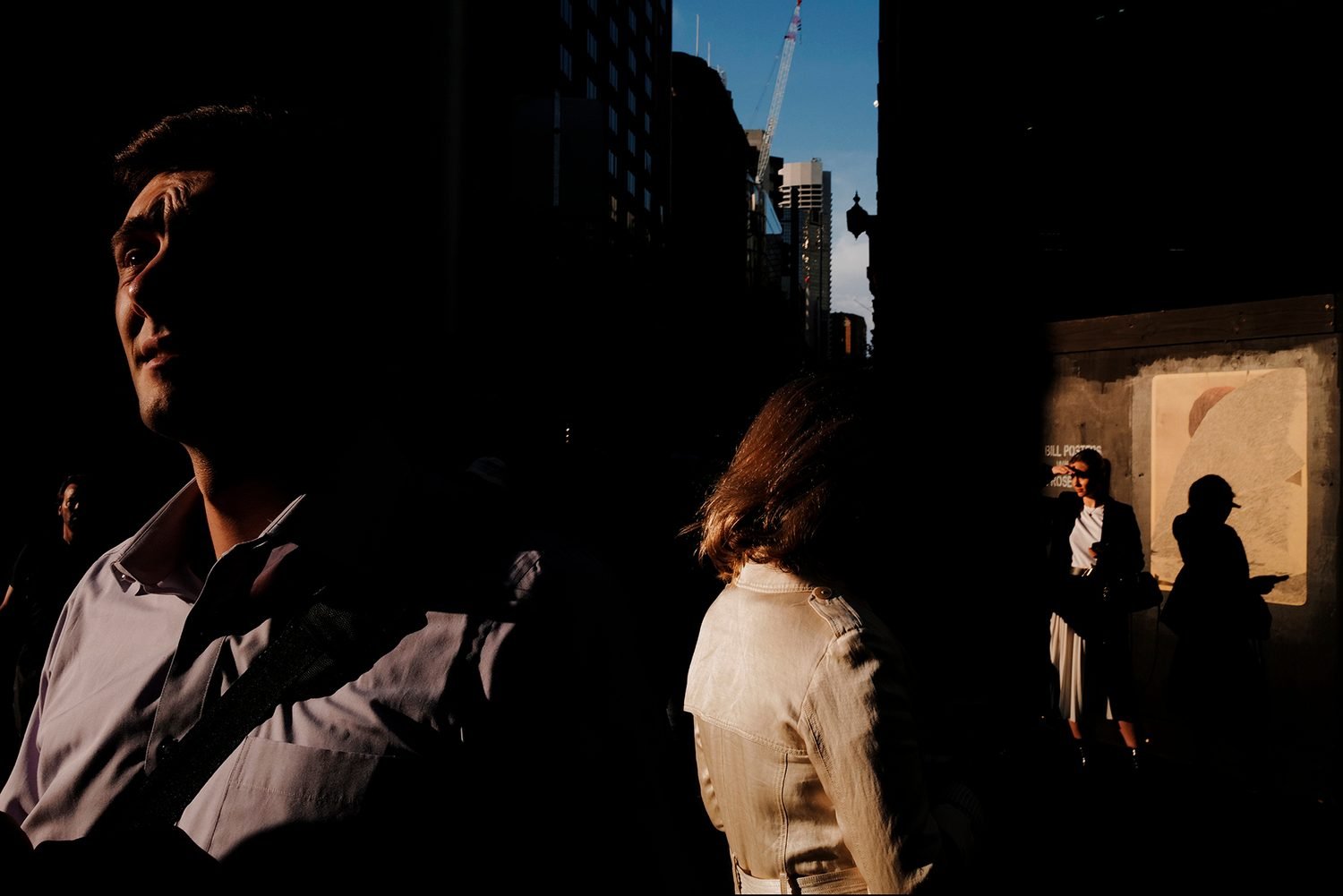
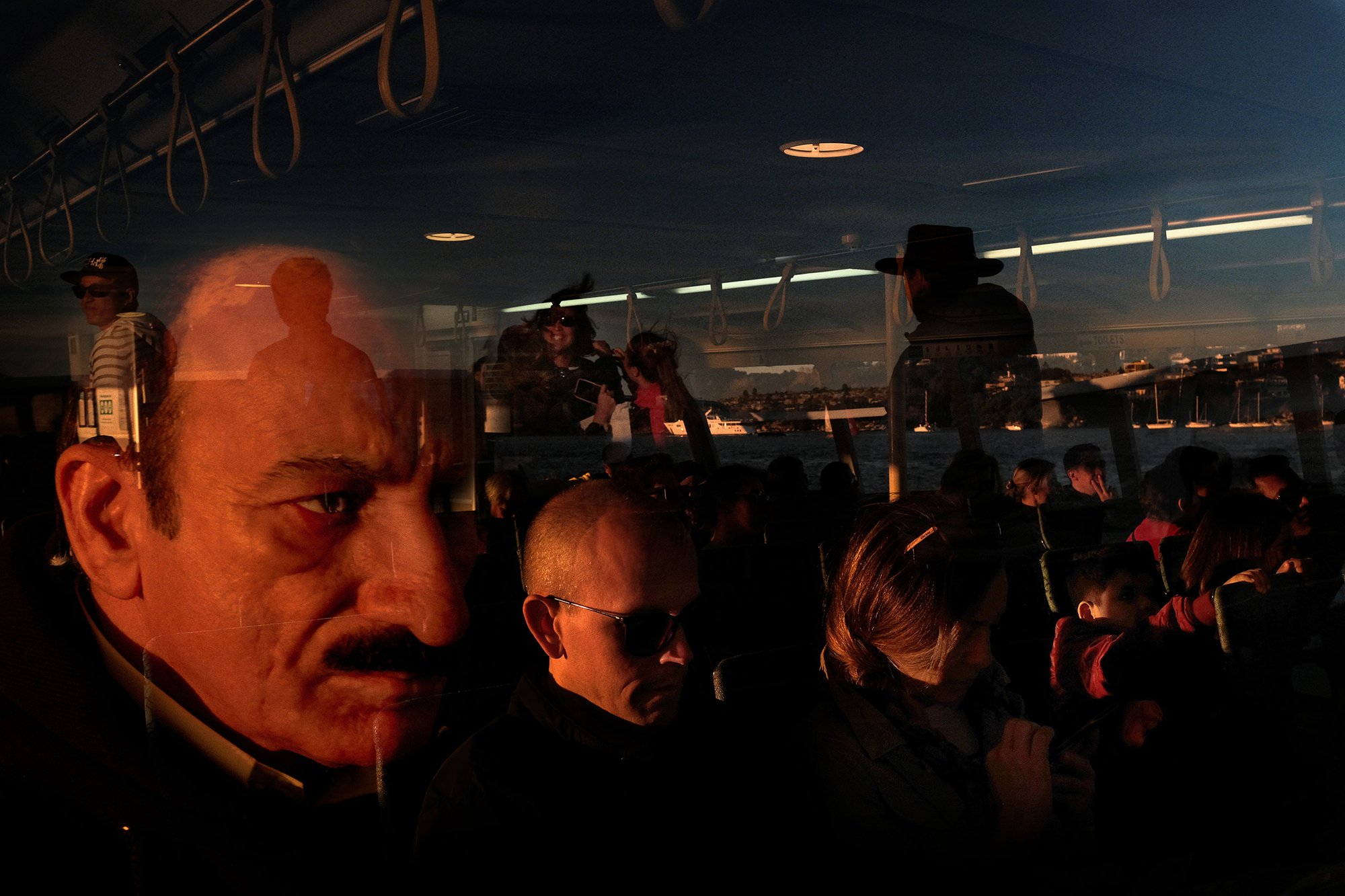
There are moments where thousands of people are moving through the same space and yet nobody seems connected to anybody else.
SW: You spent five years working on the project. How did your experience of the area change?
SF: It was closer to 10 years before I felt ready to publish it as a photobook. The city changed, but I probably changed more. When I first arrived in Sydney, I felt overwhelmed by it. I was walking through the CBD trying to understand where I fit within it. Photography became a way of making sense of my place in the city.
Then the more I photographed, the more familiar everything became. I knew where the light would hit at certain times of year. I knew which streets became interesting when it rained. I knew where commuters would emerge from stations and where crowds would bottleneck. It began to feel less intimidating.
At the same time, I started noticing things that I hadn’t seen before. The anxiety. The exhaustion. The pressure people seemed to carry around with them. The subtle ways people navigate public space. I think In Visible Light ended up documenting both journeys simultaneously: my growing familiarity with Sydney and my growing awareness of what life here actually felt like.
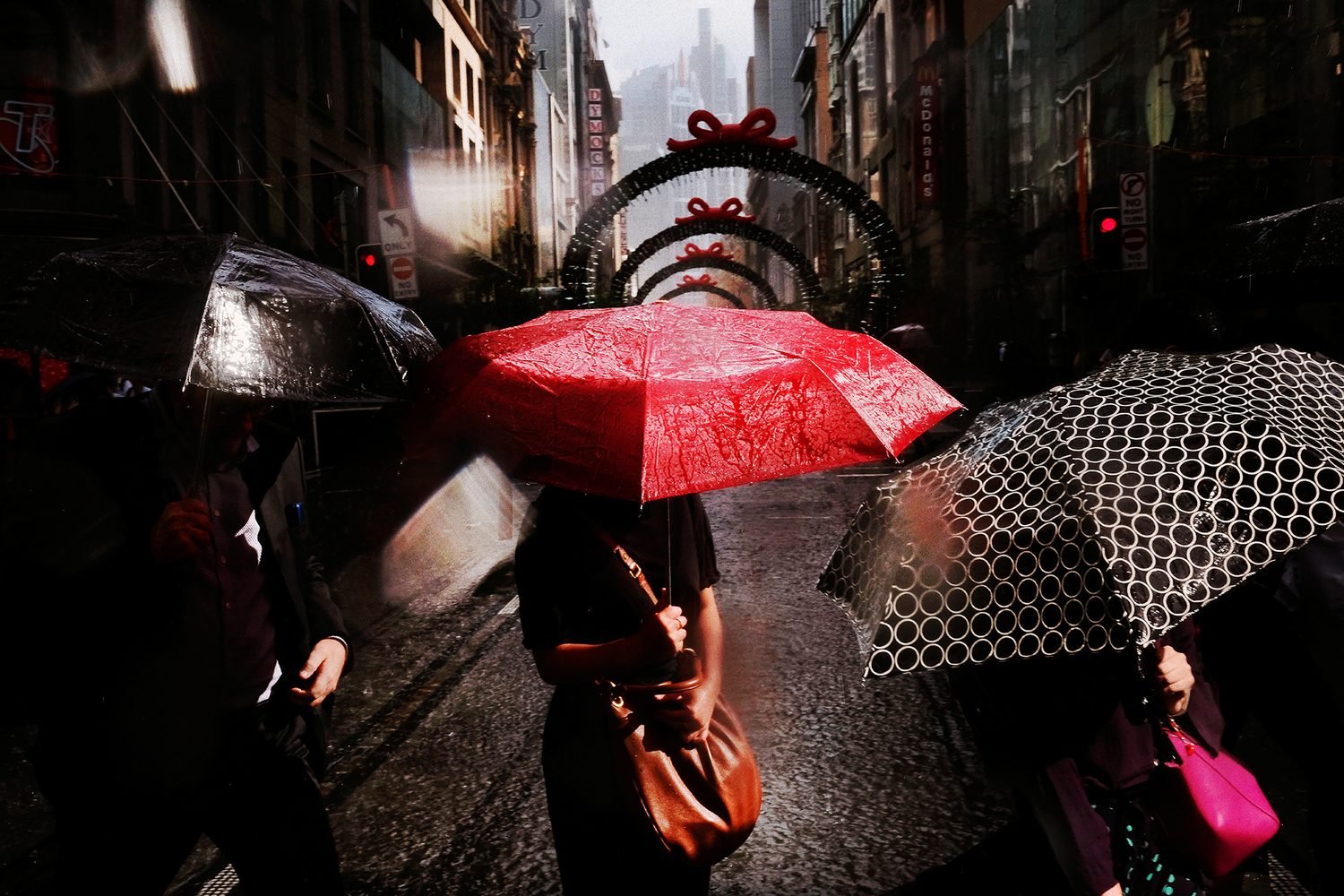
SW: Can you tell me about the title ‘In Visible Light’?
SF: At first people often assumed it was a typo. I quite like that. The title obviously refers to light. Sydney’s light is fundamental to the work. It shapes almost every photograph in the series. But it also comes from a feeling.
When I first moved here, I often felt invisible. Sydney was enormous and indifferent and I felt anonymous within it. Photography became a way of navigating that experience. At the same time, photography itself is a medium obsessed with visibility. It’s supposed to reveal things. The longer I photographed, the more interested I became in ambiguity rather than certainty. In what remains hidden and how little we actually know about the people we pass every day. This play on words title seemed to sit comfortably within that tension.
SW: There’s an interesting dichotomy to devoting yourself to the observation of a place for that long. Often we associate street photography with an ‘outsider’ perspective—but did you feel a sense of belonging emerge after spending that much time on these streets?
SF: Absolutely. Photography allowed me to connect with a city that initially I felt overwhelmed by and eventually learn to see it as home. Without it, I think Sydney would have remained somewhere I lived rather than somewhere I belonged. There’s something peculiar about street photography though; you’re both participant and observer. You’re immersed in public life while standing slightly outside it.
Most of the time I feel almost invisible on the street. You can move in and out of crowds and people barely notice you’re there. It’s a strange feeling, but I quite like it. I think that’s one reason the title resonates with me. Photography allowed me to disappear into the city while also becoming more connected to it. The camera became a bridge rather than a barrier.
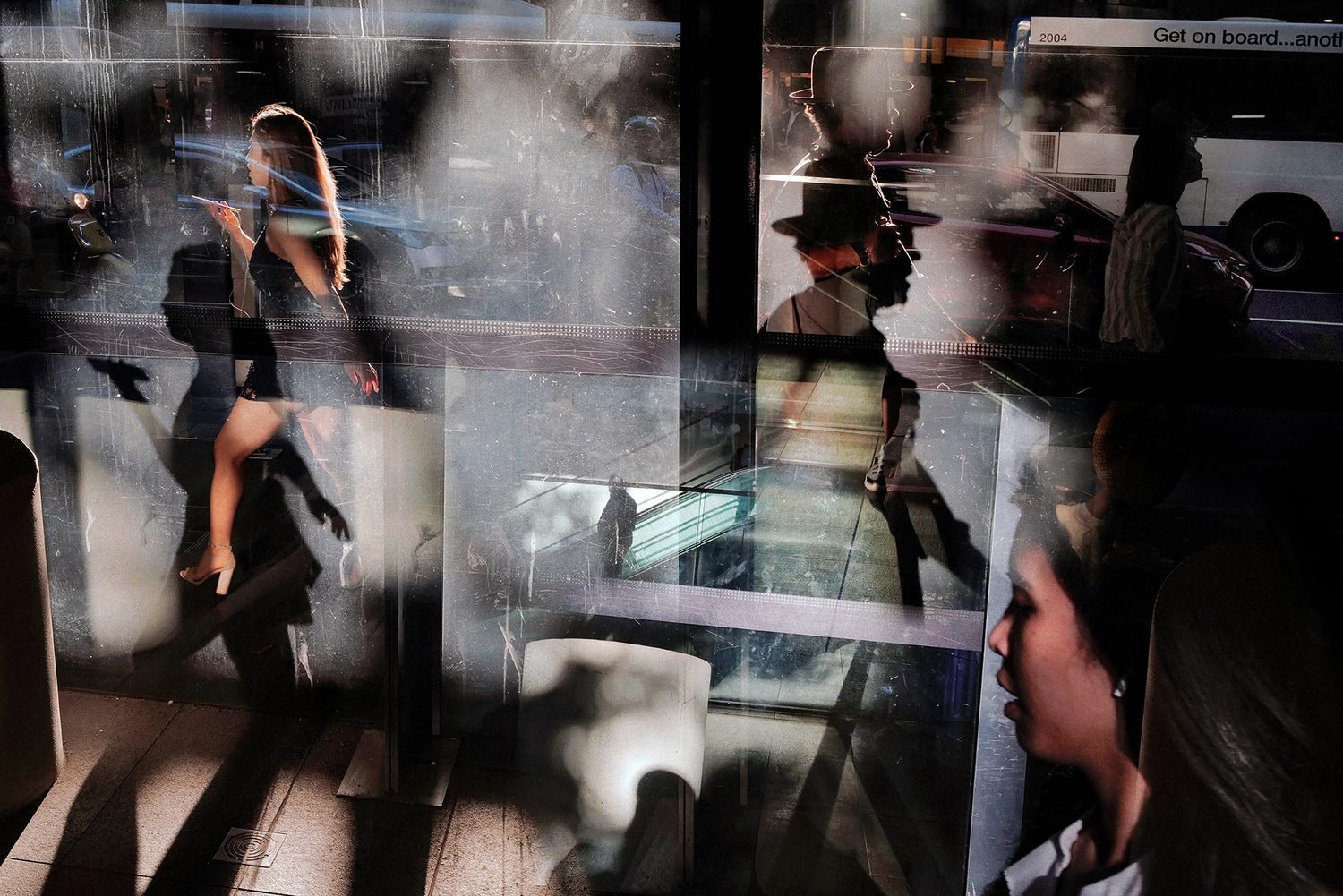
SW: What are you looking for when you head out to the street? Can you sketch out what a day’s work looks like for you?
SF: I always struggle with this question because I don’t know if I’m looking for one thing. What I usually say is that it’s there in the rush to or home from the office. It’s there in the stress of trying to have a work-life balance. It’s there in the tedium of the daily commute. It’s there in the packed street corners where masses of people are corralled together but never really connect. It’s there in the brief gestures or expressions that let the facade slip.
Practically speaking, my days are fairly ordinary. I work full-time and have a family, so I’m not wandering around the city for 10 hours a day waiting for inspiration. Most photographs are made in small pockets of time before work, after work or during a commute. Usually I’ll find an interesting scene and wait. Sometimes for five minutes. Sometimes for an hour. Sometimes nothing happens. Failure is the default setting of street photography. You learn to make peace with that.
SW: What do you find to be the most valuable qualities that have helped you navigate the practice of street photography?
Obsession probably helps. My wife would definitely say obsession. I often joke that photography is a passion, an obsession, a sickness, a calling—I don’t really know anymore. But beyond that, I think curiosity is important. Optimism too.
To be a street photographer you have to become a bit of a paradox. You need to remain eternally optimistic while expecting that most of your photographs won’t work. The only expectation I really have when I go out photographing is that I’ll probably fail. If something wonderful happens, that’s a bonus.
I also think honesty matters. The photographs that endure tend to be the ones that say something genuine about the photographer rather than simply showing us what something looked like.
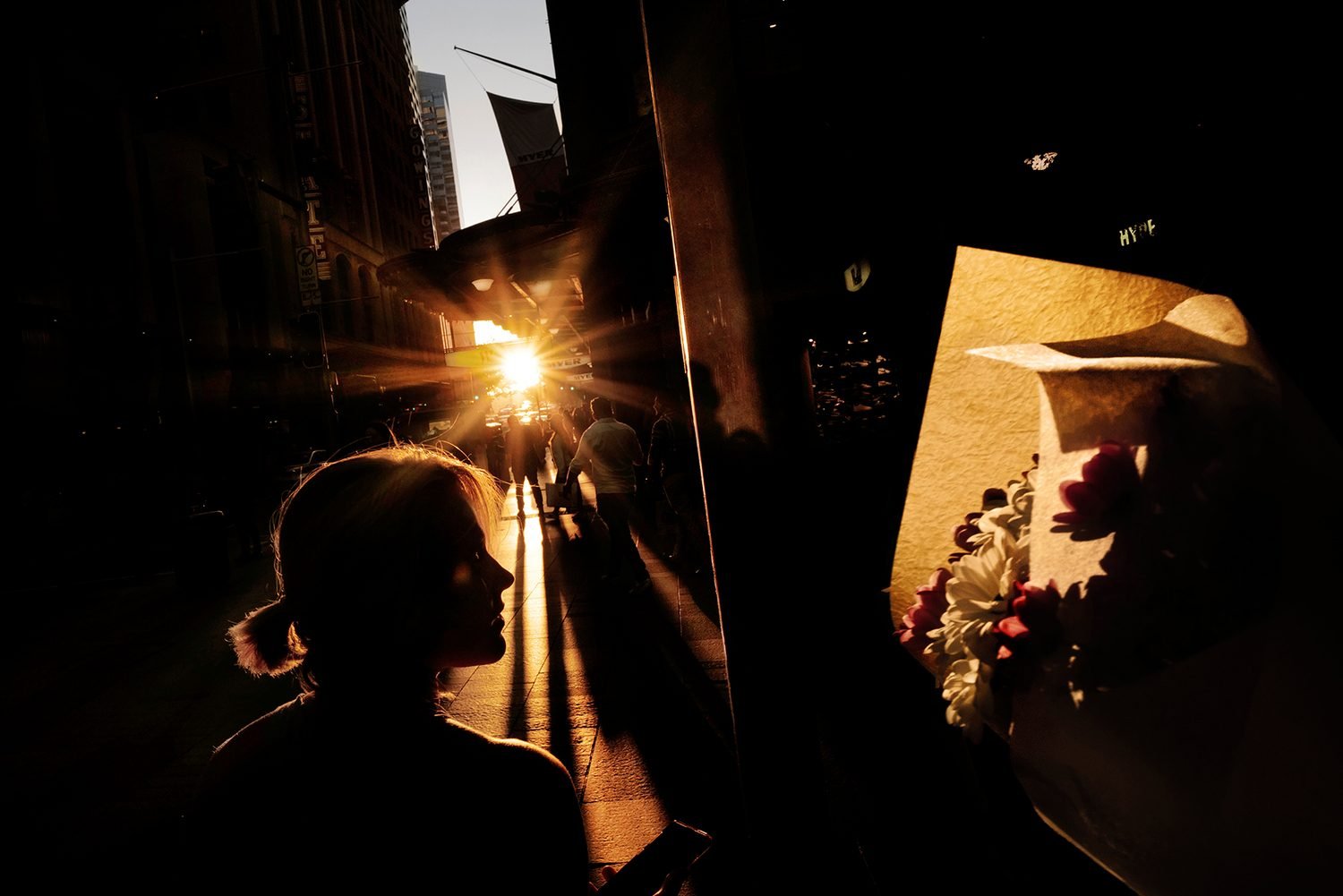
SW: In your statement you vividly outline the intersecting forces shaping the lives of Sydney’s inhabitants (both non-human and human) from rising conservatism, attacks and riots and urban ecology. Is it important to you that the project captures the specifics of time and place? Did you feel and see these forces play out in the streets or where these conditions you were looking to document?
SF: Very much so. I never wanted the work to be a generic meditation on city life. For me, it’s specifically about Sydney: documenting a city that seemed to peak with the optimism of the 2000 Olympics before gradually losing something of itself, tracing the knife-edge social tensions exposed by the Cronulla riots and still felt today, witnessing the slow erosion of nightlife through the lockout laws, recording a city still carrying the scars of the Martin Place siege and the collective anxiety of the pandemic years. It is about photographing a Sydney where housing has become increasingly unattainable, where status and success are relentlessly pursued, and where many people seem to live with a lingering sense that whatever they have, it might somehow not be enough.
I wasn’t necessarily trying to photograph those things directly. What interested me was how larger social forces reveal themselves in ordinary moments. In body language. In exhaustion. In isolation. In the strange tension that exists between people living shoulder to shoulder while often feeling profoundly alone.
SW: Did you have any influences for this project? Photographic or non-photographic.
SF: Alex Webb was hugely important for me. I remember borrowing The Suffering of Light from a university library and being completely blown away by it. I still am. The complexity, the layering, the way he uses color and light—it opened my eyes to what photography could do. Joel Meyerowitz was another important discovery. I still remember stumbling across his work in a gallery and feeling something profound click. Closer to home, Trent Parke, Narelle Autio and Jesse Marlow have all been influential. Not just because of the photographs they make, but because they showed me that Australian life could be photographed in a way that felt poetic, strange and emotionally charged.
Outside photography, literature has probably been the biggest influence. I spent years studying and teaching it, and I still think about sequencing photographs the way I think about constructing a narrative.
And then there’s my dad. He’s a painter. Growing up, I’d sit in his studio while he worked. He taught me about perspective, color, composition and form long before I ever thought seriously about photography. At the time I didn’t realize I was learning anything. Looking back now, I suspect I learned how to see before I ever learned how to use a camera.
Editor’s Note: Starting in 2016, Sam Ferris has been acknowledged three times by the LensCulture Street Photography Awards, including winning 2nd Place, Series, in 2021. We are delighted that this year, Sam has agreed to serve on the jury for the LensCulture Street Photography Awards 2026.