Every item that we own has an origin. All that
surrounds us in our homes and places of work, or as we journey through
a modern metropolis has been extracted from the natural world. The man-made
world is a world that has been cut, drilled, quarried and pumped from
our surroundings; a world wholly created from the raw materials found
on or just beneath the Earth’s surface.
As it is true that all of
these items have an origin, so it is true that the components of the synthetic
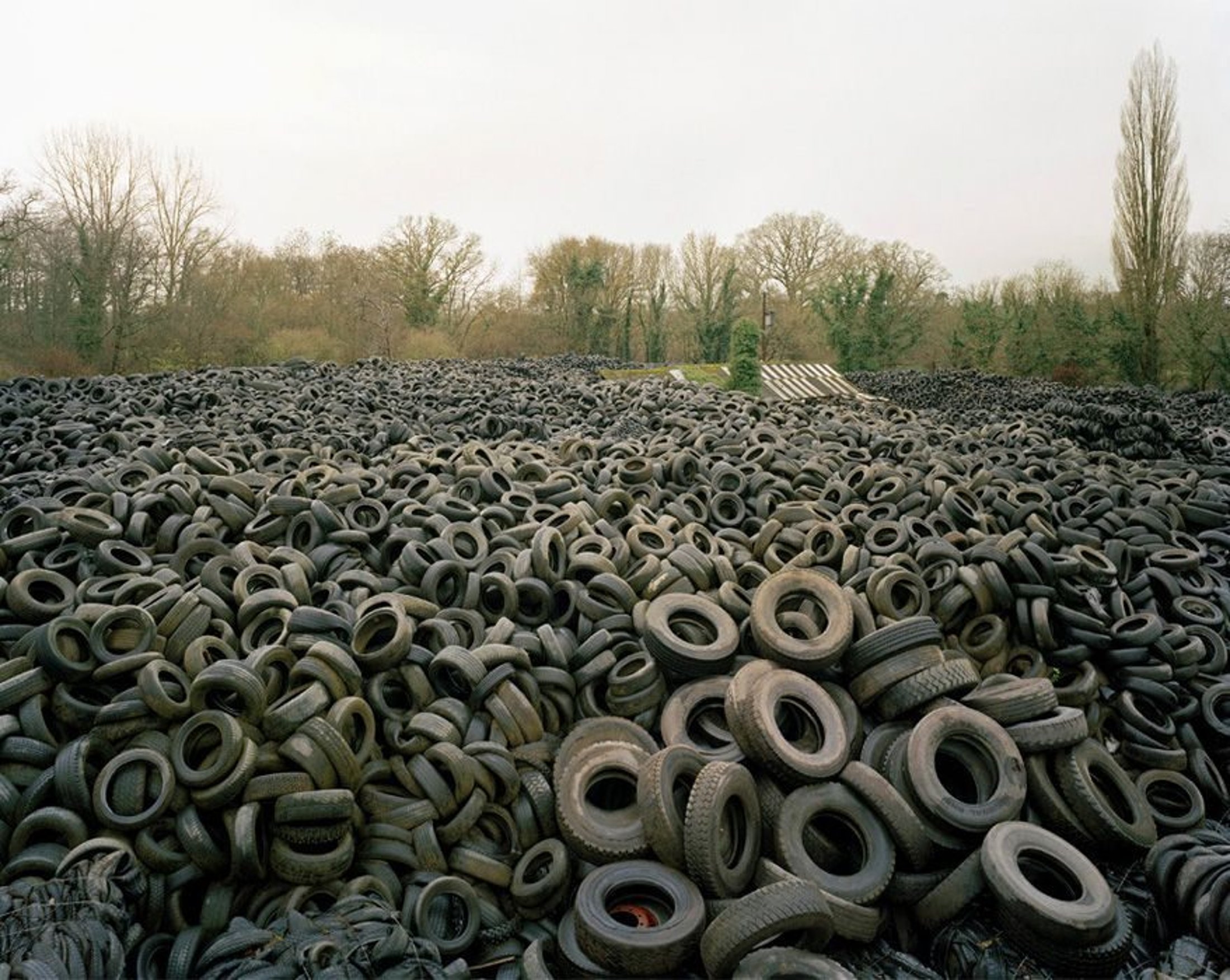
world have a destiny — a final resting place — for when we
no longer require them. Their presence in our company is often fleeting.
Once it has been decided that they are no longer wanted or needed, manufactured
goods are returned to the earth, as waste.
While the lifespan of manmade goods is declining, it follows that the
transition from raw materials to discarded waste is accelerating. Our
growing addiction to consumption could ultimately be suicidal as many
of the Earth’s resources are finite, and even those that we consider
infinite — timber, for example — become finite when mismanaged.
Less than fifty years ago, the UK was self-sufficient — living within
its environmental means. Today it is a net importer, using over three
times its share of global resources. If everyone on the planet were to
enjoy a similar lifestyle to the average UK citizen, three-and-a-third
planet Earths would be required to sustain us all — and the UK is
not the worst offender.
As parts of the developing world begin to accelerate their success in
replicating western standards of living and consequentially, replicating
western levels of consumption, the issue of declining natural resources
and increased waste will become more pressing. Added to this is the continuing
rise in world population, placing an ever higher demand on supplies.
In the UK, as with other densely populated countries, waste management
is already a serious problem. As many current landfill sites reach capacity,
how or where to dispose of our rubbish is becoming an ever more urgent
issue. Exporting waste to the developing world is part of the current
solution. Finding new landfill sites and building more incinerators at
home are other options, as is the growing trend for recycling.
The mantra ‘reduce, reuse and recycle’ has gone some way in
alerting and motivating the public about the issue of waste. In parts
of Europe and North America in particular, steady progress is being made
with regard to recycling, with many governments initiating schemes to
curb the flow towards landfill sites. At present however, the gesture
seems like it may be a case of too little by too few. The trend for developing
nations as they become more affluent is an increase in waste as well as
wealth. Forecasts are of a continued rise in the volume of worldwide waste.
Currently, consumption and waste are intrinsically linked — as the
former rises so does the latter. Increased awareness of the Earth’s
limits should be prompting us to live within its means rather than continuing
along the road of increased disposability. The consequences of our accumulative
actions will be a world exhausted of the raw materials that currently
we take for granted. Peak oil production is already thought to be upon
us, with many other less visible stocks also at the point of, or close
to decline. The more we consume beyond sustainable limits the faster we
deplete the world of the materials that support us. The current cycle
of consumption and waste is not sustainable.
— Simon Carruthers

Feature
Cycles
Simon Carruthers documents the final resting places of manmade consumer goods after we no longer require them.
View Images
Feature
Cycles
Simon Carruthers documents the final resting places of manmade consumer goods after we no longer require them.
Cycles
Simon Carruthers documents the final resting places of manmade consumer goods after we no longer require them.

Top Awards include: Full publication with Nazraeli Press, valued at more than $25,000, Los Angeles Exhibition, Cash Prizes, Solo Feature on LensCulture.
