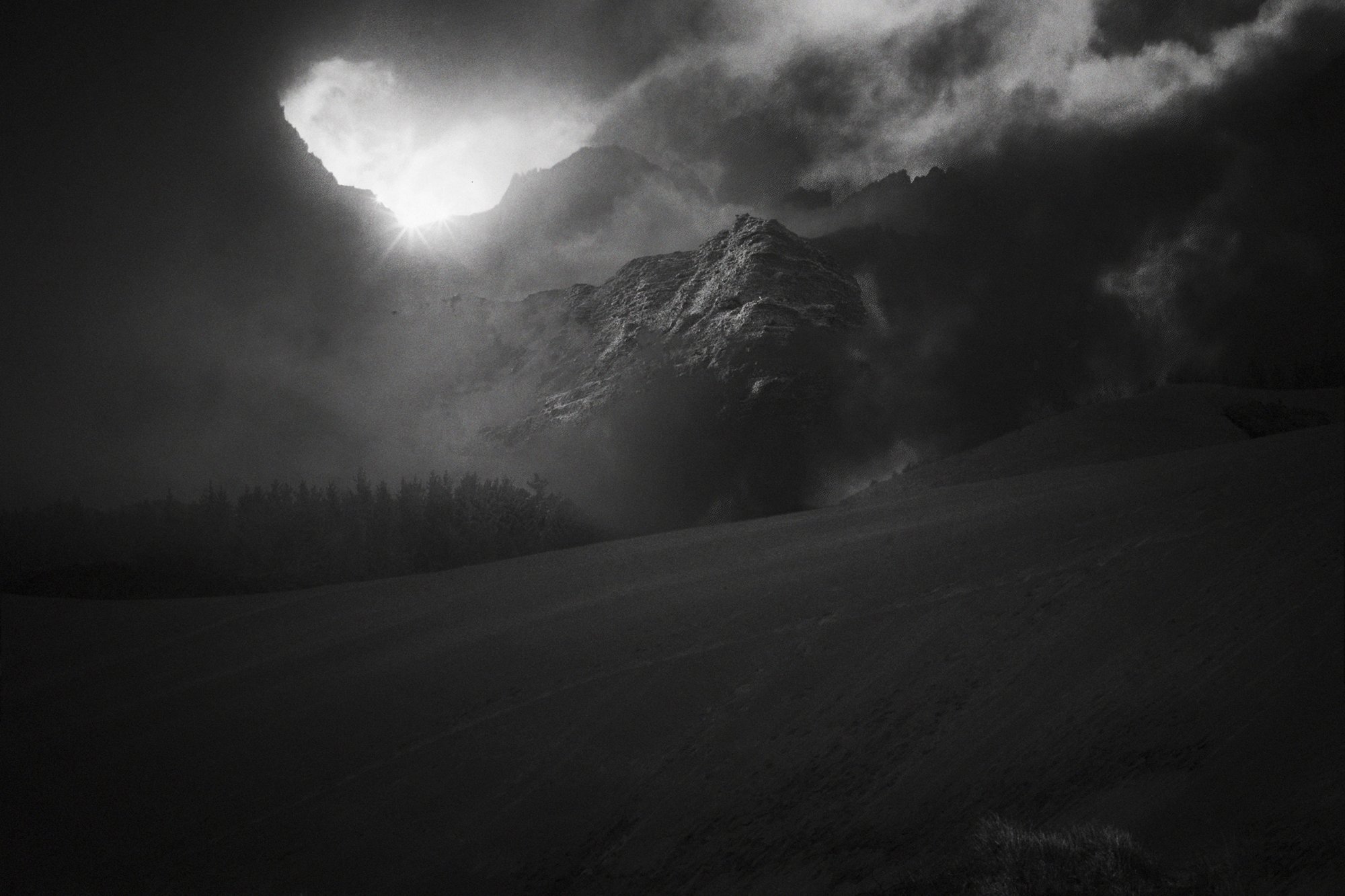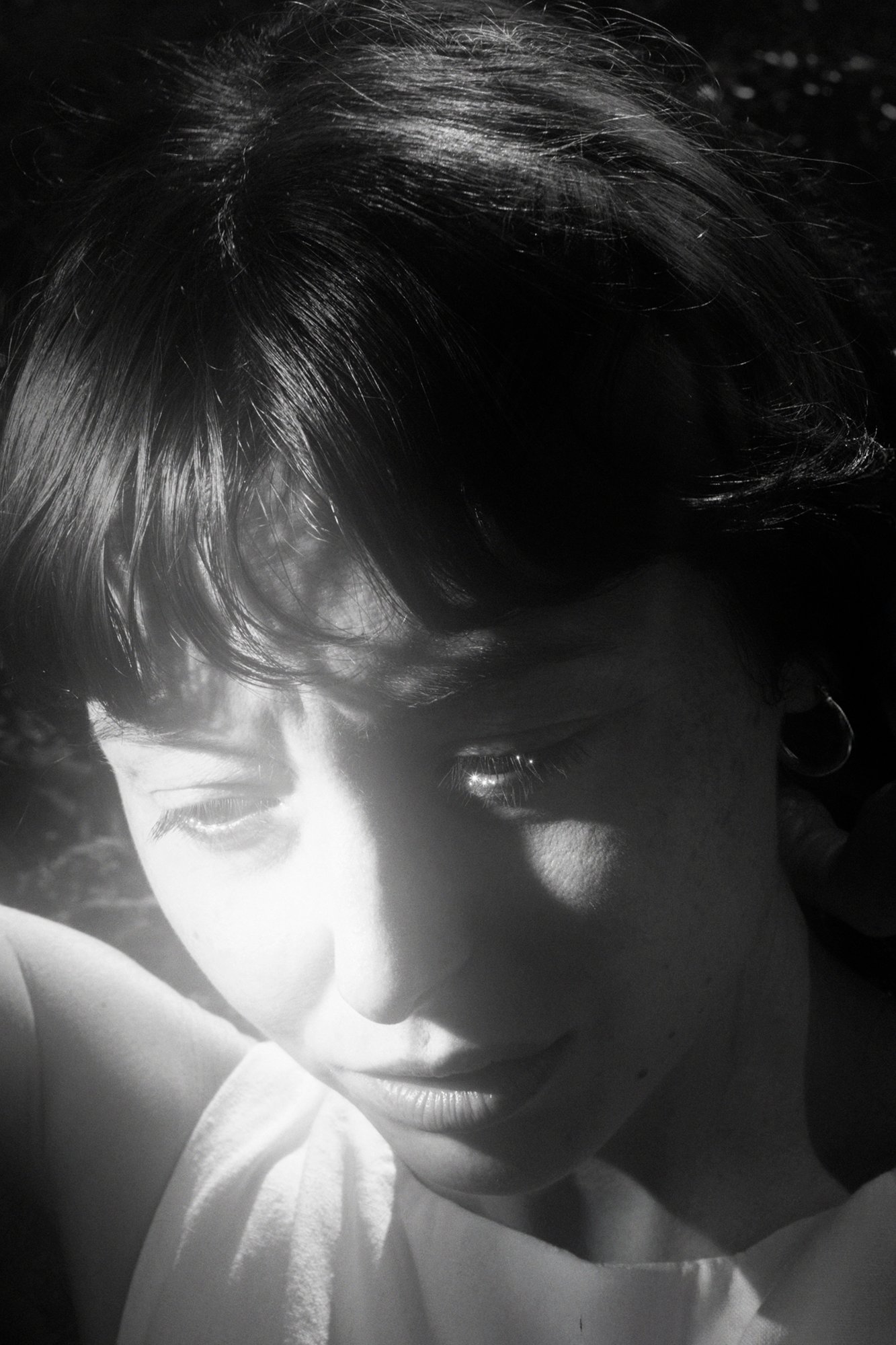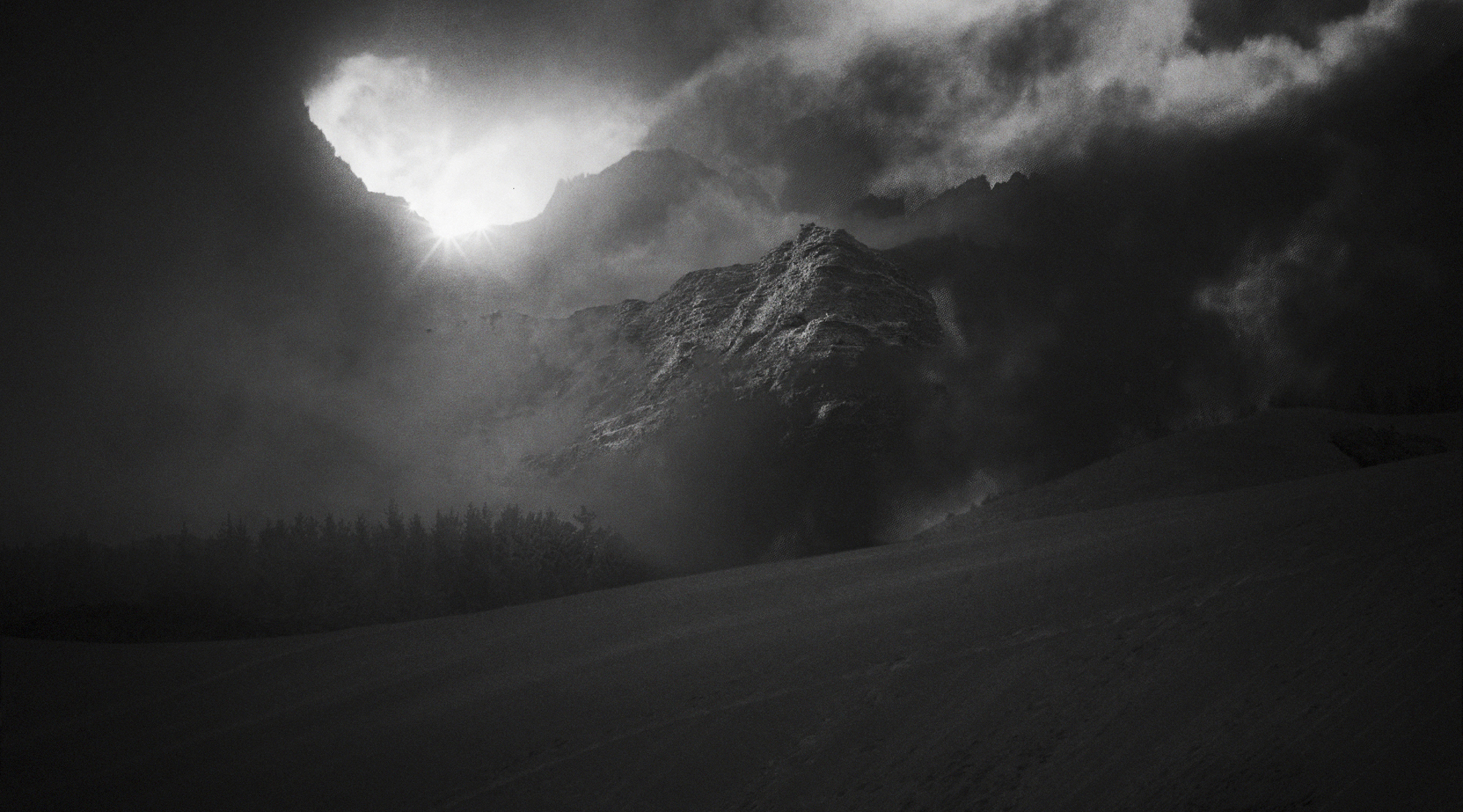
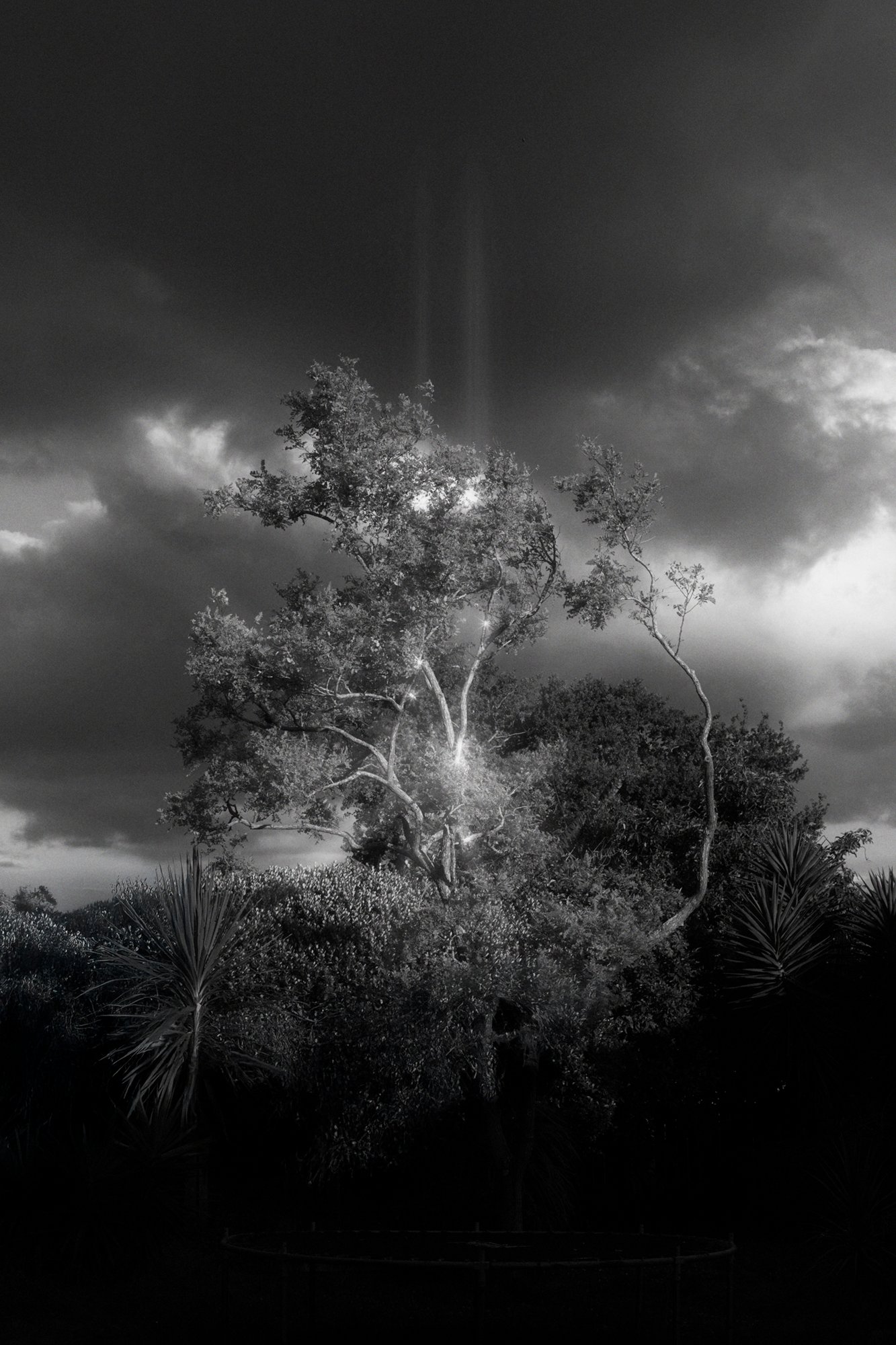
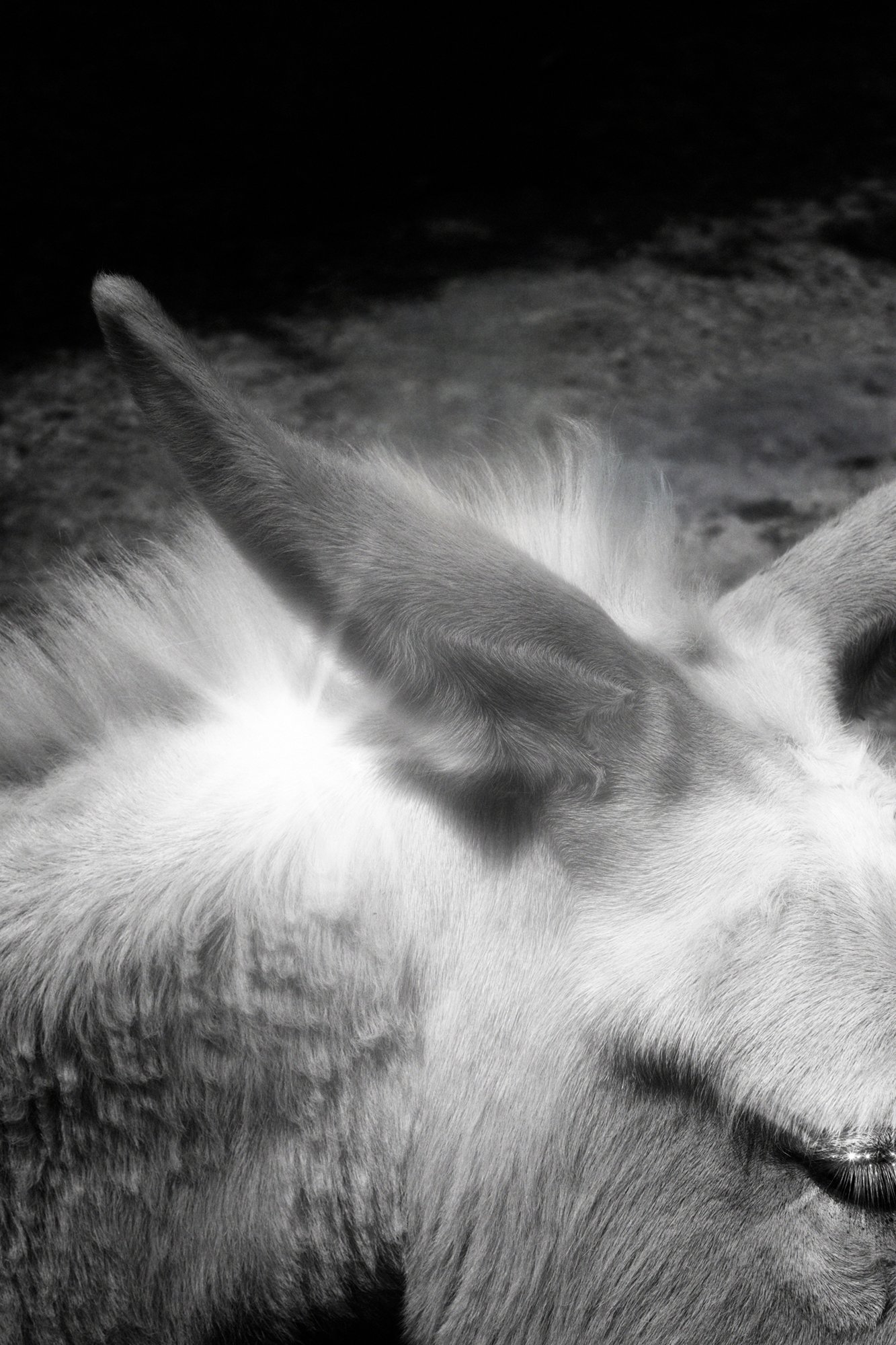
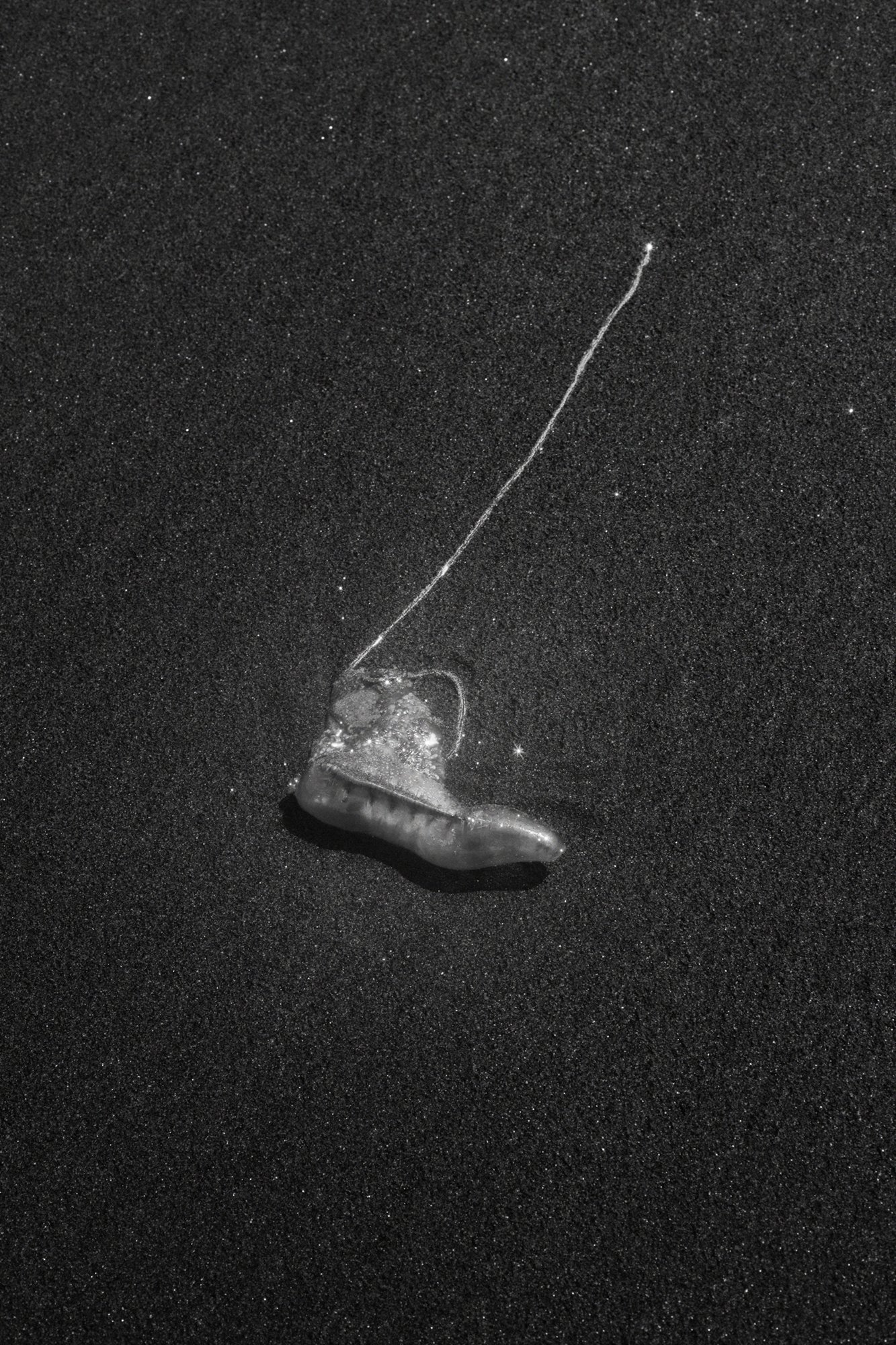
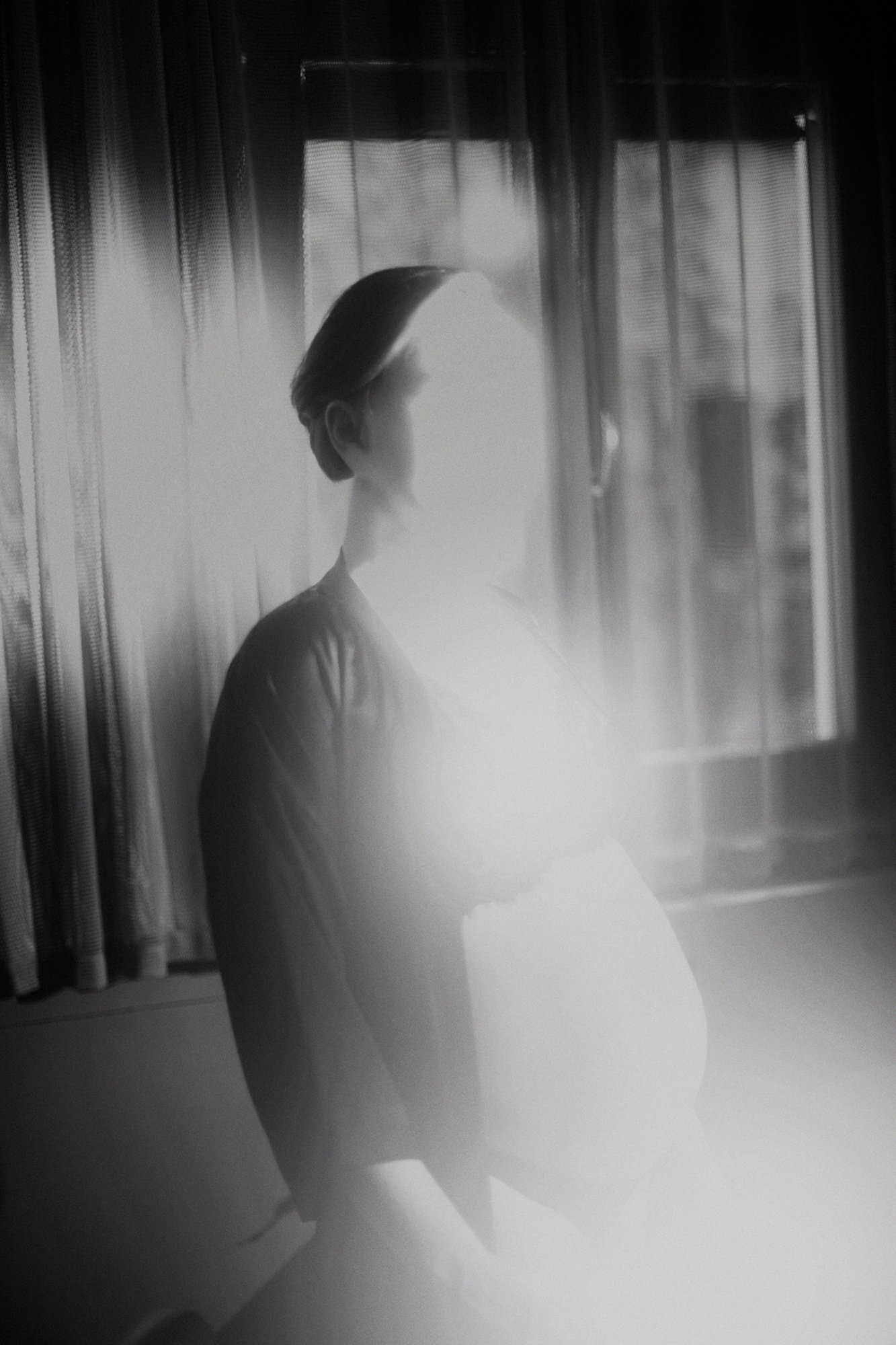
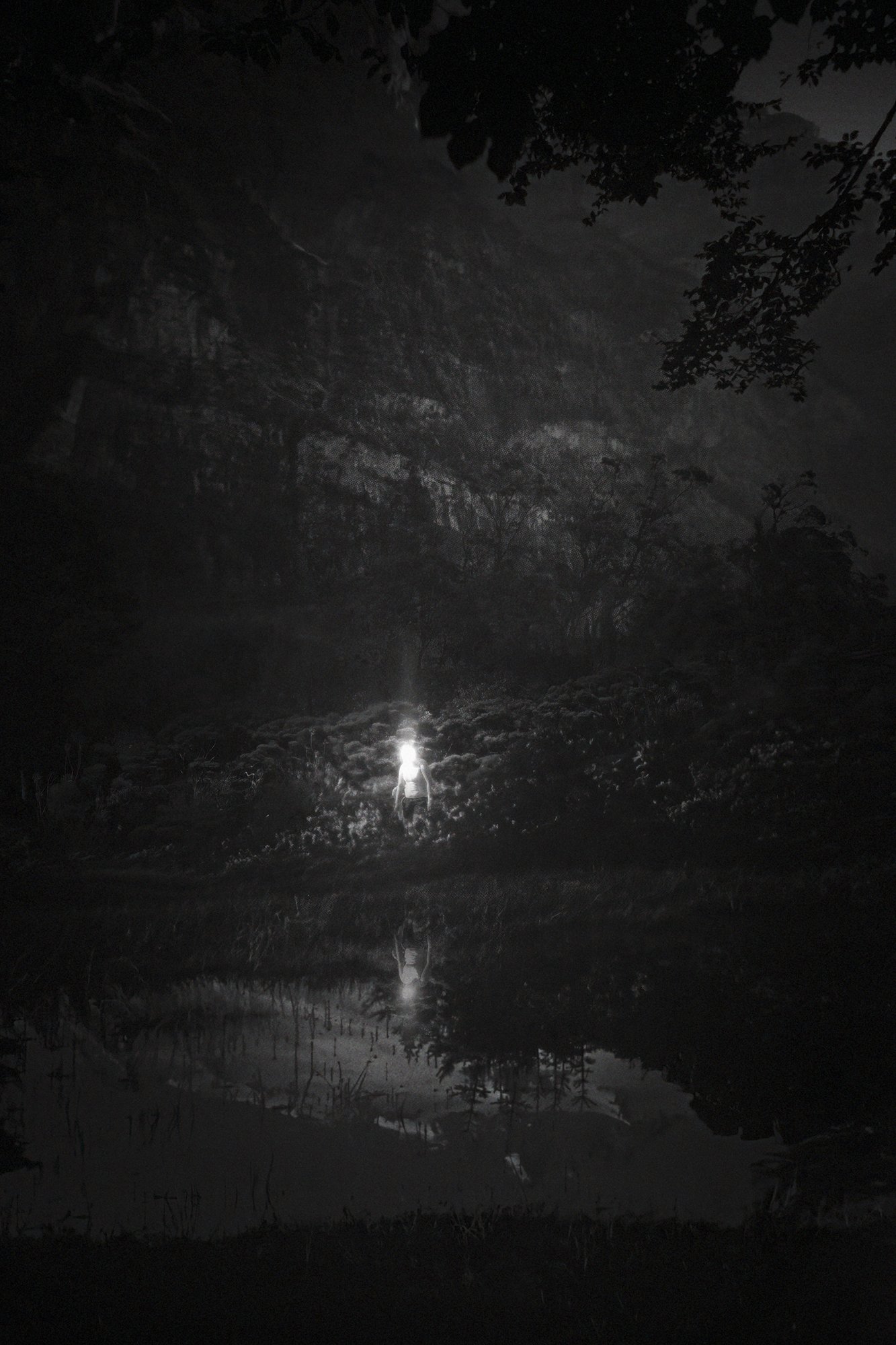
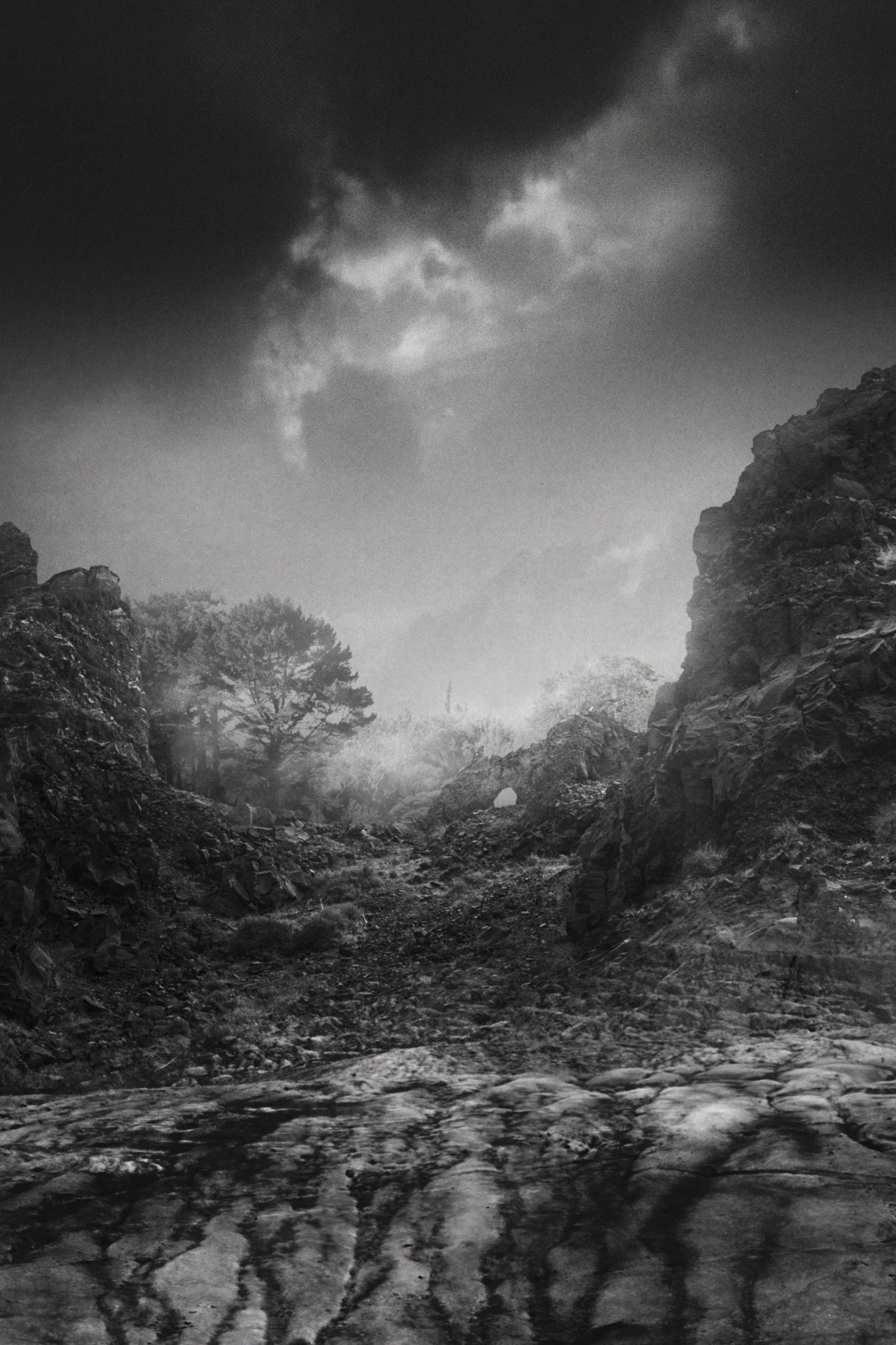
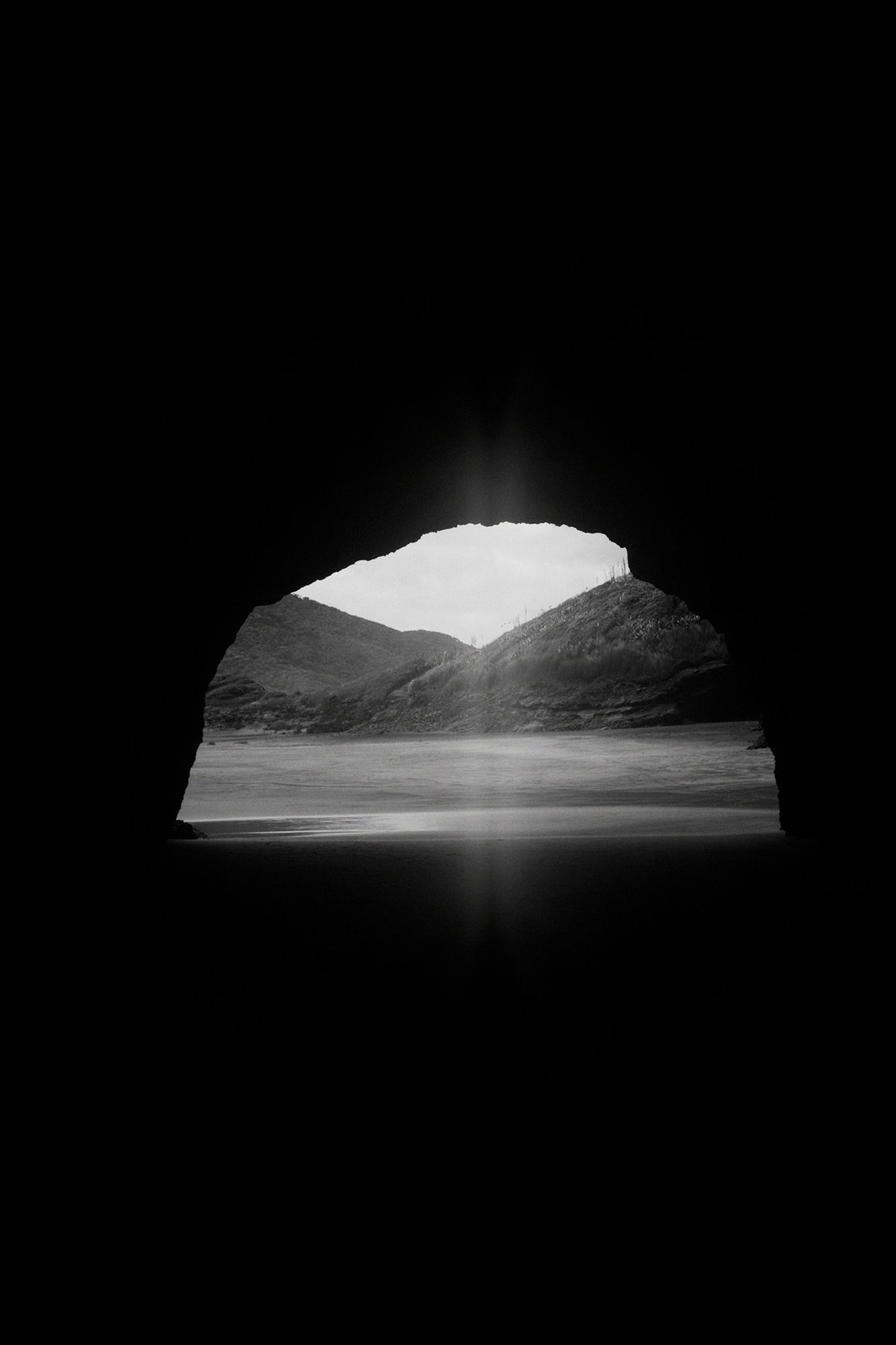
A disorientation moves through Stephanie O’Connor’s The Waves Came in Like Horses. Scale is unsettled, and light feels untethered from the logic of day or night. Strands of ocean kelp ripple across dense, clouded textures. Bright light conceals the human figure, preventing it from settling into view. An organic form remains in flux, slipping between plant, animal, and human organs, resisting stable definition. Constructed from layered photographic fragments, these chimeric forms suggest not a singular but a shared, shifting state of being.
Upon becoming pregnant, O’Connor found new life in the fragments of a work she began during the pandemic. The project took on a new form and meaning as the photographer’s body started to change, her relationship to the images shifting in a new direction.
In this interview for LensCulture, O’Connor speaks to Liz Sales about the phenomena of microchimerism that underpins the project, her process and working with images as bodies.
Liz Sales: Can you take me back to the beginning of this series. How did The Waves Came in Like Horses first take shape?
Stephanie O’Connor: Five years ago, during lockdown, I started making images out of old photographs—things I had lying around, pictures from books, fragments. It was just a way to keep making work when we couldn’t leave the house. But they felt hollow, conceptually. I put them aside.
LS: And what brought you back to the work?
SO: Years later, I returned. This time, I was pregnant. The images had a renewed energy. There was this sense of movement inside my body—kicking, shifting—these strange, internal sensations. And suddenly the work felt alive.
LS: So the work belongs to that moment?
SO: It is so tied to being pregnant. It belongs to that period.
LS: Can you speak a bit about the pregnant body in relation to this work? In your statement, you write about ‘microchimerism,’ which many people are unfamiliar with.
SO: Microchimerism became really important to me. It’s the idea that cells from the fetus pass into the birthing parent’s body and remain there for decades, and vice versa. There’s this kind of cellular exchange, a melding of both parent and child. I started thinking about that in relation to the images.
LS: How does that take shape in the work?
SO: It became a process of constructing bodies from fragments—bringing different materials together. Each image is a composite of many things: picture books, found negatives, newer photographs. They’re drawn into these hybrid spaces that feel both intimate and a bit distant—like a visual equivalent of that cellular exchange.
LS: And how are the composite images made?
SO: Each image is built from many sources—landscapes I photographed years ago in New Zealand, cut-outs from European landscapes, old negatives, and also newer photographs from when I was pregnant. Some images are made from 15 different pieces. So they’re completely unreal, in a way. But that unreality felt necessary—it allows them to express something more truthful about the pregnant body.
LS: What is your process like when you’re building them?
SO: I don’t over-plan—I follow a feeling. As a post-production artist, I’ve worked with this kind of compositing for a long time, so it comes quite naturally. During pregnancy, I found it very calming—almost therapeutic. It’s about placing things together and sensing when something begins to resonate, when it starts to feel like a body, or a space, or a memory. It feels almost meditative, like slipping into a different mental space.
LS: And there’s something in the images that reads as simultaneously familiar and strange. Can you speak about that sense of the uncanny, and how it relates to your experience of pregnancy?
SO: Yes, I think it serves as a kind of visual analogy for pregnancy, where the boundary between self and other becomes porous. Your body is no longer singular. It’s often described as something entirely natural, but it doesn’t always feel that way. There’s also so much that remains unknown. There is too little scientific research into the female body, so we often end up relying on anecdotal accounts, and that can feel quite unsettling, not fully grasping what’s happening inside you.
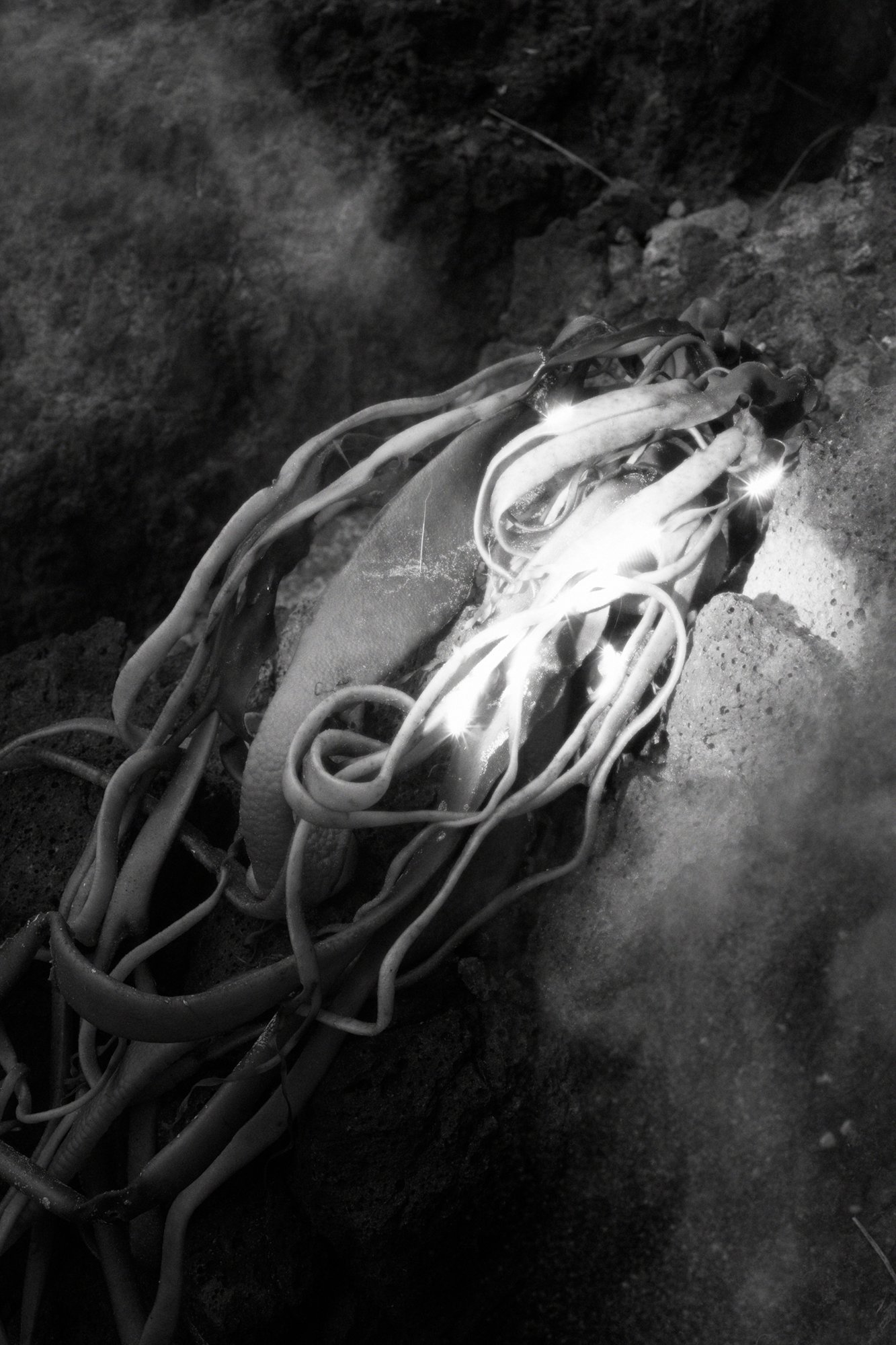
I think the images reflect that. They exist in an ambiguous space, you’re never quite sure if you’re seeing something internal or external. That felt true to the sensations I was experiencing as well, a mix of intimacy and distance, of being inside your body while also slightly removed from it. And I think part of it was wanting to acknowledge that—to say that it’s okay for pregnancy to feel strange, or painful, or extremely foreign.