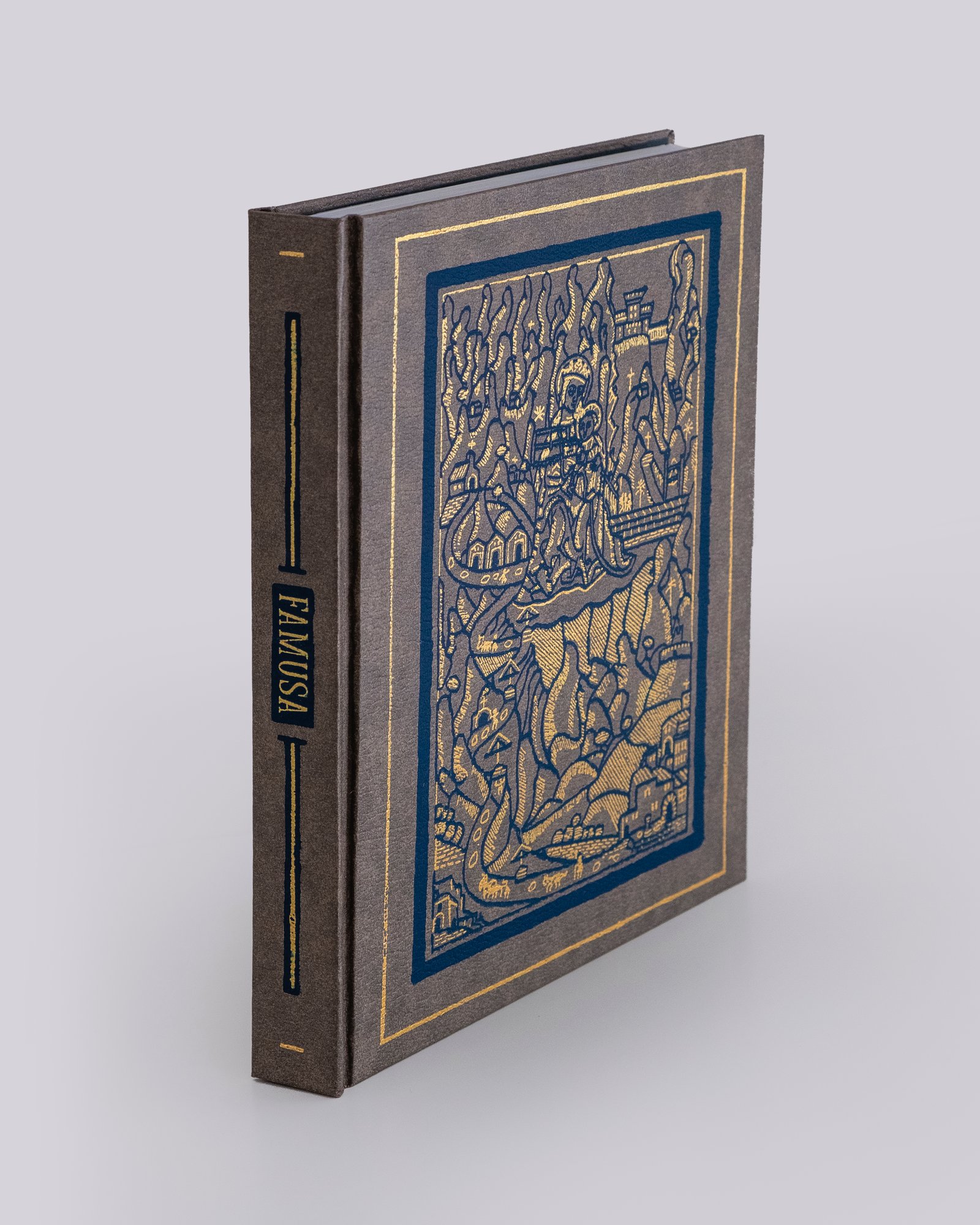
FAMUSA
by Daniel Martinez
The legend tells that around the year 880 after Christ a group of children saw a light appearing on one of Montserrat mountain hills. As they approached to see what happened, they saw the image of a virgin engraved on a wall inside a cave. The extraordinary event was interpreted as a divine sign which led, years later, to the construction of a monastery to venerate her image. Since then, the mountain acquired a new meaning for society, becoming over time a relevant sacred spot and tourism destination. Throughout the centuries, the area was presented to the population in a preset way, as something beyond a plain, deed-less mountain, becoming one of the first European landscapes to “appear” as we understand the term today.
Framing the space for the development of the study to the iconic mountain of Montserrat, FAMUSA thinks over which criteria build the conception society has about nature and how this affects the relationship that’s established with it, considering the characteristics shaping that vision a substantial reason for today’s environmental degradation and inaction towards the climate crisis. Based on the essay titled El Paradis Indicible (The Unnamable Paradise) from Francesc Roma i Casanovas, PhD in human geography.
According to Roma i Casanovas, “Natural environments become landscapes as people interpret them in the light of a model, a mental image, or a specific historical representation. The landscape is the relationship between the subject and the environment in which it projects certain values to reality. […] Landscape images create, transform or reconstitute the environment to accommodate it to human ideas such as order, truth, aesthetics, balance, etc. That is why the landscape has -deep down- a moral dimension, it tells us how the world should be like or, rather, what it should look like.”
Framing the space for the development of the study to the iconic mountain of Montserrat, FAMUSA thinks over which criteria build the conception society has about nature and how this affects the relationship that’s established with it, considering the characteristics shaping that vision a substantial reason for today’s environmental degradation and inaction towards the climate crisis. Based on the essay titled El Paradis Indicible (The Unnamable Paradise) from Francesc Roma i Casanovas, PhD in human geography.
According to Roma i Casanovas, “Natural environments become landscapes as people interpret them in the light of a model, a mental image, or a specific historical representation. The landscape is the relationship between the subject and the environment in which it projects certain values to reality. […] Landscape images create, transform or reconstitute the environment to accommodate it to human ideas such as order, truth, aesthetics, balance, etc. That is why the landscape has -deep down- a moral dimension, it tells us how the world should be like or, rather, what it should look like.”
Book Information
Publisher:
Self-Published