Gary Cialdella earned his MFA in photography from the University of Notre Dame and holds an MA in history from Western Michigan University.
In 2009, his book The Calumet Region: An American Place – Photographs by Gary Cialdella was published by the University of Illinois Press, in collaboration with the Brauer Museum of Art at Valparaiso University (www.calumetregionbook.com). This series, which began in 1986 and completed in 2006 represents a twenty-year investigation of the photographer’s home place, one of this country’s largest industrial centers. Lake Michigan is the setting for the Region’s industry-the lake’s expanse a kind of balm to industrial sprawl.
The theme of Calumet photographs is the interplay of industry and domesticity. An outgrowth of this project was the publication of his essay, Words and Photographs: Imaginative Literature and the Making of the Calumet Region: An American - Photographs by Gary Cialdella in Miscellany, the Journal of the Society for the Study of Midwestern Literature Fall 2011. Recently, the essay was republished in the online South Shore Journal.
Cialdella’s previous photography series include, The Shoreline Project: 1982-1983, Landscapes of Southwest Michigan: 1984-1985, Mississippi River Landscapes, 1993-1995; Delta Blues: The Entertainment Landscape of North Mississippi: 1997-2003; Post Hurricane: Photographs of the Gulf Coast: American Habitat 2003-2009.
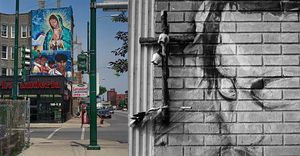
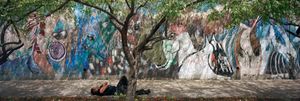
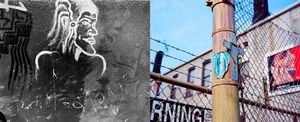
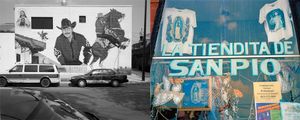
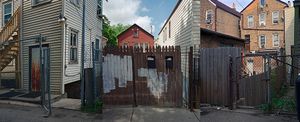
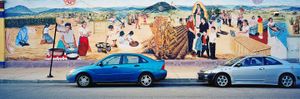
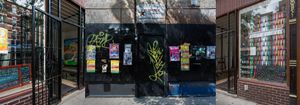
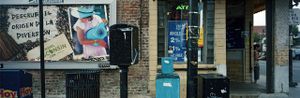
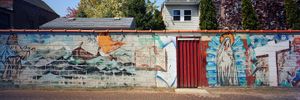
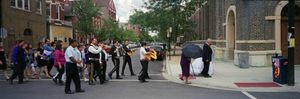
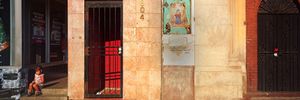
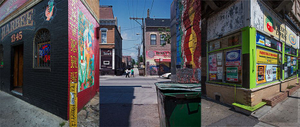
Cialdella’s current project, Picturing Pilsen, is about Chicago’s largest Latino neighborhood. A departure from his Calumet Region work, Cialdella is working primarily with color images creating panoramas, and multiple combination images, including diptychs and triptychs, to express the rich visual complexity of the everyday flow of life as expressed in murals, street art and graffiti that enliven the neighborhood.
His work has been represented in the Museum of Contemporary Photography’s Midwest Photographers Archive and is included in many corporate and private collections, including Bank of America, The Pfizer Corporation, the Kalamazoo Institute of Arts, the Brauer Museum of Art, and private collections.