Justin Partyka (b. 1972) is from the county of Norfolk on the east coast of England. He now lives in the city of Poitiers, France. Partyka has been making photographs for over twenty years. After completing his MA degree in folklore and ethnography at Memorial University in Newfoundland, Canada (2001), Partyka returned to his native region of East Anglia and dedicated himself to photographing the rural landscape and culture over a period of many years. His graduate training as a folklorist was inspired by the photography, films and folk music recordings made by John Cohen. Partyka has a keen interest in deep rooted cultural traditions. His photography often focuses on a local sense of place and considers how elements of the past continue to exist in the present.
Partyka’s extensive photography in his native region of East Anglia consists of multiple, related bodies of work and he is currently developing these into major mid-career exhibition and publishing retrospective project, Close to Home. About this work, the Financial Times art critic Jackie Wullschlager writes: “Justin Partyka’s transient light effects in landscapes of wide open spaces and huge skies, with figures blending into their settings, elegiacally yet exhilaratingly explore ‘the ancient relationship between labour and earth’.” (2013)
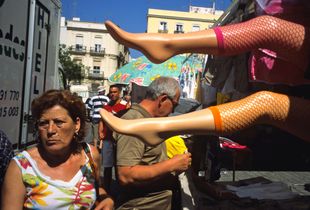
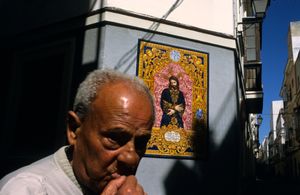
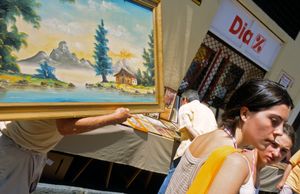
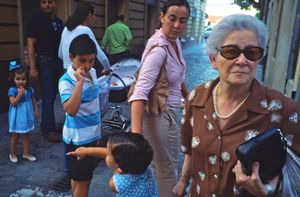
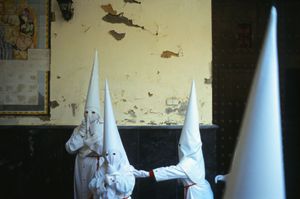
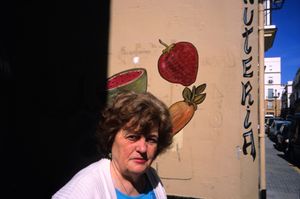
Partyka’s other extensive projects include photographs made in Saskatchewan, Canada (2005), and Cádiz, Spain (2004-2008). He has also photographed in other parts of the United Kingdom, Madrid, Paris, Berlin, Toronto, Sicily, and various locations in the United States. Since 2015 he has been working on a new long-term project in the Nouvelle-Aquitaine region of France.
Over the years Partyka’s photography has been supported by various grants and awards. These include an artist’s travel grant from the Royal Overseas League (London) to spend two months photographing in the Canadian province of Saskatchewan (2005); Arts Council England provided funding for one of Partyka’s first solo exhibitions in 2005, and again provided funding in 2012 for a new commission to photograph the rural landscape of the county of Berkshire, UK. The British landscape charity Areas of Outstanding Natural Beauty (AONB) funded a two year commission for Partyka to photograph the landscape of the Stour Valley (known as John Constable country) in East Anglia (2012-2013). More recently the prestigious Aldeburgh Music funded Partyka’s exhibition Not Exactly Nature Writing for their annual festival (2016).
Partyka’s photographs have been exhibited widely in over thirty solo and group exhibitions. These include the major group show, A Picture of Britain, at Tate Britain, London (2005); the Boutographies photo festival in Montpellier, France (2011); and The Photographers at Beetles + Huxley and Osbourne Samuel galleries, London (2015). In 2009 the Sainsbury Centre for Visual Arts, Norwich, presented a major solo show of Partyka’s photographs looking at the remnants of the agrarian culture of East Anglia. The exhibition then toured to Gainsborough’s House, Sudbury, (2010); the Museum of English Rural Life, Reading (2012), amongst other venues. In 2016 the prestigious Aldeburgh Music festival presented Partyka’s series Not Exactly Nature Writing as the main visual arts show of the festival. Partyka also has a fondness for showing work in alternative intimate spaces and has presented a number of smaller shows of prints and slide-show salons.
Publications include the limited-edition book Field Work (2011), and Not Exactly Nature Writing (2016). Also in 2011 a new edition of the classic oral history collection Fenwomen was published featuring a commissioned series of photographs made by Partyka around the fenland village discussed in the book. Journals and magazines include Source magazine (2004), the Guardian weekend magazine (2008, 2013), Granta (2008), The Drawbridge (2009), Places Journal (2010-2011), Random Spectacular (2011), and Granta Sweden (2014). Partyka sometimes also makes hand assembled artist’s books produced in limited editions of seven examples.