
Mindsuckers

Photos (10)

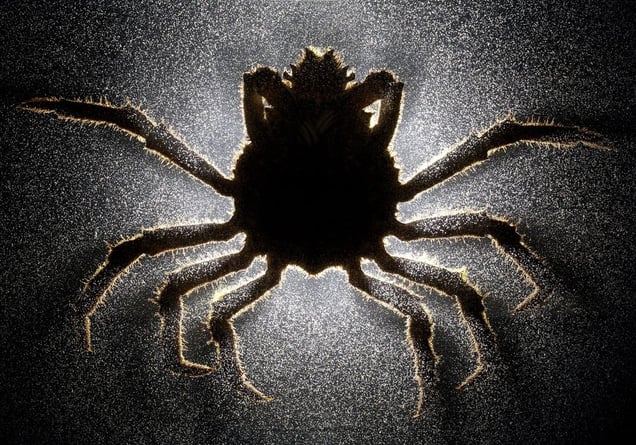
Sheep crab infected by parasitic barnacle. When a male sheep crab (Loxorhynchus grandis) is infected by Heterosaccus californicus, a parasitic barnacle, it stops developing fighting claws, and its abdomen widens, providing a womb for the barnacle to fill with its brood pouch. Nurtured by the crab, the eggs hatch. Thousands of baby barnacles disperse to infect anew.
File: MM8133_120419_01591.jpg
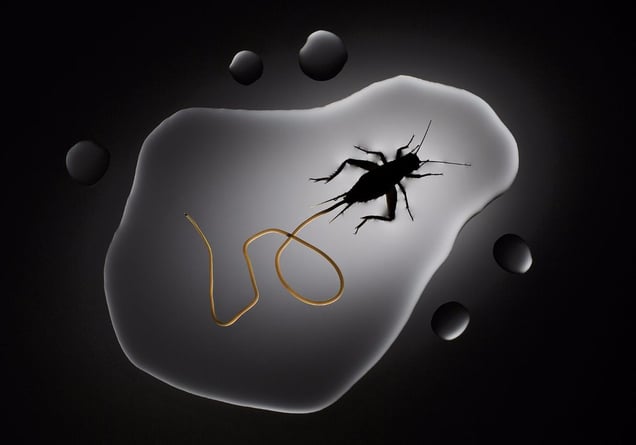
Horsehair worm emerging from cricket . Larvae of horsehair worms infiltrate house crickets when they scavenge dead insects, and then grow inside them. The cricket is terrestrial, but the adult stage of the worm’s lifecycle is aquatic. When the worm is mature, it alters the cricket’s brain, causing it to leap into the nearest body of water. As the cricket drowns, the mature worm emerges.
File: MM8133_131208_31125.jpg
File: MM8133_130707_15523.jpg
File: MM8133_130801_19402.jpg
File: MM8133_130808_23328.jpg
File: MM8133_130613_09860.jpg
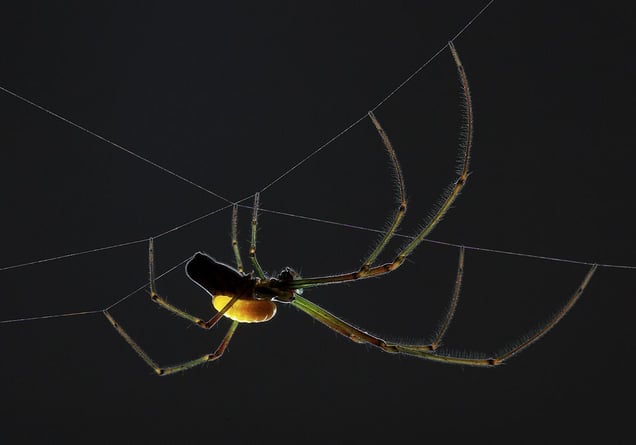
Spider with parasitic wasp larva. The parasitic Hymenoepimecis argyraphaga wasp lays its egg on the abdomen of a Leucauge argyra spider. The larva feeds on the spider’s bodily fluids. As the larva pupates, the spider begins to rip down its web and reconstruct one that is perfect for protecting the larva’s cocoon from predators. The larva forms its cocoon after sucking the spider dry.
File: MM8133_130620_10607.jpg
File: MM8133_130923_24080.jpg
Cover
File: MM8133_131006_26208.jpg
File: MM8133_140122_30475.jpg