Landscapes worthy of still life
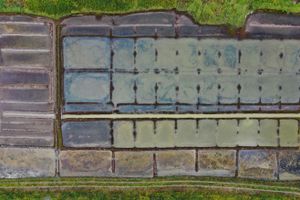
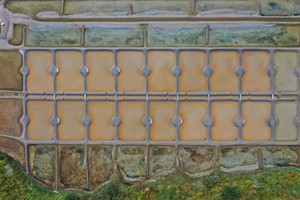
The salt-marshes of Guérande are based close to its mediaeval town of and its salt is harvested since the iron age. In 945, the monks from Landévennec Abbey studied the tides, sun and wind, and mapped out of a plan of the salt works. A titanic project. Over the years, the salt workers have built up a huge landscape of clay and water that is one of the most striking 'ecological' creations made by man, as witnessed by the large number of birds that breed, migrate and winter there. The current exploitation technique remains the same one used on the 9th century: in the traditional way using ancient methods that have been passed down from generation to generation. Since 1996, the Guérande salt marshes have been protected by stringent French legislation, which guarantees the protection of the landscape through eternity. Beyond the fact that the salt marshes are a fascinating site, observing them from above allow us to better understand all the works done since centuries and to make exceptional discoveries in this fragile wetland. When I am observing a landscape from above, I think of a way to entice the viewer's eye into the picture, with some realism, while getting a slightly more abstract photo to be produced. Another beauty emerges when you have a bigger vision of the Earth from above, especially with its pastel colors and raw beauty. It allows you to look deep into Nature, to better understand what is going on from another perspective. Birds, rakes, pieces of wood, man... are giving the scale and bringing life to the photos and this pastel landscape worthy of still life.
No categories selected
Photos (10)