A Memory of Water
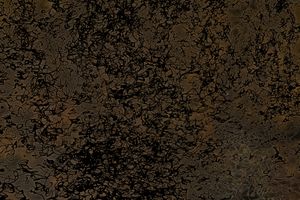
Through an extended dialogue with her local river, water has become Michela’s canvas. Fascinated by the way that the camera records sunlight as streaks and splashes of white, akin to Jackson Pollock’s pourings of paint, she has begun to examine in detail this natural mark-making. The camera extends and develops our own vision, revealing new truths. The human relationship with water is complex: it is the essence of life, yet in the developed world we pay little attention to it unless we are the subject of flood or drought. Each river and stream is a complex repository of memories that we may add to our own associations: hydrological flow remembers features, edges and resistance; surface caustics remember light and record surface perturbation. Our own memories are less reliable than we care to think. Each time we recall something, we rewrite the memory in our brain. A littoral drift takes place amid the neurons. Likewise each image differs; this divergence in the field, coupled with our own unreliable recall, prompts Michela to look at the ways in which these moments within time can be interpreted and the variety of ways in which they may be presented. Successive abstractions remove the stream from the land that bounds it. The water from its context, withdrawing the subject along with the sense of scale that we rely upon. The colour from the image; the light from the water. The conversion of the positive image to a negative one. Photography as a creative process is one of exclusion, and here the photographer asks “What else can I take away?” What is disclosed and what is withheld lies within the artist’s domain. Existence is emphasised through successive absence: absence of land = water absence of water = light absence of light = dark At times existence and absence are reversed, testing our perception of subject, signal and noise, figure and ground. The contrasts in and reversal of the images prompts us to re-assess the respective role of light and shade, and the darkness reminds us of the shadow we cast over our environment. What if the shadow is the substance? When this has gone all that remains is the light, tracing the ways taken by the water. A memory. A memory of water.
No categories selected
Photos (9)