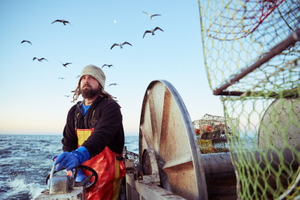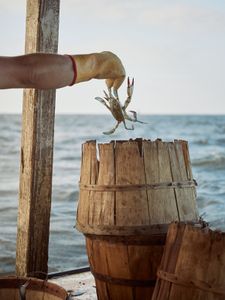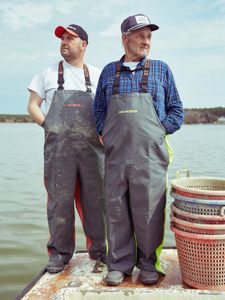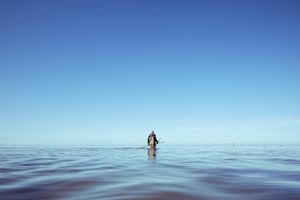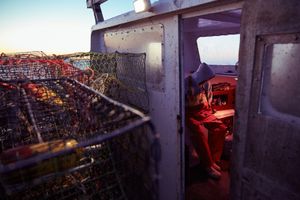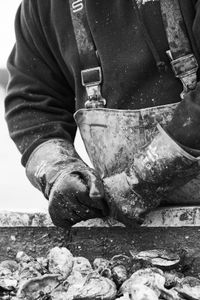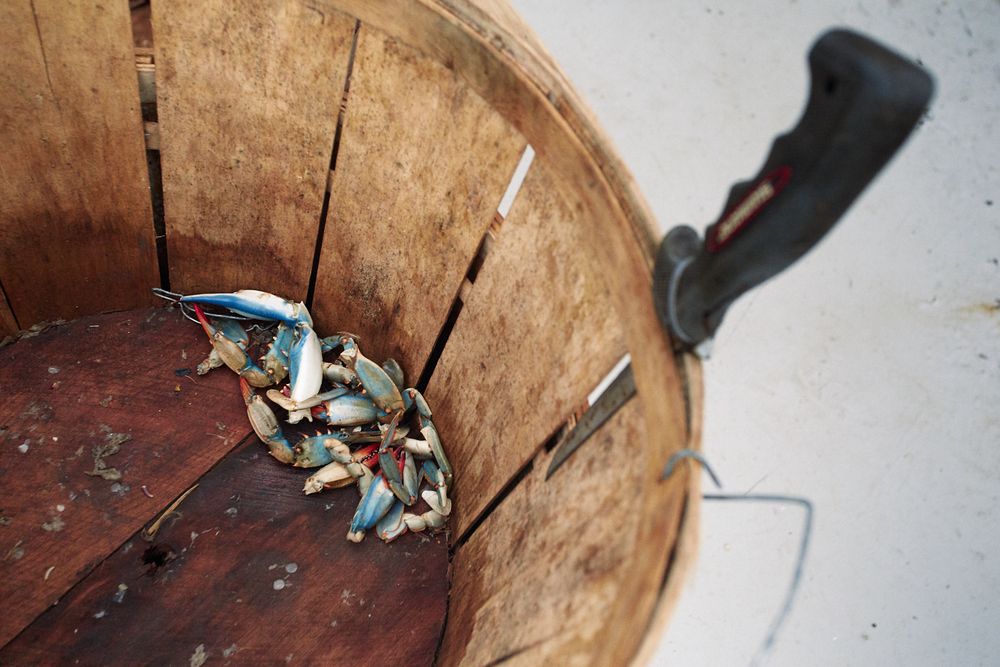
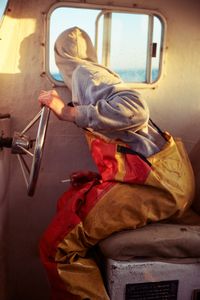
Growing up in Virginia, I was always drawn to the water, whether as a fisherman or as a beachgoer. I even considered turning my love of fishing into a career. Though I wound up in photography, this simple style of living from people who make their livelihood off the land always fascinated me. This fascination was the inspiration for my first long term photographic project: documenting the culture and decline of commercial waterman on the Chesapeake Bay.
The history of the waterman is deeply rooted in the Chesapeake Bay. They are responsible for harvesting the seafood that many of us have grown to love: notably the blue crab, oyster, and striped bass. Their traditions are passed down from generation to generation and are defined by hard, back-breaking work. The livelihood does not include retirement or insurance but instead offers a front row seat to nature in lieu of a cubicle. Waterman are a unique breed. I’ve spent time on the boats of those who have worked the water for over 50 years, using my camera to document their work. They have seen first hand the changes of our extremely fragile ecosystem. Hard, honest work is no longer as alluring as it used to be, and the industry is facing uncertain times. Better opportunities elsewhere, dwindling harvests, and habitat change have made it harder than ever before to make a living as a waterman.
Chesapeake Waterman explores the reality of making a living on the water in rural Virginia and Maryland.