Contemporary Casta Portraiture: Nuestra "Calidad"
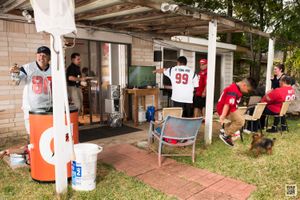
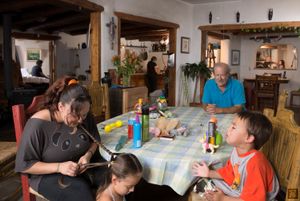
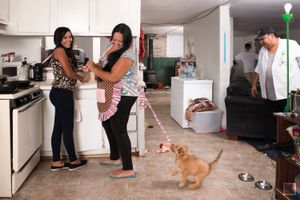
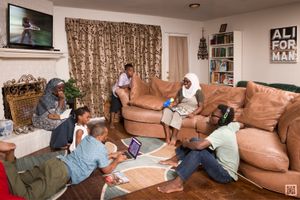
Contemporary Casta Portraiture: Nuestra “Calidad” embodies a futuristic as well as a retrospective post-colonial vision of ethnicity through the works of cultural activists, Delilah Montoya and Elia Arce. This event entails the investigation of cultural and biological forms of “hybridity.” Looking at this concept as a signifier of colonialism, Delilah Montoya’s photographic portraits echo aesthetic and cultural markers formulated by colonial casta paintings in present-day familial settings of New World multicultural communities. Foucault’s archeology of knowledge and its entanglement with power is what Delilah Montoya’s portraits unpacks by researching families’ ethnic origins through DNA studies and tracing their geographic migration routes in world maps exceeding post-colonial and modern territorial boundaries. Each family’s presence is compelling enough, but as we learn their ethnic origins, it becomes clear how deep their stories are. This wordless, “thick description,” as anthropologist Clifford Geertz would call it, is charged with deconstructive energy. Suddenly, assumptions recede, and a new social reality asserts itself, as we realize that we are the result of a complex assemblage of factors. Thus, the episteme ruling the insidious casta stereotypes is dismantled. Montoya depicts people and objects with equal intensity, recognizing that people collect objects encapsulating personal histories and a desire to transcend time. In his study of The System of Objects, Beaudrillard observed that human beings and objects are bound together in a collusion in which objects take on a certain emotional value or “presence.” He states, “What gives the house of our childhood such depth and resonance in memory is clearly this complex structure of interiority, and the objects, the furniture, and its arrangement within it, serve for us as boundary markers of the symbolic configuration known as home.” Respectively, Montoya’s photographs unveil rich layers of data. Even though each family is distinctly portrayed, nothing looks posed: each layer of information speaks of difference, telling a condensed story. The artist is careful to let the subjects speak with an underlying complicity that subtly asserts the veracity of the document.
No categories selected
Photos (10)