My Gray and Black Ozarks
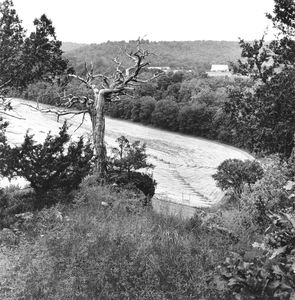
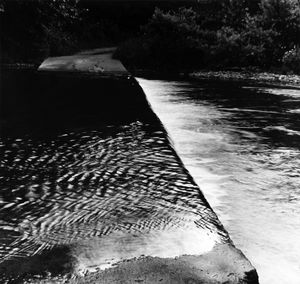
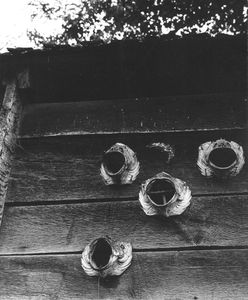
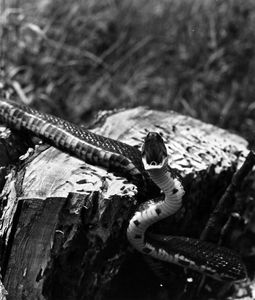
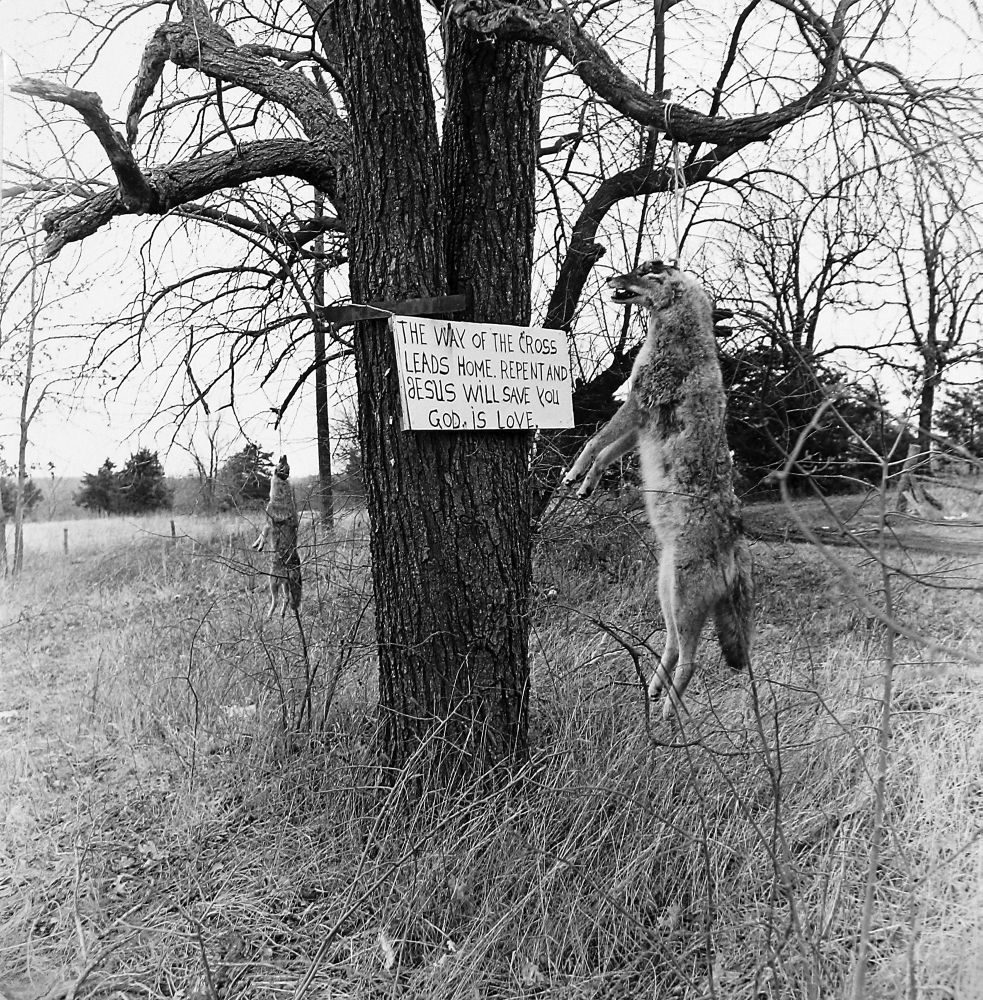
Selling watercolors wasn’t working out. Playing no-limit poker over a pool hall was profitable, but risky. The second time a drunk loser pulled a knife on me I decided to look into another career. The game became targeted by the FBI as well. They raided it once on a night I had gone fishing and some of the players assumed I was the rat. My mother sold my Grandfather Daniels old law and newspaper office in Versailles, Missouri. As I hadn’t stayed in college and was engaged in an unapproved lifestyle, one might have thought she wouldn’t have shared the proceeds of the real estate. But she did. With forty-five-hundred dollars in the bank, I drove my pickup truck to Chicago. At Altman Camera Company, I bought a new Bronica, two lenses, and an Omega enlarger. With several thousand dollars left over, I, with Lothair my big Weimaraner, headed for the hills south of Sedalia. Snapshots, television, magazines and movies were largely in black and white when I grew up. Films of that time—at least the B grade cowboy, horror and detective flicks I loved—were rarely in color. If the imagery was sharp and contrasty, the overall moral message was gray. Is it any wonder that I would be attracted years later to existentialism? Camus was also an aficionado of these dark, monochromatic genres. That my early photographs were black and white should not be surprising. But that’s not the main reason I shot in black and white. Actually, I used Tri-X because the color prints available to me were unattractive and expensive. Jim Enyeart, then at K.U., showed me his small color prints done in his basement lab. Obviously, the technology didn’t lend itself to making big, bold prints at home. There is some truth to the poetic explanations. We subscribed to Life magazine all through the 1950s and I scrutinized every grim, gray, grainy picture of the world seen through a Leica. Japanese and Italian art movies, which I avidly went to in New York, where I studied at the Art Students League for several months. They were beautifully photographed in black and white. Ansel Adams’ little how-to books, I owned but movie and magazine imagery influenced me more than his heavily filtered, stagey work. My darkroom really wasn’t all that dark. It was my old bedroom with some black polyethylene tacked over the windows. As it wasn’t lightproof, I worked at night. Prints were washed in the bathtub. Besides the chemical fumes, the biggest hazard was tripping over Lothair who liked to sleep in front of the bedroom door. He was paranoid about the prospect of being left behind in the event I would leave in the wee hours on a fishing trip, which I often did. After several years of exploring the Ozarks I had a fair collection of negatives. Several paid gigs taking pictures of the place enabled me to stretch the few thousand dollars I had left after buying equipment. By selling my boyhood coin and Indian relic collections, I was able to buy a large, sealed dry mount press and several cartons of matte board. For several months I printed my strongest negatives and dry mounted them. In August of 1969, I called the Springfield Art Museum. Ken Shuck, the director, was in Sedalia judging the fine art show at the Missouri State Fair. In the parking lot of his motel I showed him half a dozen prints. He asked how many I had total, what I would call this group, and how much would I charge them for a show? “It’s 80 Ozark Photographs,” I told him. “And how about a thousand dollars?” “How about five-hundred?” he replied. “But we’ll print a catalog and give you a hundred copies.” 80 Ozark Photographs opened January 4, 1970. With the little catalogue I easily got more bookings in the region. The ten pictures in this series are from this era. They were interpreted as having a positive environmental influence and I was hired by the University of Missouri to create exhibits to foster public sensitivity to au courant issues. With grant money, I bought several Hasselblads. With the largesse of some foundations and the National Endowment for the Arts, I created a huge Bicentennial exhibit of large dye transfer and black and white prints. That gig ended when I became a plaintiff in a lawsuit to stop the Harry S. Truman Dam on the Osage River, an Army Corps of Engineers boondoggle. Since then I’ve had no museum exhibits. My wife and I write and publish books. We both contribute photographs to those projects. In one of our books, Damming the Osage: The Conflicted Story of Lake of the Ozarks and Truman Reservoir, I used several hundred of the 6 x 6 images from that era. Even without my participation in the lawsuit, the field of nature photography soon became crowded. My take on the Ozarks may have been too bleak and realistic for the increasingly romantic direction of the ecology movement.
No categories selected
Photos (10)