
Solarizing Shores Of The St-Lawrence River
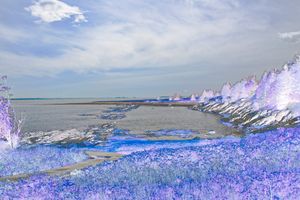
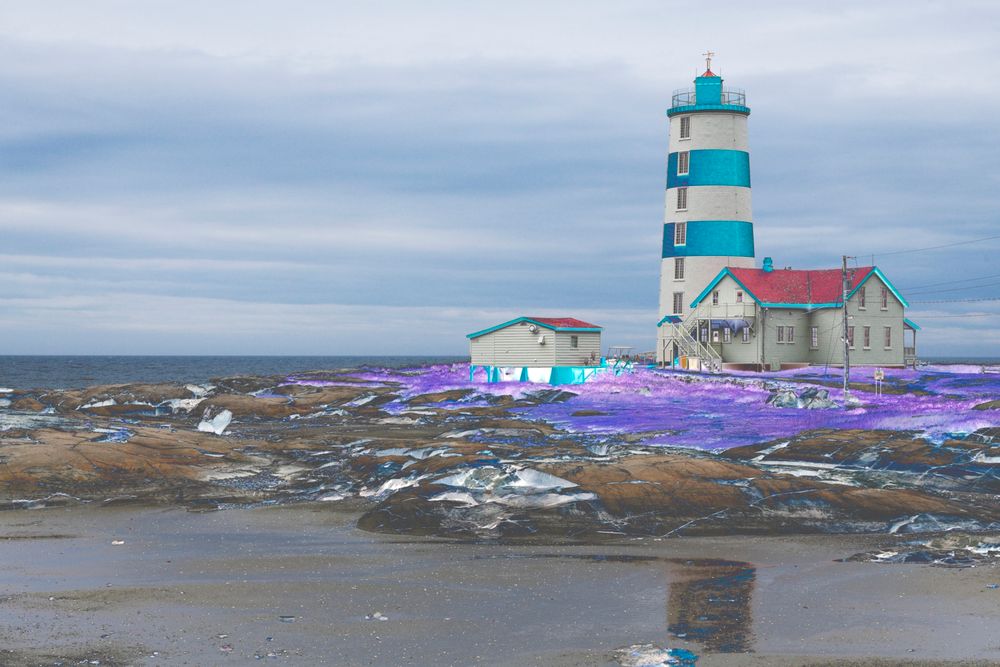
The original darkroom approach called "pseudo-solarization" was described in the middle of the 19th century and started to be used artistically by Man Ray in the 1930s. Solarization results in wholly or partly reversed tones on a print. It always remained a marginal approach because of the difficulty to obtain consistent results. Over time, the prefix "pseudo" has been dropped in most photographic communities. Nowadays, one can find solarization filters in commercial software with diverse results that remain difficult to control and do not necessarily stay within the original constraints of film solarization. Still today, solarization remains marginal and used solely for portraits and nudes in black and white. In this series, I present the first results of the rigorous digital method I have developed to solarize COLOR photos and LANDSCAPE photos. Solarizing color photos is extremely rare and requires strong skills to obtain consistent results. Similarly, solarizing landscapes is exceptional as not every scene leads to good results. As an artistic challenge, I have combined both difficulties and faced them using my scientific background for several months. My aim was to produce new types of images transcending the boundaries between photography and painting. For the first public appearance of this research, I decided to solarize scenes of the shores of the St-Lawrence River (Canada) because this is where I live. I also cherish this river for its historical role in populating North America.
No categories selected
Photos (10)