Frames of mind | Bruxellisation
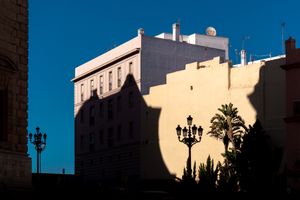
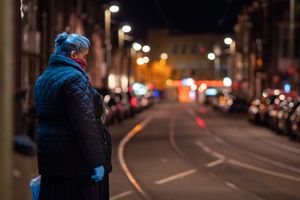
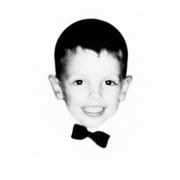
In urban planning, Brusselization (UK and US) or Brusselisation (UK variant) (French: bruxellisation, Dutch: verbrusseling) has become a byword for "haphazard urban development and redevelopment". The notion applies to anywhere whose development follows the pattern of the uncontrolled development of Brussels in the 1960s and 1970s, that resulted from a lack of zoning regulations and the city authorities' laissez-faire approach to city planning (adapted from Wikipedia). Frames of mind The city is a state of mind. A state of the mind. The city is a projection, a materialisation of our minds. Urban constructions show, among other things, ambition, contempt, solidarity, modesty, harmony, incoherence. Don’t they? The city is like a view of the mind. A mind that, having taken shape, captures the light and exposes itself to the lens. I grew up in Brussels, Belgium, in the sixties and seventies. From the window of my room in Woluwe St Lambert, I could see the construction of apartment buildings, punctuated by cranes, as the only horizon. A trivial view that I tried to tame with my camera. In a sense inspired by Magritte, Brussels "is not a city". Its identity and that of its inhabitants would be precisely due of its lack of identity - to the lack of a unique and ostensible identity. Unless heterogeneous overlays and multiple identities constitute the very essence of what a city is. Photography is my attempt to connect to an environment that is alien to me. To mental constructions that want to compete with nature and that overtake the humans who created them. Brussels is all around us, wherever we travel - wherever I go. Urbanisation and brusselisation invade the world as extensions of minds that dialogue, confront or ignore each other. For decades, wherever I stood in the chaos of buildings, my gaze has been trying to capture dignified images: fragments or clusters; roaming silhouettes and empty looks. From an intersection of urban interferences, my eye enjoys the new pattern. Each camera click is a tribute to the ordinary. It is an act of freedom that becomes part of who I am, that reconciles me with my environment. And with my adolescence. It is a proposition to an audience which I hope, in return, will express diverse perceptions. Perceptions that dialogue, confront or ignore each other. What does the city tell us about the human mind ? What do humans tell us about the spirit of the city?
No categories selected
Photos (5)