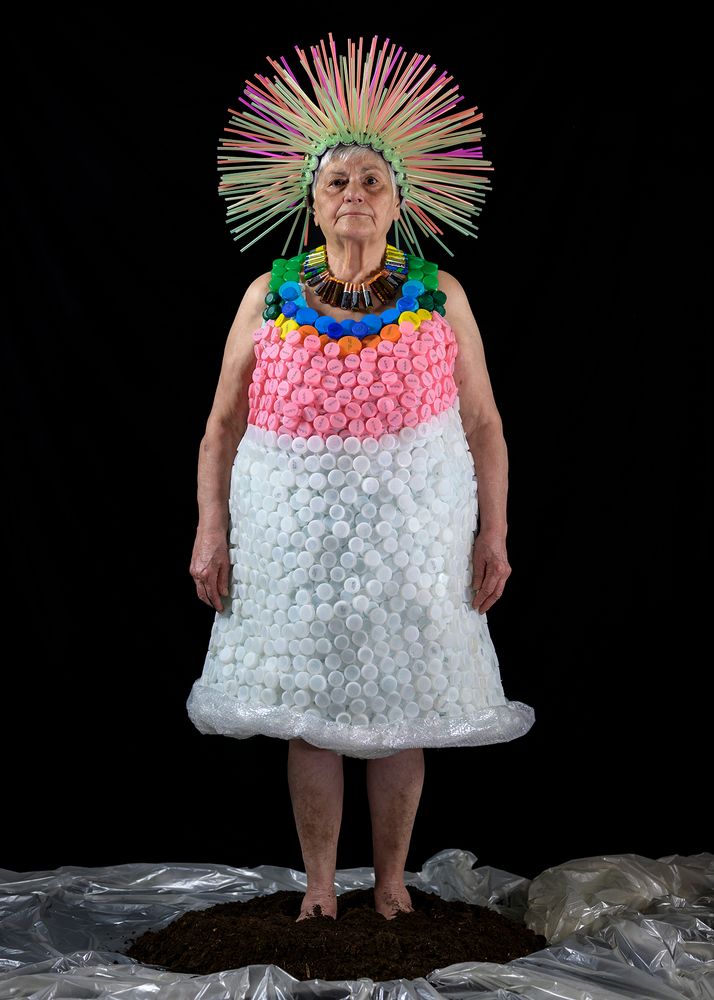

Anthropomorphosis
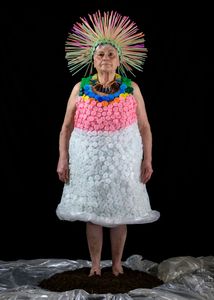
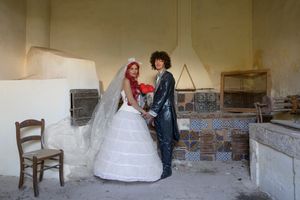
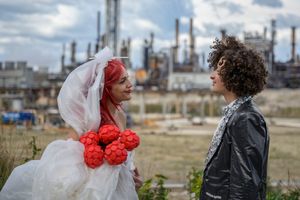
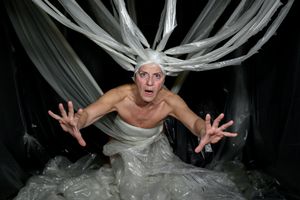
This project originates from a deep inner need, stimulated by a trip to India in 2019 and by the collection of plastic bottle caps for a social project I have from a deep inner need for about two years. Anthropomorphosis has occupied 8 months of uninterrupted work, carried out inside my house every day, with the creation of costumes and sets through waste materials, mainly plastic, more than 12000 bottle caps, 10000 linear meters of "clamps" that would be pipes used in agriculture for irrigation of crops inside the greenhouses, but also of aluminium scraps, 8000 circular elements with a diameter of about one centimenter, collected by a window and door frame friend in a few years of daily work and that we can see applied in the groom's suit, strictly in plastic and with aluminium decorations. The project aims mainly to make my public linger in front of the consumption, often excessive, of industrial materials that are transparent to our sight, with the aim of launching an inner reflection on how much the use of the industrial material mentioned above can compromise the already difficult balance between the human being and the environment in which he lives. I certainly do not want to go into environmental and sustainability discourses that would require skills that I do not have and different locations, but I believe that photography, visionary in this case, can be a very important contribution to stimulate a conscious consumption in our daily lives. With great pride I was able to involve my mother, my sister, my nephew and some very dear friends in this project, who believed in my story and each of them contributed with their own personality, also helping me in the creation of clothes (the groom's dress required a sartorial intervention of my mother) and scenography and supporting me in all moments of fatigue. Anthropomorphosis is divided into 9 photographic shots and two important chapters, respectively of 5 and 4 photographs, technically but above all emotionally different. In the first chapter, in fact, you can perceive a certain harmony, emphasized by harmonic and classic compositions, while in the second chapter the background is darker, the scenography always has a black background and gradually the feeling of anguish appropriates the gaze of my subjects representative.
No categories selected
Photos (9)