
AMONGST GIANTS
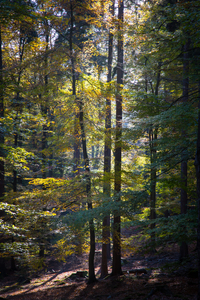
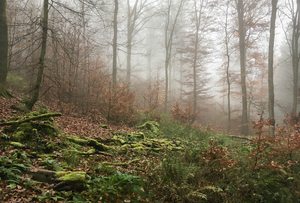
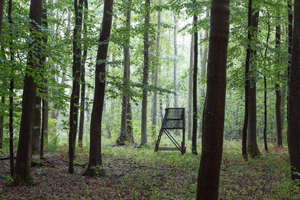
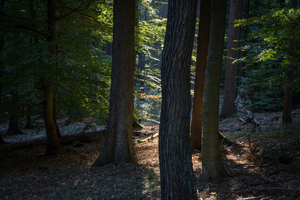
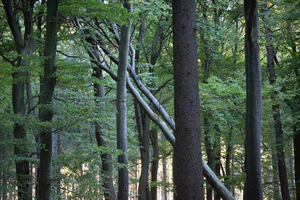
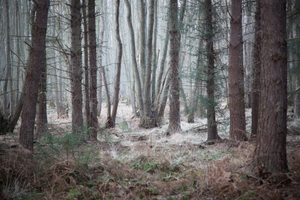
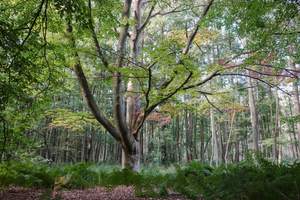
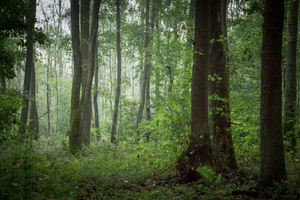
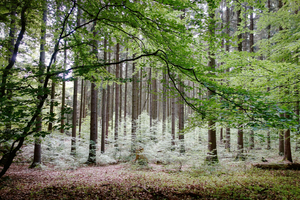
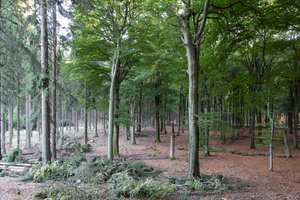
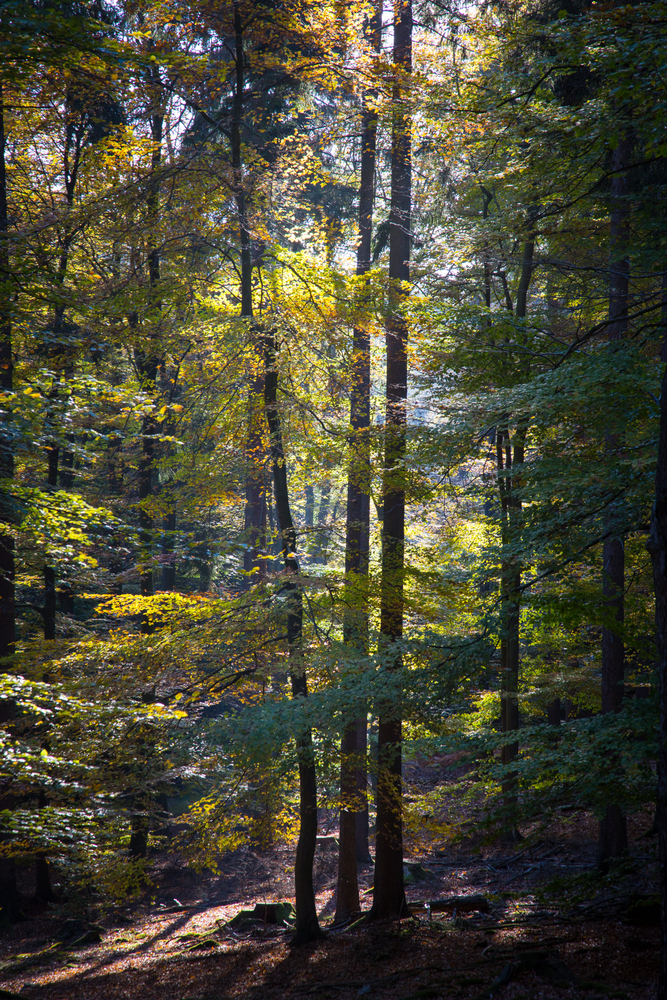
Probably for most Germans, just as for me, forests stand for nature in general. My picture series fathoms out my relationship to forests. A forest walk is usually a sensual experience for me. The cooler, humid air, the moldily, resinous smell, sweeping treetops, birdsongs, cushioned forest tracks and cracks in the coppice let me get away from it all. The Japanese call this relaxing and sensation broadening effect » Shinrin Yoku «. Giants like the sequoia trees achieve up to 115 meter in height or 377 foot respectively. But even among the spruce, pine, fir, oak and beech trees of our native forests, which are only about half that size, you feel like a dwarf. The fairytale forest is sometimes a scary backdrop, sometimes an idyllic refuge. Those who go into the "fairytale" forest also go into their "inner forest", confronting oneself with the natural side of life, which in civilization is often neglected and requires a correction from time to time. Our forests today look very different from those of Grimm's fairytales. The villages were surrounded by forest, but today it is rather the other way around. Due to the intensive management of most native forests, one should actually speak of plantations instead of forests. Primordial forests ceased to exist in Germany already a long time ago. Climate change and its consequences can also be seen in the German forest. The period April to October 2018 was the warmest since the beginning of the weather records in 1881. Heat and long drought led to more forest fires, an increased death of young trees and drought damage to older trees. What will become of the healing power of the forest, when it itself becomes sicker and sicker? Hardly imaginable - a forestless world, climate changed, polluted. Will the forest in the fairytale be the last refuge for our imagination and projections?
No categories selected
Photos (10)